
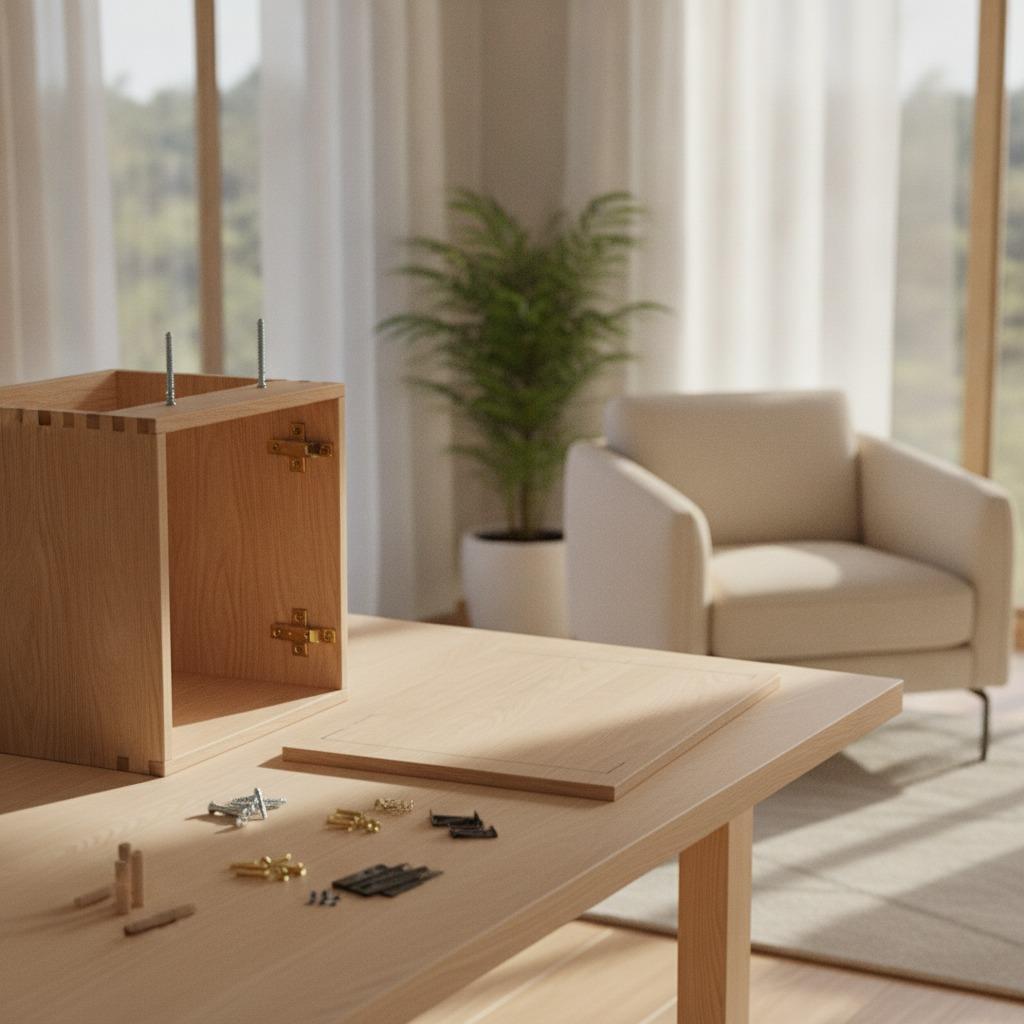
Furniture Hardware Kit Manufacturer: What a Good Kit Really Has to Do
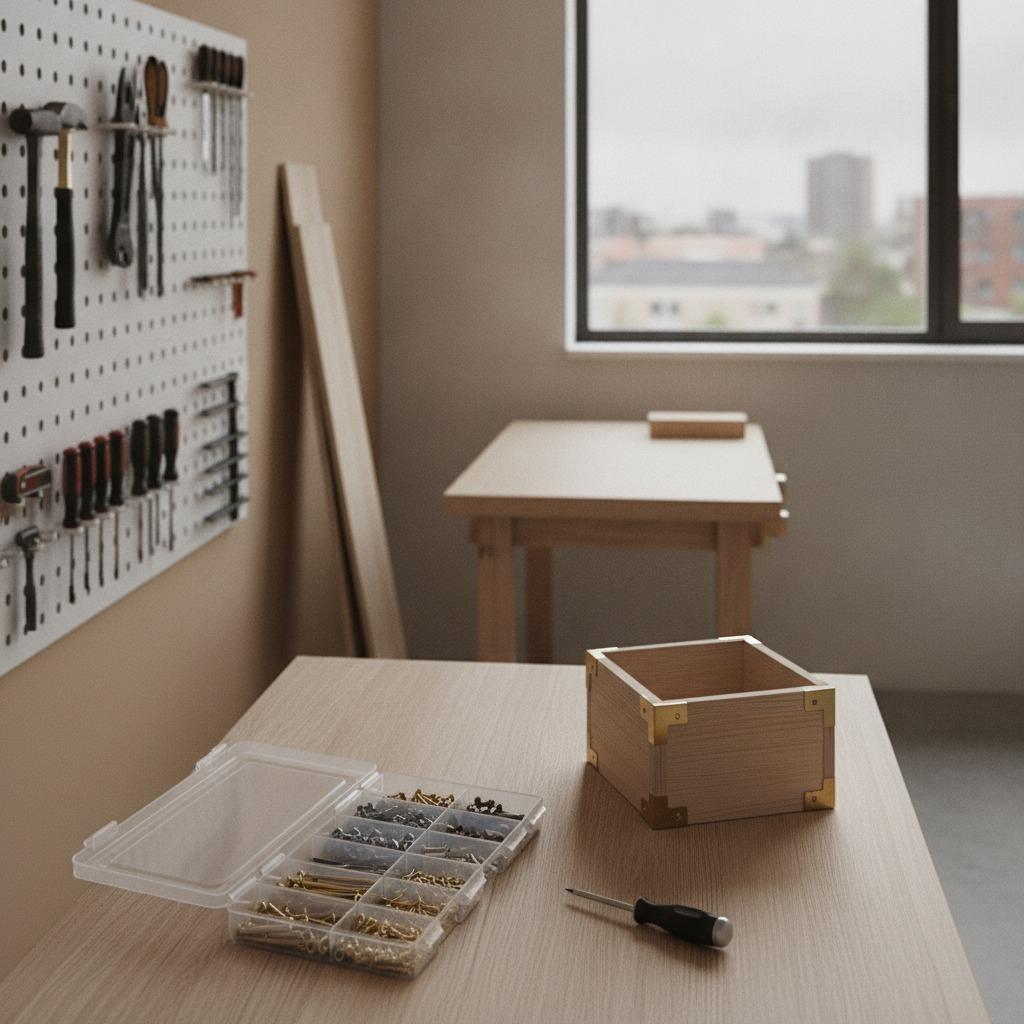
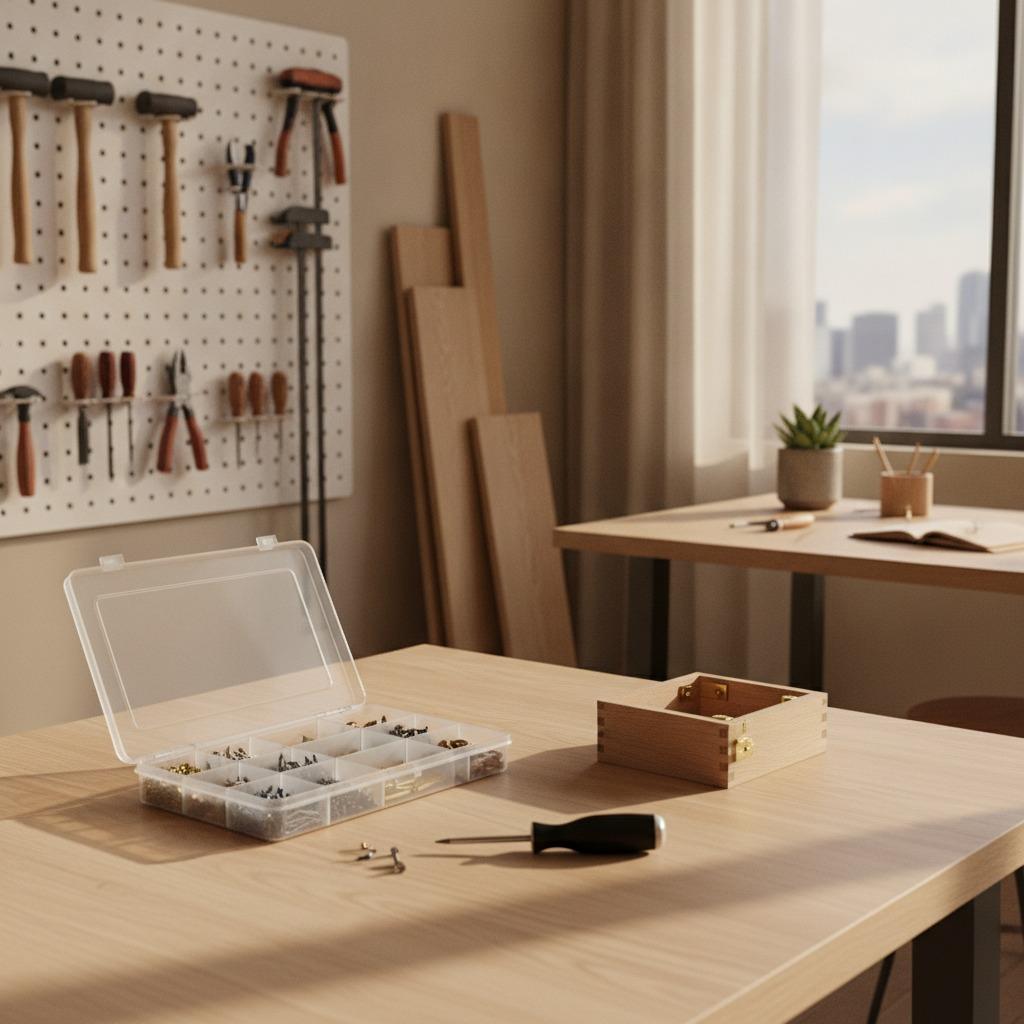
 A furniture hardware kit looks simple when it is packed in a small bag.
A few screws. Some dowels. A connector or two. Maybe a hidden fitting, a cam part, a bolt, a sleeve, or a small bracket.
Nothing about it looks complicated.
Then assembly begins.
A panel does not pull tight. A screw bites too hard into the board. A dowel is slightly loose. A connector does not match the drilled hole. The customer opens the carton and spends more time sorting small parts than building the furniture.
That is when the hardware kit stops being “small stuff.”
For flat-pack cabinets, shelving units, wardrobes, side tables, storage furniture, and knock-down furniture, the hardware kit is part of the product. It controls how the panels come together, how stable the unit feels, how clearly the customer can follow the instructions, and how easily the supplier can repeat the same result in future orders.
That is why choosing a furniture hardware kit manufacturer is not only a purchasing task.
It is an assembly decision.
A hardware kit is not just a bag of screws
When buyers search for a furniture hardware kit supplier, they are usually trying to solve a bigger problem than sourcing fasteners.
They want the product to assemble smoothly.
They want fewer missing-part complaints.
They want the panels to align without extra work.
They want the kit to match the instruction sheet.
They want the same hardware quality from one batch to the next.
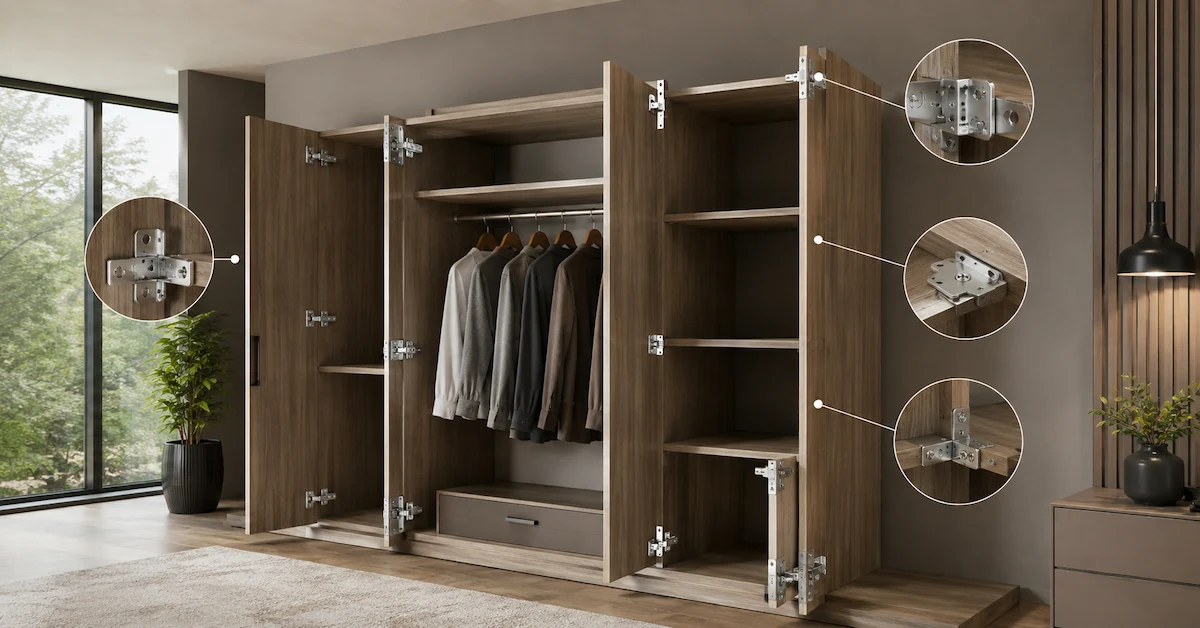
In real furniture production, a kit may include screws, bolts, concealed connectors, cam fittings, dowels, hinge screws, brackets, caps, plugs, sleeves, washers, labels, and replacement parts.
Each piece has a role.
Some parts pull panels together. Some locate the board before tightening. Some provide support. Some help hide the connection. Some protect the appearance. A few parts look minor until they are missing.
That is why a kit should be reviewed as a system, not as loose hardware.
Why flat-pack furniture makes the kit more important
Flat-pack furniture depends on prepared panels and predictable assembly.
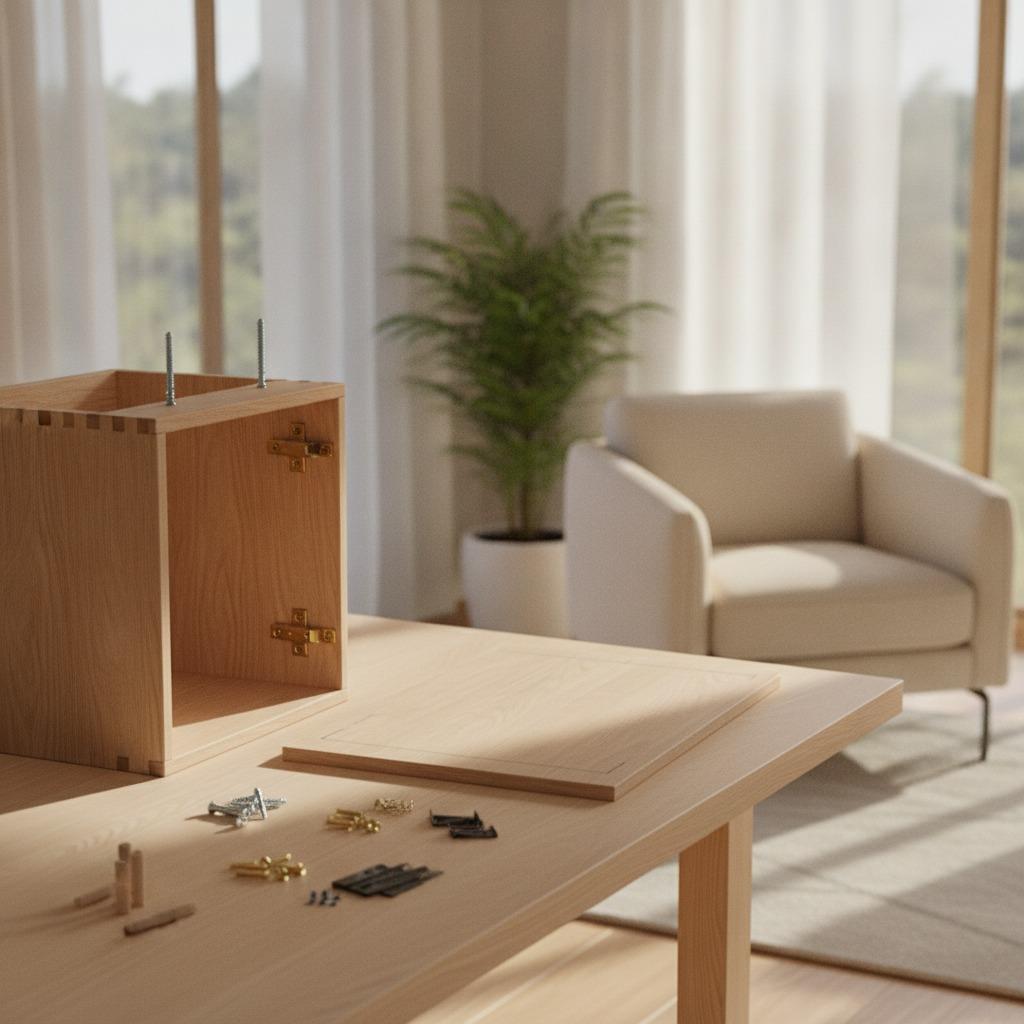
The boards are cut. The holes are drilled. The parts are packed. The user follows the assembly steps. If everything matches, the process feels simple.
But flat-pack furniture leaves little room for mismatch.
If the connector is wrong, the panel may not tighten. If the dowel diameter does not match the hole, the alignment feels poor. If the screw length is not suitable for the board thickness, it may damage the surface or fail to hold. If similar parts are mixed without clear labeling, the user may install the wrong fastener in the wrong place.
The result is not only a technical problem.
It becomes a customer experience problem.
A buyer may describe it as a hardware issue. The customer usually describes it as a bad cabinet, a weak shelf, or a confusing product.
That is why hardware kit sourcing should happen alongside panel design, not after the furniture structure has already been frozen.
Product example: concealed 3-in-1 furniture connecting fitting
One relevant product category is the concealed 3-in-1 furniture connecting fitting.
JHFix lists a product named Manufacturer's Concealed 3-in-1 Furniture Connecting Fitting Bolt Screw Furniture Dowels for Kitchen Dining Hotel Workshop. The name itself tells buyers the intended direction: concealed furniture connection, 3-in-1 fitting structure, bolt and screw use, furniture dowel matching, and applications such as kitchen, dining, hotel, and workshop furniture.
This type of hardware is useful because many flat-pack and knock-down furniture products need compact internal connection systems. A visible bracket may be acceptable for utility furniture, but cabinets, wardrobes, side tables, and hotel furniture often need cleaner surfaces and less exposed hardware.
A concealed 3-in-1 connector is usually chosen for three practical reasons:
It helps join panels.
It reduces visible hardware.
It supports repeatable flat-pack assembly.
Still, buyers should not approve the product by name alone. A concealed connector must match the actual furniture design.
The key details include board thickness, hole diameter, hole depth, panel material, edge distance, matching screw or bolt type, dowel fit, assembly direction, and whether the furniture may be disassembled later.
The board decides whether the connector works
A furniture connector does not work in empty space.
It works inside particleboard, MDF, plywood, laminated panels, veneered board, or another engineered material. These boards do not behave the same way.
A connector that fits well in plywood may not hold as well in lower-density particleboard. A screw that feels secure in one panel may strip in another. A dowel that aligns one cabinet structure may be too loose or too tight in a different drilling pattern.
Before choosing a concealed 3-in-1 furniture connector, buyers should confirm:
- board material
- board thickness
- hole diameter
- hole depth
- connector length
- screw or bolt type
- dowel size
- edge distance
- load requirement
- assembly method
- expected number of assembly cycles
These details are not just engineering paperwork.
They decide whether the furniture feels solid after assembly.
A good kit supports the assembly sequence
A furniture hardware kit should not only be complete.
It should be easy to use in the right order.
This matters more than many buyers expect. A kit may contain all the correct parts, but if the screws, dowels, connectors, caps, and bolts are mixed together without clear separation, assembly slows down.
For factory workers, that means lost time.
For installers, it means extra checking on site.
For end customers, it means frustration.
A good kit should match the instruction sheet. If the instruction uses Part A, Part B, and Part C, the hardware packaging should help the user identify those parts quickly. If two screws look similar but have different lengths, they should be separated clearly. If a concealed connector needs a matching dowel or bolt, those parts should be easy to find together.
The packaging does not need to be expensive.
It needs to reduce mistakes.
Concealed hardware should be tested before bulk orders
Concealed furniture hardware can make a product look cleaner, but it is less forgiving when the fit is wrong.
A visible bracket may allow minor adjustment during installation. A hidden fitting usually depends on accurate drilling and correct engagement. If the holes are off, the connector may not seat properly. If the bolt or screw does not match the fitting, the joint may stay loose. If the dowel does not locate the panel correctly, the assembly may feel unstable before tightening even begins.
That is why sample testing is important.
Buyers should test the kit with the actual production panel, not only with a loose sample on a desk. The test should include the real board material, drilled holes, assembly tool, instruction sequence, packaging format, and final stability check.
A short bench test can reveal problems that photos cannot show.
What Jiangmen Jinhe Hardware brings to kit sourcing
Jiangmen Jinhe Hardware Co., Ltd. works with fasteners, standard parts, and non-standard customization. Its product range includes machine screws, self-tapping screws, micro screws, precision screws, furniture-related connectors, and other hardware components used across OEM and assembly applications.
For furniture buyers, that fastener background is useful because a hardware kit often combines several part families at once. A flat-pack product may need concealed connectors, screws, bolts, dowels, brackets, caps, labels, and custom packaging.
The product page for the concealed 3-in-1 furniture connecting fitting also positions the part for furniture use across kitchen, dining, hotel, and workshop applications. That makes it relevant for buyers sourcing hardware kits for cabinets, storage units, tables, shelving systems, and other panel furniture.
The useful supplier is not only the one that can provide a single part.
It is the one that can help keep the complete hardware package stable.
Standard parts and custom hardware both have value
Standard furniture hardware can be the best option when it fits the design.
It is easier to reorder, easier to replace, and easier to manage across different furniture models. If the board thickness, hole pattern, and assembly method are common, standard concealed connectors, dowels, bolts, and screws may be enough.
Custom hardware becomes useful when the product needs a specific fit.
That may include a modified connector length, a different screw head, a special bolt size, a custom finish, private-label packaging, a different kit count, or a furniture connector combination made for one product line.
The important point is simple: customization should solve a real assembly problem.
It should not add complexity just because it sounds better in a sourcing discussion.
Packaging is part of the product
Flat-pack furniture hardware is easy to lose and easy to mix.
That makes packaging part of product quality.
A furniture hardware kit may need separated bags, step labels, model numbers, barcodes, compartment trays, blister packs, or spare-part kits. For cross-border e-commerce, packaging clarity becomes even more important because the customer may assemble the product without help.
A missing connector can stop the entire assembly.
A wrongly labeled screw can damage a panel.
A small dowel or cap hidden under larger parts can lead to a complaint even if the part is technically inside the package.
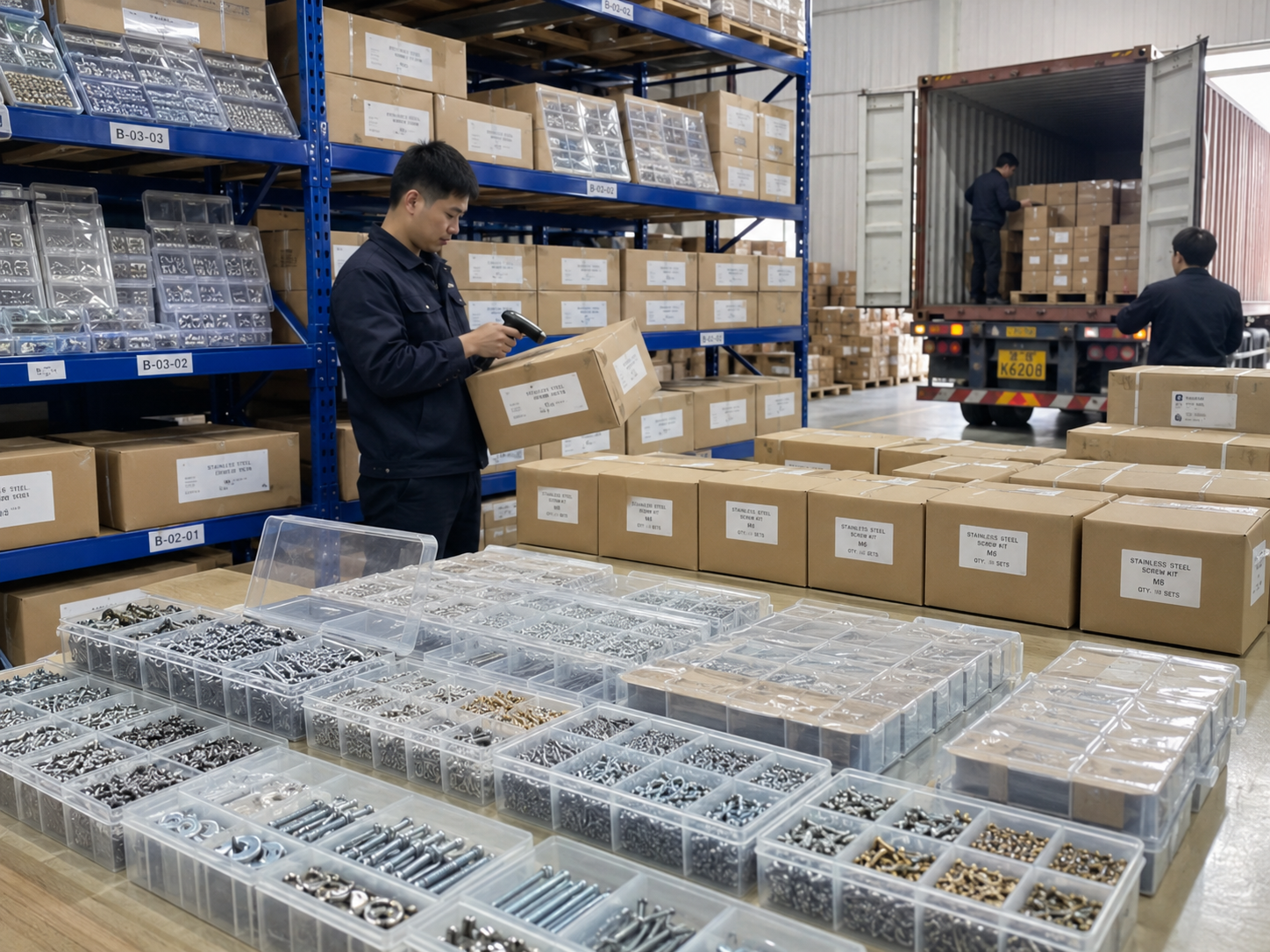
A good furniture hardware kit manufacturer should discuss how parts are counted, checked, labeled, packed, and repeated.
The goal is not just to ship hardware.
The goal is to make assembly easier.
Common mistakes buyers should avoid
One common mistake is treating the hardware kit as a commodity.
A low-cost kit is not really cheap if it causes rework, replacement claims, damaged panels, slow assembly, or poor reviews.
Another mistake is assuming one generic kit can fit several furniture models. Sometimes it can. Often it cannot. Board thickness, hole pattern, panel load, and assembly method all change the hardware requirement.
A third mistake is approving loose samples without checking the complete packed kit. Loose parts show size and finish. They do not show count accuracy, packaging clarity, or user experience.
Buyers also sometimes ignore the relationship between concealed connectors and drilling accuracy. A concealed 3-in-1 fitting may be practical, but only when the matching holes and installation method are controlled.
The final mistake is forgetting repeat orders. A sample may work well. The real test is whether the next shipment matches it.
Practical questions buyers should ask
Before choosing a furniture hardware kit manufacturer, buyers should ask:
What parts are included in the complete kit?
Which parts are standard, and which are customized?
Is the concealed connector suitable for our board material?
What board thickness and hole pattern are required?
Can the kit be tested with actual panels?
Are screws, bolts, and dowels matched as a system?
How are small parts separated in packaging?
How is kit completeness checked before shipment?
What inspection documents are available?
Can replacement packs be supplied later?
Can the same specification be repeated in future orders?
Can logistics, warehousing, or export support be included?
These questions help buyers move beyond price comparison and focus on actual assembly performance.
Frequently Asked Questions
What does a furniture hardware kit manufacturer provide?
A furniture hardware kit manufacturer may provide screws, bolts, concealed connectors, dowels, hinges, brackets, caps, sleeves, labels, and customized packaging for furniture assembly.
What is a concealed 3-in-1 furniture connector used for?
A concealed 3-in-1 furniture connector is used to join furniture panels while reducing visible hardware on the outer surface. It is common in flat-pack cabinets, shelving, wardrobes, side tables, and modular storage furniture.
Why do pre-drilled holes matter?
Pre-drilled holes control how the connector, screw, bolt, or dowel fits into the board. If the drilling pattern is inconsistent, even good hardware may perform poorly.
Can one hardware kit work for multiple furniture models?
Sometimes, but only when board thickness, hole pattern, load requirements, and assembly method are genuinely similar. Reuse without testing can create fit problems.
Why is packaging important for furniture hardware kits?
Packaging helps prevent missing parts, mixed fasteners, unclear assembly steps, and customer complaints. In flat-pack furniture, the hardware kit is part of the user experience.
Should buyers test the hardware before bulk orders?
Yes. Buyers should test the kit with actual panels, drilled holes, assembly tools, packaging format, and the complete assembly sequence before mass production.
Good hardware makes furniture easier to build
A good furniture hardware kit does not need to look complicated.
It needs to work.
The concealed connector fits. The dowel aligns. The screw holds. The bolt tightens. The kit is complete. The label is clear. The next order matches the approved sample.
That is what buyers should expect from a reliable furniture hardware kit supplier.
For furniture hardware kits, concealed 3-in-1 furniture connectors, furniture connecting fitting bolt screws, furniture dowels, flat-pack furniture hardware, OEM furniture hardware kits, and custom furniture fasteners, Jiangmen Jinhe Hardware Co., Ltd. can discuss standard parts, non-standard customization, material options, inspection, packaging, warehousing, logistics, and repeat supply requirements.
For direct inquiries:
Tel/WeChat / WhatsApp: +86 13322893939
Email: sharon@hkhomeideas.com
Start with the panel material, board thickness, hole pattern, connector type, hardware list, packaging method, and expected order quantity.
Once those details are clear, the right furniture hardware kit becomes much easier to source, assemble, and repeat.