
Why furniture hardware accessories are more important than they initially seem.
For engineers, purchasing teams, and product developers, furniture hardware is rarely the most eye-catching part of a project. However, it is often the key to transforming a simple design into a functional product. A cabinet may look simple on paper, but the final result depends on the bolts, screws, washers, connectors, and assembly logic hidden inside the box. If these components have problems, customers will quickly notice: loose connections, misalignment, damaged panels, or a disorganized assembly sequence, causing headaches for installers.
Therefore, the design of furniture hardware kits should be as rigorous as that of any mechanical component. The kit must be matched to the product type, panel structure, intended use, and assembly route. Cabinet kits differ from bed hardware kits; even if parts look similar in the tray, they are not interchangeable with table or shelf hardware kits.
What typically does a utility toolkit include?
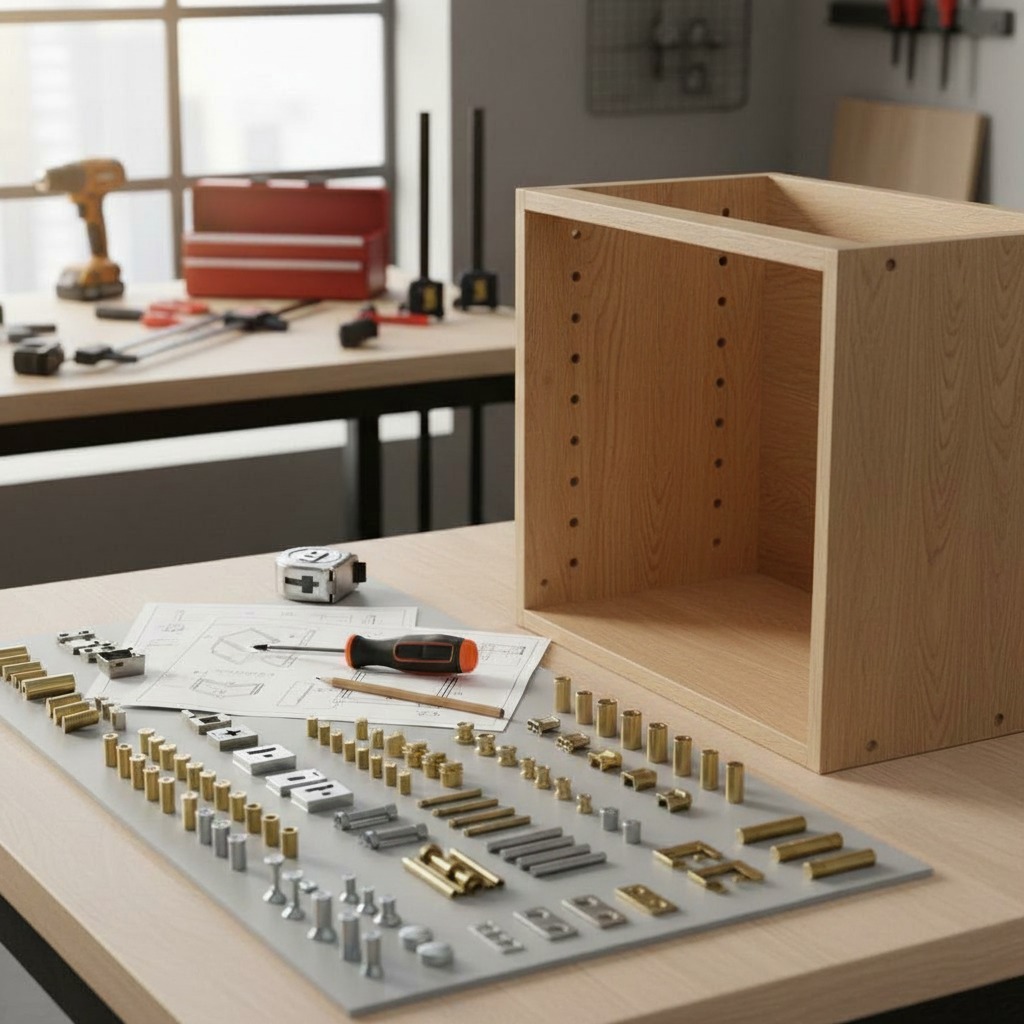
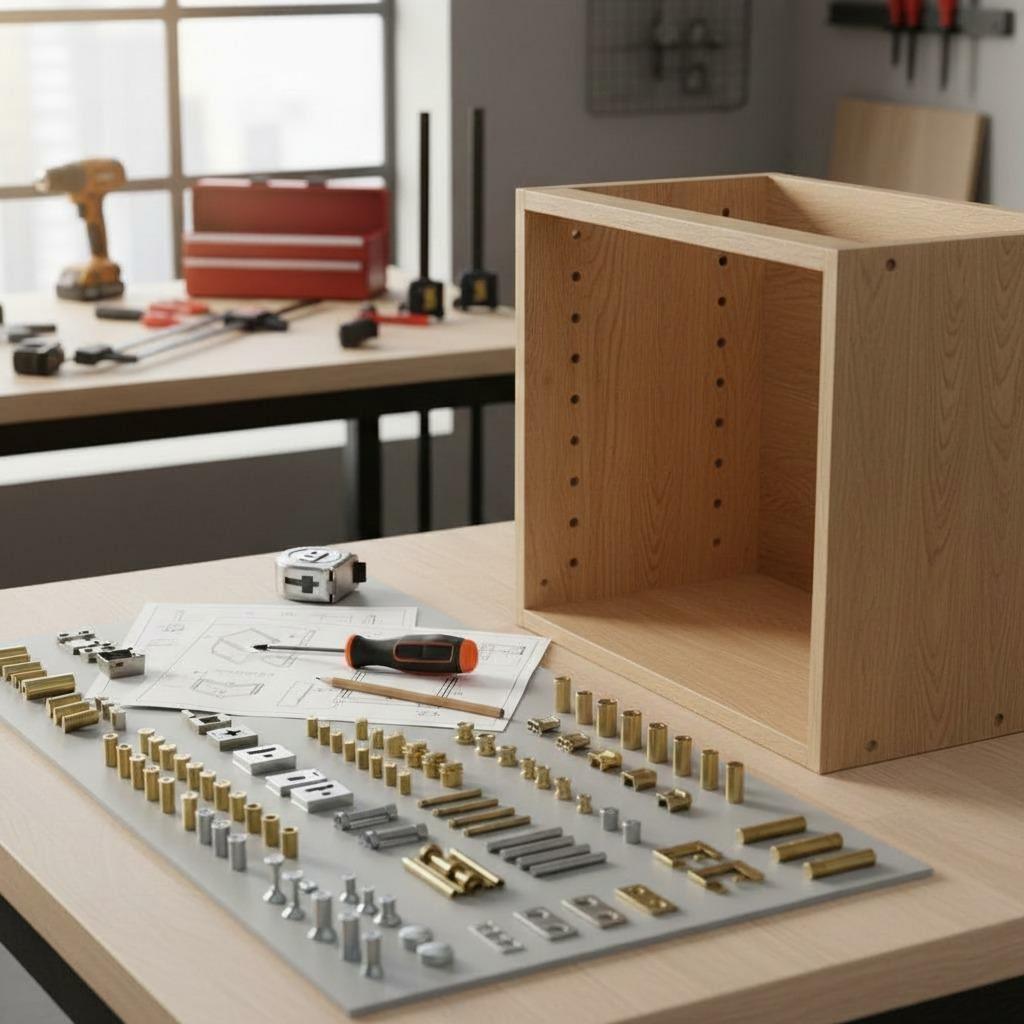
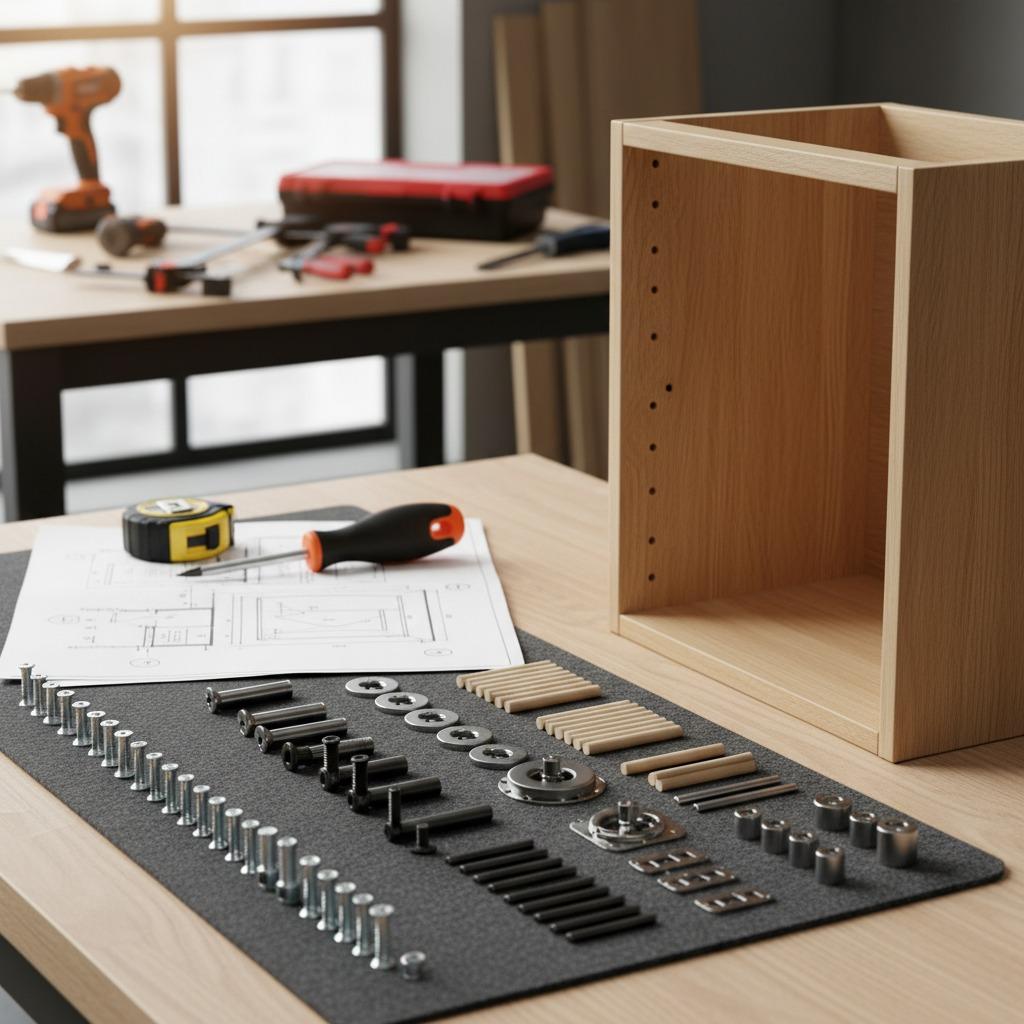
The images and product displays point to two common scenarios for the use of hardware: pre-drilled flat-pack cabinets and various metal fasteners displayed with measuring tools and technical drawings. Together, they reflect the common selection methods for hardware in furniture manufacturing.
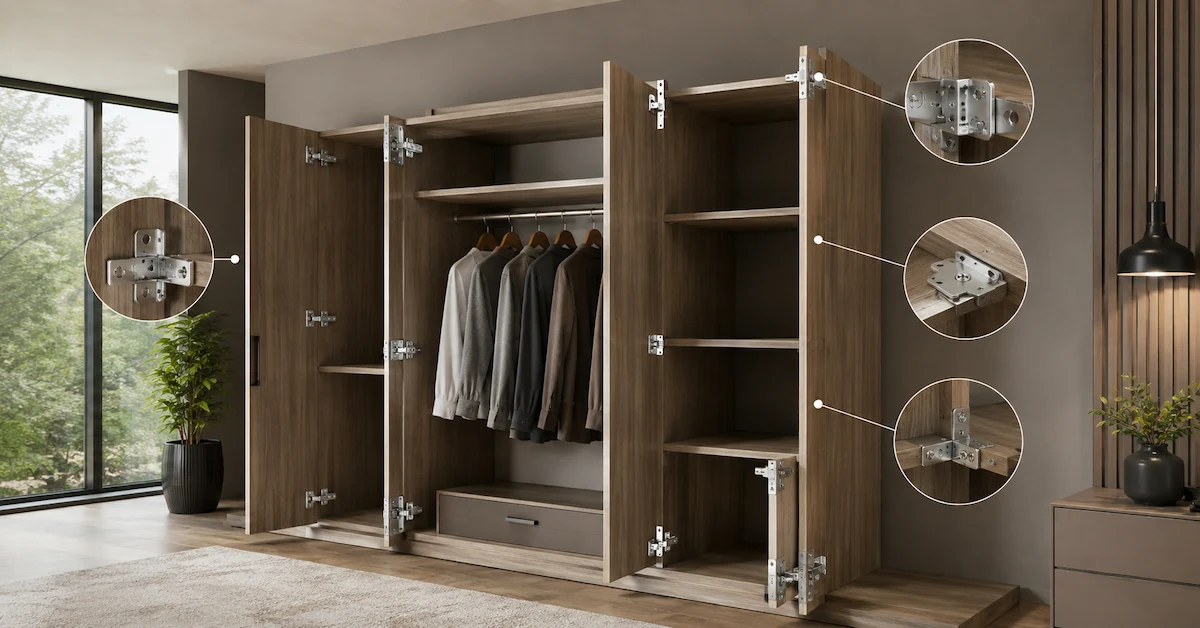
In cabinet hardware kits, buyers typically look for connectors, screws, dowels, shelf pins, hinges, brackets, and other fasteners used to assemble the panels. Drawer hardware kits focus more on drawer slides, mounting screws, and small mechanical fasteners. Bed hardware kits may emphasize stronger connectors and fittings. While table and shelf hardware kits may seem simpler, it's still essential to ensure they are sized correctly and securely installed.
The open shelving shown in the product data has a practical detail: pre-drilled holes evenly distributed on the inner side panels. This is a typical sign of adjustable configuration, especially useful for adjusting shelf positions or installing modular components. This is crucial for buyers as it reduces variations during assembly and provides end-users with flexibility without having to redesign the entire cabinet.
Materials, standards, and parts that nobody wants to rework.
The fastener scenario shows hardware made of a hybrid metal, resembling stainless steel in appearance, and the drawing also shows the A2-70 designation. It's important to note that this is only a reference point and not a guarantee for all components in the layout. However, it does reflect the standard language expected by the procurement team: clear hierarchies, well-defined geometry, and verifiable documentation.
Jiangmen Jinhe Hardware Co., Ltd., established in 2016, is a fastener manufacturer located in Jiangmen City, Guangdong Province, with a factory area of 4,000 square meters. The company specializes in producing machine screws, self-tapping screws, miniature screws, and precision screws made of stainless steel, iron, and aluminum, and strictly adheres to standards such as GB, DIN, ANSI, BS, JIS, and ISO. Such a broad product line is particularly important for furniture and cabinetry projects, as hardware sourcing typically involves multiple product lines rather than a single category.
Here's another practical issue from the buyer: furniture designs often fail, partly because a critical fastener is treated as a generic component. Even a slight deviation in bolt length can lead to flattened panels, bulging hinges, or stacking problems on the assembly line that aren't visible in the CAD design. It's a small flaw, but it can have a high cost.
How to choose the right toolkit for a furniture renovation project
First, understand the structure of the board material, not just the photos in the product catalog. Medium-density fiberboard (MDF), plywood, veneer panels, and solid wood all behave differently when fastened. Then plan the assembly sequence. If the product is flat-packed, the kit must allow for quick part identification, minimize tool changes, and provide predictable torque. If it's OEM furniture intended for home assembly, the kit may require more flexible hardware and clearer instructions.
Inspection is also crucial. The company information mentions rigorous inspections before shipment and comprehensive documentation, which is the right direction for this type of supply. For purchasing managers, this is more than just paperwork. These documents help reduce ambiguity when customers ask which batch of products was loaded into which shipment, or why a particular batch behaved differently during assembly.
Common mistakes buyers make
A common mistake is over-selecting fasteners while neglecting the design of furniture connectors. Another mistake is purchasing cabinet hardware kits with a sufficient number of parts on paper, but with a flawed assembly logic. A third mistake is ignoring toolpaths: if the installation space is cramped, even the world's best hardware can become the focus of on-site complaints.
Furthermore, don't assume that a mix of bolts, nuts, and washers on a pallet will solve the problem. It might be suitable for prototyping, bench testing, or document review, but mass-produced furniture requires part numbers, standardized packaging, and clear compatibility specifications.
What questions should you ask the supplier before placing an order?
Inquire which fastener standards your company follows, how they control dimensions, what documentation they provide, and whether hardware can be customized for non-standard furniture designs. If your product line includes cabinets, drawers, beds, tables, and shelves, confirm which kit series are universal and which require custom parts. Costs and complexity are often controlled or subtly increased here.
Jiangmen Jinhe Hardware stated that its clients include manufacturers of home appliances, electronics, furniture, building materials, and medical devices, as well as cross-border e-commerce sellers and hardware wholesalers. This diverse clientele indicates that the supplier excels in both standardized and customized products, which is particularly important for furniture projects that fall between catalog products and bespoke customization.
Frequently Asked Questions from Buyers and Product Teams
Are furniture hardware accessory kits only applicable to flat-packed products?
Not at all. They are widely used in any situation that requires repeated assembly, including OEM furniture, modular storage, and repair or replacement projects.
What is the difference between cabinet hardware kits and drawer hardware kits?
Yes. Cabinet kits typically consist of cabinet assembly and shelf support, while drawer kits usually require hardware related to drawer slides and smaller mounting fasteners.
Can a single supplier cover multiple furniture categories?
This is sometimes true, especially when the supplier is responsible for both standard parts and non-standard customizations. However, the technical handover still needs to be very specific.
A Wise Next Step
If you are developing or sourcing a furniture collection, consider the hardware package as part of the product architecture, not just a box of accessories. Provide drawings, panel details, expected assembly methods, and the standards you wish to follow. A supplier who understands fastening specifications will save you far more time than simply offering a slightly lower price.
For projects that require standard fasteners, custom parts, or a combination of both, it's worth starting discussions early on—so that prototypes don't expose problems that you could have avoided on paper.