
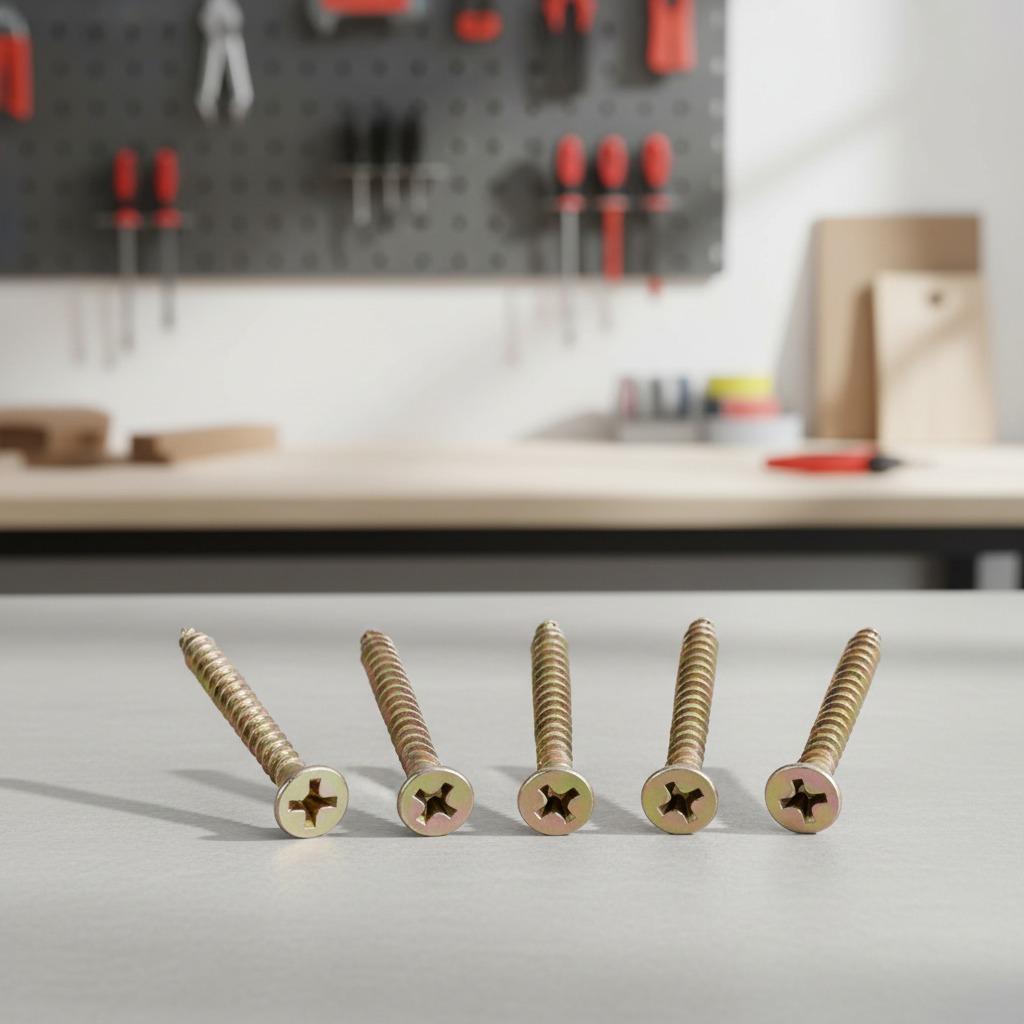
Why do furniture hardware buyers always focus on screws first, before looking at anything else?
When people look for furniture hardware manufacturers, they're often looking for more than just product catalogs. They want to avoid common production problems: fasteners that strip threads, damage boards, slow down assembly, or affect the finished product's appearance. In the furniture and light construction industries, screws are rarely critical components, yet they can easily be the culprit behind the most on-site complaints.
Whether you're sourcing cabinets, panel furniture, appliances, or building materials, this is crucial. Furniture hardware suppliers may offer a variety of categories, but the real decision is often more specific: which fastening solution will install cleanly and efficiently, be secure and reliable, and fit your assembly process without adding costs or requiring rework?
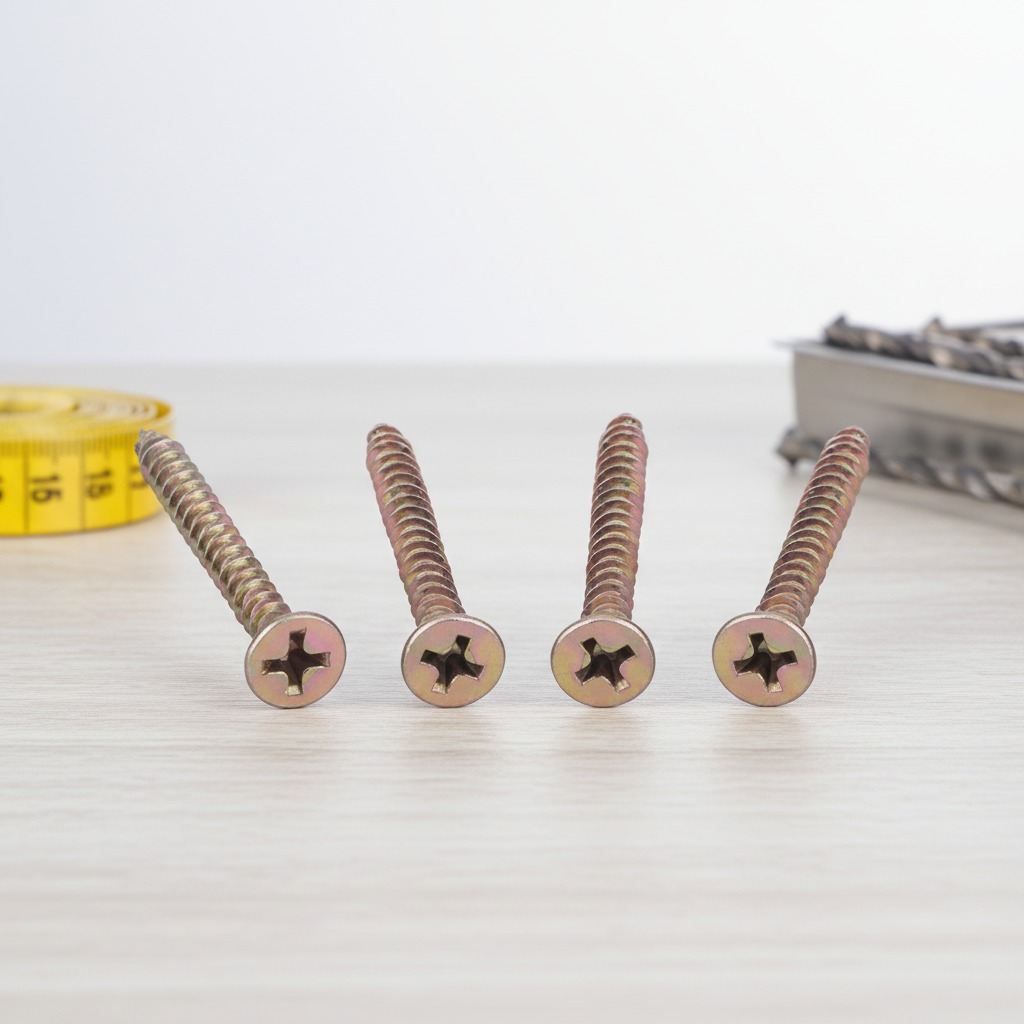
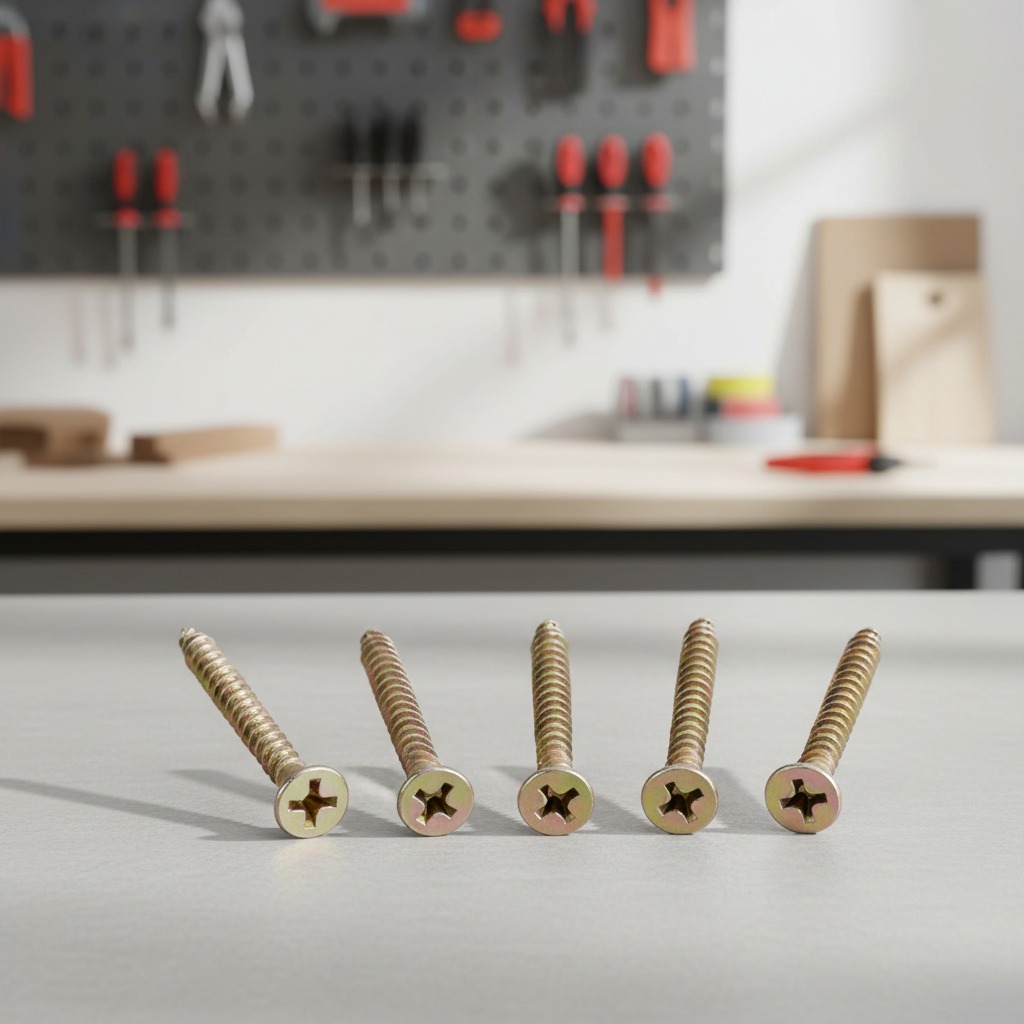
The image of a screw conveys a clear message to the buyer.
The product visible in the image appears to be a metal screw with a Phillips head, countersunk head, fully threaded shank, and sharp tip. The coarse and deep threads typically indicate a strong grip on wood, board, or light framing. A yellow zinc or chromate coating gives it a warm metallic sheen and suggests corrosion resistance, but the specific coating specifications are not yet determined.
For purchasing teams, this "combination" typically refers to universal fasteners used for drywall, panel fixing, and light assembly work. However, it's not accurate to assume all pointed screws are exactly the same. Cabinet hardware manufacturers may use different labels for products that look similar, depending on the panel type, drive performance, and intended assembly method.
In which areas of furniture and building assembly is this type of fastener applicable?
In practice, these types of screws are typically used where quick insertion and reliable thread engagement are more important than aesthetics. Common applications include panel fastening, drywall installation, cabinet sub-assembly, and general connections in lightweight structures. The fully threaded design helps maintain grip on thin materials, but if the substrate is brittle or too thin, the same property can lead to stress.
This is a small detail that buyers sometimes overlook: seemingly versatile fasteners may still be unsuitable for certain density boards or surface finishes. Furniture accessory manufacturers should help you match the geometry of the screws to the actual material structure, not just the product category name.
More important selection criteria than marketing language
If you're comparing a furniture hardware factory with other suppliers, start with the seemingly insignificant details. Successful assembly often depends on these seemingly minor details.
Observe the drive mechanism, head profile, thread shape, tip design, and surface finish. For example, countersunk heads are typically chosen for flush mounting. Coarse threads generally facilitate rapid engagement in softer or layered materials. Pointed tips may aid in self-tapping, but you still need to confirm whether the part is self-tapping or self-drilling. Even if they look similar in photos, these two types are not interchangeable in production.
Material consistency is also crucial. Jiangmen Jinhe Hardware Co., Ltd. reports that its production capacity covers machine screws, self-tapping screws, miniature screws, and precision screws, made of stainless steel, iron, and aluminum, and conforms to GB, DIN, ANSI, BS, JIS, and ISO standards. This broad product line is very useful for customers who need both standard parts and custom fasteners. It also demonstrates the company's dual supply capabilities for both domestic and export markets.
What questions should I ask before placing an order?
Confirm materials and surface treatment
Do not judge a book by its cover. A golden-yellow surface may indicate galvanization or a similar treatment, but buyers should confirm the type of coating, its corrosion resistance, and whether the surface treatment is suitable for the end-use environment.
Examine real-world use cases
Is this screw used for drywall, panel fixing, cabinet assembly, or broader light building applications? The answer will influence the choice of thread and the risk of cracking, stripping, or insufficient pull-out force.
Request for production and inspection support
Jiangmen Jinhe Hardware stated that all products undergo rigorous inspection before delivery and are accompanied by necessary documentation. For the purchasing team, this is just as important as the parts themselves, especially when balancing consistency between different batches. The company also stated that they respond to issues within 30 to 60 minutes and provide solutions within 2 hours; this efficient support effectively reduces delays during production line waiting times.
Common mistakes in furniture and fastener procurement
The first mistake is choosing screws based solely on appearance. Two screws may look almost identical, but their performance in actual use can be drastically different. The second mistake is underestimating the suitability of the substrate. Screws that perform well in wood may not be the best choice for composite boards, drywall, or mixed-material components. The third mistake is ignoring logistics and documentation. For cross-border buyers and wholesalers, these details determine whether goods ultimately arrive in the warehouse or are delayed.
Another practical problem is that some buyers only ask about price and length, only to find that the assembly line requires different drives or seats. This is undoubtedly an expensive way to learn from product mistakes.
How to collaborate with manufacturers, not just sellers.
The strongest purchasing relationships are not built around a single SKU, but rather on repeatability, documentation, and the ability to quickly adapt to product changes. Jiangmen Jinhe Hardware is not only a manufacturer, but also a fastener and non-standard customization partner with import and export capabilities and logistics support. This combination is particularly important for furniture, appliance, and building material buyers who need a single supplier to handle both standard and special orders.
If your project requires a furniture hardware manufacturer capable of transitioning from off-the-shelf screws to custom fasteners, the right next step is to inform them of your substrate, application scenario, drive requirements, and desired final result. Then, request samples and inspection records before bulk purchasing. This small act of caution often saves more money than simply chasing the lowest unit price.
Frequently Asked Questions
Is this screw definitely for furniture?
Not necessarily. It appears suitable for furniture-related fasteners, but its visible geometry also makes it suitable for drywall and light assembly applications. Please confirm the intended use before specifying its application.
Can cabinet hardware manufacturers supply these screws?
Yes, many manufacturers can do that, especially those that also produce self-tapping screws or general-purpose fasteners. The key is whether they can verify the materials, finishes, and drive performance you require.
What requirements should the buyer make first?
Inquire about the exact dimensions, material, surface treatment, application guidelines, and sample verification information. If the supplier can also provide relevant documentation and a stable inspection process, this strongly indicates mature manufacturing technology.
For purchasing teams comparing furniture fitting suppliers or, more broadly, furniture hardware suppliers, a practical approach is simple: test the fasteners on actual substrates, not just according to the specifications. Then determine if the supplier can consistently deliver the same test results.