
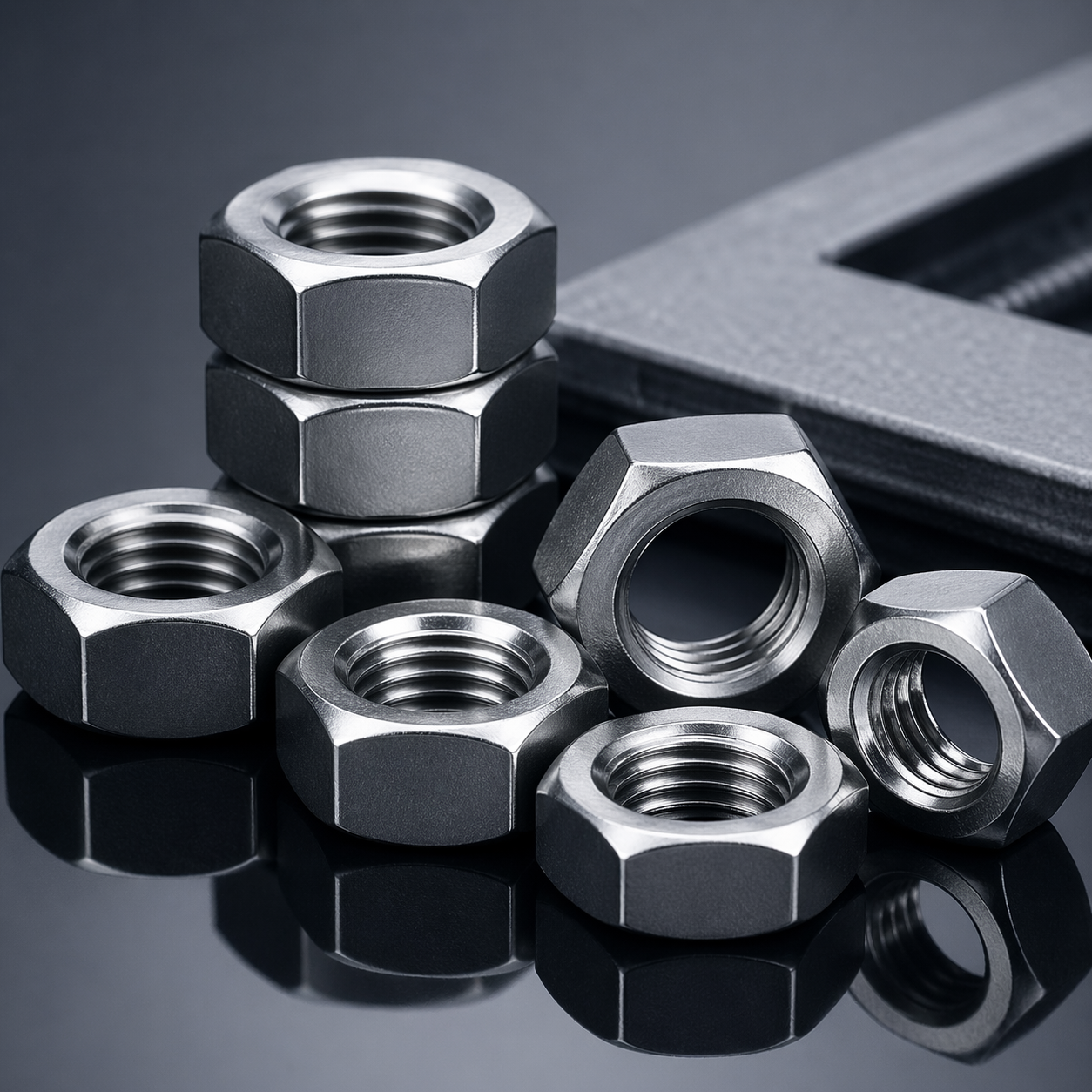

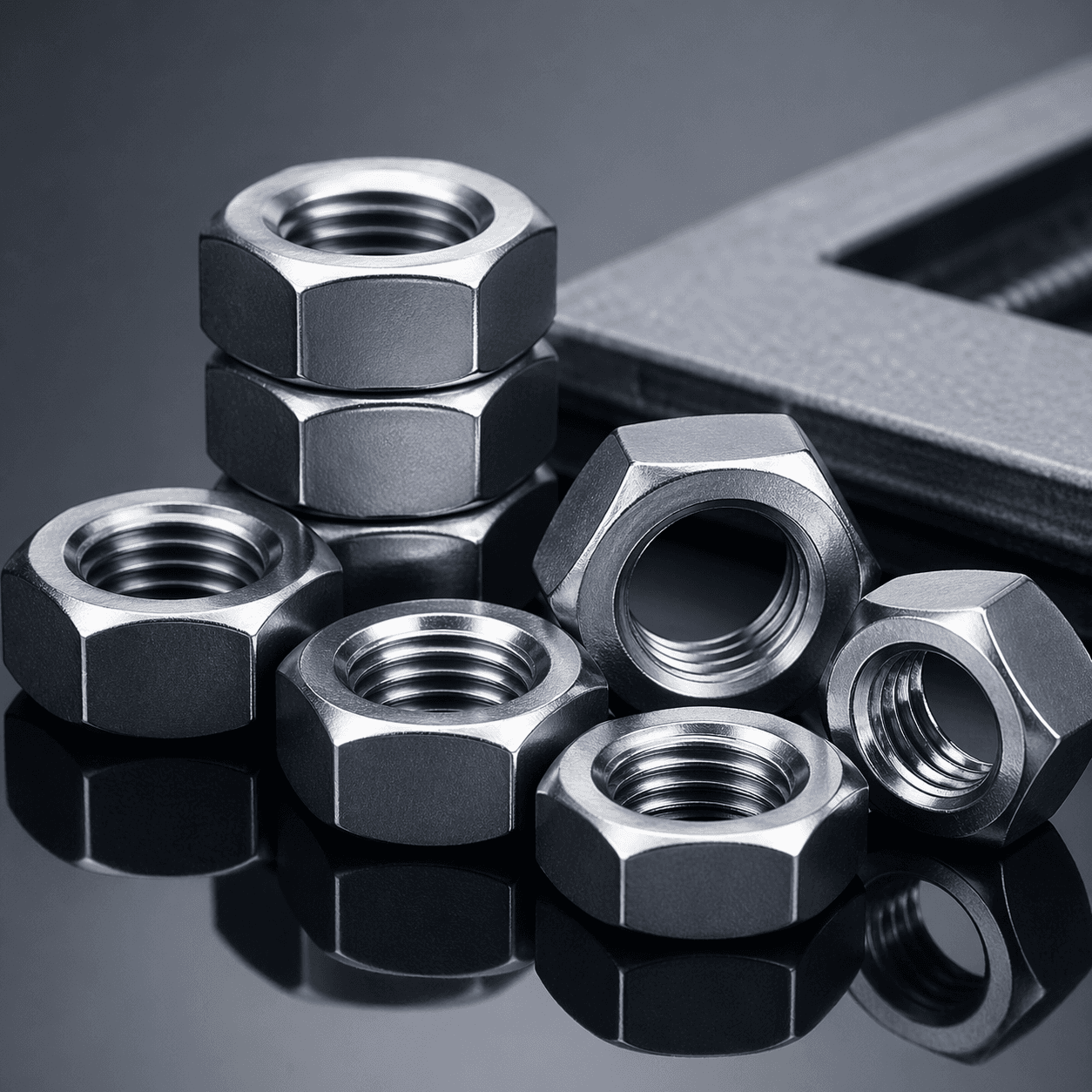
Structural Stability Issues in Hex Nuts Often Come from Design and Process Gaps
In industrial assembly, hex nuts are expected to perform consistently under load. However, real-world issues often arise not from design standards, but from execution differences.
Buyers working with a hex nut manufacturer frequently encounter:
- Uneven thread engagement affecting tightening consistency
- Load instability under vibration or repeated stress
- Slight dimensional variations across batches
- Supply inconsistencies impacting production planning
These issues rarely appear as defects. Instead, they show up as inefficiencies—slower assembly, higher rework, and reduced long-term reliability.
At JHFIX, we address these challenges by focusing on how hex nuts perform in real applications. Through controlled manufacturing and system-level optimization, we ensure consistent behavior across both product and supply.
Material and Mechanical Design for Hex Nut Performance
Hex nuts must balance strength, durability, and environmental resistance. Material selection is therefore critical.
| Material Type | Strength Range | Key Advantage | Application Scenario |
|---|---|---|---|
| Carbon Steel | Medium | Cost-effective | General industrial use |
| Alloy Steel | High | High load capacity | Heavy machinery, structures |
| Stainless Steel A2 | Medium | Corrosion resistance | Outdoor environments |
| Stainless Steel A4 | Medium-High | Chemical resistance | Marine and chemical use |
According to ASTM International, mechanical reliability depends on both material quality and processing consistency.
A professional hex nut manufacturer ensures that material properties are stable across batches, supporting consistent load performance.
Why Industrial Buyers Focus on Load Stability and Consistency
While specifications define baseline requirements, real performance depends on repeatability.
Common challenges include:
- Variability in tightening torque
- Inconsistent load distribution
- Increased wear under dynamic conditions
This leads buyers to prioritize solution-based manufacturing rather than standard supply.
At JHFIX, our approach includes:
- Controlled thread production for consistent engagement
- Material optimization based on load requirements
- Surface treatment designed for durability and friction stability
- Packaging systems aligned with industrial workflows
This ensures predictable performance across large production volumes.
Thread Precision and Load Distribution in Hex Nuts
Thread accuracy directly affects how load is transferred between nut and bolt.
Even small deviations can result in:
- Uneven stress distribution
- Reduced joint strength
- Increased fatigue over time
Thread optimization focuses on:
- Precise tolerance control (ISO 6H standard)
- Smooth thread surface for consistent friction
- Stable geometry across batches
Organizations like International Organization for Standardization emphasize that thread precision is essential for maintaining structural integrity.
A reliable hex nut manufacturer ensures that thread engagement remains consistent, supporting stable load performance.
Surface Treatment for Durability and Performance
Surface coatings provide both protection and functional benefits.
Common treatments include:
- Zinc plating for corrosion resistance
- Black oxide for moderate protection
- Phosphate coating for friction consistency
Improper coating can affect both durability and installation behavior.
By controlling coating processes, a hex nut manufacturer ensures stable performance in different environments.
Packaging Solutions That Support Industrial Efficiency
In bulk supply, packaging plays a direct role in production efficiency.
Common issues include:
- Counting inaccuracies
- Mixed specifications
- Increased handling time
Optimized packaging improves workflow:
| Packaging Type | Counting Accuracy | Operational Impact |
|---|---|---|
| Loose bulk | ~90% | Frequent delays |
| Standard packaging | ~97–98% | Minor inefficiencies |
| Controlled packaging | 99%+ | Stable operations |
Accurate packaging ensures smooth production flow and reduces operational disruptions.
A Real Case: Improving Load Stability in Heavy Equipment Assembly
A heavy equipment manufacturer faced issues with hex nuts loosening under vibration.
Problems included:
- Reduced load stability
- Increased maintenance requirements
- Inconsistent tightening torque
We implemented:
- Improved material hardness control
- Enhanced thread precision
- Optimized surface treatment
The results:
- Improved load distribution
- Reduced loosening under vibration
- More stable assembly performance
The solution focused on aligning product design with real application conditions.
Where Hex Nut Solutions Deliver the Most Value
Hex nut performance is critical in:
- Heavy machinery and structural systems
- Automotive and vibration-intensive applications
- Industrial production requiring repeatability
- Export projects needing long-term reliability
In these environments, consistency defines performance.
Frequently Asked Questions
Q1: What is the main issue with hex nuts in industrial applications?
Thread inconsistency and uneven load distribution, affecting reliability.
Q2: How can buyers improve fastening performance?
By selecting manufacturers with strong process control and product optimization capabilities.
Q3: Does packaging affect industrial supply efficiency?
Yes. Accurate packaging reduces delays and improves workflow consistency.
Reliable Fastening Starts with the Right Hex Nut Manufacturer
Hex nuts are simple components, but their role in load-bearing systems is critical. When material, thread precision, and packaging are aligned, assembly becomes more stable and efficient.
At JHFIX, we focus on delivering hex nut solutions that perform consistently in real-world applications.
To learn more about our capabilities, visit:
https://www.jhfix.com/
If you are facing issues with load stability, assembly inefficiencies, or supply inconsistency, contact our team to explore a more reliable solution:
https://www.jhfix.com/contact-us