
Hexagonal nuts in cabinet hardware: Why can such a small fastener determine the quality of the entire cabinet?
When people talk about modular furniture, they often focus on panels, hinges, or shelf layouts. But in reality, those seemingly insignificant small parts are just as important. Hex nuts are a good example. In cabinets, shelves, or removable furniture systems, nuts are often key to ensuring a stable stress path after assembly, disassembly, and reassembly. If the fasteners are not strong enough, loose, or mismatched, the entire piece of furniture will feel cheap before the wood even wears down.
Therefore, buyers purchasing furniture hardware should pay attention not only to the visible shelves but also to the fastening system behind them. The neat arrangement of screws, threaded inserts, cam connectors, pins, and nuts can well reflect whether the cabinet design facilitates repeated assembly or is simply for easy one-time installation.
What does the hardware layout imply?
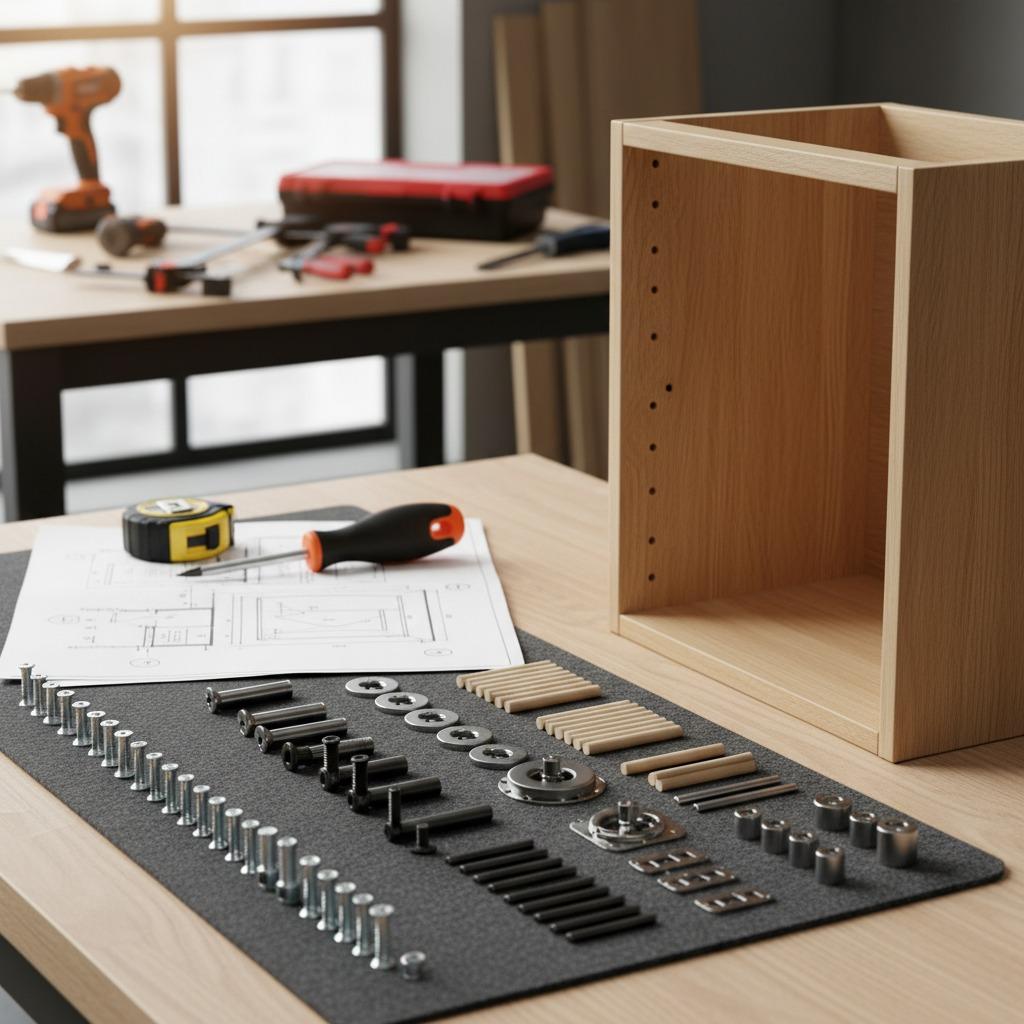
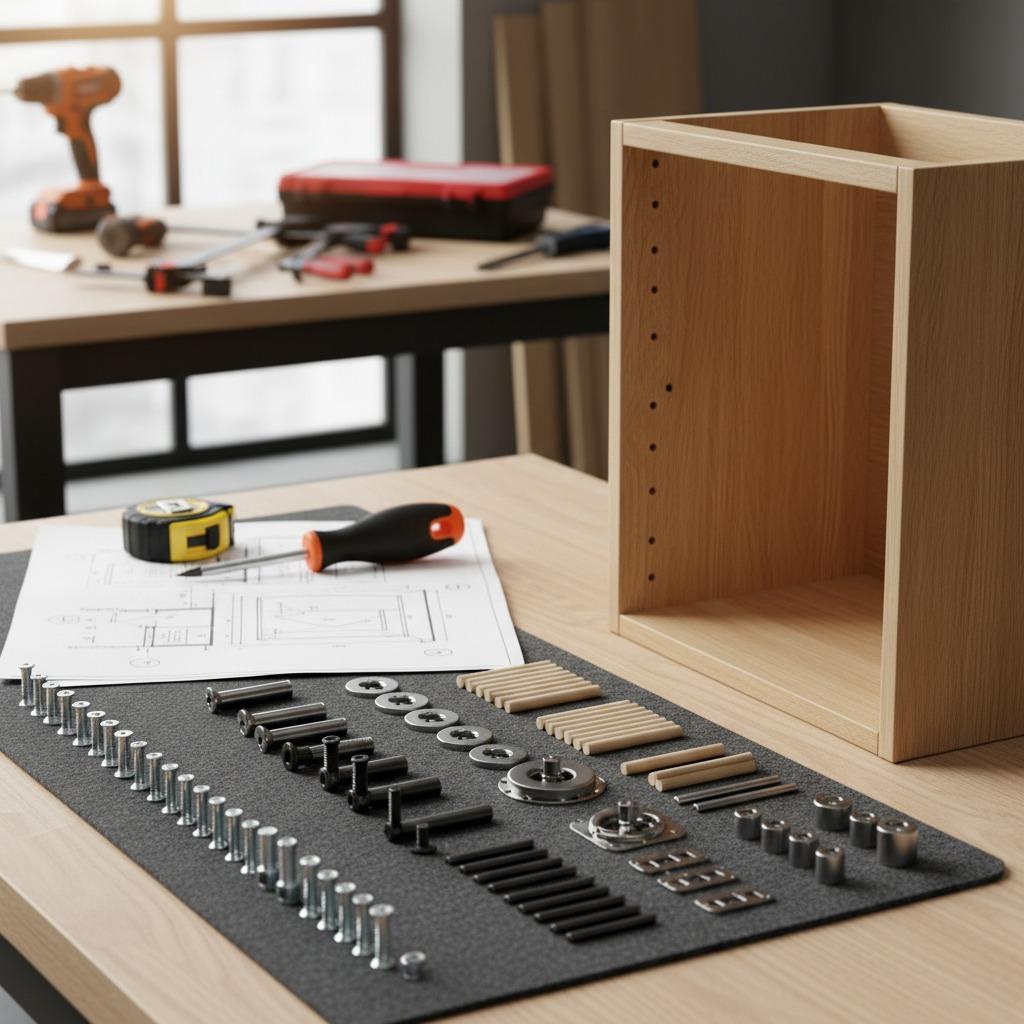
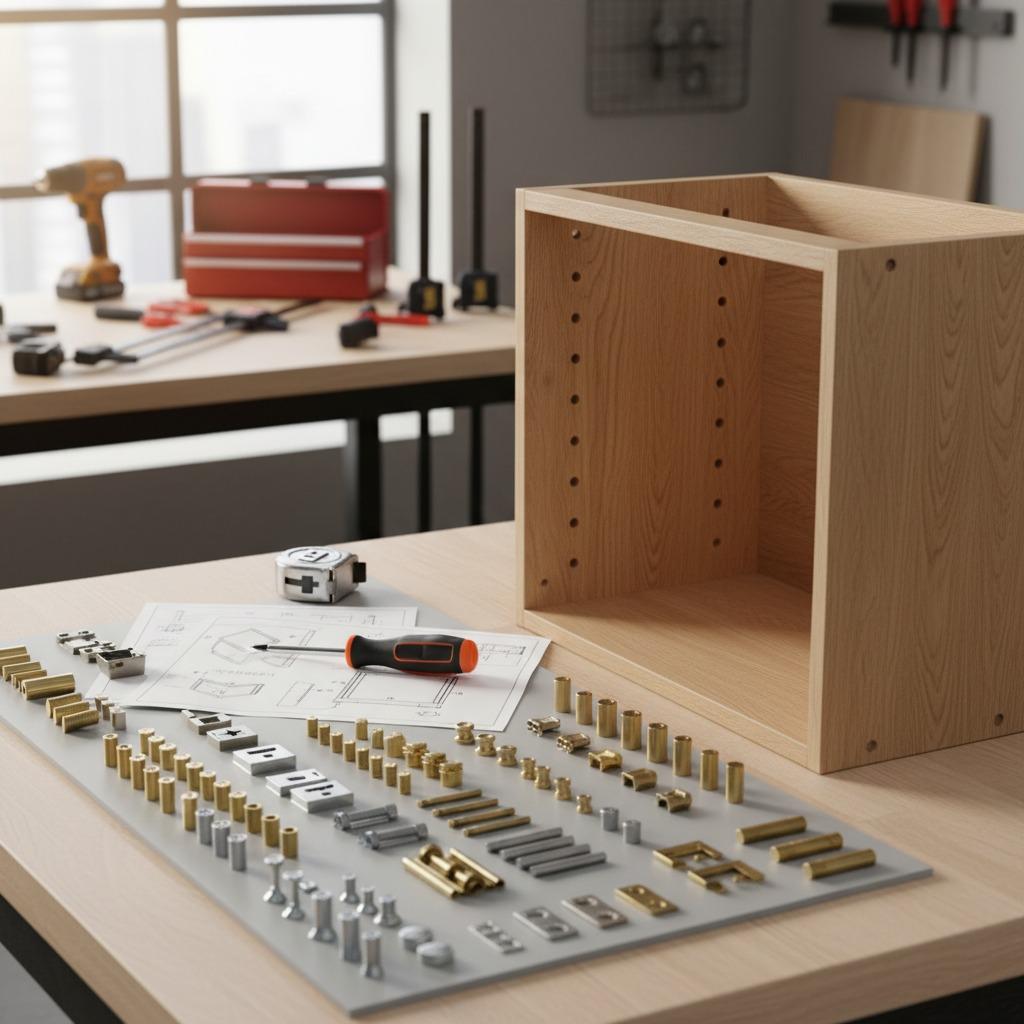
The hardware used in this type of cabinet assembly typically embodies a practical and modular structure. Visible features include evenly distributed drill holes on the side panels, multiple horizontal shelves, and various accessories scattered on the worktable: cam lock connectors, long wood screws, threaded inserts or cylindrical parts, and small washers or wooden dowels.
This combination is crucial. It demonstrates that the cabinetry is not a one-piece glued structure, but rather a configurable, adjustable, and repairable system. For furniture manufacturers, installers, and purchasing teams, this typically means better maintainability and more consistent on-site assembly. It also means that fasteners must remain aligned without damaging the panel material.
Installation position of hexagonal nuts in furniture assembly
In furniture hardware, hexagonal nuts are often used in conjunction with machine screws or in connecting components. In these cases, threaded connections are more popular than simple wood thread connections. They facilitate renovations, conceal connection points, and accommodate components that may need to be reopened later. Compared to some pure wood thread connections, nut connections offer better repeatability if the components are properly matched.
That said, it's important to note that panel furniture has a very low tolerance for error during assembly. If nuts are used at the joints, installers need to ensure sufficient working space, proper alignment, and full thread engagement. Otherwise, the fasteners will not only fail to increase strength but may also cause wobbling. Buyers should inquire early on whether the design uses machine screws, self-tapping screws, or a combination of fastening methods, as this will affect assembly speed and long-term maintenance.
The factors buyers will really pay attention to are the materials and surface finishes.
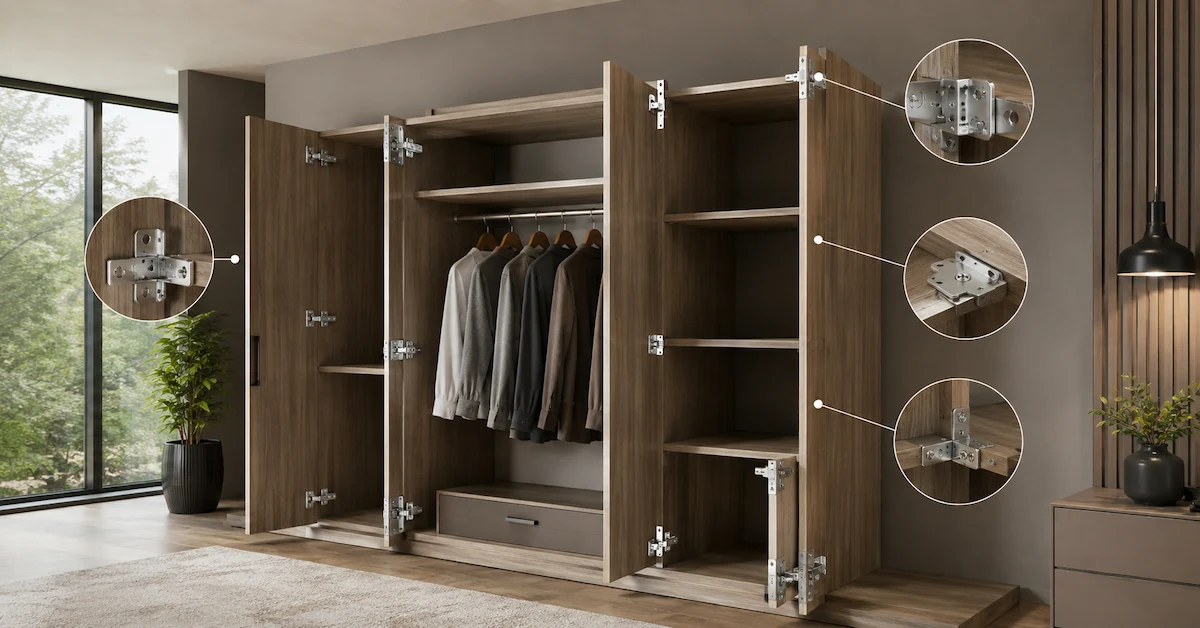
The main body of the cabinet appears to be made of wood or wood-look panels, with a light oak veneer or laminate finish. The hardware is mostly bright silver metal, likely steel or galvanized steel, with a few machined gaskets or bushings. From a material selection perspective, this is a common and sensible combination: neutral-toned metal hardware complements the light-colored interior.
For projects exposed to humid environments, high-traffic areas, or frequent handling, stainless steel screws or nuts are worth considering, but the specific grade should be confirmed with the supplier. In lower-demand indoor furniture, steel-plated materials are often used because they balance cost, appearance, and workability. The key is not to assume all silver hardware is the same. Surface finishes may look similar, but their corrosion resistance can vary significantly.
Selection criteria for the procurement team
If you are evaluating bolt and nut suppliers or furniture hardware suppliers, focus on the fundamental factors that affect workshop and on-site assembly:
1. Compatibility with panel thickness and hole spacing
The fastener system must be matched to the panel thickness, drilling layout, and connector depth. Even if the nuts look nice, it won't help if the assembly geometry is incorrect.
2. Cable consistency
For machine screws and matching nuts, the thread fit determines the feel, torque stability, and the frequency with which installers mistighten the threads. This is especially important during repeated assembly.
3. Surface treatment and processing
Brightly plated parts are easy to inspect, but buyers should still check for burrs, plating damage, or rough edges. Some small defects can slow down assembly more significantly than people expect.
4. Document preparation
The assembly diagram on the workbench serves as a good reminder of the importance of documentation. Hardware kits should be accompanied by clear part identification, especially when a kit contains multiple connector types.
Common mistakes in fastening modular furniture
A common mistake is mixing different types of fasteners without a clear logical connection. For example, using wood screws where machine thread connections would normally be necessary will affect the repeatability of the connection. Another common mistake is over-tightening connectors during assembly. In panel furniture, excessive torque can damage the surface of the panels or cause misalignment.
The second misconception is assuming all nuts are interchangeable. Hex nuts come in various thread sizes and material grades, and an incorrect match may not seem like a problem at first glance, but it can easily loosen under vibration or seasonal changes. Therefore, many installers prefer to purchase a complete fastener system rather than buying individual parts piecemeal from different parts kits.
What does this mean for furniture manufacturers and buyers?
For cabinet manufacturers, e-commerce sellers, and OEM buyers, the real decision isn't just about which fastener is the cheapest, but whether the entire fastening system allows for efficient assembly, a clean appearance, and easy maintenance. Modular cabinets with easily replaceable hardware can be a strong selling point, especially in the flat-pack or custom market.
Jiangmen Jinhe Hardware Co., Ltd.'s business covers fasteners, standard parts, and non-standard customization. Its production capacity includes machine screws, self-tapping screws, miniature screws, and precision screws made of stainless steel, iron, and aluminum. This diverse range of fasteners is crucial for furniture-related projects, as a cabinet typically uses multiple fastening methods.
Questions buyers should ask before placing an order
Inquire whether the fastener kit is designed for new production, retrofitting, or replacement work. Confirm whether nuts, inserts, cam locks, or a combination thereof are used during assembly. If the cabinet is shipped in flat-pack packaging, ask the installer how many steps are required and whether any parts are hidden or single-use. These details will affect after-sales support, sometimes even more than product images.
Next steps for the procurement team
If you are comparing furniture fasteners, request sample kits and verify their compatibility based on your sheet thickness, hole type, and assembly process. For large projects, it's worthwhile to discuss custom fastener combinations, packaging, and documentation with suppliers who can provide both standard and non-standard parts. This is often where the difference lies: not in catalog images, but in the time saved in the production line and fewer complaints after installation.