
A furniture hardware manufacturer plays a key role in how smoothly furniture is assembled, installed, packed, and delivered to the final user. For cabinet factories, flat-pack furniture brands, wardrobe manufacturers, hardware wholesalers, and DIY kit suppliers, furniture hardware is not just a group of small parts. It affects product stability, assembly speed, customer complaints, and repeat purchasing.
Many buyers compare prices first. But in real procurement, problems usually appear in other areas: mismatched screws, loose connectors, poor plating, missing parts in the package, unclear labeling, or unstable dimensions between batches. These issues can increase labor cost and damage the buyer’s brand reputation.
That is why choosing the right furniture hardware manufacturer should be treated as a supply chain decision, not only a product purchase.
Quick Answer: What Does a Furniture Hardware Manufacturer Provide?
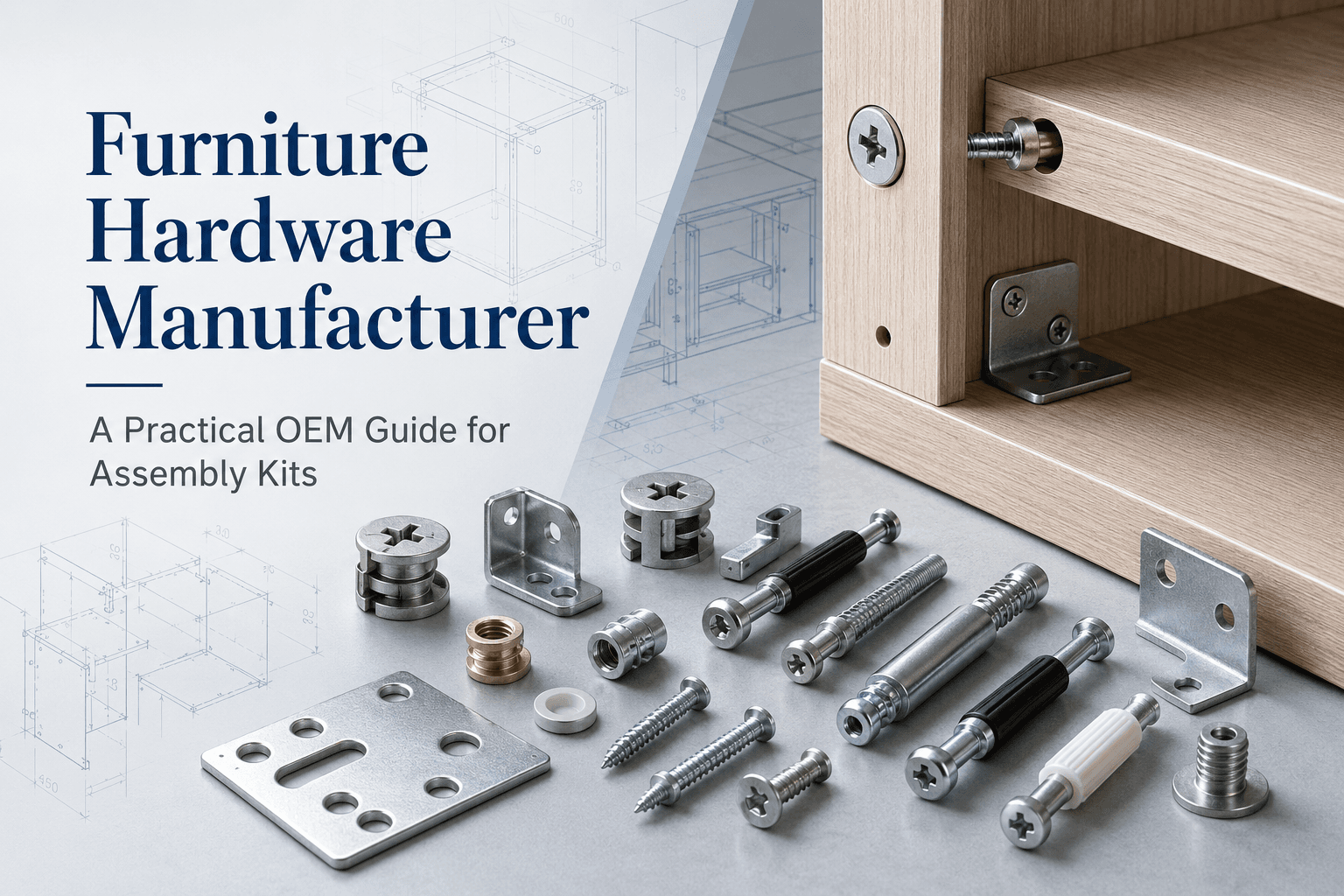
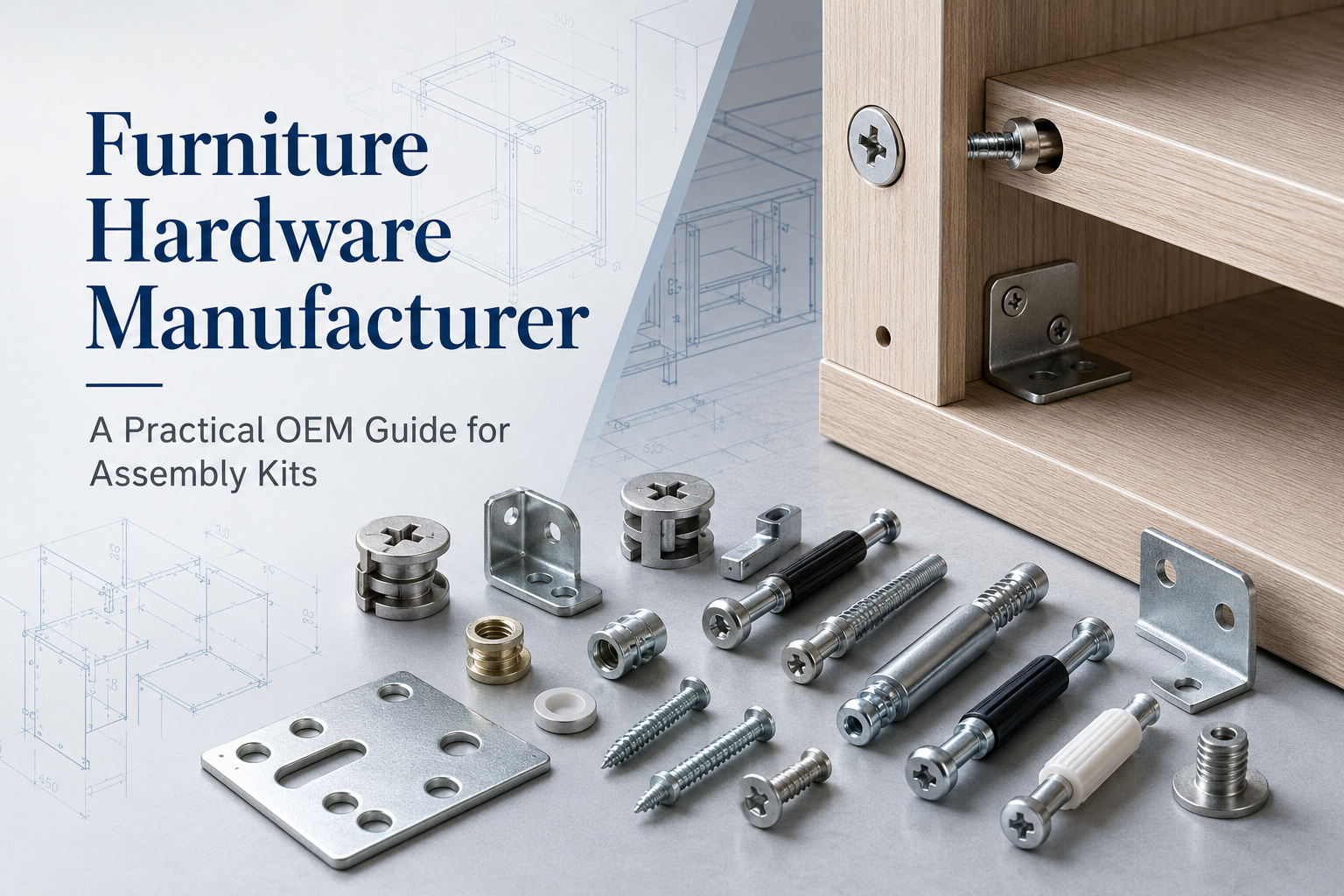
A furniture hardware manufacturer produces and supplies components used for furniture assembly, installation, reinforcement, and packaging. Common products include screws, nuts, cam lock connectors, cabinet bolts, stamped brackets, mounting plates, shelf supports, washers, anchors, and complete hardware kits.
For OEM buyers, a good manufacturer should also support custom specifications, surface treatment, material selection, sample development, inspection, and packaging methods such as bag packaging, blister packaging, box packaging, or plastic bucket packaging.
Why Furniture Hardware Matters More Than Buyers Think
Furniture hardware is often hidden after installation, but it determines whether the furniture feels stable, clean, and reliable.
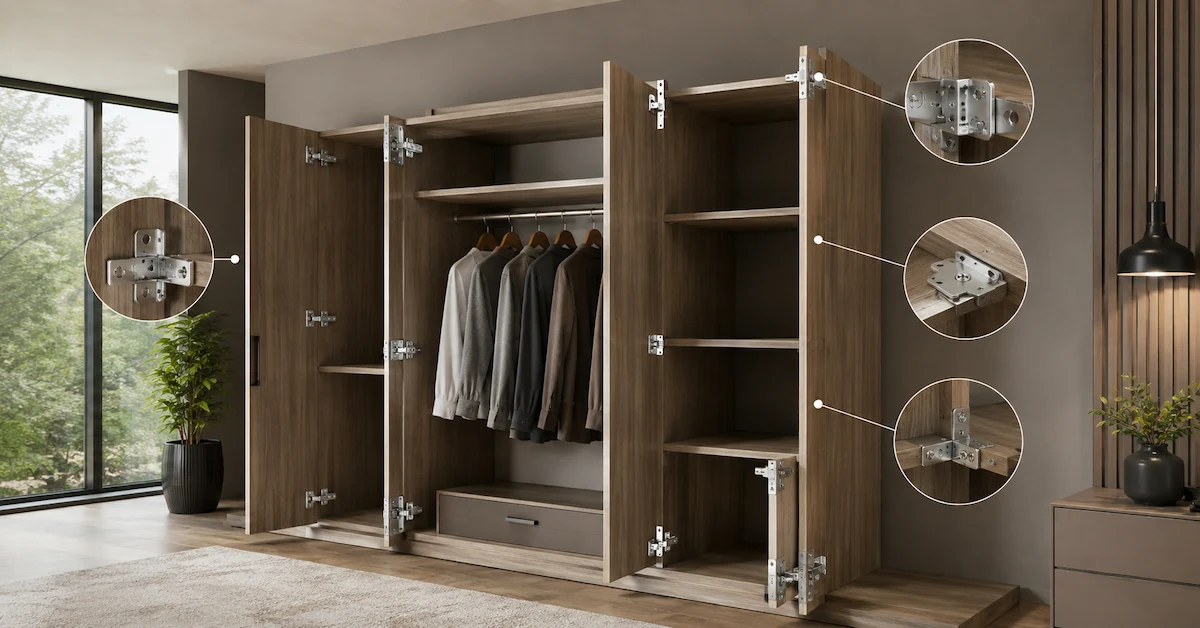
For example, a cabinet connector must fit the board thickness. A screw must match the material density. A cam lock system must align correctly during assembly. A stamped bracket must have accurate holes and bending angles. If one small component fails, the entire furniture set may become difficult to assemble.
This is especially important for:
- Flat-pack furniture
- Kitchen cabinets
- Wardrobes
- Hotel furniture
- Office desks and shelves
- Retail DIY furniture kits
- Export furniture projects
- Replacement and repair hardware kits
A reliable furniture hardware manufacturer helps buyers reduce rework, missing-part claims, and assembly complaints.
Common Products Supplied by a Furniture Hardware Manufacturer
Furniture hardware covers more than one product category. Buyers often need several matching components from the same supplier.
| Product Type | Common Items | Main Use |
|---|---|---|
| Screws | Wood screws, self-tapping screws, machine screws, confirmat screws | Board fastening, panel assembly, bracket fixing |
| Nuts | Insert nuts, hex nuts, flange nuts, rivet nuts | Threaded connection and repeatable assembly |
| Furniture connectors | Cam locks, cabinet bolts, joint bolts, connector fittings | Flat-pack and modular furniture |
| Stamping hardware | L-brackets, mounting plates, corner braces, support plates | Reinforcement and structural support |
| Washers and anchors | Flat washers, wall plugs, expansion anchors | Installation and load distribution |
| Hardware kits | Bagged kits, blister packs, boxed assortments | Retail, e-commerce, and furniture assembly packages |
JHFIX supplies screws, nuts, furniture hardware, stamping hardware, and multiple packaging solutions, which makes it suitable for buyers who need both components and organized hardware kits. Explore the JHFIX product range for more details.
Who Needs a Furniture Hardware Manufacturer?
A furniture hardware manufacturer usually serves several types of B2B buyers.
1. Furniture Factories
Furniture factories need stable hardware for production lines. They usually care about fit, tolerance, surface finish, batch consistency, and delivery time.
2. Cabinet and Wardrobe Manufacturers
Cabinet and wardrobe manufacturers need cam lock connectors, cabinet bolts, shelf supports, screws, and brackets that match board thickness and installation structure.
3. Hardware Wholesalers and Distributors
Distributors care about stable supply, product range, packaging, SKU management, and repeat order consistency.
4. DIY and Retail Kit Brands
DIY brands need clear packaging, complete part matching, and retail-ready presentation. Missing screws or unclear packaging can quickly lead to bad reviews.
5. E-Commerce Sellers
Online sellers often need small hardware kits, custom labels, barcode packaging, and attractive product combinations for repair, furniture assembly, or home installation markets.
Key Factors When Choosing a Furniture Hardware Manufacturer
Choosing the cheapest supplier is rarely the safest option. A good supplier should help buyers reduce hidden cost, not only reduce unit price.
1. Product Range
A wider product range helps buyers avoid splitting one furniture assembly kit across too many suppliers. Screws, nuts, connectors, stamped parts, and packaging can often be coordinated together.
2. Customization Ability
Furniture projects may require special lengths, head types, thread types, hole positions, bracket shapes, or surface treatments. The supplier should support drawings, samples, and specification-based customization.
3. Material and Finish Options
Common furniture hardware materials include carbon steel, stainless steel, zinc alloy, aluminum, and plastic components. Common finishes include zinc plating, nickel plating, black coating, and other anti-rust treatments.
4. Assembly Compatibility
Hardware should match the furniture structure. Buyers should confirm board thickness, hole spacing, screw length, thread type, connector size, and installation method before mass production.
5. Quality Control
A reliable furniture hardware manufacturer should inspect raw materials, dimensions, surface finish, thread quality, plating appearance, packaging quantity, and final shipment condition.
6. Packaging Support
For furniture kits, packaging is part of the product. Bag packaging, blister packaging, box packaging, and bucket packaging can help buyers sell, store, or install hardware more efficiently.
Material and Surface Finish Guide
| Material / Finish | Advantages | Best For |
| Carbon steel | Strong and cost-effective | General screws, brackets, connectors |
| Stainless steel | Better corrosion resistance | Premium furniture, humid environments |
| Zinc plating | Clean appearance and anti-rust support | Indoor furniture hardware |
| Nickel plating | Smooth surface and better appearance | Visible hardware and decorative parts |
| Black coating | Modern appearance | Dark furniture, visible connectors |
| Plastic parts | Lightweight and economical | Anchors, caps, packaging accessories |
The right choice depends on the furniture material, installation environment, appearance requirements, and cost target.
Furniture Hardware Manufacturer vs. Trading Company
Some buyers work with trading companies because they offer many product types. However, for OEM furniture hardware, direct manufacturer cooperation usually provides better control.
| Comparison Point | Manufacturer | Trading Company |
| Customization | Stronger engineering support | Often depends on factory partners |
| Quality control | Easier to control during production | Usually limited to final inspection |
| Price structure | More direct | May include extra margin |
| Technical communication | Faster for drawings and samples | May need repeated communication |
| Packaging coordination | Easier for OEM kits | Depends on supply chain ability |
| Best for | OEM, ODM, repeat orders | Small mixed sourcing orders |
For buyers who need long-term furniture hardware supply, working directly with a manufacturer is usually more efficient.
OEM Furniture Hardware Process
A practical OEM process normally includes:
- Buyer sends drawings, samples, photos, or product requirements
- Manufacturer checks material, size, function, finish, and packaging needs
- Quotation is prepared based on specification and order quantity
- Samples or pre-production parts are developed
- Buyer confirms size, fit, function, finish, and packaging
- Mass production begins after approval
- Final inspection checks dimensions, surface, quantity, and packaging
- Goods are packed for export or retail distribution
This process is especially important for furniture kits because one missing or mismatched component can affect the entire installation experience.
How Packaging Affects Furniture Hardware Orders
Packaging is often ignored during early sourcing, but it strongly affects user experience.
For example, a furniture brand may need every hardware kit packed according to one cabinet model. A hardware distributor may need clear product labels and retail display packaging. An e-commerce seller may need small boxed sets with product photos, barcode labels, and organized compartments.
Common packaging options include:
| Packaging Type | Best For | Main Advantage |
| Bag packaging | Furniture assembly kits, low-cost parts | Flexible and economical |
| Plastic blister packaging | Retail display and DIY kits | Clear product visibility |
| Box packaging | Assortment sets and organized kits | Better classification and storage |
| Plastic bucket packaging | Bulk screws and construction use | Large capacity and easy handling |
A furniture hardware manufacturer with packaging capability can help buyers reduce supplier coordination and improve shipment accuracy.
Common Sourcing Mistakes to Avoid
Many furniture hardware sourcing problems come from unclear requirements.
Buyers should avoid these mistakes:
- Choosing hardware only by price
- Not confirming board thickness or installation method
- Ignoring screw length and thread type
- Using the same connector for different furniture structures
- Not approving samples before mass production
- Forgetting packaging quantity requirements
- Mixing suppliers for one assembly kit without checking compatibility
- Not defining surface finish expectations
- Not asking for final inspection before shipment
Good sourcing starts with clear specifications.
RFQ Checklist for Buyers
Before requesting a quotation from a furniture hardware manufacturer, prepare the following information:
| RFQ Item | What to Provide |
| Product type | Screw, nut, connector, bracket, kit, or custom part |
| Material | Carbon steel, stainless steel, zinc alloy, aluminum, plastic |
| Size | Diameter, length, thickness, hole distance, board thickness |
| Finish | Zinc plated, nickel plated, black, stainless, custom finish |
| Quantity | Trial order, batch order, annual demand |
| Drawing or sample | 2D drawing, 3D file, photo, or physical sample |
| Application | Cabinet, wardrobe, shelf, office furniture, DIY kit |
| Packaging | Bulk, bag, blister, box, bucket, private label |
| Inspection needs | Dimensions, finish, load, thread, packaging quantity |
| Delivery market | Country, carton requirements, label requirements |
The clearer the RFQ, the more accurate the quotation and production plan.
Why Choose JHFIX as a Furniture Hardware Manufacturer?
JHFIX supports global buyers with screws, nuts, furniture hardware, stamping hardware, and packaging solutions. This makes it suitable for buyers who need more than one standard fastener.
For example, a furniture assembly kit may include cam locks, cabinet bolts, screws, insert nuts, washers, brackets, plastic anchors, and a custom bag or box. Coordinating these parts through one supplier can reduce communication time and improve consistency.
JHFIX can support:
- Standard and custom screws
- Furniture connectors and cabinet bolts
- Nuts and insert nuts
- Stamping hardware for furniture assembly
- Bag, blister, box, and plastic bucket packaging
- OEM/ODM production support
- Quality inspection before shipment
Learn more about JHFIX manufacturing experience and visit our FAQ page for common order questions.
Conclusion
Choosing a furniture hardware manufacturer is not only about finding small metal parts. It is about building a stable supply chain for furniture assembly, packaging, installation, and after-sales reliability.
A good supplier should understand product fit, material selection, surface treatment, packaging accuracy, OEM customization, and quality inspection. For global buyers, this reduces hidden cost and makes repeat orders easier.
If you need screws, furniture connectors, nuts, stamped parts, or complete furniture hardware kits, JHFIX can help you review specifications, develop samples, arrange production, and provide packaging solutions for your target market.
FAQ
1. What does a furniture hardware manufacturer produce?
A furniture hardware manufacturer produces screws, nuts, connectors, cam locks, brackets, plates, anchors, washers, and hardware kits used in furniture assembly and installation.
2. Can furniture hardware be customized?
Yes. Furniture hardware can be customized by size, material, finish, thread type, hole position, bracket shape, packaging method, and private label requirements.
3. What hardware is commonly used in cabinet furniture?
Common cabinet hardware includes cam locks, cabinet bolts, screws, shelf supports, insert nuts, brackets, mounting plates, and connector fittings.
4. What information should I provide for a quotation?
You should provide product drawings or samples, material, size, finish, quantity, packaging requirements, application, and target market.
5. Is stainless steel always necessary for furniture hardware?
Not always. Stainless steel is useful for corrosion resistance, but carbon steel with proper plating is often suitable for many indoor furniture applications.
6. Can one supplier provide both screws and furniture connectors?
Yes. A one-stop supplier can provide screws, nuts, connectors, stamping parts, and packaging, which helps buyers reduce coordination problems.
7. What packaging is best for furniture hardware kits?
Bag packaging is economical, blister packaging is suitable for retail display, box packaging is useful for organized kits, and bucket packaging is better for bulk screw supply.
8. How do I reduce missing-part complaints in furniture kits?
Confirm the BOM, packaging quantity, labels, sample kits, and final inspection standards before mass production. Organized packaging helps reduce missing or mismatched parts.