
A furniture installation hardware supplier plays an important role in helping furniture manufacturers, cabinet brands, installers, wholesalers, and retailers complete reliable furniture assembly projects.
Furniture installation hardware includes many small components such as screws, connectors, brackets, cam locks, insert nuts, anchors, and fixing plates. Although these parts are often hidden after installation, they directly affect furniture stability, installation efficiency, and customer satisfaction.
For global buyers, choosing the right supplier is not only about purchasing hardware parts. It is about finding a partner who can provide accurate matching, stable quality, OEM customization, packaging solutions, and long-term supply support.
A wrong screw size, incorrect connector, weak bracket, or missing installation part can increase labor costs, delay projects, and create after-sales complaints.
JHFIX provides screws, nuts, furniture hardware, stamping hardware, and packaging solutions for global buyers. Explore the full JHFIX product range for furniture installation hardware solutions.
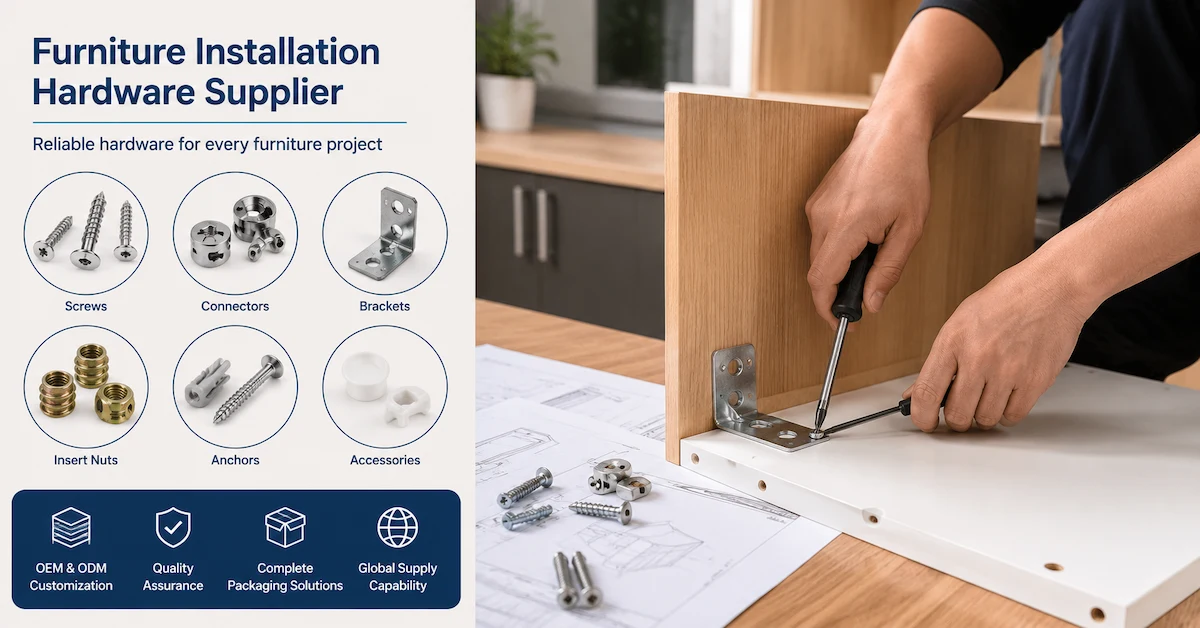
Quick Answer: What Is Furniture Installation Hardware?
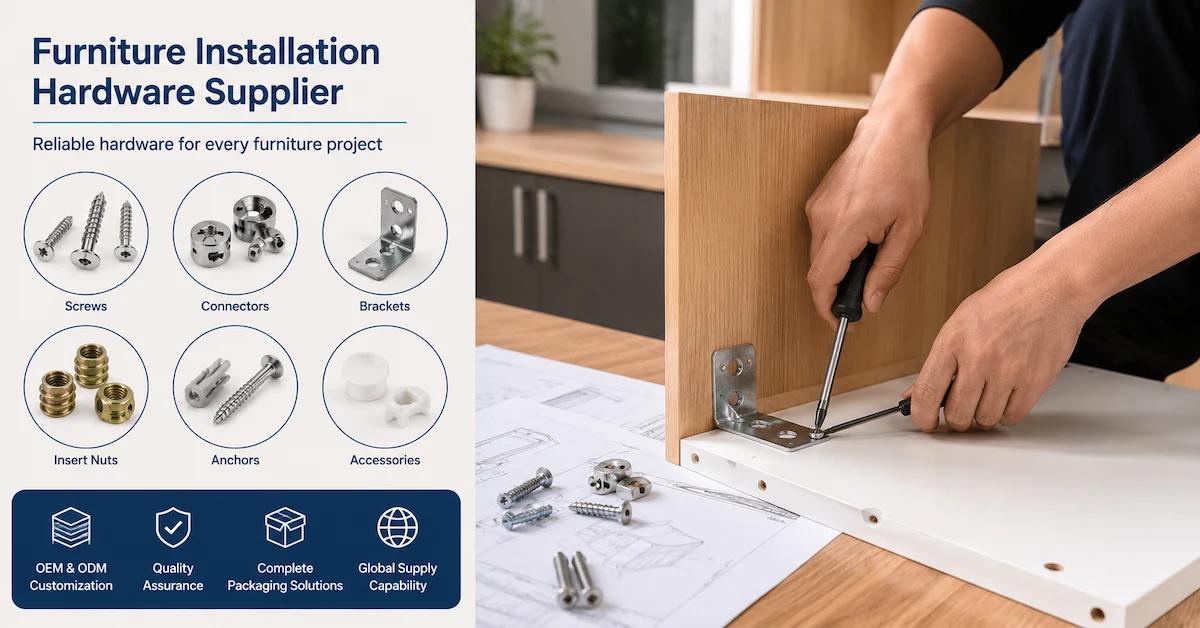
Furniture installation hardware refers to the components used to assemble, connect, support, and install furniture products.
Common products include:
- Wood screws
- Self-tapping screws
- Cam locks
- Cabinet bolts
- Insert nuts
- Brackets
- Mounting plates
- Washers
- Wall anchors
- Plastic accessories
- Complete hardware installation kits
For OEM buyers, furniture installation hardware can be customized based on furniture structure, board thickness, installation method, quantity requirements, packaging, and branding needs.
Why Furniture Installation Hardware Matters
Furniture installation hardware directly affects the final assembly experience.
For furniture manufacturers and brands, reliable hardware helps:
- Improve assembly efficiency
- Reduce installation errors
- Increase furniture stability
- Lower customer complaints
- Reduce replacement costs
- Improve product reviews
- Standardize production processes
- Support export furniture projects
For example, a cabinet manufacturer may require specific screws and connectors that match MDF board thickness. A wardrobe brand may need stronger fixing brackets because of higher load requirements. A flat-pack furniture company may require complete installation kits packed according to each furniture model.
A professional furniture installation hardware supplier understands these differences.
Common Types of Furniture Installation Hardware
| Hardware Type | Products | Application |
|---|---|---|
| Screws | Wood screws, self-tapping screws, machine screws | Panel fixing and furniture assembly |
| Connectors | Cam locks, cabinet bolts, joint connectors | Flat-pack furniture connection |
| Nuts | Insert nuts, hex nuts, flange nuts | Strong threaded connections |
| Brackets | L-brackets, corner braces, support brackets | Structural reinforcement |
| Stamping hardware | Fixing plates, mounting plates | Custom furniture support |
| Anchors | Wall plugs, expansion anchors | Furniture installation and mounting |
| Accessories | Caps, sleeves, spacers | Protection and appearance |
| Installation kits | Complete hardware sets | Furniture models and retail packages |
A complete solution usually combines several components instead of relying on one single hardware product.
Main Applications of Furniture Installation Hardware
Cabinet Installation
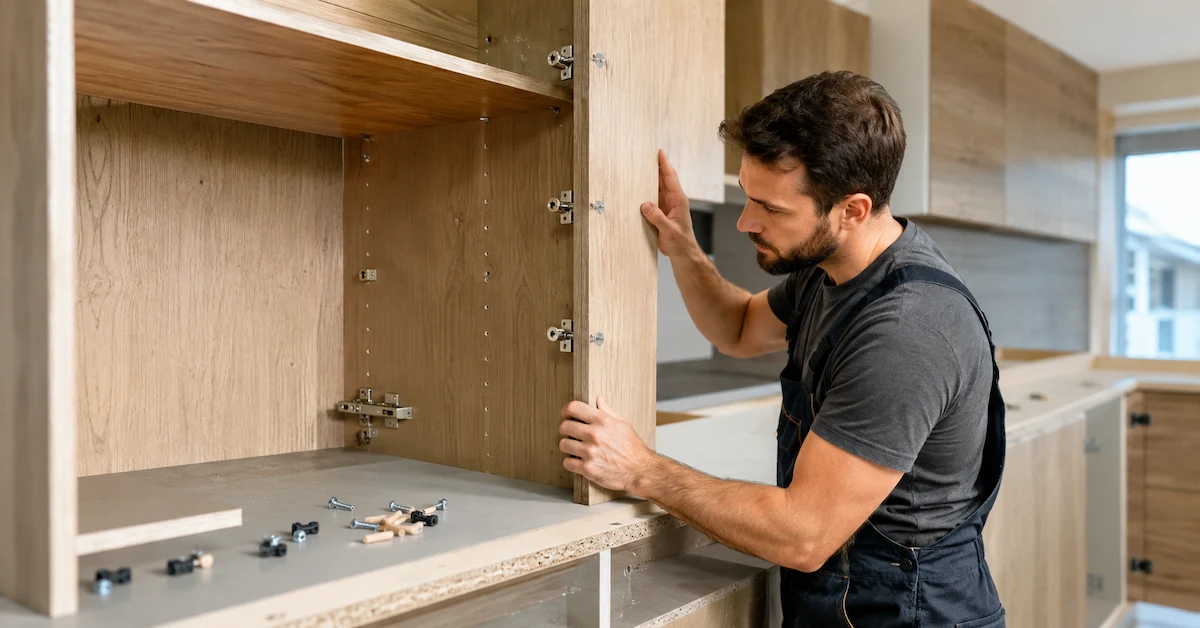
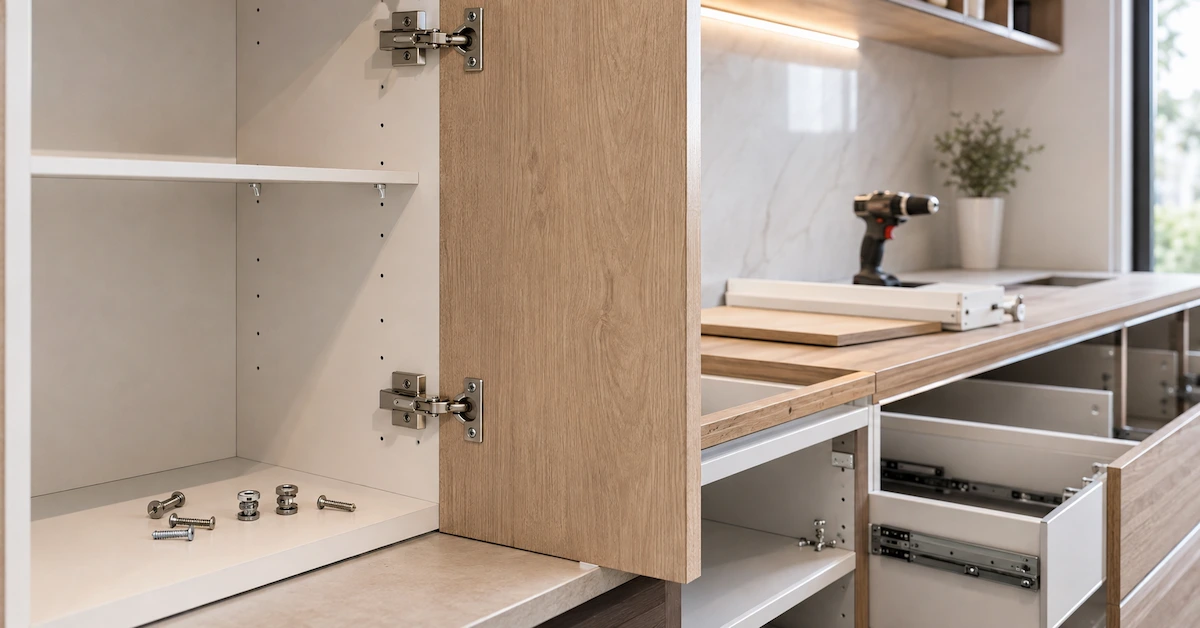
Cabinet installation requires accurate connectors, screws, brackets, and fixing accessories. Hardware must match board thickness, drilling position, and assembly sequence.
Common products include:
- Cabinet screws
- Cam locks
- Cabinet bolts
- Shelf supports
- Corner brackets
Wardrobe Installation
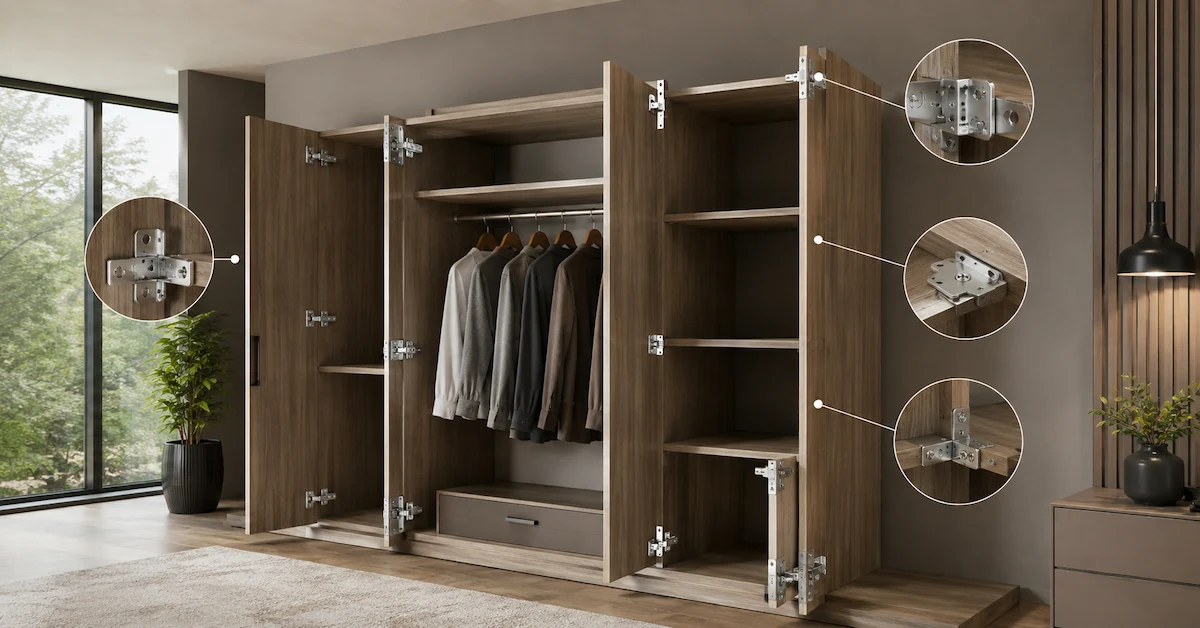
Wardrobes require stronger installation hardware because of their size and weight.
Common requirements include:
- Heavy-duty connectors
- Insert nuts
- Reinforcement brackets
- Fixing plates
- Support hardware
Flat-Pack Furniture Assembly
Flat-pack furniture depends heavily on complete installation hardware kits.
The kit should contain:
- Correct quantity
- Correct size
- Clear labeling
- Easy packaging
- Assembly instructions compatibility
Office Furniture Installation
Office desks, storage cabinets, and workstations require reliable hardware because they are used frequently.
Buyers usually focus on:
- Strength
- Repeat assembly capability
- Surface finish
- Installation efficiency
DIY Furniture Projects
DIY furniture brands often require retail-ready hardware kits with:
- Small package sizes
- Clear labels
- Barcode support
- Easy identification
How to Choose a Furniture Installation Hardware Supplier
1. Check Product Compatibility
The supplier should understand how different hardware components work together.
Important factors include:
- Board material
- Board thickness
- Hole position
- Load requirements
- Installation method
- Furniture structure
2. Evaluate Product Range
A supplier with screws, connectors, nuts, brackets, and packaging solutions can reduce communication between multiple suppliers.
This is especially useful for furniture factories and OEM brands.
3. Confirm OEM Customization Ability
Furniture projects often require customized solutions.
OEM services may include:
- Custom screw sizes
- Special connector designs
- Custom brackets
- Stamped hardware parts
- Hardware kit combinations
- Private-label packaging
4. Review Packaging Capability
Packaging is important for installation hardware.
Common options include:
| Packaging Type | Suitable For |
| Bag Packaging | Furniture assembly kits |
| Blister Packaging | Retail hardware sets |
| Box Packaging | Organized hardware assortments |
| Bucket Packaging | Bulk screws and industrial use |
A supplier with packaging capability can help buyers reduce missing-part risks.
5. Check Quality Control
Reliable suppliers should inspect:
- Material quality
- Product dimensions
- Thread accuracy
- Surface treatment
- Bracket shape
- Quantity per kit
- Packaging accuracy
OEM Process for Furniture Installation Hardware
A professional OEM process usually includes:
| Step | Process |
| 1 | Receive drawings, samples, or requirements |
| 2 | Review material, size, and application |
| 3 | Confirm quotation and production details |
| 4 | Develop samples |
| 5 | Test installation compatibility |
| 6 | Approve sample |
| 7 | Mass production |
| 8 | Final inspection and shipment |
Sample testing is especially important for customized furniture installation hardware because small size differences can affect assembly.
Furniture Installation Hardware Supplier vs General Hardware Supplier
| Comparison | Specialized Supplier | General Supplier |
| Furniture knowledge | Strong | Limited |
| OEM support | Better | Depends on factory |
| Product matching | Better | Usually product-based |
| Hardware kits | Strong capability | Limited |
| Packaging solutions | More flexible | Standard options |
| Best for | Furniture projects | General hardware buying |
For furniture manufacturers and brands, a specialized supplier usually provides better long-term value.
Materials and Surface Finishes
| Material | Benefit | Application |
| Carbon Steel | Strong and economical | General furniture hardware |
| Stainless Steel | Corrosion resistance | Premium furniture |
| Zinc Alloy | Suitable for connectors | Cam locks and fittings |
| Zinc Plating | Rust protection | Indoor furniture |
| Nickel Plating | Better appearance | Visible hardware |
| Black Coating | Modern appearance | Dark furniture |
The correct material depends on furniture environment, load requirements, appearance, and cost target.
Quality Checklist Before Bulk Ordering
Before placing a large order, buyers should confirm:
- Hardware specifications
- Material grade
- Surface finish
- Sample approval
- Installation testing
- Packaging quantity
- Labels and barcodes
- Carton requirements
- Inspection standards
A complete quality checklist helps reduce project risks.
What Buyers Should Prepare for RFQ
| Information | Details |
| Furniture type | Cabinet, wardrobe, shelf, desk |
| Hardware requirement | Screws, connectors, brackets, kits |
| Material | Steel, stainless steel, zinc alloy |
| Size | Diameter, length, thickness |
| Quantity | Trial or bulk order |
| Packaging | Bag, blister, box, bucket |
| Drawing/sample | Required for customization |
| Market | Retail, wholesale, OEM |
Clear information allows suppliers to provide faster and more accurate quotations.
Why Choose JHFIX as Your Furniture Installation Hardware Supplier?
JHFIX supports global buyers with furniture installation hardware, including screws, connectors, nuts, brackets, stamping hardware, and customized packaging solutions.
JHFIX can provide:
- Furniture screws
- Cabinet connectors
- Cam locks
- Insert nuts
- Fixing brackets
- Stamping hardware
- Hardware installation kits
- OEM customization
- Multiple packaging solutions
- Quality inspection before shipment
With integrated manufacturing and packaging capability, JHFIX helps buyers simplify sourcing and improve supply consistency.
Learn more through the About Us page, check common questions through the FAQ page, or contact JHFIX for custom furniture hardware projects.
FAQ
1. What does a furniture installation hardware supplier provide?
A furniture installation hardware supplier provides screws, connectors, brackets, nuts, anchors, fixing plates, and complete installation kits for furniture assembly.
2. Can furniture installation hardware be customized?
Yes. Hardware can be customized by size, material, finish, design, quantity, packaging, and branding requirements.
3. What furniture uses installation hardware?
It is commonly used for cabinets, wardrobes, shelves, office furniture, flat-pack furniture, and DIY furniture products.
4. What information is needed for a quotation?
Buyers should provide product type, size, material, quantity, application, packaging requirements, and drawings or samples if available.
5. Why should furniture buyers choose OEM suppliers?
OEM suppliers can provide customized solutions, better product matching, packaging support, and stable repeat production.
6. What packaging options are available?
Common options include bags, blister packs, boxes, plastic buckets, and customized retail packaging.
7. How can buyers reduce installation problems?
Use tested hardware combinations, approve samples, confirm BOM details, and conduct final inspection before shipment.
8. What quality checks are important for furniture installation hardware?
Important checks include dimensions, material, thread quality, surface finish, quantity, packaging, and assembly testing.
Conclusion
Choosing the right furniture installation hardware supplier helps global buyers improve assembly efficiency, reduce installation problems, and build more reliable furniture products.
A professional supplier should provide more than hardware parts. It should offer product matching, OEM customization, packaging solutions, quality control, and long-term supply support.
For furniture manufacturers, cabinet brands, wholesalers, and retail businesses, JHFIX provides complete furniture installation hardware solutions designed for stable production and global distribution.
Browse the JHFIX product range, learn more about our factory, check the FAQ section, or contact us for a customized quotation.