
3 in 1 Concealed Furniture Connector: What B2B Buyers Should Check Before Ordering
A cabinet shelf support looks like a small part.
That is exactly why it is easy to underestimate.
In a furniture drawing, the panel usually gets more attention. Buyers talk about board thickness, surface color, edge banding, carton size, and the final look of the cabinet. The shelf support or concealed connector may sit quietly in the bill of materials, almost like an afterthought.
But once the cabinet is assembled, the support hardware starts doing real work.
It holds the shelf.
It keeps the panel relationship stable.
It helps the unit feel clean and finished.
It reduces visible hardware inside the cabinet.
It decides whether assembly feels simple or awkward.
For B2B buyers sourcing cabinets, wardrobes, cupboards, shelving units, or modular storage furniture, a 3 in 1 concealed furniture connector is not just a fitting. It is part of the product structure.
If the part is poorly matched, the customer may not know the connector is the problem. They will simply say the shelf feels loose, the cabinet looks cheap, or the furniture does not assemble properly.
That is why choosing the right concealed furniture connector supplier matters before volume production begins.
Product data: Jinhe 3 in 1 concealed shelf support
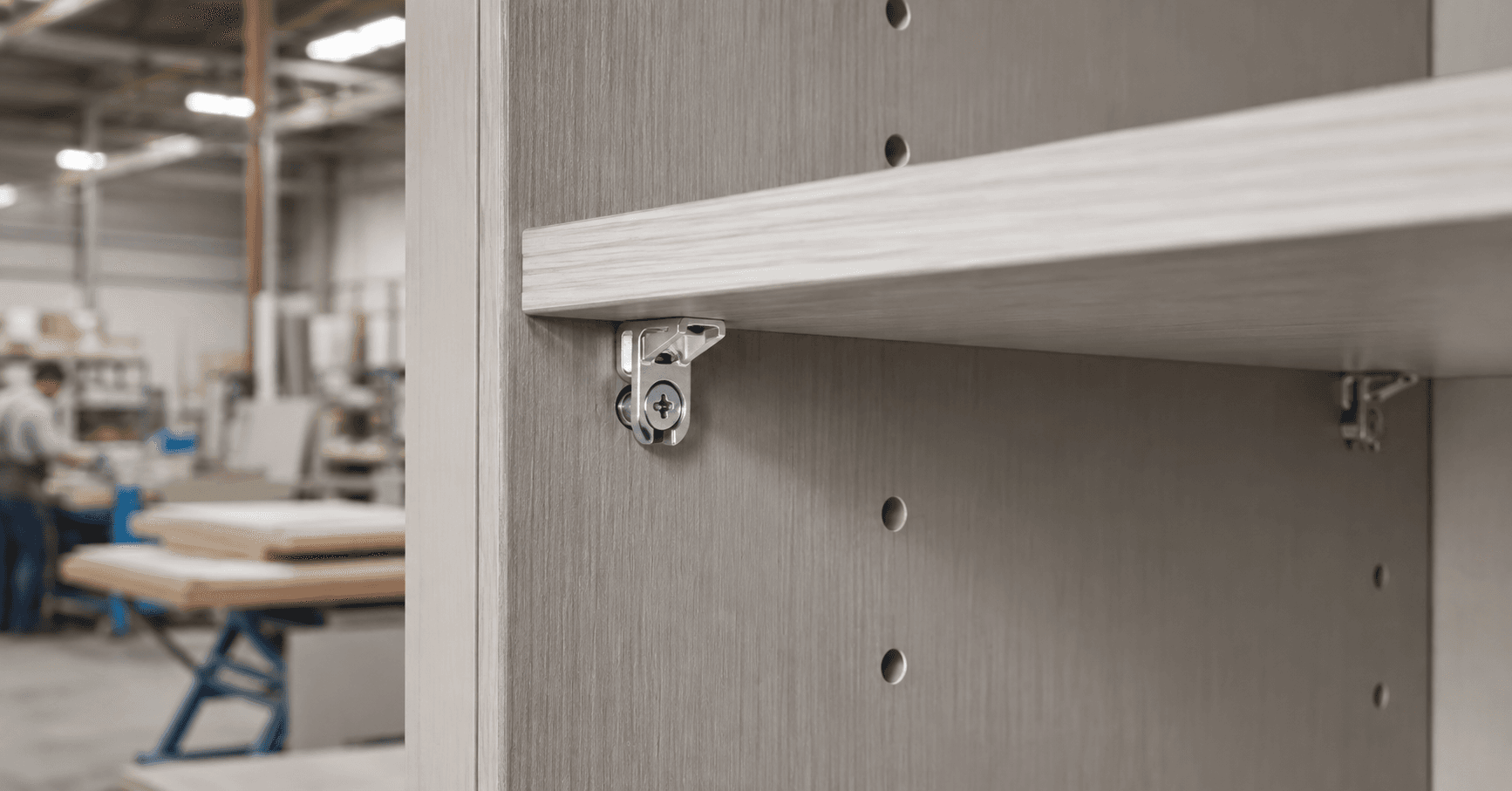
The JHFix product page lists this product as a Factory Direct Jinhe 3 1 Concealed Furniture Connector Zinc Alloy Hardware Shelf Supports. The specification table gives the brand as Jinhe, model number HICSZ201251, product name Shelf Supports, zinc alloy material, 20mm drilling diameter, M6 matching screw size with 16mm and 20mm length options, iron screw material, and usage for cabinets, cupboards, and wardrobe connectors. The page also shows “With Screw,” “3 In 1 Shelf Supports,” and “Without Screw” sections.
| Item | Product Information |
|---|---|
| Brand Name | Jinhe |
| Model Number | HICSZ201251 |
| Product Name | Shelf Supports |
| Material | Zinc Alloy |
| Drilling Diameter | 20mm |
| Matching Screw Size | M6 x Length: 16mm / 20mm |
| Screw Material | Iron |
| Usage | Cabinets, Cupboard, Wardrobe Connector |
| Kit Style | With Screw / Without Screw options shown |
| Product Direction | 3 In 1 Shelf Supports |
This data is useful because it gives buyers several practical starting points. The connector is not a vague furniture accessory. It has a defined drilling diameter, matching screw requirement, screw material, and cabinet/wardrobe/cupboard use direction.
Still, a table does not replace a sample build.
A 20mm drilling diameter may be suitable for one panel system and wrong for another. An M6 screw with 16mm or 20mm length may work well in one cabinet structure, but the final choice still depends on panel thickness, drilling depth, support position, and expected shelf load.
Why concealed shelf supports are not simple commodity parts
Shelf supports are often judged by appearance first.
That is risky.
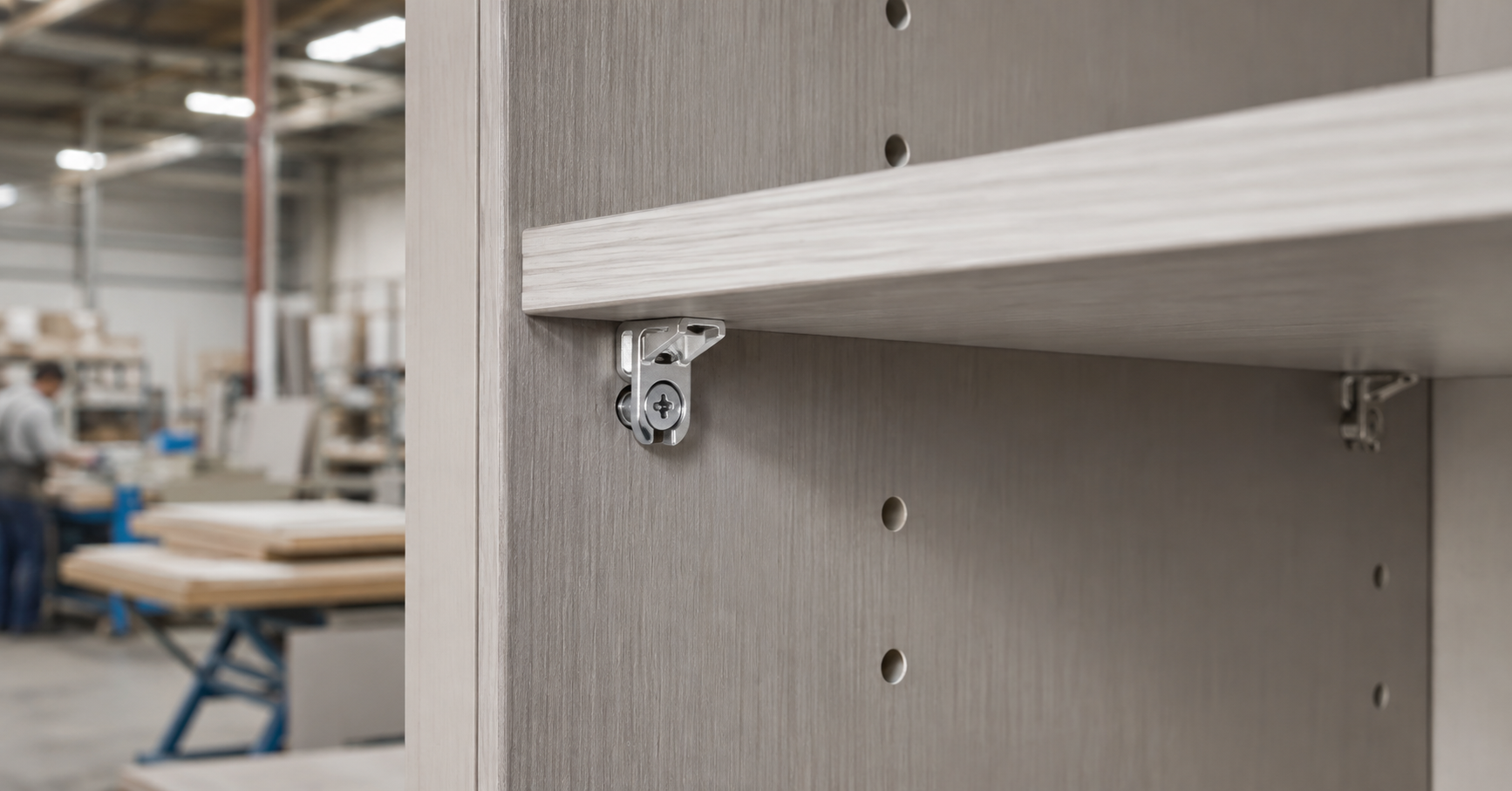
A concealed shelf support may look neat in a product photo, but furniture assembly depends on fit. The drilling must be accurate. The screw must match the panel. The support must sit in the correct position. The shelf must be stable after loading. The part must be packed in a way that prevents loss or confusion.
In cabinet and wardrobe production, the support is usually hidden or semi-hidden after installation. That gives the furniture a cleaner appearance. But hidden hardware is also less forgiving.
If the drilling is wrong, the support may not seat correctly.
If the screw is too short, holding strength may suffer.
If the screw is too long, the panel may be damaged.
If the support is loose, the shelf may rattle or shift.
If the kit is unclear, the worker may install the wrong part.
These are small errors, but they show up in the finished product.
A good zinc alloy shelf support manufacturer should understand how the part behaves inside real furniture, not only how it looks in a catalog.
Where 3 in 1 shelf supports are commonly used
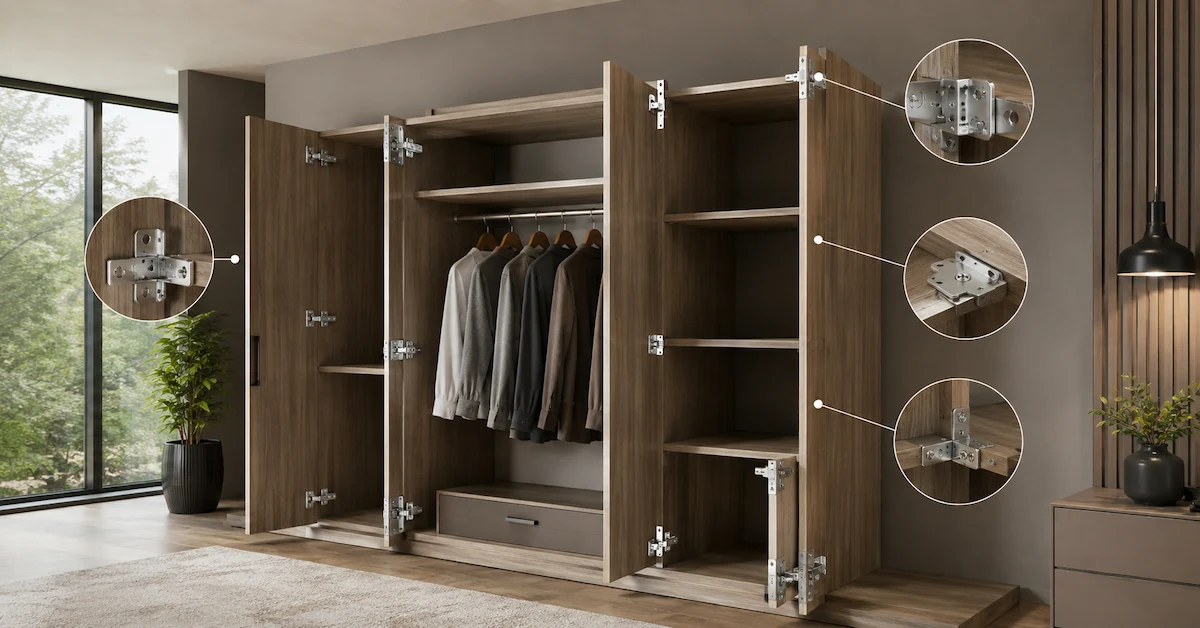
A 3 in 1 shelf support is useful when furniture designers want a clean internal structure without large exposed brackets.
Common applications include:
- kitchen cabinets
- wardrobes
- cupboards
- side cabinets
- modular storage units
- office storage furniture
- retail display cabinets
- hotel room storage furniture
- replacement shelf hardware kits
The product page specifically lists cabinets, cupboards, and wardrobe connector use, which makes the part relevant for B2B furniture buyers working with panel-based storage products.
In these products, the shelf support usually has to balance several requirements.
It should be strong enough for the expected load. It should be easy to install during production or final assembly. It should not create unnecessary visible hardware. It should be consistent enough for repeat orders. It should also be compatible with the buyer’s drilling process.
That last point is important.
If a cabinet factory has already built its drilling program around a different shelf support size, changing to a 20mm drilling diameter part may require panel process changes. Those changes may be worthwhile, but they should be reviewed before tooling or CNC drilling programs are finalized.
Board material still changes the result
A concealed shelf support works inside a panel.
That panel may be MDF, particleboard, plywood, laminated board, veneered board, or another engineered material. These materials do not behave the same way under drilling, screw tightening, or load.
A shelf support that feels secure in plywood may behave differently in particleboard. A drilling diameter that is clean in one board may chip another surface if the process is not controlled. A screw that holds well in one panel thickness may not be suitable for a thinner board.
Before approving a 3 in 1 concealed shelf support, buyers should check:
| Buyer Checkpoint | Why It Matters |
| Panel material | Different boards hold screws and drilled fittings differently |
| Board thickness | Affects screw length, drilling depth, and support position |
| Drilling diameter | Must match the shelf support specification |
| Screw length | Too short may reduce hold; too long may damage the panel |
| Shelf load | Determines whether the support is suitable for the product |
| Installation access | Hidden fittings can be harder to adjust after assembly |
| Packaging method | Small shelf supports are easy to lose or mix |
| Repeat-order control | Later batches should match the approved sample |
This kind of review is not excessive.
It is the practical work that keeps small hardware problems from becoming large furniture complaints.
With screw or without screw: why the choice matters
The product page shows both “With Screw” and “Without Screw” sections.
For buyers, this is not a small packaging detail.
Some factories prefer to source shelf supports and screws together because it reduces mismatch risk. If the support requires an M6 screw, and the supplier provides the matched screw, the buyer has fewer loose variables to manage. This can be helpful for OEM furniture kits, export orders, and projects where the hardware will be packed directly into a retail carton.
Other buyers may prefer the “without screw” option when they already use approved screws across several furniture lines. That may reduce cost or simplify internal inventory.
Neither option is automatically better.
The better choice depends on the buyer’s assembly process, quality control system, and packaging plan.
If the hardware is going into a complete furniture kit, sourcing the support with matching screw may be safer. If the factory has strong internal screw control, buying the support without screw may work.
The mistake is leaving the decision unclear.
Packaging is part of the connector system
Concealed shelf supports are small.
That means packaging matters.
A furniture kit may include shelf supports, screws, dowels, cam locks, connector bolts, washers, caps, hinge screws, and other small fittings. If all parts are mixed in one loose bag, the assembler has to sort them. If the support and screw are separated without clear labeling, installation becomes slower.
For factory assembly, this creates labor waste.
For customer assembly, it creates frustration.
For replacement hardware packs, it creates support problems because the customer may not know which part is missing.
Useful packaging options may include separated bags, step labels, small trays, model codes, barcode labels, or spare-part packs. The packaging does not need to look expensive. It needs to make the right part easy to find.
A good cabinet shelf support hardware kit should reduce questions, not create them.
What B2B buyers should ask before ordering
Before placing a bulk order, buyers should ask:
What is the exact drilling diameter?
Does the support match our board thickness?
Is the screw included or supplied separately?
If included, what screw size and material are used?
Is the M6 screw length 16mm, 20mm, or another agreed option?
Is the connector suitable for our shelf load?
Can the part be tested in our actual panel?
Can the supplier keep the same zinc alloy specification in repeat orders?
How are supports and screws packed?
Can the product be supplied as part of a full furniture hardware kit?
What inspection process is used before shipment?
Can replacement packs be prepared for after-sales support?
These questions help buyers move away from simple price comparison and toward real furniture performance.
Common sourcing mistakes
One common mistake is selecting shelf supports after the panel design is already fixed. That can force drilling changes later.
Another mistake is assuming all concealed supports work the same way. They do not. Drilling diameter, screw size, material, load, and installation method all matter.
A third mistake is sourcing the support and screw separately without confirming compatibility. The product page lists M6 screws with 16mm and 20mm length options, so the matching screw decision should be controlled rather than guessed.
Buyers also sometimes ignore kit clarity. A shelf support may be strong enough, but if the wrong screw is used during assembly, the result can still fail.
The final mistake is approving one sample and not checking repeatability. For B2B furniture programs, the second and third order matter as much as the first sample.
Frequently Asked Questions
What is a 3 in 1 concealed furniture connector used for?
It is used as shelf support or connector hardware inside cabinets, cupboards, wardrobes, and other panel furniture where buyers want a cleaner internal appearance and stable support.
What material is the Jinhe HICSZ201251 shelf support made from?
The product page lists zinc alloy as the material.
What drilling diameter is listed for this shelf support?
The product page lists a 20mm drilling diameter.
What matching screw size is listed?
The product page lists M6 screws with 16mm and 20mm length options, and the screw material is listed as iron.
Should buyers order the support with screw or without screw?
It depends on the assembly system. Ordering with screw can reduce mismatch risk, while ordering without screw may suit buyers who already manage approved screws internally.
Final takeaway
A 3 in 1 concealed shelf support is a small part, but it affects the whole furniture experience.
The support has to fit the drilled hole. The screw has to match. The panel must hold the hardware. The shelf must stay stable. The kit must be packed clearly. The next order must match the approved sample.
That is what B2B buyers should expect from a reliable concealed furniture connector supplier.
For 3 in 1 concealed furniture connectors, zinc alloy shelf supports, cabinet shelf support hardware, wardrobe connector hardware, cupboard connector fittings, M6 matching screws, and OEM furniture hardware kits, Jiangmen Jinhe Hardware can discuss product requirements, sample matching, packaging, and repeat supply.
Start with the panel material, board thickness, drilling diameter, shelf load, screw option, packaging method, and expected order quantity. Once those details are clear, the right shelf support becomes much easier to source and repeat.