
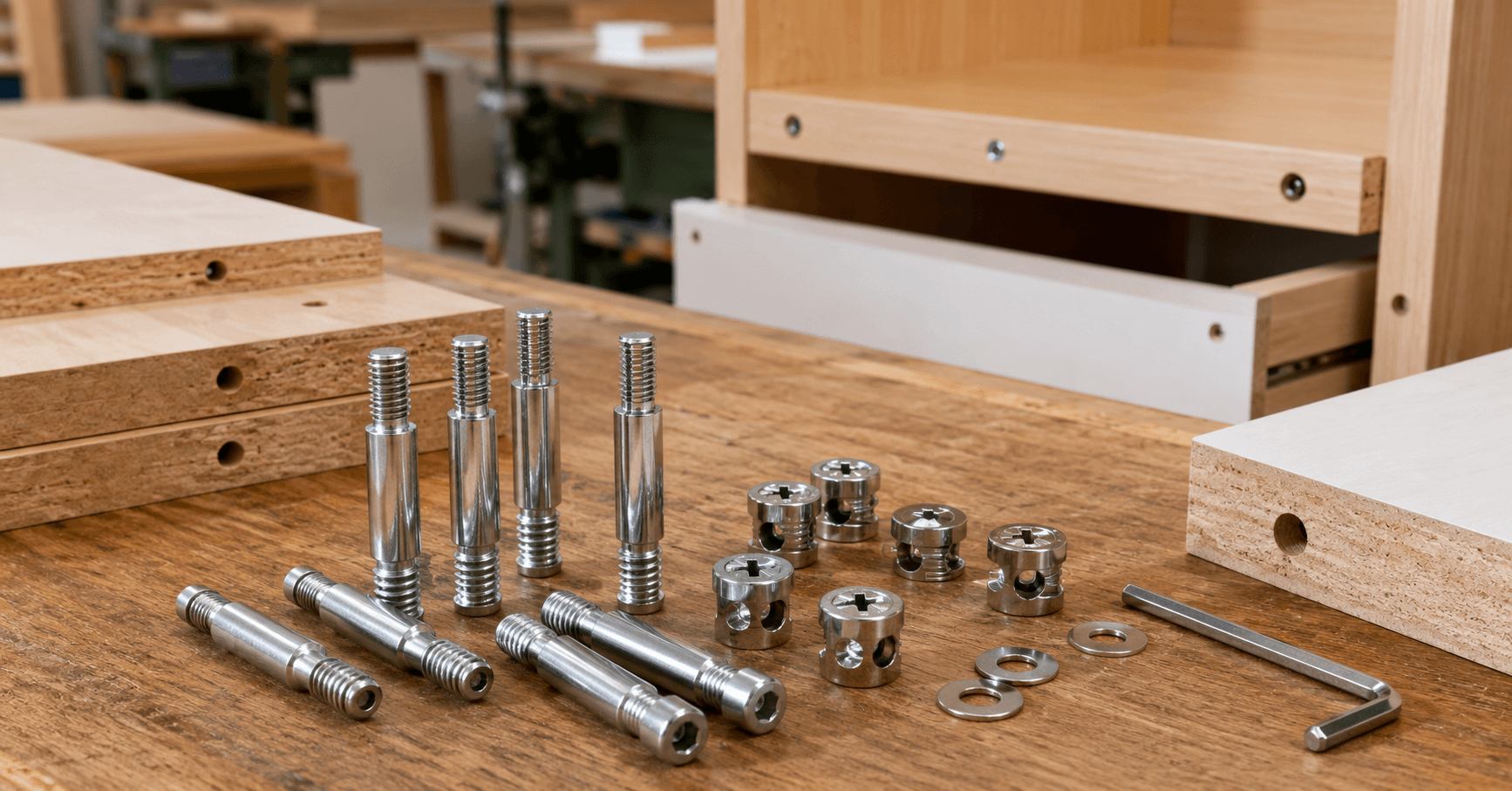
M6 Stainless Steel Connecting Bolt: What Furniture Buyers Should Check Before Bulk Orders
A connecting bolt is easy to overlook.
It is not the panel.
It is not the visible handle.
It is not the hinge that the customer notices first.
Yet in many flat-pack cabinets, dining cabinets, kitchen storage units, and modular furniture programs, the connecting bolt quietly decides whether the joint pulls together properly.
If the bolt is wrong, the cabinet may still assemble. But the connection may feel weak. The panels may not close tightly. The cam may not engage cleanly. The customer may keep tightening and still feel a small movement at the joint.
That is why an M6 stainless steel connecting bolt should not be treated as a generic screw.
It is part of the furniture connection system.
For B2B buyers, furniture factories, cabinet suppliers, and hardware kit packers, the real question is not only whether the bolt is available. The question is whether the bolt matches the board, the cam, the drilling, the head type, and the full assembly sequence.
Product data: Jinhe HIMJCC56441 M6 furniture connecting bolt
The JHFix product page lists this item as an Ex-Factory Price M6 Stainless Steel Double Ended Joint Connect Bolt for Kitchen & Dining Cabinet Furniture for Connector. The specification table gives the model number as HIMJCC56441, product name as Furniture Connecting Bolt, brand name as Jinhe, material as stainless steel, thread size as M6, length as 56mm, customizable silver color, cam size suitable for all conventional cam, zinc plated / nickel customizable finish, pan head / countersunk head type, and cabinet connector / furniture connector usage.
| Item | Product Information |
|---|---|
| Model Number | HIMJCC56441 |
| Product Name | Furniture Connecting Bolt |
| Brand Name | Jinhe |
| Material | Stainless Steel |
| Thread Size | M6 |
| Length | 56mm |
| Color | Silver, customizable |
| Cam Size | Suitable for all conventional cam |
| Finish | Zinc Plated / Nickel, customizable |
| Head Type | Pan head / Countersunk |
| Usage | Cabinet Connector / Furniture Connector |
This table gives buyers useful technical direction. The part is not simply described as a fastener; it is positioned as a furniture connecting bolt for cabinet and furniture connector use, with M6 thread and 56mm length.
For B2B sourcing, that is a starting point.
It is not the final approval.
A 56mm M6 bolt still has to be tested with the actual panel thickness, cam style, hole pattern, and furniture structure.
Why connecting bolts matter in flat-pack furniture
Flat-pack furniture depends on mechanical joining.
The furniture is designed to ship in panels, then assemble later. That reduces carton volume and improves logistics efficiency, but it also shifts more responsibility onto hardware.
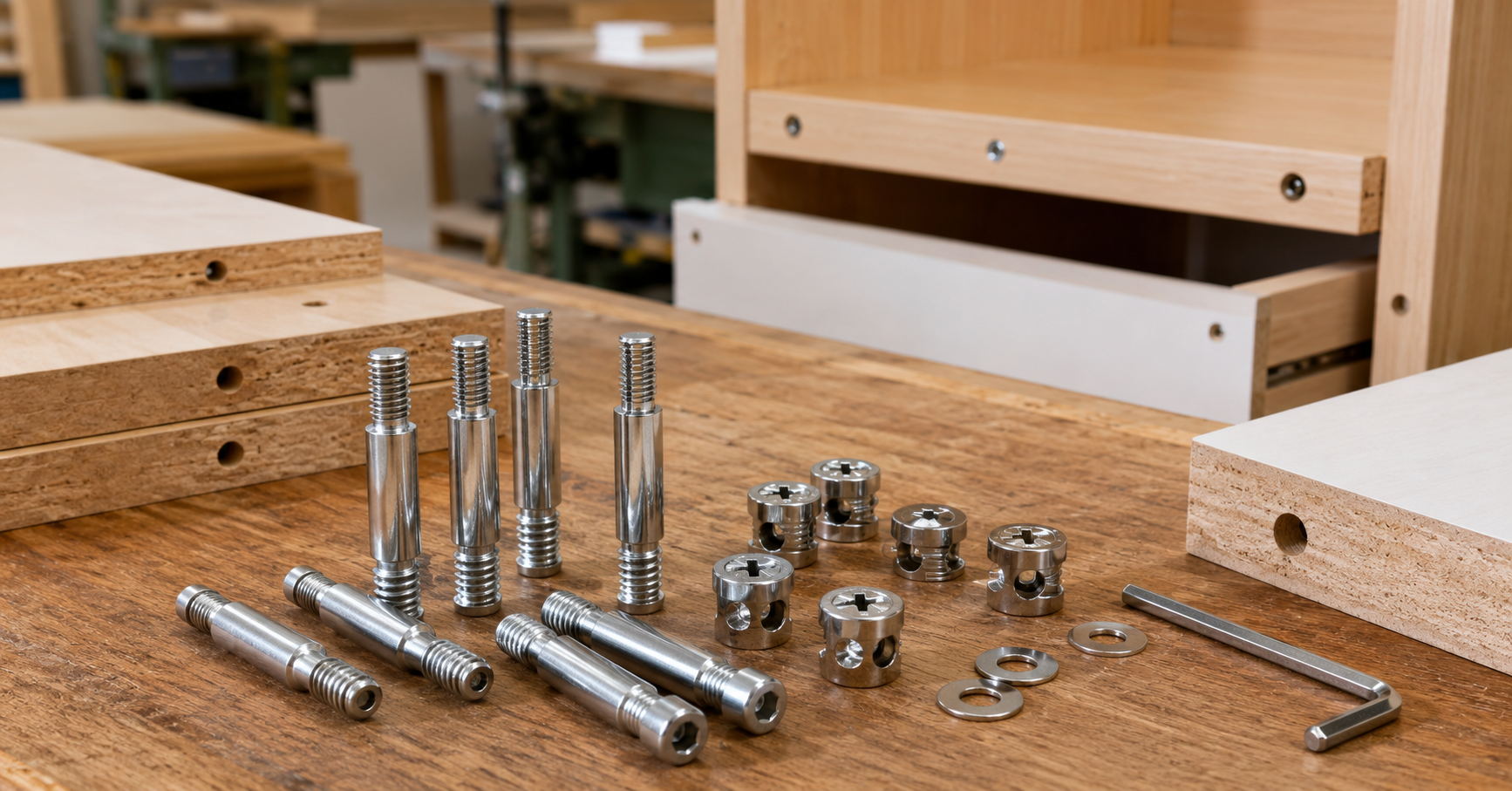
A connecting bolt often works with a cam or matching connector part. The bolt provides the engagement path. The cam pulls or locks the joint. The board holds the assembly. The user tightens the fitting.
When all details match, the cabinet comes together cleanly.
When one detail is off, the customer notices.
The issue may look like a panel problem, but the real cause may be the bolt length, head type, thread engagement, cam compatibility, drilling depth, or material mismatch.
This is why a furniture connecting bolt manufacturer should understand the whole joint, not only the bolt shape.
Stainless steel material: useful, but not the only question
The product page lists stainless steel as the material.
For furniture buyers, stainless steel may be attractive where corrosion resistance, material stability, or perceived quality is important. It can be relevant for kitchen furniture, dining cabinets, humid storage conditions, export furniture, or products where hardware quality is a selling point.
But material alone does not guarantee a good assembly.
A stainless steel bolt can still be wrong if the thread size does not match, if the head type interferes with the connector, or if the bolt length does not suit the cabinet geometry.
Before confirming stainless steel connecting bolts, buyers should ask:
Is stainless steel required for the application?
Is the product used in a dry room, kitchen, dining area, hotel, or warehouse?
Will the bolt be visible, semi-visible, or fully hidden?
Does the finish need to match other hardware in the kit?
Will the bolt be stored for a long time before assembly?
Are zinc plated or nickel finish options required for appearance or surface behavior?
The product page lists zinc plated / nickel customizable finish options, which gives buyers room to discuss application-specific requirements.
M6 and 56mm are not just numbers
The thread size and length should be treated as part of the furniture design.
The product page lists M6 thread size and 56mm length.
For buyers, these details should be checked against:
- board thickness
- hole diameter
- hole depth
- cam position
- cam engagement length
- joint type
- whether the bolt connects one panel or passes through a thicker section
- installation access
- tightening tool
- final assembly sequence
A bolt that is too short may not engage properly. A bolt that is too long may interfere with another component or fail to seat correctly. The wrong thread size may damage the mating part or create a loose connection.
This is especially important when the same hardware kit is used across several furniture models.
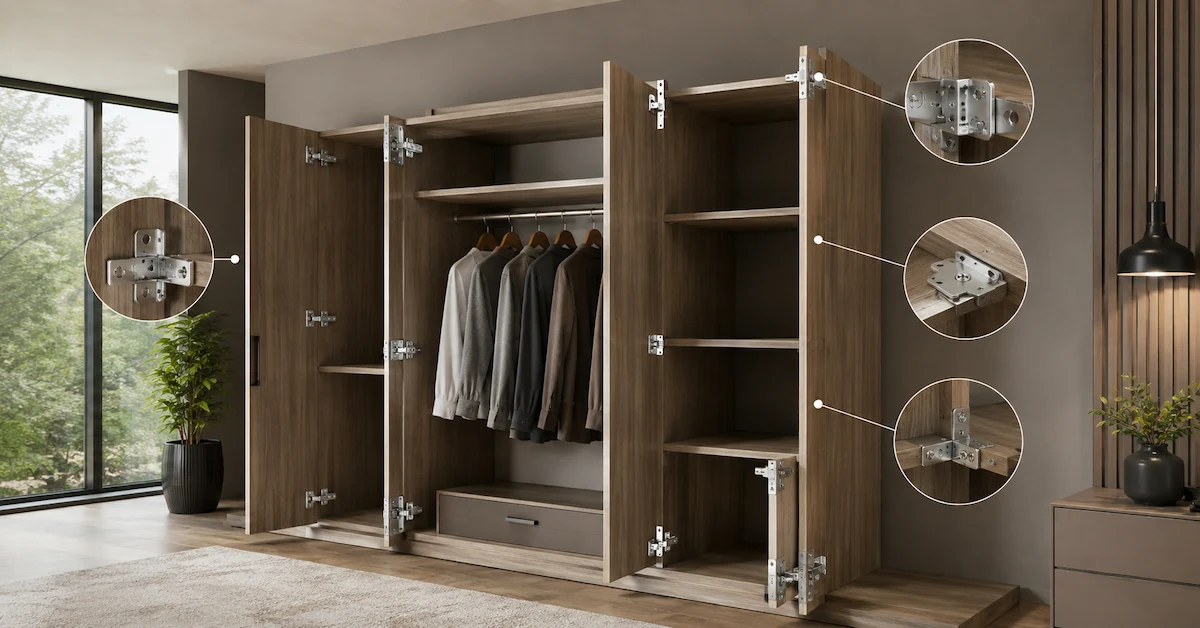
A kitchen cabinet, dining cabinet, wardrobe, shelving unit, and sideboard may all use connector bolts. That does not mean they should all use the same bolt.
Pan head or countersunk: why head type matters
The product page lists Pan head / Countersunk as head type options.
This looks like a small choice, but it can affect assembly.
A pan head may suit applications where the head sits on the surface or inside a fitting without needing to be flush. A countersunk head may be better where the fastener needs to sit lower or align with a prepared recess.
If the wrong head type is selected, several problems can appear:
- the head may sit proud
- the fastener may interfere with another fitting
- the connector may not seat correctly
- the assembly tool may not access the fastener easily
- the visible appearance may not meet the customer’s expectations
This is why buyers should not simply order “M6 bolts” without confirming the head type.
In furniture hardware, small head geometry differences can create real assembly problems.
Conventional cam compatibility needs real testing
The product page lists the cam size as suitable for all conventional cam.
That is helpful language, but buyers should still test the bolt with their actual cam.
“Conventional” can vary by supplier, market, and existing kit standard. A bolt may fit many cam systems, but a furniture factory should not assume universal compatibility without a trial.
Sample testing should include:
| Test Point | What to Check |
| Cam engagement | Does the cam pull the bolt cleanly? |
| Panel fit | Do panels close without gaps? |
| Head type | Does pan head or countersunk work better? |
| Thread feel | Does the bolt tighten consistently? |
| Finish behavior | Does the surface scratch or gall during assembly? |
| User access | Can the tool reach the fastener easily? |
| Repeat tightening | Does the joint remain stable after reassembly? |
| Packaging | Is the bolt packed with the matching cam or clearly labeled? |
This kind of test is practical.
It protects the buyer from assuming compatibility based only on the product description.
Where the bolt fits inside a complete hardware kit
A connecting bolt is rarely used alone.
A furniture hardware kit may include the bolt, cam, dowels, screws, washers, brackets, hinges, caps, labels, and spare parts. The bolt is one part of a larger assembly system.
That creates a packaging issue.
If the bolt is packed separately from the cam, the user may not connect the parts correctly. If several bolt lengths are used in one furniture kit, the labels must be clear. If pan head and countersunk versions are both supplied for different products, the packaging must prevent confusion.
For B2B furniture kit packers, the hardware pack should follow the assembly sequence.
The right bolt should appear at the right step.
A good cabinet connector bolt supplier should be able to discuss not only the bolt specification, but also kit packing, labeling, replacement packs, and repeat-order consistency.
Common sourcing mistakes
One common mistake is choosing the bolt by thread size only.
M6 is important, but it is not the whole specification. Length, head type, finish, cam compatibility, and usage matter too.
Another mistake is assuming the same double ended joint connect bolt will fit every cabinet program. It may not. Furniture geometry changes from one product line to another.
A third mistake is ignoring the packaging method. A correct bolt can still create assembly confusion if it is mixed with similar hardware.
Buyers also sometimes approve a stainless steel part without clarifying finish expectations. The product page lists zinc plated / nickel customizable finish options, so the desired surface treatment should be confirmed in the purchase specification.
The final mistake is skipping sample assembly.
A bolt on a table is not the same as a bolt inside a cabinet joint.
What B2B buyers should ask before ordering
Before placing a bulk order for M6 stainless steel connecting bolts, buyers should ask:
What thread size and length are required?
Is 56mm suitable for our panel design?
Which cam will be used with the bolt?
Is pan head or countersunk head required?
Should the finish be zinc plated, nickel, or another option?
Is the color requirement silver or customized?
Will the bolt be used in kitchen, dining, cabinet, or other furniture?
Can the bolt be tested with real panels and real cams?
How will bolts be packed in the kit?
Will different lengths be separated clearly?
Can replacement packs be supplied?
Can the same specification be repeated across future orders?
These questions help buyers avoid treating the connecting bolt as a commodity item.
Frequently Asked Questions
What is an M6 stainless steel connecting bolt used for?
It is used as part of a furniture connector system, often helping join panels in cabinets, kitchen cabinets, dining cabinets, shelving, and flat-pack furniture.
What is the listed length of the Jinhe HIMJCC56441 connecting bolt?
The product page lists the length as 56mm.
What finish options are listed?
The product page lists zinc plated / nickel finish options, with customization available.
What head types are listed?
The product page lists pan head / countersunk head types.
Is it suitable for all cams?
The page says the cam size is suitable for all conventional cam, but buyers should still test it with their actual cam system.
Final takeaway
An M6 stainless steel connecting bolt may look like a simple component, but it affects the whole furniture assembly.
The bolt must match the cam. The thread must be right. The length must suit the panel. The head type must fit the joint. The finish must meet the project requirement. The packaging must make the part easy to identify.
That is what B2B buyers should expect from a reliable furniture connecting bolt supplier.
For M6 stainless steel connecting bolts, double ended joint connect bolts, cabinet connector bolts, furniture connector hardware, conventional cam connector bolts, pan head bolts, countersunk bolts, and OEM furniture hardware kits, Jiangmen Jinhe Hardware can discuss sample matching, finish options, packaging, and repeat supply.
Start with the board thickness, cam type, hole depth, head type, finish requirement, packing method, and order volume. Once those details are confirmed, the right connecting bolt becomes much easier to source and repeat.