
OEM Screw Kit Manufacturer: Why a Small Hardware Pack Can Decide the Assembly Experience
A screw kit does not look important when the furniture is still on the drawing board.
The panels get more attention. The finish gets discussed. The carton size is checked again and again. The assembly manual goes through another round of edits. Meanwhile, the hardware kit is treated like a small supporting item: screws, dowels, connectors, maybe a bracket or two.
Then the customer opens the box.
That is the moment when the kit starts speaking for the whole product.
If the parts are clear, complete, and easy to match with the instruction sheet, assembly feels controlled. If two screw lengths are mixed together, a dowel is missing, or the cam connector does not match the hole pattern, the customer does not blame the small hardware. They blame the furniture brand.
That is why choosing an OEM screw kit manufacturer is not only a purchasing decision. For flat-pack cabinets, shelving systems, modular storage, and panel furniture, it is part of product quality.
The kit may be small, but it sits right at the point where manufacturing meets the user.
A screw kit is part of the assembly process
A good furniture hardware kit is not just a collection of loose parts.
It should follow the way the product is built.
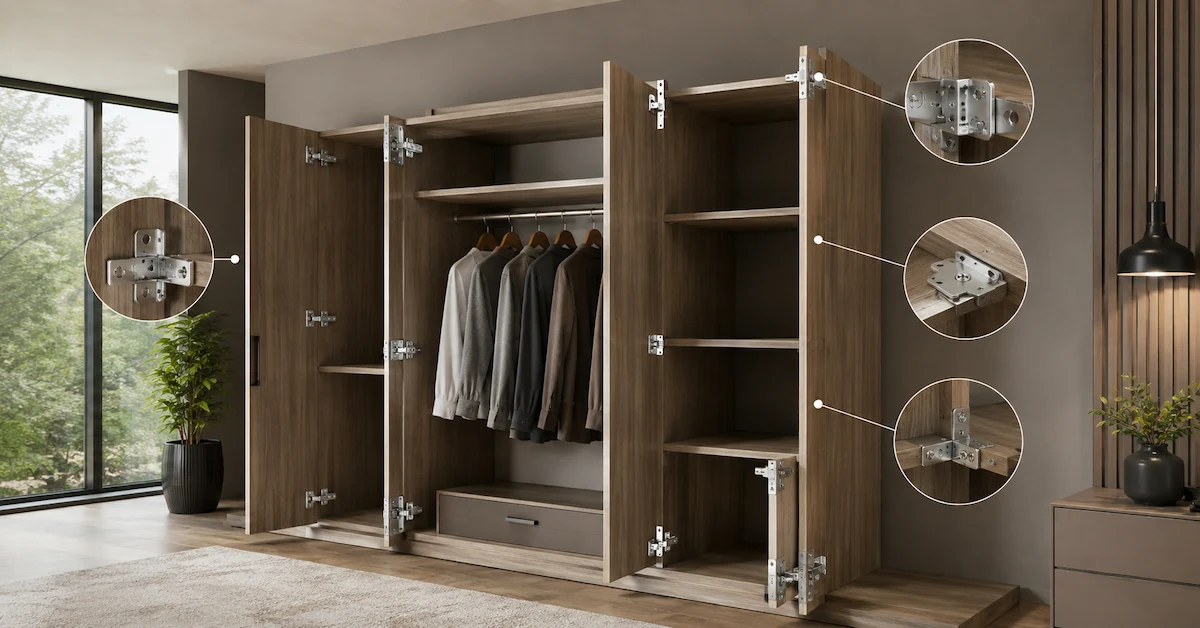
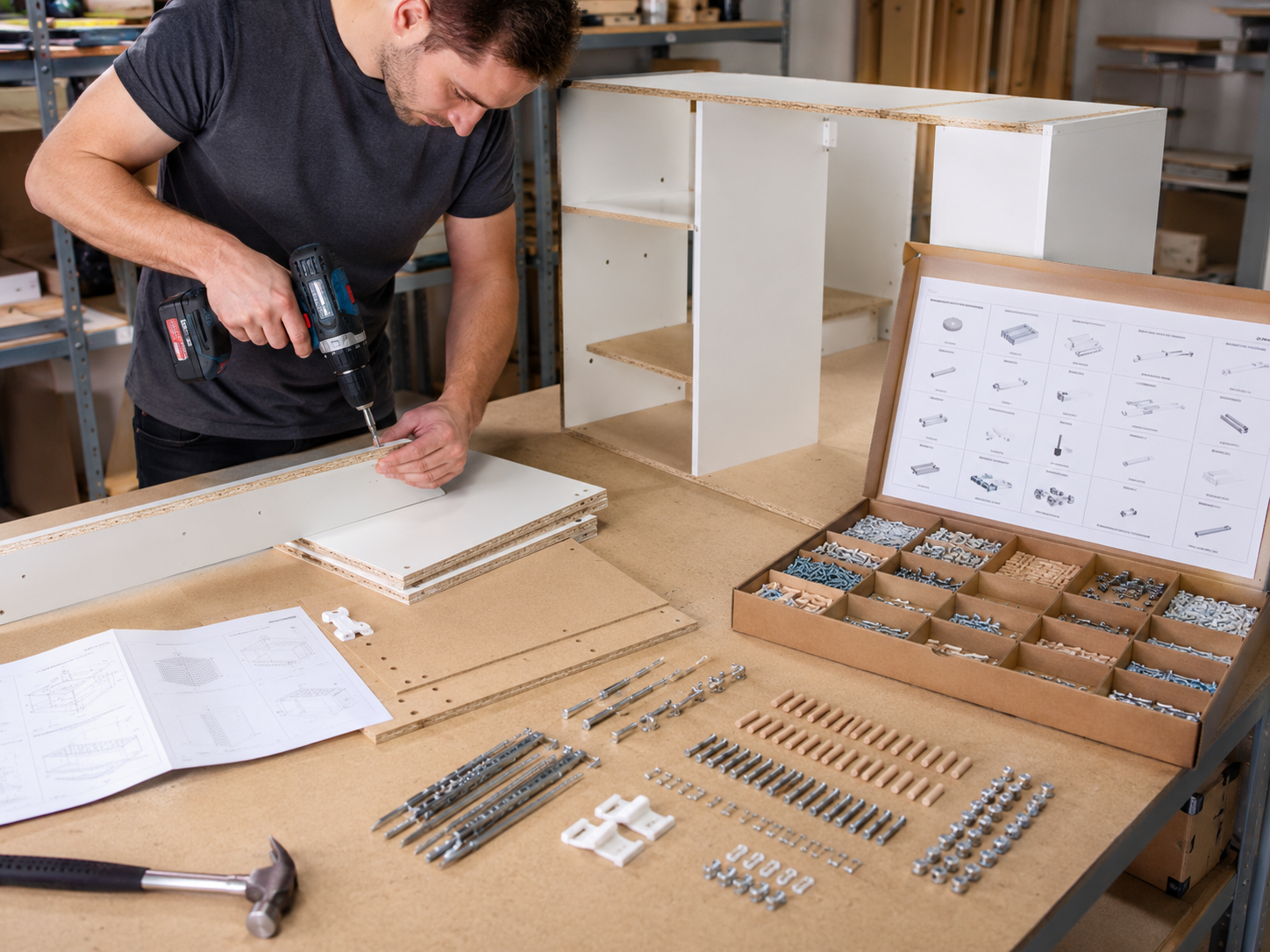
In a flat-pack cabinet, the installer may need wooden dowels first, then cam bolts, then cam locks, then screws, brackets, caps, or rail fittings. If the kit is packed randomly, the user has to sort the parts before real assembly begins. That creates hesitation. In a factory, hesitation slows the line. At home, it becomes frustration.
A proper furniture assembly screw kit should make the next step easy to understand.
The hardware does not need to be beautiful. It needs to be logical.
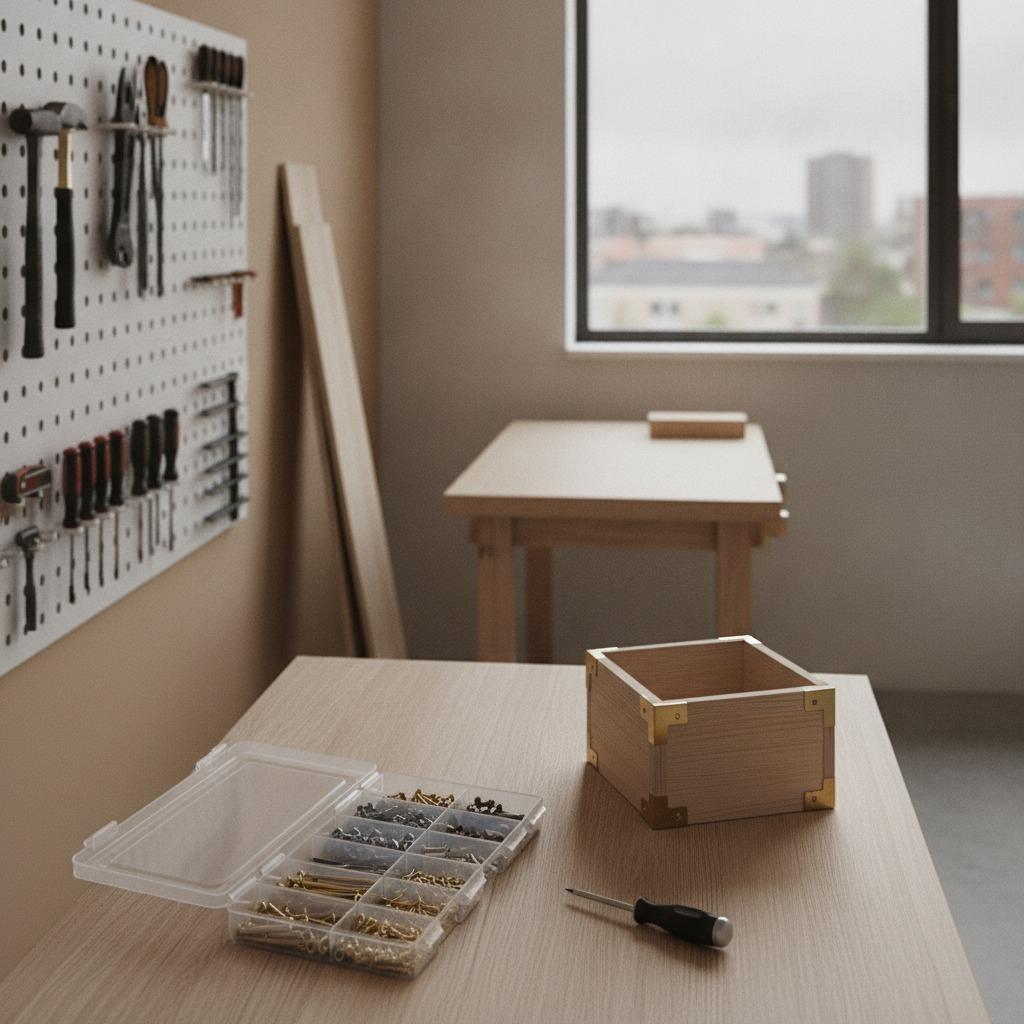
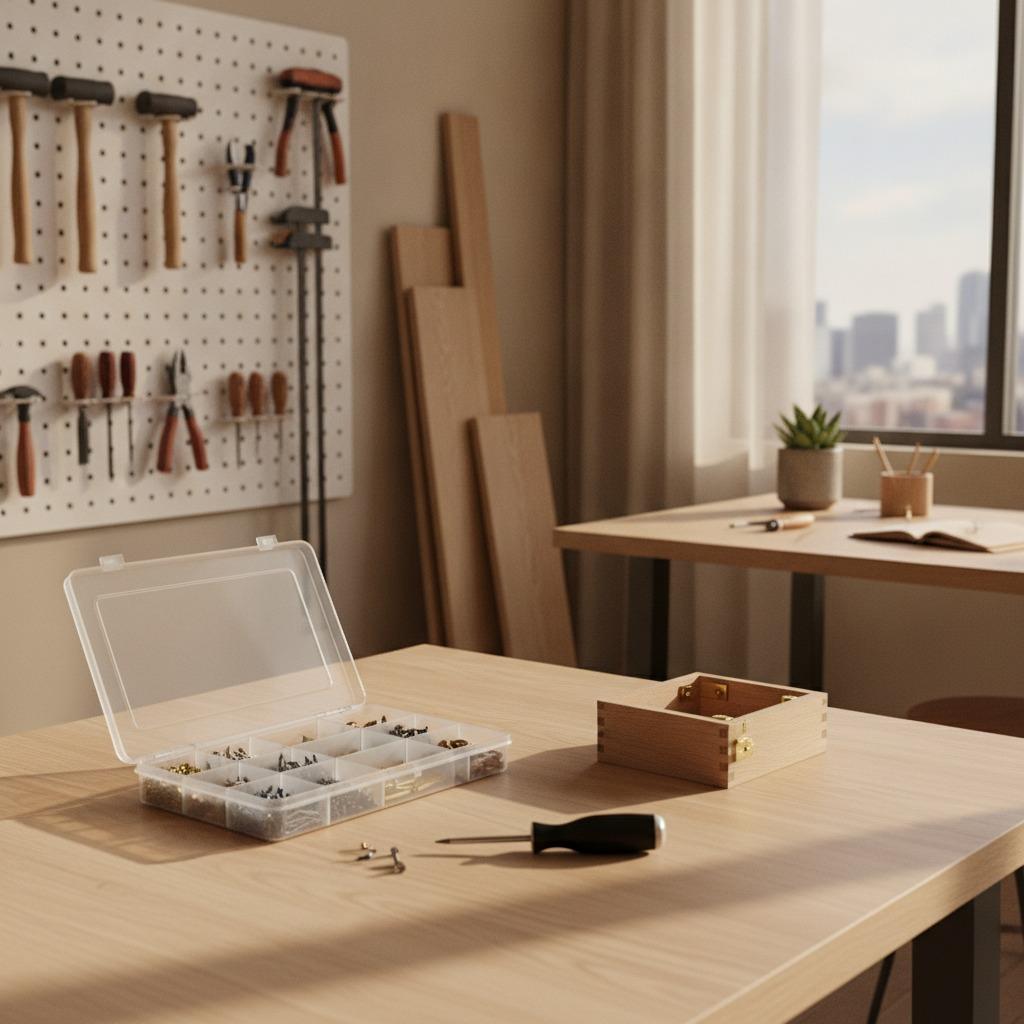
Similar screws should be separated. Small plastic connectors should not disappear under larger metal parts. The label should match the instruction sheet. If the kit uses a compartment box, the layout should reflect the assembly sequence rather than only the supplier’s packing convenience.
That is the difference between a screw kit and a bag of fasteners.
What buyers usually need inside the kit
The exact contents depend on the furniture design, but a typical OEM furniture hardware kit may include several part families.
For cabinet and shelving products, the kit may include:
- machine screws
- self-tapping screws
- cam locks
- connector bolts
- wooden dowels
- threaded inserts
- brackets
- washers
- plastic caps or sleeves
- clips
- rails or slide-related parts
- a printed parts map or instruction sheet
These parts do different jobs.
A dowel helps align panels before tightening. A cam lock pulls two boards together. A screw fixes a bracket or support part. A plastic sleeve may guide, protect, or space a fitting. A threaded insert can help when repeated fastening is needed.
From a buyer’s point of view, the kit should be reviewed as a system.
One part being correct is not enough. The full set has to match the panel design, the hole pattern, the assembly order, and the final packaging method.
Why flat-pack furniture makes kit accuracy more important
Flat-pack furniture is not forgiving.
The panels are already cut. The holes are already drilled. The carton is already packed. The customer expects the parts to fit without adjustment.
If one screw is too long, it may damage the panel.
If one screw is too short, the joint may feel weak.
If a dowel is loose, alignment suffers.
If the instruction sheet shows one connector but the pack contains another, the user stops immediately.
That is why sourcing teams should not ask only, “Can the supplier provide screws?”
The better question is: “Can this supplier provide the right hardware assortment, in the right packaging format, repeatedly?”
That is where a real screw kit OEM partner becomes useful.
A supplier who understands kitting can reduce missing-part complaints before they happen. A supplier who only sells loose fasteners may leave the furniture brand to handle sorting, labeling, and replacement issues on its own.
Packaging should reduce guessing
Compartment packaging is not just a neat presentation.
It helps people use the kit correctly.
When screws, dowels, caps, and connectors sit in separate sections, a worker can check the parts faster. A customer can compare the hardware with the instruction sheet more easily. Incoming inspection also becomes simpler because missing parts are more visible.
This is especially useful for flat-pack furniture sold through retail or cross-border e-commerce. In those channels, the customer is often assembling the product without professional help. The kit must explain itself.
For some projects, a compartment cardboard box works well. For others, step-based bags are more practical. Replacement kits may need small labeled pouches or clear blister packs. The format can change from project to project.
The principle stays the same.
The packaging should make the hardware easier to identify, not harder.
Custom does not always mean custom-made parts
A custom screw kit manufacturer does not necessarily need to produce every part from scratch.
In many furniture projects, the best solution is a customized pack built from standard parts. Standard screws, dowels, cam fittings, and brackets can work very well when they are selected correctly and packed according to the furniture model.
Customization may apply to:
- part combination
- pack quantity
- label design
- instruction matching
- screw length
- connector finish
- packaging layout
- replacement kit format
- OEM branding
Custom-made hardware becomes necessary only when the furniture design requires it. Maybe the board thickness is unusual. Maybe the bracket needs a revised hole position. Maybe the visible finish must match another component. Maybe the kit needs a special part that standard catalogs do not cover.
Customization should solve a real assembly problem.
If it only creates another uncontrolled part number, it may make the supply chain harder instead of better.
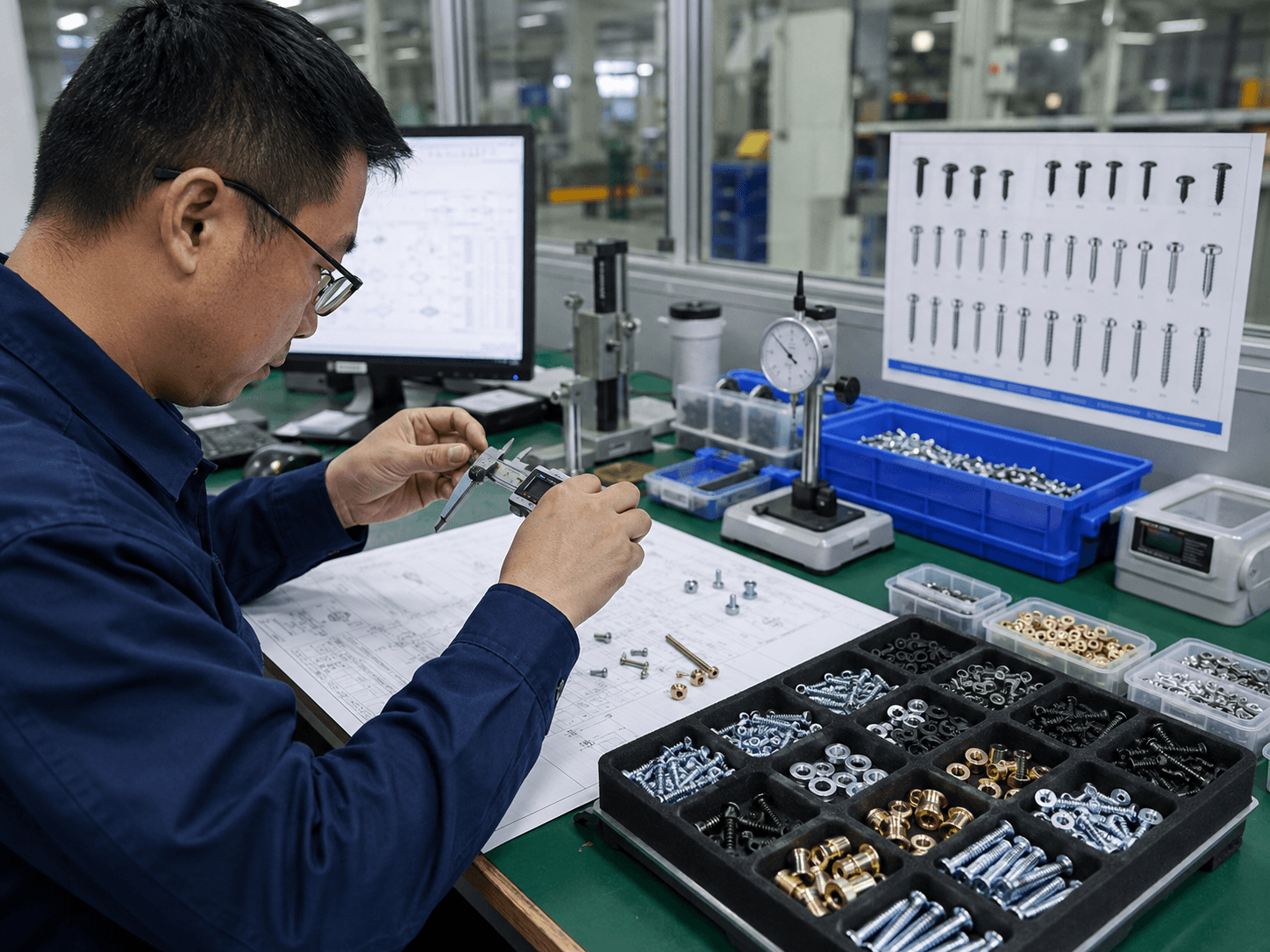
Materials and finishes should be confirmed early
Furniture screw kits often look simple from the outside, but the materials can vary.
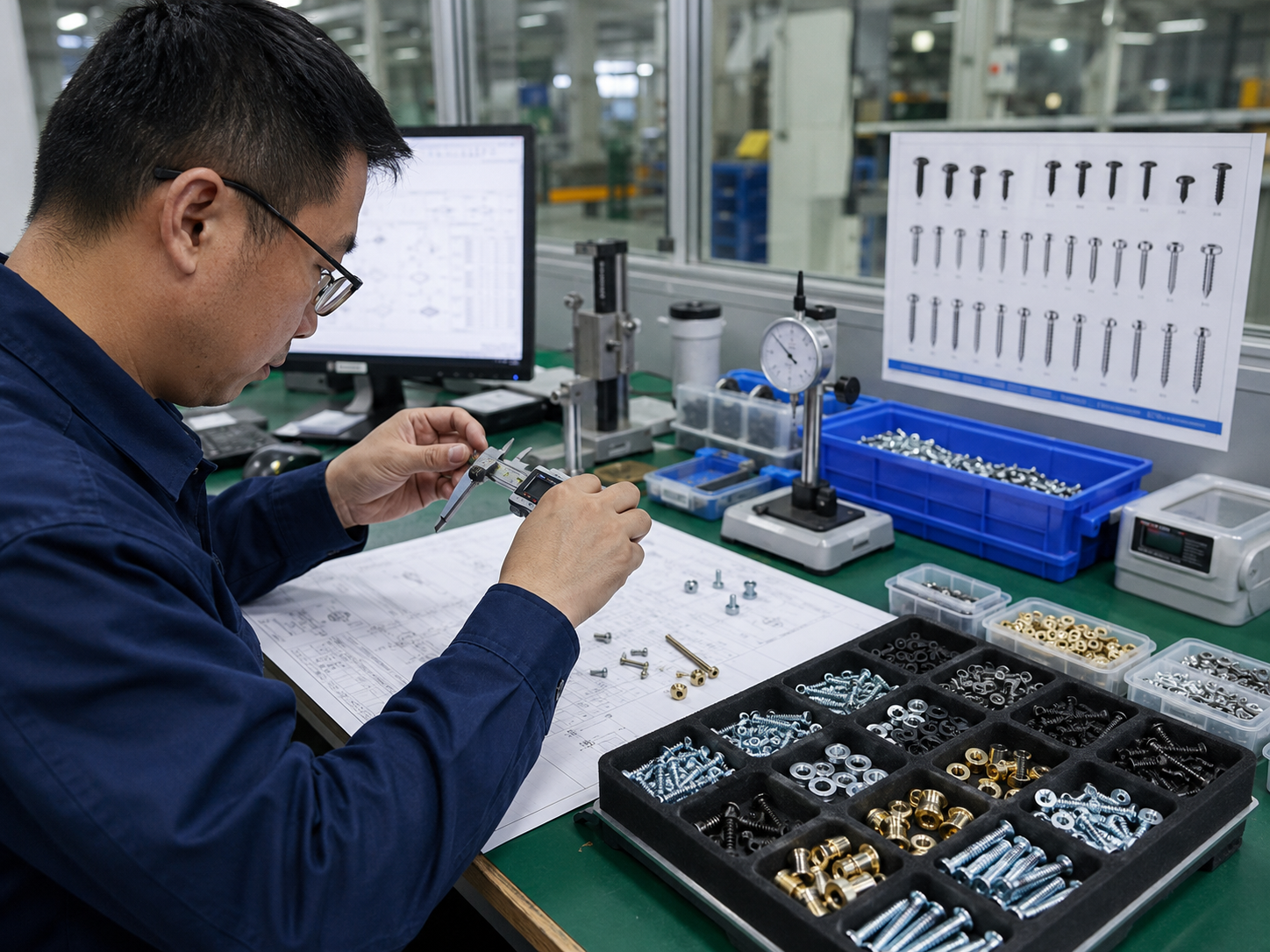
A silver screw may be zinc-plated steel or stainless steel. A gold-colored insert may be brass, plated steel, or another alloy. A black component may be plastic, nylon, or coated metal. A wooden dowel may also need consistent size and dryness to fit correctly.
Buyers should confirm these details before approving the kit.
Useful checks include:
- base material
- screw length
- thread type
- head style
- drive type
- surface finish
- connector dimensions
- dowel diameter
- plastic component material
- acceptable substitutions
- corrosion expectations
- inspection standard
Appearance alone is not enough.
A kit that looks correct in a photo may still fail if the screw thread, finish, or connector dimension does not match the real furniture design.
Where Jiangmen Jinhe Hardware fits
Jiangmen Jinhe Hardware Co., Ltd. works with fasteners, standard parts, and non-standard customization. Its product range includes machine screws, self-tapping screws, micro screws, and precision screws, using materials such as stainless steel, iron, and aluminum.
The company also works with standards including GB, DIN, ANSI, BS, JIS, and ISO.
For buyers sourcing OEM screw kits, this background is relevant because furniture hardware kits often need several fastener types in one controlled package. A cabinet project may require screws, connector bolts, inserts, dowels, brackets, caps, labels, packaging, inspection, and repeat supply control.
Jiangmen Jinhe also notes support for inspection before delivery, necessary documentation, logistics, warehousing, foreign trade, and supply chain services. For furniture brands, contract assemblers, retailers, and cross-border sellers, that support can matter when a sample kit becomes a repeat order.
The value is not only in producing screws.
It is in helping the buyer keep the whole hardware kit stable.
Common sourcing mistakes buyers still make
One common mistake is approving loose hardware samples but not the finished kit.
Loose parts can show size and finish, but they do not show whether the final pack is easy to use. A real sample should include the actual packaging, labels, instruction reference, and part layout.
Another mistake is treating replacement kits as an afterthought. Customers lose screws. Installers misplace connectors. Retailers need spare hardware. If replacement packs are not planned early, after-sales support becomes harder later.
A third mistake is putting too many similar parts in one section. Extra parts may seem helpful, but too many similar screws can confuse the user.
Buyers also sometimes forget revision control. Furniture designs change. Hole patterns move. Packaging gets updated. If the supplier does not control old and new kit versions carefully, mixed inventory can create problems.
The final mistake is choosing only by unit price.
A cheaper kit can become expensive if it causes missing-part claims, assembly delays, rework, or customer complaints.
What buyers should ask before placing an OEM order
Before choosing an OEM screw kit manufacturer, buyers should ask practical questions:
What parts are included in the complete kit?
Which parts are standard, and which are customized?
Can the kit follow our assembly sequence?
Can labels match our instruction sheet?
How are similar screws separated?
Can sample packs be supplied before mass production?
How is the kit count checked before shipment?
What inspection documents are available?
How are revisions controlled?
Can replacement kits be supplied later?
Can the same specification be repeated in future orders?
Can logistics, warehousing, or export support be included?
These questions help buyers see whether the supplier understands furniture assembly, not just fastener sales.
Frequently Asked Questions
What does an OEM screw kit manufacturer provide?
An OEM screw kit manufacturer provides organized screw kits and related hardware packs for furniture, cabinets, shelving, repair kits, retail products, and assembly programs.
Is an OEM screw kit only for new furniture production?
No. OEM screw kits can also be used for repair, replacement hardware, warranty service, spare-part packs, and cross-border e-commerce furniture programs.
Do all screw kits need custom-made parts?
Not always. Many kits use standard fasteners arranged in a custom pack format. Custom parts are only needed when the furniture design requires them.
Why is packaging important for furniture screw kits?
Packaging helps prevent missing parts, mixed fasteners, unclear assembly steps, and customer complaints. It also makes the kit easier to inspect and use.
What should buyers check before bulk ordering?
Buyers should check the full part list, sample pack, assembly sequence, labeling, count method, inspection process, and repeat-order control.
Can screw kit packaging be customized?
Yes. Packaging can be customized by furniture model, assembly step, part type, quantity, label, barcode, and sales channel.
A better screw kit makes assembly calmer
The best screw kit does not make the customer stop and guess.
The screws are correct. The dowels are easy to find. The connectors match the holes. The instruction sheet matches the hardware. The kit is complete. The next shipment matches the approved sample.
That is what buyers are really sourcing.
For OEM screw kits, custom screw kits, furniture assembly kits, cabinet screw kits, replacement hardware packs, and organized fastener packaging, Jiangmen Jinhe Hardware Co., Ltd. can discuss standard parts, non-standard customization, material options, inspection, packaging, logistics, warehousing, and repeat supply requirements.
For direct inquiries:
Tel/WeChat: +86 13729150102
WhatsApp: +86 13322893939
Email: sharon@hkhomeideas.com
Start with the furniture model, assembly sequence, part list, packaging method, label requirements, and expected order quantity.
Once those details are clear, the right screw kit becomes much easier to build, approve, and repeat.