
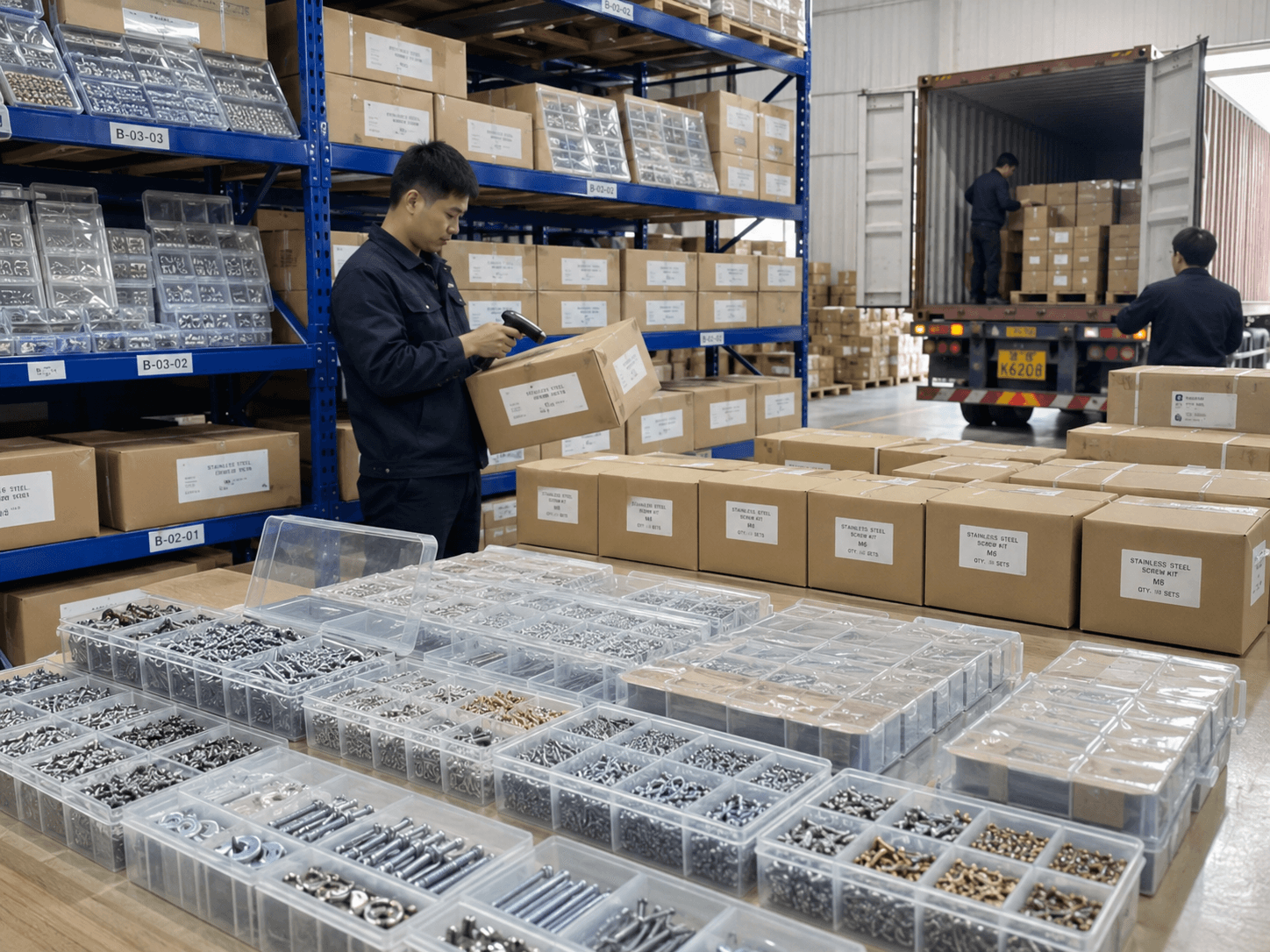
OEM Screw Kit Manufacturer: Why Flat-Pack Furniture Needs Better Hardware Control
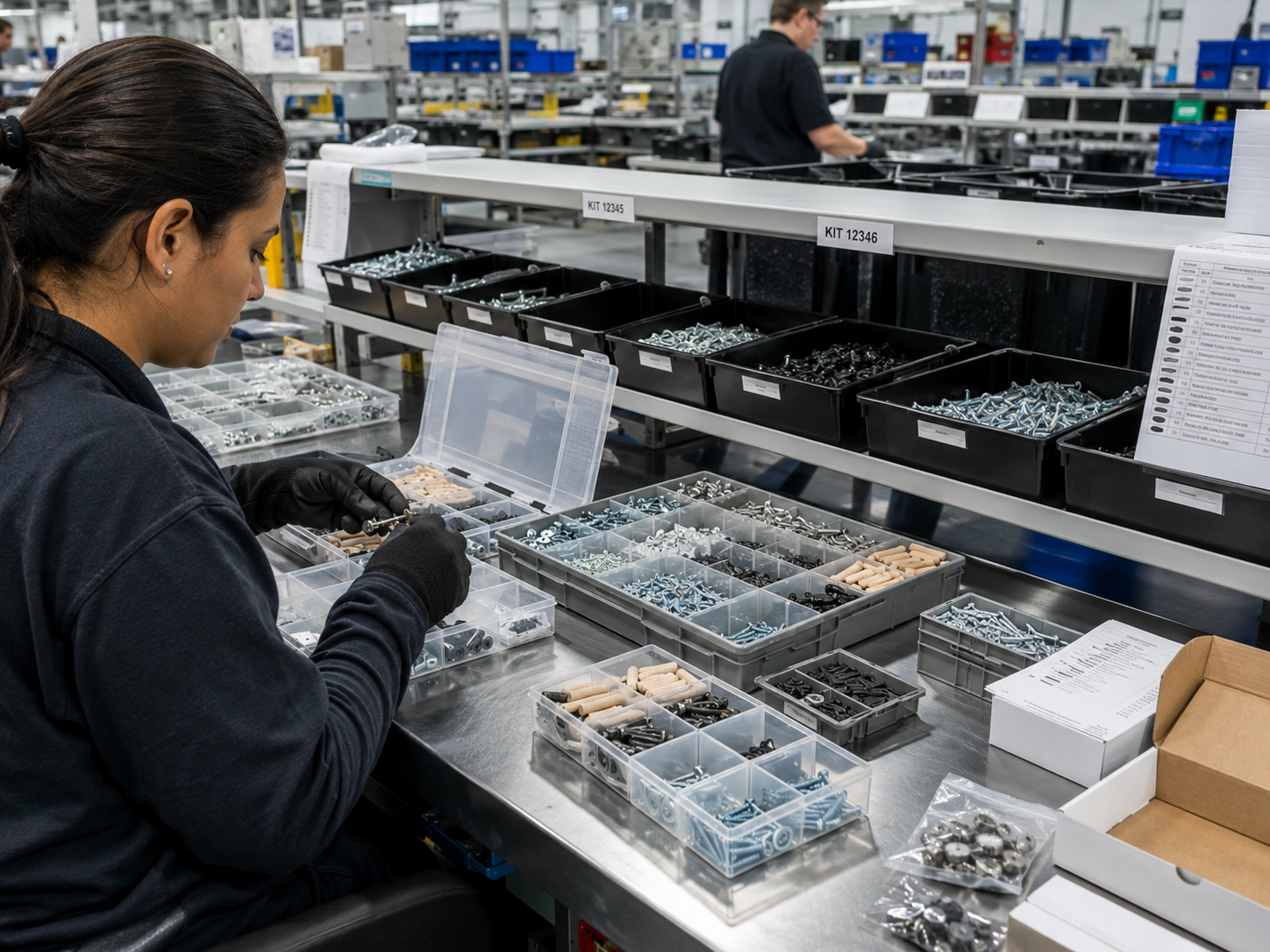
A screw kit is easy to overlook.
In a flat-pack furniture project, most attention goes to the panels, surface finish, carton size, and assembly manual. Those parts feel visible. They are easy to discuss in meetings and easy to review in photos.
The hardware kit is different. It often sits in a small box or plastic bag, full of screws, dowels, nuts, connectors, brackets, washers, caps, and small plastic fittings.
Small parts. Small space. Small cost.
At least, that is how it looks before assembly starts.
Then one screw length is wrong. A cam connector does not match the hole. A dowel is missing. Two similar fasteners are packed together without labels. The customer has already spread the panels across the floor, and now the whole build stops.
That is when an OEM screw kit manufacturer becomes more than a fastener supplier.
For cabinet makers, shelving brands, flat-pack furniture factories, e-commerce sellers, and replacement hardware programs, the screw kit is part of the product experience. If it is confusing, incomplete, or poorly matched to the furniture structure, the customer rarely blames the hardware supplier.
They blame the furniture brand.
A screw kit is part of the furniture design
An OEM screw kit should not be treated as a random group of fasteners.
It has to match the way the furniture is built.
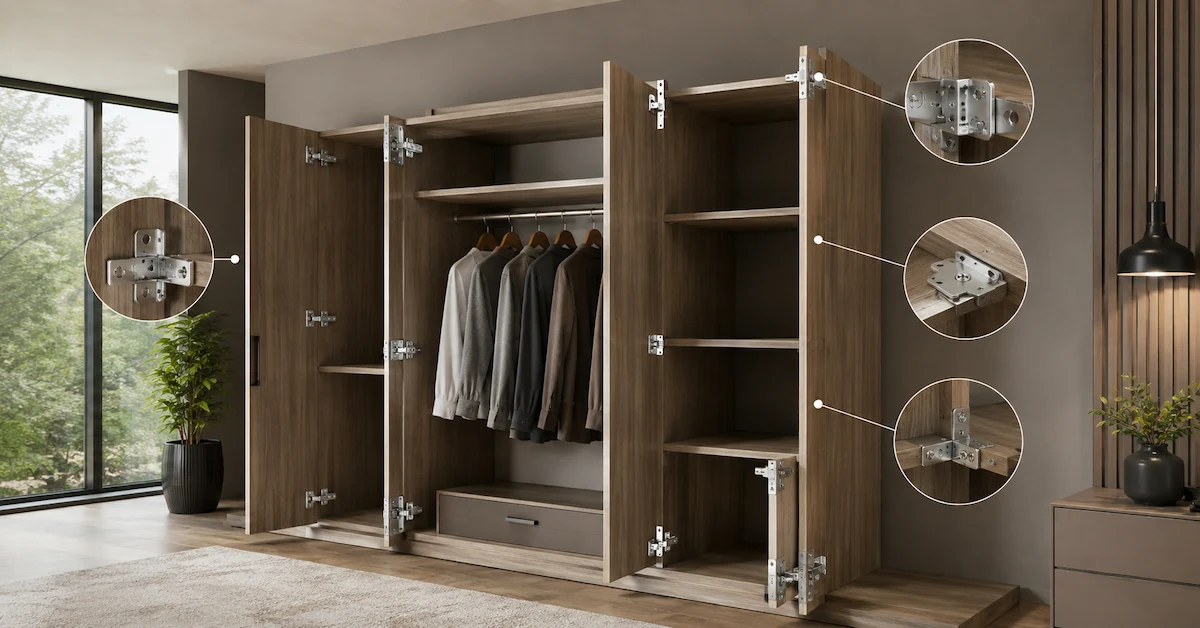
A flat-pack cabinet may need wooden dowels first to locate the panels. Then cam bolts. Then cam locks. Then screws for brackets, hinges, shelf supports, rails, or back panels. A shelving unit may need fewer connectors but more shelf pins or support parts. A wardrobe may need rail fittings, caps, screws, and brackets packed in a very different way.
The kit should follow that logic.
A good furniture assembly kit helps the user move through the build without guessing. Parts should be easy to identify. Similar screws should be separated. Small fittings should not hide under larger metal pieces. If the instruction sheet calls one part “A” and another part “B,” the hardware pack should make that difference obvious.
This sounds simple.
In practice, it is where many low-cost kits fail.
They may contain the right parts, but they do not help the user find the right part at the right moment.
The real value is organization, not just fastener supply
Most buyers can find someone to produce standard screws.
That is not the hard part.
The harder part is getting the complete kit right every time.
A reliable screw kit OEM setup usually needs to control several things at once:
- part selection
- fastener dimensions
- material and finish
- screw length and head type
- connector matching
- dowel size
- kit quantity
- part separation
- label accuracy
- packing sequence
- inspection before shipment
- repeat-order consistency
When any one of these details slips, the problem moves downstream.
A factory worker stops to recheck parts. A warehouse team has to open cartons. A retailer handles missing-hardware complaints. A customer sends photos of an unfinished cabinet.
The fastener may cost very little, but the service cost is not small.
That is why buyers should not only ask, “Can you make these screws?”
They should ask, “Can you build this kit around our furniture model and repeat it later without confusion?”
What a typical OEM furniture screw kit includes
The exact kit depends on the furniture design, but flat-pack furniture hardware usually contains more than screws.
A cabinet or shelving kit may include:
- machine screws
- self-tapping screws
- cam locks
- connector bolts
- wooden dowels
- threaded rods
- nuts and washers
- threaded inserts
- metal brackets
- rails or slide-related fittings
- plastic spacers
- caps, clips, or sleeves
- printed instructions or a parts map
Each part serves a different purpose.
Dowels help panels line up before tightening. Cam fittings pull panels together. Screws secure brackets or accessories. Washers spread force. Plastic parts may act as spacers, guides, caps, or protective fittings.
A good custom screw kit manufacturer should understand how those parts work together.
The kit is not simply a count of items. It is a small assembly system.
Flat-pack furniture is not forgiving
Flat-pack furniture is efficient because most of the preparation is done before the customer sees the product.
Panels are cut. Holes are drilled. Edges are finished. The hardware is packed. The instruction sheet is printed.
Once the carton arrives, the customer expects everything to fit.
There is not much room for correction.
A screw that is slightly too long may damage the panel face. A screw that is too short may not hold properly. A cam connector that does not match the bolt can leave a loose joint. A dowel that is too small may affect alignment. A missing washer may look minor, but it can change how a fitting tightens.
This is especially important with MDF, particleboard, laminated panels, and other engineered boards. These materials are practical for furniture production, but they do not always forgive poor fastening choices.
A careless fastener decision can make a decent panel product feel weak.
Packaging should match the assembly sequence
Packaging is not decoration in this category.
It is part of assembly control.
A compartmented box, step-based bags, labeled pouches, or clear blister pack can all work, depending on the product and sales channel. The right choice depends on who opens the kit next.
A factory worker needs speed.
A home customer needs clarity.
A warehouse team needs easy identification.
A retailer needs presentable packaging.
A service team needs replacement parts that match the original product.
If the kit is for an e-commerce furniture item, the customer may be assembling it alone with limited tools. In that situation, unclear packaging quickly becomes frustration.
A good screw kit should reduce questions.
It should make the user feel that the product was designed carefully, even before the first screw is tightened.
Custom kits do not always require custom-made screws
The word “custom” can be misunderstood.
A custom screw kit manufacturer does not always need to manufacture every piece from scratch. Many furniture projects use standard fasteners arranged in a customized kit format.
The customization may be in the:
- part mix
- quantity per pack
- label content
- packing sequence
- instruction matching
- packaging type
- OEM branding
- replacement kit format
- carton marking
- inspection process
Custom-made fasteners are useful when the furniture design truly requires them. For example, a non-standard screw length, a special finish, a modified bracket hole, or a connector that must fit an unusual board thickness.
But custom hardware should solve a real assembly problem.
Adding special parts without a clear reason can make future sourcing harder.
Material and finish should be confirmed before mass production
Furniture hardware often looks similar in photos.
A silver screw may be zinc-plated steel or stainless steel. A gold-colored insert may be brass, plated steel, or another alloy. A black part may be plastic, nylon, or coated metal.
Buyers should not approve a kit based only on appearance.
Before placing a bulk order, confirm:
- base material
- surface finish
- screw length
- thread type
- head style
- drive type
- connector size
- dowel diameter
- plastic part material
- corrosion expectations
- acceptable substitutions
- inspection requirements
For most indoor furniture, standard finishes may be enough. For humid storage, export shipping, long warehouse storage, or retail replacement kits, finish consistency and protection may matter more.
The goal is not always the most expensive specification.
The goal is the right specification for the furniture and the supply chain.
Where Jiangmen Jinhe Hardware fits
Jiangmen Jinhe Hardware Co., Ltd. was founded in 2016 in Jiangmen City, Guangdong Province, and operates from a 4,000-square-meter facility. The company works with fasteners, standard parts, and non-standard customization for domestic and international markets.
Its product range includes machine screws, self-tapping screws, micro screws, and precision screws, with materials such as stainless steel, iron, and aluminum. The company also works with standards including GB, DIN, ANSI, BS, JIS, and ISO.
For buyers sourcing OEM screw kits, that background is relevant because furniture assembly kits often need several fastener types in one controlled package. A cabinet, shelving unit, or wardrobe program may require screws, connector bolts, inserts, dowels, brackets, caps, labels, packaging, inspection, and repeat supply control.
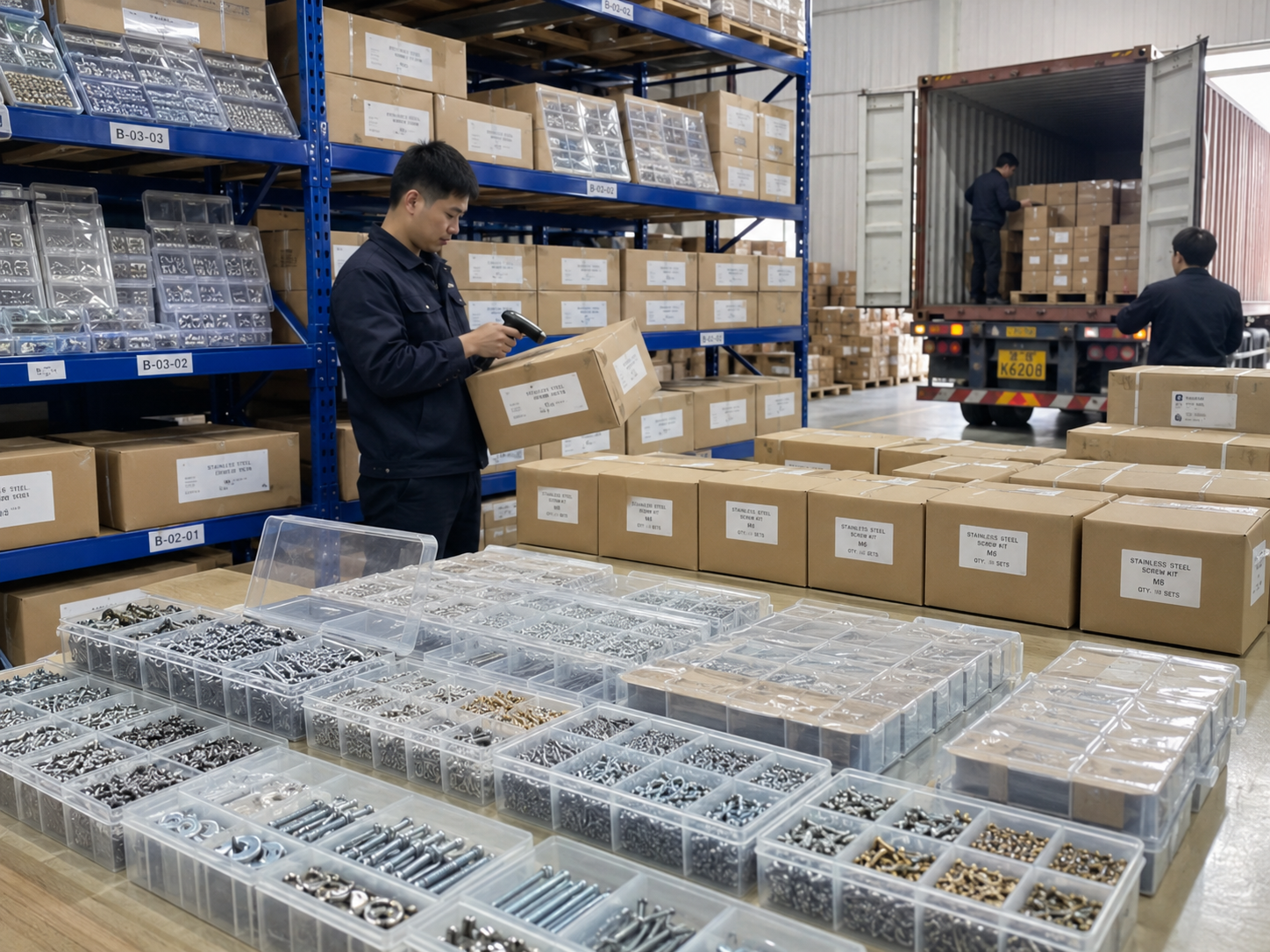
Jiangmen Jinhe also notes support for inspection before delivery, necessary documentation, logistics, warehousing, foreign trade, and supply chain services. For furniture brands, retailers, contract assemblers, and cross-border sellers, those services can help when a sample kit becomes a repeat order.
The useful question is not only whether a supplier can make fasteners.
It is whether the supplier can help keep the complete hardware kit stable.
Common sourcing mistakes buyers still make
One common mistake is approving loose hardware samples but not the finished kit.
Loose parts can show size and finish. They do not show whether the final pack is easy to understand, easy to inspect, and easy to use during assembly.
Another mistake is assuming one screw kit can serve several furniture models. Sometimes it can. Often it cannot. Board thickness, hole pattern, connector style, load, and assembly sequence may all change.
A third mistake is treating replacement kits as an afterthought. Customers lose screws. Installers misplace fittings. Retailers need spare hardware. If replacement packs are not planned early, customer service becomes harder later.
Buyers also sometimes ignore revision control.
Furniture designs change. Instructions change. Packaging changes. If the supplier cannot control old and new kit versions clearly, confusion follows.
The final mistake is buying only on price.
A cheaper kit can become expensive if it causes missing-part claims, assembly delays, product returns, or extra replacement shipments.
What buyers should ask before placing an OEM order
Before choosing an OEM screw kit manufacturer, buyers should ask practical questions:
What parts are included in the complete kit?
Which parts are standard, and which are customized?
Can the kit follow our assembly sequence?
Can labels match our instruction sheet?
How are similar screws separated?
Can sample packs be supplied before mass production?
How is the kit count checked before shipment?
What inspection documents are available?
How are revisions controlled?
Can replacement kits be supplied later?
Can the same specification be repeated in future orders?
Can logistics, warehousing, or export support be included?
These questions help reveal whether the supplier understands furniture assembly, or only fastener sales.
Frequently Asked Questions
What does an OEM screw kit manufacturer provide?
An OEM screw kit manufacturer provides organized screw kits and related hardware packs for furniture, cabinets, shelving, repair kits, retail products, and assembly programs.
Is an OEM screw kit only for new furniture production?
No. OEM screw kits can also be used for repair, replacement hardware, warranty service, spare-part packs, and cross-border e-commerce furniture programs.
Do all screw kits need custom-made parts?
Not always. Many kits use standard fasteners arranged in a custom pack format. Custom parts are only needed when the furniture design requires them.
Why is packaging important for furniture screw kits?
Packaging helps prevent missing parts, mixed fasteners, unclear assembly steps, and customer complaints. It also makes the kit easier to inspect and use.
What should buyers check before bulk ordering?
Buyers should check the full part list, sample pack, assembly sequence, labeling, count method, inspection process, and repeat-order control.
Can screw kit packaging be customized?
Yes. Packaging can be customized by furniture model, assembly step, part type, quantity, label, barcode, and sales channel.
A better screw kit makes assembly feel planned
The best screw kit does not make the customer stop and guess.
The screws are correct.
The dowels are easy to find.
The connectors match the holes.
The instruction sheet matches the hardware.
The kit is complete.
The next shipment matches the approved sample.
That is what buyers are really sourcing.
For OEM screw kits, custom screw kits, furniture assembly kits, cabinet screw kits, replacement hardware packs, and organized fastener packaging, Jiangmen Jinhe Hardware Co., Ltd. can discuss standard parts, non-standard customization, material options, inspection, packaging, logistics, warehousing, and repeat supply requirements.
For direct inquiries:
Tel/WeChat: +86 13729150102
WhatsApp: +86 13322893939
Email: sharon@hkhomeideas.com
Start with the furniture model, assembly sequence, part list, packaging method, label requirements, and expected order quantity.
Once those details are clear, the right screw kit becomes much easier to build, approve, and repeat.