
OEM Screw Kit Manufacturer: How Buyers Choose Fastener Kits for Wood-Panel Assemblies

A wooden box or cabinet body can look simple before hardware is installed.
Four panels.
A few brackets.
Several drilled holes.
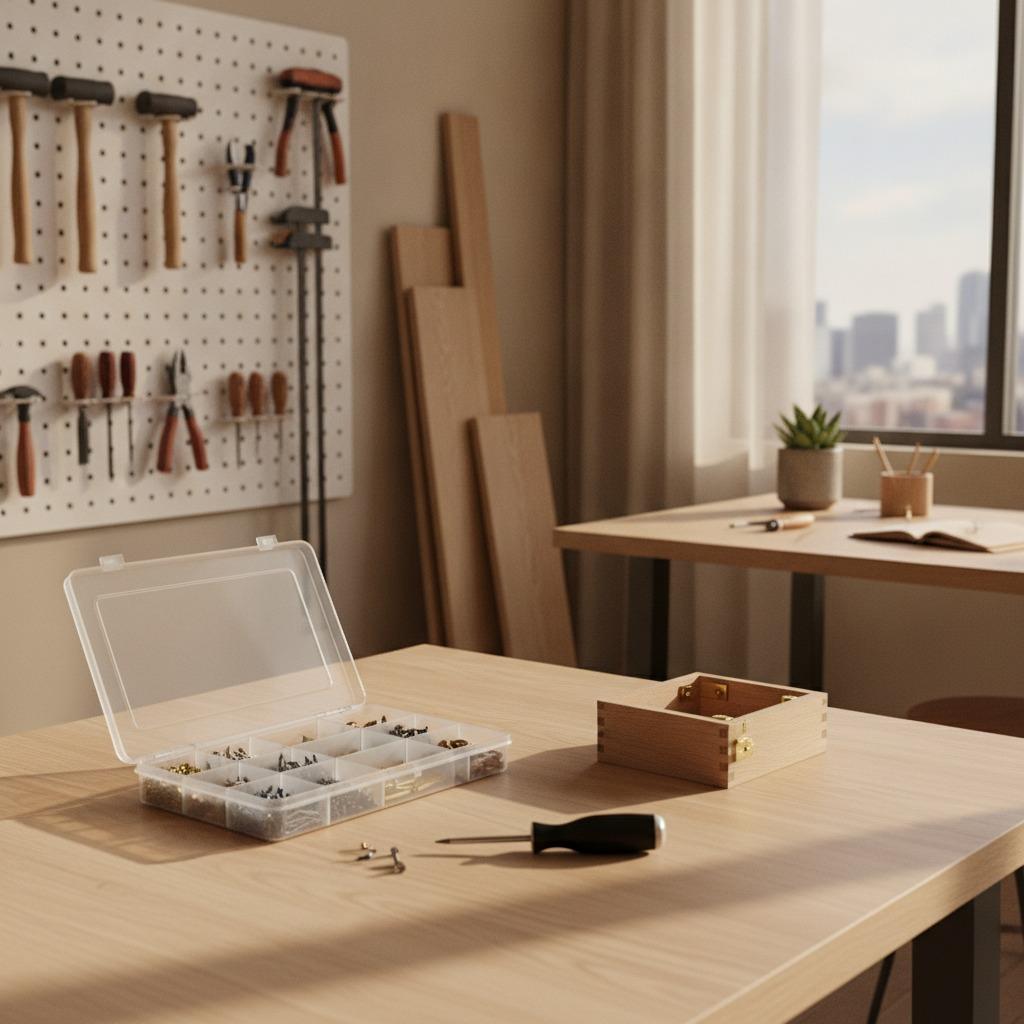
A handful of screws on the bench.
Then the assembly starts, and the small details become much larger than they looked on the drawing.
One screw is too long for the panel. One bracket hole does not line up cleanly. One fastener head interferes with the corner plate. A screw that looked acceptable in the sample photo splits the edge of the board when the operator drives it too quickly.
That is why choosing an OEM screw kit manufacturer is not only about finding a supplier that can pack screws into a bag.
It is about building a fastener set that helps the assembly work the same way every time.
For wooden boxes, drawer bodies, cabinet components, workshop storage, small equipment enclosures, furniture frames, and mixed-material assemblies, the screw kit affects production speed, joint strength, packaging accuracy, documentation, and after-sales stability.
A low-cost screw kit may look attractive at first.
A poorly matched kit becomes expensive once the line stops, panels are damaged, or customers start asking for replacement hardware.
A screw kit has to match the whole assembly
A custom screw kit should begin with the assembly, not with the screw catalog.
That sounds obvious, but many sourcing problems begin when buyers choose fasteners by diameter and length alone. A screw is not working by itself. It is working through a bracket, into a panel, around a corner, close to an edge, or inside a limited installation space.
For a wood-panel assembly, the buyer should confirm:
What panel material is being used?
What is the panel thickness?
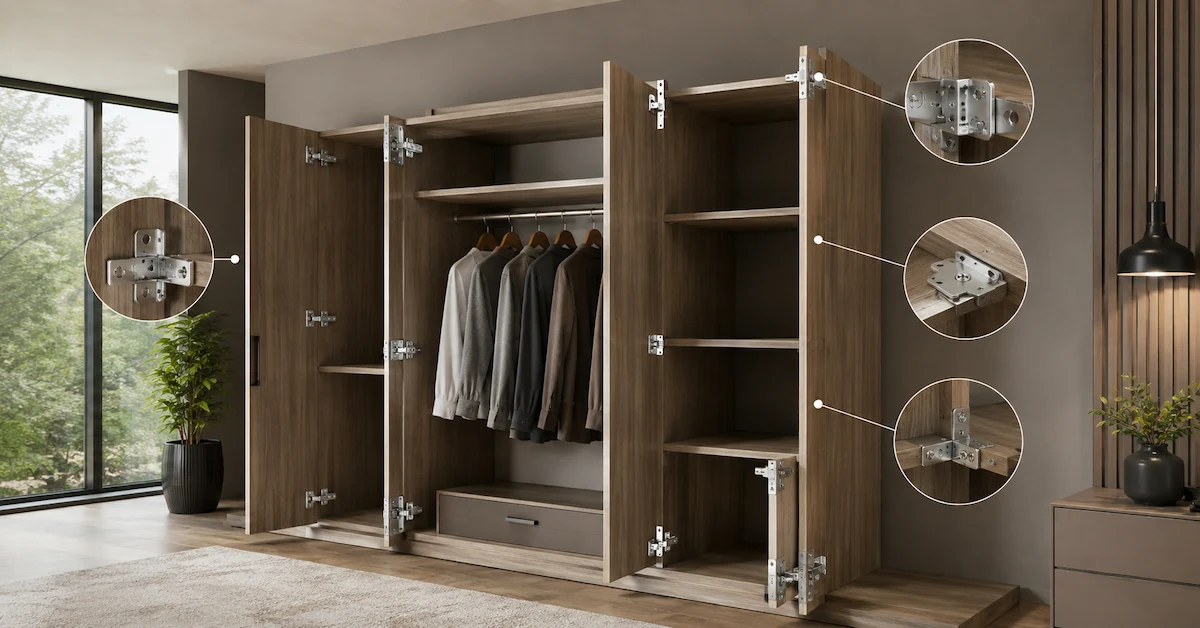
Are there metal brackets or corner plates?
Are pilot holes required?
Will screws be installed by hand, cordless driver, pneumatic tool, or automated equipment?
Is the joint expected to carry load, hold alignment, or simply close the enclosure?
Will the finished product be used indoors, shipped overseas, stored in warehouses, or handled repeatedly?
These questions decide whether the kit needs wood-compatible screws, machine screws, self-tapping screws, micro screws, precision screws, washers, nuts, inserts, or several fastener families packed together.
A serious custom screw kit supplier should ask these questions before quoting.
If the supplier only asks for “size and quantity,” the buyer may be carrying too much risk alone.
What the wooden enclosure example suggests
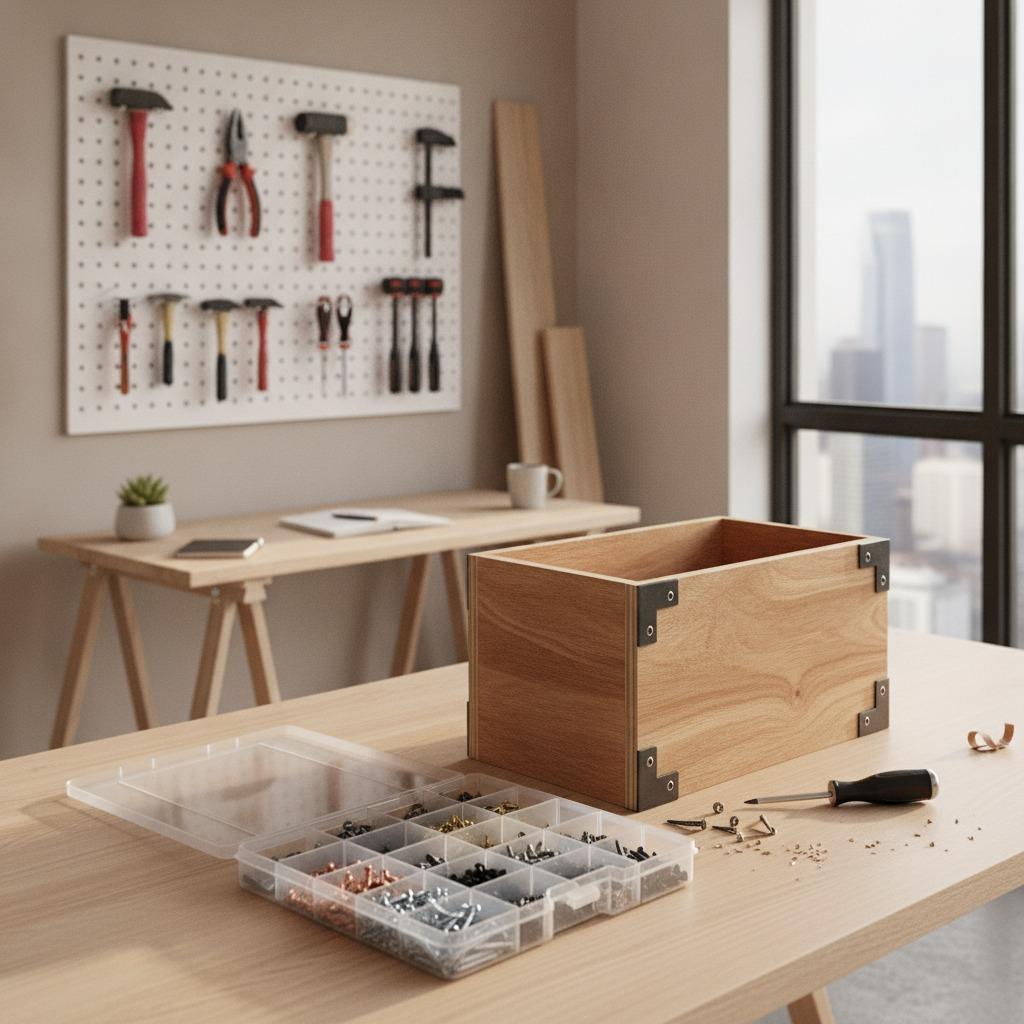
The assembly described in the source text appears to be a four-sided wooden body with an open top. It includes wood-based panels, visible corner brackets, external metal plates, screws, and lower-corner hardware. The exact panel material is not confirmed; it could be plywood, veneered board, laminated particleboard, or another engineered board.
That uncertainty matters.
Different boards hold screws differently.
Plywood often gives better screw holding in some applications, but edge direction and layer quality still matter. Particleboard can be practical and cost-efficient, but it may be more sensitive near edges. Veneered or laminated boards may look clean on the surface while still requiring careful pilot-hole control underneath.
For this kind of product, a buyer should avoid guessing from a photo.
The fastener kit should be built around the real material stack.
If the screw passes through a metal bracket and then into a wood-based panel, the supplier needs to know bracket thickness, hole diameter, screw head style, thread type, required engagement depth, and edge distance.
Without those details, even a good screw can become the wrong screw.
Product example: metric ISO M3 and M4 screw options from JHFix
One relevant JHFix product page is titled Factory price, metric ISO M3, M4 flat head aluminum hex socket head. The page URL and image title also point to product directions such as metric ISO M3 Allen titanium screw, M4 flat head aluminum anodized screw, 40mm, gold color, class 4.8/6.8, and drywall applications.
The publicly visible page text does not provide a full specification table, so buyers should confirm the exact material, grade, head type, drive type, length, thread, coating, and application before ordering.
Still, the product direction is useful for B2B sourcing because many OEM screw kits are mixed. A wooden enclosure or furniture assembly may need ordinary wood screws in one location, machine screws for metal brackets in another, and special metric screws for a smaller fitting, handle, cover, or accessory.
| Product Direction From Page Text | Buyer Interpretation |
|---|---|
| Metric ISO | Useful for international sizing language and specification control |
| M3 Allen / hex socket screw | Relevant for compact fittings, metal parts, or precise tool engagement |
| M4 flat head screw | Useful where a flush or low-profile surface is needed |
| Aluminum anodized / gold color wording | Suggests appearance-focused or lightweight screw options, but exact material must be confirmed |
| 40mm wording | A possible length reference that must be verified before ordering |
| Class 4.8 / 6.8 wording | Strength class wording appears in the product title, but buyers should confirm the exact standard and applicable product |
| Drywall wording | Indicates possible interior or board-fastening direction, but final use must match the confirmed screw design |
For an OEM screw kit buyer, the lesson is simple: product titles can give direction, but purchase approval needs confirmed specifications.
A screw listed as M3 or M4 may be useful in the kit. But the supplier and buyer still need to settle the drawing, thread, head, material, finish, and packaging method.
Why mixed screw kits need tighter control
A single-product fastener order is easier to manage.
A mixed screw kit is different.
One kit may contain short screws for corner brackets, longer screws for panel fixing, machine screws for threaded components, washers for load distribution, and small precision screws for a cover plate or internal fitting. Some screws may look similar but serve different jobs.
That is where mistakes happen.
A worker may use the wrong screw in a bracket.
A packer may mix M3 and M4 parts.
A customer may confuse flat head and pan head screws.
A replacement kit may include almost the right part, but not quite.
A later batch may arrive with a slightly different finish or drive recess.
These details look small until the product reaches assembly.
A good industrial screw kit factory should have a clear system for mixed components: part numbers, labels, separated packaging, inspection records, and repeat-order control.
The kit should not depend on someone remembering which screw “looks right.”
Choosing the right screw category
A wooden enclosure with metal brackets may require more than one screw category.
Machine screws may be needed where the mating component has a prepared thread, nut, insert, or metal part. These are not the same as wood screws. They need the correct thread engagement and often require a matching threaded part.
Self-tapping screws may be used where the screw forms or cuts its own mating path in a suitable substrate. These need careful confirmation because self-tapping performance depends on material, hardness, thread design, point type, and installation condition.
Wood-compatible screws may be used when fastening brackets directly into plywood, particleboard, MDF, or other wood-based panels. The thread design, core diameter, point, head, and length all affect the result.
Micro screws or precision screws may be needed in small fittings, covers, hinges, clips, or narrow corners where standard screw heads are too large.
Metric ISO screws may be relevant when buyers need sizing consistency across international supply chains or when the assembly uses metric drawings.
M3 Allen screws may be useful where a socket drive is preferred for better tool engagement in compact areas.
M4 flat head screws may be useful where the screw head needs to sit flush or avoid interference with another surface.
The main point is not to use every category.
The point is to use the correct category for each joint.
Head type and drive style can change assembly speed
Buyers often focus on screw length and material first.
That is understandable, but head type and drive style can create just as many problems.
A flat head screw may be useful when the head must sit flush. But if the countersink is not prepared correctly, the head may sit proud or damage the surface. A pan head may be easier in some bracket applications, but it may interfere with an adjacent panel or cover.
A hex socket or Allen drive may give good tool engagement in certain industrial assemblies. It can be useful when workers need controlled tightening or when the head is small. But it requires the correct tool, and that tool must be available at the assembly station or included in the user process.
Phillips drive remains common, but bit fit matters. Poor engagement can cause cam-out, stripped recesses, and slower assembly.
A supplier should not choose drive type by habit.
The drive should match the assembly process.
Material and finish should be written, not assumed
The JHFix product title includes words such as titanium, aluminum, anodized, gold color, and drywall. These terms suggest possible product directions, but without a visible specification table, the buyer should confirm the exact material and finish before placing an order.
This is important because color does not prove material.
A gold-colored screw may be anodized aluminum, plated steel, brass-colored finish, titanium coating, or another surface treatment depending on the product. A silver screw may be stainless steel, zinc plated steel, aluminum, or another material.
For OEM screw kits, buyers should confirm:
- base material
- material grade
- surface finish
- coating process
- color requirement
- corrosion expectation
- hardness or strength class if required
- whether substitutions are allowed
- whether the finish can survive packing and installation
- whether the screw is visible or hidden after assembly
A decorative or color-matched screw may look better in a product photo, but the surface still needs to survive real use.
If the finish scratches during installation, the customer will notice.
If the material is too soft for the drive torque, the assembly team will notice first.
How Jiangmen Jinhe Hardware fits OEM screw kit sourcing
Jiangmen Jinhe Hardware Co., Ltd. works with machine screws, self-tapping screws, micro screws, precision screws, standard fasteners, and non-standard customization. Its material range includes stainless steel, iron, and aluminum, and the company states work with common standards such as GB, DIN, ANSI, BS, JIS, and ISO.
For an OEM screw kit buyer, that range is useful because wood-panel assemblies often need several fastener types in one controlled kit. A wooden box with metal brackets may not need only wood screws. It may need machine screws, self-tapping screws, washers, nuts, small precision fasteners, and custom packaging.
The value of a supplier is not only whether it can make one screw.
It is whether it can help organize the whole kit.
That includes sample review, drawing discussion, part separation, labeling, inspection before delivery, documentation, and repeat supply.
For buyers exporting products or managing mixed hardware across several SKUs, this workflow is often more important than the lowest fastener price.
Packaging is part of the kit design
A mixed screw kit can fail even when the screws themselves are correct.
The reason is packaging.
If similar screws are mixed together, the assembler has to guess. If washers and nuts are loose in the same bag, the count may be difficult to check. If M3 and M4 screws are visually similar, they should not be packed without labels. If a gold-colored screw is meant for a visible surface, it should be protected from scratches.
Production packaging should answer practical questions:
Which screw is used first?
Which screws belong with the corner bracket?
Which screws are for threaded components?
Which parts are spare?
Can the operator check the count quickly?
Does the label match the assembly instruction?
Can the same kit be repeated next month?
For line-side use, separated bags or compartment boxes may help. For retail or e-commerce, blister packs, labeled pouches, or boxed kits may be better. For industrial OEM use, the best packaging may be simple but highly organized.
Packaging should support the assembly sequence.
It should not create a small puzzle.
Sample builds reveal what quotations cannot
A quotation can list screw sizes.
It cannot show whether the kit is comfortable to use.
A sample build can.
Before approving a bulk OEM screw kit, buyers should assemble the real product with the actual panel, bracket, tool, and packaging format. This test does not need to be complicated. It simply needs to be realistic.
During the sample build, check:
| Test Area | What to Watch |
| Screw length | Does it hold without breaking through the panel? |
| Head clearance | Does the head interfere with brackets or covers? |
| Drive fit | Does the bit engage cleanly without slipping? |
| Panel behavior | Does the board split, bulge, or strip? |
| Bracket fit | Do holes align without force? |
| Tool access | Can the operator reach the screw comfortably? |
| Kit clarity | Are parts easy to identify? |
| Count accuracy | Is the kit complete and easy to check? |
| Finish durability | Does the screw scratch during packing or driving? |
| Repeat build | Does the second assembly feel the same as the first? |
This kind of test often finds problems before they become production costs.
A sample kit on a desk is useful.
A sample kit in the actual assembly is better.
Documentation should be practical, not decorative
B2B buyers need documentation for different reasons.
Some need drawings for engineering approval. Some need material confirmation for customer files. Some need inspection reports for incoming QC. Some need packing specifications to align warehouse and assembly teams.
Documentation should match the project.
Do not ask for unnecessary certificates that the application does not need. But do not accept vague language either.
Useful documents may include:
- product drawing
- material confirmation
- finish specification
- dimension inspection report
- packing list
- label format
- sample approval record
- batch identification
- substitution control agreement
For repeat production, these documents help prevent confusion.
They also help solve problems when a later shipment does not match the sample.
Common mistakes buyers should avoid
One common mistake is choosing screws from product photos.
A photo can show head style and color. It cannot confirm material, thread, hardness, finish, tolerance, or performance in the actual panel.
Another mistake is using one screw type for every joint. A bracket-to-panel joint, threaded metal fitting, and small precision component may each need a different fastener.
A third mistake is specifying only diameter and length. That leaves head type, drive recess, material, finish, packaging, and inspection unclear.
Buyers also sometimes forget the person installing the screw. If the tool cannot reach the fastener or the drive style is inconvenient, the assembly slows down.
The final mistake is approving a mixed kit without testing it physically. A kit can be correct on paper and still awkward in production.
What buyers should ask before placing an OEM order
Before placing an order with an OEM screw kit manufacturer, buyers should ask:
What panel material is being used?
What is the panel thickness?
Which screws go into wood-based panels?
Which screws go into metal brackets or threaded parts?
Are M3, M4, or other metric screws required?
Is a flat head, pan head, countersunk, or socket head needed?
What drive type should be used?
What finish or color is required?
Are aluminum anodized screws or gold-colored screws needed for visible areas?
Is the kit used for drywall, furniture, equipment enclosure, or another application?
Can the supplier provide drawings or confirmed specifications?
How will similar screws be separated in packaging?
How will the kit count be checked?
Can replacement packs be prepared?
Can the same specification be repeated in future orders?
These questions help buyers move from a generic screw purchase to a controlled OEM kit.
Frequently Asked Questions
What does an OEM screw kit manufacturer provide?
An OEM screw kit manufacturer may provide machine screws, self-tapping screws, wood-compatible screws, micro screws, precision screws, washers, nuts, inserts, labels, and customized packaging for a specific assembly.
Why is a custom screw kit useful for wood-panel assemblies?
A custom kit helps match screw types, sizes, quantities, and packaging to the actual panel material, bracket design, assembly sequence, and production process.
What product information is visible on the JHFix link?
The page title identifies factory-price metric ISO M3 and M4 flat head aluminum hex socket head screw directions, while the URL and image title include terms such as M3 Allen titanium screw, M4 flat head aluminum anodized, 40mm, gold color, class 4.8/6.8, and drywall. A full specification table was not visible in the readable page text.
Should buyers approve screws from photos alone?
No. Buyers should confirm drawings, material, finish, thread, head type, drive type, packaging, and sample assembly performance before bulk orders.
Can one screw kit contain both standard and custom screws?
Yes. Many OEM kits combine standard fasteners with custom or project-specific screws, depending on the assembly design.
Why does packaging matter for mixed screw kits?
Packaging helps prevent mixed fasteners, wrong installation, missing parts, and assembly delays. For OEM kits, packaging is part of production control.
Final takeaway
A good OEM screw kit does not need to look complicated.
It needs to make the assembly predictable.
The correct screw reaches the correct joint. The bracket fits. The panel is not damaged. The driver reaches the head. The kit is complete. The label is clear. The next shipment matches the approved sample.
That is what buyers should expect from a reliable OEM screw kit manufacturer.
For OEM screw kits, custom screw kits, industrial screw kits, metric ISO screws, M3 Allen screws, M4 flat head screws, aluminum anodized screws, drywall screws, and custom fastener packaging, Jiangmen Jinhe Hardware Co., Ltd. can discuss drawings, samples, material options, finish requirements, packaging, inspection, and repeat supply.
For direct inquiries:
Tel/WeChat: +86 13729150102
WhatsApp: +86 13322893939
Email: sharon@hkhomeideas.com
Start with the panel material, bracket design, hole size, screw list, drive type, finish requirement, packaging method, and expected order quantity.