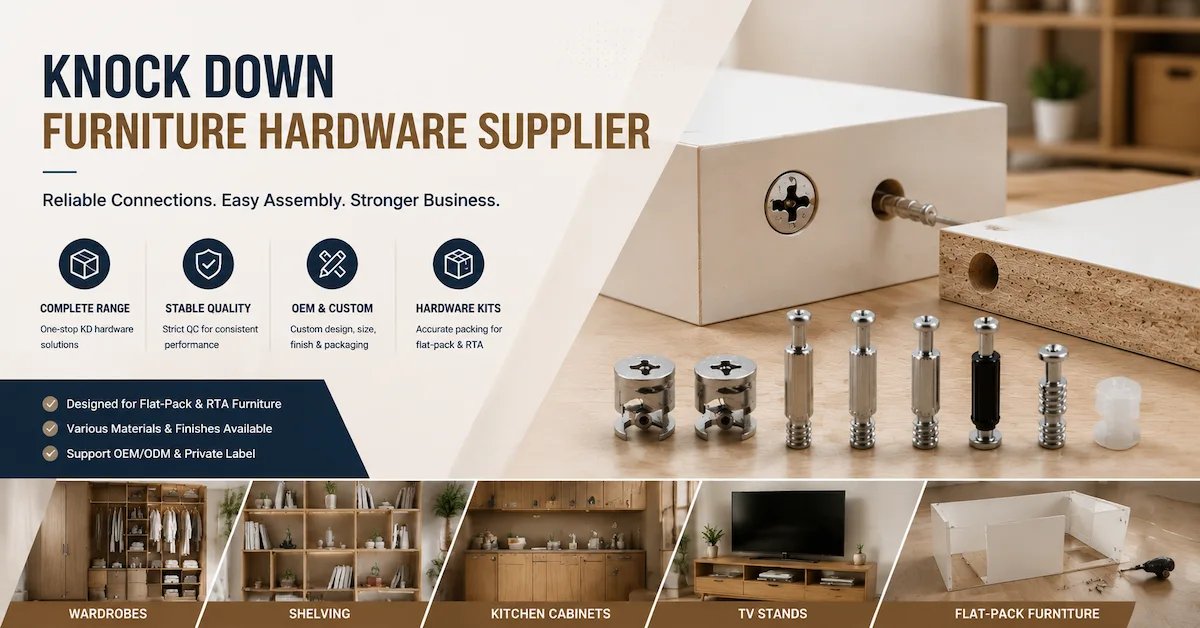

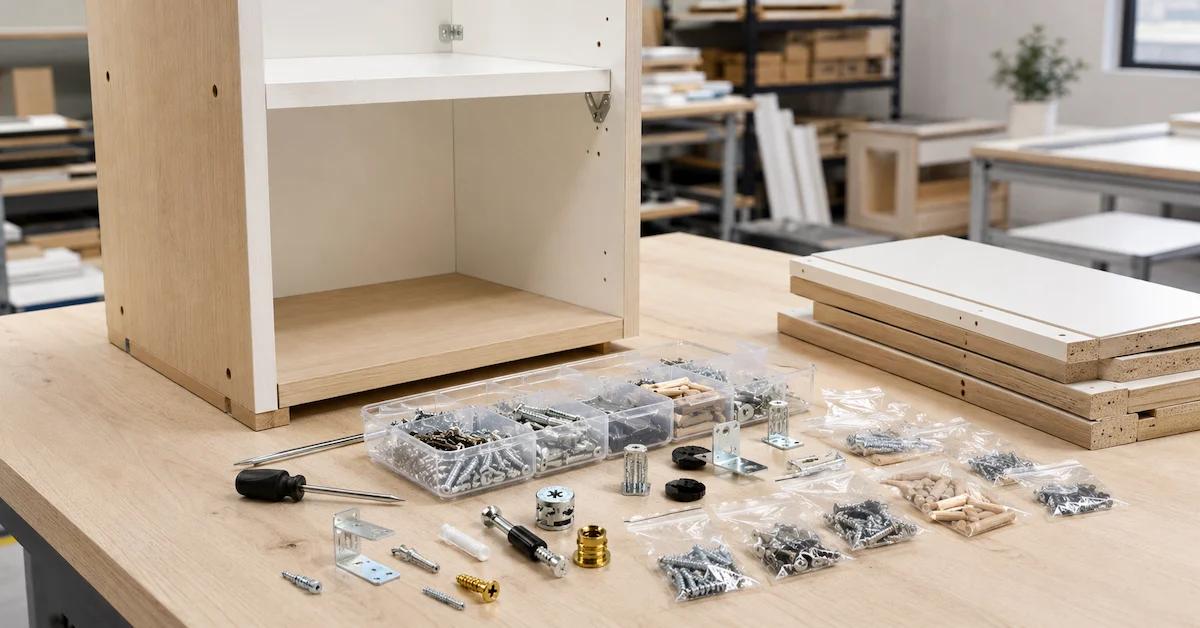
Pre-packed furniture hardware kits give furniture manufacturers, cabinet factories, flat-pack brands, hardware wholesalers, and retailers a ready-to-use set of components for each furniture model or product SKU.
Instead of receiving loose screws, connectors, nuts, brackets, and plastic accessories in separate cartons, the buyer receives the required components counted, organized, labeled, and sealed in one package.
This approach can reduce warehouse sorting, packing mistakes, missing-part complaints, and production interruptions. It also creates a more convenient assembly experience for installers and end users.
A pre-packed kit may include only a few screws and cam locks, or it may contain dozens of components divided into multiple labeled sub-bags. The correct solution depends on the furniture structure, board material, assembly sequence, sales channel, and target market.
JHFIX supplies screws, nuts, furniture connectors, stamped hardware, accessories, and customized packaging solutions. Buyers can explore the complete JHFIX product range for furniture hardware and OEM kitting projects.
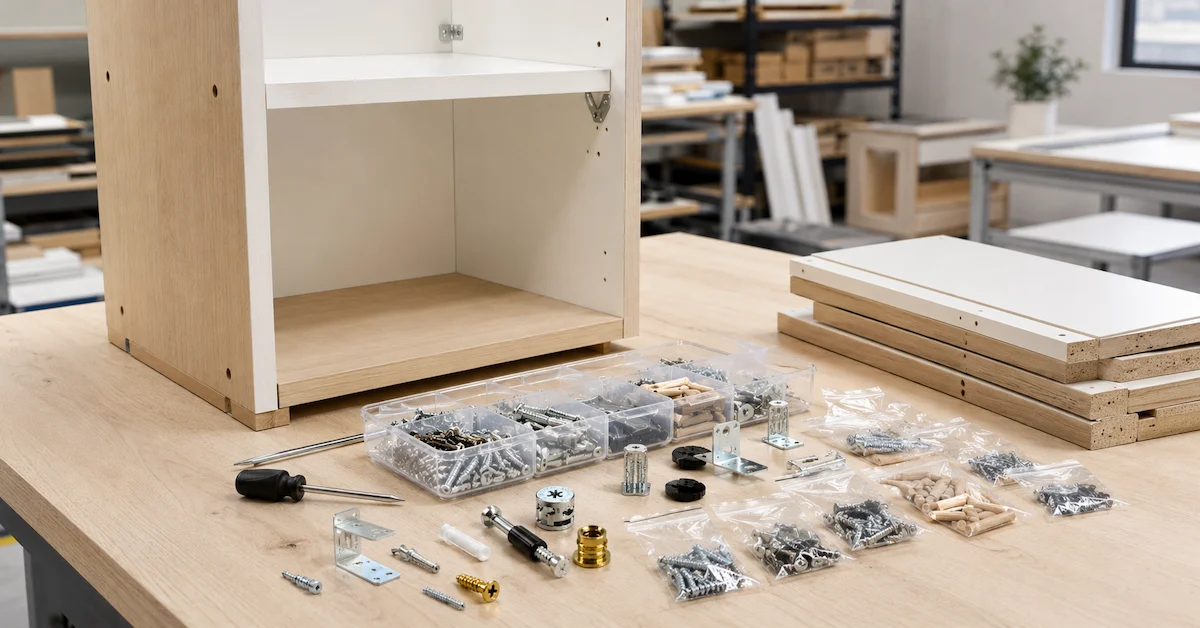
Quick Answer: What Are Pre-Packed Furniture Hardware Kits?
Pre-packed furniture hardware kits are complete sets of fasteners, connectors, brackets, anchors, and accessories that are counted and packaged before delivery.
Each kit is usually prepared for one furniture model, one assembly stage, one retail SKU, or one installation task.
Common components include:
- Wood screws
- Self-tapping screws
- Cam locks
- Cam bolts
- Insert nuts
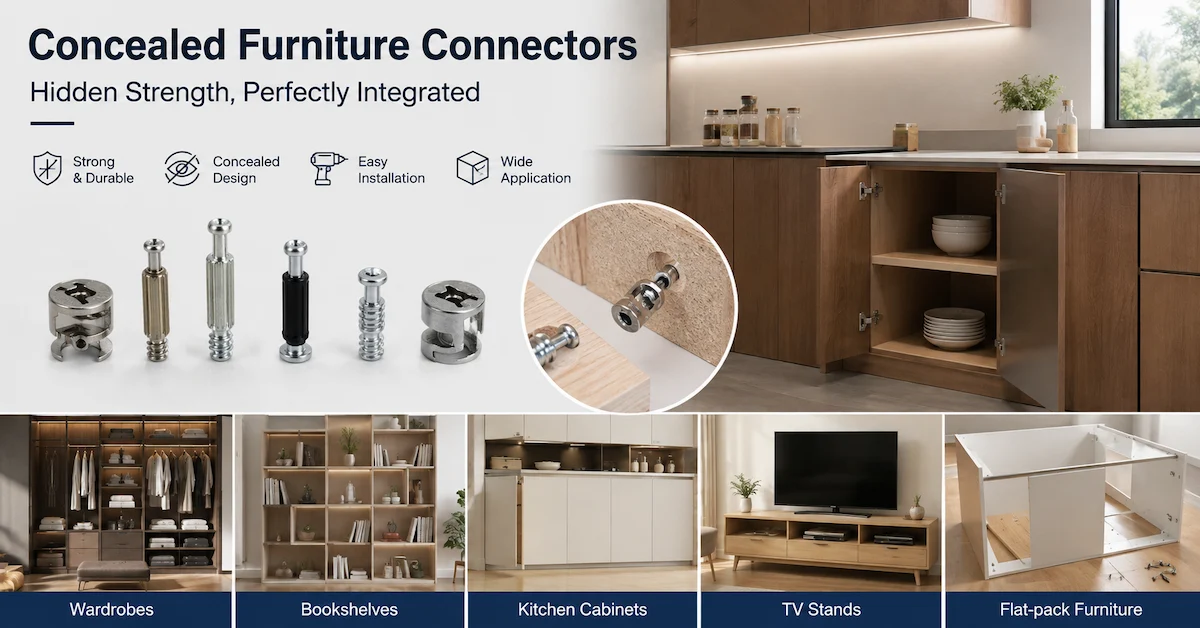
- Cabinet connectors
- L-brackets
- Fixing plates
- Washers
- Wall anchors
- Wooden dowels
- Plastic caps
- Installation accessories
OEM buyers can customize the products, quantities, finishes, packaging materials, labels, barcodes, logos, and carton marks.
Who Needs Pre-Packed Furniture Hardware Kits?
Pre-packed kits are particularly valuable when hardware accuracy directly affects production or the customer experience.
Furniture Manufacturers
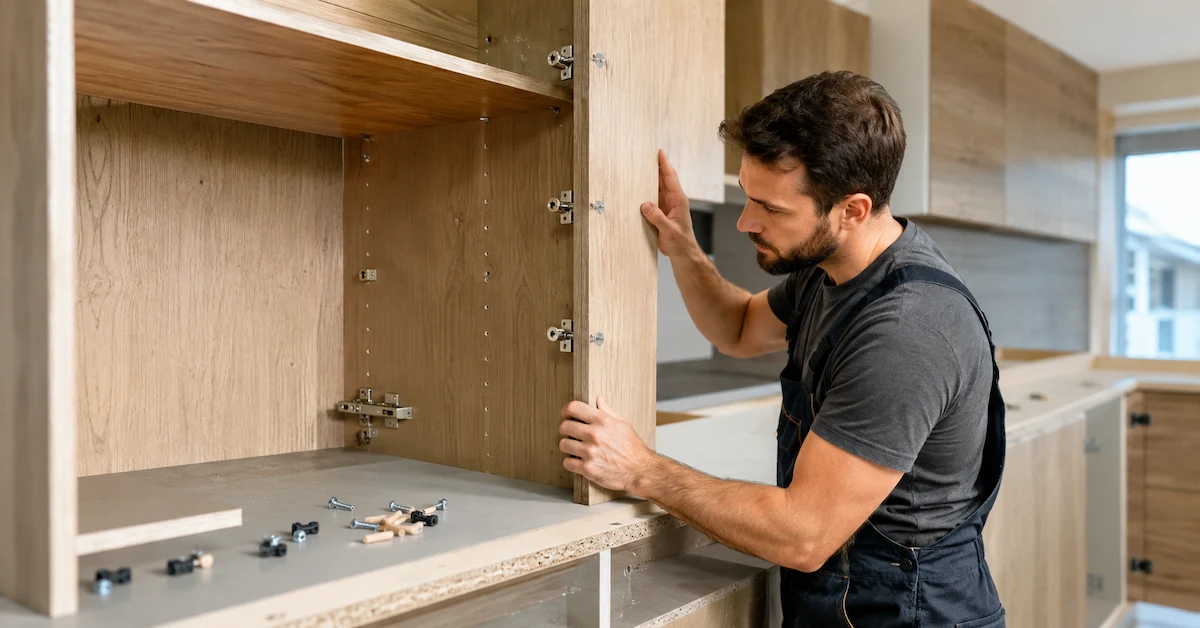
Furniture factories can use one kit for each cabinet, wardrobe, desk, shelf, or storage unit. Workers receive the components needed for one product without sorting loose hardware on the assembly line.
Flat-Pack Furniture Brands
Flat-pack furniture customers expect every component to be included. A missing connector or incorrect screw can prevent the entire product from being assembled.
Cabinet and Wardrobe Factories
Cabinet and wardrobe manufacturers often require cam locks, bolts, insert nuts, shelf supports, brackets, and screws in model-specific combinations.
Hardware Wholesalers
Wholesalers can sell pre-packed repair, replacement, and installation kits rather than individual loose parts.
Retail and E-Commerce Brands
Retailers need organized, clearly labeled, and market-ready packages. Branded bags, blister packs, and boxes can improve product presentation and simplify SKU management.
Installation Contractors
Installers can use job-specific kits for cabinets, shelving systems, office furniture, hotel furniture, and commercial fit-out projects.
Who May Not Need Pre-Packed Kits?
Pre-packed furniture hardware kits are not always the most economical option.
Loose or bulk packaging may be more appropriate when:
- A factory feeds one standard screw into an automated production line
- The buyer uses large quantities of one fastener type
- Components are stored in production bins
- No model-specific sorting is required
- Packaging presentation has no commercial value
For these applications, bulk cartons, plastic boxes, or buckets may provide a lower-cost solution.
The supplier should recommend packaging based on the buyer’s workflow rather than automatically selecting individual kits.
What Can Be Included in a Pre-Packed Kit?
A complete furniture hardware kit can combine metal, plastic, and wooden components.
| Component Category | Typical Products | Main Purpose |
|---|---|---|
| Screws | Wood screws, confirmat screws, self-tapping screws | Panel and bracket fastening |
| Connector systems | Cam locks, cam bolts, cabinet connectors | Hidden furniture connections |
| Threaded parts | Insert nuts, hex nuts, rivet nuts | Strong and repeatable connections |
| Stamped hardware | L-brackets, fixing plates, support plates | Reinforcement and load support |
| Anchoring parts | Wall plugs, expansion anchors, washers | Wall installation and load distribution |
| Alignment parts | Wooden dowels, plastic dowels, spacers | Panel positioning |
| Finishing parts | Plastic caps, hole covers, sleeves | Appearance and protection |
| Packaging materials | Bags, labels, cards, boxes, dividers | Identification and organization |
The supplier should confirm that the products work together as one assembly system instead of treating each component as an unrelated item.
Why Pre-Packed Hardware Is Better Than Loose Components
The main value of pre-packed furniture hardware kits comes from process control.
| Comparison Point | Pre-Packed Hardware Kits | Loose Hardware |
|---|---|---|
| Parts per furniture unit | Counted and packed by set | Buyer must sort components |
| Missing-part control | Easier to inspect | Depends on buyer-side handling |
| Assembly efficiency | Ready for production or installation | Additional preparation required |
| Retail presentation | Can be branded and labeled | Usually not retail-ready |
| Model identification | Label, barcode, or product code | More difficult to manage |
| Repeat-order consistency | Controlled through a confirmed BOM | Greater risk of mixing specifications |
| Warehouse workload | Lower sorting requirement | More picking and counting work |
| Best application | Furniture models, retail kits, OEM projects | High-volume use of individual items |
The cheapest packaging method is not always the lowest-cost supply solution. Buyers should also consider warehouse labor, replacement shipping, customer complaints, and production delays.
Applications of Pre-Packed Furniture Hardware Kits
Flat-Pack Cabinets
Cabinet kits commonly contain cam locks, cam bolts, wooden dowels, shelf supports, screws, brackets, and plastic caps.
The kit must correspond with the panel drilling pattern and board thickness.
Wardrobes
Wardrobe kits may require stronger connectors, longer bolts, reinforcement brackets, anti-tip wall anchors, and installation hardware.
Large wardrobe projects may benefit from multiple sub-bags separated by assembly stage.
Office Furniture
Desks, pedestals, workstations, and storage cabinets require hardware that supports regular commercial use and efficient installation.
Shelving and Storage Systems
Shelf kits may combine brackets, screws, wall plugs, washers, fixing plates, and support accessories.
Hotel and Project Furniture
Project furniture suppliers may need each hardware package labeled by room, furniture model, building section, or installation phase.
Furniture Repair Kits
Repair and replacement kits can contain commonly lost or damaged components, such as cam locks, bolts, dowels, brackets, and screws.
Retail DIY Hardware Sets
Retail products may be packed in blister cards or compartment boxes with instructions, barcodes, brand information, and application descriptions.
How to Design Pre-Packed Furniture Hardware Kits
A reliable kit should be developed from the furniture design and assembly process.
1. Define the Furniture Model
The supplier should know whether the kit is for a cabinet, wardrobe, shelf, desk, bed, drawer unit, or another furniture product.
The furniture model determines the hardware types and quantities.
2. Confirm Board Material and Thickness
MDF, particleboard, plywood, laminated board, and solid wood require different fastening solutions.
Board thickness affects:
- Screw length
- Cam bolt length
- Insert nut depth
- Connector dimensions
- Hole positions
- Bracket selection
3. Build an Accurate BOM
The bill of materials should identify every component in the package.
Descriptions such as “small screw” or “cabinet connector” are not precise enough. Each item should have a unique part code and confirmed specification.
4. Map the Assembly Sequence
Complex furniture may be easier to assemble when the hardware is separated into stages.
For example:
- Bag A: Main cabinet structure
- Bag B: Shelves and partitions
- Bag C: Door and drawer installation
- Bag D: Wall anchoring and anti-tip hardware
- Bag E: Handles and finishing accessories
This system helps installers identify the correct parts at each step.
5. Approve a Complete Sample Kit
The buyer should test the sample kit with the actual furniture panels before bulk production.
Sample approval should cover:
- Component fit
- Quantity
- Assembly sequence
- Surface finish
- Label information
- Packaging strength
- Overall user experience
BOM Checklist for Pre-Packed Furniture Hardware Kits
| BOM Field | Information to Confirm |
|---|---|
| Part name | Screw, connector, nut, bracket, anchor |
| Part code | Unique buyer or supplier reference |
| Dimensions | Diameter, length, thickness, hole spacing |
| Material | Carbon steel, stainless steel, zinc alloy, plastic |
| Finish | Zinc plated, nickel plated, black, custom coating |
| Quantity | Number of pieces in each kit |
| Sub-bag | Assembly stage or product section |
| Packaging | PE bag, resealable bag, blister pack, box |
| Label | Model, barcode, logo, part code |
| Inspection | Quantity, dimensions, appearance, sealing |
For repeat orders, the approved BOM, sample kit, label artwork, and packaging specification should be maintained as controlled production references.
Packaging Formats for Pre-Packed Hardware Kits
Sealed Bag Packaging
Sealed bags are suitable for furniture factories and flat-pack furniture brands.
Advantages include:
- Low material cost
- Flexible component combinations
- Lightweight shipping
- Easy labeling
- Suitable for one kit per furniture unit
Sharp brackets or stamped parts may require thicker bags to prevent punctures.
Resealable Bag Packaging
Resealable bags are useful for replacement kits, retail hardware, and packages that may be opened several times.
They also allow unused components to remain organized.
Blister Packaging
Blister packaging provides strong product visibility and is suitable for retail shelves.
It works well for:
- Furniture repair kits
- Connector replacement sets
- Bracket kits
- Screw and anchor combinations
- DIY furniture hardware
Box Packaging
Boxes are appropriate for larger assortments or kits containing several hardware types.
Internal compartments or dividers can prevent mixing during transportation.
Multi-Bag Packaging
A master bag or box can contain several numbered sub-bags. This is useful for wardrobes, large cabinets, and complex modular furniture.
OEM and Private-Label Options
Pre-packed furniture hardware kits can be customized for furniture brands, importers, wholesalers, and retailers.
OEM options may include:
- Custom hardware specifications
- Buyer-defined quantities
- Model-specific BOMs
- Printed labels
- Customer logos
- Barcode and QR code
- Product identification numbers
- Assembly-stage labels
- Multi-language descriptions
- Warning information
- Country-of-origin marking
- Retail cards
- Branded boxes
- Custom outer cartons
Buyers should supply final artwork files, barcode data, label dimensions, and target-market requirements before production.
Quality Control for Pre-Packed Furniture Hardware Kits
Kit inspection must cover both the individual components and the completed package.
Component Inspection
The supplier should verify:
- Product type
- Dimensions
- Thread quality
- Hole positions
- Bracket thickness
- Surface finish
- Appearance
- Connector compatibility
Quantity Verification
Possible quantity-control methods include:
- Manual counting
- Pre-set counting equipment
- Weight comparison
- Compartment-based sorting
- First-kit approval
- Random finished-kit checks
The method should be selected according to part size, order quantity, and the complexity of the kit.
Packaging Inspection
Finished packages should be checked for:
- Correct label
- Correct barcode
- Secure sealing
- Bag or box damage
- Part separation
- Package appearance
- Quantity per carton
- Carton marks
Assembly Verification
For model-specific kits, sample assembly is one of the most effective ways to confirm that the hardware set is complete and compatible.
How Pre-Packed Kits Reduce Missing-Part Complaints
A supplier cannot reduce missing parts through packaging appearance alone. The process requires controlled information and repeatable checks.
A reliable workflow may include:
- Confirm the final BOM
- Assign a unique code to each component
- Approve physical component samples
- Create a reference kit
- Count or verify each part
- Seal and label the package
- Inspect finished kits
- Confirm cartons and shipment quantities
When a kit contains similar-looking screws, the supplier may separate them into labeled sub-bags instead of mixing them together.
This reduces assembly confusion and helps customers identify parts more quickly.
Cost Factors Buyers Should Understand
The price of pre-packed furniture hardware kits depends on:
- Number of different components
- Quantity of each component
- Hardware material
- Surface treatment
- Custom stamped parts
- Packaging material
- Number of sub-bags
- Printed labels
- Barcode requirements
- Retail cards or boxes
- Counting method
- Inspection requirements
- Order volume
- Export carton specifications
A kit containing four standard components in one PE bag will cost less to prepare than a 30-component retail set with five sub-bags, custom printing, and a compartment box.
Buyers should request an itemized quotation that separates hardware, packaging, printing, tooling, and inspection costs where appropriate.
How to Choose a Furniture Hardware Kitting Supplier
A suitable supplier should be able to manage both the products and the packaging process.
| Evaluation Area | What the Buyer Should Check |
|---|---|
| Hardware range | Screws, connectors, nuts, brackets, anchors |
| Product matching | Compatibility with boards and furniture structures |
| BOM management | Clear part codes, revisions, and quantities |
| OEM capability | Custom products, labels, and packaging |
| Sample process | Complete kit approval before mass production |
| Quantity control | Repeatable counting and inspection method |
| Packaging options | Bags, blisters, boxes, and bulk solutions |
| Repeat orders | Consistent specifications and controlled references |
| Communication | Clear technical and commercial confirmation |
A supplier that only sells loose fasteners may not have the process needed to manage model-specific hardware kits.
What to Send When Requesting a Quote
A complete RFQ helps the supplier quote accurately and reduces repeated communication.
| RFQ Information | Details to Provide |
|---|---|
| Furniture type | Cabinet, wardrobe, shelf, desk, bed |
| Hardware list | Screws, connectors, brackets, anchors, accessories |
| BOM | Part code, specification, quantity, finish |
| Board details | Material and thickness |
| Annual volume | Trial quantity and estimated repeat demand |
| Packaging | Bag, sub-bags, blister pack, or box |
| Labels | Logo, barcode, model number, instructions |
| Drawings | Furniture drawings or hardware drawings |
| Samples | Existing components or reference kit |
| Target market | Factory, retail, e-commerce, project furniture |
| Inspection | Quantity, appearance, dimensional, assembly checks |
For the fastest evaluation, send your BOM together with photos, drawings, estimated order volume, and packaging reference.
Why Choose JHFIX for Pre-Packed Furniture Hardware Kits?
JHFIX supports buyers who need both furniture hardware components and customized packaging.
Available product and service categories include:
- Furniture assembly screws
- Cam locks and cabinet connectors
- Insert nuts and matching bolts
- Stamped brackets and fixing plates
- Washers and anchors
- Plastic accessories
- Model-specific hardware kits
- Bag packaging
- Plastic blister packaging
- Box packaging
- Plastic bucket packaging
- OEM and private-label support
- Pre-shipment inspection
Combining hardware sourcing and kitting through one supplier can reduce communication, simplify BOM management, and improve repeat-order consistency.
Buyers can review the JHFIX product range, learn more about JHFIX, or submit a BOM through the contact page for project evaluation.
FAQ
1. What are pre-packed furniture hardware kits?
They are counted and organized sets of screws, connectors, brackets, nuts, anchors, and accessories prepared for a specific furniture product, installation stage, or retail SKU.
2. Can each kit be packed for one furniture model?
Yes. The hardware types, specifications, quantities, labels, and packaging can be prepared according to the BOM for each furniture model.
3. What products can be included in a pre-packed kit?
A kit can include screws, cam locks, cam bolts, insert nuts, brackets, washers, wall anchors, wooden dowels, plastic caps, and other installation accessories.
4. Can complex kits be divided into several bags?
Yes. Parts can be separated into numbered or lettered sub-bags according to the assembly sequence, furniture section, or installation task.
5. How are missing parts controlled?
Common controls include confirmed BOMs, unique part codes, counting, weight verification, reference kits, finished-package inspection, and sample assembly.
6. What packaging options are available?
Options include sealed bags, resealable bags, blister packaging, boxes, compartment boxes, multiple sub-bags, and customized retail packaging.
7. Can the packaging include our logo and barcode?
Yes. OEM packaging can include a logo, barcode, QR code, product number, instructions, warnings, and other market-specific information.
8. What should I send for a quotation?
Send the hardware BOM, part specifications, quantities, furniture application, board details, packaging requirements, artwork, estimated order volume, and target market.
Conclusion
Pre-packed furniture hardware kits help furniture manufacturers, flat-pack brands, retailers, and distributors reduce sorting work, improve assembly efficiency, and control missing-part risks.
A successful kit requires more than putting several components in one bag. It requires accurate product matching, a controlled BOM, approved samples, suitable packaging, clear labels, and repeatable inspection.
For cabinets, wardrobes, office furniture, storage systems, retail repair kits, and OEM flat-pack furniture, JHFIX can help review your BOM, match the required components, prepare sample kits, and develop suitable packaging.
Browse the JHFIX product range, review common purchasing questions on the FAQ page, or contact JHFIX with your BOM, drawings, annual volume, and packaging requirements for a customized quotation.