
Quick answer: Screw hardness and ductility answer different buyer questions. Hardness indicates how strongly a material resists indentation and often works as a quick screen for heat-treatment consistency. Ductility describes how much the fastener can deform before fracture, which affects warning before failure, thread stripping, tightening behavior and tolerance to local stress. A property class or hardness number does not replace elongation, reduction-of-area, proof-load or tensile evidence. When reviewing a fastener certificate, read hardness as one data point in a chain, then check whether the reported ductility and strength results match the specified standard, lot and test method.
This guide is for purchasing, supplier-quality and engineering teams buying screws, bolts or custom fasteners. It focuses on how to interpret mechanical-property data before approving a sample or releasing a lot. It does not assign a grade to an untested product, and it does not replace the drawing, purchase order or named standard.
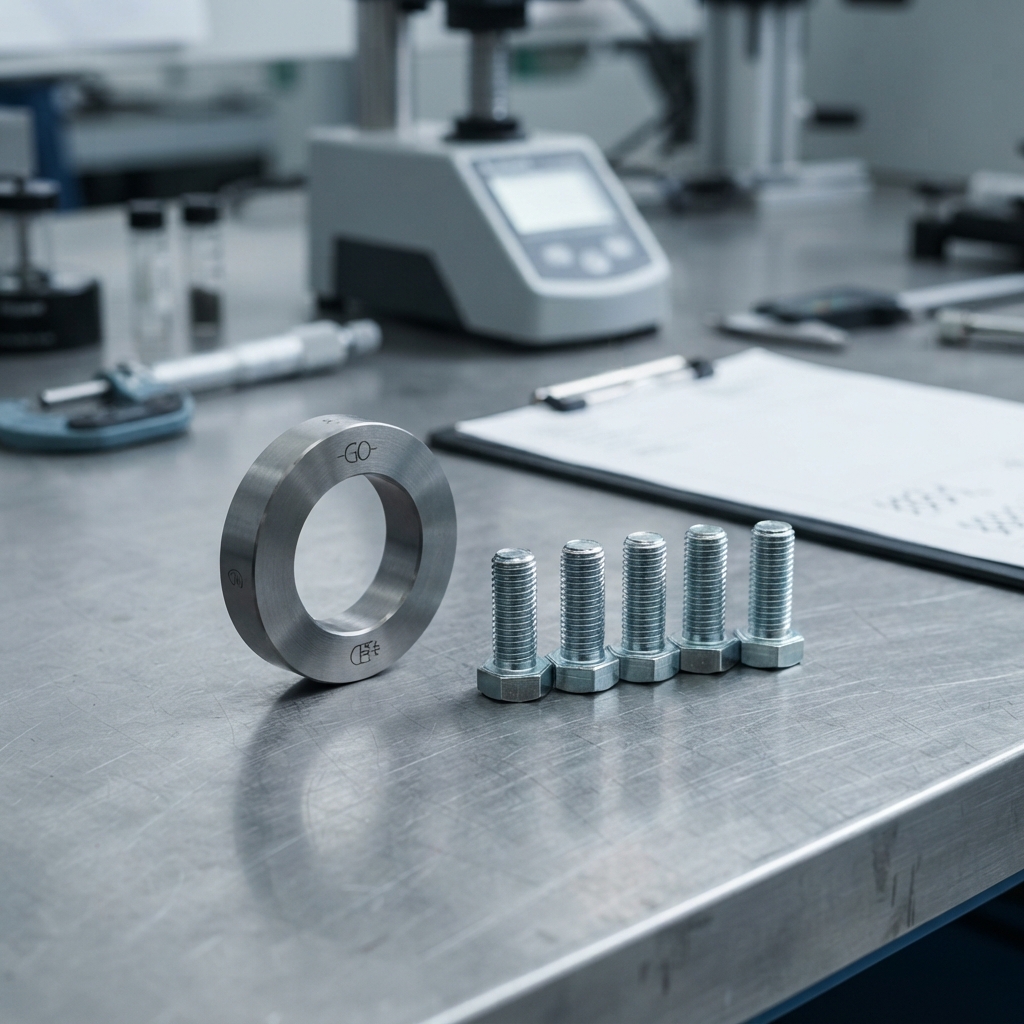
Why hardness and ductility are easy to confuse
Hardness is convenient because it is relatively fast to measure on a production sample. Buyers often see a Rockwell, Vickers or Brinell value on a report and assume that a higher number means a safer screw. That shortcut is incomplete. A hard part may resist indentation and still be too brittle for the joint, while a more ductile part may deform under overload without breaking suddenly.
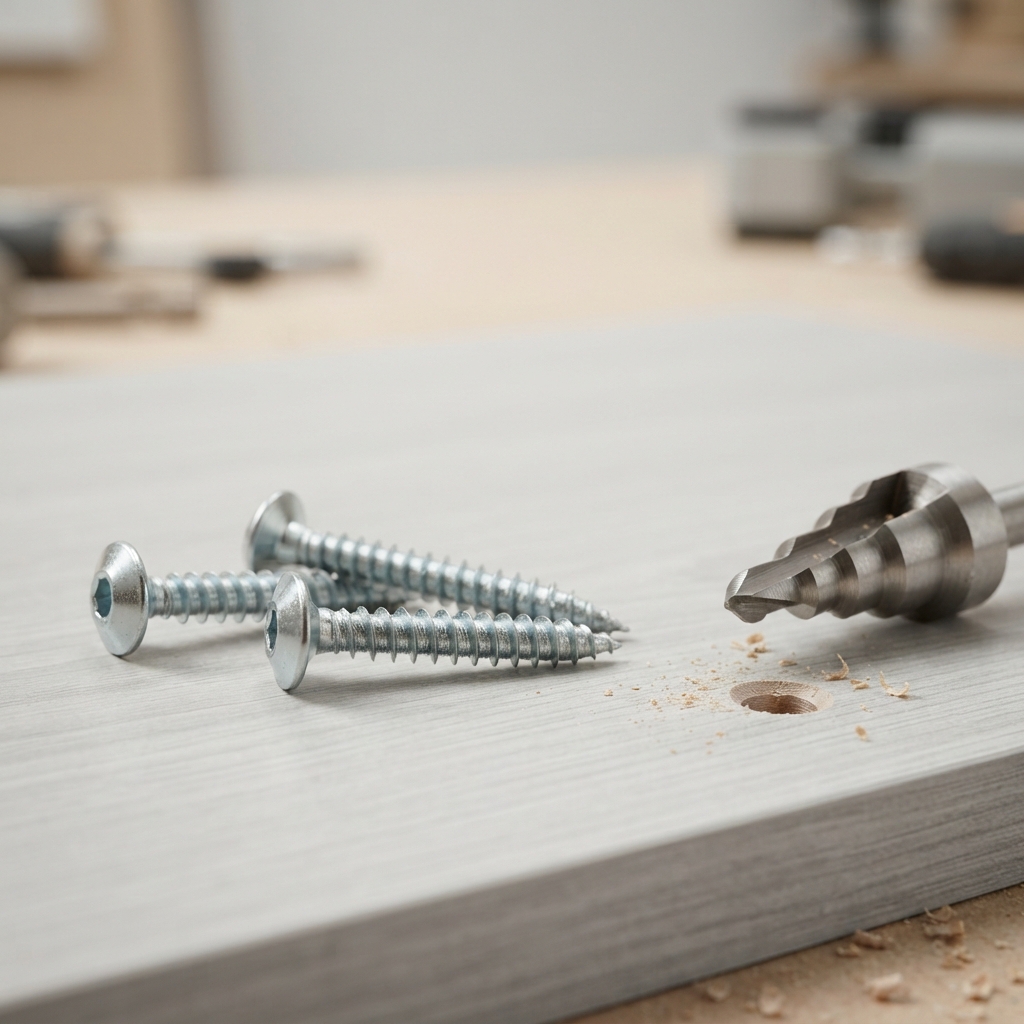
Ductility is usually represented by elongation or reduction of area in a tensile test. It is not a single universal number for every fastener type: the test specimen, gauge length, diameter, thread geometry and standard all matter. For some screws, a proof-load or tensile result is more useful than an isolated hardness reading. For tapping screws and other heat-treated products, torsional performance, surface hardness, core hardness and case depth may be the controlling evidence instead.
That is why the first purchasing question should be: Which failure mode is the specification trying to control? If the risk is a soft screw that cannot sustain preload, hardness may be a useful screening characteristic. If the risk is brittle fracture during tightening or service, the buyer needs evidence that addresses ductility, fracture behavior and the applicable mechanical-property standard.
What each property tells a buyer
| Property | What it describes | Useful buyer question | What it cannot prove alone |
|---|---|---|---|
| Hardness | Resistance to indentation or localized deformation under a stated method | Is the material or heat treatment within the specified hardness band? | Full tensile behavior, elongation, fracture mode or fatigue life |
| Tensile strength | Maximum engineering stress reached during a tensile test | Can the sampled fastener reach the required strength level? | How much warning deformation occurs before fracture or how every piece in the lot behaves |
| Yield or proof strength | Load level associated with specified permanent deformation or proof performance | Will the screw sustain the required preload without unacceptable permanent set? | Corrosion resistance, thread fit or assembly torque by itself |
| Elongation | Permanent extension measured after fracture under the stated tensile method | Does the material retain the specified ability to deform before breaking? | Local ductility at a thread root or surface defect without a suitable test |
| Reduction of area | Change in cross-sectional area at the fracture location | Does the fracture show meaningful plastic deformation in the tested section? | Performance of a different geometry, lot or heat-treatment condition |
| Torsional strength | Resistance to twisting failure under a defined test | Can a tapping or self-drilling screw survive installation torque? | Machine-thread proof load or long-term joint behavior |
Use the table as a reading guide, not as a substitution matrix. The drawing and named standard control which properties are mandatory. A supplier report that contains a hardness value but omits the specified ductility or proof result is incomplete when the purchase requirement calls for those tests.
How hardness relates to strength, and where the relationship breaks
For many steels, hardness correlates approximately with tensile strength. That makes hardness useful for process control and incoming inspection. It can quickly reveal a missed quench-and-temper operation, a wrong wire lot or a surface condition that differs from the approved sample.
The relationship is not exact. It depends on alloy, microstructure, section size, test location and the conversion table used. A hardness conversion is not a second tensile test. It should be treated as an estimate or screening comparison unless the governing standard explicitly permits that use for the product and test method.
Three checks before accepting a hardness number
- Check the method: confirm Rockwell, Vickers or another method, scale, load and applicable standard.
- Check the location: verify whether the reading is taken on the head, shank, thread section, surface or prepared cross-section. A decarburized surface can produce a misleading result.
- Check the acceptance band: compare the actual readings with the required range and sample identity, not only with a nominal target.
For high-strength fasteners, hardness should not be used to hide missing tensile, proof-load or ductility evidence. A passing hardness screen may justify further review; it should not automatically release a critical lot.
Ductility is the buyer's protection against brittle surprises
Ductility matters because real joints rarely load a fastener in a perfectly uniform way. Misalignment, uneven clamping, thread runout, surface damage, installation torque variation and local contact stress can all concentrate load. A ductile fastener may absorb some of that abuse through plastic deformation. A brittle fastener can fracture with much less visible warning.
Elongation data must be read carefully. Ask which standard, specimen geometry and gauge length were used. A result from a machined material coupon may not represent a finished threaded fastener with a rolled thread, reduced shank or head-to-shank transition. Fracture location also matters. A break at a valid section and a break at a thread root may lead to different conclusions, depending on the standard and the acceptance rule.
For a buyer, the practical question is not whether a report contains a large elongation percentage. It is whether the test evidence matches the fastener geometry and the specified class. If the report lists tensile strength and hardness but no required elongation, proof or fracture assessment, ask the supplier to identify the applicable acceptance basis before approval.
Reading property-class data without overpromising
For carbon and alloy steel machine-thread fasteners, a property class such as 8.8 expresses a defined mechanical-property system under the applicable standard. It is not a generic material name, and it does not by itself define coating, thread tolerance, corrosion performance or assembly behavior.
JHFIX's screw property class verification guide explains the separate evidence chain of drawing, marking, heat-linked documentation and lot testing. This article adds a different purchasing lens: even when the class is correct, buyers should still ask which data demonstrates the expected balance of strength, hardness and ductility for the actual product.
| Report field | Buyer interpretation | Follow-up when missing or unclear |
|---|---|---|
| Standard and edition | Defines the property-class requirements and test framework | Ask the supplier to name the exact standard and edition in the quotation and report |
| Part number and drawing revision | Connects the data to the geometry that was ordered | Reject generic reports that cannot be tied to the purchased part |
| Lot, heat or batch reference | Shows which material and production population was tested | Require the carton or package label to carry the same trace reference |
| Hardness method and readings | Shows the screening method, location and spread | Ask for actual values, not only “pass” |
| Tensile, proof or yield result | Shows load performance under the named test | Confirm sample size, fracture location and acceptance rule |
| Elongation or ductility result | Shows deformation capacity under the stated test geometry | Ask why it is absent when the governing standard requires it |
| Fracture or failure notes | Helps distinguish ductile deformation from brittle or thread-root failure | Request photographs or lab notes when the result is disputed |
When a harder screw is the wrong purchase decision
A higher hardness or higher property class is not automatically safer. A fastener that is too hard for the joint can damage mating threads, split a panel, strip a drive recess or reduce the margin against hydrogen-assisted cracking when a susceptible high-strength part is electroplated. In furniture and hardware assemblies, the surrounding material may yield long before the fastener reaches its capacity.
Do not change from a lower class to a higher class as a corrective action without an engineering review. Confirm the joint load, substrate, thread engagement, installation method, coating and environmental exposure. The correct decision may be to improve the joint design, change the mating component, control torque or improve traceability rather than simply buy a harder screw.
Likewise, do not accept a softer substitute because the fastener “looks the same.” A lower hardness can signal the wrong heat treatment, wrong material or a process bypass. The commercial quotation, head marking and colour of the coating are not mechanical-property evidence.
Procurement checklist for hardness and ductility data
- Write the fastener type, material family, property class or product standard into the drawing and purchase order.
- State whether the requirement applies to machine-thread fasteners, tapping screws, self-drilling screws or stainless fasteners.
- Require the report to identify part number, drawing revision, lot or heat and production basis.
- Record the hardness method, scale, load, reading location and actual values.
- Confirm whether the report includes tensile, proof-load, yield, elongation, reduction-of-area or torsional results as applicable.
- Ask how the test specimen represents the finished geometry, especially for threaded or case-hardened screws.
- Check fracture location and failure notes when ductility or brittle fracture is a risk.
- Match the carton label and certificate to the same lot or heat reference.
- Keep an approved sample and a defined response for a result outside the agreed range.
- Do not approve a substitution based only on a higher hardness number or a lower unit price.
Common mistakes buyers make
Using hardness as a complete grade certificate
Hardness is one measurement. It does not prove every property required by a standard, and it does not tie a report to the delivered lot unless traceability is present.
Comparing numbers from different methods
A Rockwell value, a Vickers value and a converted tensile estimate are not interchangeable without the method, scale and conversion basis. Keep the original method on the report.
Ignoring the test location
Surface hardening, decarburization and thread geometry can make the reading location decisive. A supplier should explain how the test avoids a misleading surface result.
Assuming more ductility is always better
Ductility is useful only within the product's design and standard. The buyer still needs the required strength, proof performance, thread fit and functional behavior.
Accepting a generic material report
A steel mill certificate for a heat does not automatically prove the finished fastener received the correct forming, heat treatment, coating or inspection. Connect the raw material, process lot and finished package.
Frequently asked questions
Does higher hardness mean higher screw strength?
Often there is an approximate correlation in steels, but it is not proof by itself. The applicable standard, alloy, section size, test location and heat treatment affect the relationship. Use hardness as a screen and require the specified strength or proof evidence.
Can a hard screw still be brittle?
Yes. Hardness does not measure the full ability to deform before fracture. A fastener can meet a hardness range yet require additional ductility, elongation, impact or fracture evidence for the application.
What does elongation tell a fastener buyer?
It reports permanent extension after a tensile test under a defined specimen and gauge length. It helps assess deformation capacity, but it must be tied to the finished fastener geometry and the governing standard.
Should buyers request hardness and tensile tests for every screw?
Not necessarily. The required evidence depends on fastener type, risk, standard, lot plan and application. Define the minimum data in the drawing or purchase order instead of requesting a generic package for every part.
Are tapping screws specified with the same property classes as machine screws?
No. Tapping and self-drilling screws use different performance criteria and standards. Buyers may need surface hardness, core hardness, case depth, torsional strength and drive-performance evidence rather than an ISO 898-1 machine-screw class.
Sources and further reading
The following industry sources were reviewed for terminology, testing context and buyer-facing explanation. Use the governing standard named in your drawing or contract as the acceptance authority.
- Portland Bolt: Strength and Hardness of Bolts
- Bossard: Mechanical Properties of Fasteners
- Accu: What Is Hardness and Why Does It Matter?
- Fastenal: Technical Reference Guide
- Fastener Training Institute: Hardness
For related JHFIX purchasing context, review the first article inspection checklist and the fastener claim evidence pack guide. Send the approved drawing, required property data and intended application through the JHFIX inquiry route so the requirement can be reviewed before quotation.