
Why buyers are paying closer attention to screw manufacturers ISO 9001 claims
When sourcing fasteners for electronics, appliances, furniture, or medical assemblies, the phrase screw manufacturers ISO 9001 shows up early in the buying process for a reason. It is less about marketing polish and more about whether a supplier can repeatedly make the same part, inspect it properly, and document what happened before the shipment leaves the plant.
That matters because screws are small, but failure at the fastener level has a habit of becoming a line-stop, a field return, or a service complaint that eats far more time than the part itself is worth. For sourcing managers, the real decision is not simply whether a supplier says they are certified. It is whether their quality system fits the part you need, the risk you carry, and the way your own production runs.
What this kind of supplier is really selling
Jiangmen Jinhe Hardware Products Co., Ltd., founded in 2016 in Jiangmen City, Guangdong Province, focuses on machine screws, self-tapping screws, micro screws, and precision screws. The company says it works with stainless steel, iron, and aluminum materials and serves sectors such as electronics, medical devices, automation, home appliances, furniture, and building materials. It also lists non-standard customization, R&D, production, sales, import and export support, plus logistics and warehousing services.
That mix is useful to buyers because fastener sourcing is rarely just about the screw itself. It is about drawing review, packaging, export paperwork, replenishment timing, and whether the factory can keep a stable specification over repeated orders. The company’s stated standards include GB, DIN, ANSI, BS, JIS, and ISO, which suggests a multi-market approach. As always, buyers should still verify the exact standard tied to the part number they are quoting; broad capability is not the same thing as a guaranteed fit for every application.
Key takeaways from the factory and booth presentation
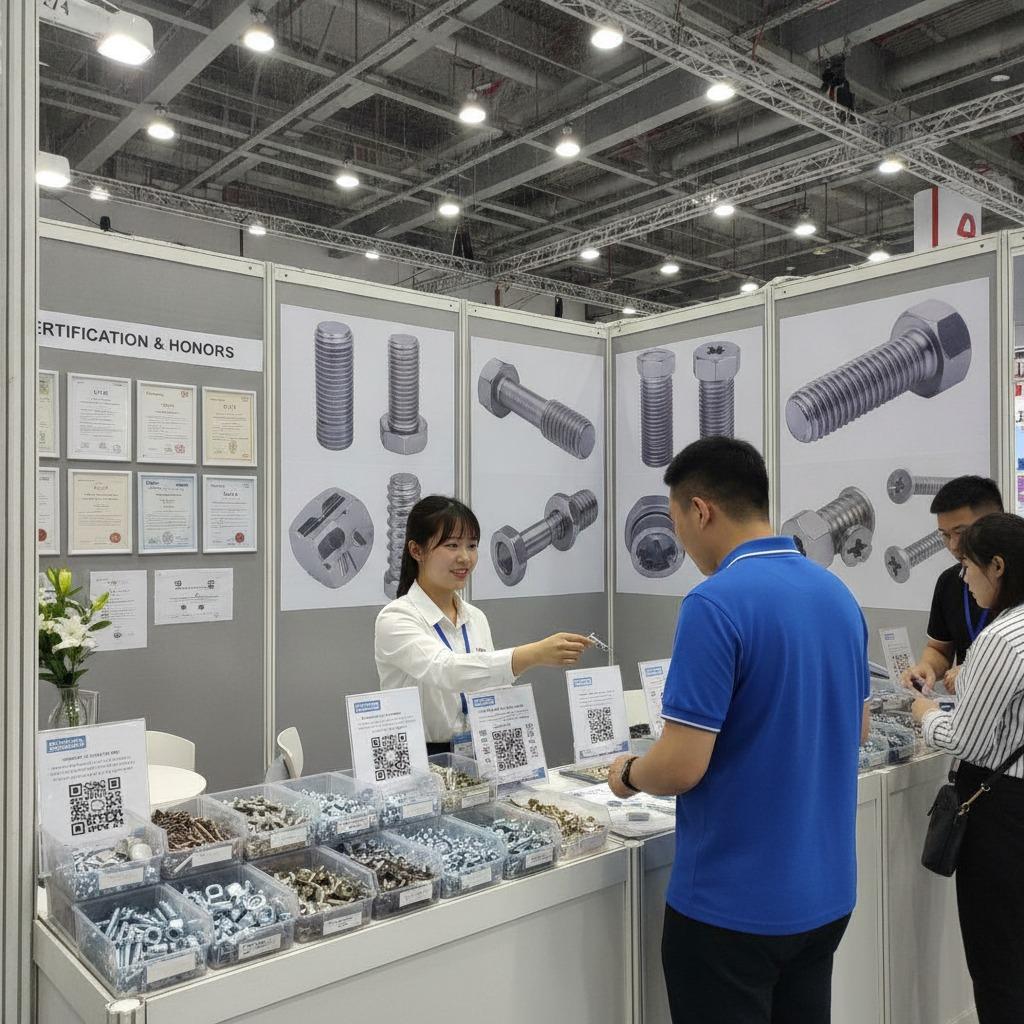
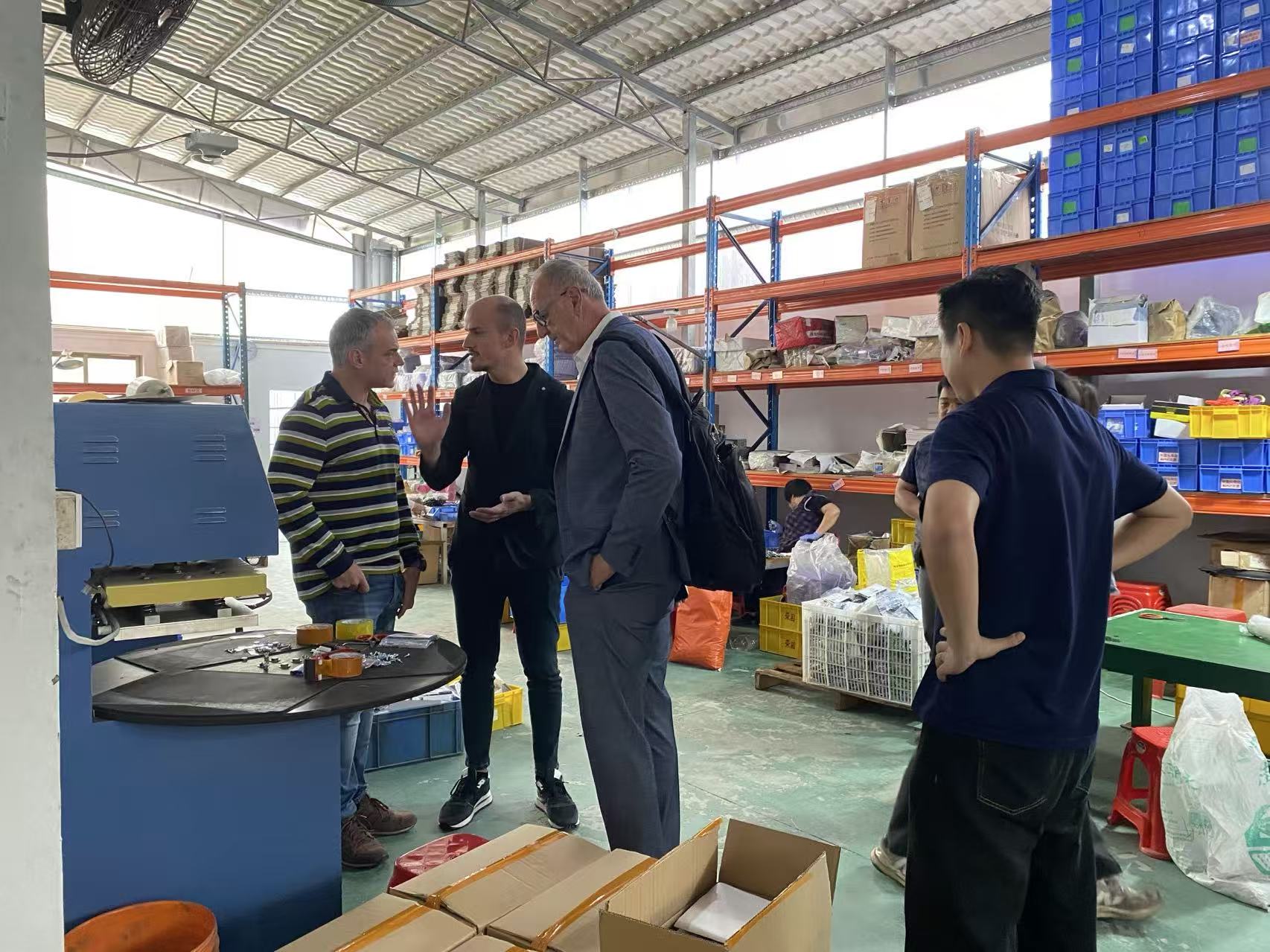
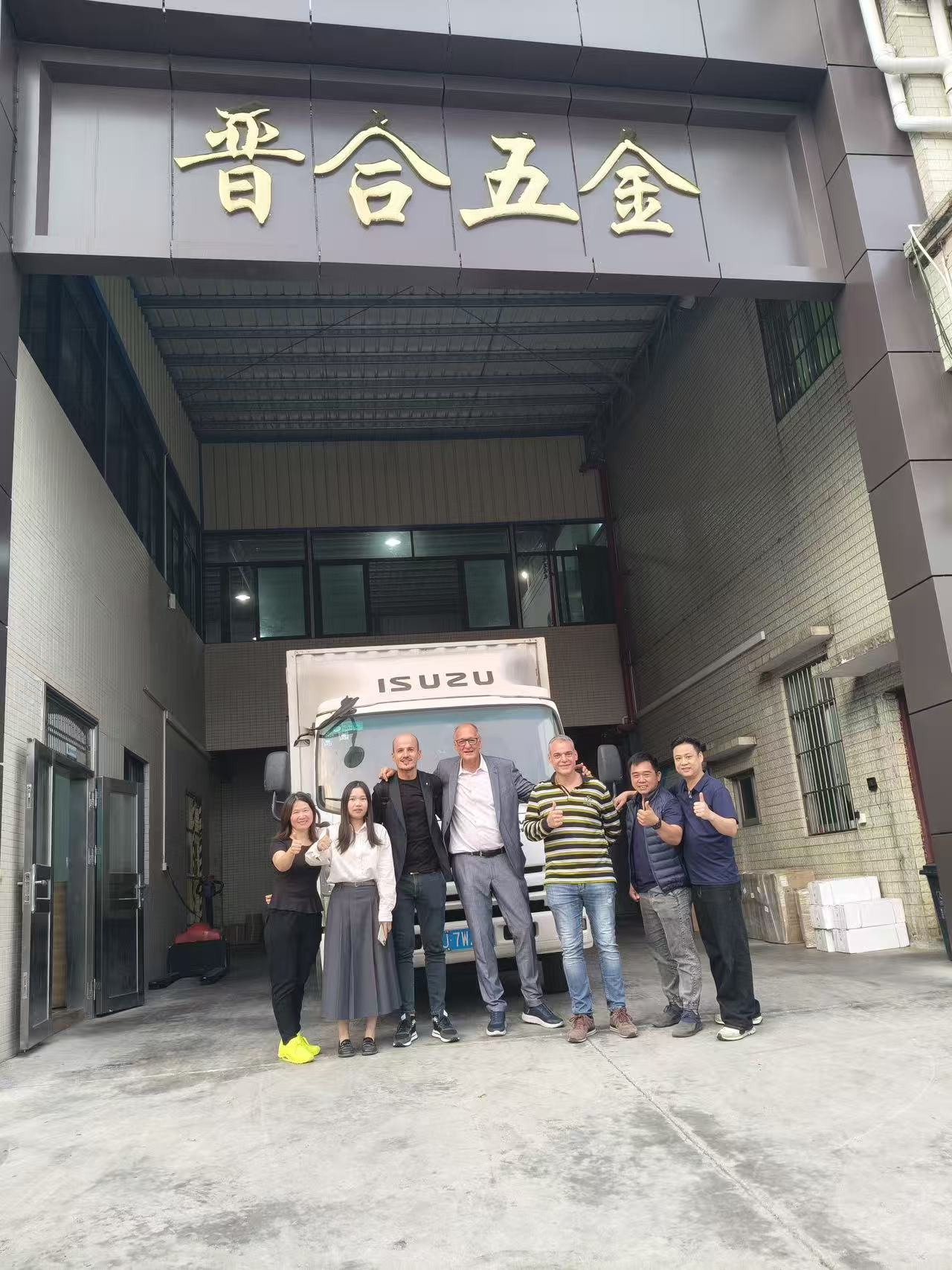
The supplied images point to two practical signals. One is the factory-style loading bay and warehouse opening, which indicates an operation built for receiving, storing, and shipping industrial goods rather than a narrow workshop with no logistics capacity. The other is the trade show booth, where product categories were displayed in an organized way. That kind of presentation usually tells a buyer the supplier understands export sales and sample-based evaluation.
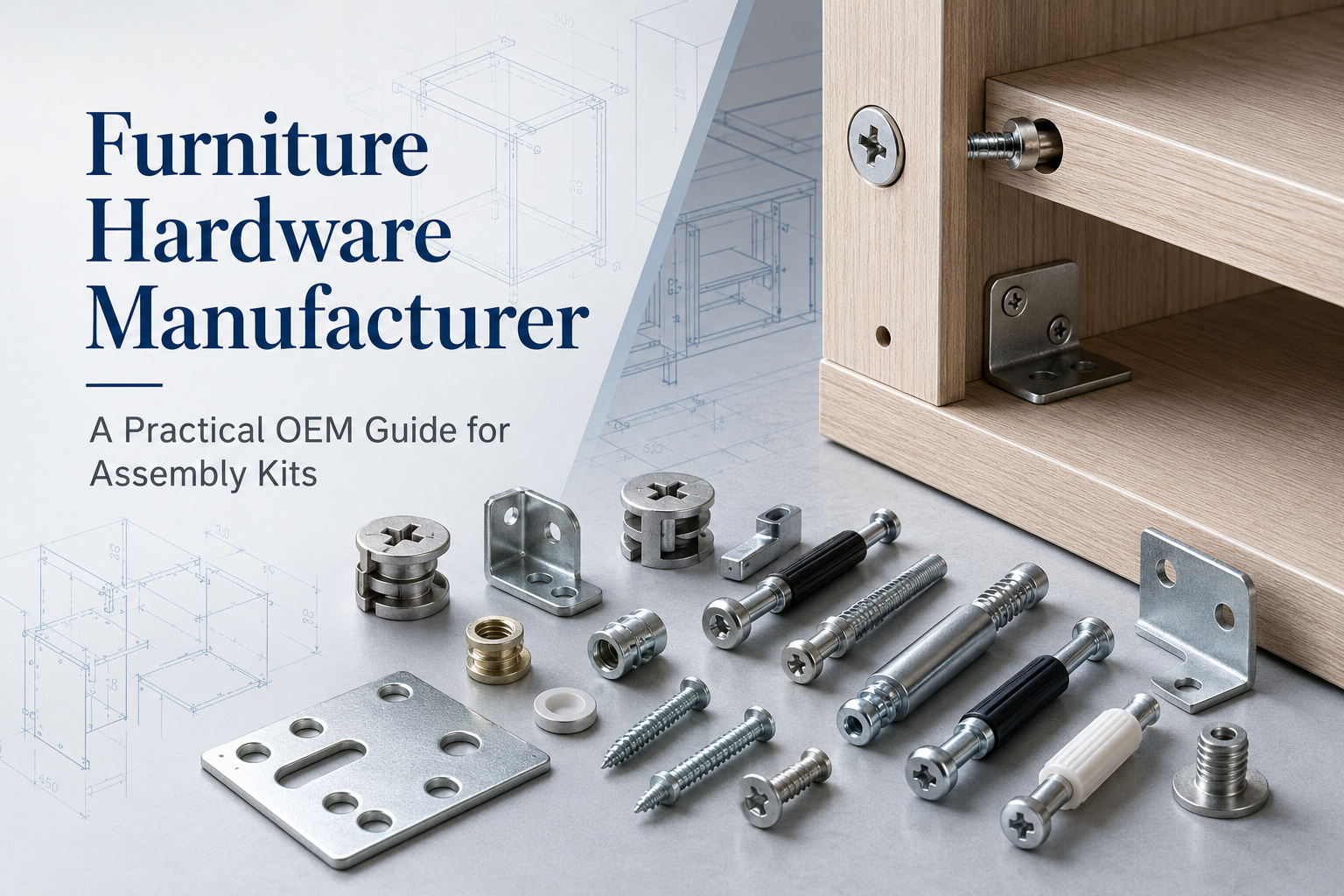
At the booth, the visible focus was on hardware components such as hinges, drawer runners, sockets, brackets, connectors, and assorted fittings. While those are not screws themselves, they sit in the same buyer universe: cabinet makers, furniture manufacturers, interior fit-out teams, and hardware distributors often source these categories from the same supplier network. For a fastener buyer, that can be a practical advantage if your bill of materials includes both screws and adjacent hardware.
How to judge an ISO 9001 screw factory without overreading the certificate
1. Ask what the quality system actually controls
ISO 9001 is a management system standard, not a performance badge for a specific screw. A good supplier should be able to explain how incoming material is checked, how in-process inspection is handled, what happens to nonconforming product, and which records accompany shipment. Jiangmen Jinhe states that products undergo strict inspection before delivery and are supported by necessary documentation. That is the right language, but buyers should still ask for sample inspection records tied to their own drawings or specifications.
2. Match material and application, not just diameter
For a self-tapping screw used in furniture or a precision screw used in electronics, material choice and surface condition matter as much as size. Stainless steel may be the safer route in corrosion-prone environments, while iron-based parts may suit controlled indoor assemblies where cost is more sensitive. The right answer depends on the end use, not on a blanket claim from the catalog. That sounds obvious, but it is where many quotes go wrong.
3. Check whether the factory can support non-standard work
Custom screws often fail at the handoff stage, not the press stage. Buyers should ask whether the supplier can handle drawings, samples, thread forms, head styles, plating preferences, and packaging requirements without turning the project into a six-week clarification loop. Jiangmen Jinhe says it supports non-standard customization, which is a positive sign, though the actual project scope still needs to be confirmed case by case.
Common mistakes buyers make when comparing suppliers
The first mistake is treating every ISO 9001 certified screw supplier as interchangeable. They are not. One factory may be strong in micro screws for compact assemblies, another in self-tapping screws for furniture or electrical fittings, and a third in export packaging and documentation. The second mistake is focusing only on price while ignoring inspection discipline and communication speed. The company says it responds to issues within 30 to 60 minutes and proposes solutions within 2 hours; if that service level is real in practice, it is worth something, especially when a shipment problem threatens a production schedule.
A third mistake is assuming that a broad catalog means a deep process capability. Trade show displays can look impressive, but the buyer still needs confirmation on dimensions, finish, testing method, and shipment traceability. If those are not on the quote or in the sample approval, they are not yet part of the deal.
Practical buyer advice before you send an RFQ
Start with the part drawing, material preference, application environment, and annual usage. Then ask the supplier to confirm the governing standard, inspection method, packaging format, and whether the order is production stock or custom run. If your product is sensitive to corrosion, vibration, or cosmetic appearance, say so early. Fastener suppliers can usually work with clear input; they struggle when the buyer asks for “good quality” and leaves everything else open.
For companies sourcing through export channels, it is also worth checking whether the supplier can support freight forwarding, domestic logistics, and warehousing. Jiangmen Jinhe says it offers those services, which may simplify replenishment for overseas buyers and distributors.
FAQ: what buyers usually ask first
Is ISO 9001 enough on its own?
No. It is a strong baseline, but you still need part-level verification, especially for critical assemblies.
Can one supplier cover screws and related hardware?
Sometimes. In this case, the company’s broader hardware context suggests that adjacent cabinet and furniture fittings may be part of the sourcing conversation.
What should I request first?
A drawing match, sample, inspection documentation, and confirmation of the applicable standard.
What to do next
If you are shortlisting screw manufacturers ISO 9001 suppliers, treat certification as the starting filter, not the finish line. For Jiangmen Jinhe Hardware Products Co., Ltd., the useful questions are straightforward: which screw family fits your application, what inspection records can they provide, and how will they support repeat orders, custom work, and export delivery. That is where the real supplier comparison begins.