
Why sourcing a supplier export to Europe is more complicated than it looks
Buying fasteners from a supplier export to Europe is not just a question of finding the lowest unit price. For engineers, sourcing managers, and product teams, the real issue is whether the supply chain can support repeatable quality, the right paperwork, and stable delivery into European markets without surprises at customs or in the assembly line. With screws, anchors, wall plugs, nuts, and other hardware components, small specification mistakes often become expensive very quickly.
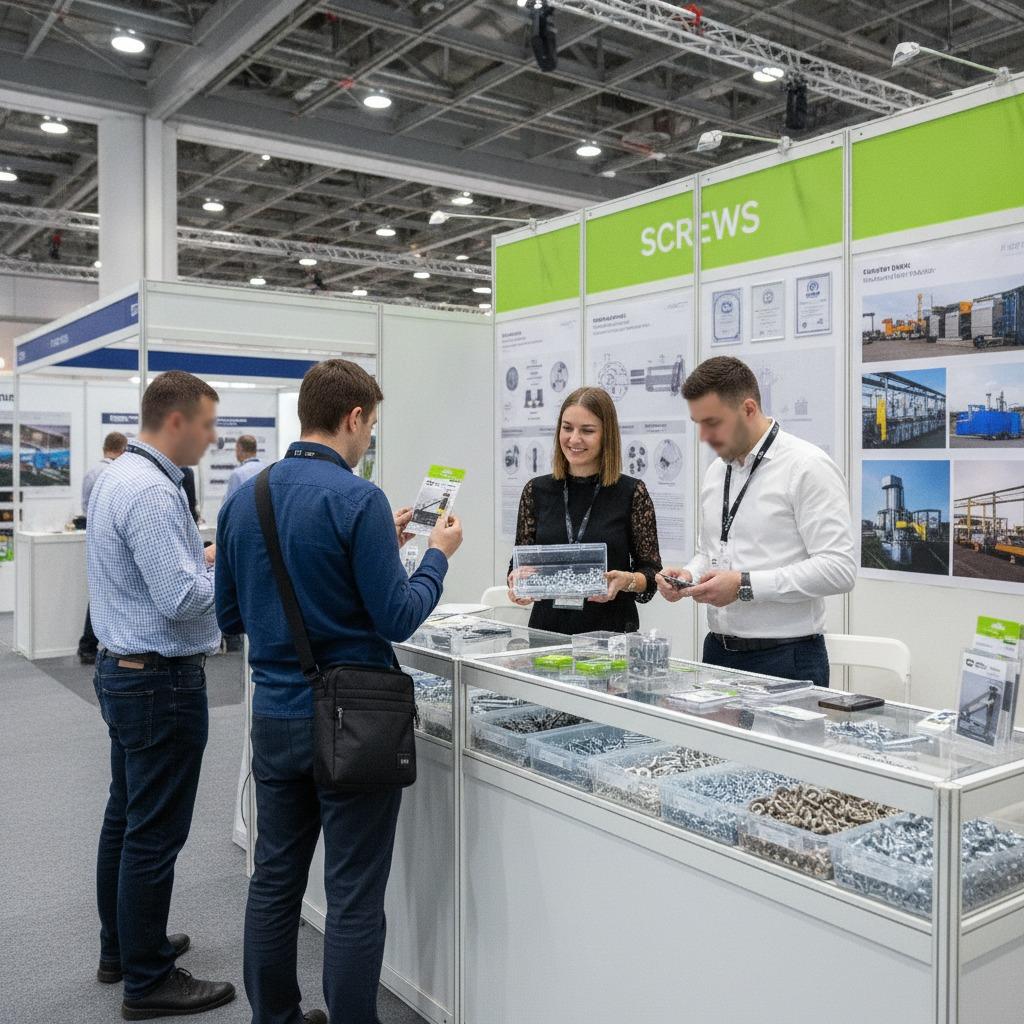
That is especially true when the product range is broad. A booth full of assorted fasteners may look straightforward at first glance, but the buyer still has to separate catalogue breadth from actual production control. A European export supplier should be able to handle consistent packaging, clear documentation, and the practical reality of mixed SKUs. If the supplier also offers international freight forwarding and warehouse support, that can simplify the process, but it does not replace due diligence on the product itself.
What buyers should check before placing an export order
Fastener sourcing is one of those categories where the sample can look fine and the bulk order can still create trouble. The basic checks are familiar, yet they are often rushed.
1. Product definition
First, make sure the item description is precise. “Screws” is not enough. Buyers need the intended screw type, the likely application, the head style, the drive type, the material, the finish, and the standard if one applies. Jiangmen Jinhe Hardware Co., Ltd. states that it produces machine screws, self-tapping screws, micro screws, and precision screws in materials such as stainless steel, iron, and aluminum. That is useful information, but it still needs to be matched to the exact application.
2. Standards and documentation
For Europe-bound supply, the paperwork matters almost as much as the part. A reliable international supplier Europe should be able to support the technical documents requested by the buyer and the importer. According to the company information provided, Jiangmen Jinhe works to GB, DIN, ANSI, BS, JIS, and ISO standards, and it says products are inspected before delivery with accompanying documentation. That does not remove the need for buyer-side verification, but it is the right kind of starting point.
3. Packaging and assortment control
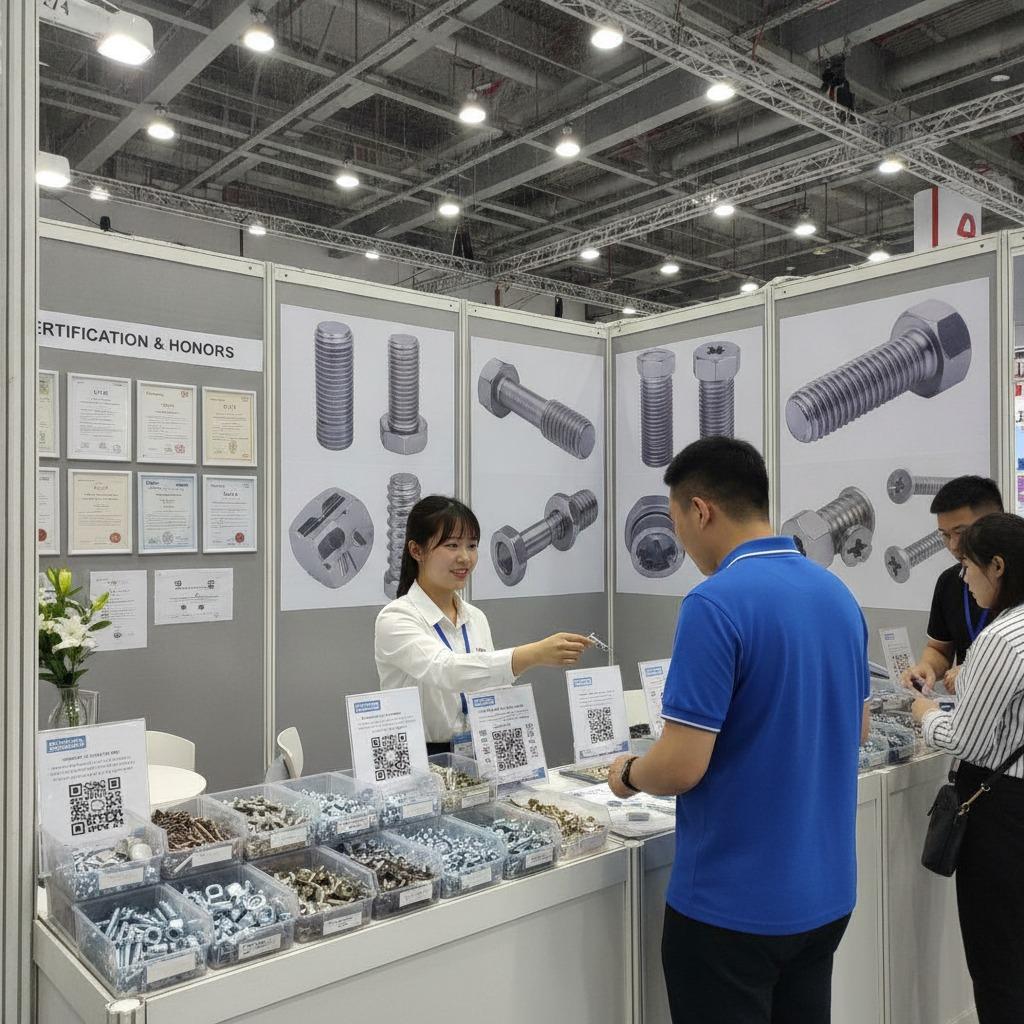
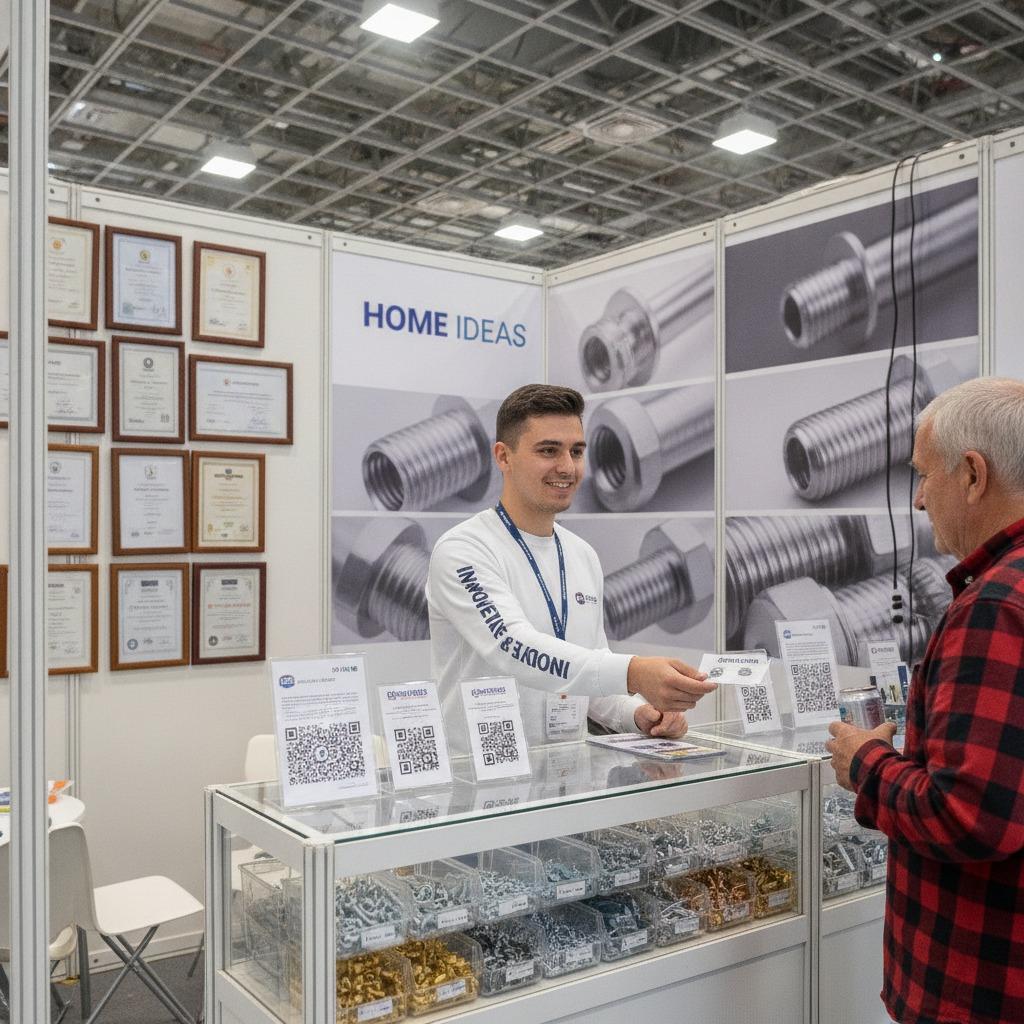
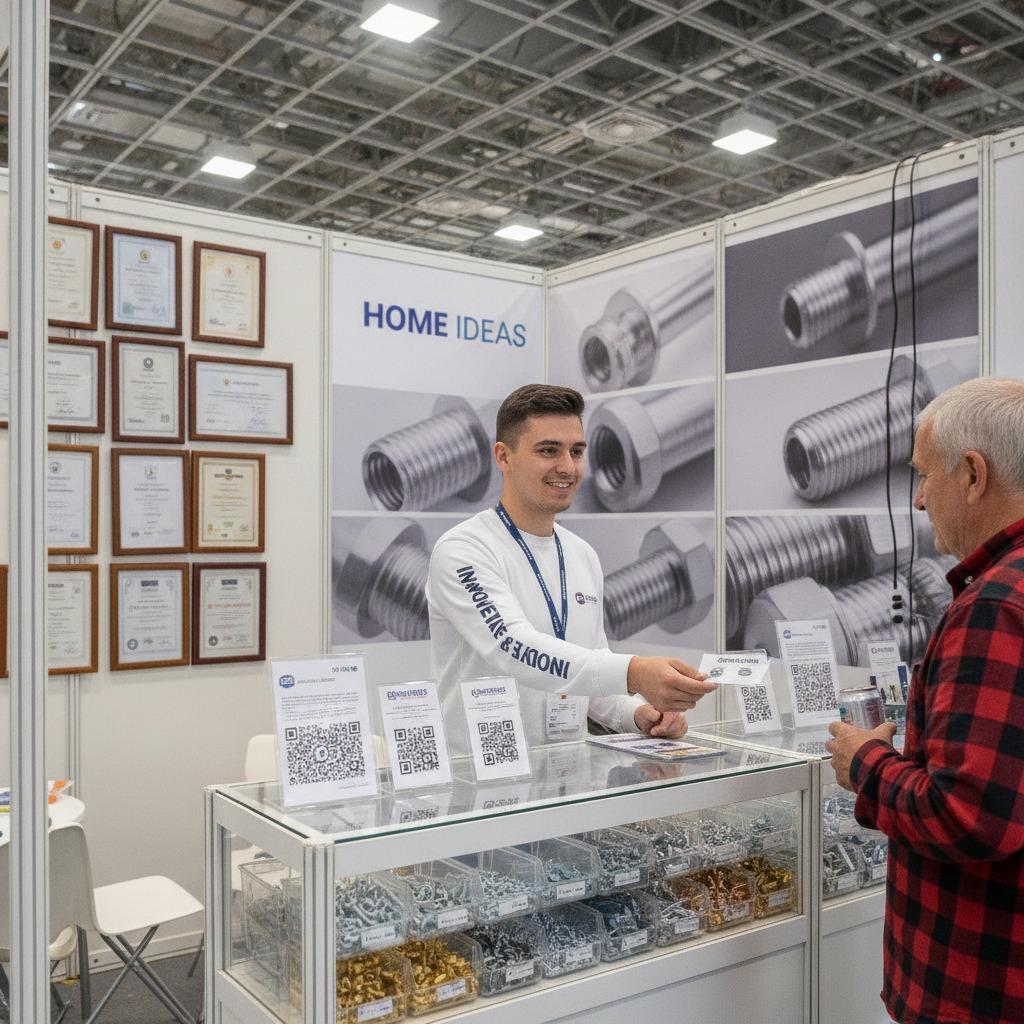
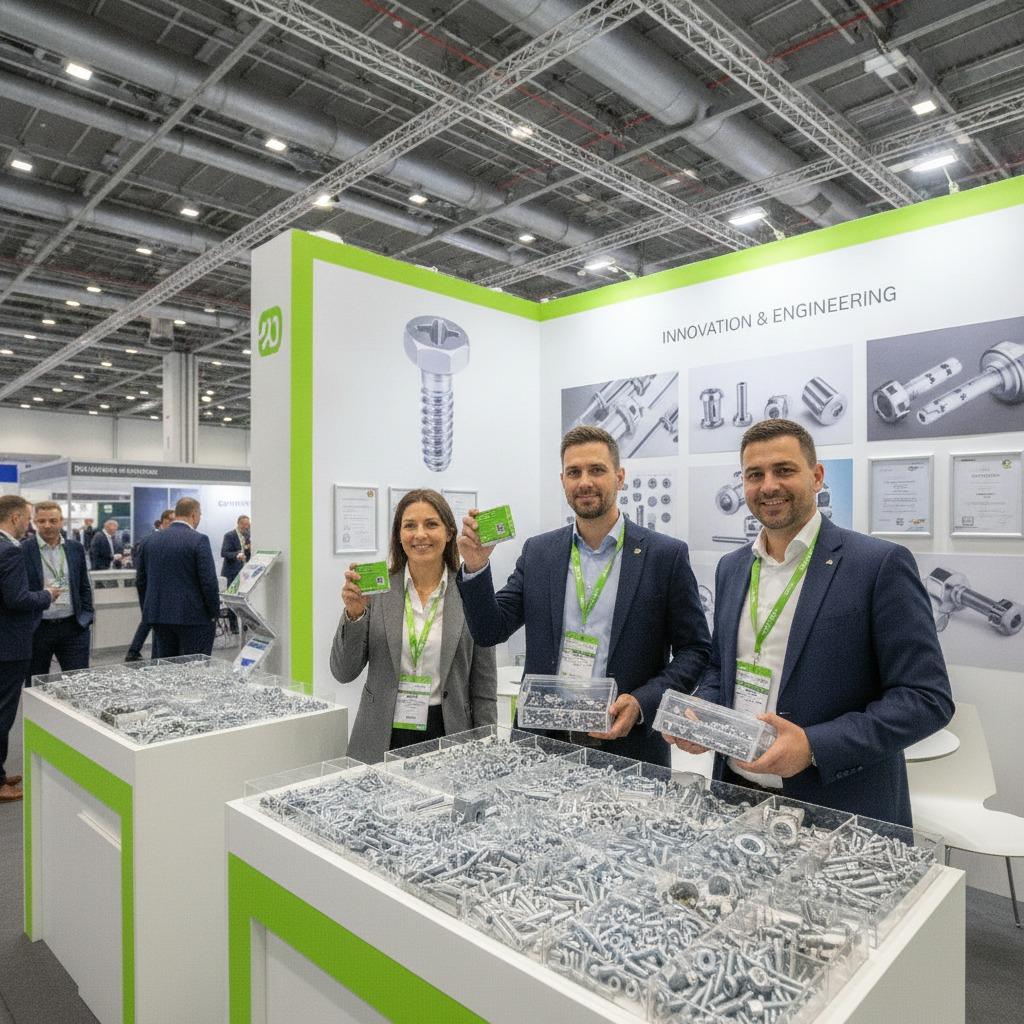
The trade-show display shows organized trays and sample packs, which is a good sign for catalog-style supply. For a Europe shipping supplier, packaging is not a cosmetic issue. Mixed trays, blister packs, and labeled assortments reduce picking errors and help distributors keep stock organized. The catch is that packaging format should be agreed in advance, especially if the order is going to a retail channel or a kitting operation.
What the booth display suggests about the supplier
The booth branding reads “HOME IDEAS,” and the display clearly focuses on assorted metal fasteners and hardware components. Visible items include screws of different lengths, threaded fasteners, and orange or red plastic anchors or plugs. The range appears wide enough to support construction, furniture assembly, cabinetry, mechanical maintenance, and general hardware distribution.
That breadth is useful, but buyers should treat it as a lead, not proof of capability. A supplier export to Europe needs more than a broad sample board. It needs repeatable production or sourcing control, stable surface finishing, and export handling that does not damage the goods during transit. Shiny silver finishes and yellow passivated tones may be visible in the display, yet the exact coating type cannot be assumed from an image alone.
How to compare European export suppliers without getting distracted by the brochure
A lot of purchasing teams get sidetracked by presentation. Clean display boards, polished trays, and a long list of product categories can make any booth look capable. The better question is whether the European export supplier can support your actual buying pattern.
If you source for an electronics or medical device program, you may care more about dimensional consistency, traceability, and small precision screws. If you source for building materials or furniture, the priorities may shift toward packaging efficiency, replenishment reliability, and mixed-SKU availability. Jiangmen Jinhe says it serves home appliance, electronics, furniture, building materials, and medical device manufacturers, along with wholesalers and cross-border e-commerce sellers. That kind of customer mix usually points to flexible order handling, though buyers should still request application-specific samples and documentation.
Common mistakes in Europe-bound fastener sourcing
The first mistake is treating all fasteners as interchangeable. They are not. A screw that works in one substrate or assembly process may fail in another. The second mistake is assuming a broad product assortment means deep process control across every line. The third is skipping the logistics discussion until the end. For an international supplier Europe, freight, warehousing, and customs preparation are part of the sale, not an afterthought.
Another practical caution: do not rely on display finishes alone. Bright silver, zinc-like, and gold-tone coatings may look consistent under trade-show lighting, but buyers still need to confirm the underlying specification. That is where a supplier’s technical responsiveness becomes important. Jiangmen Jinhe says it responds to issues within 30-60 minutes and provides solutions within 2 hours. That is a service claim, not a substitute for QC, but it does hint at the kind of after-sales behavior buyers should expect from a serious exporter.
Questions worth asking before you approve a supplier
Can the supplier identify the exact product family and standard used for each fastener? Can it provide inspection documents before shipment? Can it package by SKU, by kit, or by retailer requirement? Can it support international freight forwarding and safe delivery? And if a problem appears, who owns the response on the export side?
For companies like Jiangmen Jinhe Hardware Co., Ltd., the important takeaway is not just that they manufacture or supply fasteners, but that they position themselves for both domestic and international markets, with non-standard customization and foreign trade services in scope. That combination matters when you are trying to keep a European line stocked without constant firefighting.
Practical next step for buyers
If you are evaluating a supplier export to Europe, start with a short RFQ that includes the exact fastener family, intended application, packaging needs, and the standards or documents you require. Ask for samples, confirm the export handling route, and review whether the supplier’s catalog breadth is matched by clear technical control. A broad tray of screws is useful, but the real value is in whether the supplier can turn that assortment into a dependable replenishment system.
For buyers sourcing assorted fasteners, that is the difference between a good-looking booth and a usable supply partner.