
Why is wholesaling self-tapping screws still important, especially when everyone is pretending that all screws are the same?
If you wholesale self-tapping screws , you know that small problems can escalate into costly troubles. An incorrect screw head design, premature coating peeling, or a batch of screws not tightening properly can all disrupt an entire production line, causing what should be a simple fastener issue. Screws themselves aren't exactly glamorous, but they're adept at causing all sorts of tricky problems.
For engineers, purchasing managers, and product teams, the real issue isn't whether self-tapping screws exist, but which screws are easy to install, provide a secure fastening, and are packaged to meet actual application needs rather than simply catering to sales claims. This is crucial whether you manufacture furniture, framing structures, panel components, or other building products.
What does the exposed screw design tell you?
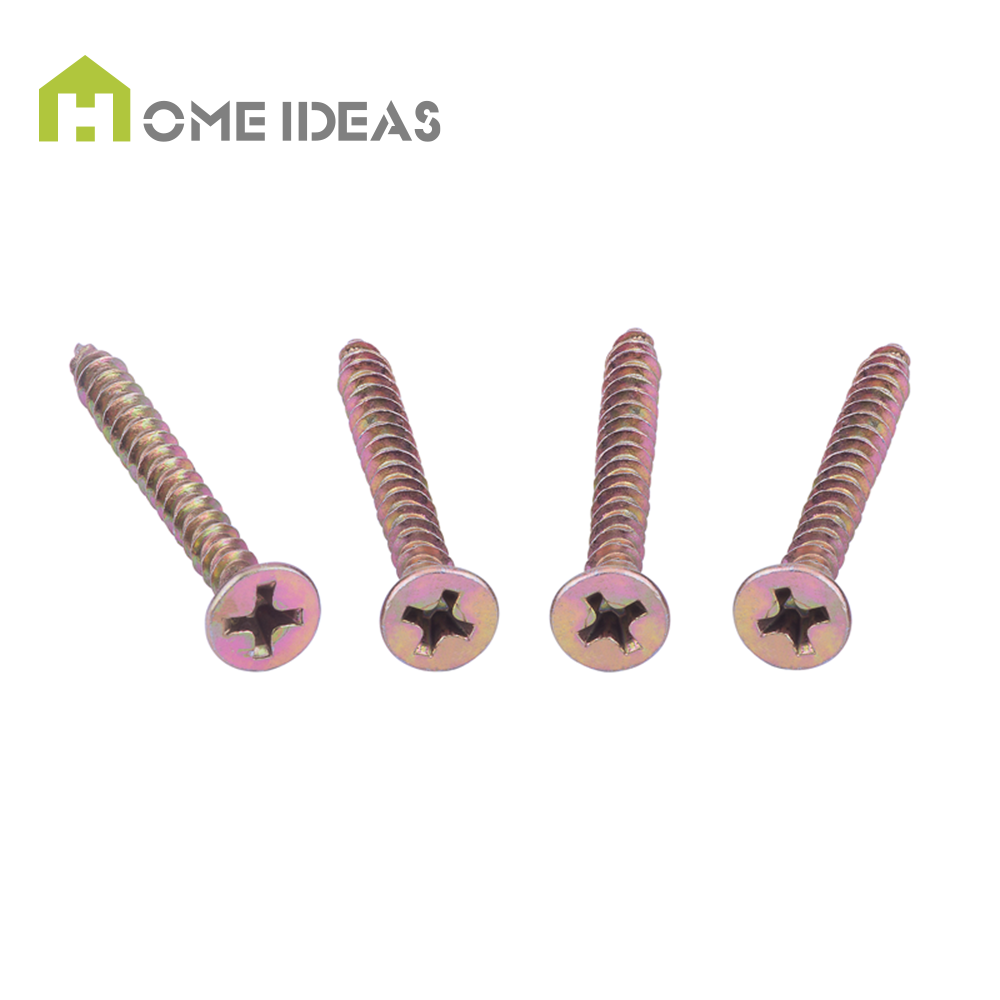
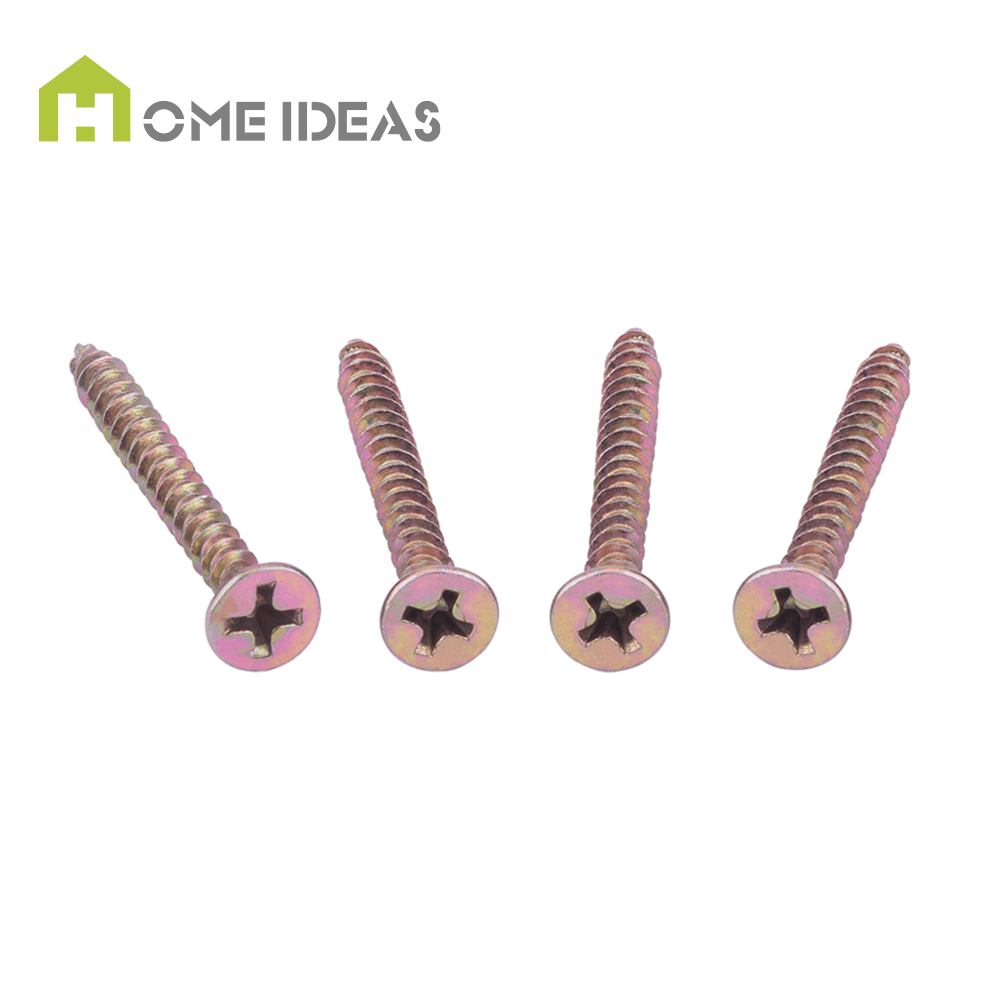
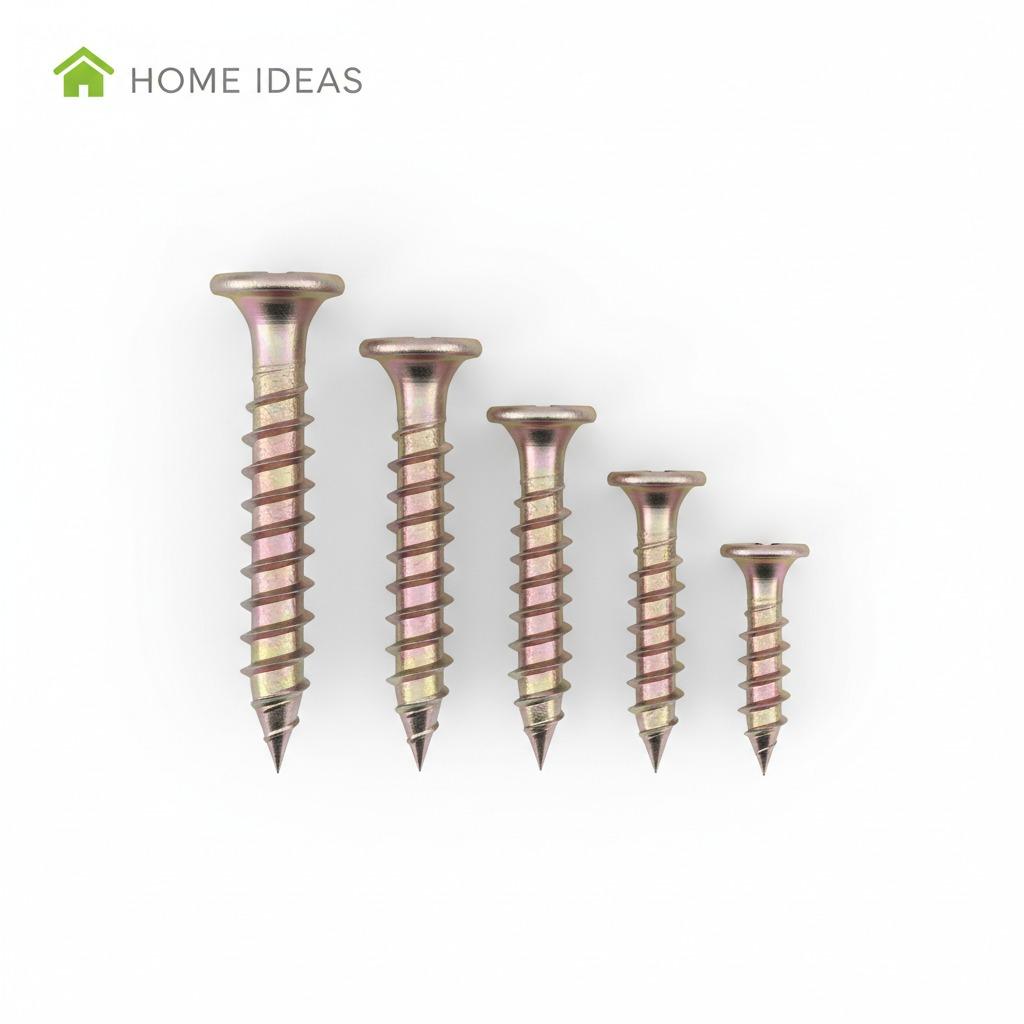
The product shown in the image is a metal self-tapping screw with a sharp head, countersunk head, and coarse threads running through most of the shank. This combination typically indicates that the fastener is designed to engage with and flush with the substrate. Simply put: it should be easy to screw in, smoothly pushed in, and completely integrated into the surface without leaving any protruding screw head.
The visible coating appears yellowish-zinc or has an iridescent sheen, which usually indicates some form of anti-corrosion surface treatment. I say "appears" because the specific coating, substrate, or performance grade cannot be determined from a picture alone. Fastener buyers should always treat appearance as a reference, not a final guarantee.
In addition, four size specifications were showcased, which is very practical. Suppliers who can offer multiple lengths and diameters with the same head profile and thread type can typically simplify the procurement team's work, helping them standardize components and avoid using the same unsuitable generic screw across all applications.
Buyer's Quick Guide: Factors to Compare Before Bulk Orders
When evaluating self-tapping screw suppliers or manufacturers, focus should be placed on details that affect installation and repeatability:
Thread Overview
Coarse, deep threads are typically used for materials requiring strong mechanical engagement. If the thread geometry varies from batch to batch, installers will notice it quickly, usually at the worst possible time.
Head shape
Countersunk head screws are ideal when flush installation is required. This is especially important in furniture, panels, and components, as protruding screw heads can be annoying, pose safety hazards, or simply affect aesthetics.
Finish
If the screws will be used in harsh environments, their coating is just as important as the steel itself. Buyers often choose stainless steel self-tapping screws when corrosion resistance is a priority, but for many indoor or sheltered applications, carbon-plated steel screws may be a better commercial choice.
Size range
Bulk purchases of self-tapping screws are easier to manage if the supplier can guarantee consistent dimensions for different lengths. This sounds obvious until you receive "the same screws, different sizes".
Where Wholesale Procurement Goes Wrong
Many screw purchases fail silently. No one makes a big deal out of it. The parts might simply be the wrong size, or the installation torque might increase unnoticed, or the screw head might tear the surface. A common mistake is looking only at the wholesale price of self-tapping screws and ignoring their end use. The cheapest fastener on the invoice can end up being the most expensive after rework, scrap, or on-site complaints.
Another misconception: that all self-tapping screws are interchangeable. This is not the case. Screws designed for wood, composite boards, or general building materials are not necessarily suitable for all substrates, especially when considering factors such as load path, pull-out strength, or surface finish.
Why is a supplier's capability just as important as a screw?
Jiangmen Jinhe Hardware Co., Ltd., established in 2016 and located in Jiangmen City, Guangdong Province, has a 4,000-square-meter factory. It primarily manufactures machine screws, self-tapping screws, miniature screws, and precision screws made of stainless steel, iron, and aluminum. The company's products conform to GB, DIN, ANSI, BS, JIS, and ISO standards, serving industries such as electronics, medical devices, automation, furniture, building materials, and cross-border e-commerce.
This breadth of knowledge is crucial because it demonstrates that the fastener manufacturer understands both standard parts and non-standard customizations. For buyers, this reduces the usual back-and-forth communication, such as "Can you make this?" and "Can you make it again, exactly the same?"
The company also stated that it would conduct inspections before shipment, provide necessary documentation, and respond promptly to customer needs. These may not be eye-catching selling points, but in the fastener industry, they are often more important than fancy brochures. A screw won't tolerate late documentation.
Practical selection advice for engineers and procurement teams
If you are comparing products from different self-tapping screw manufacturers, be sure to ask for detailed information that matches your assembly needs, not just the titles in the catalog. Confirm the base material, head style, plating or material selection, and whether the screw needs to be flush-mounted. If your product will be exposed to humid environments, requires handling, or is exported, do not rely on guesswork to determine its corrosion resistance requirements.
If you are procuring for repetitive production, request samples of the exact size range you plan to use. Pin them to actual substrates, not virtual sample boards. Always use real materials and real tools, and ideally, have real operators handle them. Fasteners that perform perfectly in sample trays can become difficult to manage on the production line.
Frequently Asked Questions: Some questions raised by buyers after receiving the first batch of defective goods
Are all wholesale self-tapping screws suitable for sheet metal?
This is not always the case. Thread geometry, tip style, head shape, and surface finish all affect the performance of a screw in a given substrate.
Is galvanized steel sheet always enough?
No. While perfectly suitable for many indoor applications, stainless steel self-tapping screws may be more appropriate for environments with a high risk of corrosion.
Should I choose the self-tapping screws with the lowest wholesale price?
This job is only for those who enjoy dealing with returns, production line downtime, and exasperated production supervisors.
What should we do next?
If you are sourcing large quantities of self-tapping screws for construction, furniture, or general industrial assembly, consider the application area first, not the price list. Compare screw thread types, head styles, surface finishes, and available sizes, and then confirm that the supplier can consistently provide products that meet specifications.
A good fastener partner should make the procurement process as easy and convenient as possible: predictable, traceable, and free from any unforeseen circumstances. Jiangmen Jinhe Hardware Co., Ltd. operates on this principle, providing standard and custom fastener production and export-oriented services. For small parts like screws, this reliability can prevent many serious problems.