
Cabinet Hardware Kit Manufacturer: What Buyers Should Check Before Ordering
 A cabinet hardware kit can look simple from the outside.
A few screws. A hinge. Some washers. Maybe a bracket, anchor, pin, or small fitting. Put everything in a blister pack or a clear bag, add a label, and the job looks finished.
But buyers who have handled cabinet, wardrobe, or furniture hardware programs know the story is rarely that clean.
One washer goes missing. A screw size is mixed with another. The blister pack looks fine in the sample room but cracks during shipping. The label makes sense to the supplier, but not to the warehouse team. A retail pack hangs neatly on the pegboard, yet the customer cannot tell what is actually included.
That is where a small hardware kit becomes a real sourcing problem.
Choosing a cabinet hardware kit manufacturer is not only about finding someone who can supply metal parts. It is about finding a supplier that can keep the kit complete, readable, protected, and repeatable from the first sample to later orders.
For cabinet brands, wardrobe suppliers, furniture hardware buyers, wholesalers, retailers, and cross-border e-commerce sellers, this matters more than the unit price alone.
Start with the kit structure
Before talking about packaging, buyers should first define the kit.
What is inside?
How many pieces are needed?
Which parts look similar?
Which parts must stay separated?
Which parts are visible to the customer?
Which parts may scratch or damage other pieces during shipping?
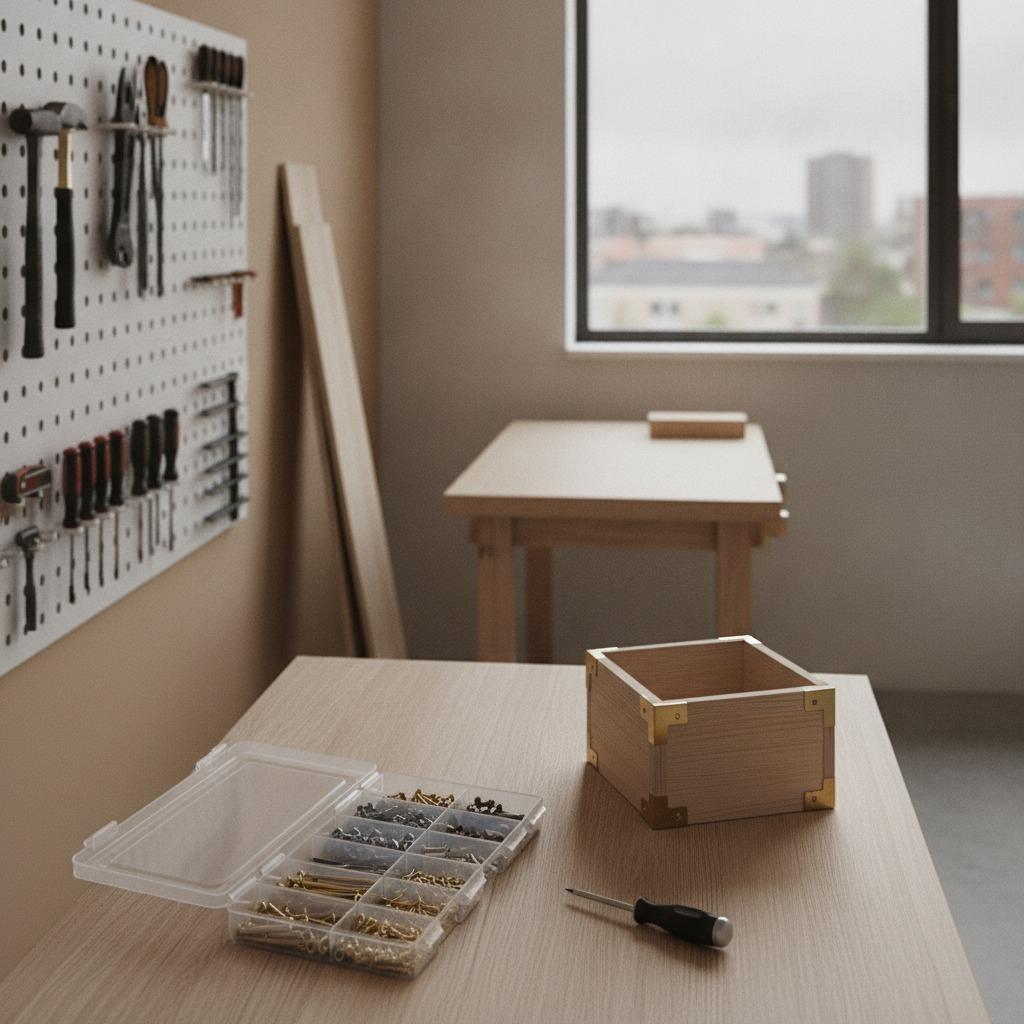
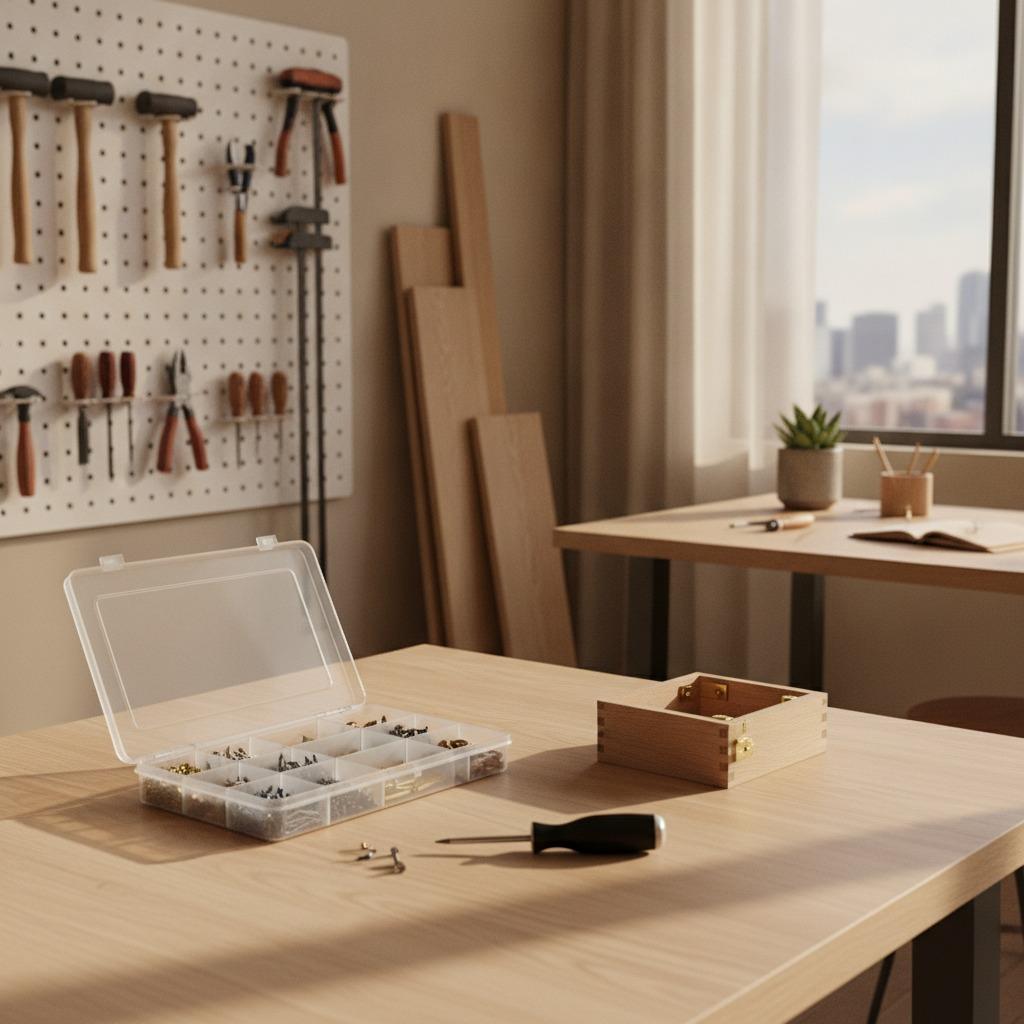
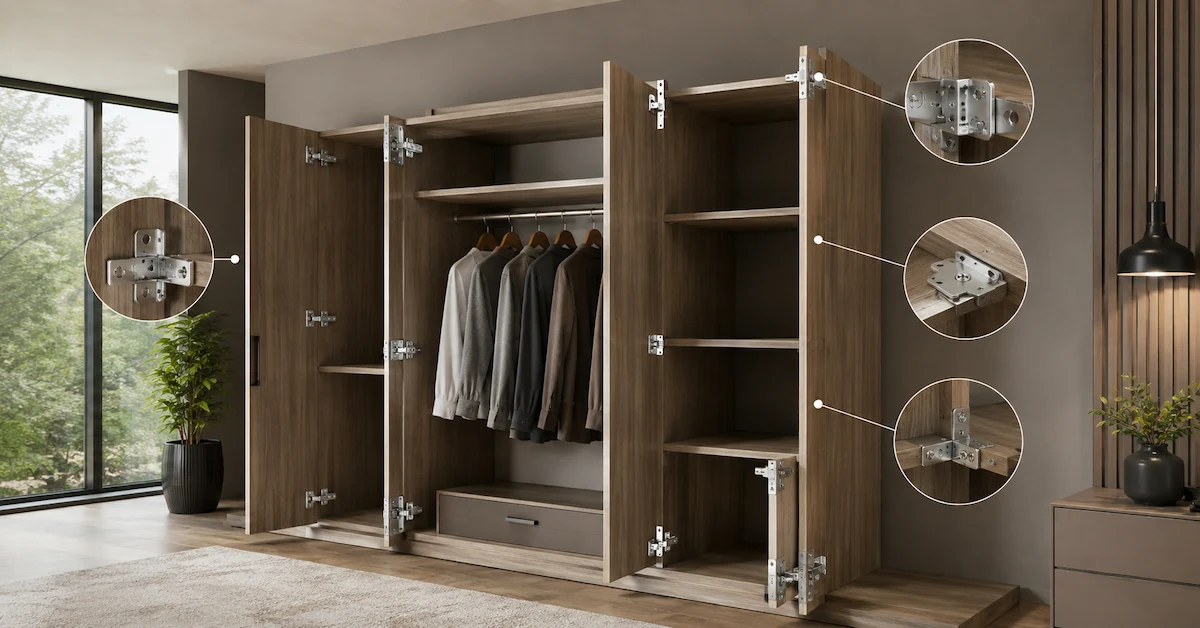
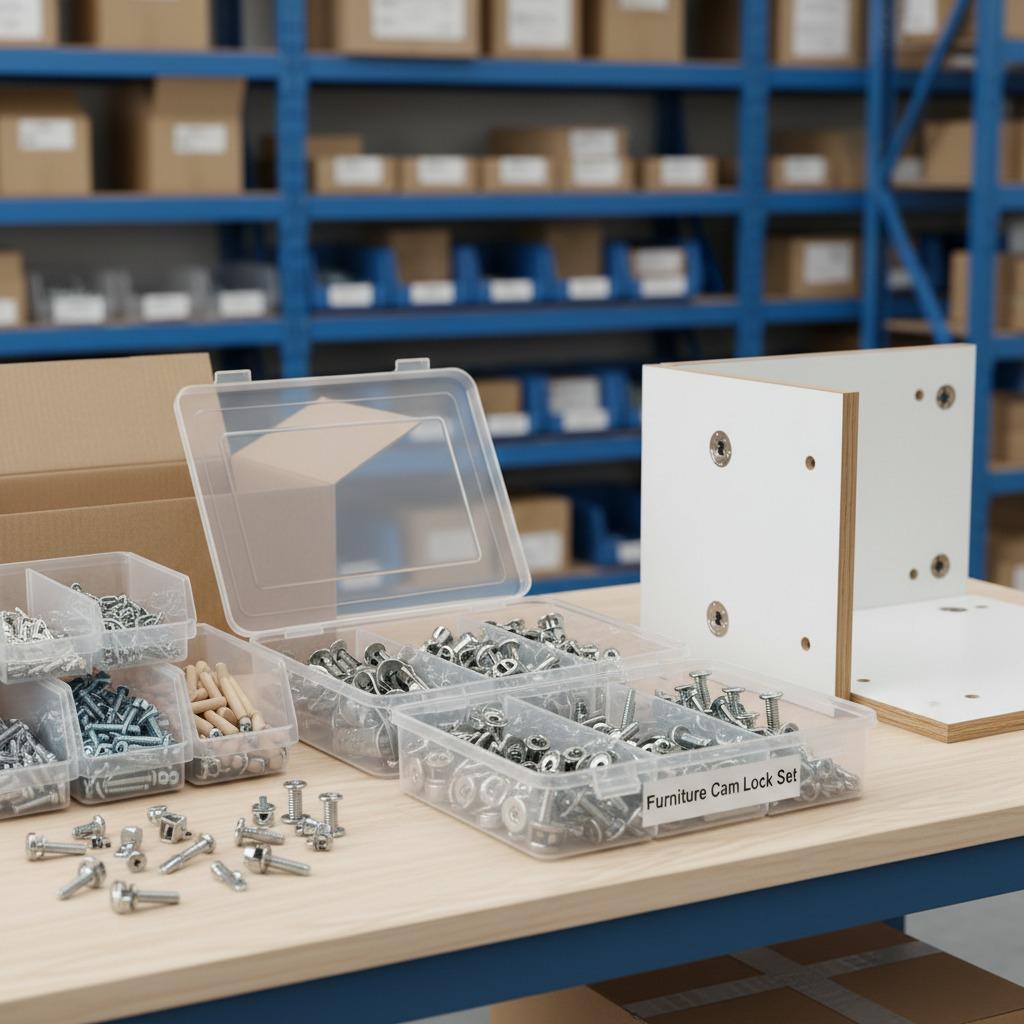
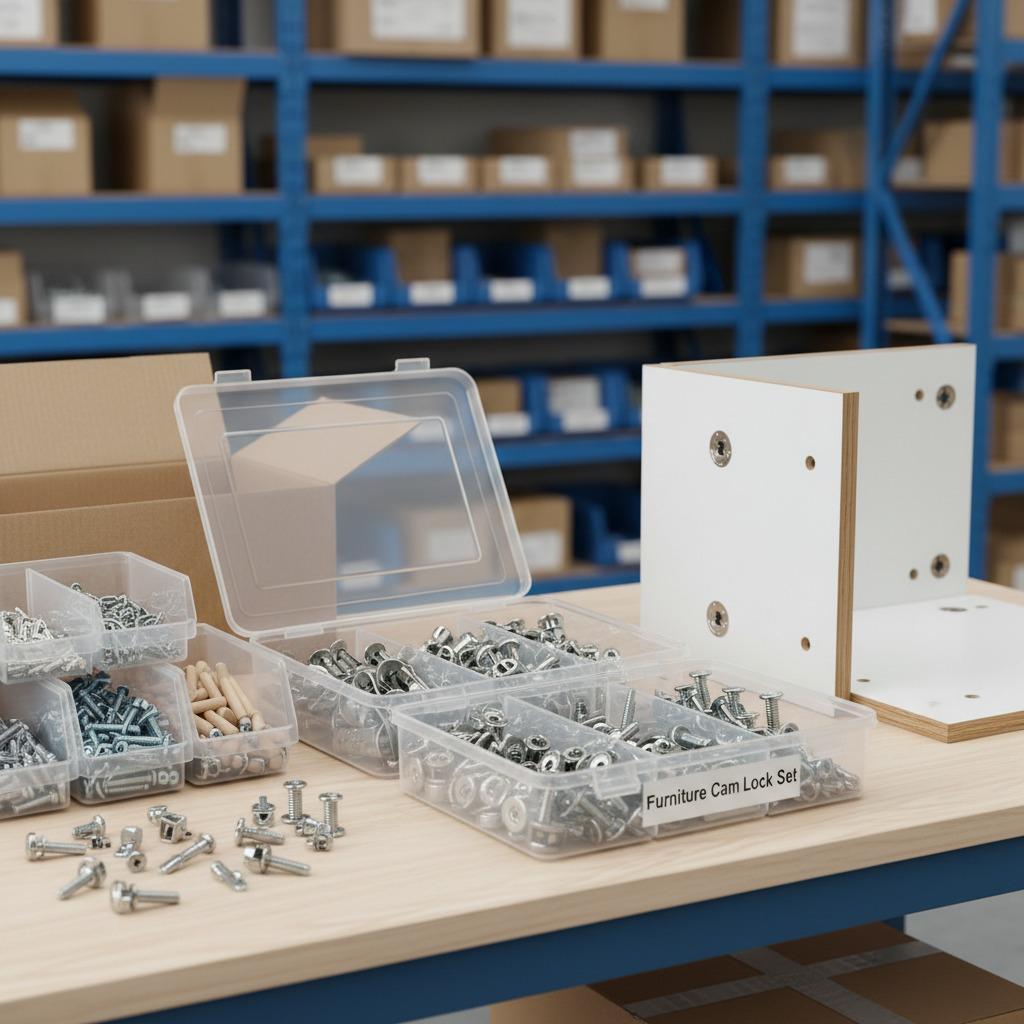
A cabinet hardware kit may include screws, hinges, brackets, washers, nuts, bolts, shelf pins, anchors, plastic caps, or small fittings. A wardrobe hardware kit may include rail brackets, screws, shelf supports, caps, and other room-furniture hardware. A broader furniture hardware kit may include mixed fasteners, cam connectors, dowels, bolts, washers, and small installation tools.
Those kits should not be treated in the same way.
A good supplier thinks in assemblies, not loose parts. The kit should match the customer’s use case, whether it is retail display, warehouse storage, furniture assembly, spare-parts supply, or direct installation.
If a supplier only talks about price per fastener, the discussion is probably not deep enough.
Mixed hardware needs more control
Mixed hardware kits are convenient, but they are also where mistakes happen.
A short screw can look close to a longer screw. A washer can hide under a bracket. A small nut can slip into the wrong cavity. A black-coated part and a dark metal part may look similar under warehouse lighting.
This is why kit control matters.
A manufacturer that produces machine screws, self-tapping screws, micro screws, and precision screws has a useful base capability, but production alone is not the whole story. The supplier also needs to sort, count, separate, pack, and inspect the complete kit.
Jiangmen Jinhe Hardware Co., Ltd. works with fasteners, standard parts, and non-standard customization. For buyers, that background can be useful when a cabinet or furniture kit requires standard fasteners plus one or two special parts.
Still, the finished kit should be approved as a kit.
Loose parts on a table do not prove that the final pack will work in real handling.
Packaging should match the channel
Packaging is not only about appearance.
For retail, packaging helps sell the product. For warehouse supply, it helps teams identify and pick the correct SKU. For installers, it helps reduce sorting time. For e-commerce, it helps the kit arrive in good condition.
That is why packaging should be chosen according to the channel.
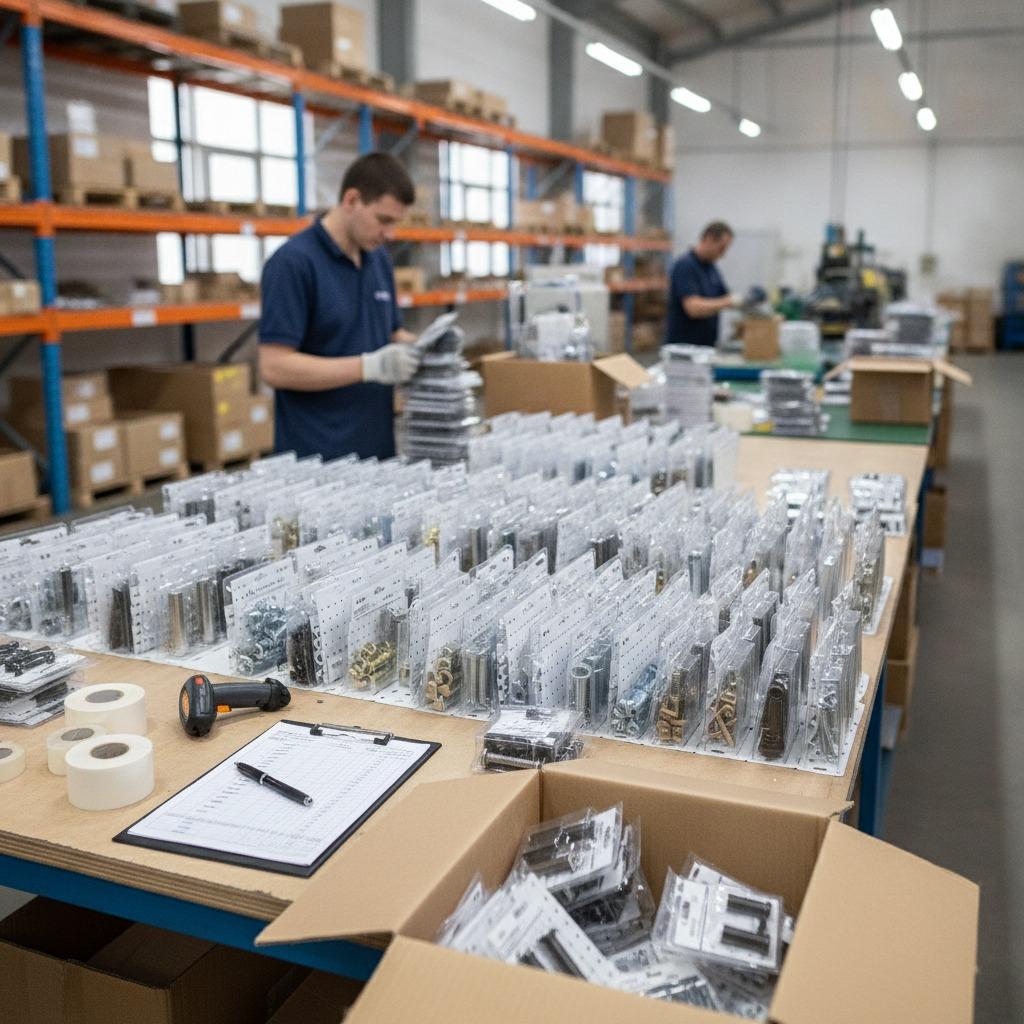
Clear blister packaging is often useful for cabinet hardware kits because it allows buyers to see the contents. A formed cavity can hold screws, brackets, hinges, washers, and other small parts in position. A printed backing card gives space for the brand, SKU, barcode, part count, and basic product information. A hang tab makes the pack suitable for pegboard display.
But blister packaging is not the best answer for every order.
A factory assembly kit may work better in labeled bags. A workshop kit may need a divided box. A bulk project kit may need stronger carton packing more than retail presentation.
The practical question is simple: where will this kit go after it leaves the supplier?
The packaging should support that route.
Clear packaging still needs clear labeling
A transparent pack helps, but it does not solve everything.
If the label is vague, the kit can still confuse the user. If the barcode is hard to scan, the warehouse will still lose time. If the contents description is too general, retail staff and customers may still ask questions.
A good label should do useful work.
It may include the part name, quantity, SKU, barcode, model number, finish, or basic usage note. For OEM or project kits, it may also need customer codes, batch information, or assembly-step references.
This is especially important when one supplier handles cabinet, wardrobe, and furniture hardware kits together. Similar-looking kits can easily be mixed if labeling is weak.
A neat package with unclear information is only half finished.
Count accuracy is where small mistakes become expensive
In hardware kits, the cheapest missing part often causes the biggest irritation.
A washer may cost almost nothing. A hinge screw may be tiny. A plastic cap may look unimportant. But once the customer opens the pack and finds it missing, the cost changes.
Now there may be a complaint, a replacement shipment, a delayed installation, or a returned product.
Buyers should ask how the supplier verifies kit count before sealing.
Manual counting may work for simple kits. Weight checking may help for some fastener sets. Visual inspection works better when the packaging is clear. More complex kits may need separated trays, barcode control, final pack inspection, or documented count checks.
There is no single method for every kit.
The important thing is that the supplier can explain the process clearly.
If the answer is only “we check before shipping,” ask what that actually means.
Inspection should cover both parts and packs
A cabinet hardware kit can fail in two ways.
The parts can be wrong, or the pack can be wrong.
The screw may be off-size. The bracket may have poor finish. The hinge may not match the approved sample. That is part-quality risk.
But the kit can also fail because the correct parts were packed in the wrong quantity, placed in the wrong cavity, labeled incorrectly, or damaged during packing.
That is pack-out risk.
A capable manufacturer should control both.
Jiangmen Jinhe Hardware states that its products undergo inspection before delivery and can be supplied with necessary documentation. For buyers, that is useful, but it is still important to confirm the inspection plan for the specific kit.
A carton of one screw size is easier to inspect than a retail blister pack with several different components.
The inspection should match the risk.
Material and finish should be confirmed early
Hardware kits often include several finishes in one pack.
Silver screws, black-coated brackets, brass-colored fittings, stainless washers, plastic caps—each may have a different function or appearance requirement.
Buyers should not assume material from color alone.
A silver part may be zinc-plated steel or stainless steel. A black part may be coated metal or plastic. A brass-colored fitting may be plated or made from another material. These differences affect appearance, corrosion resistance, handling, and sometimes assembly performance.
Before approving the kit, confirm:
- Material
- Surface finish
- Part dimensions
- Quantity
- Acceptable substitutions
- Packaging protection
- Inspection requirement
- Repeat-order standard
This is especially important for retail and export programs, where the kit may face longer storage, more handling, and closer customer inspection.
Logistics is part of the kit decision
A kit that looks good at the supplier’s factory still has to survive movement.
It may pass through carton packing, pallets, warehouses, trucks, containers, retail shelves, or parcel networks. If the outer carton is weak, the retail pack may arrive crushed. If the blister seal is weak, small parts may shift. If carton marks are unclear, warehouse teams may waste time sorting.
For buyers managing repeated orders or cross-border supply, logistics support can make a real difference.
Jiangmen Jinhe lists domestic logistics, international freight forwarding, warehousing, and supply chain services. For importers, wholesalers, and e-commerce sellers, that support may reduce the number of handoffs between production and delivery.
Good packaging is not only the inner pack.
The full delivery path matters.
Match the supplier to the product family
A cabinet hardware kit manufacturer may also need to support wardrobe kits, furniture hardware kits, retail fastener packs, mixed assortments, or spare-parts programs.
That does not mean one supplier can handle everything automatically.
But it does mean buyers should look for a supplier with enough range to support related product lines without creating confusion.
A wardrobe hardware kit manufacturer may need to organize rail brackets, screws, caps, and shelf supports. A furniture hardware kit manufacturer may need cam fittings, bolts, dowels, washers, and customer-facing packaging. A cabinet kit supplier may need blister packs for retail and simpler packs for installation teams.
If the supplier understands only loose fasteners, your team may end up managing the kit logic alone.
If the supplier understands both parts and packaging, the project usually runs more smoothly.
Communication speed should be tested before volume orders
Hardware kit projects often change during sampling.
A screw length is revised. The backing card needs new wording. The customer asks for a different count. The blister cavity needs adjustment. A carton mark is unclear. A delivery date changes.
When that happens, response speed matters.
Jiangmen Jinhe says customer support responds within 30 to 60 minutes and provides solutions within 2 hours. Buyers should not treat any service claim as automatic proof, but it is worth testing during sampling.
Ask questions. Request changes. See how clearly the supplier answers.
A supplier that communicates well before the first large order is usually easier to work with later.
Common mistakes buyers still make
One common mistake is choosing by metal-part price only.
The cheapest fastener set may not be the cheapest kit if sorting, labeling, packaging, and complaints add extra cost later.
Another mistake is approving loose samples instead of real packed samples. Loose parts do not show how the final kit will behave during sealing, stacking, hanging, shipping, or warehouse picking.
A third mistake is under-labeling. A supplier’s internal code may work inside the factory, but it may not help a retailer, installer, or customer.
Buyers also sometimes ignore outer carton protection. A strong blister pack still needs sensible carton packing if the goods travel long distances.
The final mistake is not checking repeatability.
A first sample can be hand-prepared carefully. The real question is whether the supplier can repeat the same kit across future orders.
Quick buyer checklist
Before placing a volume order, ask for:
- Final part list
- Quantity of each item
- Material and finish details
- Packaging format
- Blister or cavity layout
- Label and barcode requirements
- Count verification method
- Finished-pack inspection process
- Outer carton plan
- Customization options
- Logistics support
- Repeat-order control
A short checklist like this usually reveals more than a polished catalog.
Frequently Asked Questions
What does a cabinet hardware kit manufacturer provide?
A cabinet hardware kit manufacturer may provide screws, hinges, brackets, washers, nuts, pins, anchors, shelf supports, plastic caps, mixed fasteners, labels, and retail or assembly packaging.
Why is blister packaging useful for cabinet hardware kits?
Blister packaging makes small parts visible, helps keep items separated, supports pegboard display, and gives space for branding, barcodes, and product information.
Can one supplier handle cabinet, wardrobe, and furniture hardware kits?
Often, yes. A supplier with fastener production, customization, sorting, packaging, inspection, and logistics support may be able to manage several related kit programs.
What should buyers check before approving a kit?
Buyers should check the part list, count method, packaging layout, label information, material, finish, carton protection, and repeat-order consistency.
Is the lowest-price kit usually the best option?
Not always. A lower price can become expensive if parts are missing, packaging is weak, labels are unclear, or repeat orders are inconsistent.
Can cabinet hardware kits be customized?
Yes. Part mix, quantity, blister layout, labels, carton marks, fastener specifications, and packaging format can be customized for retail, warehouse, e-commerce, or assembly use.
A better kit is built before it is packed
A good cabinet hardware kit does not happen at the end of production.
It starts with the part list, count method, packaging format, label plan, inspection process, and delivery route.
That is what buyers should expect from a capable cabinet hardware kit manufacturer.
For cabinet hardware kits, wardrobe hardware kits, furniture hardware kits, hardware blister packaging, mixed fastener kits, retail hardware packs, and custom hardware packaging, Jiangmen Jinhe Hardware Co., Ltd. can discuss standard parts, non-standard customization, inspection, packaging, logistics, warehousing, and repeat supply requirements.
For direct inquiries:
Tel/WeChat: +86 13729150102
WhatsApp: +86 13322893939
Email: sharon@hkhomeideas.com
Start with the part list, packaging channel, target quantity, label requirements, and expected order volume.
Once the kit structure is clear, choosing the right manufacturer becomes much easier.