
What Buyers Miss When Choosing a Cabinet Hardware Kit Manufacturer
A cabinet hardware kit does not usually get much attention until something goes wrong.
The package looks small. The parts are inexpensive. A few screws, brackets, washers, hinges, anchors, or pins do not seem difficult to manage. So it is easy to treat the kit as a simple packing job.
Then a store receives blister packs with parts shifted out of place.
An installer opens the pack and finds one screw missing.
A warehouse team cannot identify the SKU quickly.
A customer sees a damaged package and assumes the hardware inside is low quality.
That is when the kit stops being a small purchasing detail.
For buyers comparing a cabinet hardware kit manufacturer, the real question is not just who can supply metal parts. The more useful question is this: who can make the kit complete, readable, protected, and repeatable?
That is where many projects succeed or fail.
Start with the job the kit has to do
Before choosing packaging, the buyer needs to decide what the kit is actually for.
A retail hardware kit has to sell itself on a shelf. Customers should be able to see the parts, read the quantity, understand the use, and trust the pack before they buy it.
A warehouse kit has a different job. It needs clear labels, easy counting, and carton markings that make receiving and picking less painful.
An assembly kit used by cabinet installers may not need a glossy card at all. It may need separate bags, simple labels, and fast access to the parts.
An e-commerce kit has another challenge. It must survive parcel handling and still arrive looking organized.
These use cases are close, but they are not the same.
That is why a good cabinet hardware kit manufacturer should ask where the kit goes next. A pack designed for pegboard retail may not be the best choice for factory assembly. A plain polybag may work inside a workshop but look too weak for consumer retail.
Packaging should follow the channel, not the other way around.
The part list comes before the blister layout
Clear packaging often looks like the obvious choice. For many cabinet hardware kits, it is useful. Customers can see the screws, brackets, hinges, nuts, washers, or small fittings without opening the pack.
But the part list still comes first.
If the kit includes three screw lengths, they should not be placed where they can mix. If washers are small and flat, the cavity should keep them visible. If a black-coated bracket can scratch a silver fitting, the layout should prevent contact. If the kit includes sharp screws, the blister or inner packaging needs to stop them from moving too much during transport.
In other words, hardware blister packaging is not only about presentation.
It is about control.
A tidy sample can still fail if the cavities do not match the parts. Buyers should ask for the actual layout, not only a general packaging photo. The formed tray, card backing, sealing method, label area, and outer carton all affect whether the kit works in real handling.
A clear pack should not hide the hardware
Some retail packaging tries too hard.
Too much graphic design. Too many claims. Not enough useful information.
Cabinet hardware is practical. Buyers want to know what is inside, how many pieces are included, and whether the kit fits their use. A clear blister front helps because the hardware can speak for itself. The card should support that with the part name, quantity, barcode, SKU, and basic use information.
If the kit contains different finishes, the layout should make that easy to understand. Silver fasteners, black-coated pieces, brass-colored fittings, and plastic parts may not just look different; they may belong to different installation steps.
When the packaging is crowded or unclear, the user has to guess. That is exactly what a good kit should avoid.
For a furniture hardware kit manufacturer, clear presentation is not decoration. It is part of the product.
Count control is where trust is built
The most expensive mistake in a hardware kit is often the cheapest missing part.
One washer.
One hinge screw.
One bracket.
One anchor.
The cost of the part is almost nothing. The cost of the problem can be much higher: a support email, a replacement shipment, a delayed installation, or a returned product.
Mixed fastener kits need careful counting because the parts are small and often similar. A short screw can look like a longer one at a glance. Washers may stick together. Nuts can hide in corners. Small pins can shift under other components.
A buyer should ask how the manufacturer checks the count before sealing.
Manual counting may work for simple kits. Weight checks can help, but they are not perfect when different parts have similar weights or when one heavy part hides the absence of a lighter one. Visual inspection is useful, especially with clear packaging, but it still needs a process behind it.
The supplier should be able to explain how errors are caught.
If that answer is vague, the risk usually moves to your warehouse or your customer.
Materials and finishes should be written down
A cabinet hardware kit may include several materials in one pack. A screw may be zinc-plated steel. A washer may have another finish. A hinge may use a different grade. A black part may be coated metal or plastic.
Appearance alone is not enough.
For retail products, finish consistency affects shelf appearance. For assembly kits, material and finish may affect corrosion resistance, fit, and handling. For export orders, storage and transport conditions may create extra pressure on the hardware.
Jiangmen Jinhe Hardware Co., Ltd. works with machine screws, self-tapping screws, micro screws, and precision screws in materials such as stainless steel, iron, and aluminum. The company also works with GB, DIN, ANSI, BS, JIS, and ISO standards.
That kind of fastener background can be useful when buyers need stable specifications. Still, every kit should have its own confirmed part list. The material, finish, size, quantity, and acceptable substitution rules should be clear before volume production starts.
A standard fastener is useful only when the standard is actually controlled.
Kitting is different from simply making parts
A manufacturer may be good at producing screws and still weak at building kits.
That distinction matters.
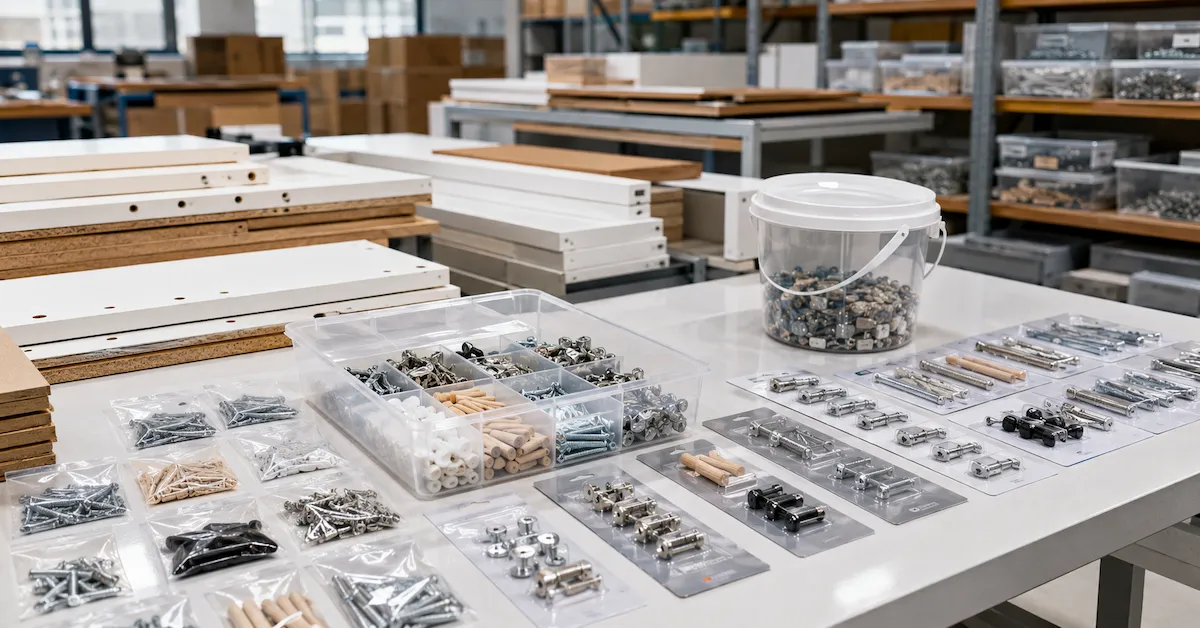
A cabinet hardware kit manufacturer needs to manage the parts after production: sorting, counting, grouping, labeling, sealing, inspecting, and packing them for shipment. If the kit contains mixed hardware, the process becomes more demanding.
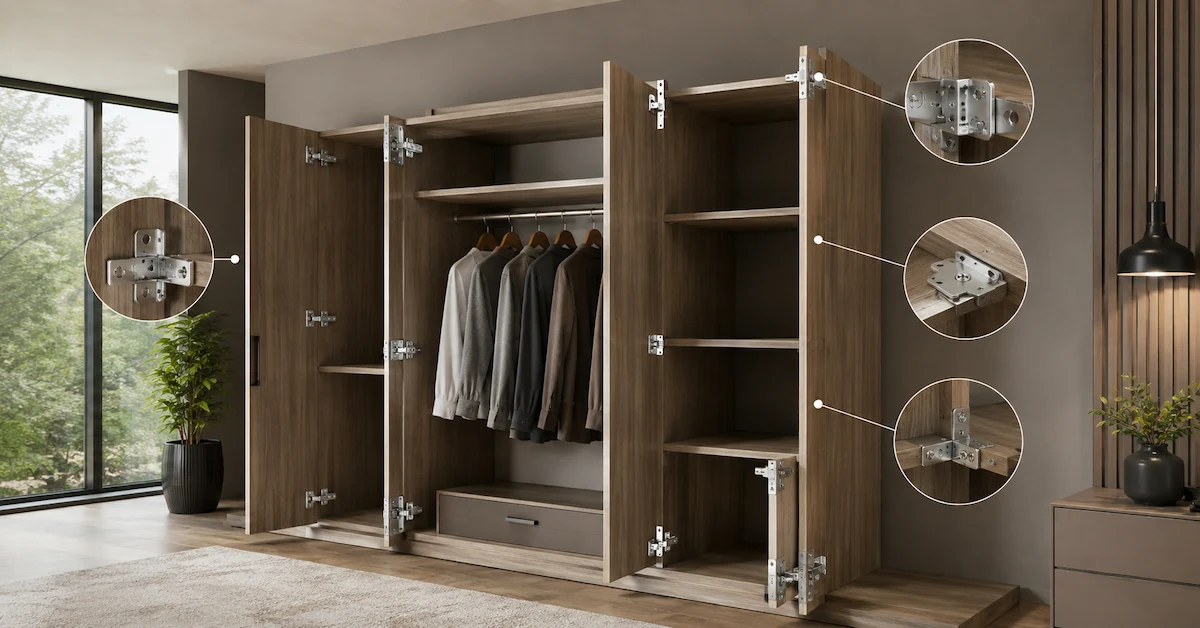
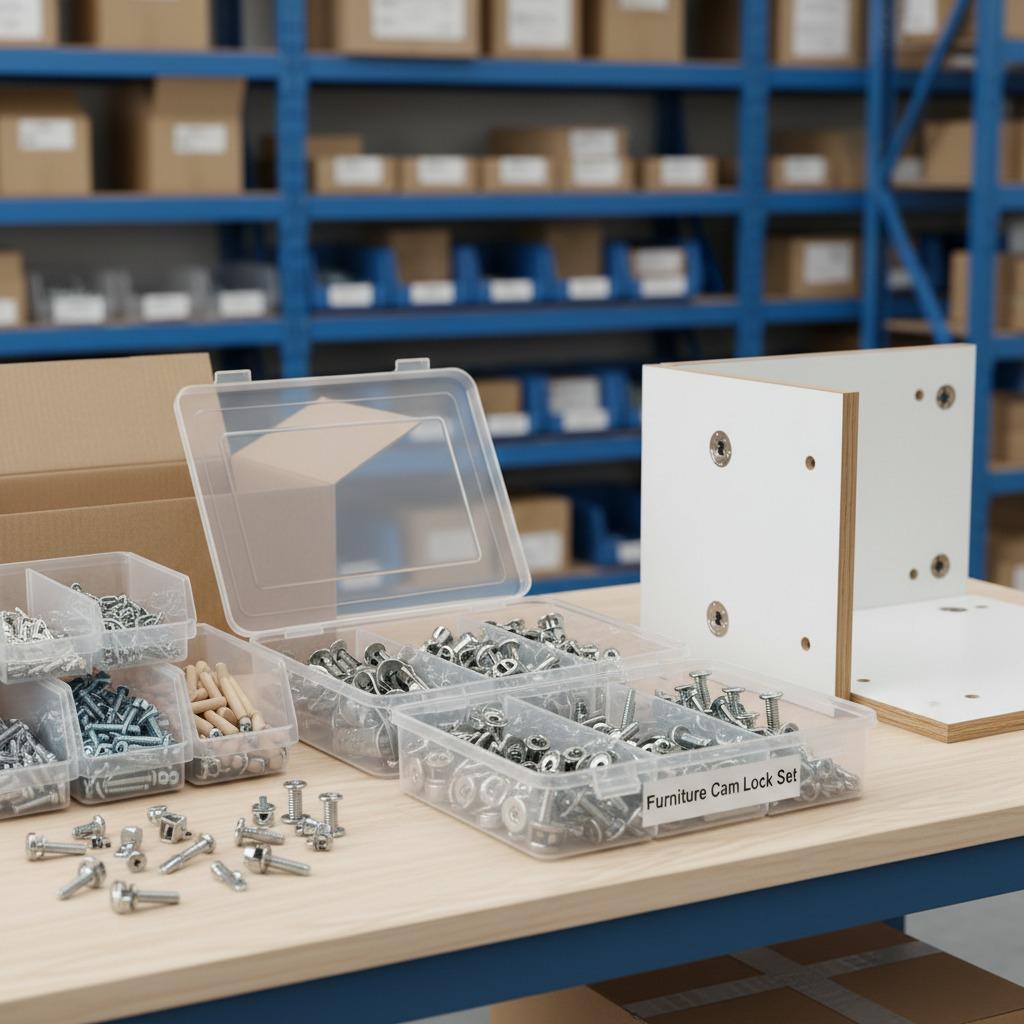
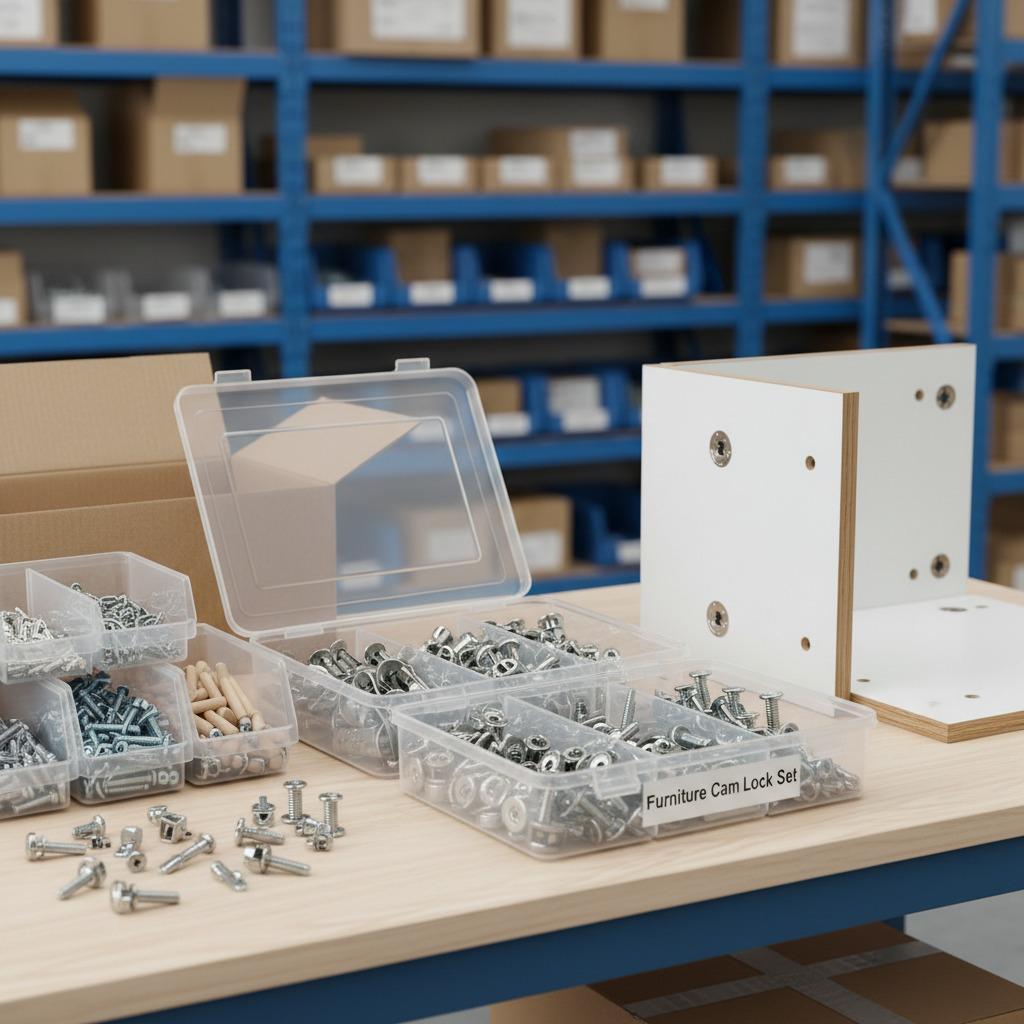
For a wardrobe hardware kit manufacturer, the kit may include rail brackets, screws, caps, pins, and shelf supports. For a furniture kit, it may include cam connectors, dowels, bolts, washers, and small tools. For a retail hardware pack, the layout and label may matter almost as much as the fasteners.
Buyers should ask whether the supplier can support the full kit structure, not only the metal parts.
Can similar screws be separated?
Can the label match the SKU?
Can the pack be repeated next order?
Can the supplier handle small changes without confusing the old and new versions?
These are ordinary questions, but they reveal whether the supplier is ready for real kit work.
Logistics can damage a good pack
A kit is not finished when the blister is sealed.
It still has to move through cartons, pallets, warehouses, trucks, containers, store shelves, or parcel networks. If the outer carton is weak, the retail pack may arrive crushed. If labels are unclear, warehouse teams may lose time. If the blister is not sealed well enough, parts may shift or spill.
Small hardware is surprisingly easy to mishandle.
This is one reason buyers should review the shipping path before approving the packaging. A kit sold in a local hardware store may need one kind of carton. A cross-border e-commerce order may need another. A warehouse replenishment program may care more about carton markings and pallet efficiency than card design.
Jiangmen Jinhe lists support for domestic logistics, international freight forwarding, warehousing, and supply chain services. For buyers managing repeat hardware kit orders, that kind of support can reduce the number of handoffs between production and delivery.
The goal is simple: the kit should arrive ready to sell or use, not ready to be repaired.
Do not approve only loose samples
Loose parts are useful for checking material and dimensions.
They do not prove the kit works.
Before approving an order, buyers should request the actual packed sample. Open it. Count it. Shake it lightly. Store it. Scan the barcode. Place it in the carton. Let the warehouse or retail team look at it. If the kit is for installers, let someone use it in a real job or mock assembly.
Small issues appear quickly during handling.
A label may be too small. A cavity may not hold the bracket. A washer may be hard to see. A blister may be hard to open. A card may bend too easily. A pack may look good alone but stack poorly in a carton.
These problems are much cheaper to fix before production.
Common mistakes buyers still make
One mistake is choosing packaging before defining the kit.
A beautiful blister pack cannot save a poorly planned assortment.
Another mistake is putting too many parts in one kit. A large assortment may look useful, but it can become hard to understand, hard to count, and hard to stock.
A third mistake is under-labeling. A supplier’s internal code may not help the warehouse, installer, store clerk, or customer.
Buyers also sometimes treat finish differences as cosmetic only. In some kits, finish helps users identify part function or installation position. If that visual logic is not planned, mistakes become easier.
The final mistake is accepting the lowest price without checking repeatability. A cheap kit is not cheap if the second order does not match the first one.
Quick buyer checklist
Before choosing a cabinet hardware kit manufacturer, confirm the exact part list, quantity, material, finish, packaging channel, blister layout, label content, barcode needs, count verification method, finished-pack inspection, carton protection, customization options, logistics support, and repeat-order control.
This may look like a long list, but it is easier than solving missing-part complaints later.
Frequently Asked Questions
What does a cabinet hardware kit manufacturer provide?
A cabinet hardware kit manufacturer may provide screws, hinges, brackets, washers, nuts, pins, anchors, shelf supports, plastic caps, mixed fasteners, labels, and retail or assembly packaging.
Why is blister packaging common for cabinet hardware kits?
Blister packaging makes small parts visible, helps keep items separated, supports retail display, and gives space for branding, barcodes, and product information.
Can one supplier handle cabinet, wardrobe, and furniture hardware kits?
Often, yes. A supplier with fastener production, customization, sorting, packaging, inspection, and logistics support may be able to manage several related kit programs.
Is the lowest-price kit the best option?
Not usually. A low-price kit can become expensive if parts are missing, packaging is weak, labels are unclear, or repeat orders are inconsistent.
What should buyers check before approving a kit?
Buyers should check the part list, count method, packaging layout, label information, material, finish, carton protection, and repeat-order consistency.
Can cabinet hardware kits be customized?
Yes. Part mix, quantity, blister layout, labels, carton marks, fastener specifications, and packaging format can be customized for retail, warehouse, e-commerce, or assembly use.
A good kit feels simple because the work was done earlier
The best cabinet hardware kit does not make the buyer, warehouse team, installer, or customer stop and wonder what went wrong.
The parts are correct.
The count is right.
The label is clear.
The packaging suits the channel.
The carton protects the pack.
The next order matches the approved sample.
That is what buyers should expect from a capable cabinet hardware kit manufacturer.
For cabinet hardware kits, wardrobe hardware kits, furniture hardware kits, hardware blister packaging, mixed fastener kits, retail hardware packs, and custom hardware packaging, Jiangmen Jinhe Hardware Co., Ltd. can discuss standard parts, non-standard customization, inspection, packaging, logistics, warehousing, and repeat supply requirements.
For direct inquiries:
Tel/WeChat: +86 13729150102
WhatsApp: +86 13322893939
Email: sharon@hkhomeideas.com
Start with the part list, packaging channel, target quantity, label requirements, and expected order volume.
Once the kit structure is clear, choosing the right manufacturer becomes much easier.