
Concealed furniture connectors do not get much attention once the furniture is assembled.
That is the point.
The customer sees clean panels, straight shelves, a tidy wardrobe interior, or a cabinet with fewer exposed screws. The connector stays inside the joint, behind the board, or under a cap. When the part works well, nobody talks about it.
But sourcing teams know the other side of the story.
A hidden connector that does not tighten properly can leave a cabinet feeling weak. A cam part that does not match the drilled hole can slow assembly. A threaded fitting that loosens in MDF or particleboard can turn a normal installation into a service problem. A bracket that is slightly off can make the whole unit feel less precise than it should.
That is why choosing a concealed furniture connector supplier is not only about finding neat-looking hardware.
It is about making sure the hidden joint works in the real furniture, with the real panel, the real hole pattern, and the real assembly process.
Hidden hardware still carries visible consequences
The connector may be concealed, but the result is not.
If the joint pulls tight, the furniture feels solid. If the panels align well, the cabinet looks better. If the hardware is easy to use, the installer moves faster. If the kit is complete, the customer does not stop halfway through assembly looking for a missing part.
When any of those details fail, the problem becomes visible immediately.
A wardrobe may rack slightly.
A bookcase may wobble.
A shelf may sit unevenly.
A cabinet corner may show a small gap.
The customer may not know which connector caused the issue, but they will know the furniture does not feel right.
That is the real value of concealed joinery connectors. They are not chosen only to hide metal parts. They are chosen to make the whole product feel cleaner, tighter, and more intentional.
A concealed connector kit is usually not one single part
In many furniture projects, concealed hardware comes as a small system.
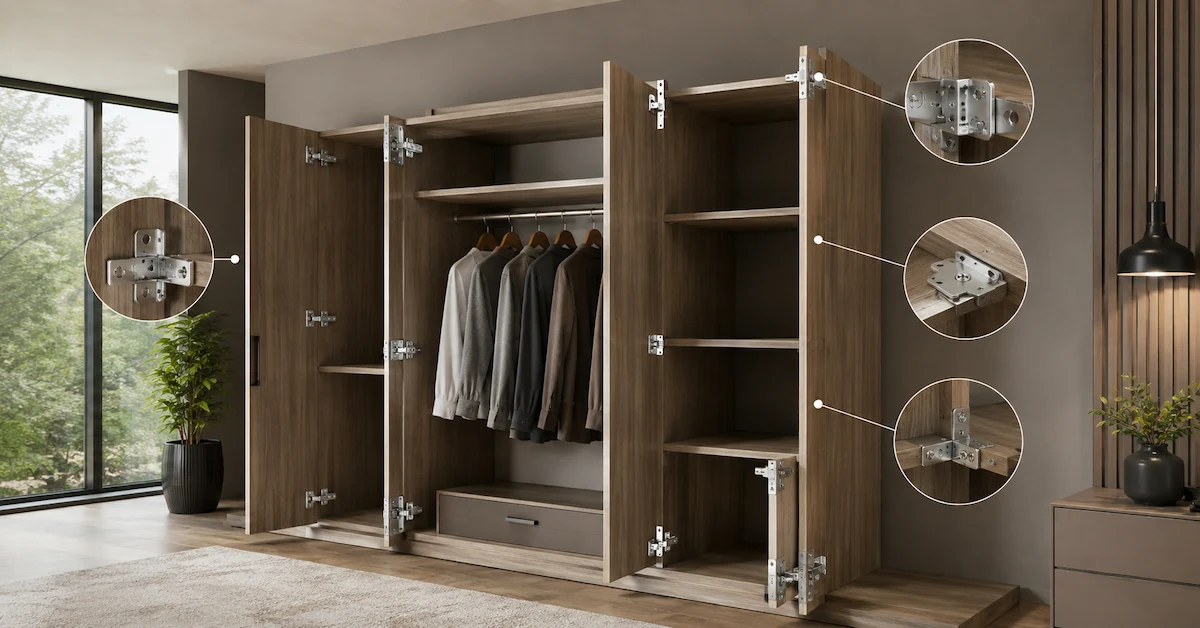
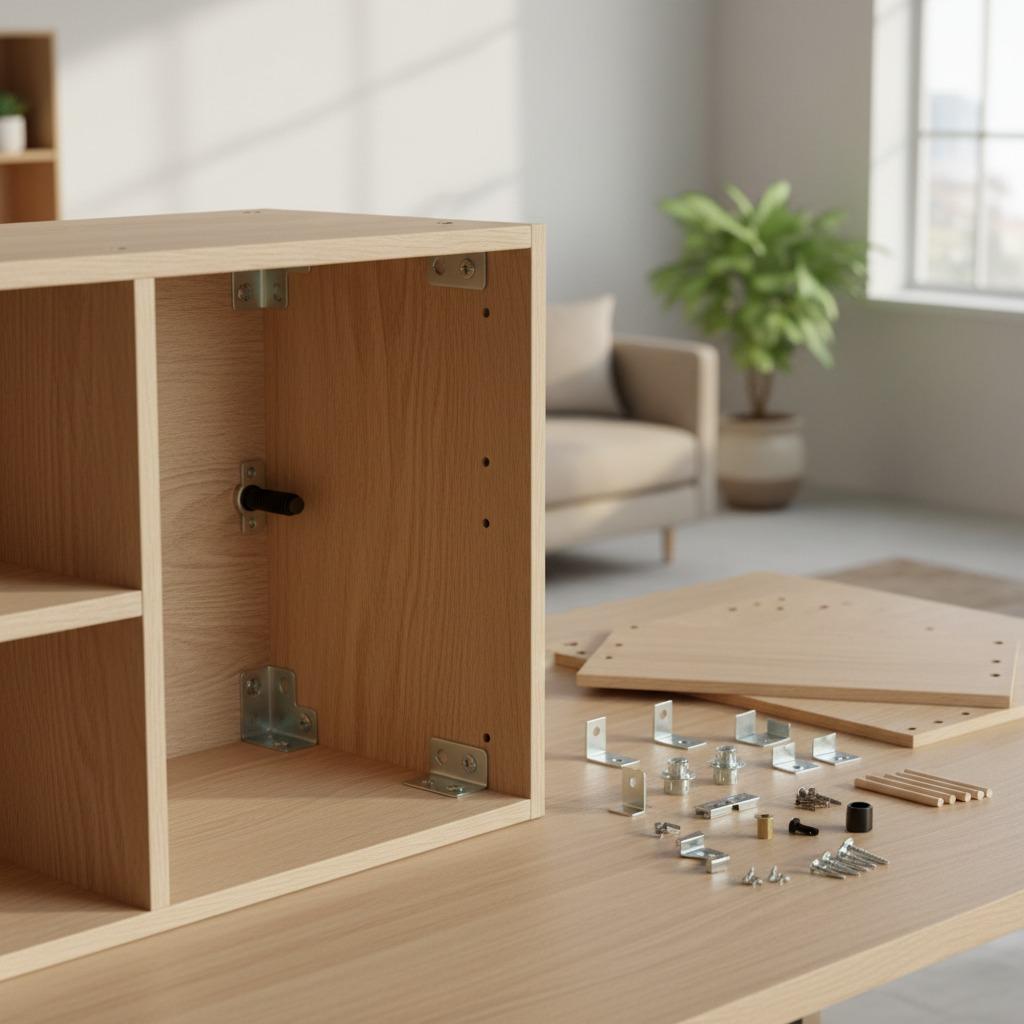
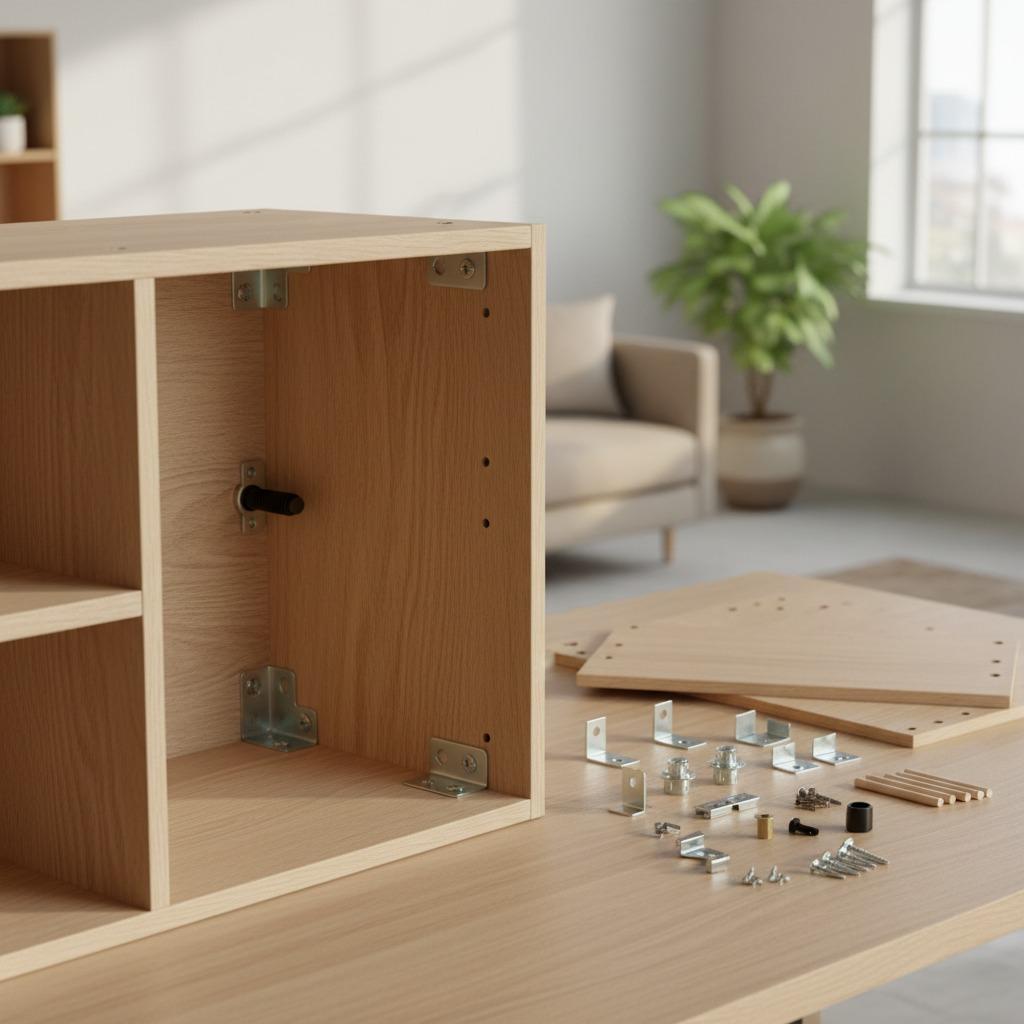
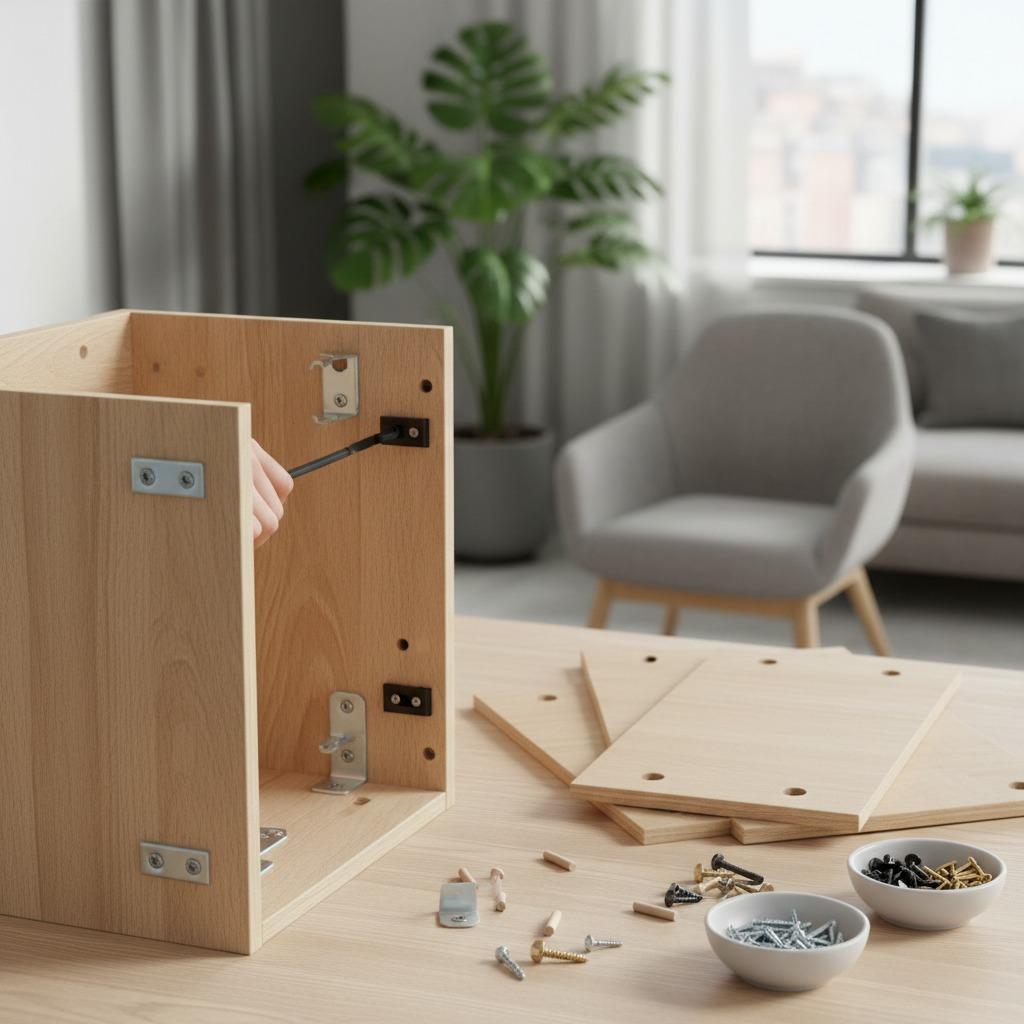
A kit may include cam-style connectors, threaded bolts, inserts, dowels, angle brackets, L-brackets, screws, plastic spacers, bushings, caps, or black molded pieces used for alignment or finishing. Some parts are structural. Some help locate the panels. Some hide the opening after assembly. Others protect the board or make the joint easier to service later.
This is why buyers should avoid judging the kit part by part.
The cam needs the correct bolt.
The insert needs the correct hole.
The screw needs the correct length.
The dowel needs the correct fit.
The bracket needs the correct hole position.
The cap needs to stay in place after tightening.
A concealed furniture hardware supplier should understand how those small parts work together. A connector kit is not just a mixed bag of metal and plastic pieces. In flat-pack furniture, it is part of the assembly logic.
The board decides whether the connector works
Concealed furniture connectors depend heavily on the board material.
Particleboard, MDF, plywood, laminated panels, and veneered boards all behave differently. Some panels hold screws better. Some are more sensitive near the edge. Some machine cleanly but do not tolerate repeated tightening very well. A connector that works in plywood may feel weak in a lower-density board. A threaded insert that holds in one panel may spin in another.
This is why the first sourcing discussion should include the panel.
Before approving concealed joinery connectors, buyers should confirm the board thickness, hole diameter, hole depth, edge distance, connector length, screw or bolt size, assembly direction, and expected load.
Those details sound plain, but they decide whether the product assembles cleanly.
A sample connector on a desk is useful for checking finish and general shape. It does not tell buyers enough about real fit. The more useful test is to install the connector in the actual panel material and follow the same assembly sequence that workers or customers will use later.
That is where problems show up.
Pre-drilled furniture leaves little room for correction
Flat-pack furniture usually depends on pre-drilled holes.
This keeps assembly faster and more repeatable, but it also makes concealed connector sourcing less forgiving. Once the holes are drilled, the hardware must match the geometry. There is no easy way for the customer to adjust a hole that is too deep, too shallow, too wide, or slightly out of position.
A visible bracket may allow some adjustment during installation.
A hidden furniture connector often does not.
If the hole pattern is off, the connector may sit proud, fail to lock, damage the edge, or leave the panel gap open. That is why buyers should review drilling requirements before the furniture design is frozen.
The supplier should be able to discuss the connector in relation to the board and machining process, not only the part price.
Concealed does not always mean better
Hidden hardware has clear advantages, but it is not always the best answer for every joint.
Cam-style connectors work well in many flat-pack products because they allow knock-down assembly and keep the outside surface clean. Threaded inserts and connector bolts can be useful when repeated tightening is expected. Internal brackets may not be fully invisible, but they can provide practical reinforcement in utility cabinets, shelving, or workshop furniture. Dowels often help with alignment before the final tightening step.
In many real projects, the best solution is a mixed system.
One part handles alignment.
One part pulls the panels together.
One part reinforces the corner.
One part improves appearance.
The better question is not, “Which connector looks the cleanest?”
The better question is, “Which connector system fits this furniture design without making assembly harder?”
A good supplier should help buyers answer that honestly.
Material and finish still matter, even inside the cabinet
Because concealed hardware is often hidden after assembly, some buyers treat finish as a minor issue.
That can be a mistake.
Zinc-plated or bright silver metal parts are common in furniture connector kits because they are practical for indoor use. Brass-colored inserts or connector pieces may be used where appearance, thread behavior, or identification matters. Black plastic or coated pieces may work as caps, spacers, guides, or adjustment parts.
But color alone does not confirm material.
A silver piece may be zinc-plated steel or stainless steel. A brass-colored part may be plated rather than solid brass. A black component may be plastic, nylon, or coated metal.
Buyers should confirm base material, surface treatment, thread type, size tolerance, finish consistency, corrosion expectations, and substitution rules before production.
A hidden part still affects the final furniture. If the material changes quietly, the assembly feel may change too.
Packaging can make hidden hardware easier or harder to use
Concealed connectors are small.
That makes packaging important.
A furniture kit may include several parts that look similar but serve different functions. If they are mixed together without clear separation, the installer or customer may choose the wrong part. A missing cap, screw, insert, or bolt can stop assembly just as quickly as a missing panel.
For flat-pack furniture connectors, useful packaging may include separated bags, small trays, labels by assembly step, model numbers, barcodes, replacement kit references, or simple visual grouping.
The goal is not fancy packaging.
The goal is to help the person opening the kit find the correct part quickly.
A concealed connector may disappear after installation, but before assembly it needs to be very easy to identify.
Where Jiangmen Jinhe Hardware fits
Jiangmen Jinhe Hardware Co., Ltd. works with machine screws, self-tapping screws, micro screws, precision screws, standard parts, and non-standard customization. Its material range includes stainless steel, iron, and aluminum, with production aligned to standards such as GB, DIN, ANSI, BS, JIS, and ISO.
For buyers sourcing concealed furniture connectors, this fastener background is relevant because hidden furniture hardware often depends on accurate small parts. A complete kit may include screws, threaded pieces, inserts, connector bolts, brackets, caps, packaging, inspection, and repeat-order control.
Jiangmen Jinhe also notes support for inspection before delivery, documentation, logistics, warehousing, foreign trade, and supply chain services. For furniture manufacturers, cabinet suppliers, hardware wholesalers, and cross-border e-commerce sellers, this kind of support can help when a sample kit turns into repeat production.
A useful concealed furniture hardware supplier should not only quote a fitting.
It should help keep the connector system stable across future orders.
Mistakes buyers should avoid
One common mistake is choosing concealed connectors only by appearance.
Clean furniture is important, but the connector still has to install easily and hold firmly.
Another mistake is assuming all concealed furniture connectors are interchangeable. They are not. Hole depth, connector length, board thickness, bolt shape, tightening method, and panel material all affect performance.
A third mistake is approving loose samples without testing the full assembly. A connector may look fine on the table and still perform poorly in the actual cabinet.
Buyers also sometimes delay packaging decisions until the end. That is risky because hidden hardware kits often include several small matching parts. If the kit is confusing, the assembly becomes confusing.
The final mistake is ignoring repeatability. The first sample may work well. The real question is whether the next shipment will match the same dimensions, finish, count, and packaging method.
What buyers should ask before ordering
Before choosing a concealed furniture connector supplier, buyers should ask:
What panel material is the connector designed for?
What board thickness and hole pattern are required?
Which parts are included in the full kit?
Is the hardware suitable for flat-pack assembly?
Can the connector be tested in our actual panel?
What material and finish options are available?
Can non-standard fasteners be customized?
How are small parts separated in packaging?
How is kit completeness checked before shipment?
What inspection documents are available?
Can the same specification be repeated later?
Can logistics, warehousing, or export support be included?
These questions help buyers avoid choosing a connector that looks right but behaves badly in production.
Frequently Asked Questions
What are concealed furniture connectors?
Concealed furniture connectors are hidden or semi-hidden fittings used to join panels in cabinets, wardrobes, shelving, bookcases, built-in furniture, and flat-pack furniture.
Why do buyers use concealed joinery connectors?
They help create a cleaner appearance while supporting panel alignment, joint tightening, and repeatable assembly.
Are concealed connectors only for premium furniture?
No. They are also used in value and mass-market flat-pack furniture when clean appearance, efficient packing, and predictable assembly are important.
Can concealed furniture hardware be customized?
Yes. Connector size, screw length, threaded parts, finish, caps, packaging, and complete hardware kits can be customized when the furniture design requires it.
What should buyers test before bulk production?
Buyers should test the connector with the actual board material, drilling pattern, tools, packaging format, and full assembly sequence.
Why does packaging matter for concealed connectors?
Because concealed connector kits often include several small matching parts. Clear packaging helps prevent missing parts, mixed hardware, and assembly confusion.
Good hidden hardware makes the furniture feel finished
The best concealed furniture connector does not ask the customer to notice it.
It simply works.
The panels align. The connector tightens. The joint stays hidden. The board is not damaged. The kit is complete. The next order matches the approved sample.
That is what buyers should expect from a reliable concealed furniture connector supplier.
For concealed furniture connectors, concealed joinery connectors, cabinet connector hardware, flat-pack furniture connectors, custom furniture fasteners, and organized furniture hardware kits, Jiangmen Jinhe Hardware Co., Ltd. can discuss material options, standard parts, non-standard customization, inspection, packaging, warehousing, logistics, and repeat supply requirements.
For direct inquiries:
Tel/WeChat: +86 13729150102
WhatsApp: +86 13322893939
Email: sharon@hkhomeideas.com
Start with the panel material, board thickness, hole pattern, connector style, hardware list, packaging method, and expected order quantity.
Once the assembly details are clear, the right concealed connector becomes much easier to source and repeat.