
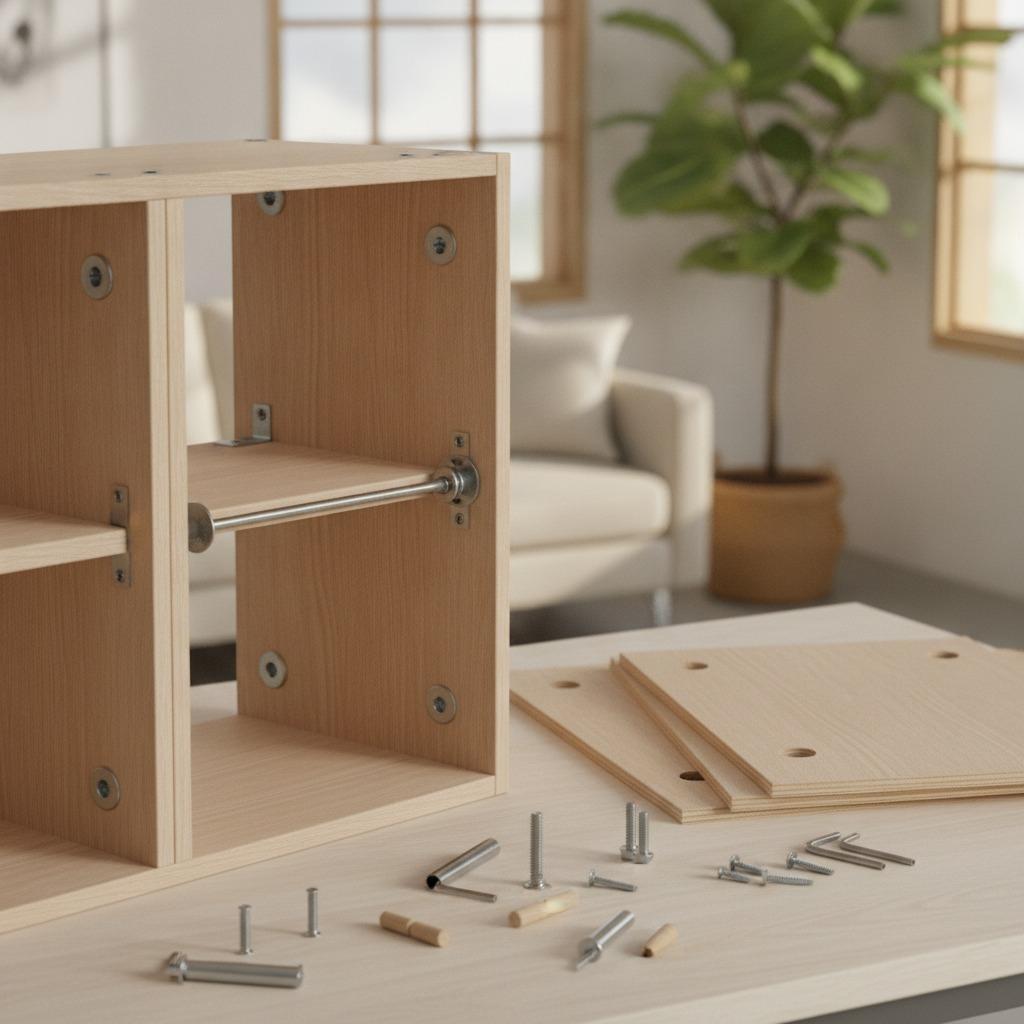
Concealed Furniture Connector Supplier: Why Hidden Hardware Deserves a Closer Look
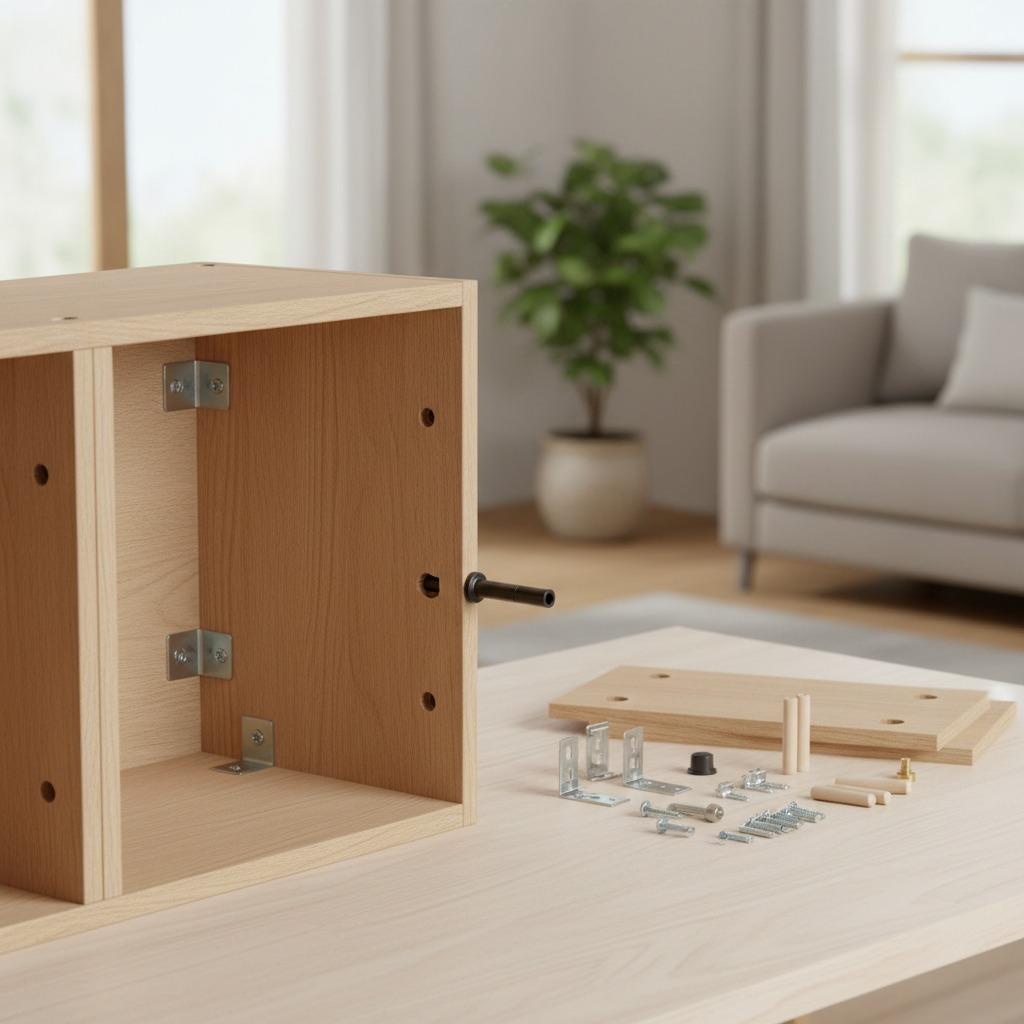 Concealed furniture connectors are easy to overlook because, when they do their job well, nobody sees them.
That is also the reason they matter.
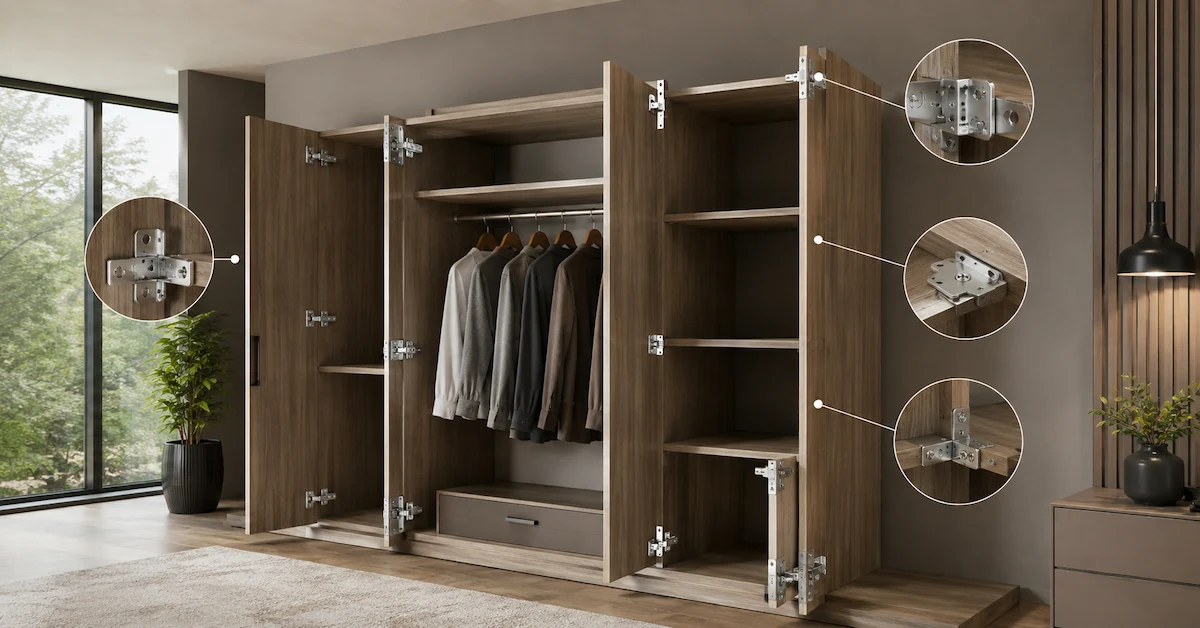
A cabinet looks cleaner when the joint is hidden. A shelving unit feels better when the panels pull together tightly. A wardrobe has a more finished appearance when large brackets and exposed screws are not interrupting the surface. For flat-pack furniture, office storage, built-in cabinetry, and modular panels, hidden hardware helps the product feel more intentional.
But concealed hardware is not only about appearance.
The connector still has to hold. It has to match the board. It has to fit the drilled holes. It has to be practical for the person assembling the furniture. If the joint is hidden but difficult to install, loose after tightening, or hard to repeat in production, the clean appearance will not save the product.
That is why choosing a concealed furniture connector supplier should not start with a catalog photo.
It should start with the furniture structure.
Hidden hardware still has to do real work
A hidden connector may disappear after assembly, but it still carries mechanical responsibility.
It may pull two panels together. It may locate a shelf. It may reinforce a corner. It may allow the furniture to be assembled, disassembled, and moved later. In some cases, it also helps reduce visible screw heads or bulky metal brackets on the outside surface.
That makes concealed furniture hardware attractive for cabinet makers and furniture brands.
The challenge is that hidden connectors often need more precise preparation than exposed hardware. A visible bracket can sometimes tolerate small adjustments during installation. A concealed connector usually cannot. Once the holes are drilled and the panel is cut, the hardware has to fit the design exactly.
If the connector is slightly wrong, the problem may show up as a gap, a loose joint, damaged board edges, or slower assembly.
The part is hidden.
The mistake is not.
A concealed joinery kit is usually a mix of parts
Concealed joinery connectors are rarely one-piece solutions.
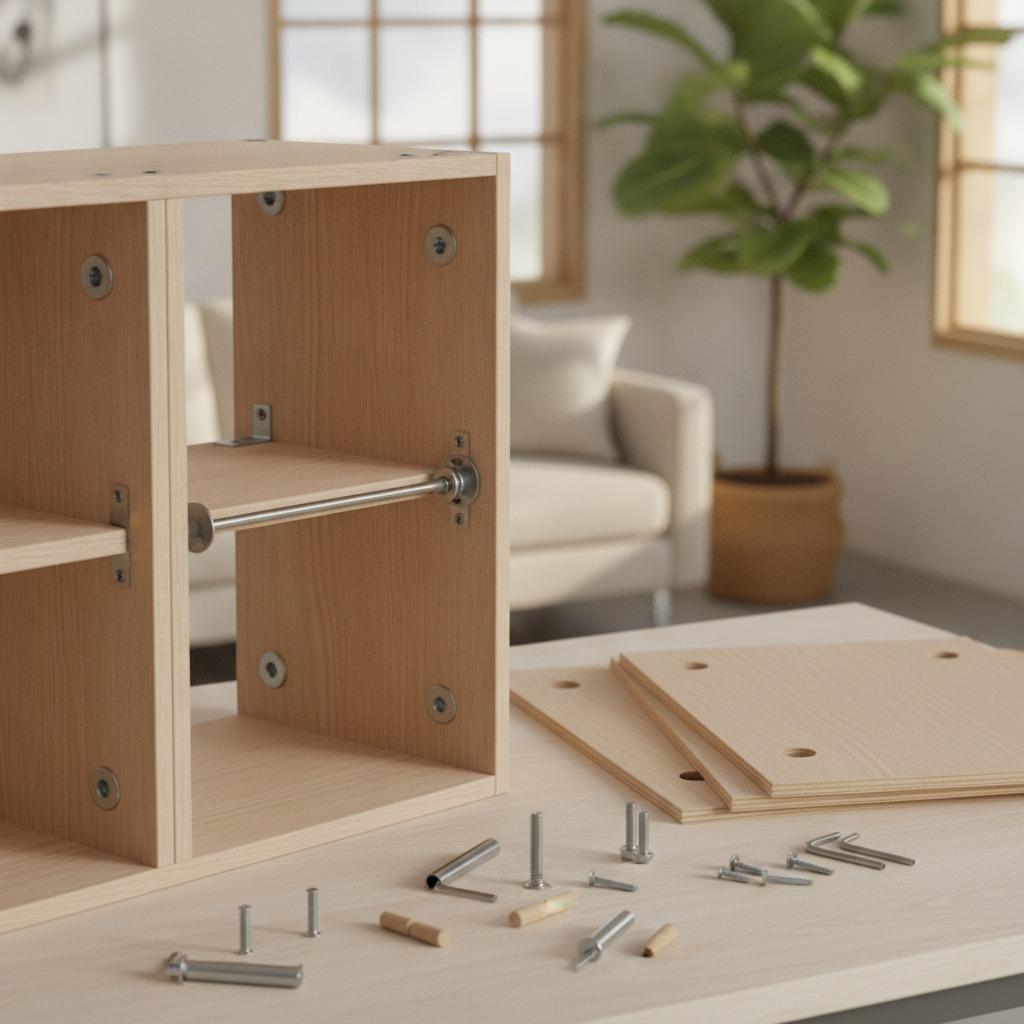
A typical kit may include cam fittings, threaded connector bolts, dowels, sleeve pieces, small brackets, screws, inserts, caps, or plastic covers. Some components are metal. Some may be plastic or nylon. Some are visible during assembly and hidden afterward. Others remain semi-visible inside the cabinet.
This mix matters because the parts depend on one another.
A cam needs the right bolt.
A threaded insert needs the right hole and board material.
A dowel helps locate the panel before tightening.
A screw needs the right length and head style.
A cover or cap may finish the appearance after installation.
If one part is mismatched, the whole joint can feel unreliable.
That is why a concealed furniture hardware supplier should understand the complete assembly, not only the individual fastener.
For buyers, the useful question is not, “Can you supply this connector?”
The better question is, “Can this connector system work with our board, our hole pattern, our assembly method, and our packaging plan?”
Panel material decides more than buyers expect
Concealed connectors are heavily affected by the board they are installed into.
Particleboard, MDF, plywood, laminated panels, and veneered boards do not behave in the same way. One panel may hold a threaded insert well. Another may loosen after repeated tightening. One material may accept a cam fitting cleanly. Another may chip around the hole if the machining is not controlled.
This is especially important in flat-pack furniture.
The customer or installer usually cannot correct a poor hardware-to-panel match. They follow the instructions, tighten the connector, and judge the product by how the furniture feels in their hands.
Before approving concealed joinery connectors, buyers should confirm:
- Board material
- Panel thickness
- Hole diameter
- Hole depth
- Edge distance
- Connector length
- Screw or bolt size
- Assembly direction
- Expected load
- Whether disassembly is required later
These details may look small in a purchasing file, but they decide whether the connector works in real assembly.
A sample part on a desk is not enough.
The connector should be tested in the actual panel.
Clean appearance should not come at the cost of difficult assembly
Concealed hardware is often chosen because buyers want a cleaner final product.
That is reasonable. Nobody wants a premium cabinet covered in unnecessary visible brackets.
But hidden hardware sometimes creates a trade-off.
A connector that looks elegant after installation may require more accurate drilling. A hidden fastener may need a specific tool angle. A compact joint may leave less room for the installer’s hand. A connector that works well in factory assembly may frustrate a home user who has only a basic screwdriver.
That does not mean concealed hardware is a bad choice.
It means the assembly method should be reviewed before the supplier is approved.
For consumer flat-pack furniture, the hardware should be easy to understand. For built-in cabinetry, the installer may accept a slower process if the finished result is cleaner. For factory pre-assembly, speed and repeatability may matter more than how intuitive the connector feels to an end user.
The best connector is not always the most hidden one.
It is the one that fits the product’s real assembly path.
Cam connectors, threaded fittings, and brackets all have a place
Buyers sometimes ask which concealed connector is “best.”
There is rarely one answer.
Cam-style connectors are common in flat-pack furniture because they support knock-down assembly and keep the outside surface relatively clean. They work well when the panel drilling is accurate and the matching bolt is correct.
Threaded connectors or inserts can be useful when the joint needs stronger repeated engagement. They may be a better fit for furniture that will be moved, serviced, or reassembled.
Small internal brackets are less invisible, but they can be practical when reinforcement matters more than a perfectly hidden joint. In prototypes, workshop furniture, utility cabinets, or internal structures, brackets often make sense.
Dowels are often used with these systems because they help locate panels before tightening.
In many real furniture programs, the answer is a mixed system.
One connector handles pull-up. Another handles alignment. A third part supports load or improves serviceability.
A good supplier should be able to discuss that mix honestly.
Finish and material should be confirmed before production
Concealed furniture hardware may be hidden, but material and finish still matter.
Many connectors use zinc-plated or bright silver finishes for indoor applications. Brass-colored parts may be used for inserts, sleeves, or fittings where appearance or thread behavior matters. Black plastic caps or covers may be used to hide openings, reduce friction, or protect surfaces.
Buyers should not assume material from color alone.
A silver part may be zinc-plated steel, stainless steel, or another material. A brass-colored fitting may be brass, plated steel, or zinc alloy. A black part may be plastic, nylon, or coated metal.
Before placing an order, confirm the base material, finish, thread type, size tolerance, corrosion expectation, and whether substitutions are allowed.
This is not only a technical exercise.
If a finish changes between batches, visible or semi-visible parts may look inconsistent. If the material changes, the connector may behave differently during tightening. If a threaded part is not stable, the joint may loosen sooner than expected.
Hidden does not mean low-risk.
Where Jiangmen Jinhe Hardware fits
Jiangmen Jinhe Hardware Co., Ltd. works with machine screws, self-tapping screws, micro screws, precision screws, standard parts, and non-standard customization. Its material range includes stainless steel, iron, and aluminum, with production aligned to standards such as GB, DIN, ANSI, BS, JIS, and ISO.
For buyers sourcing concealed furniture connectors, that fastener background can be useful because hidden furniture hardware often depends on precise small parts. A concealed connector kit may need standard screws, custom fasteners, threaded pieces, inserts, brackets, caps, labels, packaging, and repeat-order control.
Jiangmen Jinhe also notes support for inspection before delivery, documentation, logistics, warehousing, foreign trade, and supply chain services. For furniture manufacturers, cabinet suppliers, hardware wholesalers, and cross-border sellers, these services may help when sample projects become repeated production orders.
The useful supplier is not only the one that can quote a connector.
It is the one that can keep the connector system stable.
Packaging matters even when the hardware is hidden
Concealed connectors are small and easy to confuse.
A cam, bolt, dowel, insert, cap, and screw may all sit in the same furniture hardware kit. Some parts look similar. Some are used only once. Some are essential but easy to miss.
If the packaging is unclear, the assembly becomes slower.
For flat-pack furniture, this can turn into a customer complaint. For factory assembly, it becomes lost labor. For installers, it becomes a call-back risk.
Good packaging should separate similar parts, protect finishes, match the assembly sequence, and make the kit easy to check before shipment. Labels should be clear enough for the warehouse, installer, or end customer to identify the parts without guessing.
A concealed connector may be invisible after assembly.
The hardware pack is very visible before assembly.
Common mistakes buyers should avoid
One common mistake is choosing concealed hardware only for appearance.
A clean exterior is valuable, but the connector still needs to assemble easily and hold properly.
Another mistake is assuming all hidden furniture connectors are interchangeable. They are not. Hole depth, board thickness, connector geometry, bolt length, and tightening method all affect performance.
A third mistake is testing loose parts instead of the full assembly. The connector should be tested with the real board, real drilling pattern, real tool, and real assembly order.
Buyers also sometimes ignore packaging until late in the project. That is risky. A furniture kit with unclear hidden hardware can confuse users quickly because they cannot always see where each part ends up.
The final mistake is approving a sample without checking repeatability. The first sample may work. The question is whether the same connector, finish, dimension, and packaging will appear in later orders.
What buyers should ask before ordering
Before choosing a concealed furniture connector supplier, buyers should ask:
What panel material is the connector designed for?
What board thickness and hole pattern are required?
Which parts are included in the complete kit?
Is the connector suitable for flat-pack assembly?
Can the hardware be tested in our actual panel?
What material and finish options are available?
Can non-standard fasteners be customized?
How are small parts separated in packaging?
How is kit completeness checked before shipment?
What inspection documents are available?
Can the same specification be repeated in future orders?
Can logistics, warehousing, or export support be included?
Good answers should connect the hardware to the furniture structure.
If the conversation stays only at part price, the sourcing review is not finished.
Frequently Asked Questions
What are concealed furniture connectors?
Concealed furniture connectors are hidden or semi-hidden fittings used to join panels in cabinets, wardrobes, shelving, built-in furniture, and flat-pack furniture.
Why do buyers use concealed joinery connectors?
They help create a cleaner appearance while still supporting panel alignment, joint tightening, and assembly strength.
Are concealed connectors suitable for flat-pack furniture?
Yes, many concealed connectors are used in flat-pack furniture, but they must match the panel material, hole pattern, board thickness, and assembly method.
Can concealed furniture hardware be customized?
Yes. Connector size, screw length, threaded parts, finish, caps, packaging, and complete hardware kits can be customized when the furniture design requires it.
What should buyers test before bulk production?
Buyers should test the connector with the actual board material, drilling pattern, tools, packaging format, and full assembly sequence.
Why does packaging matter for concealed hardware?
Because concealed connector kits often include several small matching parts. Clear packaging helps prevent missing parts, mixed hardware, and assembly confusion.
The best hidden hardware makes the furniture feel finished
Good concealed furniture hardware does not need to draw attention.
It needs to fit the board, tighten the joint, stay out of sight, and repeat across future orders.
That is what buyers should expect from a reliable concealed furniture connector supplier.
For concealed furniture connectors, concealed joinery connectors, cabinet connector hardware, flat-pack furniture connectors, custom furniture fasteners, and organized furniture hardware kits, Jiangmen Jinhe Hardware Co., Ltd. can discuss material options, standard parts, non-standard customization, inspection, packaging, warehousing, logistics, and repeat supply requirements.
For direct inquiries:
Tel/WeChat: +86 13729150102
WhatsApp: +86 13322893939
Email: sharon@hkhomeideas.com
Start with the panel material, board thickness, hole pattern, connector style, hardware list, packaging method, and expected order quantity.
Once the assembly details are clear, the right concealed connector becomes much easier to source and repeat.