
Custom Screw Manufacturer: Why Standard Screws Often Fall Short in Real Projects
At the early stages of sourcing, many buyers assume standard screws will meet most requirements. After all, catalogs are full of options, and specifications appear clear. Yet once production begins, especially in OEM, furniture, or industrial assembly environments, limitations quickly surface. This is where a custom screw manufacturer becomes a strategic partner rather than a simple supplier.
The challenge is not that standard screws are poorly made. The challenge is that real projects are rarely standard. Materials vary, installation tools differ, assembly sequences evolve, and packaging constraints change across markets. Customization is not about complexity for its own sake. It is about alignment with how products are actually built.
Understanding What “Custom” Really Means in Screw Manufacturing
Customization in screw manufacturing is often misunderstood. It does not always mean entirely new designs or exotic materials. In many cases, it involves controlled adjustments that significantly improve assembly performance.
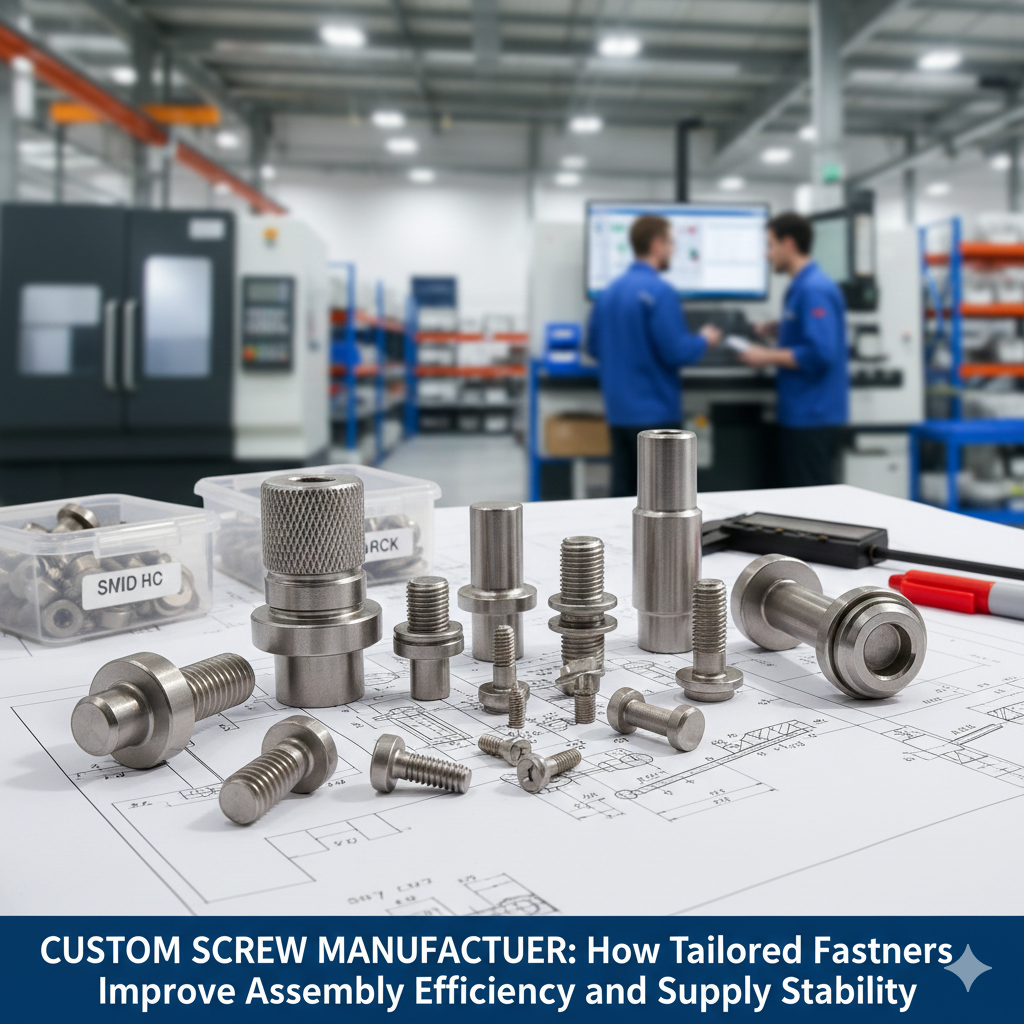
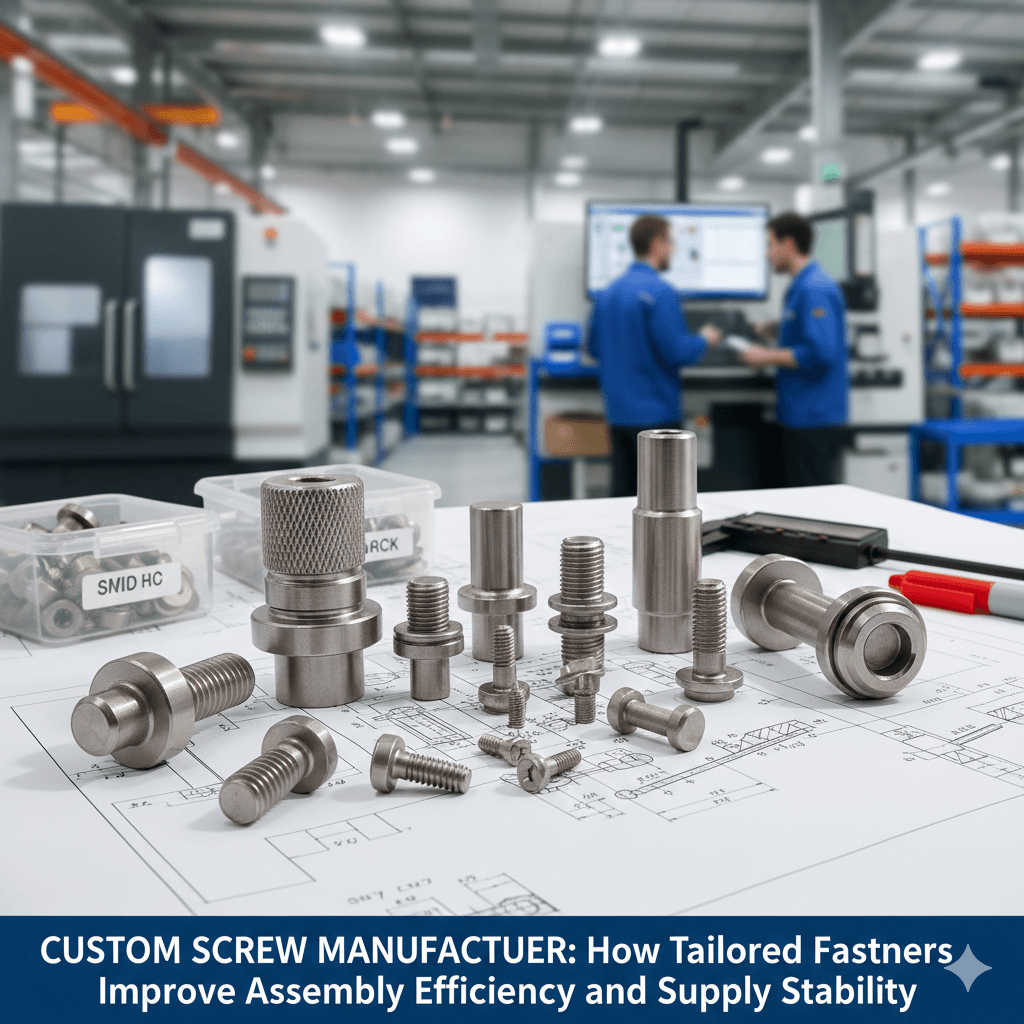
Typical customization elements include thread profile tuning for specific substrates, length and head combinations optimized for installation depth, and surface conditions adjusted for consistent driving behavior. Even small changes can reduce stripping rates, stabilize torque application, and improve operator efficiency.
A capable custom screw manufacturer focuses on how these variables interact during real installation, not just how they appear on drawings.
Common Problems Caused by Using Standard Screws
The risks of relying solely on standard screws often emerge gradually.
Common issues include:
-
Over-tightening or under-tightening due to mismatched thread geometry
-
Increased stripping rates when screws are used across mixed materials
-
Assembly slowdowns caused by inconsistent driving resistance
-
Higher rework rates due to joint instability
-
Packaging mismatches that complicate kitting and line-side supply
Industry observations from furniture and light industrial projects indicate that improper screw selection can increase rework rates by 10–20%. When packaging and counting errors are added, total efficiency loss can exceed 25% over a full production cycle.
These losses are rarely attributed to the screw itself, but they are directly linked to it.
Technical and Packaging Considerations in Custom Screw Supply
Customization should be evaluated as a system, not as isolated features.
Key technical and logistical factors include:
-
Thread geometry aligned with target materials
-
Surface finish supporting repeatable torque application
-
Batch consistency across long-term production runs
-
Packaging formats designed around actual assembly and logistics workflows
Packaging plays a critical role. According to commonly referenced industrial supply benchmarks, loose custom screws supplied in bulk achieve counting accuracy of around 90%. Pre-packed kits increase this to approximately 97–98%. Fully customized packaging solutions, designed for specific projects or SKUs, regularly achieve accuracy above 99%.
In high-volume OEM environments, that difference determines whether production runs smoothly or is interrupted by shortages and manual recounting.
Comparison Table: Standard vs Custom Screw Supply Models
| Supply Model | Standard Screws | Semi-Custom Screws | Fully Custom Screws |
|---|---|---|---|
| Material compatibility | General | Optimized | Fully matched |
| Assembly efficiency | Baseline | +10–15% | +20–30% |
| Rework rate | 8–12% | 4–6% | <3% |
| Packaging accuracy | ~90% | ~97% | 99%+ |
| Project suitability | Low–Medium | Medium–High | Very High |
These figures represent commonly observed ranges across OEM and furniture manufacturing projects. They demonstrate how customization impacts not only product performance but also overall process efficiency.
Why a Custom Screw Manufacturer Reduces Long-Term Risk
A custom screw manufacturer works upstream to eliminate problems before they reach the assembly line. By aligning screw design, production control, and packaging under one system, variability is reduced and predictability improves.
Instead of adapting production to available screws, assembly processes are supported by screws designed for their specific conditions. For furniture manufacturers, this often means fewer installation issues across different board materials. For industrial buyers, it results in more stable torque behavior and reduced tool wear.
Customization shifts problem-solving from the shop floor to the supply chain, where it is more efficient and less costly.
Typical Use Scenarios for Custom Screw Manufacturing
Custom screw solutions are especially valuable in:
-
Furniture OEM projects with mixed materials and repeatable SKUs
-
Industrial assemblies requiring stable torque and joint reliability
-
Export-focused production with strict packaging and labeling needs
-
Long-term programs where consistency matters more than unit price
In these scenarios, customization is not an upgrade. It is a requirement.
Frequently Asked Questions
Q1: When should buyers consider working with a custom screw manufacturer?
When standard screws cause rework, inconsistent installation, or packaging inefficiencies, customization often provides measurable operational benefits.
Q2: Does custom screw manufacturing significantly increase lead time?
In most cases, once specifications are confirmed, lead times stabilize and become more predictable than repeated sourcing of unsuitable standard screws.
Q3: Are custom screws suitable for medium-volume projects?
Yes. Many custom solutions focus on high-impact adjustments that deliver efficiency gains even at moderate volumes.
Moving Forward with a Custom Screw Manufacturer
Choosing a custom screw manufacturer is a strategic decision about efficiency, consistency, and risk reduction. Tailored screws and project-oriented packaging align fasteners with real assembly conditions, reducing rework and improving production flow over time.
To explore how custom screw manufacturing, OEM support, and packaging solutions can be combined to support different applications, you can review our full capabilities and product range on the JHFIX homepage. This overview explains how standard and custom screw solutions are developed, packaged, and supplied for furniture, OEM, and industrial projects.
If you are currently evaluating a project that requires tailored screw specifications, optimized packaging, or long-term supply stability, a direct discussion can help clarify the most effective approach. Our team works closely with buyers to align technical requirements, packaging formats, and delivery plans. You are welcome to contact us through our Contact Us page to discuss your needs and explore a practical custom solution.