
When a Standard Screw Is No Longer Standard: What Bulk Buyers Should Check
For many buyers, the search for a custom screw manufacturer for bulk orders begins with a part that almost works.
The screw is close, but the head does not match the driver used on the assembly line. The length seems right until it meets the real housing. The finish looks acceptable in the sample, but it does not match the final product. Or the screw performs well in a small trial, then creates trouble when the order moves into volume.
That is when a standard screw stops being standard.
In high-volume production, a small mismatch can become a large sourcing problem. It may slow assembly, increase rework, delay shipment, or create complaints after the product reaches the customer. Buyers are not only choosing a screw. They are choosing a fastening detail that must stay consistent across production batches, packaging, delivery, and repeat orders.
Jiangmen Jinhe Hardware Co., Ltd., founded in 2016 in Jiangmen City, Guangdong Province, works in this practical space between standard fastener supply and non-standard customization. The company’s stated product scope includes machine screws, self-tapping screws, micro screws, and precision screws, with materials such as stainless steel, iron, and aluminum. For bulk buyers, that range matters because most projects do not rely on one fastener alone. They need a repeatable supply system that can support different screw types without losing control.
Why bulk screw sourcing is not just a price comparison
At first glance, screw purchasing looks simple.
Buyers compare size, finish, quantity, lead time, and price. Then they place an order.
In real production, it is rarely that clean.
A screw must match the assembly material, the tool, the torque requirement, the visible surface, and the packaging method. If one of those details is unclear, the lowest quote may become expensive later.
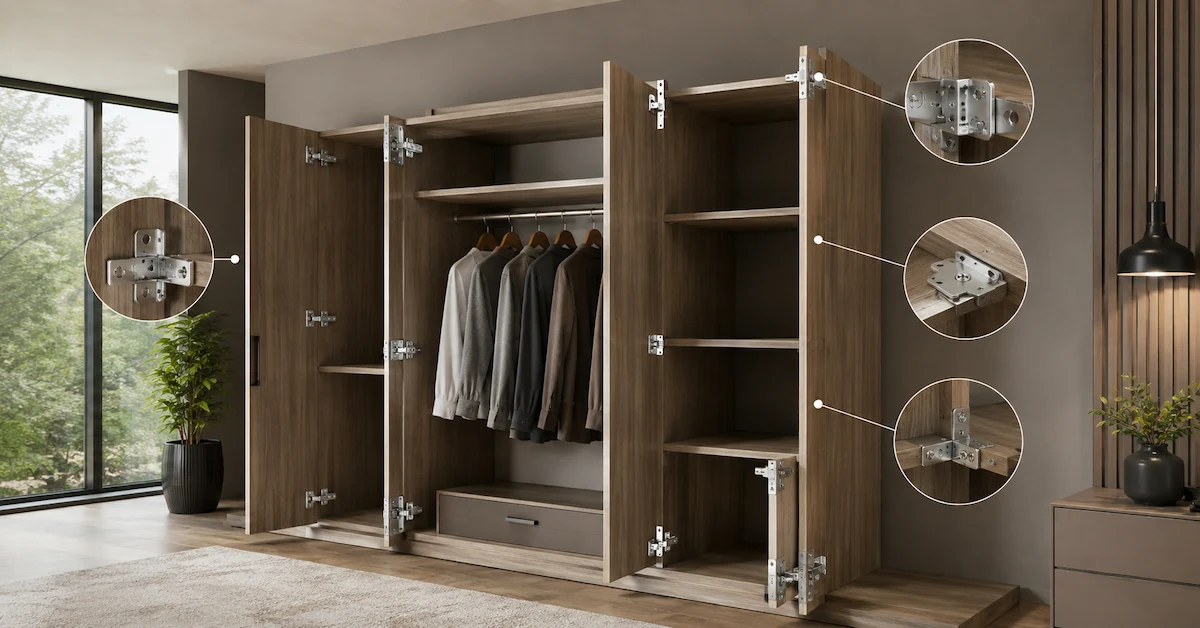
For example, a furniture project may need screws that hold well in engineered panels. An appliance housing may need a fastener with a neat visible finish. An electronics assembly may require stable dimensions and clean packing. A medical device or precision product may need tighter control and better documentation.
A custom wholesale screws supplier should understand these differences. The supplier should not only ask, “What size do you need?” A better discussion starts with the application, drawing, material, finish, head type, drive style, packaging, and expected order volume.
A case study in mixed fastener demand
Consider a typical OEM assembly program.
One product needs bright metal machine screws for visible fastening points. Another needs black-coated screws for a dark housing. A third requires plated screws for general internal assembly. The procurement team does not want three suppliers, three quality systems, three communication habits, and three separate delivery schedules.
It wants one supplier that can handle variety without making the sourcing process messy.
That is where a broad fastener range becomes useful.
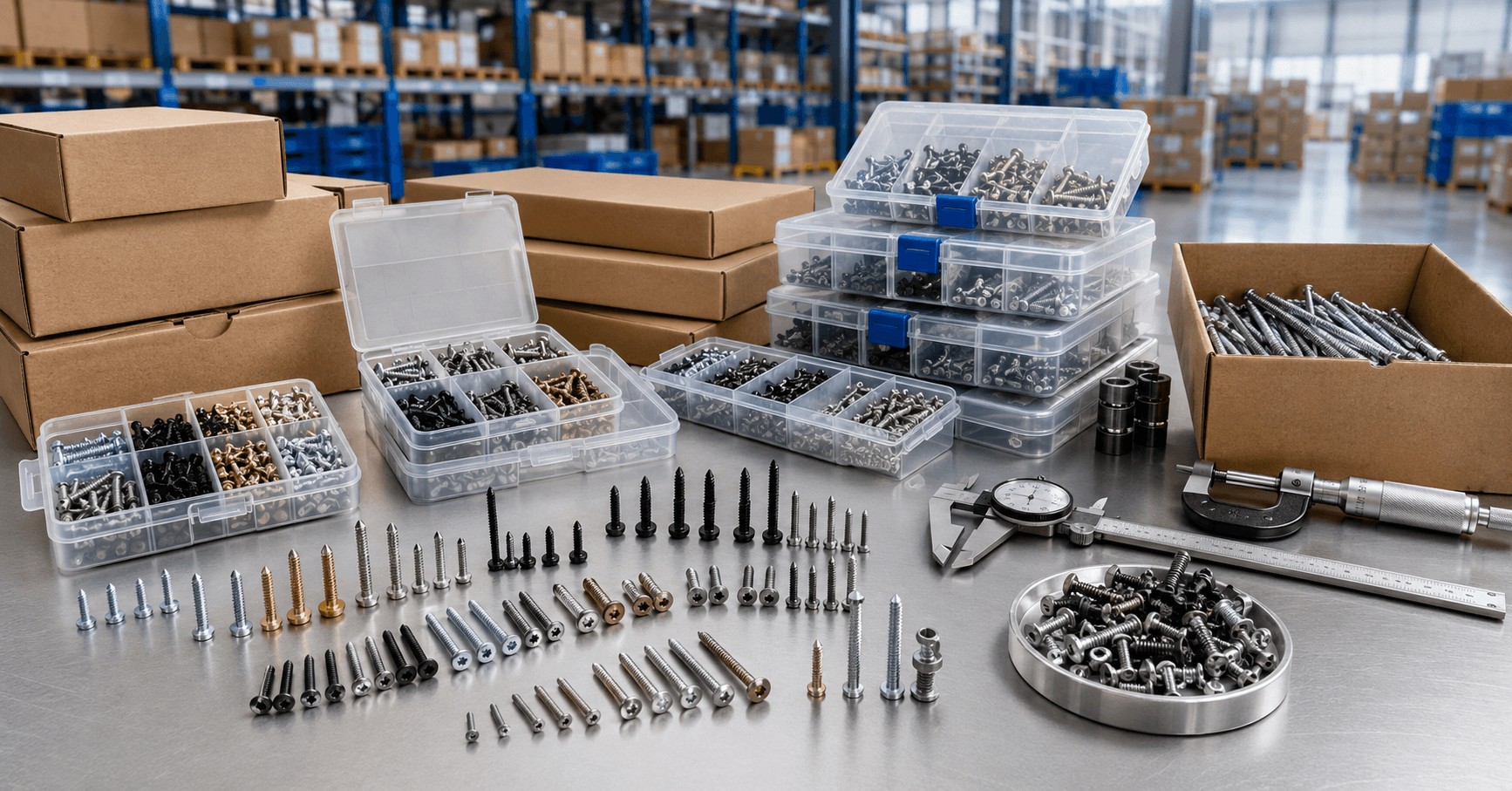
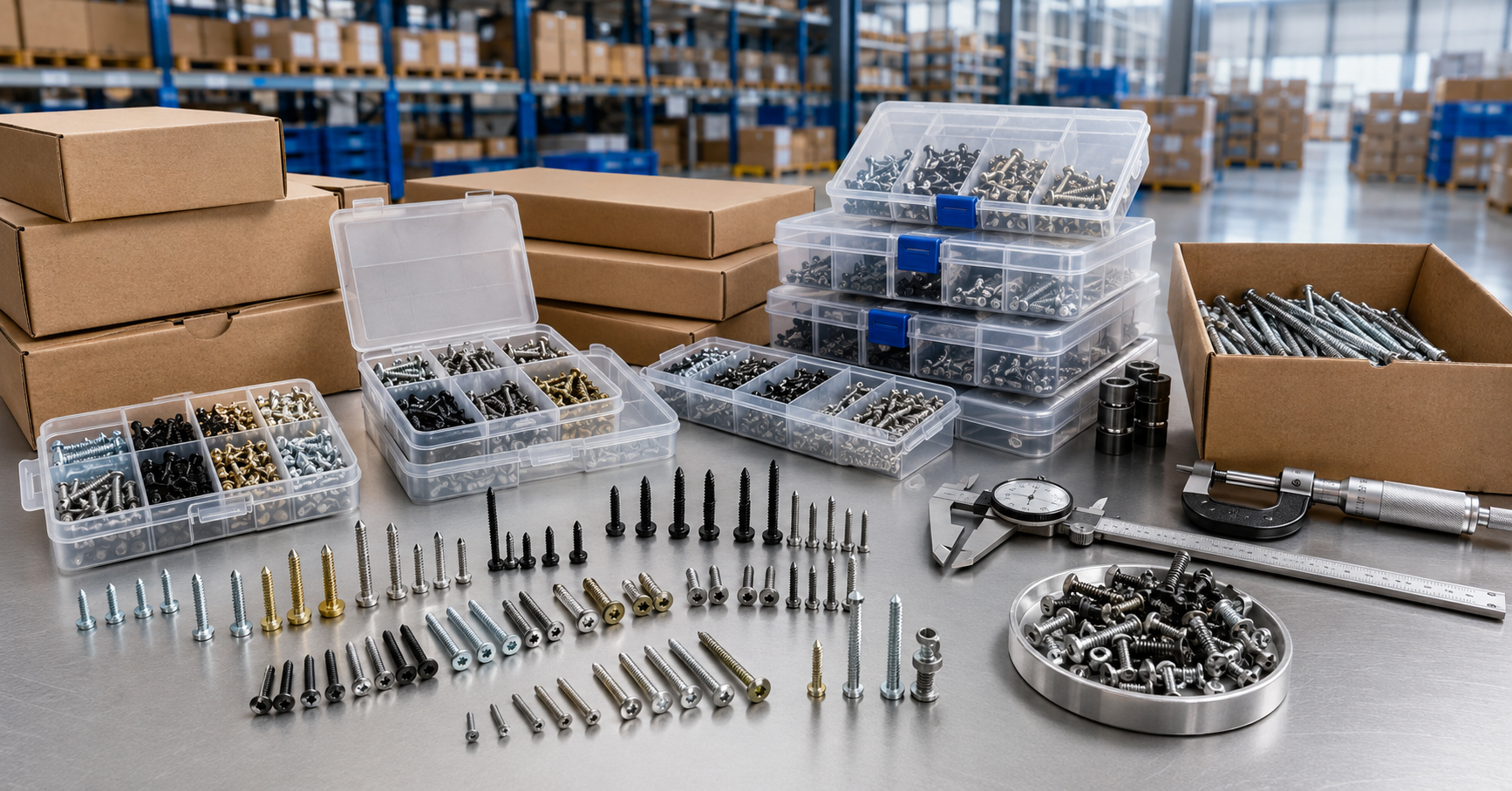
The product setup described in the source material shows assorted screws with different sizes, geometries, head styles, and drive types. The visible range includes Phillips or cross recesses, hex or Allen-style forms, partially and fully threaded shanks, flanged heads, and different surface appearances.
For buyers, this means there may be more room to match the fastener to the real application instead of forcing the product design around a limited catalog.
It also suggests an important point: bulk screw sourcing is not always about one screw. Often, it is about managing a group of related fasteners across a product line.
What buyers should verify before placing an order
A serious buyer should not stop at the question, “Can you make this screw?”
The better question is:
Can you make it consistently, document it clearly, pack it properly, and repeat it later?
That is the real test of an OEM screw supplier.
Before placing a production order, buyers should confirm:
| Sourcing Point | Why It Matters |
|---|---|
| Drawing or sample confirmation | Reduces misunderstanding before production |
| Standard reference | Helps align GB, DIN, ANSI, BS, JIS, ISO, or project-specific requirements |
| Material | Affects strength, corrosion behavior, weight, and cost |
| Head style | Influences clearance, appearance, and assembly tools |
| Drive type | Affects installation speed and tool compatibility |
| Thread form | Determines how the screw engages with the mating material |
| Finish | Affects appearance, protection, friction, and storage behavior |
| Inspection method | Helps control batch consistency |
| Packaging | Reduces mixing, damage, and handling cost |
| Repeat-order control | Keeps future batches aligned with approved samples |
These checks sound basic. That is exactly why they are sometimes skipped.
A screw is small, so buyers may underestimate it. But in mass production, small parts can create very large problems.
Why size range and finish options matter
The visible mix of finishes in the product setup is not only about appearance.
In bulk production, finish selection can affect how the screw looks, how it handles, how it stores, and sometimes how it behaves during assembly. A buyer may need one finish for exposed parts, another for hidden joints, and another for cost-sensitive internal fastening.
A custom metric screws manufacturer may also need to adjust size, thread length, head height, drive recess, or surface treatment depending on the product.
Jiangmen Jinhe’s stated customer base includes home appliance, electronics, furniture, building materials, and medical device manufacturers, as well as cross-border e-commerce sellers and hardware wholesalers. These buyers do not all purchase screws in the same way.
Appliance and electronics teams often care about fit and consistency.
Furniture buyers often care about installation performance and packaging.
Wholesalers may care about range and replenishment.
E-commerce sellers may care about presentation, kit packaging, and flexible quantities.
A supplier that understands mixed demand is usually better prepared for bulk programs than one that only sells standard stock.
Custom does not always mean starting from zero
One useful point for buyers: “custom” does not always mean a completely new screw developed from nothing.
In many cases, the fastest solution is to adapt an existing fastener family. The supplier may adjust the length, finish, head style, thread form, or packaging method while keeping the basic production route stable.
That approach can be useful for a bulk self tapping screws supplier or any high-volume fastener partner because it may reduce development time and lower production risk.
But buyers still need to confirm one thing: the adapted screw must work in the actual assembly environment.
A screw that looks right on paper should still be tested with the real material, real tool, real torque condition, and real packaging flow.
Practical advice for OEM and bulk buyers
Before discussing price too deeply, send the supplier a clear specification package.
That may include:
- drawing
- sample
- product application
- mating material
- screw size
- thread requirement
- head style
- drive type
- finish requirement
- order quantity
- packaging method
- inspection requirement
- delivery destination
The clearer the inquiry, the more useful the quotation.
A vague request such as “quote this screw” often leads to hidden assumptions. Those assumptions may not be noticed until production begins.
Buyers should also ask whether the supplier is quoting a standard screw, a modified standard screw, or a fully non-standard part. These three options may have different lead times, tooling needs, minimum quantities, and quality risks.
What Jiangmen Jinhe appears positioned to support
Based on the supplied company information, Jiangmen Jinhe Hardware Co., Ltd. is positioned as a supplier for standard fasteners and non-standard customization, with foreign trade capability, warehousing, logistics support, and supply-chain services.
That combination can be useful for overseas buyers and domestic customers that need steady replenishment rather than occasional spot purchases.
The company also states that products are inspected before delivery and accompanied by necessary documentation. It notes customer support response within 30 to 60 minutes and solutions within two hours. For buyers working with production schedules, those service details matter because fastener issues often need quick clarification.
Still, buyers should confirm the actual inspection items, documentation package, packaging method, and delivery arrangement during quotation. Service claims are helpful, but the project details should be written clearly before production.
Common mistakes buyers should avoid
One common mistake is assuming a screw is interchangeable because the size looks close.
In fastening, “close enough” can create rework.
Another mistake is focusing only on visible dimensions while ignoring finish, thread behavior, and drive compatibility. A screw may look correct but still perform poorly if the recess, coating, or thread is wrong for the job.
A third mistake is chasing the lowest quote without checking what is included. If the offer does not clearly cover samples, inspection, documentation, packaging, and repeat-order control, the buyer may face extra costs later.
A fourth mistake is failing to freeze the approved specification. Once the sample is approved, the buyer and supplier should define exactly what must stay unchanged in future batches.
That is how repeat orders stay repeatable.
Next step for sourcing teams
If your team is building a new assembly program, replacing a screw that no longer performs well, or consolidating fastener suppliers, start with the technical details.
Send the drawing, sample, or specification list. Explain the application. Confirm the standard. Ask how the supplier handles materials, finishes, inspection, packaging, and repeat supply.
Then compare not only the price, but the quality of the supplier’s questions.
For bulk fastener projects, clear communication often reveals more than the first quotation.
Jiangmen Jinhe Hardware Co., Ltd. can discuss custom screws, machine screws, self-tapping screws, micro screws, precision screws, standard fasteners, and non-standard customization for OEM, ODM, and bulk supply programs.
For direct inquiries:
Tel / WeChat: +86 13729150102
WhatsApp: +86 13322893939
Email: sharon@hkhomeideas.com
When a screw is no longer just a standard part, the right supplier should help buyers control the full process: specification, production, inspection, packaging, delivery, and repeat orders.