
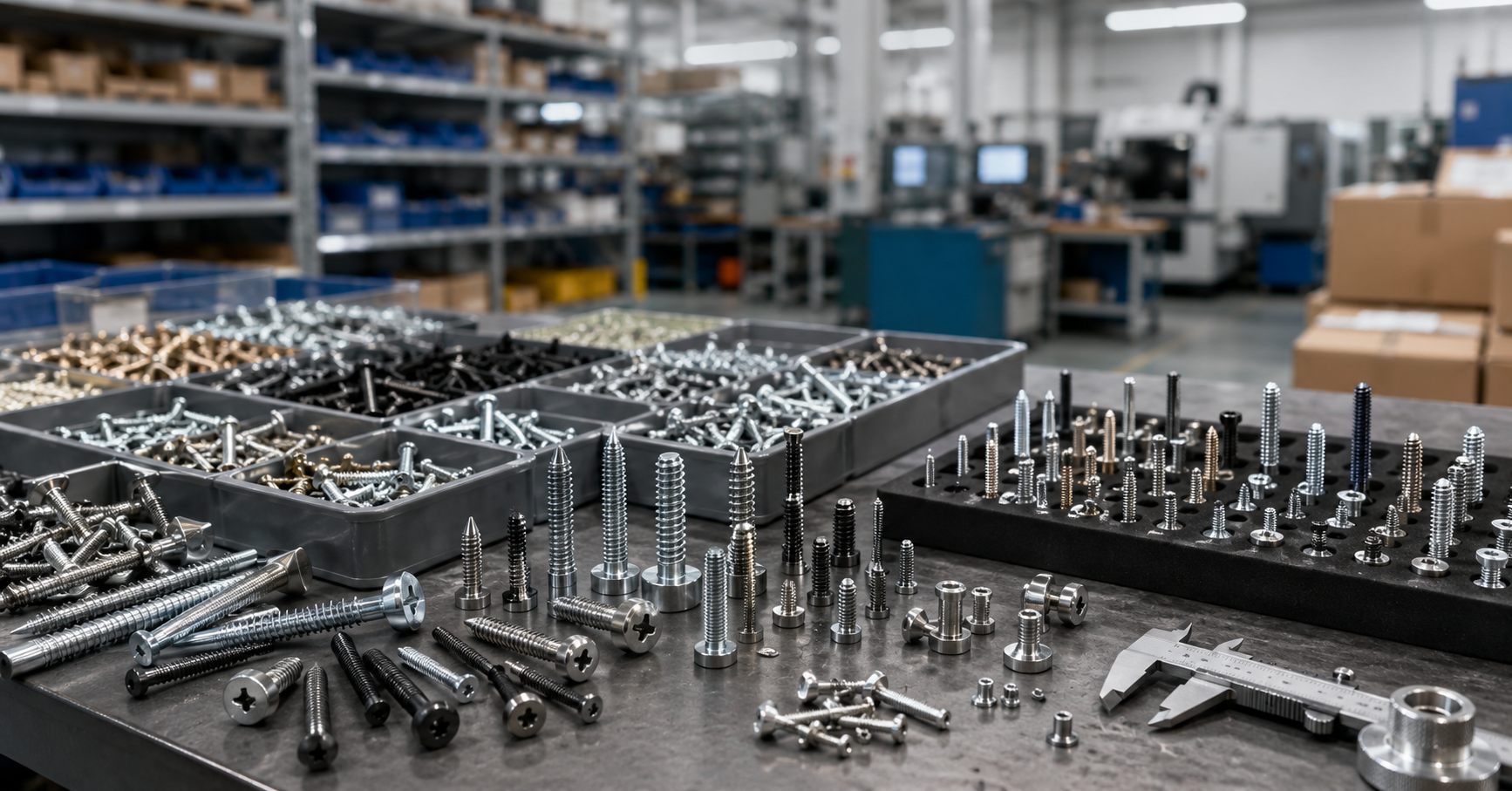
 When a Standard Screw Is No Longer Enough: How Bulk Buyers Choose a Custom Screw Manufacturer
For many procurement teams, the search for a custom screw manufacturer for bulk orders starts with a small but stubborn problem.
The screw almost works.
Maybe the head sits too high inside a plastic housing. Maybe the thread does not bite consistently in a wood-based panel. Maybe the finish looks acceptable in the sample room but fails after repeated handling. Or maybe the screw is technically correct, yet the assembly team keeps reporting cam-out, stripping, or slow installation.
At that point, buyers are no longer simply purchasing screws from a catalog. They are defining a fastening solution that needs to perform across production, packaging, shipping, installation, and long-term product use.
That is where a capable custom screw supplier becomes important.
A standard screw can solve a standard problem. A custom screw is needed when the application has its own geometry, material, assembly speed, surface requirement, or quality risk.
Why “almost right” screws become expensive
In bulk fastener sourcing, small mismatches can create large downstream costs.
A slightly wrong head height may interfere with a cover plate.
A poorly matched thread may damage softer materials.
An inconsistent recess may slow automatic or manual driving.
A coating that changes friction may affect tightening behavior.
A mixed batch may create rework before the product even leaves the factory.
These problems are not always obvious during price comparison. They usually appear later, on the assembly line or in customer feedback.
That is why serious buyers do not evaluate a custom wholesale screws supplier by unit price alone. They look at drawing control, material confirmation, finish consistency, inspection discipline, packaging, and repeat-order stability.
The screw is small. The sourcing decision is not.
What bulk buyers are really comparing
When sourcing managers compare screw suppliers, the visible differences are easy to list: head type, thread size, material, finish, price, lead time, and MOQ.
But for a bulk order, those are only the starting points.
The harder questions are more practical:
Can the supplier repeat the same part over several production runs?
Can they work from a drawing, sample, or special requirement?
Can they support standard and non-standard screws?
Can they explain the difference between similar finishes?
Can they pack parts in a way that protects both the screw and the buyer’s workflow?
Can they provide inspection support before shipment?
Jiangmen Jinhe Hardware Co., Ltd. positions itself around this type of requirement. The company was founded in 2016 in Jiangmen, Guangdong, and operates from a 4,000-square-meter site. Its product scope includes machine screws, self-tapping screws, micro screws, and precision screws, with materials such as stainless steel, iron, and aluminum. The company also works with standards including GB, DIN, ANSI, BS, JIS, and ISO.
For buyers in electronics, appliances, furniture, building materials, medical devices, automation, and other assembly industries, that kind of standard language matters. It gives both sides a clearer way to discuss drawings, tolerances, materials, finishes, and inspection requirements.
When custom screws make more sense than standard parts
A standard screw is often enough when the application is simple, the load requirement is ordinary, and the assembly environment is not demanding.
Custom screws become more practical when the product has special constraints.
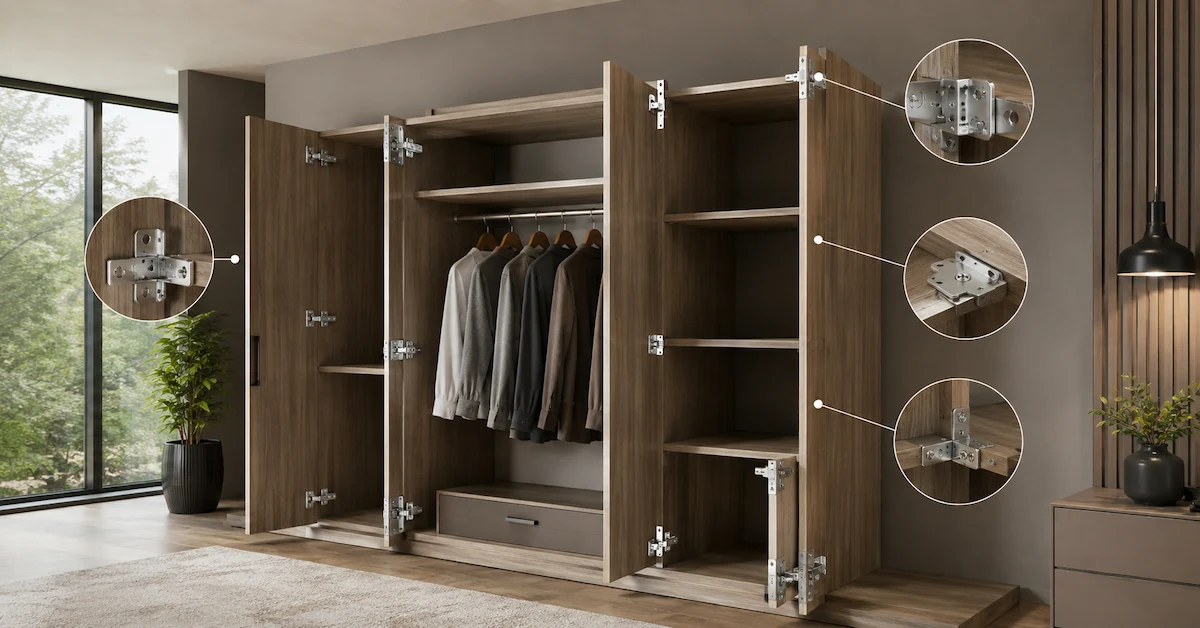
For example, an electronics housing may need a smaller head profile. A furniture connector may require a specific drive recess for faster installation. A medical or appliance part may need cleaner packaging and more stable dimensions. A self-tapping screw used in a soft material may need a thread form that reduces cracking or stripping.
In other cases, customization is not about the screw shape at all. It may involve coating, color, packaging, sorting, or documentation.
A buyer may ask for:
| Custom Requirement | Why It Matters |
|---|---|
| Head style adjustment | Improves fit, appearance, or clearance |
| Drive recess selection | Reduces cam-out and improves assembly speed |
| Thread length control | Helps match the fastening depth |
| Material confirmation | Supports strength, weight, or corrosion needs |
| Surface finish selection | Affects appearance, friction, and protection |
| Size customization | Fits non-standard product designs |
| Packaging method | Supports production, retail, or export handling |
| Inspection documentation | Helps controlled supply chains release goods faster |
This is why an OEM screw supplier needs more than a long product list. The supplier needs a process for turning buyer requirements into repeatable production.
What a custom screw project usually starts with
A good custom screw project rarely begins with a catalog page.
It usually starts with one of three things: a drawing, a sample, or a production problem.
A drawing gives the supplier a technical target. A sample gives the supplier something to measure and compare. A production problem gives the supplier a reason to change the design.
In many cases, the most useful discussion happens around small details:
- screw diameter
- total length
- thread length
- head diameter
- head height
- drive type
- point type
- thread form
- surface finish
- base material
- hardness or strength requirement
- packaging quantity
- inspection standard
These details may look ordinary, but they decide whether the final screw will behave correctly in real assembly.
For a custom metric screws manufacturer, measurement and verification are not optional. A buyer should expect the supplier to confirm drawings, review samples, discuss tolerances, and identify unclear requirements before production starts.
Production capability buyers should discuss clearly
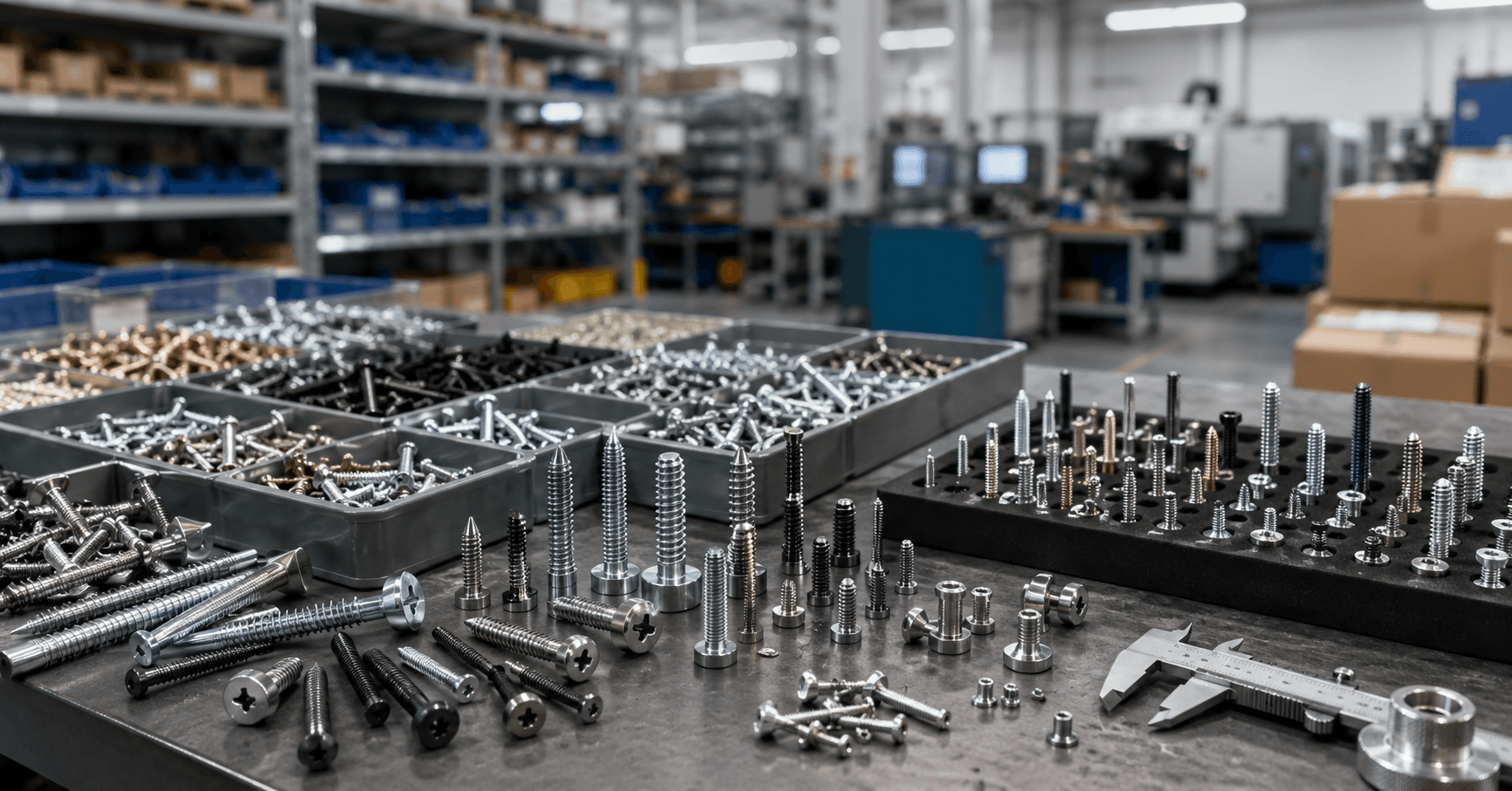
For common screw and fastener products, production may involve processes such as cold heading, thread rolling, machining, heat treatment, cleaning, and surface finishing. The exact route depends on the screw type, size, material, grade, and performance requirement.
Buyers should not assume every screw follows the same process.
A micro screw for electronics is not the same sourcing problem as a self-tapping screw for furniture. A stainless steel screw is not the same as an iron screw with plating. A black-coated screw may have different handling and appearance requirements from a bright zinc-plated screw.
A serious bulk self tapping screws supplier should be able to explain which processes apply to the requested part and which do not. They should also be able to tell buyers what information is needed before quoting accurately.
That may include:
- drawing or sample
- material requirement
- standard reference
- finish requirement
- order quantity
- packaging method
- application environment
- required inspection items
- delivery destination
- export documentation needs
A vague inquiry often leads to a vague quote. For bulk orders, vague quotes are risky.
Inspection and documentation matter more at scale
When a buyer orders a small quantity, inspection problems may be manageable. When the order becomes large, small inconsistencies multiply quickly.
This is why inspection discipline is important in bulk screw procurement.
Jiangmen Jinhe states that its products undergo strict inspection before delivery and that necessary documentation can accompany shipments. The company also notes fast response to customer issues, with customer support responding within 30 to 60 minutes and solutions proposed within 2 hours.
For procurement teams, that type of service support matters because screw problems can block larger production plans. A packaging lot may be waiting for release. A furniture line may be waiting for replacement screws. An export shipment may need documentation before customs clearance.
A good supplier does not only manufacture the part. It helps reduce friction around the part.
Why packaging should be discussed early
Bulk buyers sometimes treat packaging as a final detail.
That is a mistake.
Packaging affects counting, protection, storage, assembly, and customer perception. Screws may be packed in bulk cartons, polybags, plastic boxes, blister packs, or OEM kits. Each method suits a different channel.
A factory may prefer bulk inner cartons.
A furniture brand may need one bag per product.
An e-commerce seller may need a clean hardware kit.
A distributor may want labeled boxes for easy resale.
A medical or electronics buyer may care about cleanliness and traceability.
For custom screw orders, packaging should match the way the screws will be used after delivery. If the buyer must re-sort, re-label, or re-pack every shipment, the low unit price may no longer be low.
Common mistakes in bulk screw procurement
One common mistake is treating drawings as optional.
A photo and a size description may be enough for a rough discussion, but they are not enough for a controlled bulk order. Drawings help define the part and reduce misunderstanding.
Another mistake is assuming that similar screws are interchangeable. A screw that looks close may still have the wrong head height, thread pitch, recess depth, point shape, or finish.
A third mistake is ignoring coating and finish details. Finish can affect appearance, corrosion resistance, handling, and sometimes assembly behavior. Buyers should confirm finish requirements instead of relying only on visual comparison.
A fourth mistake is not clarifying whether the supplier is offering a standard item, a modified standard item, or a fully non-standard custom part. These options can have different costs, tooling requirements, lead times, and risks.
A final mistake is approving the part but not the packaging. For bulk orders, the packaging method should be confirmed together with the part itself.
How to choose the right supplier
A reliable custom fastener manufacturer should help buyers move from requirement to production without leaving too many unclear points.
Before placing a bulk order, buyers should request:
- drawing confirmation
- sample review
- material description
- finish description
- size and tolerance confirmation
- standard reference
- inspection plan
- packaging method
- sample approval process
- production lead time
- repeat-order control
- logistics and export support
Jiangmen Jinhe also states that it can support international freight forwarding, domestic logistics, warehousing, and supply chain services. For cross-border buyers, those services can simplify the process when commercial terms, packing details, and delivery requirements are confirmed in advance.
The key is not only whether the supplier can make screws. The key is whether they can keep the screw consistent when the order scales.
Practical takeaway for engineers and sourcing teams
A standard screw is useful when the application is standard.
But once the part affects assembly speed, product fit, coating performance, packaging, or after-sales risk, buyers should treat the screw as an engineered component.
That is when a custom screw manufacturer for bulk orders becomes valuable.
For engineering teams, the next step is simple: prepare the drawing, define the application, confirm the standard, and request a sample review before committing to mass production.
For procurement teams, the decision should include more than price. Look at communication, inspection, documentation, packaging, and repeat supply.
Some suppliers can quote quickly. Fewer can stay disciplined through sampling, production, inspection, packing, and repeat orders.
In bulk fastener sourcing, that discipline is what keeps small parts from becoming large production problems.