
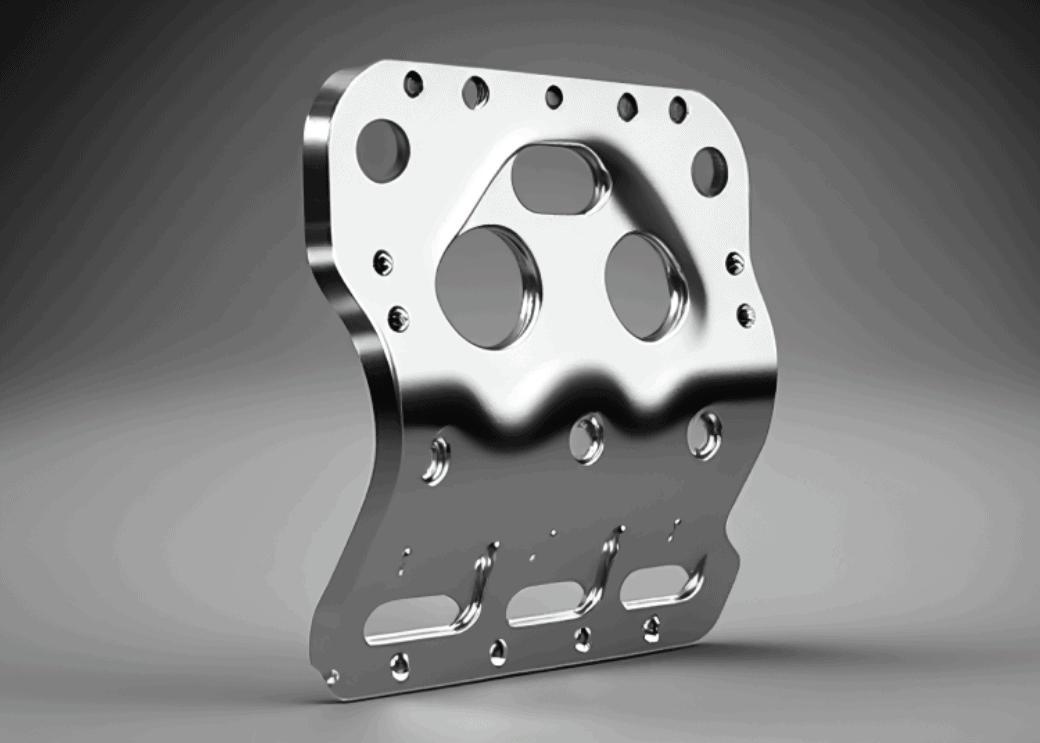
Challenges in OEM Production with Standard Stamping Components
In high-volume production, small variations in stamped hardware can create disproportionate problems.
Common issues include:
- Slight dimensional inconsistencies affecting assembly
- Burr formation requiring secondary processing
- Material deformation under repeated stamping
- Batch-to-batch variability causing production delays
Working with a custom stamping hardware supplier allows OEM buyers to address these challenges proactively. At JHFIX, we integrate tooling control, material management, and process optimization to ensure components perform consistently across production cycles.
Material Selection and Forming Stability
Different metals behave differently during stamping. Selecting the correct material is critical to achieving both dimensional precision and mechanical strength.
| Material Type | Key Advantage | Formability | Typical Application |
|---|---|---|---|
| Carbon Steel | Cost-effective | High | General hardware parts |
| Alloy Steel | High load capacity | Medium | Structural and machinery parts |
| Stainless Steel 304 | Corrosion resistance | Medium | Outdoor or humid environments |
| Stainless Steel 316 | Chemical resistance | Medium | Marine and harsh conditions |
| Aluminum Alloy | Lightweight structure | High | Electronics and consumer products |
Material selection combined with proper stamping process control ensures that components maintain structural integrity and repeatability.
Why OEM Buyers Require Tailored Stamping Solutions
Standard stamped parts may meet nominal specifications but often fail in real-world applications:
- Misaligned holes leading to assembly issues
- Variability in thickness affecting torque stability
- Surface imperfections increasing defect rates
- Packaging and labeling errors delaying production
Custom solutions allow precise adjustment of tooling, material properties, and finishing processes to reduce these operational risks.
At JHFIX, we offer:
- Tooling optimization for specific applications
- Material and coating tailored to performance requirements
- Batch-level quality inspection
- OEM packaging aligned with production workflow
This approach ensures predictable performance and minimal production disruption.
Threading, Burr Control, and Dimensional Accuracy
Even minor deviations in stamped components affect overall assembly quality:
- Burrs can interfere with mating parts
- Dimensional drift may affect fit tolerances
- Repeated handling increases wear and scrap
Precision stamping involves:
- Tooling maintenance and calibration
- In-process dimensional verification
- Controlled forming pressures and rates
- Optimized coating or surface finishing
Such measures are critical for high-volume OEM and industrial applications.
Packaging for Export and Production Efficiency
OEM production and export require attention to packaging to protect precision components:
| Packaging Type | Protection Level | Operational Impact |
|---|---|---|
| Loose bulk | Low | Frequent handling and rework |
| Standard packaging | Medium | Minor disruptions |
| Custom OEM packaging | High | Stable assembly and export readiness |
Accurate, protective packaging prevents damage during transport, maintains component integrity, and improves workflow efficiency.
A Real Case: Improving Assembly Efficiency Through Custom Stamping
A machinery OEM client struggled with stamped brackets that caused repeated misalignment during assembly.
Our solution:
- Adjusted die tooling for precise hole placement
- Optimized material selection and heat treatment
- Implemented batch-level quality checks
- Introduced custom packaging aligned to assembly sequence
Results:
- Assembly time reduced by 20%
- Dimensional consistency improved
- Scrap and rework significantly decreased
Where Custom Stamping Hardware Adds the Most Value
Custom stamped hardware is critical for:
- Industrial machinery assembly
- Automotive OEM components
- Electronics and consumer products
- Export manufacturing requiring high repeatability
In these applications, precision and consistency directly impact productivity and product quality.
Frequently Asked Questions
Q1: When should OEM buyers choose custom stamping hardware?
When standard parts cause assembly inefficiencies, misalignment, or increased defect rates.
Q2: Does customization significantly increase cost?
Slightly, but savings from reduced rework and improved efficiency often outweigh the cost.
Q3: How long does it take to implement custom stamping?
Most adjustments can be integrated within standard production timelines with proper tooling and material planning.
Reliable OEM Production Starts with a Custom Stamping Hardware Supplier
Custom stamping transforms hardware from generic components into performance-driven solutions. By aligning tooling, material, and finishing processes, JHFIX ensures components perform consistently in industrial and OEM applications.
To explore our custom stamping hardware capabilities, visit:
https://www.jhfix.com/
If you are looking for reliable precision stamped parts for OEM or industrial projects, contact our team here:
https://www.jhfix.com/contact-us