
A Practical Sourcing Guide to Custom Wholesale Screws for OEM and Bulk Buyers
Choosing a custom wholesale screws supplier is rarely about buying “just screws.”
For engineers, sourcing teams, product managers, hardware distributors, and OEM buyers, screw sourcing often becomes a bundle of practical problems: part compatibility, repeatability, warehouse flow, drawing control, packaging, documentation, and whether the supplier can keep production moving when the bill of materials becomes complicated.
A good supplier should be able to provide standard fasteners, of course. But that is only the beginning. In real procurement work, buyers often need non-standard dimensions, mixed fastener assortments, special finishes, custom packaging, bulk delivery, and stable replenishment.
That matters because fasteners sit exactly where design meets assembly.
A screw that looks interchangeable on paper may behave differently once it meets the actual material, torque condition, finish requirement, or production tool. A small change in head style, thread form, coating, or base material can affect assembly speed, product appearance, and long-term reliability.
So when buyers compare an OEM screw supplier with a broad fastener distributor, the real question is not simply who can quote the lowest price.
The better question is:
Can this supplier support the product through production, maintenance, packaging, and repeat orders without creating extra problems?
What a capable custom screw supplier should cover
Jiangmen Jinhe Hardware Co., Ltd., founded in 2016 in Jiangmen City, Guangdong Province, works across machine screws, self-tapping screws, micro screws, and precision screws. The company also mentions non-standard customization, as well as R&D, production, and sales support for domestic and international markets.
For buyers, that combination is useful because many projects need both catalog items and modified parts from the same source.
A furniture hardware buyer may need common screws for one product line and customized fasteners for another. An electronics assembler may need small precision screws with tighter dimensional control. A maintenance supplier may need mixed hardware in organized packs. A hardware wholesaler may care about stock range, carton marking, and fast replenishment.
A capable custom fastener manufacturer should be able to discuss materials such as stainless steel, iron, and aluminum where appropriate. It should also understand common standards such as GB, DIN, ANSI, BS, JIS, and ISO.
Not every order needs a fully customized screw. Sometimes the best solution is to start with an existing fastener family and adjust the length, drive type, coating, head style, or packing format.
That is where an experienced custom screw manufacturer for bulk orders becomes valuable.
Standard supply or custom supply: which one fits?
Buyers do not always need custom screws. But they should know when standard supply is enough and when it is not.
| Sourcing Route | When It Makes Sense | What Buyers Should Watch |
|---|---|---|
| Standard wholesale supply | Common applications, mature drawings, maintenance stock | Limited flexibility in finish, head style, and packaging |
| Custom screw supply | Special dimensions, limited space, specific appearance, OEM assemblies | Requires drawing review and sample approval |
| Bulk self-tapping screws | Furniture, panels, sheet metal, appliances, repair programs | Thread form must match the real material |
| Precision screw supply | Electronics, compact assemblies, small mechanisms | Dimensional stability and inspection matter more |
| Mixed fastener kits | MRO, e-commerce, hardware resale, project-based kits | Sorting, labels, and packaging discipline are critical |
Standard wholesale supply is usually the fastest option when the application is common and the part has already been proven.
Custom or OEM supply is better when the assembly has limited space, special torque behavior, appearance requirements, or an existing component that standard screws do not match cleanly.
For buyers, the choice is not about making everything custom. It is about knowing which parts can stay standard and which parts need tighter control.
What the warehouse view says about real fastener supply
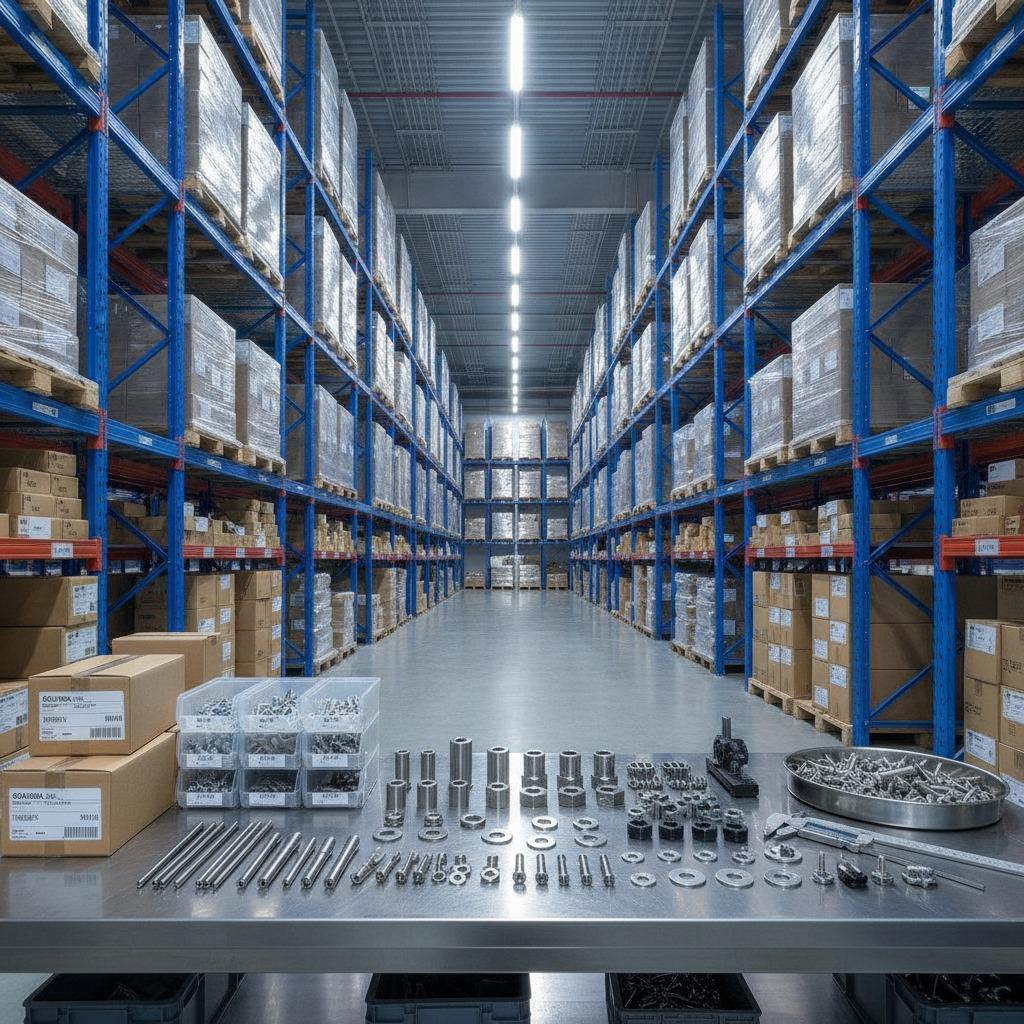
A mixed fastener inventory is not just a shelf full of hardware.
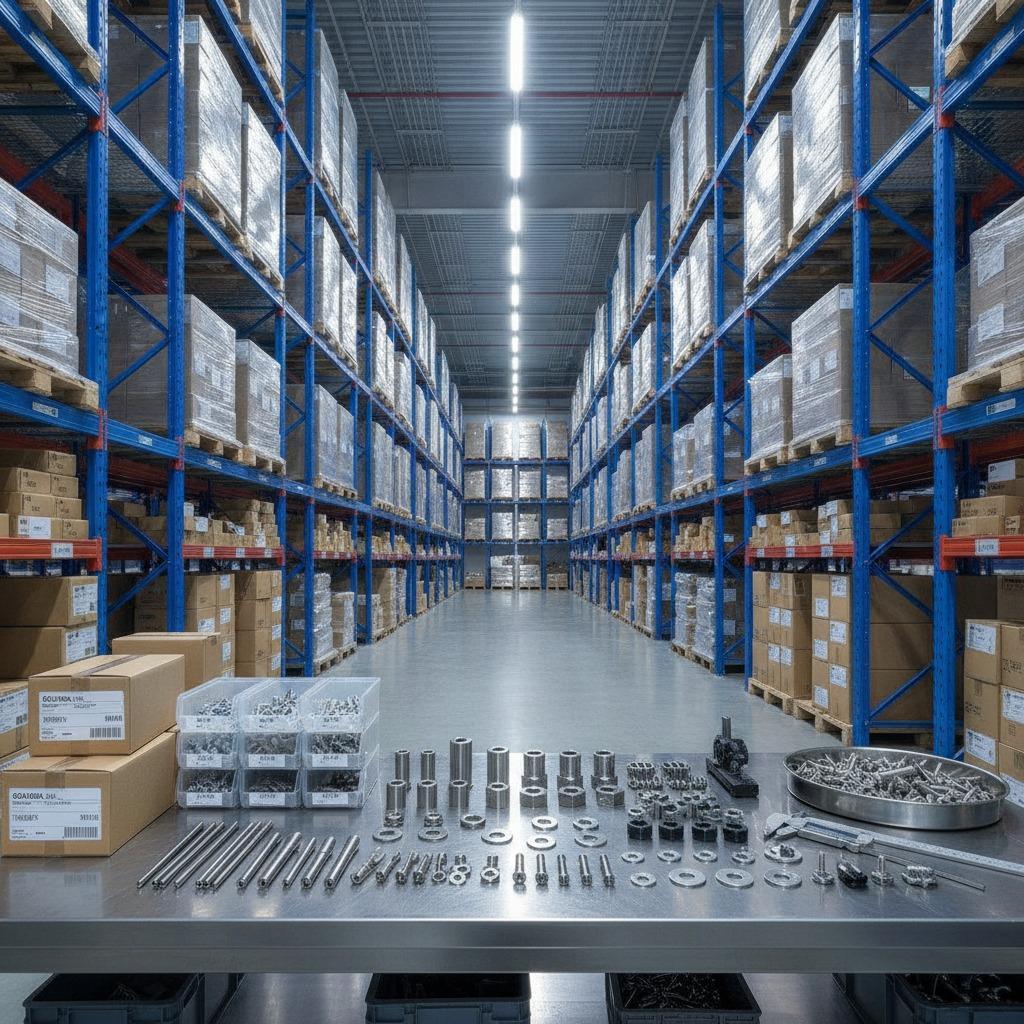
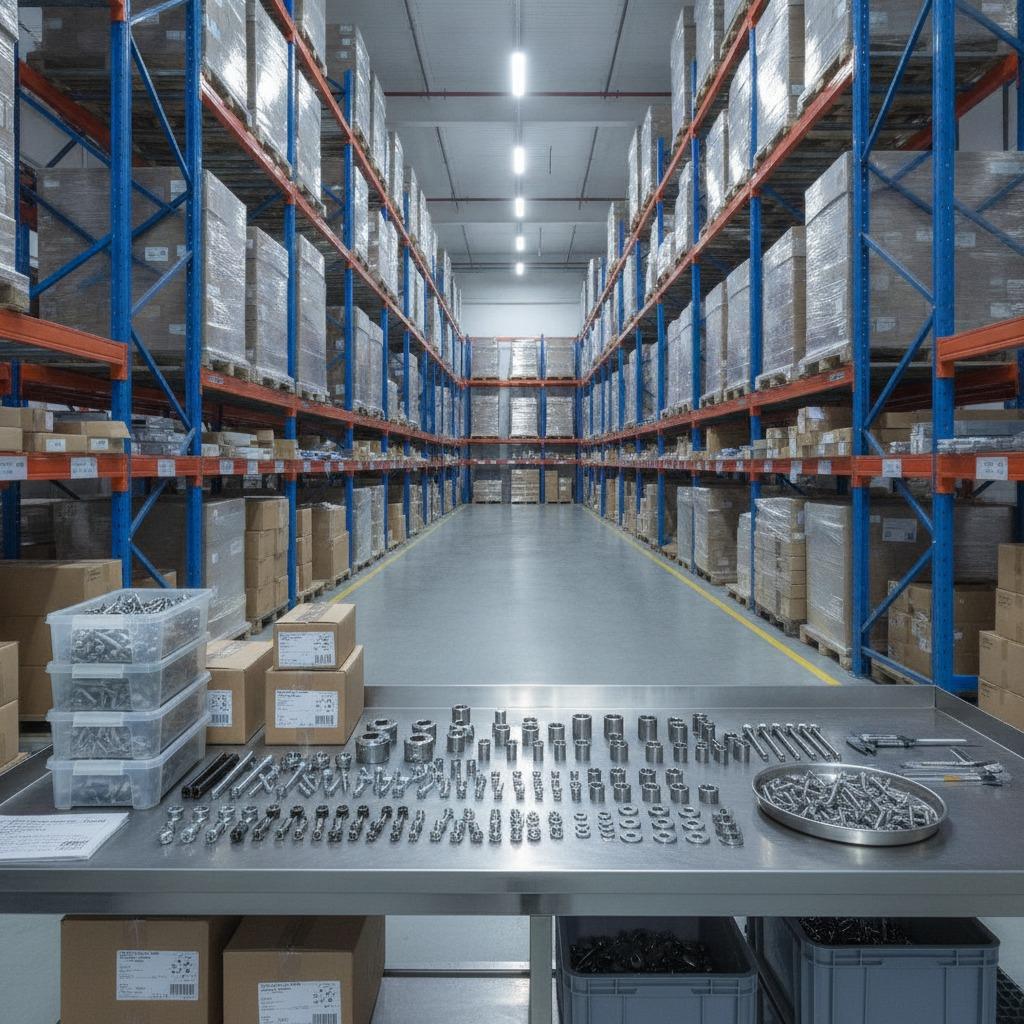
The warehouse image shows sorted bins, assorted screws, bolts, nuts, washers, spacers, standoffs, pins, and small fittings. That kind of organized stock is often what keeps assembly lines, repair programs, and distributor operations from losing hours to part hunting.
For buyers, this matters because the best fastener supply chains are rarely single-part supply chains.
A machinery builder may need a screw, washer, spacer, and small fitting packed together.
A maintenance team may need mixed hardware in labeled bags.
An e-commerce seller may need small kits packed clearly for end users.
A wholesaler may need fasteners sorted by size, finish, and SKU.
A bulk self tapping screws supplier that can also support warehousing, packing, sorting, and shipping gives buyers fewer handoffs to manage.
That does not remove the need for technical confirmation. But it can make the supply process easier to control.
Selection criteria that save trouble later
The first thing buyers should check is how the supplier manages technical requirements.
Can the supplier review drawings?
Can it work from samples?
Can it confirm material and finish?
Can it support standard and non-standard dimensions?
Can it explain what is being quoted clearly?
Jinhe states that its products undergo strict inspection before delivery and are accompanied by necessary documentation. That type of support matters in bulk sourcing, especially for buyers serving electronics, appliances, medical devices, automation, or other controlled assembly environments.
Still, buyers should confirm the exact documents required for each order. “Documentation” can mean different things depending on the industry and purchasing system.
The second point is response speed. In fastener sourcing, unanswered questions about drawings, substitutions, finishes, or packaging can delay a purchase order quickly. Jinhe says customer support responds within 30–60 minutes and provides solutions within 2 hours. If that level of communication is consistent in real projects, it can be a meaningful operational advantage.
The third point is logistics and warehousing. A supplier that can support domestic logistics, international freight forwarding, warehousing, and supply chain services may be easier to work with when demand is irregular, shipping windows are tight, or buyers need shipment consolidation.
Common mistakes buyers still make
One common mistake is treating all screws as interchangeable.
They are not.
A machine screw, self-tapping screw, micro screw, and precision screw can behave very differently in production. Head style, thread form, finish, and base material all affect assembly performance.
Another mistake is ordering only by price, then discovering that the packaging or documentation does not fit the buyer’s process. A low unit price does not help much if the screws arrive mixed, poorly labeled, or difficult to issue to the assembly line.
A third mistake is assuming that a supplier who handles bulk stock automatically understands non-standard customization. Bulk supply and custom production are related, but they are not the same discipline.
There is also a more subtle problem: under-specifying the real use case.
If a screw will be used in electronics, furniture, automation equipment, medical devices, or appliances, the supplier should understand the application context, not just the nominal size. That context helps determine whether a standard part is enough or whether a modified design is safer.
Practical advice for sourcing teams
Use drawings whenever possible.
A clear drawing or approved sample reduces misunderstanding and gives both sides a reference point for future orders. Buyers should also confirm material, finish, packing format, inspection expectations, and documentation needs before the first production run.
If you are considering a custom wholesale screws supplier for multiple product families, ask whether the factory can support both standard part replenishment and custom runs without fragmenting communication.
A good supplier should be able to discuss this plainly.
Jiangmen Jinhe Hardware’s customer base includes home appliance, electronics, furniture, building materials, and medical device manufacturers, along with cross-border e-commerce sellers and hardware wholesalers. That breadth suggests familiarity with different buyer priorities.
One buyer may care most about consistency and compliance.
Another may care about packaging and turnover.
Another may need mixed-stock fulfillment.
Those are not the same job.
The right supplier should understand the difference.
FAQ
Can one supplier handle both standard and custom fasteners?
Yes, if the supplier has enough process control, production capability, and communication discipline. For buyers, this can reduce sourcing fragmentation and make repeat orders easier to manage.
Do bulk orders always mean lower risk?
No. Bulk buying helps when the part is stable and the forecast is reliable. It becomes risky when the design is still changing, the finish is unclear, or the packaging method has not been confirmed.
What should buyers ask before sending a drawing?
Ask about available materials, supported standards, inspection process, documentation, packing options, warehousing, and shipment consolidation if needed.
Why does packaging matter in screw sourcing?
Packaging affects receiving, sorting, storage, assembly, resale, and user experience. Poor packaging can create extra labor even when the screws themselves are correct.
When should buyers choose custom screws?
Choose custom screws when standard parts do not fully meet the assembly requirement, appearance target, torque condition, head style, drive type, finish, or packaging need.
Next step
If your team is comparing an OEM screw supplier against a broader custom fastener manufacturer, start with a short technical brief and a clear forecast range.
Include the application, drawing or sample, material, finish, thread type, head style, drive type, packaging requirement, inspection needs, and expected order quantity.
For companies like Jiangmen Jinhe Hardware Co., Ltd., the useful test is simple:
Can the supplier turn your requirements into repeatable supply without extra confusion?
That is the real measure of a dependable custom wholesale screws supplier.