
OEM Furniture Hardware Kits: Why Small Parts Decide Whether Flat-Pack Furniture Works
A flat-pack furniture program can look well planned on paper.
The panels are cut. The holes are drilled. The surface finish is approved. The carton design is ready. The instruction sheet has gone through several rounds of checking.
Then someone opens the hardware kit.
That is often where the real problems begin.
A cam connector does not tighten the panel properly. A bracket hole is slightly off. A screw is the right diameter but the wrong length. A plastic sleeve looks minor, so nobody notices it is missing until the cabinet is halfway built.
Furniture buyers know this kind of problem. It is not dramatic at first, but it spreads quickly. One small part slows the assembly bench. One missing fitting turns into a customer service request. One poorly matched connector makes a cabinet feel cheaper than it should.
That is why OEM furniture hardware kits should not be treated as a leftover item in the bill of materials.
They are part of the furniture system.
A hardware kit has to match the furniture, not just the drawing
In flat-pack furniture, the hardware does not work in empty space.
It works in MDF, particleboard, plywood, laminated board, or another wood-based panel. It works with a drilled hole, a panel edge, an assembly sequence, and a person holding a screwdriver or power tool.
That is why a kit cannot be judged only by looking at loose parts on a table.
A connector may look fine until it meets the actual board. A screw may seem correct until it is driven close to the panel edge. A threaded insert may feel solid in one material and weak in another. A bracket may look standard but still fail to line up with the production hole pattern.
A good flat pack furniture hardware supplier should ask about the furniture structure before recommending the kit.
What is the board thickness?
What hole size has already been drilled?
Will the product be assembled by factory workers, installers, or end users?
Will the furniture be taken apart and moved later?
Are the fittings hidden, visible, or semi-visible?
These questions sound basic, but they prevent a lot of avoidable trouble.
The kit is doing more than holding panels together
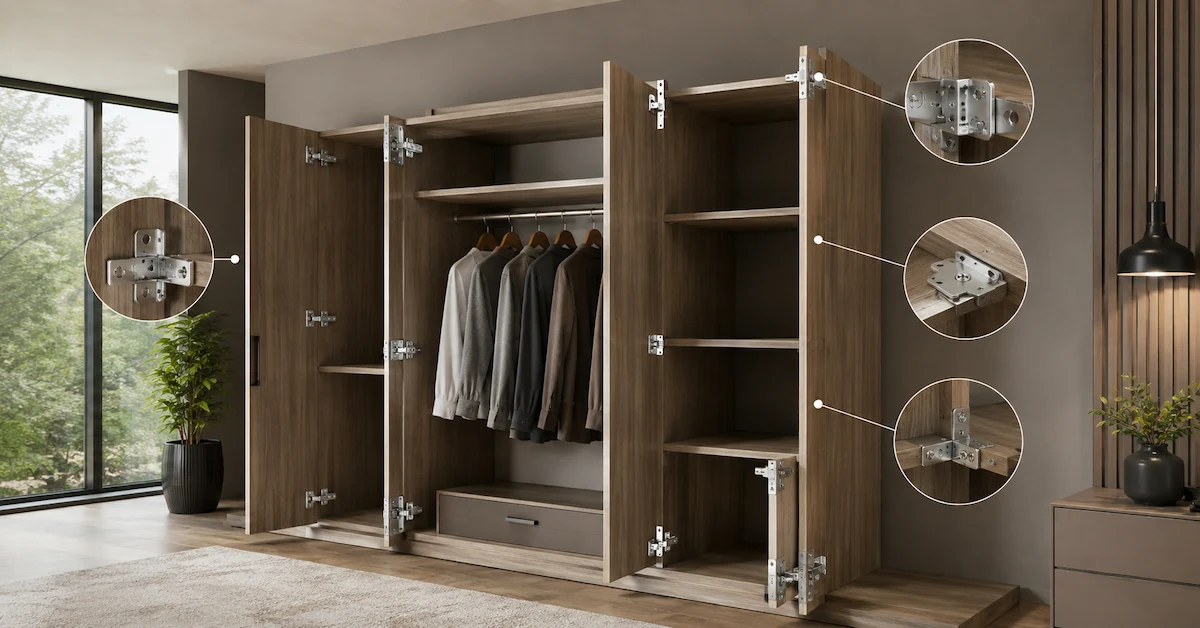
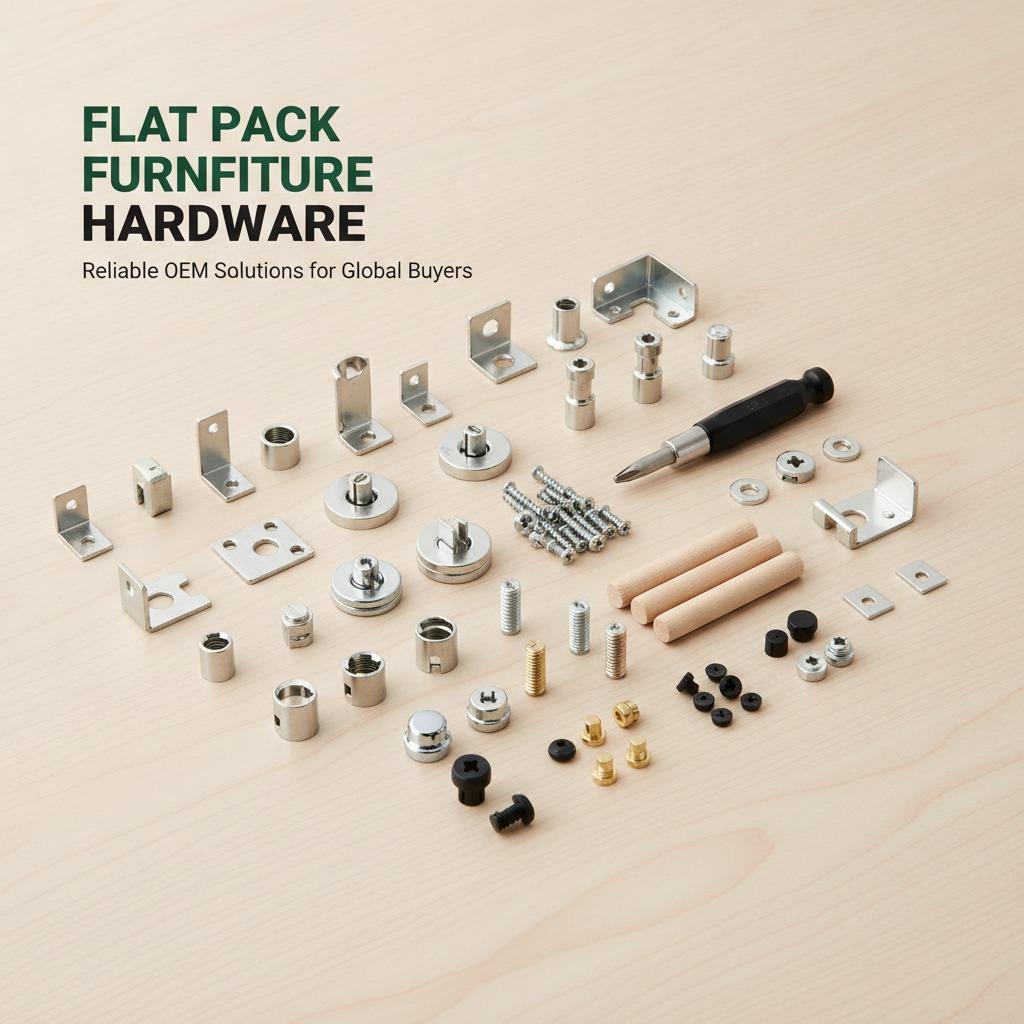
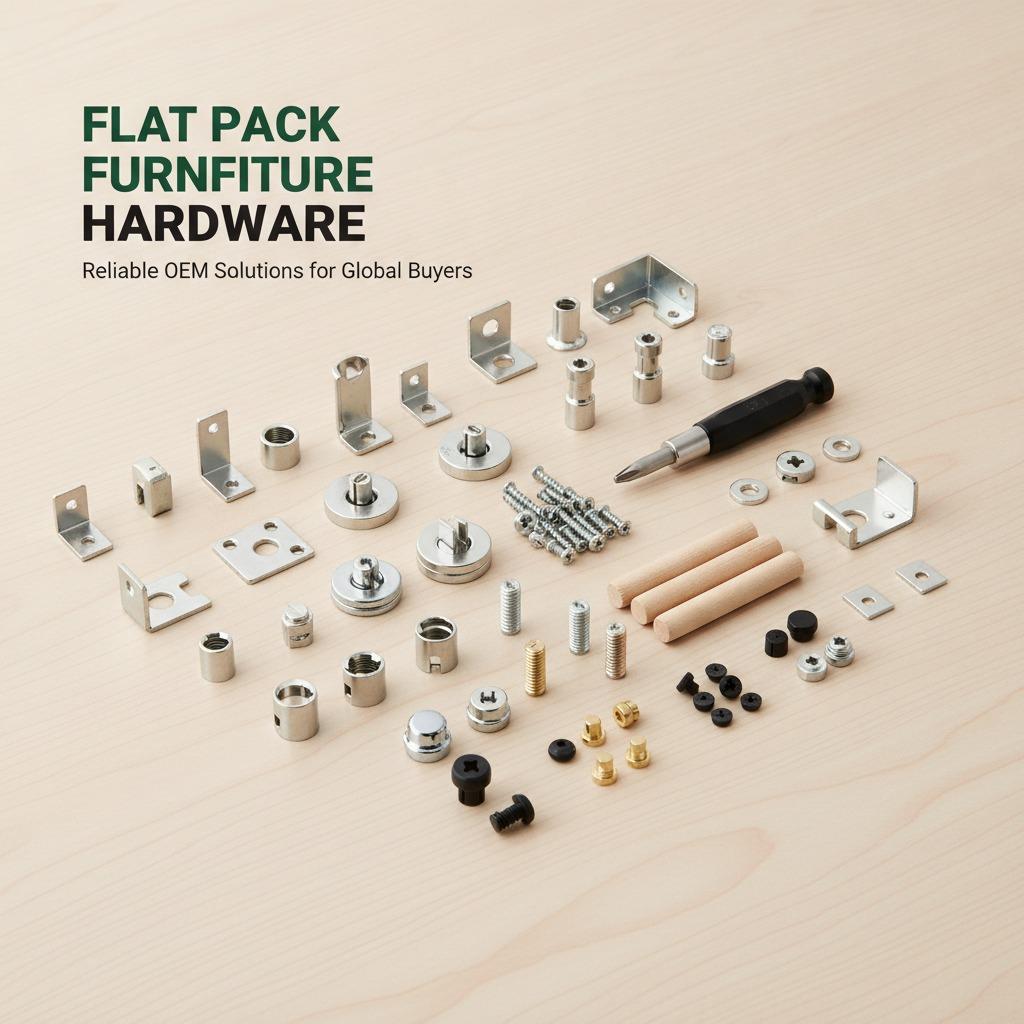
A typical OEM furniture hardware kit may contain screws, cam locks, connector bolts, dowels, threaded inserts, metal brackets, washers, plastic caps, sleeves, spacers, or small support parts.
That assortment is not random.
Some parts pull the panels together. Some keep the boards aligned before tightening. Some reinforce corners. Some create a threaded point inside engineered wood. Some protect the appearance after assembly. A few parts may seem unimportant until they are missing.
This is where buyers sometimes make the wrong assumption.
They treat the kit as a pile of parts.
In production, it behaves more like a small assembly system. Each piece has to work with the next one. The cam needs the right bolt. The screw needs the right insert or panel material. The bracket needs the correct hole position. The plastic cap needs to fit after the fastener is installed.
If one part is off, the whole kit becomes less reliable.
Flat-pack production rewards boring consistency
Nobody wants exciting hardware in a cabinet kit.
They want hardware that behaves the same way every time.
A cam lock should tighten the same way in batch one and batch five. A screw should keep the same head style, length, thread, and finish. A bracket should not become thinner without approval. A plastic sleeve should not change fit because a supplier made a quiet substitution.
This kind of consistency does not always look impressive in a brochure. It shows up on the line.
Workers stop checking every part. Packing teams trust the kit count. Customers do not call because a screw is missing. Replacement packs match the original furniture.
That is the real value.
For a cabinet hardware supplier, repeatability is often more important than a long list of available parts. A broad catalog is helpful, but a stable kit is what keeps a furniture program calm.
A sample kit should be tested like the real product
A sample review should not stop at appearance.
The hardware needs to be used in the same way it will be used later.
That means testing the kit with the actual panel material, drilled holes, tools, and assembly sequence. If the furniture will be assembled by end users, the test should not require a technician’s patience or special fixtures. If it will be packed for e-commerce, the kit should also be checked after handling, shaking, and carton movement.
Small issues appear quickly when the sample is treated like production hardware.
A screw may strip after repeated use.
A dowel may not guide the panels well enough.
A bracket may interfere with another fitting.
A bag may look complete but make similar parts hard to identify.
These are the problems worth finding early.
Once the product is in volume production, every small correction becomes slower and more expensive.
Packaging is part of the hardware quality
Furniture hardware kits are easy to miscount and easy to mix.
That is why packaging should be discussed before the first large order, not after the first complaint.
A kit for a factory assembly line may need simple, step-based bags. A retail replacement kit may need a clear pack with visible parts. A larger furniture set may need separated inner bags matched to the instruction sheet. Some projects need labels with model numbers, barcodes, or part references.
The packaging does not have to be beautiful.
It has to be usable.
The person opening the kit should know what the parts are and when to use them. If two screw lengths look similar, they should not be thrown together without separation. If a small insert can hide under larger fittings, the package should make it easier to check. If the product is sold across markets, replacement hardware should be easy to identify.
A good furniture fastener kit reduces questions at the point of assembly.
A poor one creates them.
Material and finish should be confirmed, not assumed
Many furniture hardware components look similar at first glance.
Silver-colored parts may be zinc-plated steel, stainless steel, or another material. Brass-colored pieces may be solid brass, plated steel, or zinc alloy with a finish. Black parts may be coated metal, plastic, or nylon.
Appearance alone is not enough for approval.
Buyers should confirm base material, surface treatment, thread type, size tolerance, finish consistency, and corrosion expectations. For most indoor furniture, standard finishes may be suitable. For humid storage, commercial use, export shipment, or long-term replacement kits, the requirements may be different.
The goal is not always to choose the most expensive material.
The goal is to choose a material and finish that fit the job.
A hidden fastener still needs the right quality. It may not be visible after assembly, but it still affects strength, tightening feel, and long-term stability.
Where Jiangmen Jinhe Hardware fits
Jiangmen Jinhe Hardware Co., Ltd. works with fasteners, standard parts, and non-standard customization. Its product range includes machine screws, self-tapping screws, micro screws, and precision screws, using materials such as stainless steel, iron, and aluminum.
The company also works with standards such as GB, DIN, ANSI, BS, JIS, and ISO.
For furniture buyers, this background is relevant because OEM furniture hardware kits often need more than one type of part. A cabinet or shelving program may require standard screws, custom fasteners, connector parts, brackets, inserts, packaging, inspection, documentation, and repeat-order control.
Jiangmen Jinhe also notes support for inspection before delivery, documentation, logistics, warehousing, foreign trade, and supply chain services. For buyers managing flat-pack furniture programs or export orders, those services can help reduce the number of handoffs between production, packing, and shipment.
The useful point is not only that a supplier can produce hardware.
It is whether the supplier can help keep the complete kit stable.
Common mistakes buyers still make
One common mistake is choosing hardware by price before testing the furniture structure.
A cheaper fastener is not cheaper if it causes rework, loose joints, slower assembly, or customer complaints.
Another mistake is approving loose samples instead of a full kit. Loose parts may look acceptable, but the real issue may be packing, count control, or how the parts are identified during assembly.
A third mistake is assuming one kit can cover several furniture models. Sometimes it can. Often it cannot. Board thickness, hole pattern, load, and assembly method may all change the hardware requirement.
Buyers also sometimes ignore replacement support. Flat-pack furniture often needs spare hardware later. Customers lose parts. Installers misplace fittings. A small replacement kit can save a much larger service problem.
The final mistake is treating customization as either always necessary or always unnecessary.
Standard parts are useful when they fit. Custom furniture connectors are useful when they solve a real assembly problem. The right answer depends on the furniture design.
What buyers should ask before placing an OEM order
Before moving into bulk production, buyers should ask practical questions.
What parts are included in the complete kit?
Which parts are standard, and which are customized?
What board material is the hardware designed for?
What hole pattern and panel thickness are required?
Can the kit be tested with real production panels?
How are similar parts separated in packaging?
How is kit count checked before shipment?
What inspection documents are available?
Can replacement packs be supplied later?
Can the same specification be repeated in future orders?
Can logistics or export support be included?
The answers should connect back to the furniture assembly process.
If the supplier only discusses loose part prices, the conversation is not complete yet.
Frequently Asked Questions
What are OEM furniture hardware kits?
OEM furniture hardware kits are organized sets of screws, connectors, brackets, inserts, dowels, caps, and related fittings prepared for furniture manufacturers or brand-specific assembly programs.
Why do flat-pack furniture kits need careful hardware selection?
Because the hardware affects panel alignment, joint strength, assembly speed, packaging accuracy, and customer experience.
Can one hardware kit work for several furniture products?
Sometimes, but only when the panel thickness, hole pattern, load requirement, and assembly method are compatible.
Why is packaging important for furniture fastener kits?
Packaging helps prevent missing parts, mixed fasteners, unclear assembly steps, and customer complaints.
Can furniture hardware kits be customized?
Yes. Screw length, connector size, bracket design, finish, kit quantity, labels, and packaging can be customized when the application requires it.
What should buyers test before mass production?
Buyers should test the full kit with actual panels, real hole patterns, intended tools, packaging format, and assembly sequence.
A reliable kit makes furniture easier to trust
Good OEM furniture hardware kits do not need to look complicated.
They need to work.
The connector tightens. The screw holds. The bracket lines up. The insert stays firm. The package is complete. The next shipment matches the approved sample.
That is what furniture buyers are really sourcing.
For OEM furniture hardware kits, flat-pack furniture hardware, cabinet connector kits, furniture fastener kits, custom furniture connectors, and knock-down furniture hardware, Jiangmen Jinhe Hardware Co., Ltd. can discuss standard parts, non-standard customization, material options, inspection, packaging, warehousing, logistics, and repeat supply requirements.
For direct inquiries:
Tel/WeChat: +86 13729150102
WhatsApp: +86 13322893939
Email: sharon@hkhomeideas.com
Start with the panel material, board thickness, hole pattern, hardware list, packaging method, and expected order quantity.
Once those details are clear, the right OEM hardware kit becomes much easier to build and repeat.