
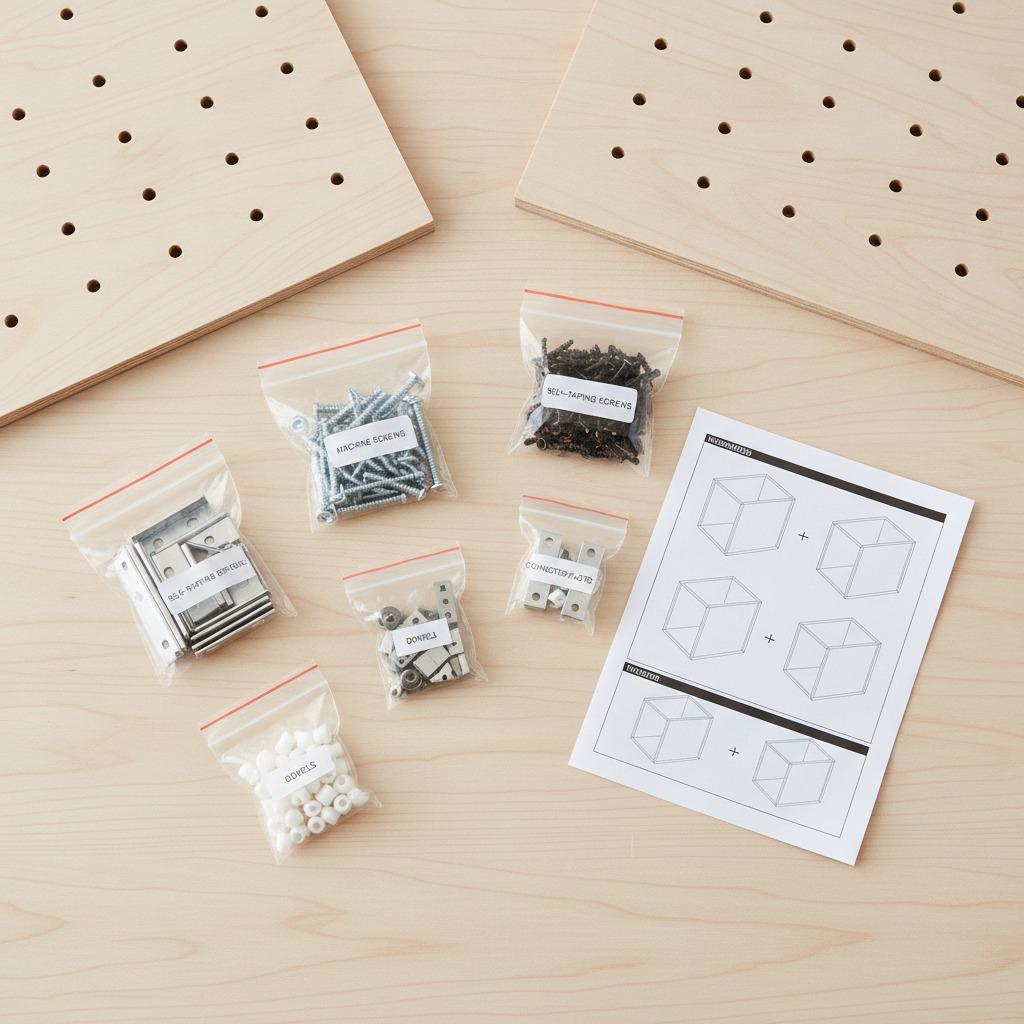
Flat-pack furniture makes hardware mistakes more expensive
Flat-pack furniture depends on repeated accuracy.
The panels are cut in advance. Holes are drilled before packing. The hardware is counted and sealed. The customer, installer, or factory worker follows the assembly sequence.
When everything matches, assembly feels smooth.
When one part is wrong, there is very little room to fix it.
A customer at home cannot easily correct a wrong drilling pattern. A factory worker does not want to stop the line to compare two similar screws. A hotel furniture installer does not want to open several packs just to find the right connector.
Small problems become real costs:
- slower assembly
- damaged panels
- loose joints
- missing-part complaints
- replacement shipments
- poor product reviews
- extra communication with customers
This is why a furniture hardware kit supplier should be evaluated by fit, packaging discipline, and repeat-order consistency, not only by price per set.
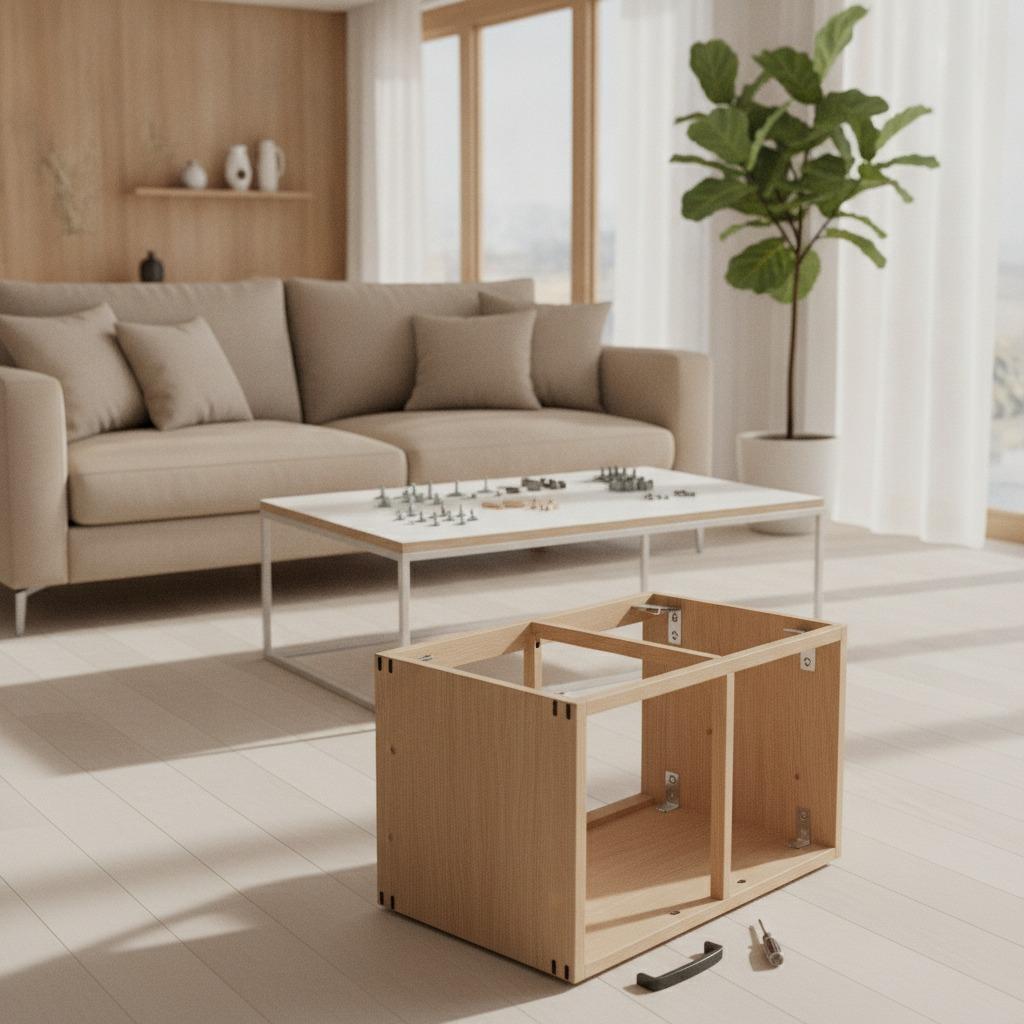 Product example: Jinhe JH-20 eccentric cam lock
One relevant product for flat-pack furniture hardware is Jinhe’s JH-20 eccentric cam lock.
According to the product specifications, this part is listed as a 2 in 1 Furniture Screw Connector Eccentric Cam Lock for Kitchen & Dining Cabinets. The product name is Eccentric Cam Lock, under the Jinhe brand, with model number JH-20.
| Item | Specification |
|---|---|
| Brand Name | Jinhe |
| Model Number | JH-20 |
| Product Name | Eccentric Cam Lock |
| Material | Carbon Steel |
| Finish | Zinc, Nickel |
| Suitable Board | 15mm / 16mm board |
| Function | Connecting 2 boards |
| Drilling Depth | 12mm |
| Drilling Distance | 7.5mm |
| Cam Size | Suitable for all conventional bolt |
| Service | OEM / ODM Customised |
This kind of product fits the practical needs of panel furniture because many cabinets, kitchen units, dining cabinets, and storage products use cam-lock-style joining systems. The connector is designed to help connect two boards, which is exactly the basic requirement in flat-pack carcass assembly.
But buyers should still look beyond the product name.
An eccentric cam lock only works well when it matches the board thickness, drilling depth, drilling distance, and matching bolt. In this case, the product information points to use with 15mm and 16mm boards, with 12mm drilling depth and 7.5mm drilling distance. Those details are important because even a small mismatch can affect tightening feel and final joint stability.
Why board thickness matters
Board thickness is one of the first details buyers should confirm.
Many flat-pack cabinets use 15mm or 16mm panels, especially in cost-sensitive storage furniture and cabinet products. A cam lock designed around this board range may be useful for those applications, but it should not be assumed to fit every furniture design.
If the panel is thicker, thinner, softer, or drilled differently, the result can change.
Particleboard, MDF, plywood, laminated board, and veneered panels all behave differently during fastening. Some materials hold better. Some are easier to damage near the edge. Some machine cleanly but do not tolerate repeated tightening very well.
For an eccentric cam lock, buyers should check:
- panel material
- board thickness
- hole diameter
- drilling depth
- drilling distance
- matching bolt size
- tightening direction
- expected load
- whether the furniture will be disassembled later
These details are not extra paperwork.
They decide whether the connector works in real assembly.
Cam locks are useful, but they are not magic
Cam-lock systems are popular in flat-pack furniture for good reasons.
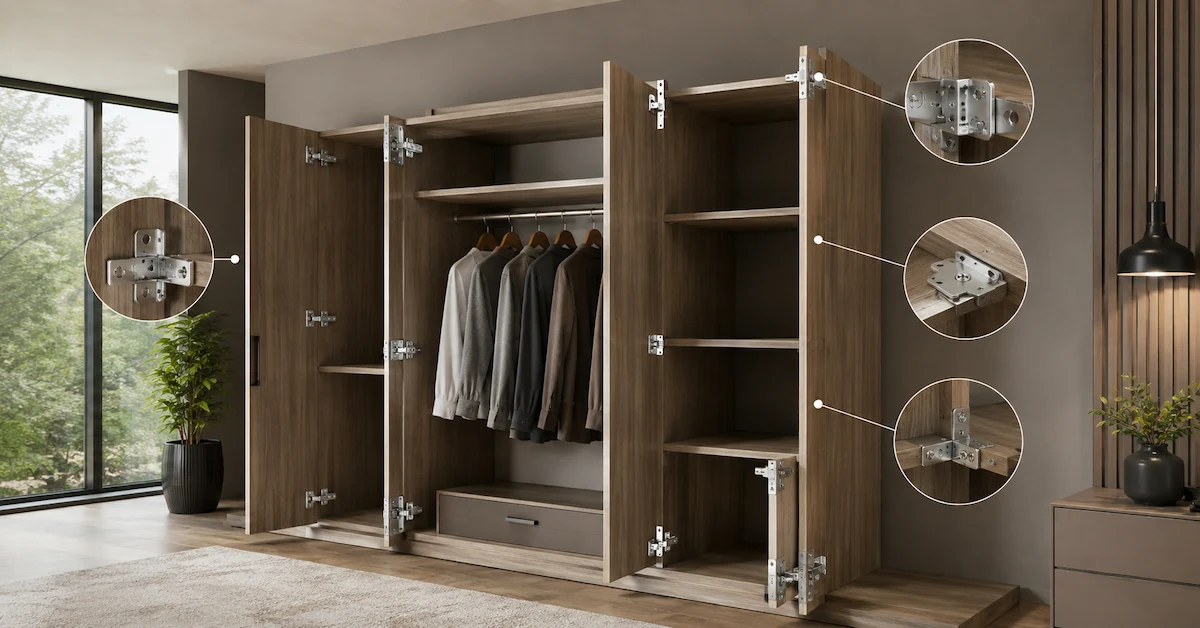
They allow panels to be joined without large exposed brackets. They support knock-down assembly. They are familiar to many furniture factories and end users. They can help keep packaging compact because panels can be shipped flat and assembled later.
Still, a cam lock is only as good as the system around it.
The hole must be drilled correctly. The bolt must match. The board must hold the connection. The user must be able to identify the part and tighten it without confusion.
If the cam lock does not engage properly, the panel may not pull tight. If the drilling is too shallow, the part may sit proud. If the board material is too weak, the joint may loosen over time.
That is why buyers should test the cam lock with real panels before bulk production.
A product table is useful.
A sample build is more useful.
Packaging should support the assembly sequence
Many hardware problems are not caused by bad parts.
They are caused by unclear packaging.
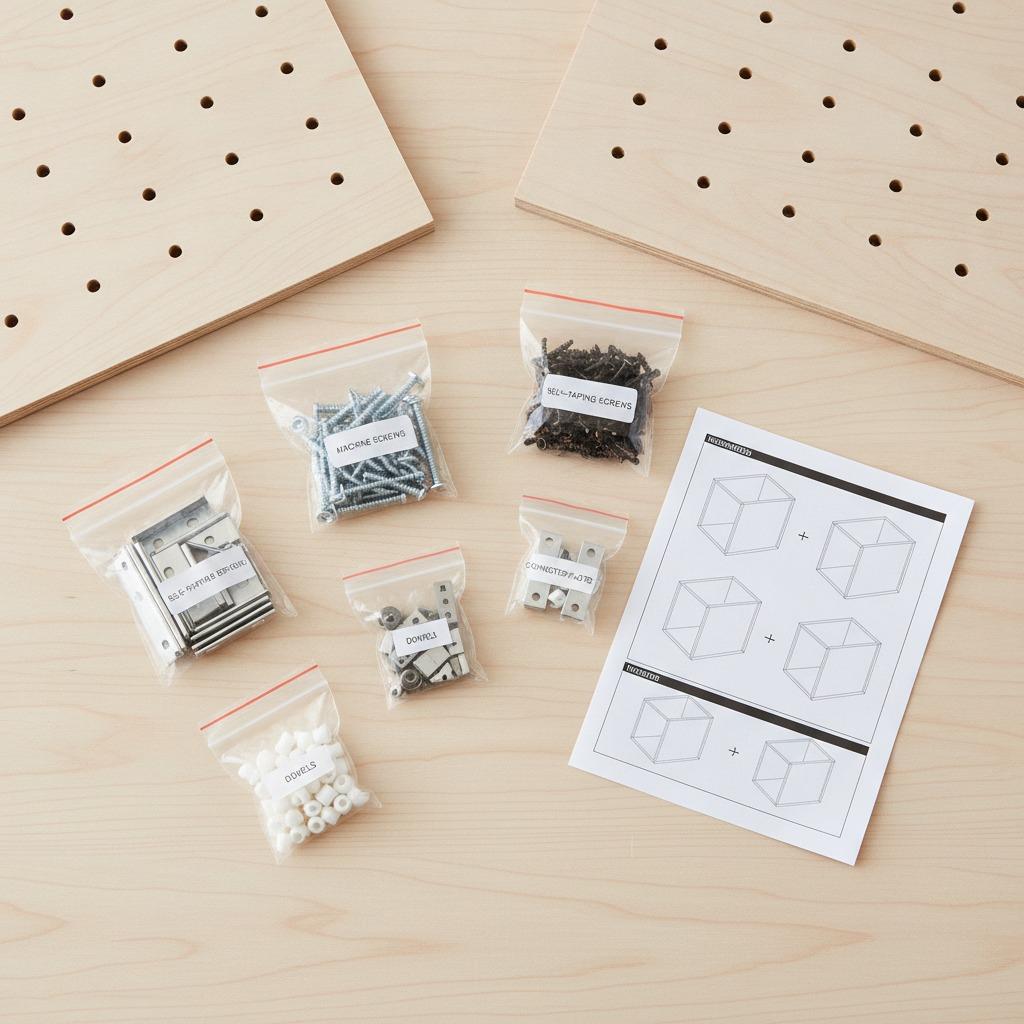
A furniture hardware kit may include cam locks, screws, bolts, dowels, washers, caps, and hinge parts. If similar components are mixed together, the user may choose the wrong part. If the pack is difficult to check, the factory may miss a shortage. If the label does not match the instruction sheet, assembly becomes slower.
A good cabinet hardware kit manufacturer should help buyers think about packaging before volume orders begin.
Useful packaging options may include separated bags, step labels, model numbers, barcode labels, small trays, blister packs, spare-part packs, or replacement kit codes.
The goal is not to make the hardware look expensive.
The goal is to make the correct part easy to find.
In flat-pack furniture, clear packaging is part of customer experience.
Standard hardware and OEM customization both matter
Standard hardware is useful when the furniture design matches common sizes.
A product such as the Jinhe JH-20 eccentric cam lock, designed for 15mm and 16mm boards, may suit many cabinet and storage applications using conventional cam-lock assembly. Standardized hardware can make reorder, replacement, and production planning easier.
But furniture programs do not always stay standard.
A buyer may need a different finish. A cabinet may require a different board thickness. A brand may want private-label packaging. A product revision may change the hole pattern. A hotel furniture project may need different replacement packs from a retail cabinet line.
That is where OEM and ODM support becomes useful.
Jinhe’s product page lists OEM / ODM customization service for this eccentric cam lock. For buyers, this means the sourcing discussion can include not only the part itself, but also project-specific requirements such as finish, packaging, kit structure, and repeat supply.
Customization should be used carefully, though.
It should solve a real assembly or packaging problem, not add complexity for no reason.
What Jiangmen Jinhe Hardware brings to kit sourcing
Jiangmen Jinhe Hardware Co., Ltd. works with machine screws, self-tapping screws, micro screws, precision screws, standard parts, furniture connector hardware, and non-standard customization. Its products cover materials such as stainless steel, iron, aluminum, and carbon steel for different hardware applications.
For furniture buyers, this background matters because a complete kit rarely depends on one part alone. A cabinet program may need eccentric cam locks, connecting bolts, screws, dowels, hinge screws, washers, caps, labels, and organized packaging.
The JH-20 eccentric cam lock is one example of a furniture connection part that can sit inside a wider hardware kit. For kitchen cabinets, dining cabinets, storage units, and flat-pack furniture, the key value is not only the cam lock itself. It is whether the supplier can keep the kit consistent across repeat orders.
A good manufacturer should support the whole sourcing process:
- standard part supply
- non-standard customization
- sample review
- inspection before delivery
- packaging discussion
- repeat-order control
- export and logistics support
That kind of support helps buyers avoid small hardware problems that become larger production issues.
Common sourcing mistakes buyers should avoid
One common mistake is choosing a hardware kit by price only.
A cheaper kit can become expensive if it creates assembly delay, damaged panels, missing-part claims, replacement orders, or customer complaints.
Another mistake is assuming one cam lock fits every cabinet. Even if a cam is suitable for conventional bolts, the final result still depends on board thickness, drilling depth, drilling distance, and the matching furniture structure.
A third mistake is approving loose samples without checking the full packed kit. Loose parts may look fine, but they do not show whether the customer can assemble the furniture without confusion.
Buyers also sometimes ignore finish requirements. Zinc and nickel finishes may both be suitable for many indoor applications, but the buyer should confirm the final finish based on product use, environment, appearance, and cost target.
The final mistake is not checking repeatability. One good sample does not guarantee stable production. Buyers should confirm whether later orders will match the approved dimensions, finish, packaging, and kit count.
Practical questions before placing an order
Before choosing a furniture hardware kit manufacturer, buyers should ask:
What parts are included in the complete kit?
Which parts are standard, and which are customized?
Is the eccentric cam lock suitable for 15mm or 16mm board?
What drilling depth and drilling distance are required?
Which bolt does the cam lock match?
What finish is required: zinc, nickel, or customized?
Can the kit be tested with actual production panels?
How are similar parts separated in packaging?
How is kit completeness checked before shipment?
What inspection documents are available?
Can replacement packs be supplied later?
Can OEM or ODM service be supported?
Can the same specification be repeated in future orders?
Can logistics, warehousing, or export support be included?
These questions help buyers move away from a simple quote comparison and toward real assembly performance.
Frequently Asked Questions
What does a furniture hardware kit manufacturer provide?
A furniture hardware kit manufacturer may provide cam locks, connecting bolts, screws, dowels, washers, hinge screws, brackets, caps, sleeves, labels, and customized packaging for furniture assembly.
What is an eccentric cam lock used for?
An eccentric cam lock is used to connect furniture panels, often in flat-pack cabinets, shelving, kitchen cabinets, dining cabinets, and modular furniture.
What board thickness is the Jinhe JH-20 eccentric cam lock suitable for?
According to the product information, the Jinhe JH-20 eccentric cam lock is suitable for 15mm and 16mm boards.
What material and finish does the JH-20 cam lock use?
The product page lists carbon steel as the material, with zinc and nickel finish options.
Why does drilling depth matter?
Drilling depth affects how the cam lock seats inside the panel. If the depth is wrong, the connector may not tighten properly or may affect the final panel fit.
Should buyers test hardware before bulk orders?
Yes. Buyers should test the kit with actual panels, drilled holes, assembly tools, packaging format, and the complete assembly sequence before mass production.
The best hardware kit makes assembly feel uneventful
Good furniture hardware does not need to look impressive.
It needs to work every time.
The cam lock seats properly. The bolt engages. The screw holds. The dowel aligns the panel. The washer is present. The kit is complete. The label is clear. The next shipment matches the approved sample.
That is what buyers should expect from a reliable furniture hardware kit manufacturer.
For furniture hardware kits, eccentric cam locks, furniture screw connectors, 2 in 1 furniture connectors, flat-pack cabinet hardware, kitchen cabinet hardware, dining cabinet hardware, OEM furniture hardware kits, and custom furniture fasteners, Jiangmen Jinhe Hardware Co., Ltd. can discuss standard parts, non-standard customization, material options, zinc or nickel finish, OEM / ODM service, inspection, packaging, warehousing, logistics, and repeat supply requirements.
For direct inquiries:
Tel/WeChat: +86 13729150102
WhatsApp: +86 13322893939
Email: sharon@hkhomeideas.com
Start with the panel material, board thickness, hole pattern, cam lock type, bolt requirement, packaging method, finish requirement, and expected order quantity.
Once those details are clear, the right furniture hardware kit becomes much easier to source, assemble, and repeat.