
Furniture Hardware Kit Manufacturer: Why the Right Kit Matters More Than the Panel Count
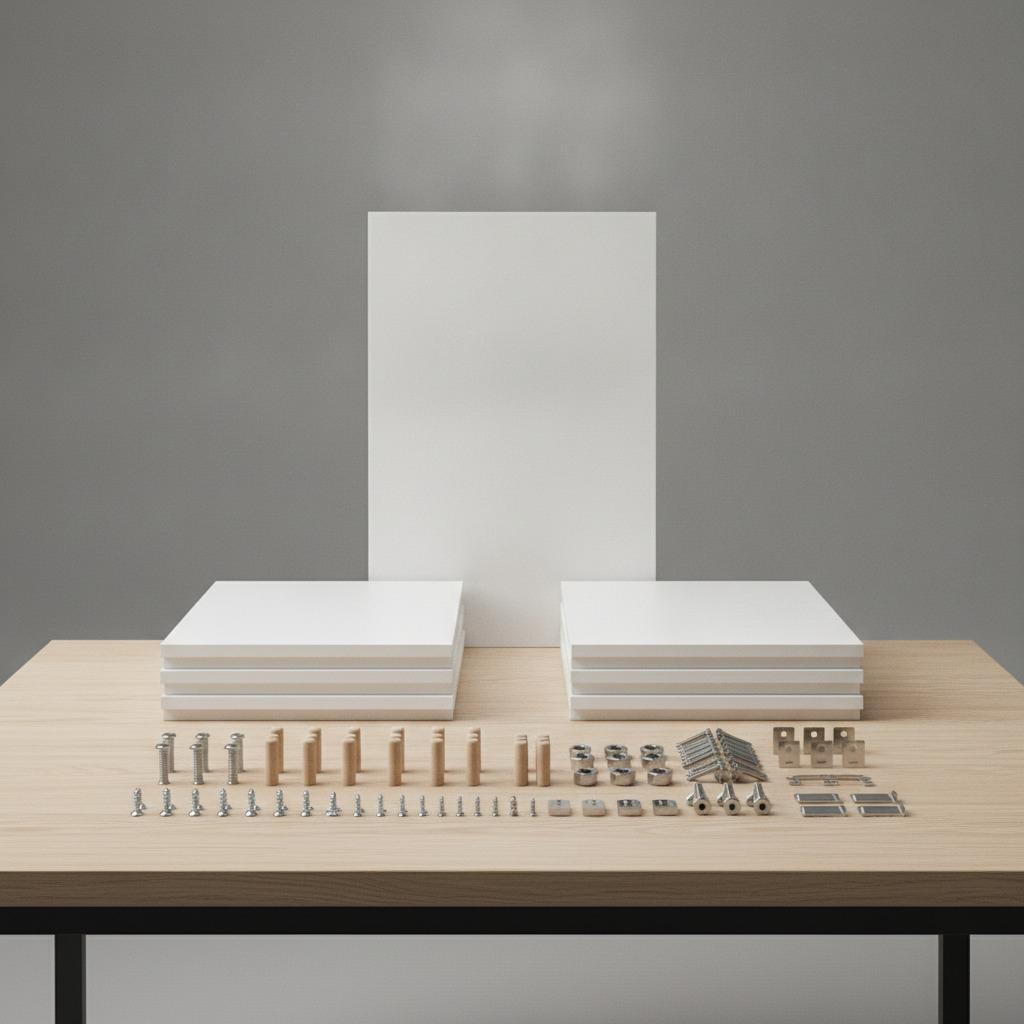
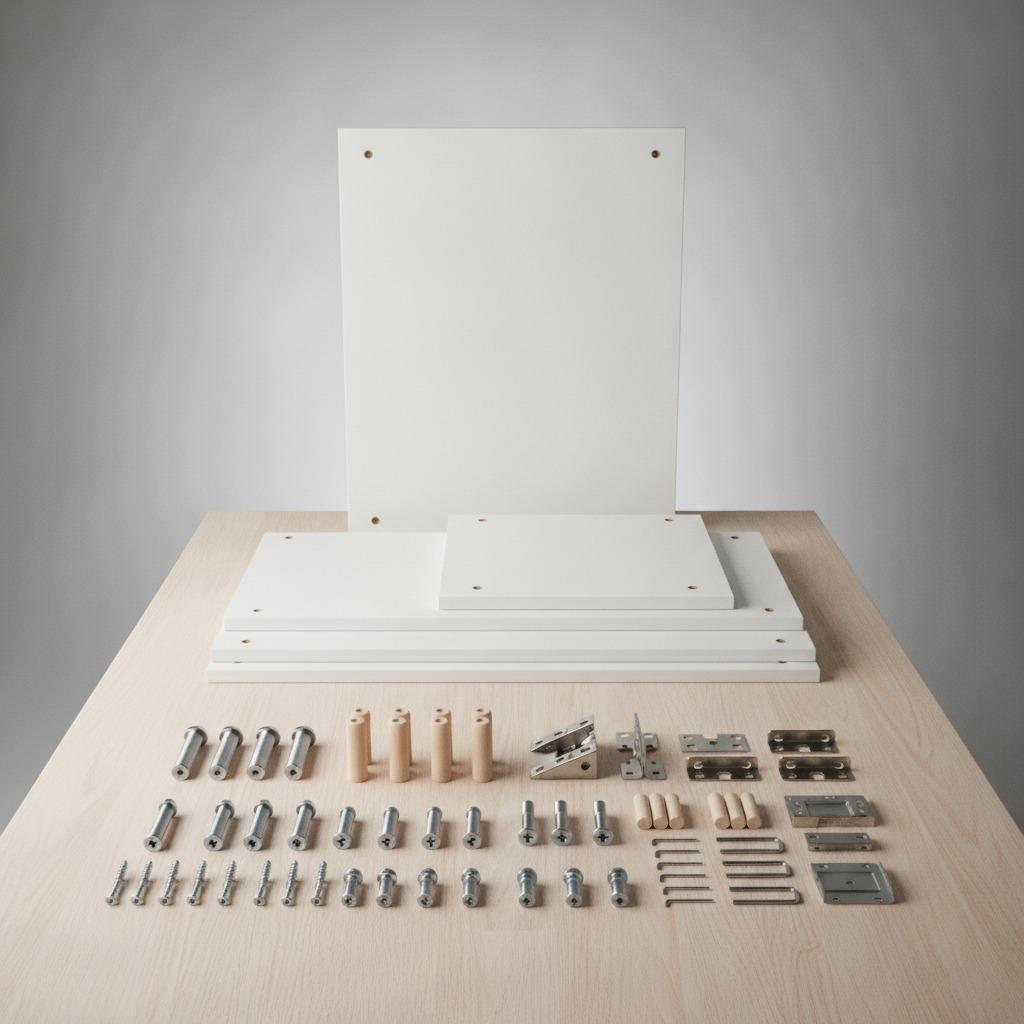
A flat-pack furniture project can look simple when the panels are stacked neatly.
There are boards. There are pre-drilled holes. There is a hardware bag. The carton looks compact, and the assembly sheet appears short enough for a customer to follow without much trouble.
Then the real test begins.
A screw is close, but not quite the right length. A connector bolt does not pull the panel tight. A dowel sits loosely in the hole. A washer is missing. A bracket looks correct until it meets the actual panel. The customer tightens the last part and the furniture still has a small wobble.
That is why choosing a furniture hardware kit manufacturer is not only about buying screws, bolts, washers, dowels, and connectors.
It is about controlling the assembly experience.
For cabinets, shelves, benches, small tables, drawer units, and modular storage products, the number of panels is only part of the story. The hardware kit decides whether those panels become a stable product or a frustrating return claim.
A furniture hardware kit is part of the product design
A furniture hardware kit should never be treated as a random bag of small parts.
It has to match the board material, hole pattern, panel thickness, assembly sequence, packaging method, and final use environment. If those details are not aligned, the product may look fine in a photo but fail during real assembly.
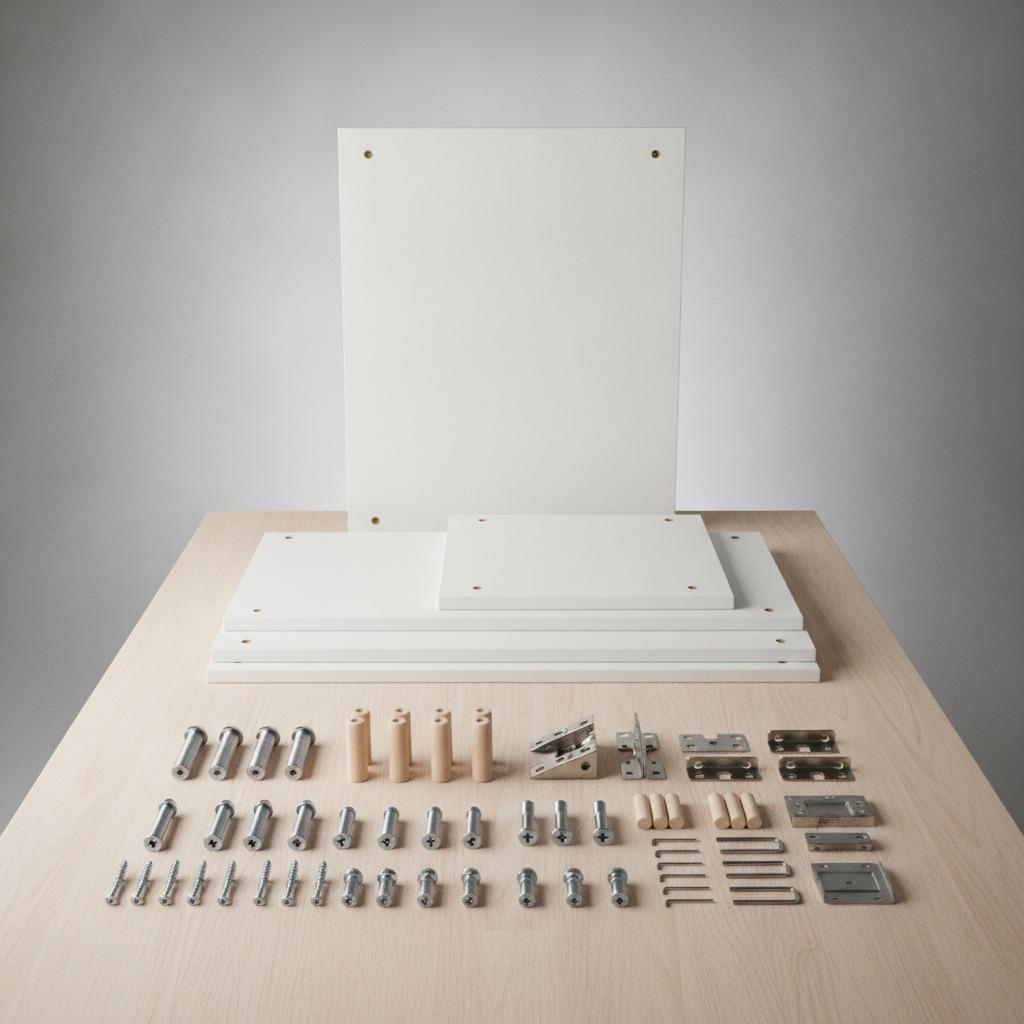
A practical assembly hardware kit for furniture may include:
- connecting bolts
- cam locks
- screws
- dowels
- washers
- threaded inserts
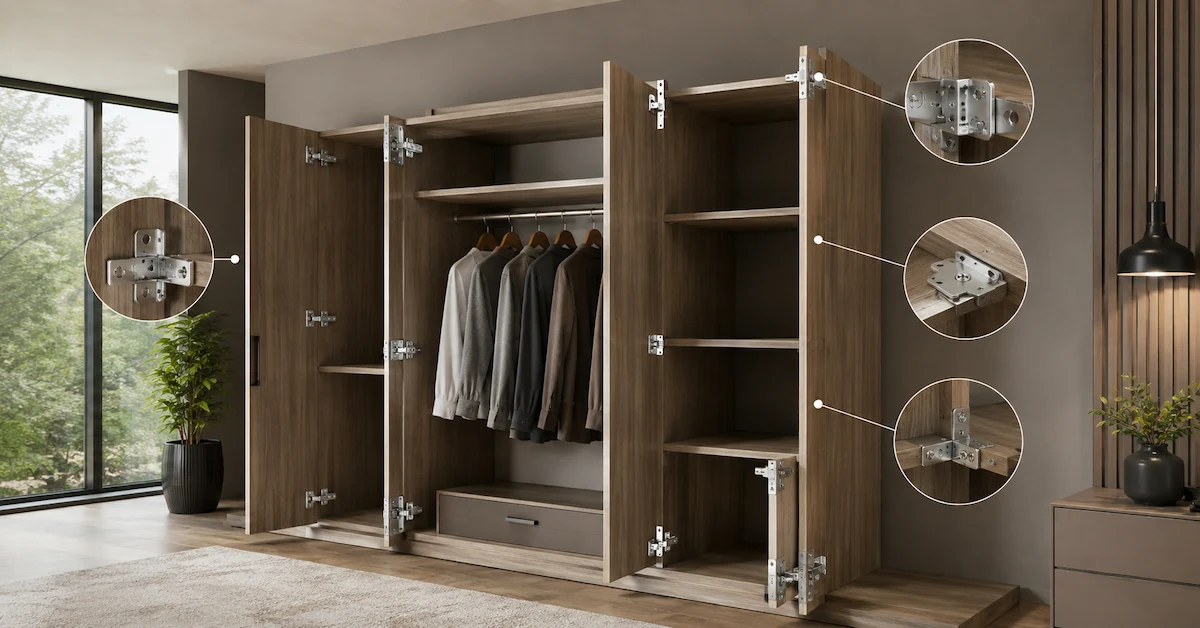
- brackets
- spacers
- hinge screws
- drawer screws
- caps
- sleeves
- labels
- spare parts
Each part does something different.
The bolt pulls the joint together. The cam locks the connection. The dowel helps the panels line up before tightening. The washer may protect a surface or help distribute pressure. A small spacer can stop one part from sitting too deep. A bracket may reinforce an area where the board alone is not enough.
None of these pieces works well in isolation.
The whole kit has to behave as one assembly system.
Why complete kits matter in flat-pack furniture
Flat-pack furniture depends on repeatability.
The panels are cut in advance. Holes are drilled before packing. Hardware is counted and sealed. The customer, installer, or factory worker follows the assembly sequence and expects the parts to match.
When everything works, assembly feels almost uneventful.
That is exactly what buyers want.
When one part is missing or mismatched, the problem grows quickly. A missing connector stops the build. A wrong screw damages the panel. A loose dowel makes the cabinet feel unstable. A mixed hardware bag forces the customer to guess.
For cross-border e-commerce, retail furniture, and OEM furniture programs, those small issues become expensive. They create replacement shipments, support messages, returns, bad reviews, and extra warehouse handling.
This is why buyers keep asking for complete hardware kits.
A complete kit reduces random picking. It improves carton organization. It makes replacement support easier. It also helps the supplier repeat the same set across future orders.
A low-cost loose parts package may look attractive on a quote sheet.
It often costs more after assembly begins.
Product example: Jinhe HIMJCC56441 M6 stainless steel connecting bolt
One useful example from JHFix is the Ex-Factory Price M6 Stainless Steel Double Ended Joint Connect Bolt for Kitchen & Dining Cabinet Furniture for Connector. The product page lists it under the Jinhe brand, with model number HIMJCC56441 and product name Furniture Connecting Bolt. It is made from stainless steel, with M6 thread size, 56mm length, silver color customizable, and zinc plated / nickel finish customizable. The page also lists pan head / countersunk head types and usage as Cabinet Connector / Furniture Connector.
| Item | Product Information |
|---|---|
| Brand Name | Jinhe |
| Model Number | HIMJCC56441 |
| Product Name | Furniture Connecting Bolt |
| Material | Stainless Steel |
| Thread Size | M6 |
| Length | 56mm |
| Color | Silver, customizable |
| Cam Size | Suitable for all conventional cam |
| Finish | Zinc Plated / Nickel, customizable |
| Head Type | Pan head / Countersunk |
| Usage | Cabinet Connector / Furniture Connector |
This type of connecting bolt is relevant for flat-pack furniture because many cabinet, kitchen, dining, shelf, and storage products need a mechanical joining system that can pull panels together without relying on glue or permanent joinery.
The product data gives buyers a clear starting point.
But it does not remove the need for testing.
An M6 stainless steel connecting bolt still has to match the furniture design. The buyer needs to confirm the board thickness, hole diameter, hole depth, cam compatibility, head type, installation tool, and final assembly sequence.
A bolt can look right in the product table and still be wrong for the panel.
Why M6 connecting bolts need careful matching
An M6 furniture connecting bolt is not just a larger or stronger screw.
It is part of a joint system.
In many cabinet and flat-pack designs, the connecting bolt works with a cam or matching connector part. The bolt provides engagement. The cam or connector pulls the panels together. The board holds the hardware in place.
If one detail is wrong, the joint may not close properly.
The bolt may be too long for the board.
The cam may not engage cleanly.
The head type may not suit the installation access.
The drilled hole may be too loose or too shallow.
The panel material may not support the same tightening force.
For buyers, this means the product should be reviewed inside the actual furniture, not only as a loose sample.
A stainless steel connecting bolt may offer strength and useful corrosion resistance for many indoor applications, but furniture assembly depends on the full system: board, hole, bolt, cam, tool, package, and user.
Panel material still decides the final result
Furniture fasteners behave differently in different boards.
MDF, particleboard, plywood, laminated panels, veneered board, and solid wood do not respond the same way to drilling, tightening, and repeated assembly. A connector bolt that works smoothly in one board may feel loose or too aggressive in another.
This is why buyers should share panel details before asking for volume pricing.
Useful information includes:
What board material is used?
What is the panel thickness?
Is the panel pre-drilled?
What hole diameter is required?
What is the hole depth?
Will the bolt connect with a cam?
Will the product be assembled once or several times?
Will the hardware remain hidden or semi-visible?
Will the furniture be used in a dry room, kitchen, hotel, or commercial space?
These questions may sound plain, but they prevent many sourcing mistakes.
A good furniture hardware kit supplier should be able to discuss the connector in relation to the board, not just quote a part number.
Cabinet kits and drawer kits are not the same job
A drawer hardware kit supplier and a cabinet hardware kit supplier may both provide screws and fittings, but they are solving different problems.
Cabinet kits usually focus on panel joining, structural support, shelf positioning, door hinges, and general stability. The main question is whether the box stays square and solid after assembly.
Drawer kits involve another layer of movement. They may include slides, runners, fixing screws, stops, guides, and adjustment parts. The key issue is not only whether the drawer attaches, but whether it opens, closes, aligns, and survives repeated use.
Using a cabinet-style hardware kit in a drawer program without checking movement can create problems later.
The hardware may fit.
The drawer may still perform poorly.
That is why buyers should describe the furniture type clearly when speaking with a supplier. A kitchen cabinet, dining cabinet, shelf, bench, side table, drawer unit, or office storage product may need different hardware logic even if the parts look similar in a photo.
Packaging is not the last step
Many hardware kit problems are packing problems.
The parts may be correct, but the package makes them hard to use.
Two similar screws sit in one bag. A small washer hides under larger bolts. Dowels are packed without clear quantity marking. A connecting bolt is separated from the cam it belongs with. The instruction sheet calls for one part name, while the hardware bag uses another.
That is where assembly slows down.
For factory workers, this creates lost time. For installers, it creates checking and sorting. For end users, it creates frustration before the furniture is even built.
A practical furniture hardware kit should be packed around the assembly sequence.
Useful packaging may include:
- separated bags
- step labels
- barcode labels
- model numbers
- small trays
- blister packs
- spare-part bags
- replacement kit codes
- inner carton protection
This does not mean every project needs expensive packaging.
It means every project needs packaging that prevents avoidable mistakes.
A clear kit can make a modest piece of furniture feel better designed.
Material and finish need written confirmation
The Jinhe HIMJCC56441 connecting bolt is listed as stainless steel, with zinc plated / nickel finish options that can be customized. The product page also lists silver color as customizable and gives pan head / countersunk as head type options.
Those details are important because material and finish affect more than appearance.
Stainless steel may be useful where buyers want better material performance than basic steel options. Zinc plated or nickel finish choices may be selected based on cost, appearance, handling, corrosion expectations, or compatibility with other hardware in the kit.
Head type also matters.
A pan head may suit one furniture connection. A countersunk head may be better where the fastener needs to sit flush. If the wrong head type is selected, the hardware may interfere with the panel surface, bracket position, or final appearance.
Buyers should confirm:
- base material
- thread size
- length
- finish
- head type
- color requirement
- cam compatibility
- substitution rules
- packaging protection
Do not rely on appearance alone.
A silver bolt is not a full specification.
What Jiangmen Jinhe Hardware brings to kit sourcing
Jiangmen Jinhe Hardware Co., Ltd. works with furniture-related fasteners, standard parts, machine screws, self-tapping screws, micro screws, precision screws, and non-standard customization. For furniture buyers, that background matters because a complete hardware kit often includes several fastener types, not one isolated component.
A project may need M6 connecting bolts, cams, dowels, washers, screws, brackets, caps, labels, and packaging support.
The HIMJCC56441 furniture connecting bolt is one example of a part that can fit into a broader hardware kit. Its stainless steel material, M6 thread size, 56mm length, customizable color, and zinc plated / nickel finish options make it relevant for cabinet and furniture connector applications.
For sourcing teams, the real value is not only whether a supplier can provide the bolt.
It is whether the supplier can help keep the complete kit stable from sample approval to repeat order.
Common sourcing mistakes buyers should avoid
One common mistake is buying panels and hardware as separate decisions.
That can work when the design is simple and the parts are standard. But once the project uses pre-drilled holes, cam systems, special connectors, or multiple furniture models, the hardware and panel design must be reviewed together.
Another mistake is treating all “complete kits” as equally complete.
Some kits include the obvious screws and bolts but miss small washers, spacers, caps, or matching pieces. Those small omissions may not be noticed in a quick sample review. They show up during assembly.
A third mistake is choosing only by price. A lower-cost kit can become expensive if it creates damaged boards, slower assembly, missing-part claims, or after-sales replacement work.
Buyers also sometimes ignore the end user. A kit that makes sense to an engineer may confuse someone assembling furniture at home.
The final mistake is not checking repeatability. One good sample is useful. A reliable supplier should repeat the same specification, count, label, and packaging method across future orders.
Practical questions before placing an order
Before choosing a furniture hardware kit manufacturer, buyers should ask:
What parts are included in the full kit?
Which parts are standard, and which are customized?
Is the M6 connecting bolt matched to the cam system?
What board thickness is the kit designed for?
What hole diameter and depth are required?
Is pan head or countersunk head better for this design?
Is stainless steel required, or is another material acceptable?
Should the finish be zinc plated, nickel, or customized?
Can the kit be tested with actual production panels?
How are similar parts separated in packaging?
How is kit completeness checked before shipment?
Can replacement packs be supplied later?
Can OEM or ODM customization be supported?
Can the same specification be repeated in future orders?
Can logistics, warehousing, or export support be included?
These questions move the sourcing discussion away from “How much per set?” and closer to real assembly performance.
Frequently Asked Questions
What does a furniture hardware kit manufacturer provide?
A furniture hardware kit manufacturer may provide screws, connecting bolts, cam locks, dowels, washers, brackets, spacers, drawer hardware, labels, and customized packaging for furniture assembly.
What is an M6 furniture connecting bolt used for?
An M6 furniture connecting bolt is used as part of a furniture connection system, often helping join panels in cabinets, kitchen furniture, dining cabinets, shelving, and flat-pack furniture.
What material is the Jinhe HIMJCC56441 connecting bolt made from?
The product page lists the Jinhe HIMJCC56441 furniture connecting bolt as stainless steel.
What length is listed for the HIMJCC56441 connecting bolt?
The product page lists the length as 56mm.
What finish options are listed for this furniture connecting bolt?
The product page lists zinc plated / nickel finish options, with customization available.
Why does packaging matter for furniture hardware kits?
Packaging helps prevent missing parts, mixed fasteners, unclear assembly steps, and customer complaints. In flat-pack furniture, the hardware kit is part of the product experience.
The right kit makes the product easier to trust
A good furniture hardware kit does not need to look impressive.
It needs to work the first time.
The connecting bolt fits. The cam engages. The screw holds. The dowel aligns. The washer is present. The packaging is clear. The next order matches the approved sample.
That is the real value of a reliable furniture hardware kit manufacturer.
For furniture hardware kits, M6 stainless steel connecting bolts, cabinet connectors, drawer hardware kits, assembly hardware kits for furniture, flat-pack furniture hardware, OEM furniture hardware kits, and custom fasteners, Jiangmen Jinhe Hardware Co., Ltd. can discuss standard parts, non-standard customization, material options, zinc plated or nickel finish, inspection, packaging, warehousing, logistics, and repeat supply requirements.
For direct inquiries:
Tel/WeChat: +86 13729150102
WhatsApp: +86 13322893939
Email: sharon@hkhomeideas.com
Start with the panel material, board thickness, hole pattern, connector type, bolt requirement, packaging method, finish requirement, and expected order quantity.
Once those details are clear, the right furniture hardware kit becomes much easier to source, assemble, and repeat.