
Why are hexagonal nuts so important in cabinet and furniture hardware?
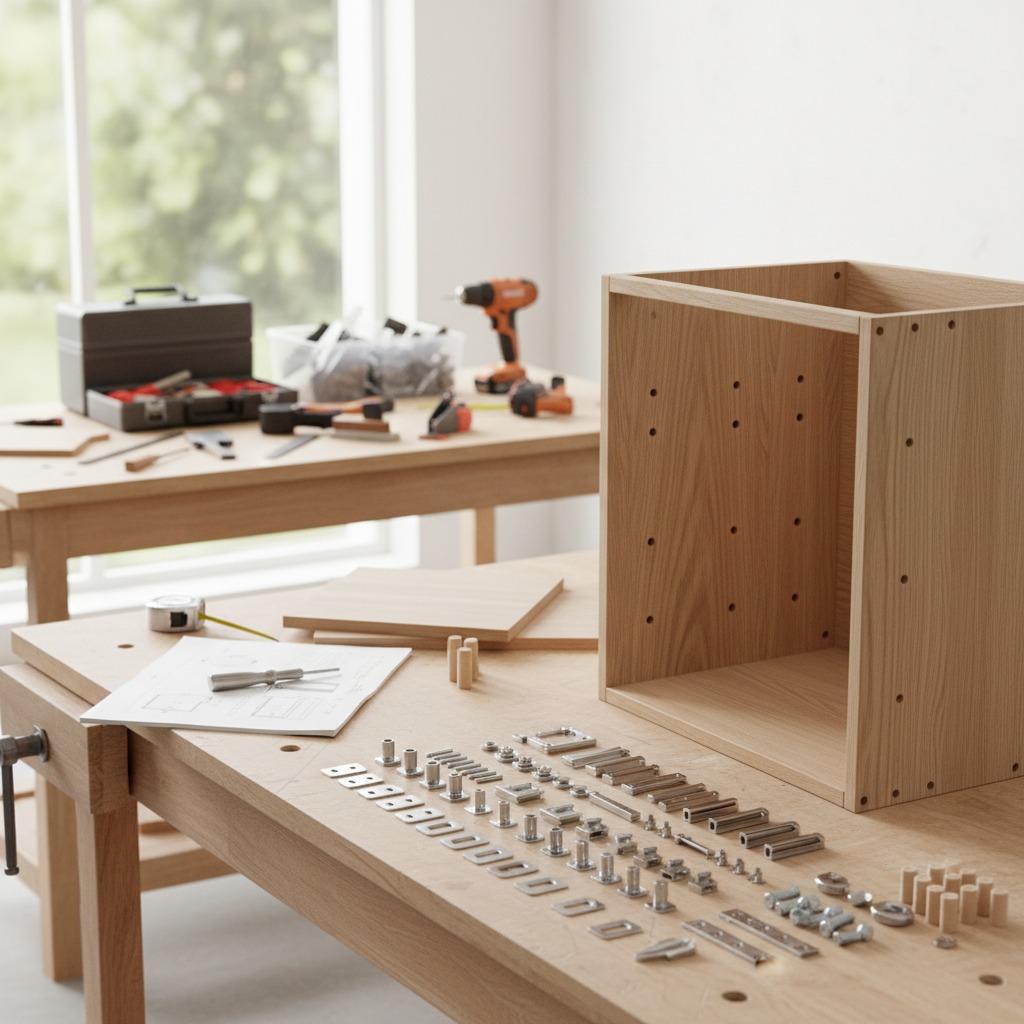
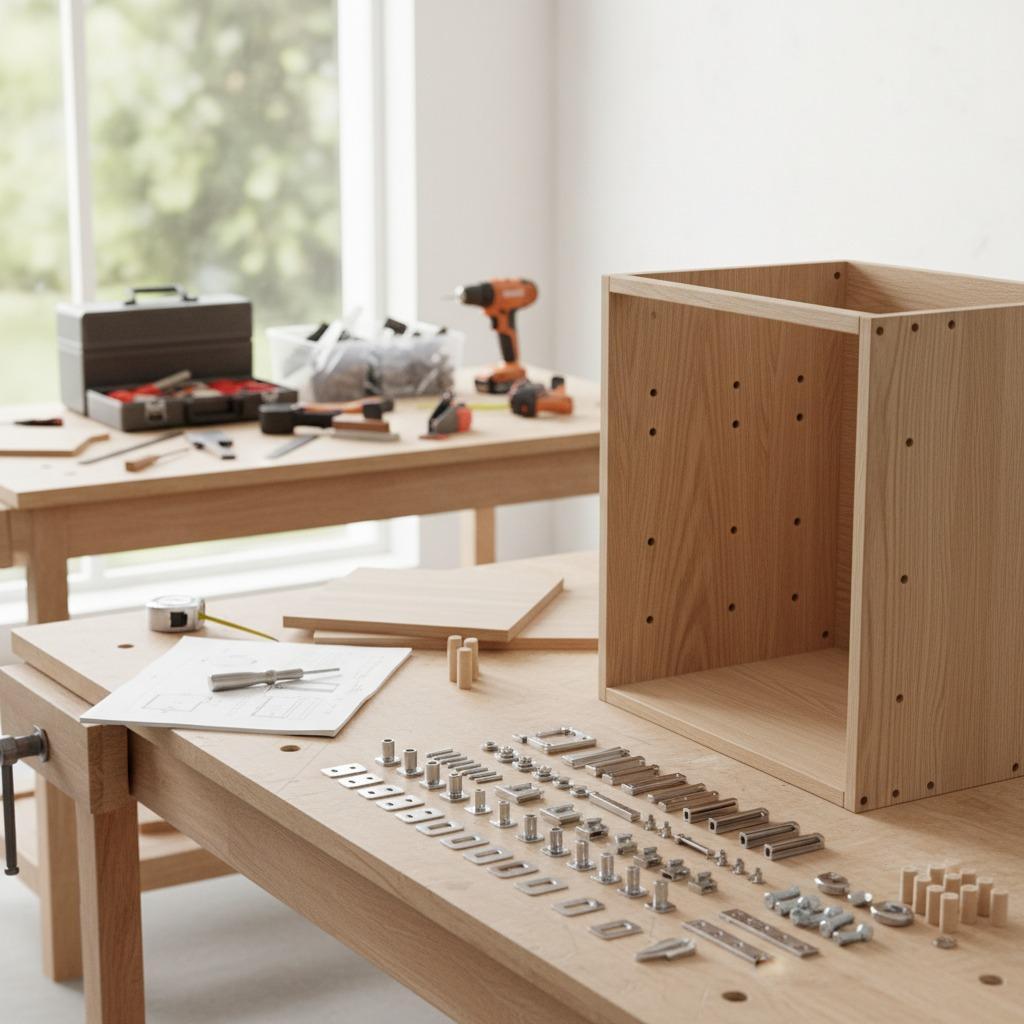
When a cabinet frame is assembled neatly, the importance of the hardware is often overlooked. This is actually a misconception. In modular furniture, the choice of hexagonal nuts and matching fasteners determines the stability of the assembled cabinet, or whether it will loosen after handling, unloading, and reassembly. The image shows a typical furniture panel application: pre-drilled cabinet panels, adjustable shelf holes, and loose connectors for assembly. For purchasing teams and product engineers, the real issue is not whether the components are simple, but whether the fastener system is reliable enough to withstand repeated use, convenient enough for end-user operation, and compatible with the panel structure.
Therefore, choosing fasteners is no longer just a simple matter of purchasing goods, but a practical operational decision. Hex nuts, machine screws, self-tapping screws, and stainless steel screws all play different roles in furniture and light cabinet systems. Choosing the wrong fasteners can lead to stripped threads, loose connections, and even a poor customer assembly experience, ultimately resulting in after-sales service issues.
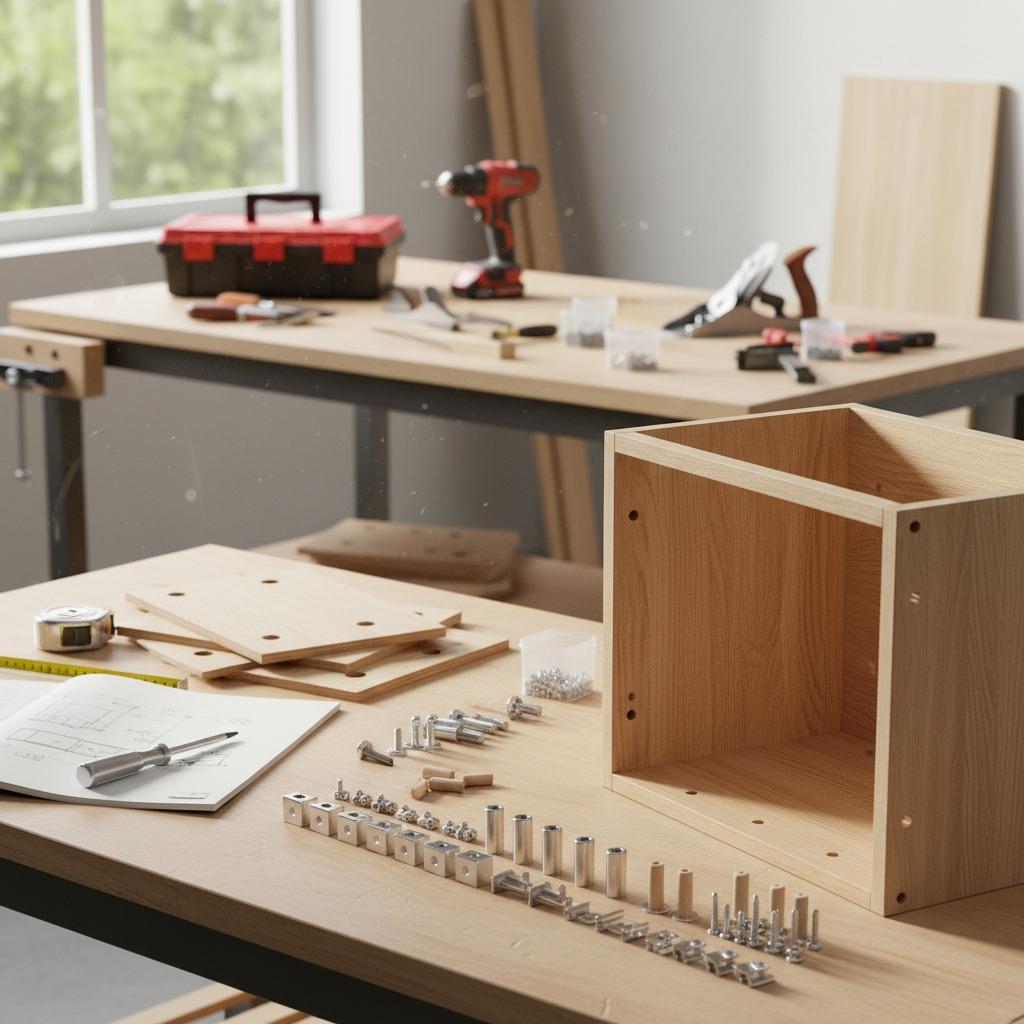
The rack images suggest some information about the hardware system.
The visible structure appears to be a semi-finished wooden cabinet or shelf frame, with evenly distributed drilled holes on the side panels. This layout is typical of adjustable shelf systems and modular storage units. The scattered hardware in the front seems to include several types of fasteners: bolts, connectors, dowels, and small bracket-like fittings. While the specific components cannot be identified from the images alone, it clearly employs a design concept of detachable furniture, where the panels are fabricated first, and then assembled using standardized hardware.
In this structure, hexagonal nuts are typically part of large connecting components. Depending on the furniture design, they can be used with machine screws for bolted connections, or with inserts and cam-type joints. The key is fit and consistency. Furniture hardware must not only withstand weight, but also vibration, transportation, reassembly, and occasional forceful tightening by customers.
Choose the appropriate type of furniture assembly fasteners
Hex nuts and machine screws
Hex nuts are most useful when a secure mechanical lock is required at the joint, and when installers can access the panel from both sides, or when using fixed inserts. When used with machine screws, they offer a cleaner, more controlled thread engagement than wood thread fastening in many applications. For cabinet frames, this helps improve production repeatability.
Self-tapping screws and wood screws
Self-tapping screws and wood screws are common in furniture making because they are easy to install, simply screwing directly into the wood. While convenient, they are not always the best choice for situations requiring repeated assembly. Over-tightening screws is a common mistake, especially on softer boards. For OEM buyers, this means confirming whether the connection is permanent or requires user assembly before deciding on the fastening method.
Stainless steel screws and stainless steel nuts
Stainless steel screws and nuts are worth considering in situations where corrosion resistance and aesthetics are critical, such as in damp rooms, storage furniture near kitchens, or products that need to withstand transportation under varying climatic conditions. While not all cabinets require stainless steel screws and nuts, they can reduce customer complaints in situations where the end-use environment is critical. As always, material selection should be aligned with panel design and cost objectives.
What questions should a purchasing manager ask before placing an order?
Buyers often focus only on the name of the fasteners, neglecting the details that truly affect assembly, which can lead to problems later. Always ask if the hex nuts are compatible with standard machine screws, if the thread specification matches the hardware kit, and if the provided finish is suitable for the installation location (visible or concealed). If the furniture is for export or commercial use, request dimensional and standard reference information instead of assuming that a supplier's "M6-like" parts will work in all situations.
Jiangmen Jinhe Hardware Co., Ltd. specializes in producing various machine screws, self-tapping screws, miniature screws, and precision screws, using materials including stainless steel, iron, and aluminum. The company strictly adheres to GB, DIN, ANSI, BS, JIS, and ISO standards, which is highly advantageous for buyers requiring hardware that meets established specifications. Its clientele includes furniture manufacturers, electronics companies, and medical device companies, demonstrating that the company excels in standardized fastener production rather than piecemeal, one-off supply.
Common mistakes in purchasing cabinet fasteners
A common mistake is mixing different thread systems without checking compatibility. Another mistake is prioritizing appearance over mechanical performance. A third mistake is ignoring the assembly sequence. Furniture hardware that appears interchangeable can perform drastically differently once screwed into panels or used with connecting plates. Furthermore, don't assume a hardware kit is complete just because it contains a few visible parts. In modular furniture, the absence of even a small component can bring the entire assembly line to a standstill.
Another point that buyers often overlook is that if the cabinets are designed for DIY users, the fastening system must have a certain degree of tolerance. A perfectly fitted joint in the factory is meaningless if a home user breaks the hole on their first attempt. This is why a balanced design, rather than just sheer strength, is key.
Practical next steps for furniture and hardware buyers
If you are building or sourcing modular cabinetry, first plan the connection methods: panel thickness, ease of installation on both sides, expected reassembly frequency, and whether fasteners will be concealed or exposed. Then determine which combination of hex nuts, machine screws, self-tapping screws, or wood screws is best suited for the job. For high-volume projects, partner with a bolt and nut supplier who can provide both standard and custom-made parts, as furniture projects typically require both.
Jiangmen Jinhe Hardware Co., Ltd. also provides foreign trade support, logistics, warehousing, and supply chain services, which are especially important when hardware needs to be coordinated with furniture production schedules. If your next project requires a simple, reusable fastening system, it's best to request samples and confirm the stacking method of the hardware before finalizing the cabinet design.