
A furniture hardware supplier is an important partner for furniture factories, cabinet manufacturers, hardware distributors, retail brands, and e-commerce sellers. The right supplier does more than provide screws or connectors. It helps buyers match parts correctly, control quality, organize packaging, reduce missing-part complaints, and keep repeat orders stable.
For furniture assembly, small parts can create big problems. A screw with the wrong length may damage a panel. A cam lock that does not match the board thickness may cause loose assembly. A bracket with poor plating may rust too early. A hardware kit with missing parts may lead to customer complaints and product returns.
That is why global buyers should choose a furniture hardware supplier based on product range, customization ability, quality control, packaging support, and long-term supply stability.
Quick Answer: What Does a Furniture Hardware Supplier Provide?
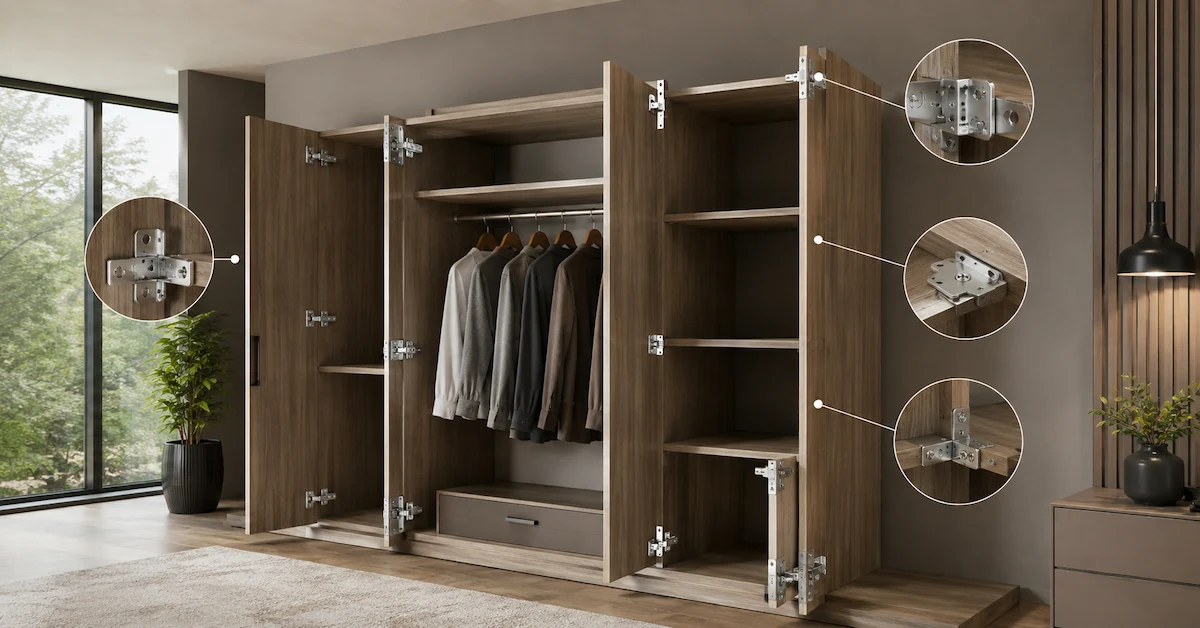
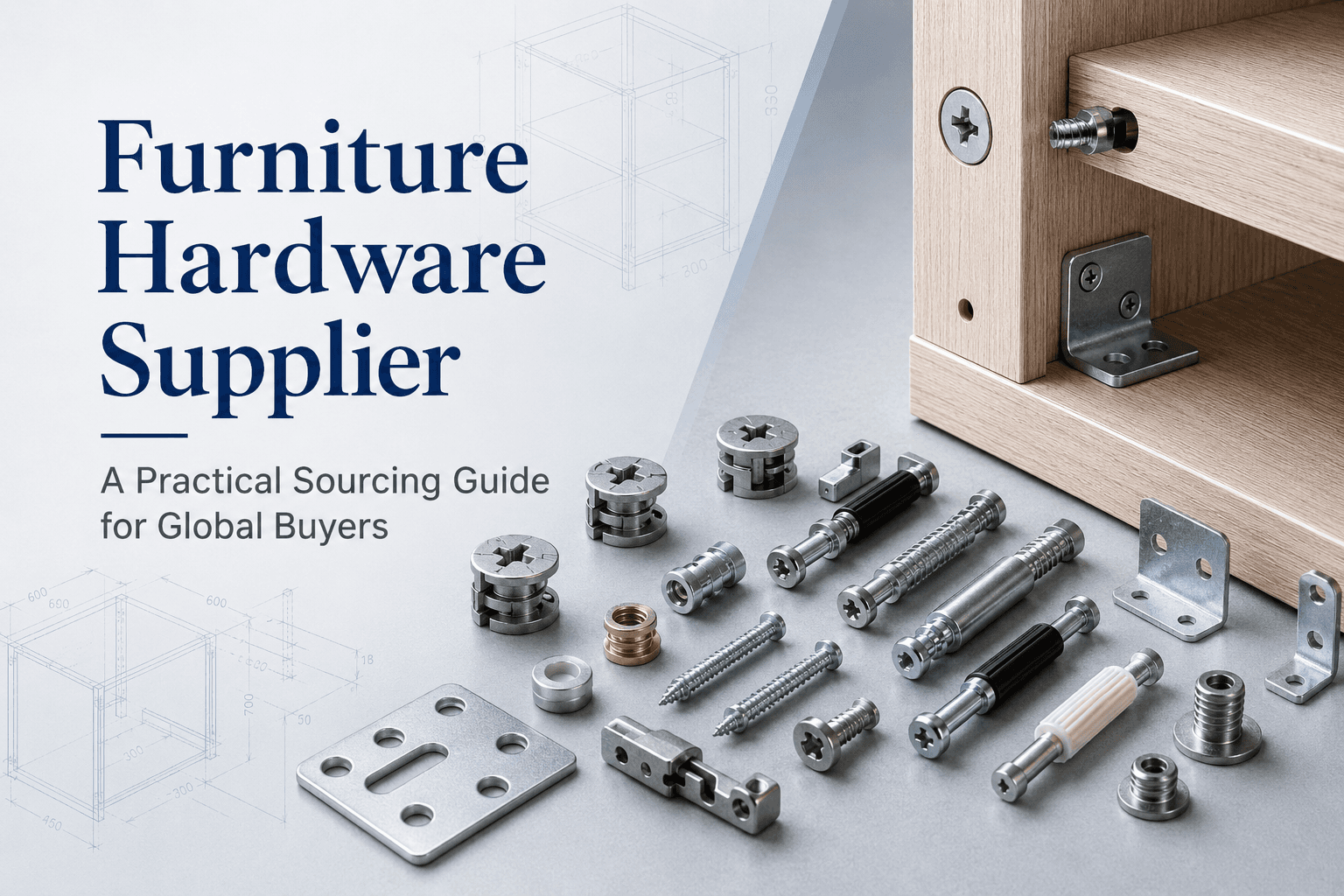
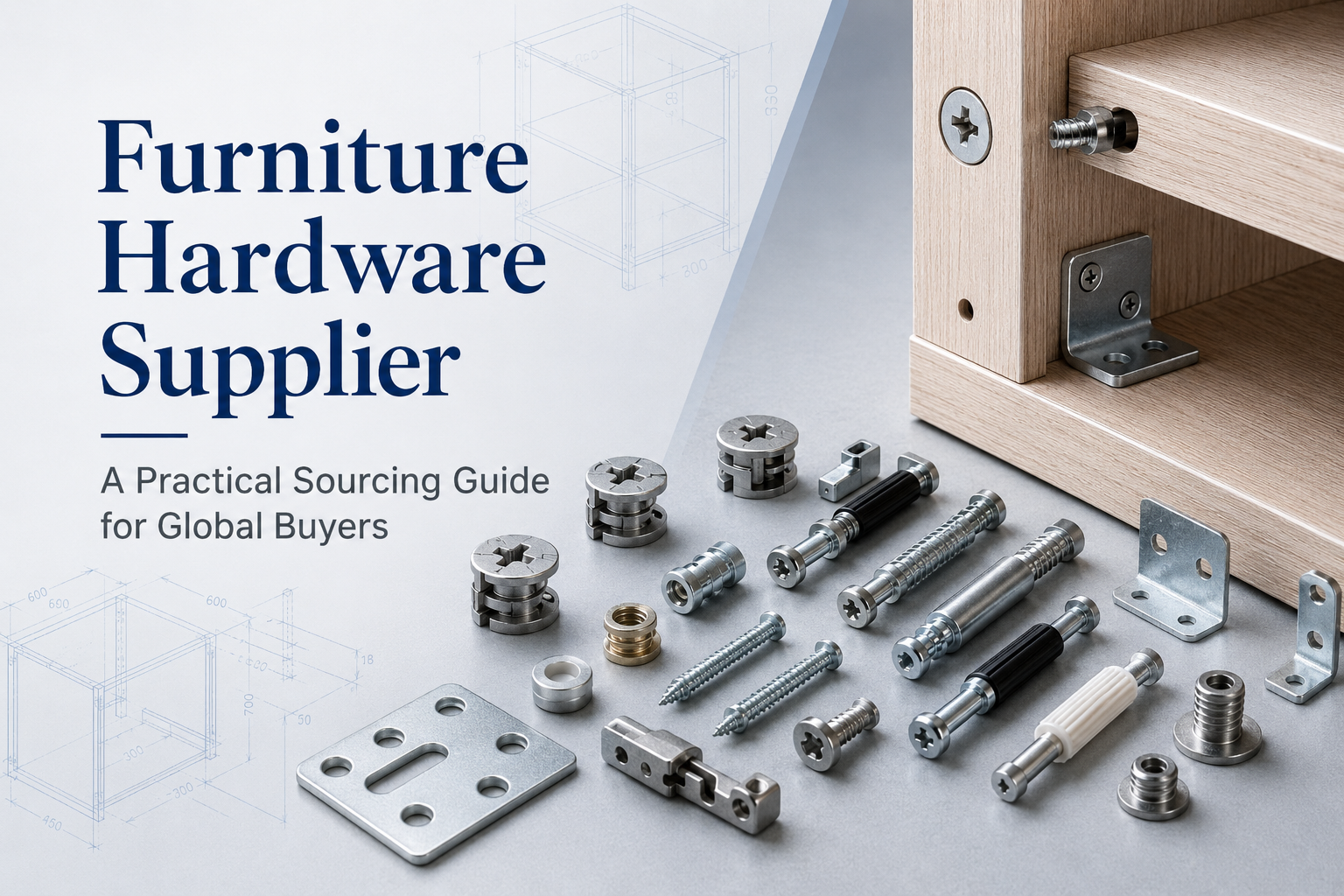
A furniture hardware supplier provides components used for furniture assembly, connection, reinforcement, installation, and packaging. Common products include wood screws, self-tapping screws, cam locks, cabinet bolts, insert nuts, brackets, stamped plates, washers, anchors, and complete furniture hardware kits.
For OEM and wholesale buyers, a reliable supplier should also support product matching, sample confirmation, custom specifications, surface treatment, packaging options, and pre-shipment inspection. Buyers can explore the complete product catalog to understand available furniture hardware solutions.
Why Choosing the Right Furniture Hardware Supplier Matters
Furniture hardware is often invisible after assembly, but it directly affects the final user experience. If the hardware is unstable, furniture may feel loose, difficult to assemble, or unreliable over time.
For B2B buyers, the risk is not only product failure. It also includes:
- Assembly delays
- Higher after-sales cost
- Missing-part complaints
- Poor online reviews
- Inconsistent batch quality
- Packaging and labeling errors
- Difficulty managing multiple suppliers
- Repeated communication with factories
A professional furniture hardware supplier helps buyers avoid these issues by offering matched components, stable quality, and organized supply support.
Common Products from a Furniture Hardware Supplier
Furniture hardware usually includes several product groups. Buyers often need different items packed together as one assembly set.
| Product Category | Common Products | Main Application |
|---|---|---|
| Screws | Wood screws, self-tapping screws, machine screws, confirmat screws | Panel fixing, bracket installation, furniture assembly |
| Furniture connectors | Cam locks, cabinet bolts, joint bolts, connector fittings | Flat-pack furniture, cabinets, wardrobes |
| Nuts | Insert nuts, hex nuts, flange nuts, rivet nuts | Threaded connection and repeat assembly |
| Stamping hardware | L-brackets, corner braces, mounting plates, support plates | Reinforcement and structural support |
| Washers and anchors | Flat washers, expansion anchors, wall plugs | Installation, load distribution, wall mounting |
| Hardware kits | Bagged kits, blister packs, boxed sets | Retail, e-commerce, DIY and furniture assembly |
JHFIX supplies screws, nuts, furniture hardware, stamping hardware, and packaging solutions. Buyers can view the full JHFIX product range to match different furniture assembly needs.
Who Needs a Furniture Hardware Supplier?
Different buyers have different sourcing priorities. A good supplier should understand these differences.
Furniture Manufacturers
Furniture manufacturers need stable quality, accurate specifications, and repeatable supply for production lines. They usually focus on fit, tolerance, material, finish, and delivery time.
Cabinet and Wardrobe Factories
Cabinet and wardrobe factories need connectors, cabinet bolts, shelf supports, screws, and brackets that match board thickness and installation structure.
Hardware Wholesalers
Wholesalers need a wide product range, competitive batch pricing, stable inventory planning, and consistent packaging for repeat customers.
Retail and DIY Hardware Brands
Retail brands need organized hardware kits, blister packs, boxed assortments, labels, barcodes, and clear product presentation.
E-Commerce Sellers
E-commerce sellers usually care about small-package combinations, low complaint rates, good visual packaging, and reliable replacement supply.
Key Factors When Selecting a Furniture Hardware Supplier
A low price may look attractive, but unstable quality or poor packaging can create higher hidden costs. Buyers should evaluate the supplier from several angles.
1. Product Range and Matching Ability
A furniture assembly kit may require screws, cam locks, insert nuts, brackets, washers, and plastic accessories. If these parts come from too many suppliers, matching problems may increase.
A supplier with a wider product range can help buyers coordinate different parts more efficiently.
2. OEM and Customization Support
Furniture hardware is not always standard. Buyers may need custom screw length, special head type, different plating, unique bracket shapes, private-label packaging, or part combinations based on one furniture model.
A reliable furniture hardware supplier should support drawings, samples, specifications, and customized packaging.
3. Quality Control Process
Quality control should cover more than appearance. Buyers should ask whether the supplier checks:
- Material grade
- Thread quality
- Screw length and diameter
- Connector size
- Hole position
- Bracket bending angle
- Surface plating
- Packaging quantity
- Carton condition before shipment
This is especially important for furniture hardware kits because one missing or mismatched component can affect the full assembly process.
4. Packaging Capability
Packaging is a major advantage for hardware suppliers serving retail, e-commerce, and furniture kit customers.
Common packaging options include:
| Packaging Type | Best For | Advantage |
| Bag packaging | Furniture assembly kits and low-cost hardware sets | Flexible and economical |
| Plastic blister packaging | Retail display and DIY products | Clear product visibility |
| Box packaging | Assortment kits and multi-size hardware sets | Organized and easy to store |
| Plastic bucket packaging | Bulk screws and construction use | Large capacity and easy handling |
A supplier with packaging support can help buyers reduce sorting work and improve user experience.
5. Export and Communication Experience
Global buyers need clear communication, stable lead time, export-ready cartons, and accurate order documentation. A supplier with export experience is more likely to understand inspection standards, labeling requirements, and long-term order planning.
You can learn more about JHFIX manufacturing experience and its role as a fastener and furniture hardware supplier for global buyers.
Furniture Hardware Supplier vs. General Hardware Trader
Some buyers choose general traders because they can source many products. But for repeat furniture hardware orders, a specialized supplier often provides better control.
| Comparison Point | Specialized Furniture Hardware Supplier | General Hardware Trader |
| Product matching | Stronger understanding of furniture assembly | May focus only on product sourcing |
| OEM support | Better for drawings, samples, and packaging | Depends on factory partners |
| Quality control | Easier to define inspection points | Often limited to final checking |
| Repeat order stability | Better for long-term supply | May change factories often |
| Packaging support | More suitable for hardware kits | May require extra coordination |
| Best for | Furniture factories, distributors, retail kits | Small mixed purchasing |
For buyers who need long-term cooperation, a specialized furniture hardware supplier is usually more suitable than a general trader.
How to Build a Reliable Furniture Hardware Kit
Many furniture brands do not buy single items. They buy complete hardware kits for one furniture model. A complete kit may include:
- Cam locks
- Cabinet bolts
- Wood screws
- Insert nuts
- Washers
- Plastic caps
- Brackets
- Anchors
- Installation accessories
- Printed labels or instruction references
To reduce errors, buyers should create a clear BOM before production.
| Kit Item | What to Confirm |
| Part name | Clear product name or code |
| Quantity | Quantity per furniture unit |
| Size | Diameter, length, thickness, hole position |
| Material | Steel, stainless steel, zinc alloy, plastic |
| Finish | Zinc plated, nickel plated, black, custom finish |
| Packaging | One bag per set, blister card, box, or custom kit |
| Label | Model number, barcode, customer logo, part code |
| Inspection | Quantity check and sample assembly check |
A clear BOM helps the supplier pack the right components and reduces missing-part complaints.
Material and Finish Options for Furniture Hardware
The right material depends on furniture type, environment, load, and price target.
| Material / Finish | Main Benefit | Suitable Use |
| Carbon steel | Strong and cost-effective | General screws, brackets, connectors |
| Stainless steel | Better corrosion resistance | Premium or humid environments |
| Zinc plating | Good balance of appearance and anti-rust performance | Indoor furniture hardware |
| Nickel plating | Smooth and decorative surface | Visible connectors or premium kits |
| Black coating | Modern appearance | Dark furniture or exposed hardware |
| Plastic accessories | Lightweight and low cost | Caps, anchors, sleeves, packaging parts |
Buyers should confirm the furniture environment before choosing finish. For indoor furniture, zinc plating is commonly used. For humid areas or premium projects, stainless steel or improved coating may be better.
Cost Factors Buyers Should Understand
The price of furniture hardware depends on several factors:
- Material type
- Product size and weight
- Surface treatment
- Order quantity
- Custom tooling
- Packaging method
- Inspection requirements
- Labeling and barcode needs
- Export carton requirements
- Whether parts are standard or customized
A professional furniture hardware supplier should explain these cost factors clearly instead of only giving a low unit price. Clear quotation details help buyers compare suppliers more accurately.
RFQ Checklist for Furniture Hardware Buyers
Before asking for a quotation, prepare the following information:
| RFQ Information | Details to Provide |
| Product type | Screw, nut, connector, bracket, washer, kit |
| Application | Cabinet, wardrobe, shelf, office furniture, DIY kit |
| Size | Diameter, length, board thickness, hole spacing |
| Material | Carbon steel, stainless steel, zinc alloy, plastic |
| Finish | Zinc plated, nickel plated, black, stainless, custom |
| Quantity | Trial order, regular batch, annual forecast |
| Packaging | Bulk, bag, blister, box, bucket, private label |
| Drawing or sample | Photo, drawing, 3D file, or physical sample |
| Market | Retail, wholesale, furniture factory, e-commerce |
| Inspection needs | Dimension check, quantity check, surface check |
This information helps the supplier quote faster and reduce misunderstanding before sample production.
Common Sourcing Mistakes to Avoid
Furniture hardware buyers should avoid these common mistakes:
- Choosing a supplier only by the lowest price
- Not checking whether screws and connectors match the board
- Ignoring packaging accuracy
- Not confirming surface treatment samples
- Using one kit for multiple furniture models without testing
- Not approving samples before bulk production
- Not asking how missing parts are prevented
- Not defining labels, barcodes, or carton marks
- Not checking whether the supplier can support repeat orders
Avoiding these mistakes can reduce after-sales problems and improve customer satisfaction.
Why Work with JHFIX as Your Furniture Hardware Supplier?
JHFIX is suitable for buyers who need both standard hardware and organized hardware kits. Instead of sourcing screws, nuts, connectors, stamping hardware, and packaging from separate suppliers, buyers can coordinate more items through one supplier.
JHFIX can support:
- Screws for furniture assembly
- Cam locks and cabinet connectors
- Nuts and insert nuts
- Stamping hardware and brackets
- Bag, blister, box, and bucket packaging
- OEM and ODM customization
- Sample development and batch production
- Quality inspection before shipment
For common order questions, buyers can also visit the JHFIX FAQ page. To discuss specific project requirements or request a quotation, feel free to contact JHFIX.
FAQ
1. What does a furniture hardware supplier provide?
A furniture hardware supplier provides screws, nuts, cam locks, cabinet bolts, brackets, connectors, washers, anchors, and complete hardware kits for furniture assembly.
2. How do I choose a reliable furniture hardware supplier?
Check product range, OEM ability, quality control, packaging support, export experience, sample process, and repeat order stability. You can also review the supplier's about us page to understand its manufacturing and export capabilities.
3. Can furniture hardware be customized?
Yes. Furniture hardware can be customized by size, material, finish, screw type, connector type, bracket shape, packaging, label, and kit combination.
4. What products are usually included in a furniture hardware kit?
A furniture hardware kit may include screws, cam locks, cabinet bolts, insert nuts, washers, brackets, anchors, plastic caps, and installation accessories.
5. What packaging is suitable for furniture hardware?
Bag packaging is suitable for assembly kits, blister packaging for retail display, box packaging for organized assortments, and bucket packaging for bulk screw supply.
6. Is a furniture hardware supplier different from a manufacturer?
A supplier focuses on sourcing and supplying products, while a manufacturer produces them directly. Some companies, like JHFIX, can support both product supply and manufacturing-related customization.
7. What should I provide when requesting a quotation?
Provide product type, size, material, finish, quantity, application, packaging method, target market, drawings, samples, and inspection requirements. For faster assistance, you can submit your requirements through the contact us page.
8. How can I reduce missing parts in furniture hardware kits?
Use a clear BOM, confirm sample kits, define packaging quantity, add labels, and request final quantity inspection before shipment.
Conclusion
Choosing a furniture hardware supplier is not just about buying small parts. It is about building a stable supply chain for furniture assembly, retail packaging, wholesale distribution, and long-term repeat orders.
A reliable supplier should provide product matching, OEM customization, quality inspection, packaging support, and clear communication. For global buyers, this helps reduce hidden costs, missing-part complaints, and unstable batch quality.
If you are sourcing screws, cam locks, nuts, brackets, stamped parts, or complete furniture hardware kits, JHFIX can help review your requirements, prepare suitable product options, and provide packaging solutions for your market. You can browse the products page, learn more about us, check the FAQ section, or contact us for personalized assistance.