


OEM Screw Kit Manufacturer: What Buyers Should Check Before Ordering Fastener Kits for Wood Box and Cabinet Assembly

A wooden box, cabinet body, drawer frame, or small enclosure may look simple before the screws go in.
Four panels.
A few brackets.
Some holes.
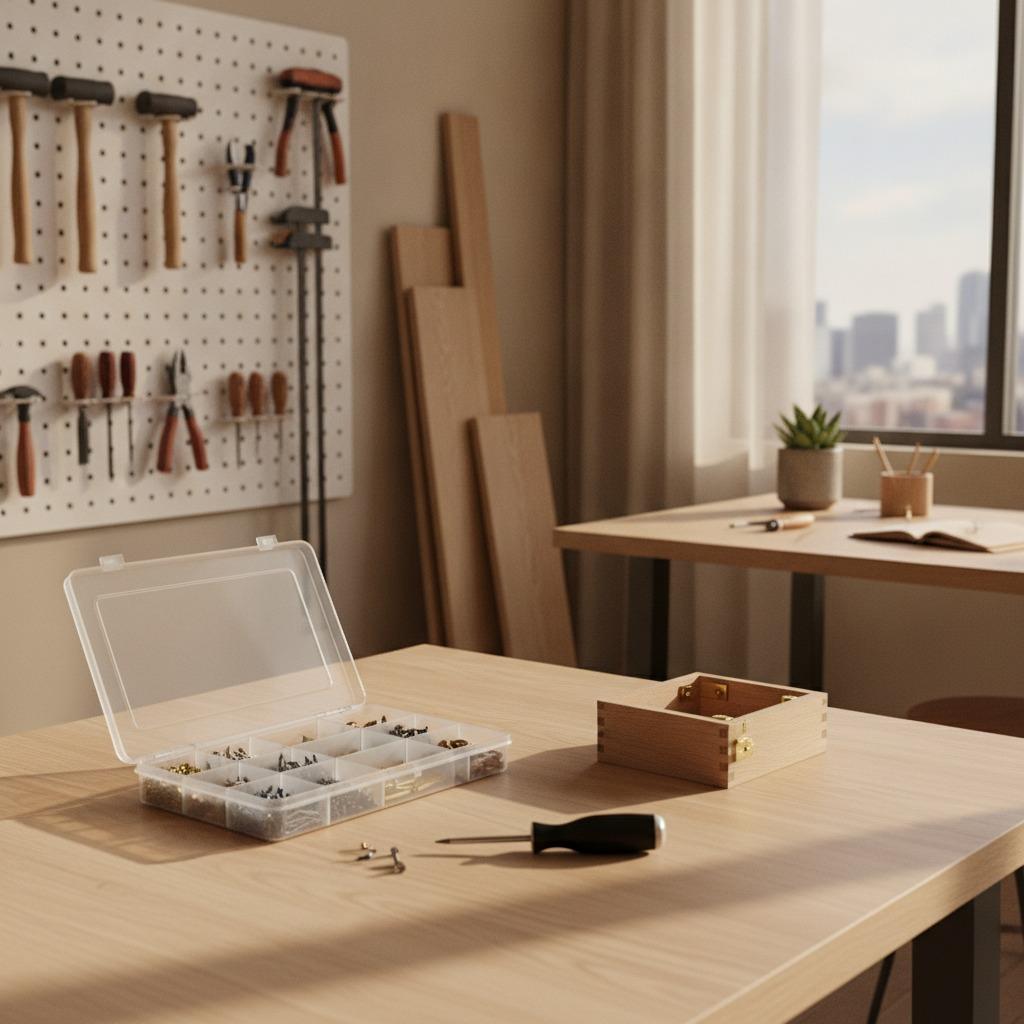
A cordless driver on the bench.
A small pile of fasteners waiting to be sorted.
Then assembly begins, and the “simple” part becomes less simple.
One screw is too long for the panel. One bracket does not sit flat. One fastener head blocks the next part. A self-tapping screw drives well in a test piece but behaves differently in the actual board. Another screw looks almost identical, so an operator installs it in the wrong corner.
This is where an OEM screw kit manufacturer becomes more than a supplier of loose screws.
A good screw kit helps the assembly move in the right order. It puts the right fastener in the right place, with the right count, label, material, finish, and packaging method. For wood box assembly, cabinet components, small furniture, equipment enclosures, appliance parts, or mixed wood-and-metal structures, that control can save more time than buyers first expect.
The best kit is not the one with the most screws.
It is the one that makes assembly predictable.
A screw kit should start with the joint, not the catalog
Many sourcing problems begin with a fastener list that is too thin.
A buyer writes “M4 screw,” “self-tapping screw,” or “stainless steel screw” on the RFQ. The supplier quotes something close. The sample looks acceptable on the table. Then the kit reaches the real product, and small problems appear.
The reason is simple: screws do not work alone.
A screw works through a bracket, into a panel, against a washer, beside another fastener, or inside a prepared hole. It may need to hold a corner plate, fix a handle, attach a hinge, close an enclosure, or secure a fitting that will be removed later.
For a wood-panel product, the supplier should know:
What material is the panel?
How thick is the board?
Is the screw going into solid wood, plywood, MDF, particleboard, or a laminated panel?
Does it pass through metal first?
Is there a pilot hole?
Will it be installed by hand, power driver, pneumatic tool, or automated equipment?
Is the joint visible after assembly?
Will the product be shipped assembled or flat-packed?
These questions decide the screw.
A serious custom screw kit supplier should ask them before recommending fasteners.
What the wooden box example tells buyers
The referenced product is an open-top wooden box or enclosure with wood-grain panels, external metal corner brackets, darker lower fittings, and visible screws installed with common workshop tools. The exact board material, dimensions, screw grade, bracket thickness, load requirement, and service environment are not confirmed from the image alone.
That uncertainty matters.
A screw that works in plywood may not work the same way in particleboard. A fastener that holds well in a thick panel may break through a thinner board. A screw head that looks fine in one bracket may interfere with another bracket shape. A surface finish that is acceptable inside a workshop product may not suit exposed furniture hardware.
A responsible OEM screw kit manufacturer should not guess from a photo.
The better starting point is a technical package: drawing, board sample, bracket drawing, hole position, assembly sequence, expected volume, and packaging target.
Without those details, the supplier can only quote a general screw.
With those details, the supplier can build a kit.
Product example: metric ISO aluminum alloy M6 anodized gold hexagonal head self-tapping screws
One relevant product direction from JHFix is an ex-factory price metric ISO aluminum alloy M6 anodized gold hexagonal head self-tapping screw. The product page title confirms the key searchable direction: metric ISO, aluminum alloy, M6, anodized gold, hexagonal head, and self-tapping screws.
For buyers, this type of screw may be relevant where a project needs:
- metric sizing language
- M6 self-tapping screw direction
- aluminum alloy fastener options
- anodized gold appearance
- hexagonal head installation style
- visible or semi-visible fasteners
- OEM screw kits where color and head style matter
- hardware packs for cabinets, enclosures, equipment, or furniture components
However, the page does not show a complete visible specification table. Before ordering, buyers should confirm material grade, thread form, actual length, head dimensions, drive style, finish process, tolerance, packaging quantity, and intended application.
A product title can start the sourcing discussion.
It cannot finish the technical approval.
Why M6 self-tapping screws need application testing
An M6 self-tapping screw sounds specific, but it still needs to be checked against the real joint.
Self-tapping screws create or form their mating path during installation, depending on the material and screw design. That makes them useful in some assemblies, but also sensitive to material conditions.
In a wood box or cabinet assembly, buyers should check whether the screw is intended for:
wood-based panels,
metal fittings,
plastic parts,
aluminum components,
threaded inserts,
or another compatible substrate.
A self-tapping screw that performs well in one material may not behave well in another. It may strip. It may require too much torque. It may loosen after vibration. It may damage the surface if the installation angle is poor.
For this reason, sample testing should not be skipped.
Install the screw through the actual bracket into the actual panel. Use the same driver and torque condition expected in production. Then inspect the joint, the surface, the bracket seating, and whether the operator can repeat the action without hesitation.
That short test is often more useful than a long email discussion about screw categories.
Aluminum alloy and anodized finish should be confirmed carefully
The product title includes aluminum alloy and anodized gold language.
That is useful because some buyers want fasteners that are lighter, visually distinctive, or matched to a product design. Gold anodized hardware may be relevant when the screw remains visible or when the product uses color-coded fasteners in a kit.
Still, appearance should not be treated as a full specification.
Buyers should confirm:
| Specification Point | Why It Matters |
|---|---|
| Base material | Aluminum alloy behavior differs from steel, stainless steel, or iron |
| Surface finish | Anodized gold appearance should match the approved sample |
| Thread form | Self-tapping performance depends on thread geometry |
| Head style | Hexagonal head affects tool choice and installation access |
| Size | M6 must match the receiving material and hole design |
| Length | Must suit bracket thickness and panel depth |
| Surface durability | Visible screws should resist scratching during packing and installation |
| Application fit | Not every self-tapping screw suits every substrate |
| Packaging protection | Anodized color can be damaged by rough mixed packing |
A gold-colored screw may look good in a product photo. It still needs to survive handling, packaging, driving, and repeat production.
For visible hardware, finish consistency is not decoration only.
It is part of the product experience.
Hexagonal head screws change the assembly process
A hexagonal head screw is not used the same way as a Phillips, pan head, countersunk, socket head, or flat head screw.
The head style changes tool access.
That matters in wood box and cabinet assembly because corners are often tight. External brackets may leave limited room around the fastener. The operator may need a wrench, socket, hex driver, or other tool depending on the exact head design.
A hexagonal head can be practical when a stronger tool grip is needed or when the screw remains accessible after assembly. But it may not be suitable if the fastener needs to sit flush, remain hidden, or fit inside a narrow recess.
Before approving a hexagonal head self-tapping screw, buyers should ask:
Can the tool reach the screw during assembly?
Will the head interfere with the bracket or panel edge?
Is the screw visible after assembly?
Is the head style acceptable for the product appearance?
Can the assembly station use the required driver consistently?
Will the tool be included for end-user assembly if needed?
A fastener can be mechanically correct and still slow production if the tool access is poor.
When a screw kit needs more than one fastener type
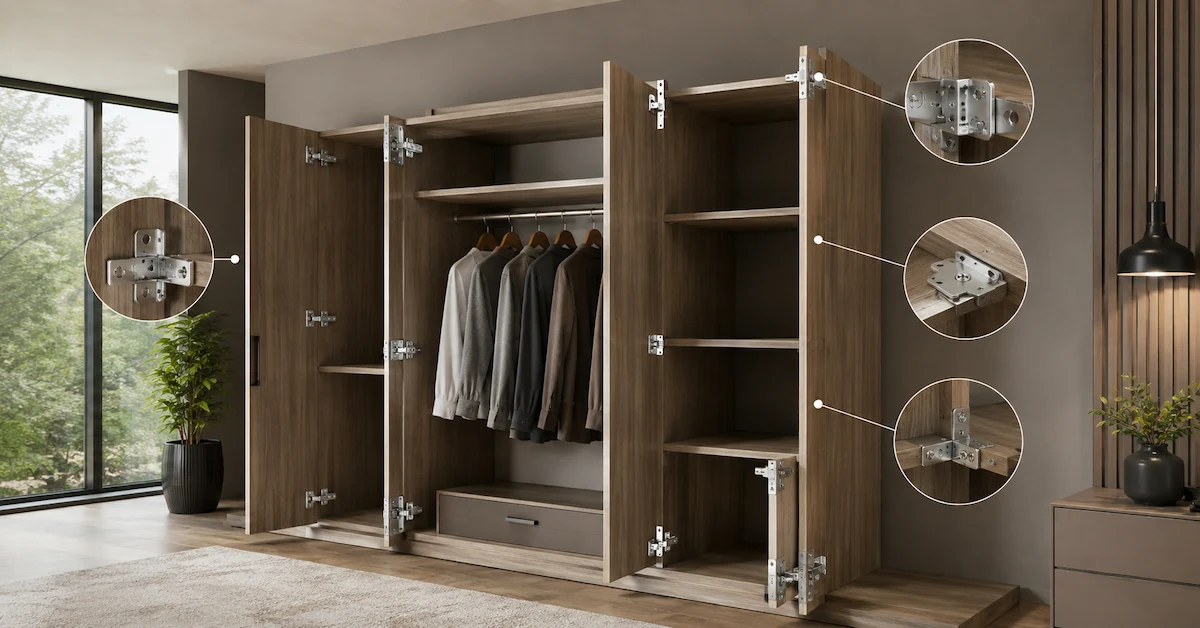
A wooden box or cabinet assembly often uses several fastener types.
One screw may fix the corner bracket. Another may attach a lower fitting. Another may hold a small cover, handle, hinge, or internal part. A separate machine screw may be needed if the mating part has threads or uses a nut. A micro screw may be used where space is limited.
This is where kit design matters.
A practical OEM screw kit may include:
- machine screws
- self-tapping screws
- wood-compatible screws
- micro screws
- precision screws
- washers
- nuts
- inserts
- corner bracket screws
- visible finish screws
- spare parts
- labels
These parts should not be mixed casually.
If two screws look similar but have different functions, they should be separated. If one screw has a gold anodized finish for visible use, it should not be thrown into a bag where it can scratch against steel hardware. If a hexagonal head screw requires a tool, that tool requirement should be clear in the assembly process.
A mixed screw kit should make work easier, not create a sorting job.
How Jiangmen Jinhe Hardware fits OEM screw kit sourcing
Jiangmen Jinhe Hardware Co., Ltd. works with machine screws, self-tapping screws, micro screws, precision screws, standard fasteners, and non-standard customization. Its material options include stainless steel, iron, and aluminum, and the company states that it works with standards such as GB, DIN, ANSI, BS, JIS, and ISO.
For buyers developing wood box, cabinet, equipment enclosure, furniture, appliance, or automation-related assemblies, that range is useful because one kit may need different screw families.
A project may need standard screws in one position and a non-standard part in another. It may need a visible anodized screw for one external bracket and a hidden self-tapping screw for an internal fitting. It may also need packaging that separates the two clearly.
The supplier’s value is not only production.
It is coordination.
A useful OEM screw kit manufacturer should help with drawing review, sample matching, material options, finish requirements, packaging design, inspection before delivery, and repeat-order control.
Packaging should follow the assembly sequence
Screw kit packaging is often treated as a late step.
That is a mistake.
A kit can contain the right screws and still fail in use if the packaging is unclear. A worker may spend time searching. A customer may install the wrong fastener. A packer may miss a small component. A replacement kit may be hard to identify later.
Good packaging should answer simple questions:
Which screws go with the corner brackets?
Which screws are for lower fittings?
Which screws are spare?
Which fasteners are visible and need surface protection?
Which part is M6?
Which one is self-tapping?
Which one needs a hex tool?
Does the label match the instruction sheet?
Packaging options may include separated bags, step labels, compartment boxes, blister packs, small cartons, or station-based packs. For industrial use, plain packaging can work if labeling and count control are strong. For retail or customer assembly, clearer visual separation may be needed.
The goal is not fancy packaging.
The goal is fewer mistakes.
Documentation should support repeat production
B2B screw kits need more than samples.
They need records.
A buyer should request the information required for repeat production and incoming inspection. That may include drawings, material confirmation, finish description, dimensional inspection, packing list, label format, sample approval record, batch identification, and substitution control.
The exact documents depend on the application.
A workshop storage box may not need the same paperwork as an appliance enclosure or medical device component. But even simple furniture and wood-panel assemblies benefit from clear part definitions.
Vague words such as “high quality,” “standard screw,” or “gold color” are not enough for a repeat program.
The approved sample should become the reference.
The documents should help keep future shipments aligned with that reference.
Common sourcing mistakes
One common mistake is choosing screws from a product photo.
A photo can show color and general head shape. It cannot confirm thread geometry, material grade, finish thickness, tolerance, strength, or installation behavior.
Another mistake is specifying only size. “M6” is not a full specification. Material, length, head style, thread, point, finish, and packaging still matter.
A third mistake is using the same screw for every joint. A bracket-to-panel joint, threaded metal part, visible exterior screw, and small internal fitting may each need a different fastener.
Buyers also sometimes ignore finish protection. Anodized or color-finished screws can be scratched if packed carelessly.
The final mistake is approving a kit without a real assembly test. A kit may look correct in a bag and still be awkward on the bench.
Questions buyers should ask before placing an order
Before choosing an OEM screw kit manufacturer, buyers should ask:
What panel material is used?
What is the panel thickness?
Which screws pass through metal brackets?
Which screws go directly into wood-based panels?
Are machine screws, self-tapping screws, micro screws, or precision screws required?
Is an M6 self-tapping screw suitable for this joint?
Is aluminum alloy required, or would another material be better?
Is anodized gold finish needed for appearance or identification?
What head style is required?
Can the tool access the hexagonal head during assembly?
How will visible screws be protected in packaging?
How will similar screws be separated?
What documents will come with the shipment?
Can the same kit be repeated in future orders?
These questions help move the discussion away from generic screw pricing and toward actual assembly performance.
Frequently Asked Questions
What does an OEM screw kit manufacturer provide?
An OEM screw kit manufacturer may provide machine screws, self-tapping screws, micro screws, precision screws, washers, nuts, inserts, labels, and customized packaging for a defined assembly.
Why use a screw kit instead of buying screws separately?
A screw kit reduces sorting work, helps prevent missing parts, supports line-side assembly, and makes repeat production easier to control.
What product information is visible on the JHFix link?
The product page supports the product direction of factory-price metric ISO aluminum alloy M6 anodized gold hexagonal head self-tapping screws. The page does not show a complete visible specification table, so buyers should confirm exact technical details before ordering.
Are anodized gold screws only decorative?
Not necessarily. They may be chosen for appearance, identification, or product design, but buyers still need to confirm material, finish durability, and application suitability.
Should buyers test screws before mass production?
Yes. Buyers should test screws with the actual panel material, bracket, tool, hole condition, and assembly sequence before approving bulk orders.
Why does packaging matter for screw kits?
Packaging helps prevent mixed fasteners, wrong installation, missing parts, scratched finishes, and assembly delays.
Final takeaway
A good screw kit makes assembly quieter.
The right screw reaches the right corner. The bracket sits flat. The panel does not split. The head is accessible. The finish is protected. The label is clear. The next shipment matches the approved sample.
That is what buyers should expect from a reliable OEM screw kit manufacturer.
For OEM screw kits, custom screw kits, industrial screw kits, machine screws, self-tapping screws, micro screws, precision screws, metric ISO screws, M6 self-tapping screws, aluminum alloy screws, anodized gold screws, and hexagonal head fasteners, Jiangmen Jinhe Hardware Co., Ltd. can discuss drawings, samples, material options, finish requirements, packaging, inspection, and repeat supply.
For direct inquiries:
Tel/WeChat: +86 13729150102
WhatsApp: +86 13322893939
Email: sharon@hkhomeideas.com
Start with the panel material, bracket design, hole size, screw list, head type, drive tool, finish requirement, packaging method, and expected order quantity.
Once those details are clear, the right screw kit becomes much easier to source, assemble, and repeat.