
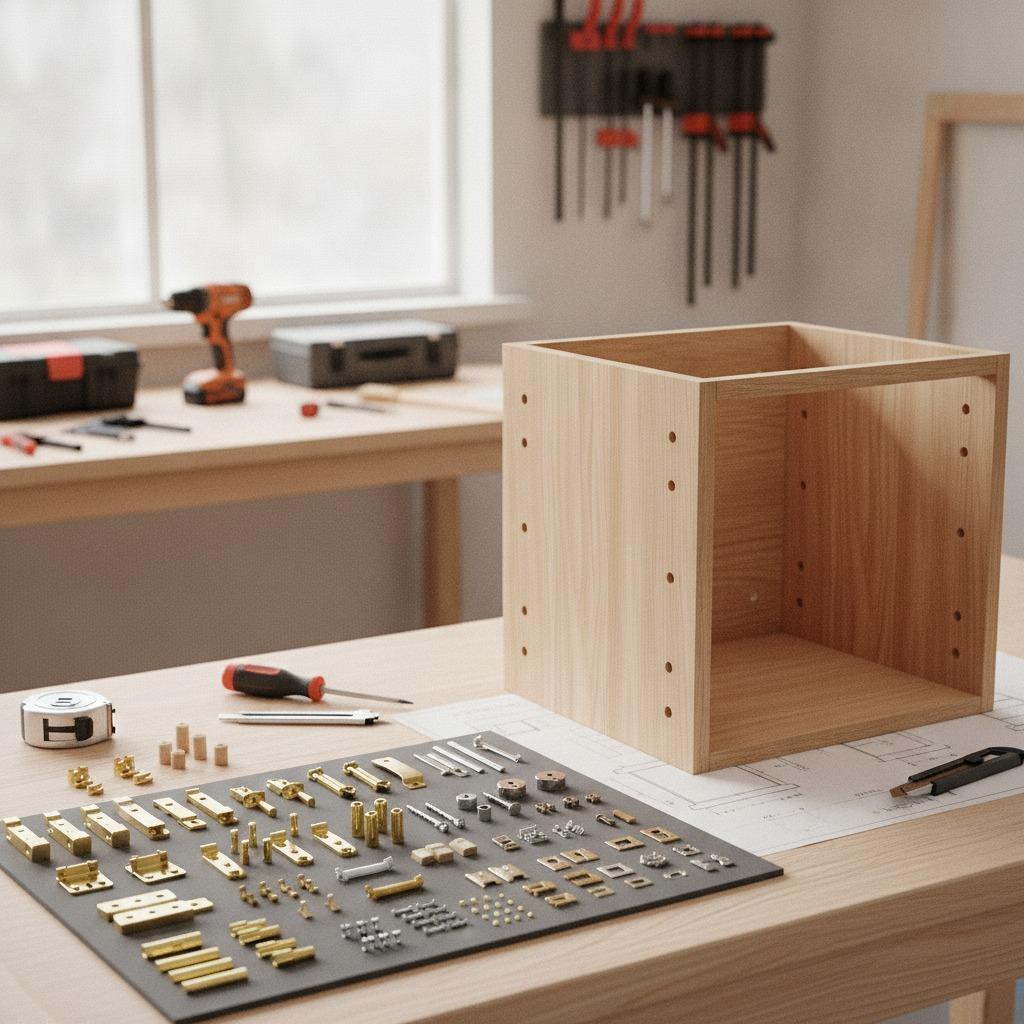
Before You Order: 7 Checks for a Furniture Connector Manufacturer
A furniture connector usually costs very little compared with a cabinet, wardrobe, or shelving system. That is exactly why it is easy to underestimate.
Then production starts.
A screw does not enter the insert smoothly. Two panels pull together at a slight angle. Workers need an extra tool at one station. A bag marked for one cabinet model contains fittings for another. None of these problems looks dramatic by itself, but repeat the same issue across several hundred furniture sets and the cost becomes difficult to ignore.
Choosing a furniture connector manufacturer is therefore not just a purchasing decision. It affects drilling, assembly speed, packing accuracy, rework, and even the number of complaints received after delivery.
Before approving a supplier, it is worth looking beyond the quotation.
 1. Be clear about what the joint needs to do
Buyers sometimes begin by sending a supplier a connector photo and asking for the same item. That can work, but it leaves too much room for interpretation.
The better starting point is the joint.
Is the hardware joining two cabinet side panels? Is it holding a shelf that will carry weight? Will the customer assemble the furniture at home? Does the joint need to come apart later without damaging the board?
A connector used for factory assembly has a different job from one placed in a flat-pack furniture kit. The first may be installed with controlled equipment by trained workers. The second has to make sense to someone working on a living-room floor with a small hex key and an instruction sheet.
Board material matters as well. MDF, plywood, particleboard, and solid wood do not react to threads in exactly the same way. A fitting that feels secure in plywood may loosen more easily in a lower-density panel.
A useful furniture connectors supplier will normally ask about the application before recommending a part. When the only question is “How many pieces do you need?”, the discussion has probably started too late in the process.
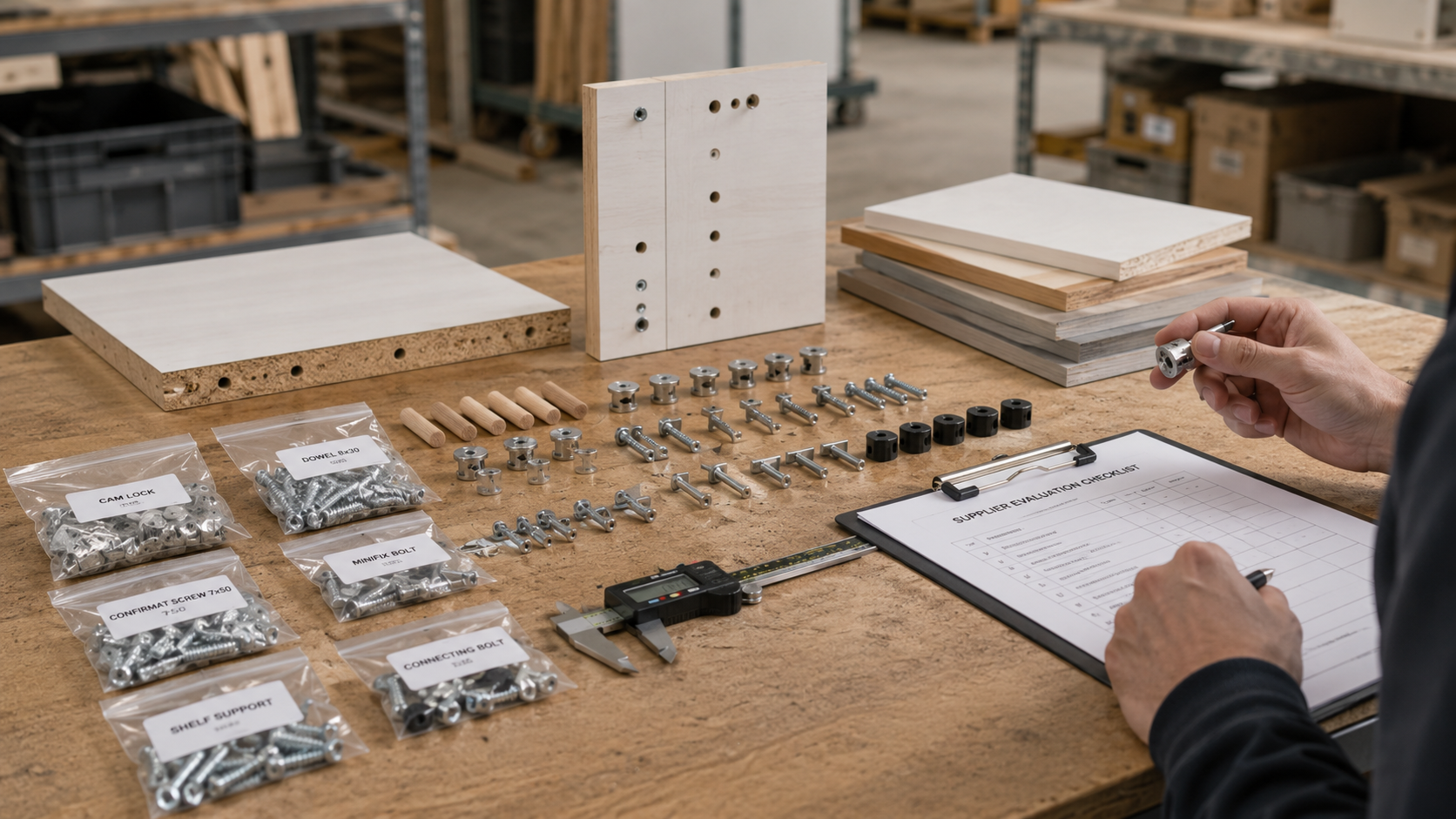
2. Send the panel drawing, not only the connector drawing
A technically correct connector can still be wrong for the furniture around it.
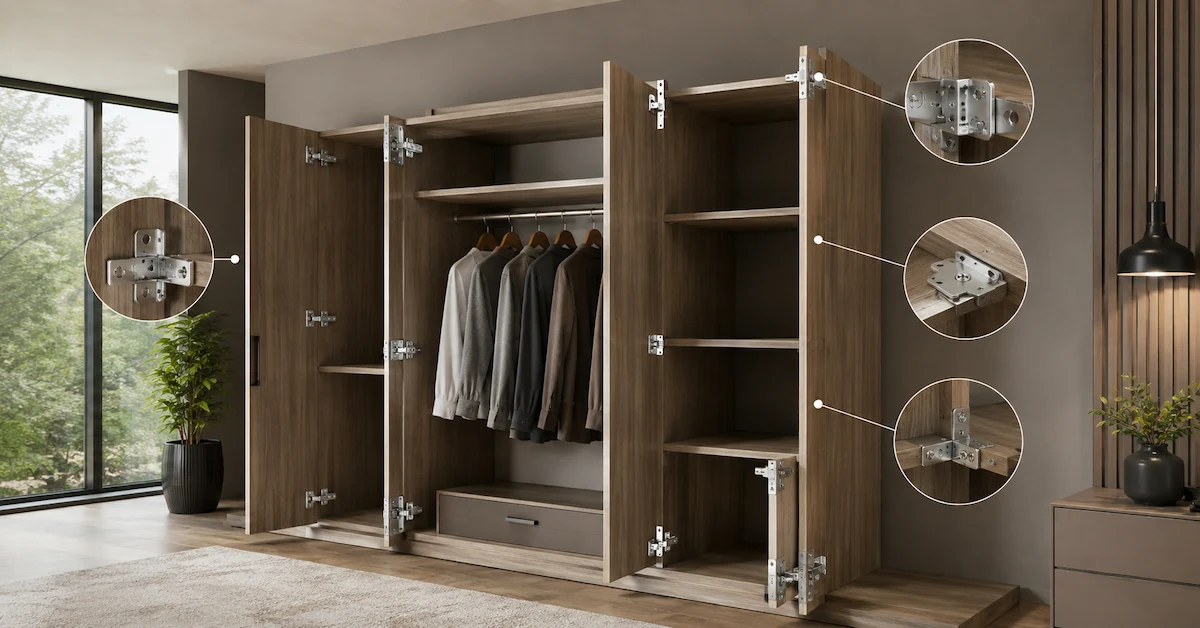
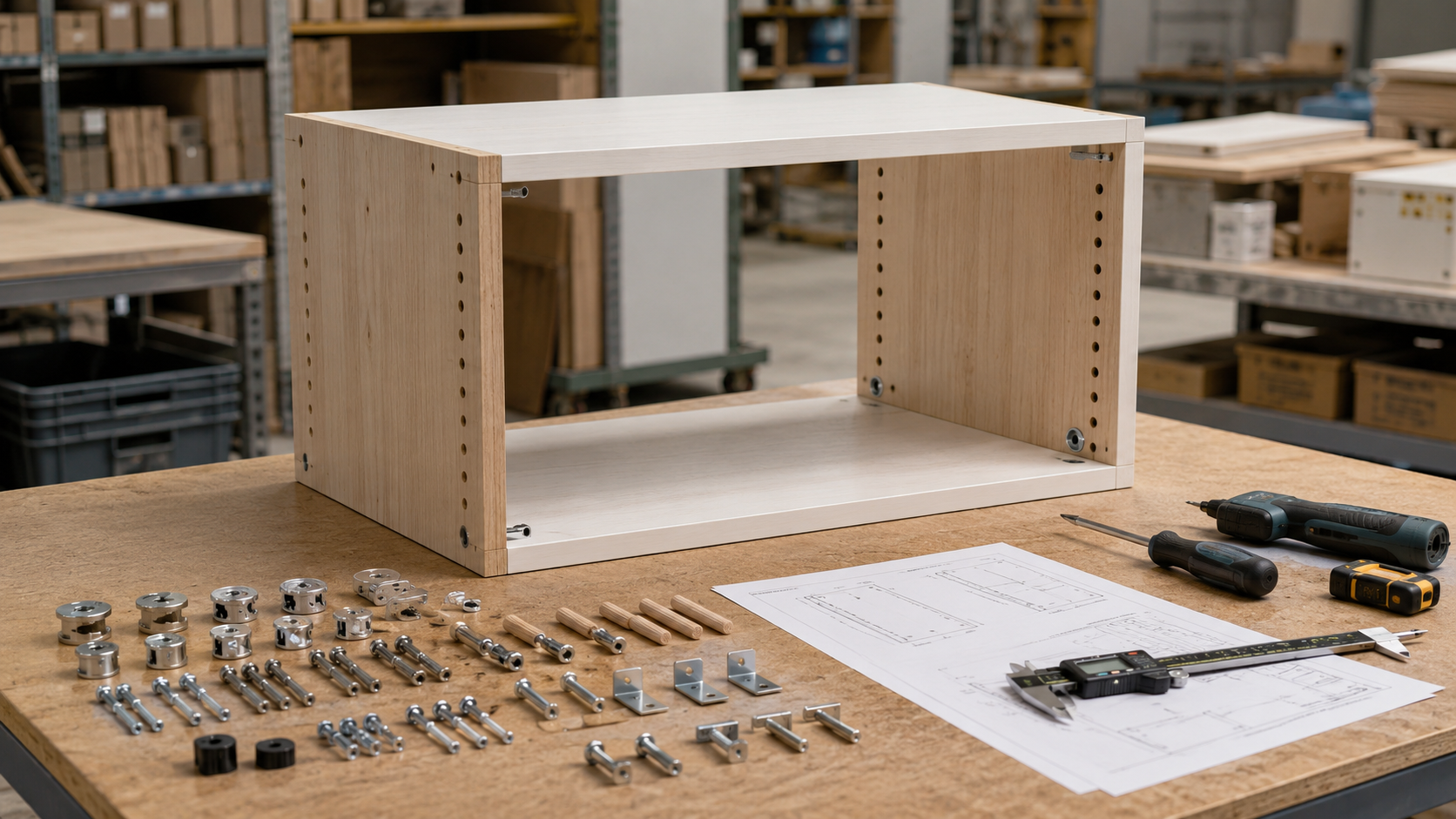
Consider a typical cabinet carcass. The side panels have pre-drilled holes. The base panel must sit square. Hinges, drawer runners, and shelf supports may share the same working area. A few millimeters of extra head height can interfere with another fitting, even though the connector itself matches its drawing.
This is why a cabinet connector manufacturer should see more than the metal component.
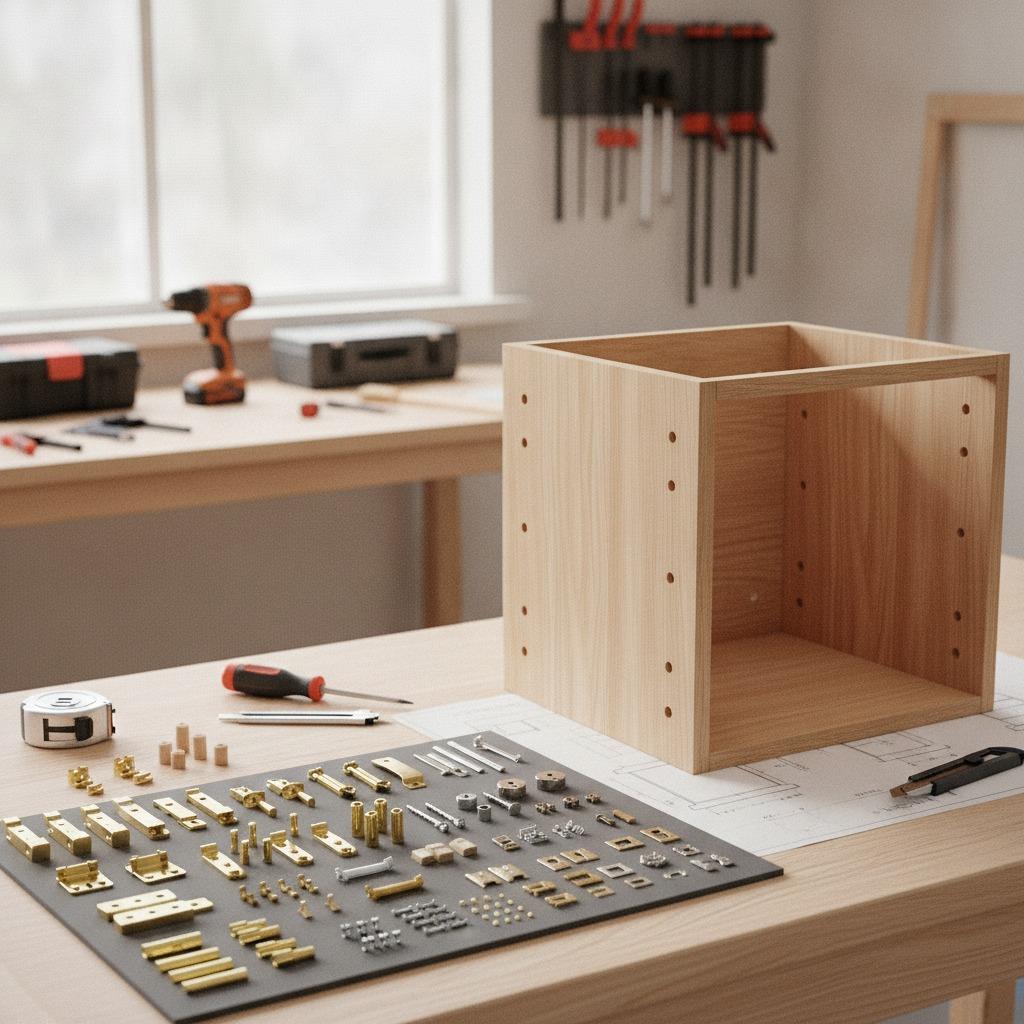
Useful reference information includes the panel thickness, hole diameter, drilling depth, edge distance, installation direction, and the part that mates with the connector. An assembly sketch is often more useful than several product photographs.
There is another benefit. When suppliers receive the full layout, experienced engineers may notice an issue that the purchasing team has missed. Perhaps the screw is slightly too long. Perhaps the hole depth leaves no allowance for board variation. Perhaps the assembly tool cannot approach the fitting at the intended angle.
Those comments are valuable. They show that the supplier is reviewing the application rather than simply copying a sample.
3. Test the fitting in the board you actually use
A sample should not be approved because it looks clean, shiny, and close to the requested dimensions.
Install it.
Use the same board material, drilling method, and tool planned for production. Ask an operator to assemble several joints instead of testing a single piece by hand. The first installation may feel fine; the fifth or tenth often tells you more.
Pay attention to small details:
- Does the thread start easily?
- Is the required torque consistent?
- Does the panel pull into position without shifting?
- Is the connector head flush where it should be?
- Can the joint be tightened without damaging the finish?
- Does repeated assembly weaken the board?
These checks are especially important for wood furniture connectors because performance depends on both the metal part and the panel structure.
Procurement teams sometimes skip application testing when the component follows a familiar standard. That saves a day at the beginning and can create weeks of argument later. Standards are useful, but they do not reproduce the exact conditions on your line.
4. Ask how the factory controls the second batch
Most suppliers can produce a convincing first sample. The harder question is whether the next 50,000 pieces will behave the same way.
For furniture production, dimensional consistency matters more than visual perfection. A small variation in thread diameter, length, recess depth, or head shape can alter how quickly the fitting is installed. Operators notice this immediately, even when an inspection report still shows acceptable results.
Ask the manufacturer which dimensions are considered critical. Find out how they are measured, how often tools are checked, and what happens when readings begin to move toward the tolerance limit.
It is also reasonable to request inspection records for the first bulk order. The report does not need to be elaborate. It should, however, match the drawing and identify the features that actually affect assembly.
Jiangmen Jinhe Hardware Co., Ltd. produces machine screws, self-tapping screws, micro screws, precision screws, and non-standard parts. For a buyer sourcing several related components, this range can be useful. The important point is still repeatability: every component in the set needs to remain stable from one production run to the next.
5. Notice how drawing changes are handled
Furniture designs rarely stay untouched from quotation to final production.
A panel may become thicker. The designer may move a hole to avoid a hinge plate. Packaging may change from bulk supply to individual hardware bags. Sometimes the revision is tiny. Tiny revisions are also the easiest ones to miss.
Before placing an order, make one controlled change and watch how the supplier handles it.
Does the sales contact confirm the new revision number? Is the old drawing removed from the production record? Does the quotation reflect the change? Can the engineer explain whether it affects tooling, cost, or lead time?
The speed of the reply matters, although clarity matters more. A quick “no problem” is not the same as a technical confirmation.
A dependable furniture connector manufacturer should be able to separate assumptions from approved information. When drawings change, there should be one clear version in use—not three files circulating through different chat groups.
6. Open the packaging and imagine it on your line
Packaging is often discussed at the end of the project. For furniture hardware, it belongs much earlier.
Suppose the total quantity in a carton is correct, but two screw lengths are mixed. Someone now has to sort them. Suppose each cabinet requires six parts and the bag regularly contains five. The connector may be perfect, yet the customer still receives an incomplete product.
Ask how parts will be counted, separated, labeled, and protected.
Bulk cartons may suit a factory assembly line. Flat-pack furniture fittings often need small bags arranged by model or assembly step. Retail hardware may require blister packaging, printed cards, barcodes, or spare parts.
Do not assume “packed in bags” is a complete specification. Confirm the number of parts per bag, bag thickness, label wording, carton quantity, and whether mixed kits are checked by weight, counting equipment, or manual inspection.
A slightly more expensive packing method can remove a surprising amount of labor later.
7. Compare the cost of disruption, not only the piece price
Connector quotations are easy to compare because the numbers are small and clear. The hidden costs are less tidy.
One supplier may be cheaper by a fraction per piece but require more incoming inspection. Another may have a higher unit price but deliver counted kits that go directly to packing. A third may quote well but struggle whenever the order contains several sizes or staged delivery dates.
For each supplier, ask what happens after the parts arrive.
Will your team need to sort them? Are inspection documents provided? Can replacement parts be shipped quickly? Does the supplier support customized quantities for different furniture models? Can several SKUs be consolidated into one shipment?
International buyers may also need freight coordination, warehousing, or scheduled releases. Jinhe provides support for domestic logistics, international forwarding, warehousing, and related supply-chain arrangements. Whether those services are useful depends on the buyer’s own inventory system, but they should be included in the comparison when delivery coordination is complex.
The lowest price on a spreadsheet is not always the lowest cost at the end of the production run.
Warning signs that deserve a second look
Some supplier problems appear early.
Be cautious when the factory quotes a customized part without requesting a drawing. The same applies when material descriptions remain vague, tolerance questions receive no clear answer, or sample packaging differs from the confirmed plan.
Another warning sign is inconsistency between departments. The salesperson may promise one lead time while production gives another. The drawing may show one finish while the quotation names a different one. These details are easy to dismiss during a busy project, but they often return as larger problems.
There is no need to reject a supplier over every small mistake. What matters is how the mistake is corrected and whether the correction becomes part of the controlled record.
 Questions to settle before the first PO
Before releasing the order, confirm the approved drawing, material, finish, critical tolerances, packaging method, label information, sample status, production lead time, and inspection requirements.
Also decide how nonconforming parts will be handled. Will the supplier replace them, rework them, or issue a credit? Who pays for urgent freight if the problem stops production? It is easier to agree on this before anything goes wrong.
For a new product, a small pilot order is often more useful than another round of discussion. It tests the actual chain: drawing review, production, inspection, packing, shipping, and assembly.
A good sample proves that a part can be made. A pilot order begins to show whether the supplier can support the project.
Frequently Asked Questions
Is a standard furniture connector safer than a customized one?
Not automatically. Standard parts are usually easier to replace and may require less development time. A customized connector can be the better option when the furniture structure, appearance, or assembly sequence has unusual requirements. The decision should come from the application, not from a preference for standard or custom parts.
How many samples should be tested?
Testing one or two pieces is rarely enough. Use several samples from different positions in the sample batch and install them under normal working conditions. Where possible, let regular assembly operators perform the test rather than relying only on the engineering team.
What should be included in a furniture hardware kit?
The contents depend on the product, but every kit should have a controlled parts list, clear quantities, readable identification, and packaging strong enough for transport. Spare parts may be added for components that are easily lost during home assembly.
Should buyers inspect every shipment?
The inspection level depends on supplier history and product risk. New parts and early orders normally deserve closer checks. Once performance becomes stable, buyers may use sampling inspection while continuing to monitor important dimensions and assembly results.
The right supplier makes the connector feel uneventful
Good hardware is rarely noticed during assembly. It fits, tightens, aligns the panels, and moves to the next station without creating a discussion.
That uneventful result takes work behind the scenes: correct drawings, stable tooling, sensible tolerances, clear packaging, and communication that does not collapse when a detail changes.
When evaluating a furniture connector manufacturer, look at what happens around the part as carefully as the part itself. The supplier should understand the joint, test the application, control repeat production, and deliver the hardware in a form your team can use.
For cabinet connectors, flat-pack hardware kits, precision screws, or customized fastening parts, buyers can send Jiangmen Jinhe Hardware Co., Ltd. their drawings, panel details, expected quantities, and packing requirements for review. The most useful conversation begins with the furniture and how it is assembled. The connector comes next