

Imperial hex nuts: How buyers can choose the right fasteners without creating inventory problems.
Imperial hex nuts may seem simple on the shelf, but choosing the wrong style, finish, or matching parts can create procurement problems. For engineers, purchasing managers, and maintenance teams, decisions are rarely just a matter of "which nut is right." They typically need to consider compatibility, corrosion resistance, assembly speed, and whether the connection will remain secure after vibration or repeated use. This is especially important in mixed hardware projects where imperial hex nuts must be used with components such as bolts, washers, and locking mechanisms.
What role do these nuts play in actual assembly?
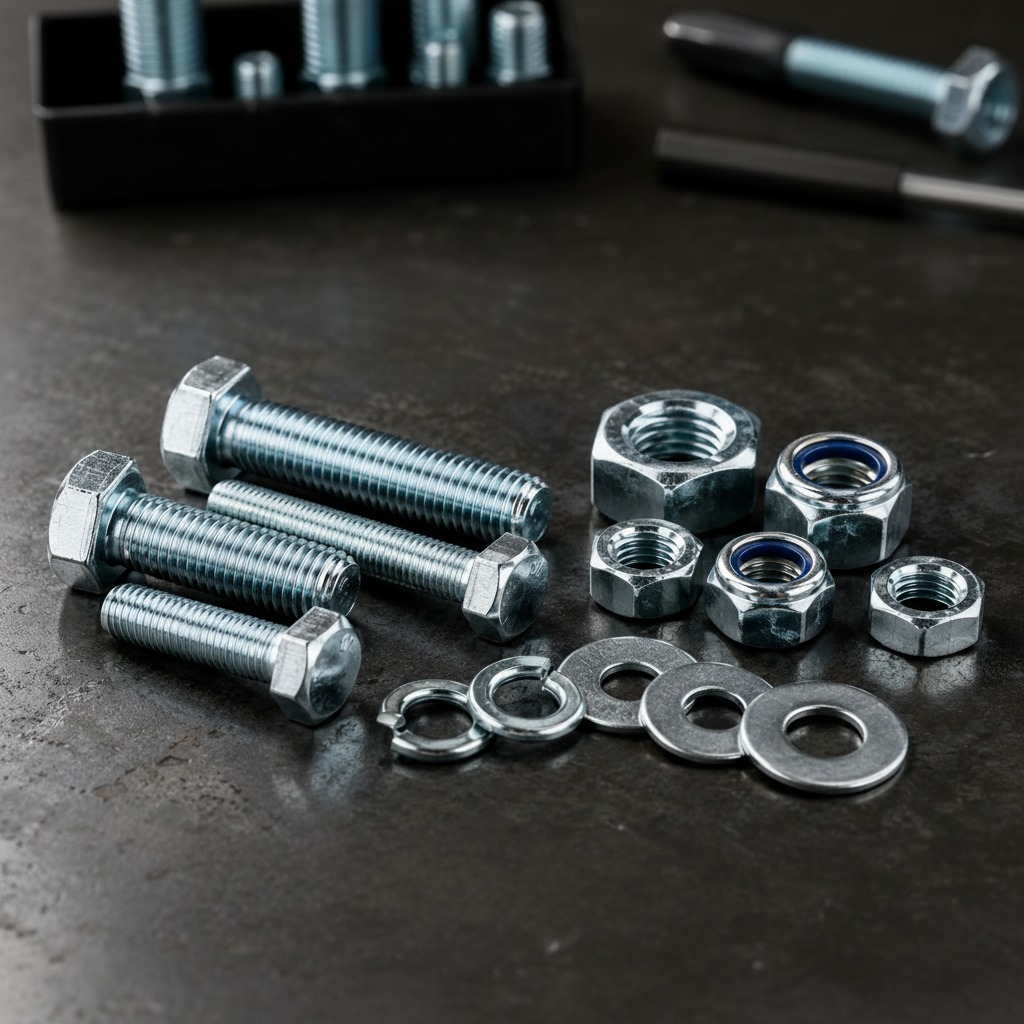
A hex nut is a clamping component for bolts or screws. Essentially, it helps to tighten two parts and allow them to bear loads. This sounds simple, but the details are crucial. Standard nuts, thin nuts, heavy-duty hex nuts, or lock nuts can perform differently in real-world applications. The hardware shown in the product data also includes flat washers and spring washers, indicating that the kit is designed for general-purpose fastening and some vibration resistance, rather than being limited to a specific application.
This is crucial for buyers because nut selection is not done in isolation. Connector design, operating environment, and tool accessibility all influence the final choice. For example, a maintenance kit for equipment may require a wider variety of nuts than a controlled production bill of materials (BOM) can provide.
Quick Shopping Guide
First, match the stitches.
The first rule, though seemingly insignificant, is also the most important: the nut must match the bolt's thread standard. If you order imperial hexagonal nuts, do not assume that metric nuts will work just because they look similar in size. This mistake is common in mixed warehouses and cross-border e-commerce inventory.
Choose materials and surface treatment processes suitable for the environment.
Common hexagonal nut materials include stainless steel, carbon steel, and galvanized steel. Stainless steel is typically used in applications requiring high corrosion resistance, while carbon steel is a practical choice for general-purpose fasteners. Galvanized nuts are widely used due to their bright, silvery appearance and some surface protection. Product information may describe a bright coating similar to galvanizing or hot-dip galvanizing, but it doesn't specify the exact base material and coating material; therefore, it's recommended to confirm these details before purchasing.
Choose the appropriate nut shape based on the load and installation method.
Heavy-duty hex nuts should be used when a stronger load-bearing surface is required; thin hex nuts can be used when space is limited or the connection design requires a low profile. This sounds simple, but field technicians often just grab whatever's handy. Purchasing personnel should avoid this habit and select the appropriate nut based on the application scenario, not convenience.
What are the components of a set of combination fasteners?
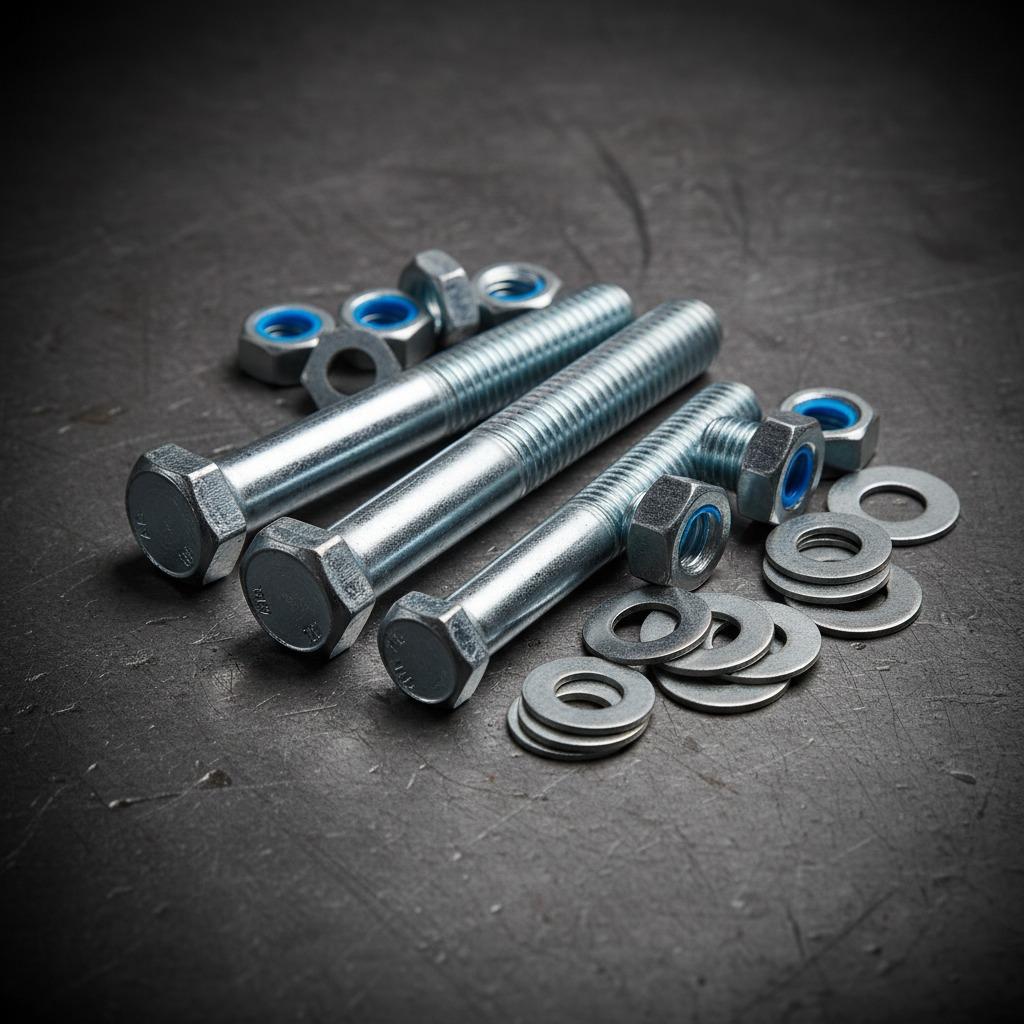
The product range offered includes hex bolts, hex nuts, flat washers, and spring washers, some of which appear to have nylon locking inserts. This accessory combination is highly useful for maintenance teams as it reduces the need to search for parts. It also facilitates the quick assembly of brackets, frames, housings, clamps, and general equipment servicing.
Here's a small but important point: While mixed kits are convenient, they can lead to confusion in specification control if your team doesn't carefully label dimensions. Mixed lengths and mixed nut types only work when the shelving system is clear and organized, and the purchasing team knows the items in stock.
How does Jiangmen Jinhe Hardware align with buyers' workflows?
Jiangmen Jinhe Hardware Co., Ltd., located in Jiangmen City, Guangdong Province, primarily supplies fasteners and standard parts, focusing its manufacturing and customization business on serving industrial users. Company information indicates that its products include machine screws, self-tapping screws, miniature screws, and precision screws, conforming to standards such as GB, DIN, ANSI, BS, JIS, and ISO. While the product range is broader than the types of nuts described herein, this demonstrates that the company is a fastener supplier serving industries such as electronics, furniture, building materials, medical devices, and automation.
This supplier profile is extremely useful for the procurement team, as fastener projects rarely remain well-organized. Some departments require standard hardware, others need non-standard models, and still others want the relevant documentation as soon as possible. The company places particular emphasis on pre-delivery inspection and timely after-sales support—operational details that buyers typically focus on after the initial shipment, rather than before.
Common mistakes when ordering imperial hex nuts
The most common mistake is assuming that hex nuts in the same size series perform the same way. This is not the case. Surface finish, shape, locking mechanism, and material all affect their performance. Another common problem is over-purchasing plated general-purpose nuts in corrosive environments, only to find that their performance degrades faster than expected. On the other hand, some teams specify stainless steel for all applications, thus increasing costs when it is not actually necessary.
The second mistake is neglecting the proper matching of washers. Flat washers can distribute loads; open-end lock washers may help alleviate pressure at certain vibration-prone connections; nylon insert nuts can increase resistance to loosening. However, none of these are universal solutions, and in some components, incorrect matching will only increase structural complexity.
Practical Buying Advice
If you stock imperial hex nuts for maintenance or resale, categorize them by size range, finish, and end use. Heavy-duty hex nuts should be stored separately from standard nuts. Stainless steel hex nuts should be stored separately from galvanized hex nuts. If you carry mixed sets, clearly label them and keep a fastener list along with your inventory records. This will save time later and avoid the embarrassment of field technicians opening the wrong boxes during repairs.
For OEM or contract manufacturing, always request the exact thread standard, material grade, coating specifications, and inspection documents before approving shipment. Even if the supplier seems highly capable, these details can prevent fasteners from becoming a potential source of production line failure.
Do I need a suitable combination of imperial hardware?
If you are compiling maintenance kits, equipment bills of materials, or wholesale fastener product portfolios, start with the connection requirements and work backward to determine the nut type. This simple method can avoid most ordering errors. For mixed fastener solutions and custom packaging, Jiangmen Jinhe Hardware Co., Ltd. can provide practical consulting services on standard and non-standard fasteners.
Contact information: +86 13729150102 | WhatsApp: +8613322893939 | sharon@hkhomeideas.com