
What Should a Kitchen Furniture Hardware Manufacturer Actually Do?
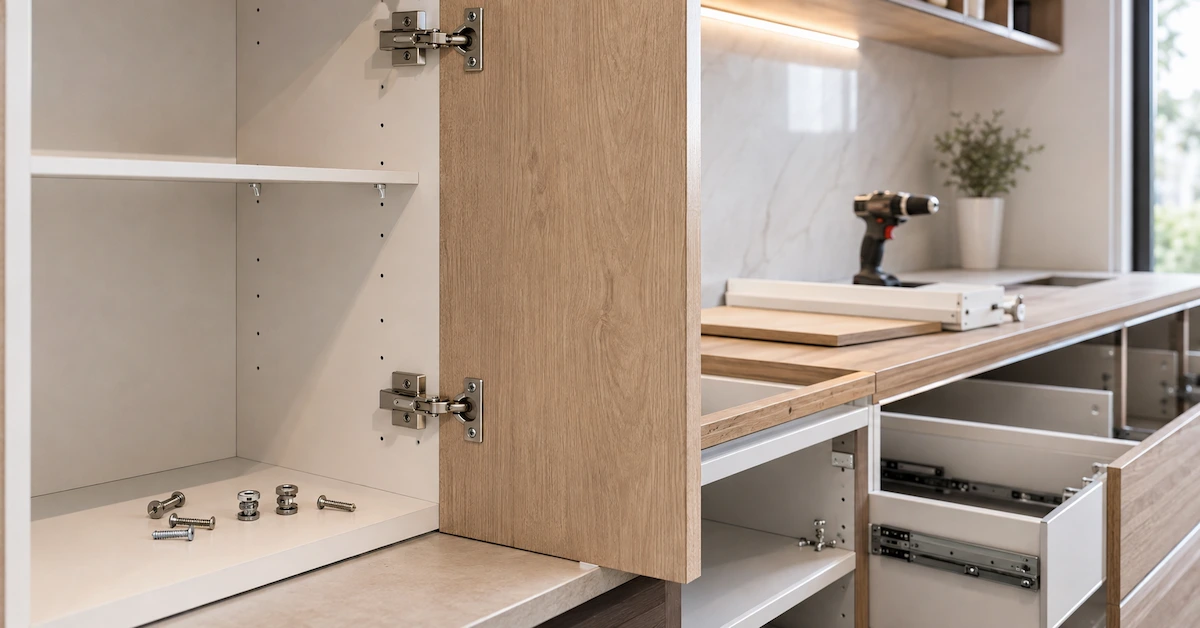
A kitchen furniture hardware manufacturer should do more than produce individual screws, connectors, nuts, or brackets. For OEM kitchen furniture projects, the manufacturer's real value is its ability to turn drawings, samples, furniture structures, and BOM requirements into repeatable hardware specifications that work during mass assembly.
For a kitchen cabinet factory, the hardware system may include:
- Cam locks and eccentric connectors
- Furniture connecting bolts
- Wood and assembly screws
- Insert nuts
- Shelf supports
- Stamped brackets and mounting plates
- Plastic accessories
- Model-specific hardware kits
These components interact with panel thickness, drilling position, assembly sequence, surface finish, packaging, and end-user installation.
That means buyers should evaluate a manufacturer at system level, not part by part.
A technically correct screw does not solve the problem if it is packed with the wrong connector. A precise cam lock is not useful if its bolt does not match the drilling map. A strong bracket may still cause production delays if its holes are inconsistent.
For OEM buyers,the better sourcing question is:
Can this manufacturer reproduce our complete furniture hardware specification accurately from sample approval through repeat production?
Who Should Work Directly With a Hardware Manufacturer?
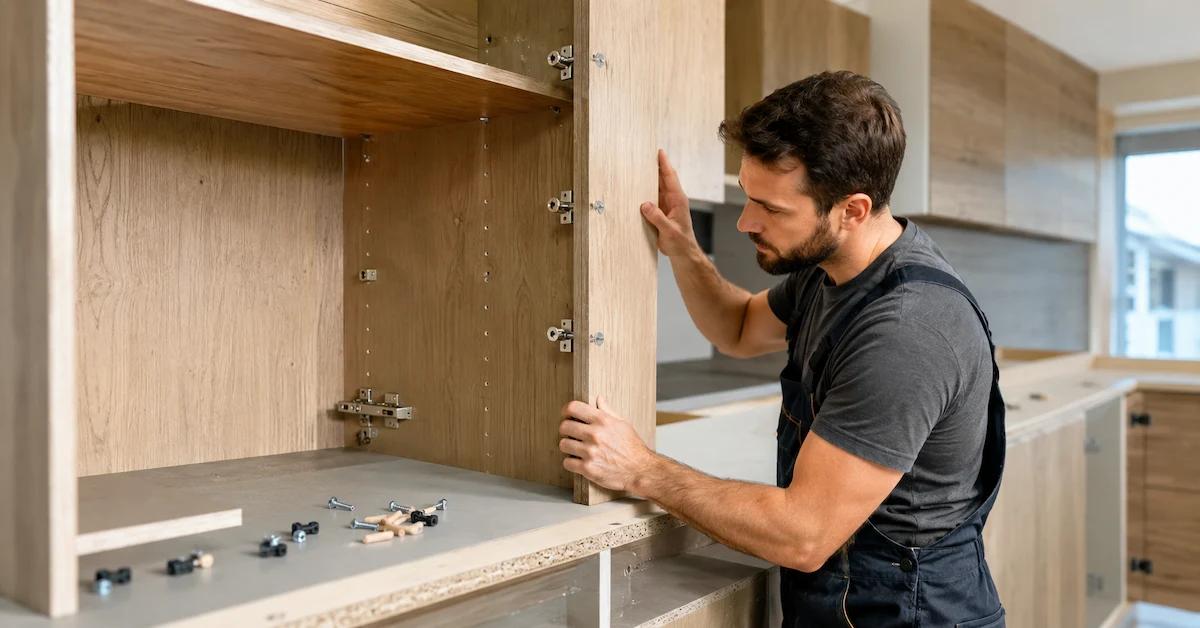
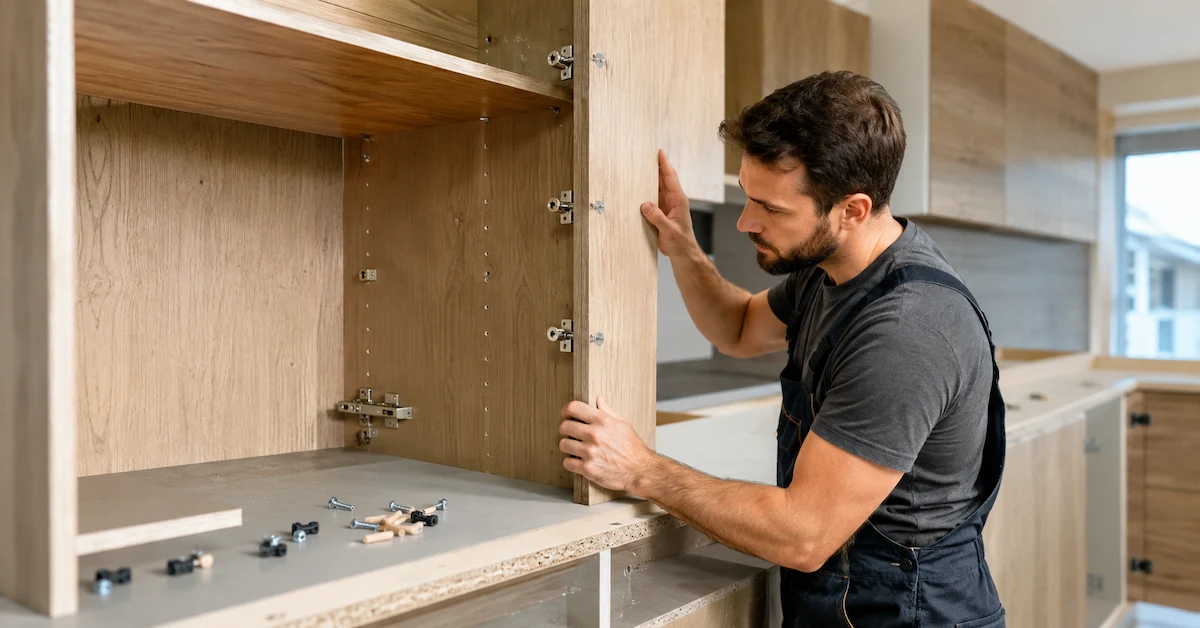
A direct manufacturing relationship is especially valuable for buyers that require:
- Customized dimensions
- Drawing-based development
- Repeat monthly or seasonal orders
- Multiple matching hardware components
- Model-specific BOM packaging
- Controlled surface finishes
- Sample approval before production
- Private-label hardware kits
- Long-term specification consistency
Typical buyers include:
- Kitchen cabinet factories
- Modular kitchen manufacturers
- Flat-pack furniture producers
- RTA furniture brands
- Furniture importers
- OEM furniture brands
- Hardware wholesalers
- Furniture-component distributors
- Project procurement teams
A small buyer purchasing a standard off-the-shelf screw may not need extensive OEM development.
A manufacturer becomes more valuable as the project becomes more technically integrated.
Kitchen Furniture Hardware Manufacturer vs General Supplier
“Manufacturer” and “supplier” are often used interchangeably in search results, but B2B buyers should understand the operational difference.
| Evaluation | Direct Manufacturer | General Trading Supplier |
|---|---|---|
| Drawing review | Often available in-house | Depends on upstream factory |
| Custom dimensions | Direct engineering discussion | Requires external coordination |
| Process control | Closer to production | Indirect |
| Sampling | Direct production feedback | Additional communication layer |
| Component matching | Can coordinate manufacturing | Depends on sourced products |
| QC communication | Direct access to production requirements | May rely on third parties |
| BOM kitting | Strong where packing is in-house | Varies significantly |
| Best for | OEM and repeat production | Standard sourcing and product consolidation |
This does not mean a manufacturer is automatically better in every situation.
The real question is whether the production model fits your project.
For kitchen furniture OEM buyers with drawings, matching components, custom finishes, and repeated volumes, direct manufacturing control can reduce communication gaps.
What Hardware Should a Kitchen Furniture Manufacturer Be Able to Produce?
Cam Locks and Connector Sets
Cam locks are widely used in flat-pack and modular kitchen furniture.
A typical connection combines:
- An eccentric cam
- A matching connecting bolt
- Precisely positioned holes in the furniture panels
The system allows two panels to be pulled together while keeping much of the connection concealed.
For OEM buyers, relevant parameters include:
- Cam diameter
- Cam height
- Connecting-bolt length
- Hole diameter
- Drilling depth
- Center distance
- Panel thickness
- Material
- Finish
JHFIX currently groups 2-in-1 and 3-in-1 cam locks, eccentric connectors, Minifix fittings, and connector sets within its furniture-hardware range.
View JHFIX Cam Locks & Connector Sets
Furniture Connecting Bolts
Connecting bolts are used with:
- Cam locks
- Insert nuts
- Threaded connectors
- Knock-down fittings
The manufacturer should understand the mating part rather than quoting only from bolt length.
Important specifications include:
- Diameter
- Thread
- Overall length
- Threaded length
- Shoulder geometry
- Head shape
- Drive
- Material
- Finish
For a custom project, sending the cam or mating hardware together with the bolt drawing reduces compatibility risk.
Furniture and Cabinet Screws
Kitchen furniture can use screws for:
- Back-panel fixing
- Bracket mounting
- Cabinet assembly
- Reinforcement
- Accessory installation
- Furniture bases
The manufacturer may need to review:
- Panel material
- Diameter
- Length
- Thread geometry
- Head style
- Drive
- Pilot-hole conditions
- Finish
Insert Nuts
Insert nuts can create reusable internal threads in selected furniture applications.
They are useful where the design requires:
- Repeated bolt installation
- Modular structures
- Removable bases or frames
- More controlled threaded engagement
Key parameters include:
- Internal thread
- Insert length
- Outer geometry
- Installation method
- Board material
- Matching bolt
Shelf Supports
Kitchen wall cabinets, pantry units, and tall cabinets frequently require adjustable shelves.
A shelf-support specification may include:
- Pin diameter
- Support geometry
- Shelf material
- Cabinet hole size
- Hole spacing
- Material
- Finish
A visually similar support is not necessarily interchangeable if the drilling system differs.
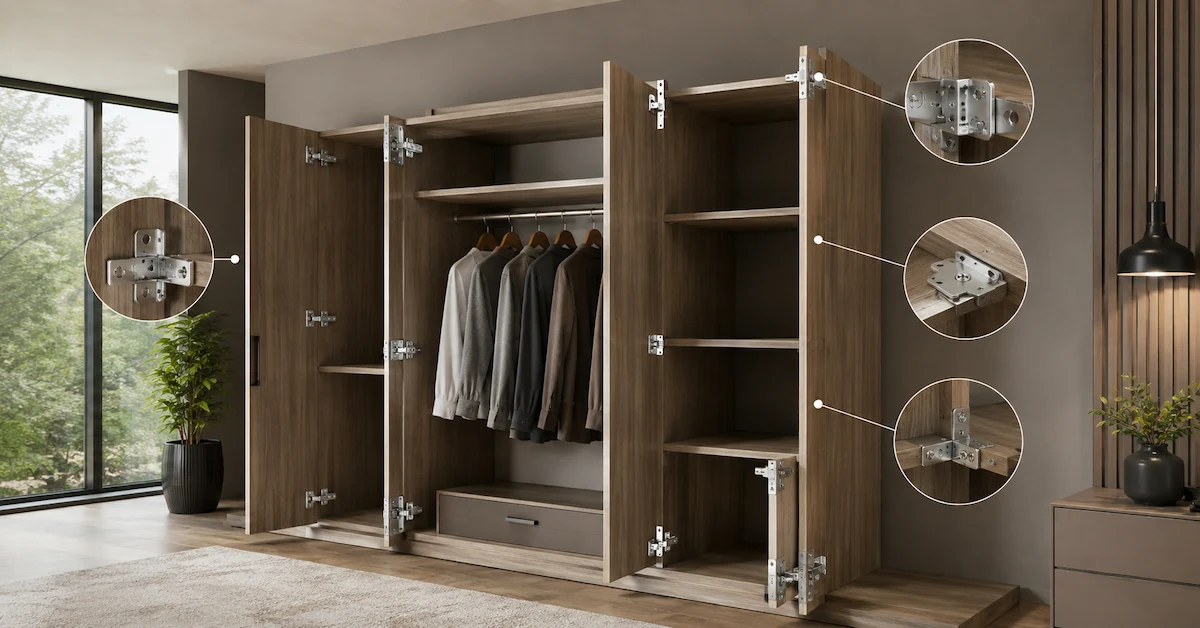
Stamped Brackets and Mounting Plates
Kitchen furniture may also require:
- Corner brackets
- Reinforcement plates
- Mounting plates
- Clips
- Supports
- Custom stamped components
For these parts,OEM buyers should provide:
- Material
- Sheet thickness
- Hole position
- Hole diameter
- Bend angles
- Critical dimensions
- Finish
- Drawing revision
Explore JHFIX Stamping Hardware
The Hardware BOM Should Come Before the Purchase Order
One of the biggest mistakes in furniture sourcing is treating hardware as a list of independent SKUs.
A better approach is to build the hardware BOM around one furniture model.
For example:
| Cabinet Function | Hardware | Specification to Lock |
|---|---|---|
| Main panel joint | Cam + bolt | Panel thickness, drilling map |
| Direct fixing | Furniture screw | Diameter, length,thread |
| Reusable joint | Insert nut + bolt | Matching thread |
| Adjustable shelf | Shelf support | Pin/hole dimensions |
| Reinforcement | Stamped bracket | Geometry and hole position |
| Final assembly | Hardware kit | Component count and label |
This allows both the furniture factory and hardware manufacturer to review compatibility before production.
It also creates a cleaner reference for repeat orders.
How Panel Material Affects Hardware Engineering
Particleboard
Particleboard is widely used in cabinet and flat-pack furniture.
Hardware selection should consider:
- Thread engagement
- Edge distance
- Hole position
- Penetration depth
- Installation torque
MDF
MDF offers relatively uniform density, but edge fastening and aggressive installation conditions can still create problems.
Sample approval should therefore use the actual board planned for production.
Plywood
Plywood's layered structure changes how screws and connectors interact with the panel.
The same nominal hardware does not necessarily behave identically across different board constructions.
Solid Wood
Wood species, density, grain orientation, moisture, and edge distance may influence fastening.
Practical OEM Rule
Do not approve furniture hardware using the metal part alone. Test the complete connection in the real panel whenever practical.
That provides more useful information than visually inspecting the component on a desk.
Materials and Finishes: Specify the Requirement, Not the Marketing Term
Common options in furniture hardware can include:
- Carbon steel
- Stainless steel
- Zinc alloy
- Selected plastic components
- Zinc plating
- Nickel plating
- Black finishes
- Custom finishes
The correct option depends on:
- Component function
- Manufacturing process
- Environment
- Appearance
- Target cost
- Customer specification
For kitchen furniture,humidity and cleaning exposure can make surface requirements more important than in some dry indoor furniture applications.
However, it is equally incorrect to assume every kitchen hardware component requires stainless steel.
The engineering requirement should come first.
What Manufacturing Processes Matter?
For a multi-component furniture-hardware project, the factory's process coverage can influence coordination and repeatability.
JHFIX states that its facilities include cold heading, tapping, punching/stamping, injection molding, assembly, packing, inspection, warehousing, and production-line operations. Its About Us page also states the company began in 2004 and supplies products to more than 40 countries.
Review JHFIX Manufacturing Capabilities
Cold Heading
Relevant to production of selected screws, bolts, and other cold-formed metal parts.
Tapping and Thread Processing
Critical where mating components must maintain repeatable thread compatibility.
Stamping
Relevant for:
- Brackets
- Plates
- Clips
- Supports
Injection Molding
Useful where a hardware assembly combines:
- Plastic sleeves
- Covers
- Inserts
- Other molded accessories
Assembly and Packing
Particularly important for furniture hardware kits where multiple components must be combined according to one BOM.
OEM Development Should Start With DFM, Not With a Quote
High-conversion OEM enquiries usually contain enough technical information for the manufacturer to evaluate feasibility.
JHFIX currently describes a six-step workflow beginning with drawings or samples, followed by requirement review, quotation and CAD/DFM recommendations, sample development, mass production, and inspection/shipping.
Step 1 — Send Drawings,Samples or Existing Hardware
Provide:
- 2D drawing
- 3D data where relevant
- Physical sample
- BOM
- Furniture application
Step 2 — Explain the Assembly Requirement
Include:
- Panel material
- Panel thickness
- Joint position
- Matching components
- Installation process
Step 3 — DFM and Commercial Review
The manufacturer can assess:
- Geometry
- Process feasibility
- Material
- Tooling
- Surface finish
- Packaging
- Estimated production requirements
Step 4 — Sample Development
Samples should be evaluated for:
- Fit
- Dimensions
- Assembly
- Tool engagement
- Appearance
- Matching hardware
Step 5 — Lock the Approved Specification
A drawing revision, approved sample, and packaging reference should become the basis for mass production.
Step 6 — Production, QC and Packing
Only after technical approval should the project scale.
This workflow reduces the chance that a commercial purchase order is issued before the hardware system is technically stable.
What Should Quality Control Cover?
A good QC plan follows actual failure risk.
Incoming or Material Checks
Depending on the product:
- Material identification
- Wire or sheet dimensions
- Surface condition
- Purchased component condition
Dimensional Inspection
Possible critical characteristics include:
- Screw diameter and length
- Thread
- Cam diameter
- Bolt length
- Insert-nut thread
- Bracket hole position
- Shelf-support dimensions
Functional Fit
This step is especially valuable for multi-component furniture systems.
Ask:
- Does the cam engage the bolt correctly?
- Does the insert accept the specified bolt?
- Does the shelf support match the production drilling?
- Does the bracket align with the cabinet structure?
Surface Inspection
Review:
- Coating uniformity
- Scratches
- Burrs
- Visible defects
- Color consistency where relevant
Kit and Packaging Inspection
For flat-pack furniture:
- Correct SKU
- Correct quantity
- Correct combination
- Correct label
- Correct furniture model
ISO 9001 is a recognized quality-management standard that provides a framework for consistent processes, customer requirements, performance evaluation, and continual improvement. Certification alone does not replace product-level inspection, so OEM buyers should still define their critical characteristics and acceptance requirements.
JHFIX currently states company-level ISO9001, RoHS, and EU REACH compliance on its website.
Why Hardware Kitting Can Be a Manufacturing Advantage
Kitchen furniture hardware is often small, numerous, and model-specific.
A flat-pack kitchen cabinet may require:
- Cam locks
- Connecting bolts
- Screws
- Insert nuts
- Shelf supports
- Brackets
- Caps
- Accessories
If each component arrives in bulk, the cabinet factory may need to:
- Sort parts
- Count quantities
- Create bags
- Match cabinet models
- Print labels
- Perform another final check
A manufacturer with assembly and packing capability can potentially move some of this work upstream.
JHFIX's current product structure includes bag, blister, box, and plastic-bucket packaging alongside its furniture hardware and fastener products.
View JHFIX Products and Packaging Options
Bulk Parts vs Complete Hardware Kits
| Supply Method | Main Advantage | Main Risk | Suitable Buyer |
|---|---|---|---|
| Bulk parts | Simple component procurement | Buyer handles sorting | Factory with internal kitting |
| Individually bagged SKUs | Better part separation | Multiple bags require coordination | High-volume production |
| Model-specific hardware kit | Ready for cabinet packing | BOM must be controlled | Flat-pack/RTA furniture |
| Private-label kit | Brand-ready | Requires packaging approval | Furniture brands/distributors |
The ideal supply method depends on how the kitchen furniture is manufactured, packed, shipped, and assembled.
What Determines Custom Hardware Cost?
A kitchen furniture hardware manufacturer does not calculate price only from raw-material weight.
Cost can be affected by:
- Material
- Geometry
- Size
- Tooling
- Thread
- Surface finish
- Tolerance
- Process complexity
- Order volume
- Number of SKUs
- Assembly requirements
- Inspection requirements
- Packaging
- Private-label requirements
Compare Total Supply Cost
Two quotations can have different scopes.
For example, Supplier A may quote only bulk components.
Manufacturer B may include:
- Component matching
- Sorting
- Assembly
- Kit packing
- Labeling
The second quotation may have a higher piece price but reduce work downstream.
Always normalize the scope before comparing prices.
MOQ and Lead Time Should Be Project-Specific
MOQ and lead time can change based on:
- Standard vs custom part
- Tooling
- Raw material
- Finish
- Sample development
- Number of SKUs
- Quantity
- Inspection
- Packaging
For this reason, JHFIX-specific MOQ or production days should not be assumed without project review.
A serious quotation should follow the actual drawing, BOM, quantity, and packaging specification.
Seven Questions to Ask a Kitchen Furniture Hardware Manufacturer
Before approving a factory, ask:
- Can you review drawings and physical samples?
- Which manufacturing processes are handled in-house?
- How do you confirm compatibility between mating components?
- What dimensions will be treated as critical?
- Can samples be tested in representative cabinet panels?
- Can you pack hardware according to our furniture BOM?
- How do you control specifications on repeat orders?
The quality of the manufacturer's questions is also revealing.
A factory that asks about panel thickness, mating parts, drilling layout, and packaging is showing more application awareness than one that immediately sends a price.
Manufacturer Red Flags for OEM Buyers
Be cautious when a factory:
- Quotes custom hardware without reviewing dimensions
- Does not ask about mating parts
- Ignores the furniture panel
- Cannot explain manufacturing processes
- Cannot define critical QC points
- Changes specifications without controlled approval
- Makes unsupported performance claims
- Has no clear sample-approval process
- Cannot explain how hardware-kit quantities are checked
The objective is not to eliminate every sourcing risk.
It is to identify risk before mass production rather than after shipment.
When Does One-Stop Manufacturing Make Sense?
A one-stop hardware manufacturing model can be useful when the furniture BOM contains several related components.
For example:
Cam + bolt + screw + insert nut + stamped bracket + plastic accessory + kit packaging
Potential benefits include:
- Fewer suppliers to coordinate
- Easier BOM communication
- Better component matching
- Simplified packaging
- Fewer incoming shipments
However, consolidation only adds value when each component meets the required specification.
A buyer should not accept a weaker component simply because it is available from the same manufacturer.
Why Consider JHFIX for Kitchen Furniture Hardware Manufacturing?
JHFIX identifies itself as Jiangmen Jinhe Hardware Products Co., Ltd., with operations dating from 2004.The company states over 20 years of fastener/hardware manufacturing experience and exports to more than 40 countries. Its listed product scope includes cam-lock systems, connectors, shelf supports, screws, nuts, stamping hardware, assortment kits, and packaging.
Its current production information lists:
- Cold heading
- Tapping
- Stamping/punching
- Injection molding
- Assembly
- Packaging
- Inspection
For kitchen furniture OEM buyers, that combination is relevant because a single cabinet program may require metal fasteners, molded parts, stamped hardware, and BOM-based packing.
The practical next step is not to ask for a generic catalogue quote.
Send:
- Drawings
- Samples
- BOM
- Panel material
- Panel thickness
- Estimated quantities
- Finish requirements
- Packaging requirements
and allow the engineering and production team to review the complete application.
Send Your Kitchen Furniture Hardware Project to JHFIX
FAQ
What does a kitchen furniture hardware manufacturer produce?
A kitchen furniture hardware manufacturer may produce cam locks, connecting bolts, furniture screws, insert nuts, shelf supports, stamped brackets, mounting plates, plastic accessories, and complete assembly hardware kits.
What is the difference between a kitchen furniture hardware manufacturer and supplier?
A manufacturer directly controls some or all production processes, while a general supplier may source finished components from multiple factories. OEM buyers should compare engineering access, process control, QC, customization, and packaging capability rather than relying only on company labels.
Can kitchen furniture hardware be customized from drawings?
Yes, subject to manufacturing feasibility. Buyers can provide drawings, existing samples, BOMs, materials, dimensions, finishes, and application requirements for engineering review.
What information is required for an OEM quotation?
Provide the component drawing or sample, furniture application, panel material, panel thickness, mating parts, quantity, material, finish, QC requirements, and packaging method.
Can a manufacturer provide complete kitchen furniture hardware kits?
Yes, if the factory has the relevant component, assembly, and packaging capability. A kit can be organized according to the approved BOM for a specific kitchen cabinet model.
How should cam locks and connecting bolts be approved?
Approve them as a matched system. Verify component dimensions, drilling requirements, panel thickness, engagement, and actual assembly before mass production.
How should kitchen furniture screws be selected?
Consider panel material, screw diameter, length, thread geometry, head, drive, engagement depth, pilot-hole conditions, material, and surface finish.
What should be checked during furniture hardware quality control?
Typical checks include materials where relevant, critical dimensions, threads, surface condition, component compatibility, functional assembly, and packaging quantity.
What affects MOQ for custom furniture hardware?
Tooling, geometry, material, production process, finish, quantity, number of SKUs, inspection, and packaging may affect MOQ. It should be confirmed after specification review.
How can an OEM buyer reduce sourcing risk?
Use controlled drawings and BOMs, qualify mating components together, test samples in representative furniture panels, define critical QC requirements, approve packaging, and maintain revision control for repeat orders.
Conclusion
Choosing a kitchen furniture hardware manufacturer should begin with your furniture engineering requirements, not with a price list.
For kitchen cabinet factories, modular furniture brands, importers, and OEM buyers, the strongest manufacturing partner is one that can understand the complete system:
panel → drilling → connector → fastener → bracket → assembly → inspection → hardware kit.
The objective is repeatability.
When the approved hardware can be reproduced consistently across production batches, matched correctly with other components, inspected against the right characteristics, and packed according to the furniture BOM, small hardware stops being a sourcing problem and becomes part of a controlled manufacturing process.
JHFIX supports furniture-hardware projects with cam locks, connectors, screws, nuts, stamped parts, assembly, OEM/ODM development, inspection, and packaging capabilities. Buyers with an upcoming kitchen furniture program can submit drawings, samples, BOMs, and packaging requirements for project-specific evaluation.