
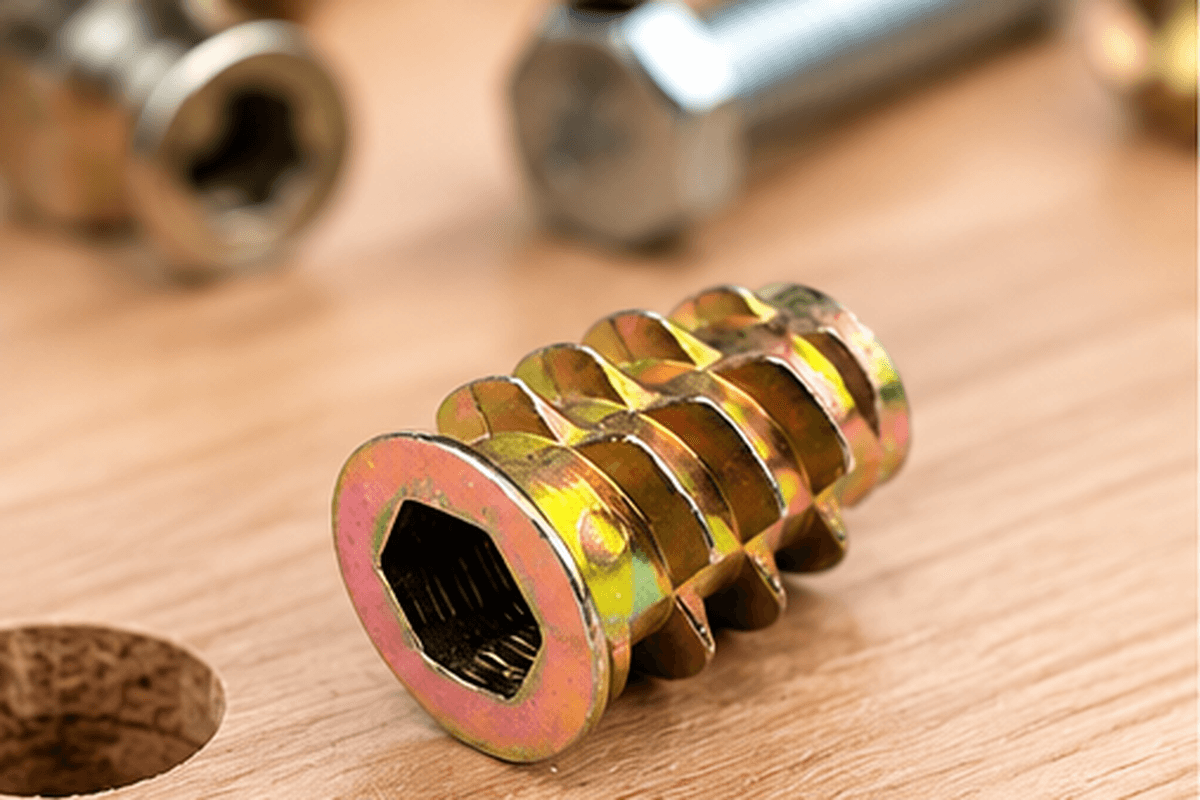
How to Choose M6 Zinc Plated Hex Drive Wood Insert Nuts for Furniture and Cabinet Assembly
A wood insert nut looks simple when it is lying on a workbench.
It is small, usually hidden after assembly, and easy to treat as just another piece in a furniture hardware kit. But once it goes into a cabinet panel, desk board, shelf unit, or wardrobe component, it becomes part of the structure.
If the insert nut fits well, the connection feels stable. The bolt tightens cleanly. The panel can be assembled, removed, or repaired without destroying the board. The product feels more reliable to the user.
If the insert nut is wrong, the problem appears quickly.
The thread may not match.
The insert may spin inside the wood.
The panel may split.
The bolt may not tighten fully.
The finished cabinet may feel loose after installation.
That is why consumers and B2B buyers should not choose an M6 wood insert nut only by price or product photo.
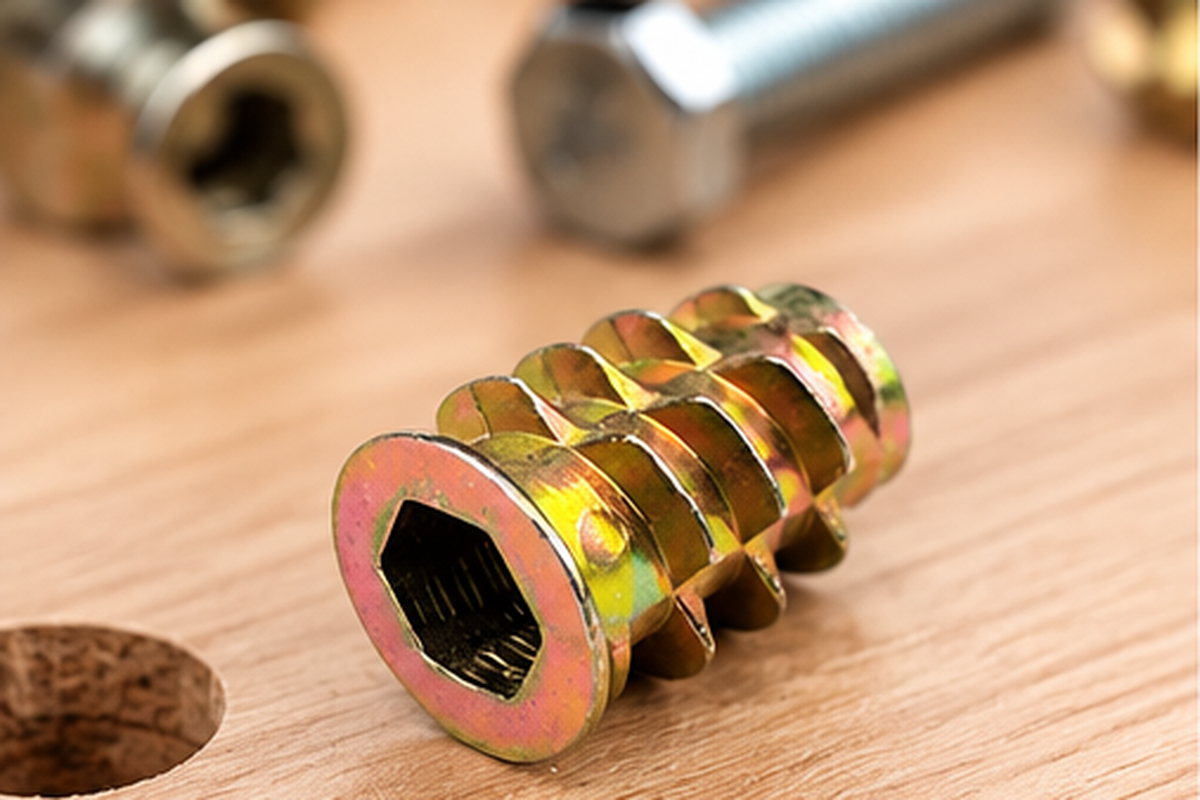
The JHFix product page identifies this product as a Customized M6 Zinc Plated Alloy Hex Drive Wood Insert Nut for Furniture Cabinets. The specification table lists the product name as Zinc Alloy Nut, brand name Jinhe, packing Carton, suitable for Cabinet, specification M6, material Carbon steel, plating options Zinc, Nickel, Natural (Custom), head style Pan or Round, application Connection, Fastening, and place of origin Guangdong, China.
Product information from the JHFix page
| Item | Product Information |
|---|---|
| Product Title Direction | Customized M6 Zinc Plated Alloy Hex Drive Wood Insert Nut for Furniture Cabinets |
| Product Name | Zinc Alloy Nut |
| Brand Name | Jinhe |
| Packing | Carton |
| Suitable For | Cabinet |
| Specification | M6 |
| Material | Carbon steel |
| Plating | Zinc, Nickel, Natural(Custom) |
| Head Style | Pan or Round |
| Application | Connection, Fastening |
| Place of Origin | Guangdong, China |
This table gives buyers a useful starting point, but it also shows why confirmation matters.
The title uses “zinc plated alloy hex drive wood insert nut,” while the table lists product name as “Zinc Alloy Nut” and material as “Carbon steel.” That does not mean the product cannot be used. It means buyers should confirm the final drawing, material structure, plating, and sample before mass production.
For furniture and cabinet hardware, one small wording difference can become a real assembly problem if it is ignored.
What is a wood insert nut used for?
A wood insert nut creates a stronger internal thread inside wood or wood-based panels.
Instead of driving a screw directly into the board every time, the insert nut gives a machine screw or connector bolt a more controlled threaded point. This is useful when the furniture may need repeated assembly, stronger fastening, cleaner disassembly, or better repairability.
Common use scenarios include:
- kitchen cabinets
- bathroom cabinets
- wardrobes
- bookshelves
- office desks
- modular storage furniture
- flat-pack furniture
- furniture repair kits
- shelf support systems
- wooden display fixtures
- cabinet connector systems
- OEM furniture hardware kits
For consumers, the benefit is practical. A cabinet joint feels firmer, and the furniture is easier to repair if the original screw hole has become weak.
For B2B buyers, the benefit is repeatability. When every cabinet panel receives the correct insert nut, assembly becomes more predictable across many units.
Why M6 size matters
The page lists specification as M6.
M6 is a common size in furniture connector systems, but buyers should not stop at the size name. An M6 insert nut still needs to match the bolt, thread pitch, panel thickness, hole diameter, and installation tool.
Before buying, confirm:
Is the mating bolt also M6?
What thread pitch is required?
What hole diameter should be drilled?
How deep should the insert sit?
Is the board thick enough?
Will the insert be installed by hand, hex key, or power tool?
Will the furniture be assembled once or repeatedly?
A wood insert nut that is too large can damage the panel. One that is too small may not hold. One that is installed too deep or at the wrong angle may stop the connector bolt from engaging properly.
A good furniture insert nut supplier should help buyers review these details before ordering.
Why panel material changes the choice
A wood insert nut is only as reliable as the panel around it.
Solid wood, plywood, MDF, particleboard, laminated board, and veneered panels all behave differently. Some materials hold inserts well. Some are more sensitive near edges. Some require better pilot-hole control. Some can crack or crumble if the insert is forced.
For cabinet production, the panel material should be confirmed before the insert nut is approved.
Ask:
What board material is being used?
What is the panel thickness?
Is the insert close to an edge?
Will the panel be pre-drilled by CNC?
Does the hole need countersinking?
Will the insert carry load or only locate a connector?
Will the furniture be moved often?
A wood insert nut that works in plywood may not behave the same way in particleboard. A cabinet designed for hotel use may need different stability than a simple home storage shelf.
That is why sample testing should happen in the actual panel, not in a random test block.
Plating and finish: zinc, nickel, or natural custom
The product page lists plating options as Zinc, Nickel, Natural(Custom).
For furniture hardware, plating is not only about appearance. It also affects handling, storage, corrosion expectations, and compatibility with other fittings.
Zinc plating may be practical for many general cabinet applications. Nickel may be selected when appearance or surface feel is more important. Natural custom plating may be discussed when the buyer has a specific finish requirement or wants the insert to match other furniture hardware.
Before choosing plating, buyers should ask:
Will the insert be visible after assembly?
Will the furniture be used in a dry room, kitchen, or bathroom?
Will moisture or cleaning products be present?
Does the finish need to match screws, cams, bolts, or brackets?
Will the insert be packed with other metal parts?
Can the plating be repeated in future orders?
For hidden cabinet insert nuts, function may matter more than appearance. For visible or semi-visible hardware, finish consistency becomes part of the user experience.
Head style: pan or round
The product page lists Pan or Round head style.
This detail should not be ignored.
Head style affects how the insert sits in the panel and how the mating component engages. A pan-style or round-style head may be suitable for different connection layouts. If the head interferes with a bracket, cap, shelf support, or panel surface, the assembly may not close cleanly.
Buyers should check:
Does the insert sit flush or raised?
Is the head visible?
Does it interfere with another connector?
Is there enough clearance in the panel?
Does the cabinet drawing specify head style?
Will the installer see this part during assembly?
A small head-style difference can create a big fit issue in cabinet hardware.
Why consumers should choose carefully
Consumers usually buy wood insert nuts for one of three reasons.
They are repairing a loose cabinet.
They are building furniture from panels.
They are replacing missing hardware from an old assembly.
In all three cases, the buyer should compare the insert nut with the original connector system. Do not buy only because the product title says M6. Check the matching bolt. Check the board thickness. Check the hole. Check whether the old insert used the same head style.
For a repair job, install one sample first.
If the insert spins, cracks the board, or does not accept the bolt smoothly, stop and review the size before installing the rest.
Why B2B buyers need a controlled specification
For a furniture factory, cabinet brand, or hardware kit supplier, the insert nut becomes part of the production standard.
The buyer should control:
- product drawing
- material confirmation
- plating requirement
- thread specification
- pilot-hole size
- installation method
- sample approval
- packing style
- batch labeling
- repeat-order consistency
This is where Jiangmen Jinhe’s product direction can be useful. The product page shows Jinhe branding, cabinet suitability, M6 specification, custom plating options, carton packing, and connection/fastening application. For B2B buyers, these details support a structured inquiry instead of a vague request for “some insert nuts.”
Company and product advantages for buyers
For this product, the main advantages are practical rather than decorative.
The M6 specification gives a common furniture connector direction. The listed cabinet suitability makes it relevant for furniture and cabinet manufacturing. The plating options allow buyers to discuss zinc, nickel, or natural custom finishes. The carton packing supports bulk purchasing, while Jinhe branding and Guangdong, China origin help buyers identify the supply source.
The real company advantage is the ability to discuss the part as one element in a cabinet hardware system.
A buyer can ask about insert nut size, plating, head style, packing, and compatibility with bolts or connector hardware. That is more useful than buying loose hardware with no assembly context.
Common buying mistakes
One common mistake is ordering from the title only. Product titles often include several searchable words. The purchase order should use confirmed specifications.
Another mistake is ignoring the panel material. A wood insert nut must be matched to the real board.
A third mistake is using the wrong installation tool. Hex drive insert nuts need controlled installation. If the tool slips or the insert is forced, the panel may be damaged.
Buyers also sometimes ignore plating. A hidden insert may not need a premium finish, but a bathroom or kitchen cabinet may need more corrosion review.
The final mistake is not testing samples. A small sample build can reveal problems before thousands of panels are drilled.
Buyer checklist before ordering
| Buying Point | What to Confirm |
| Thread Size | M6, thread pitch, mating bolt compatibility |
| Panel Material | MDF, particleboard, plywood, solid wood, or laminated board |
| Hole Preparation | Hole diameter, depth, edge distance, CNC drilling accuracy |
| Material | Confirm final material because page wording includes Zinc Alloy Nut and Carbon steel |
| Plating | Zinc, Nickel, or Natural custom option |
| Head Style | Pan or Round, depending on panel and connector design |
| Application | Cabinet, furniture, connection, fastening |
| Packaging | Carton packing, inner labels, OEM kit needs |
| Sample Test | Install in real panel with real bolt |
| Repeat Order | Confirm drawing, sample, and batch consistency |
Frequently Asked Questions
What is an M6 wood insert nut used for?
It is used to create a threaded fastening point inside wood or wood-based panels, commonly for cabinets, furniture connectors, shelves, and flat-pack hardware systems.
What product specification is listed on the page?
The product page lists specification as M6, suitable for cabinet, and application as connection and fastening.
What plating options are listed?
The page lists Zinc, Nickel, and Natural custom plating options.
Why should buyers confirm material?
The page lists product name as Zinc Alloy Nut while the material field says Carbon steel. Buyers should confirm the final material structure before ordering.
Can this product be used for furniture production?
Yes, the product is listed as suitable for cabinet and intended for connection and fastening. Buyers should still test it in the actual panel and connector system before bulk ordering.
Final takeaway
An M6 zinc plated hex drive wood insert nut is small, but it can decide whether a cabinet joint feels strong or weak.
The thread must match.
The panel must hold.
The plating must suit the environment.
The head style must fit the connector.
The installation method must be controlled.
The supplier must repeat the approved specification.
For M6 wood insert nuts, zinc plated insert nuts, furniture cabinet connector nuts, zinc alloy nuts, cabinet fastening hardware, and OEM furniture hardware kits, Jiangmen Jinhe Hardware can discuss samples, plating options, packing, and repeat supply.
Start with the panel material, board thickness, thread requirement, hole size, head style, plating, packing method, and order quantity.
Once those details are clear, the right wood insert nut becomes much easier to choose, install, and reorder.