

Product Problems in Metal Nut Applications Are Rarely Random
In industrial assembly, fastening issues don’t usually begin with failure—they begin with inconsistency.
A nut fits, but not smoothly. Torque readings fluctuate between batches. Under load, some connections hold perfectly, while others require re-tightening. These are not dramatic defects, yet they quietly disrupt production stability.
Buyers working with a metal nuts manufacturer often encounter recurring challenges:
- Thread mismatch leading to unstable installation
- Load distribution issues in high-stress applications
- Material inconsistency affecting strength and durability
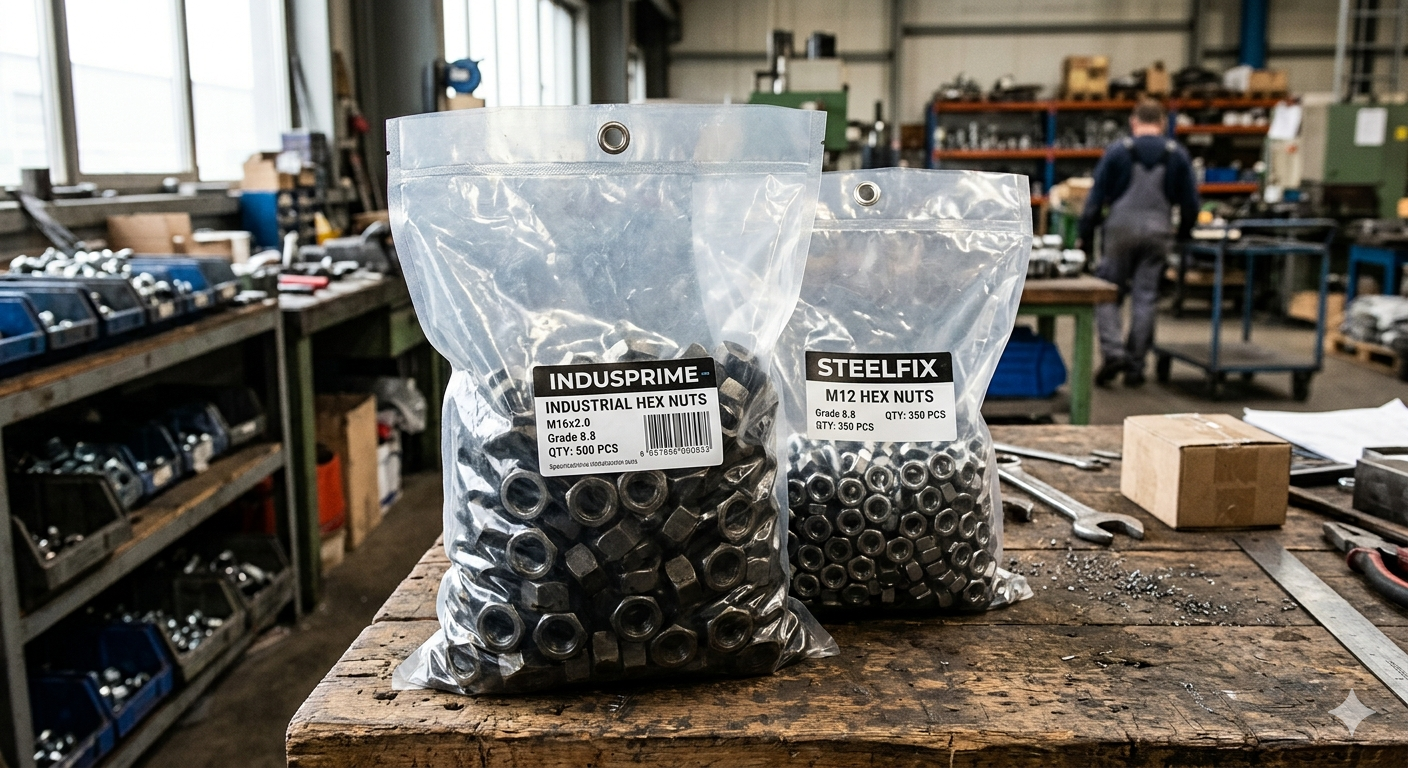
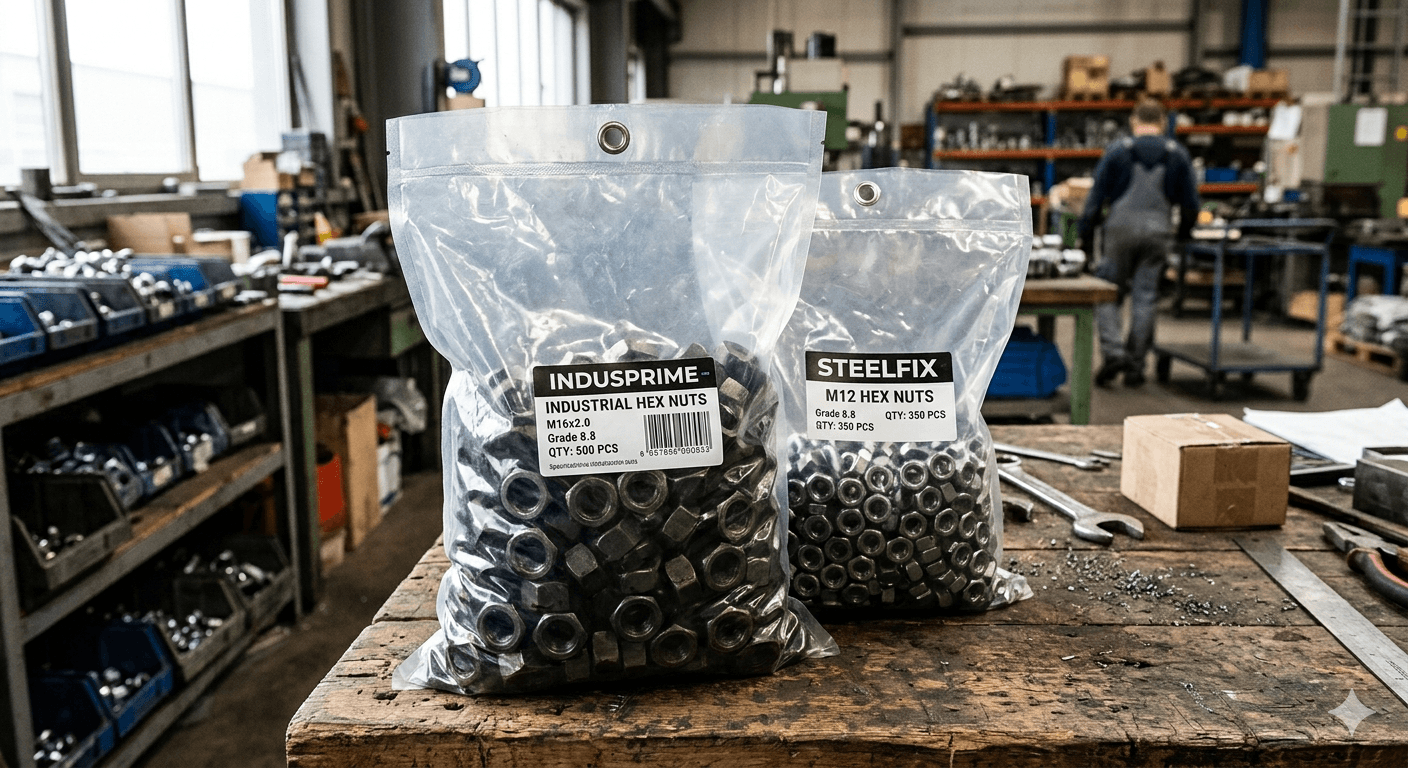
- Packaging problems causing counting errors and workflow delays
These problems rarely come from a single cause. They are the result of misalignment between product design and real application conditions.
At JHFIX, we approach metal nuts as engineered solutions rather than standard components—focusing on how they perform in actual assembly environments, not just how they measure on paper.
Material Engineering: Matching Strength to Application Reality
The performance of a metal nut starts at the material level, but real-world reliability depends on how that material behaves under load—not just its nominal strength.
Different applications require different material characteristics:
| Material Type | Strength Range | Key Advantage | Application Scenario |
|---|---|---|---|
| Carbon Steel | Medium | Cost-effective, versatile | General industrial assembly |
| Alloy Steel | High | Superior load-bearing capacity | Heavy machinery, structures |
| Stainless Steel A2 | Medium | Corrosion resistance | Outdoor, humid environments |
| Stainless Steel A4 | Medium-High | Chemical resistance | Marine, chemical industries |
According to ASTM International, mechanical performance in fasteners depends not only on material grade but also on heat treatment and processing consistency.
A capable metal nuts manufacturer ensures that material selection aligns with real application loads—preventing both underperformance and unnecessary over-specification.
Why Buyers Choose Solution-Based Manufacturing
Many buyers initially focus on specifications: size, grade, coating.
But over time, a different priority emerges—performance consistency across real use scenarios.
We’ve seen common patterns:
- Standard nuts meeting specifications but failing under dynamic load
- Assembly inefficiencies caused by thread inconsistency
- Unexpected maintenance issues due to material fatigue
This is where solution-based manufacturing becomes critical.
At JHFIX, we work from application backward:
- Analyze load requirements and environmental conditions
- Optimize material and hardness accordingly
- Control thread tolerance for stable engagement
- Design packaging aligned with assembly workflows
The goal is not just to supply nuts—but to eliminate recurring problems.
Thread Optimization: Solving Fit and Torque Instability
Thread performance is one of the most underestimated aspects of metal nut design.
Even when threads meet standard dimensions, slight variations can cause:
- Binding during installation
- Loose engagement affecting load distribution
- Torque inconsistency in automated assembly
Thread optimization focuses on:
- Precise tolerance control (ISO fit classes such as 6H)
- Smooth surface finish for stable friction
- Consistent thread geometry across batches
Organizations like International Organization for Standardization highlight the importance of thread fit in ensuring mechanical stability and fatigue resistance.
A solution-oriented metal nuts manufacturer ensures that thread behavior remains predictable—not just compliant.
Surface Treatment: Balancing Protection and Performance
Surface coatings are often selected for corrosion resistance, but they also influence installation behavior.
Common treatments include:
- Zinc plating for general protection
- Phosphate coating for friction control
- Dacromet or similar coatings for high corrosion resistance
Improper coating thickness can affect thread fit, while inconsistent coating leads to variable torque performance.
In product solution design, surface treatment is selected not only for durability but also for its impact on assembly efficiency.
Packaging as a Functional Solution, Not Just Logistics
In bulk supply, packaging is often treated as secondary. In reality, it directly affects operational efficiency.
Loose packaging can result in:
- Quantity discrepancies
- Mixed specifications
- Increased preparation time
Solution-based packaging addresses these issues:
| Packaging Type | Counting Accuracy | Operational Benefit |
|---|---|---|
| Loose bulk | ~90% | High risk of errors |
| Standard packaging | ~97–98% | Moderate efficiency |
| Custom packaging | 99%+ | Stable workflow |
By aligning packaging with production processes, a metal nuts manufacturer can significantly reduce downstream inefficiencies.
A Real Case: From Thread Instability to Load Reliability
An industrial equipment manufacturer approached us with a recurring issue.
Their assemblies required consistent load-bearing performance, yet field reports showed occasional loosening under vibration.
Initial analysis pointed to thread inconsistency and uneven load distribution.
We implemented:
- Tighter thread tolerance control
- Adjusted material hardness for better load response
- Optimized surface treatment for stable torque
The results:
- Improved load stability across assemblies
- Reduced maintenance requirements
- Increased overall product reliability
The solution wasn’t adding complexity—it was aligning product design with real conditions.
Where Metal Nut Solutions Make the Biggest Impact
Product-driven solutions are especially valuable in:
- Heavy machinery requiring stable load distribution
- Automotive systems exposed to vibration
- Industrial equipment with precision assembly requirements
- Export products needing long-term durability
In these environments, standard components often fall short. Tailored solutions deliver measurable improvements.
Frequently Asked Questions
Q1: What is the most common issue with metal nuts in industrial use?
Thread inconsistency and load instability, which affect assembly performance and long-term reliability.
Q2: How can buyers ensure they are choosing the right solution?
By evaluating real application requirements and working with manufacturers who provide engineering support, not just products.
Q3: Does customization increase cost significantly?
Not necessarily. Improved performance and reduced rework often offset any increase in unit price.
Turning Metal Nuts into Reliable Engineering Solutions
Metal nuts may seem simple, but their role in assembly systems is fundamental. When material, thread, and packaging are aligned with application needs, performance becomes stable and predictable.
At JHFIX, we focus on delivering product solutions—not just components—by integrating engineering, manufacturing, and supply processes.
To explore how our metal nut solutions support OEM and industrial applications, you can visit our homepage:
https://www.jhfix.com/
If you are facing issues such as load instability, thread mismatch, or inconsistent supply, it may be time to move beyond standard sourcing. You can contact our team here to discuss your project and develop a more reliable fastening solution:
https://www.jhfix.com/contact-us