
Plastic Blister Packaging Supplier: Why Hardware Packs Need More Than a Clear Shell
Selling hardware by the piece sounds easy until the parts start moving.
A screw falls into the wrong bin. A hinge scratches against a bracket. A washer disappears in a loose bag. A retail buyer looks at two similar packs and cannot tell which one belongs to which job. A warehouse worker has to open cartons just to confirm what is inside.
That is where packaging starts doing real work.
A plastic blister packaging supplier is not only making a transparent shell around the product. For hardware companies, retailers, industrial suppliers, and e-commerce sellers, blister packaging can decide whether small parts stay visible, organized, protected, and easy to sell.
The hardware may be the product.
But the package is what helps people recognize it, count it, store it, ship it, and trust it.
Hardware is small, but handling is not simple
Small hardware parts create a strange problem.
Individually, they are easy to ignore. A screw, nut, hinge, bracket, bolt, washer, or small machined component does not look difficult to pack.
In quantity, they become messy quickly.
Loose fasteners can shift during transport. Mixed finishes can scratch each other. Similar parts can be confused during picking. A bag may tear. A carton may arrive with small parts scattered inside. In retail, a loose or unclear pack can make the product look cheaper than it really is.
This is why hardware blister packaging has become common in many retail and industrial channels.
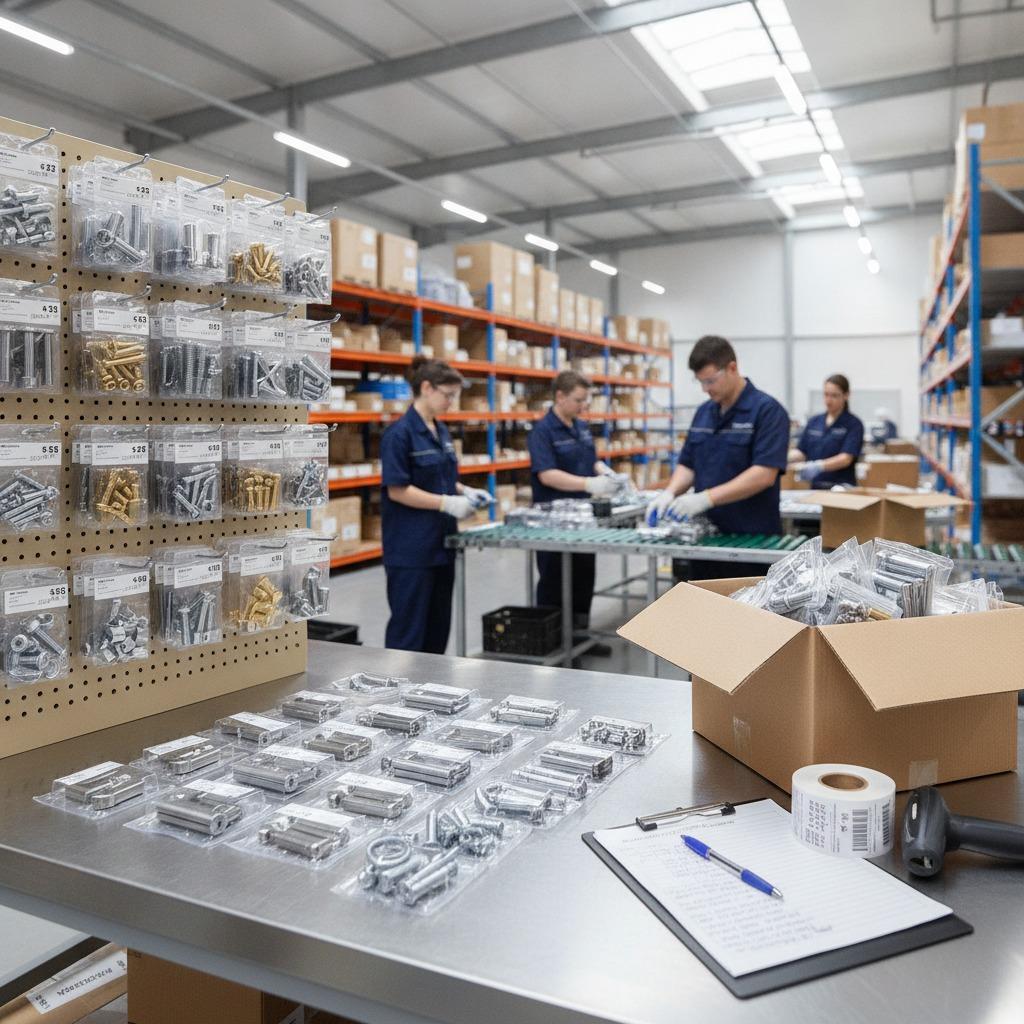
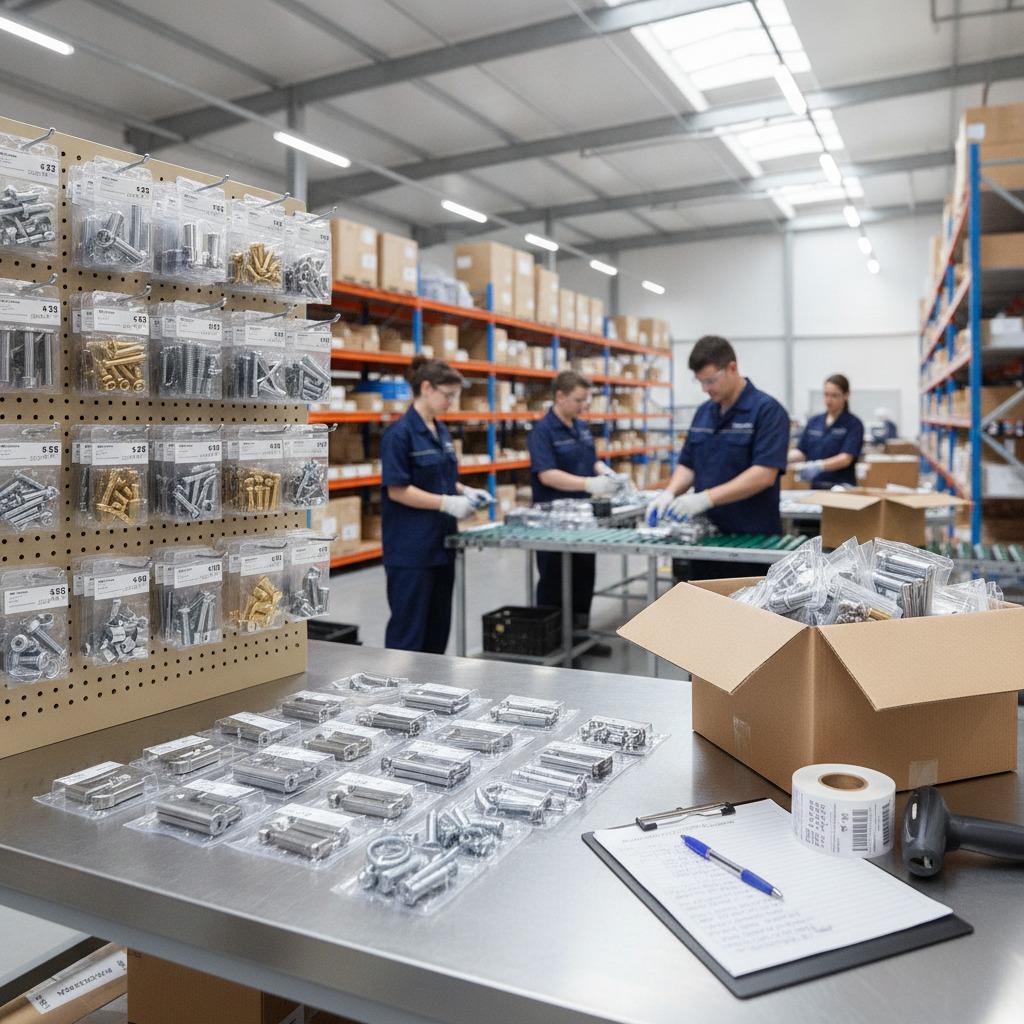
A clear blister pack gives every small part a fixed place. It lets buyers see the contents without opening the pack. It supports barcodes, printed cards, hang holes, and pegboard display. It also helps warehouse teams identify the SKU faster.
That is not decoration.
It is handling control.
A good blister pack should match the hardware, not force the hardware to fit
Not every blister pack works for every part.
A small screw assortment needs one type of cavity layout. A hinge pack needs another. A bracket with sharp corners may need stronger spacing or a deeper formed shell. A mixed hardware kit with silver screws, black-coated parts, and brass-toned fittings may need separation so the finishes do not rub during shipping.
This is where buyers should be careful.
A blister pack can look clean in a sample photo and still fail in real distribution. The cavity may be too shallow. The seal may be weak. The plastic may flex too much. The pack may hang well on a retail hook but stack poorly in a carton.
A useful packaging supplier should ask practical questions:
What parts are going into the pack?
Are they sharp, heavy, polished, or mixed?
Will the pack hang on a pegboard?
Will it ship by parcel?
Will it be stacked in warehouse cartons?
Does the customer need to see every part clearly?
The shape of the package should follow the way the hardware moves.
Why visibility matters in hardware sales
Retail hardware buyers often want to see what they are buying.
That is simple, but important.
If two screw packs look similar, visibility helps customers compare them. If a small hinge kit includes screws, the customer wants to see that they are included. If a bracket pack has several pieces, the visible layout can reduce doubt before purchase.
Clear blister packaging helps because it lets the product show itself.
The backing card can carry the brand, barcode, SKU, size, quantity, and basic use information. The transparent front lets the customer verify the contents. The hang tab makes shelf display easier.
For hardware stores, DIY channels, and small industrial retail packs, this combination is practical.
A plain polybag may be cheaper, but it does not always sell the product well.
A blister pack turns loose hardware into a finished SKU.
Warehouse teams care about shape and labels too
Packaging is not only for customers.
Warehouse teams notice it immediately.
A blister pack with a consistent shape is easier to stack, count, and pick than loose mixed bags. A clear pack makes visual checks faster. A readable barcode reduces handling. A strong backing card helps the SKU stay identifiable after transport.
This matters for distributors and e-commerce sellers.
When orders move quickly, warehouse workers do not have time to open every pack. They need the packaging to do some of the identification work. If the pack is unclear, poorly labeled, or easy to damage, the warehouse has to slow down.
A good hardware packaging solution should reduce extra handling.
It should not create another sorting job.
Retail blister packaging and industrial packaging are not always the same
Retail packaging and industrial packaging can look similar, but they do not always serve the same purpose.
A retail blister pack needs shelf appeal. It should hang well, display clearly, and explain the product quickly.
An industrial pack may need stronger protection, easier carton loading, or faster issue control. It may not need a glossy backing card. It may need part numbers, batch information, or a label that matches internal warehouse systems.
An e-commerce pack needs another layer of thinking. It may be handled roughly, shipped with other items, and opened by a customer who expects the contents to be clean and complete.
A tool blister packaging manufacturer or contract packager should understand these differences.
One packaging format should not be pushed into every channel.
The right choice depends on whether the kit is going to a store shelf, assembly bench, warehouse bin, service technician, or end customer.
Mixed hardware needs careful separation
Many blister packs contain more than one hardware type.
A hinge pack may include screws. A bracket pack may include anchors. A fastener assortment may include bolts, nuts, washers, and spacers. Some parts may be zinc-plated. Others may be brass-colored or black-coated. Some may be plastic.
That mixture is useful, but it creates risk.
Sharp screws can scratch plated parts. Black-coated components can mark lighter finishes. Small washers can shift under larger items. Similar screws can be confused if the pack layout is not clear.
Good blister packaging should keep the parts visible and separated.
Sometimes that means individual cavities. Sometimes a small inner pouch inside the blister is better. Sometimes a deeper cavity or stronger shell is needed because the part is heavier than it looks.
The buyer should not approve the pack only by appearance.
The parts should be tested inside the actual packaging.
Materials and sealing details should be confirmed
Many blister packs look alike from a distance.
Their performance may be very different.
Before approving a packaging project, buyers should confirm the plastic type, thickness, forming method, sealing method, backing card material, hang-tab strength, and carton packing plan. If the product will ship internationally, the pack should also be reviewed for long-distance handling.
This is especially important for hardware.
Metal parts can be sharp, dense, and abrasive. A blister that works for lightweight consumer goods may not perform the same way with screws, hinges, or brackets.
Buyers should also ask whether the pack is intended for:
- Retail display
- Warehouse picking
- E-commerce fulfillment
- Contract packaging
- Industrial part storage
- Hardware kit resale
- OEM spare-part supply
The packaging should be tested for the real route, not only for the sample table.
Where Jiangmen Jinhe Hardware fits into the discussion
Jiangmen Jinhe Hardware Co., Ltd. is primarily a hardware and fastener manufacturer, not just a packaging name. The company works with machine screws, self-tapping screws, micro screws, precision screws, standard parts, and non-standard customization. Its materials include stainless steel, iron, and aluminum, with production aligned to standards such as GB, DIN, ANSI, BS, JIS, and ISO.
For buyers working on hardware blister packaging, that background can be useful when packaging is tied to the fastener supply itself.
A blister pack for screws, brackets, hinges, or small fittings needs correct parts before it needs a nice shell. If the supplier understands the fasteners, the kit structure, and the shipment requirements, it may be easier to coordinate the full project.
Jiangmen Jinhe also notes support for inspection before delivery, documentation, logistics, warehousing, foreign trade, and supply chain services. For buyers managing retail hardware packs, cross-border e-commerce SKUs, or repeated small-part shipments, those details can help reduce handoffs.
Still, every packaging project should be confirmed clearly.
The fastener specification, kit contents, blister layout, sealing method, label, and carton plan all need approval before volume orders.
Common mistakes buyers make
One common mistake is choosing blister packaging only because it looks good.
A glossy pack can still crack, shift, scratch parts, or stack poorly.
Another mistake is underestimating the hardware inside. Screws, brackets, hinges, bolts, washers, and small machined parts do not behave like lightweight plastic accessories. They may need stronger cavities, better separation, or tougher outer packing.
A third mistake is not defining the end channel early.
Retail, industrial supply, e-commerce, and warehouse kitting may need different packaging priorities.
Buyers also sometimes approve loose parts instead of packed samples. Loose parts do not show whether the blister layout works. The real sample should include the actual parts, actual shell, actual backing card, actual label, and actual carton method.
The final mistake is ignoring warehouse handling.
A pack that looks good on a screen may still be awkward to scan, store, stack, or pick.
Questions to ask before placing an order
Before choosing a plastic blister packaging supplier, buyers should ask:
What hardware parts will the pack hold?
Are the parts sharp, heavy, polished, or mixed?
What plastic material and thickness are used?
How are the cavities formed?
How is the blister sealed?
Can the backing card include barcode, SKU, and instructions?
Does the pack need a hang hole or header slot?
Can mixed finishes be separated?
How will the packs be cartonized?
Can the supplier support kitting and assembly?
Can samples be tested before volume production?
Can logistics or export support be included?
These questions are practical.
They help buyers avoid a package that looks acceptable but fails during real handling.
Frequently Asked Questions
What is hardware blister packaging?
Hardware blister packaging is clear formed plastic packaging used to hold screws, hinges, brackets, bolts, fasteners, small machined parts, and hardware kits for display, shipping, or storage.
Why do hardware products use blister packs?
Blister packs make small parts visible, help protect them, reduce mixing, support retail display, and make SKUs easier to identify in warehouses.
Is blister packaging only for retail?
No. It is often used for retail, e-commerce, warehouse organization, spare-part kits, contract packaging, and small industrial hardware programs.
What should buyers check before approving blister packaging?
Buyers should check plastic thickness, cavity design, sealing method, backing card, hang-tab strength, part retention, carton packing, and whether the format suits the sales channel.
Can blister packs hold mixed hardware?
Yes, but mixed hardware needs careful cavity design and separation to prevent scratches, movement, counting errors, and confusion between similar parts.
Can fasteners and packaging be sourced together?
In some cases, yes. A supplier with both fastener knowledge and packaging coordination can help buyers manage part selection, kitting, inspection, and shipment more smoothly.
Good blister packaging makes small hardware easier to sell
A strong blister pack does not only make hardware look neat.
It keeps small parts visible. It protects finishes. It helps warehouse teams identify SKUs. It supports retail display. It reduces the chance that loose hardware will become a customer complaint.
That is what buyers should expect from a capable plastic blister packaging supplier.
For hardware blister packaging, retail hardware packs, tool blister packaging, small industrial parts, fastener kits, and custom hardware packaging projects, Jiangmen Jinhe Hardware Co., Ltd. can discuss fastener selection, kit structure, packaging requirements, inspection, logistics, warehousing, and repeat supply needs.
For direct inquiries:
Tel/WeChat: +86 13729150102
WhatsApp: +86 13322893939
Email: sharon@hkhomeideas.com
Start with the hardware list, part size, display channel, packaging format, label needs, and expected order quantity.