
Screw Selection Guide: Choosing the Right Fastener Before the Job Chooses It for You
If you are searching for a screw selection guide, the real question is usually not “what screw is available?” but “what screw will hold, install cleanly, and avoid a service call later?” That matters whether you are building furniture, specifying a product assembly, or sourcing fasteners for retail packaging. A screw that is slightly wrong can strip a hole, split a board, corrode too early, or slow down production in ways that do not show up until the field returns start arriving.
Buyers also forget one practical detail: the screw itself is only part of the equation. Packaging, labeling, compartment separation, and count accuracy all affect how easily a kit can be used on the shop floor or by an end customer. The hardware may be small, but the decision is not.
Start With the Base Material: Wood, Metal, or Drywall
The best screw for wood is rarely the same as the best screw for metal or drywall. That sounds obvious, but mismatches still happen all the time when purchasing is driven by appearance or price alone.
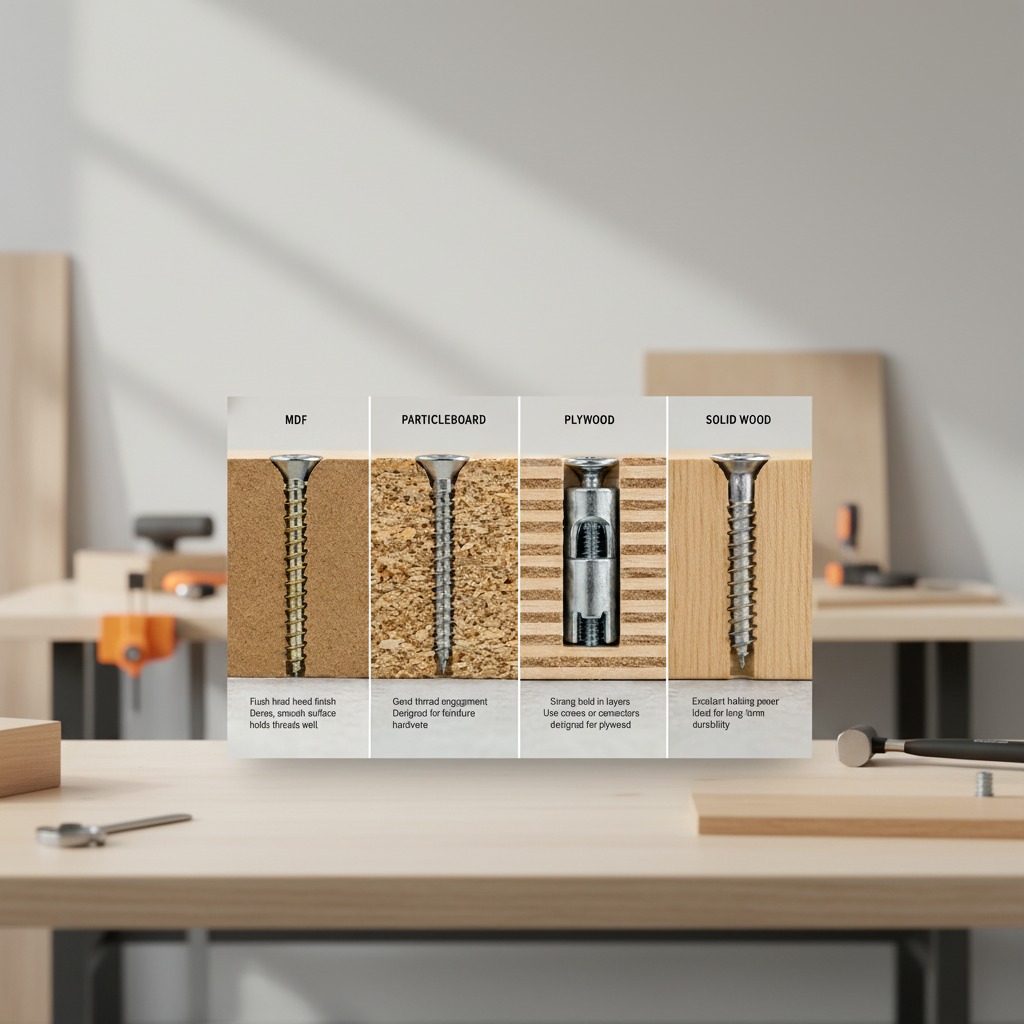
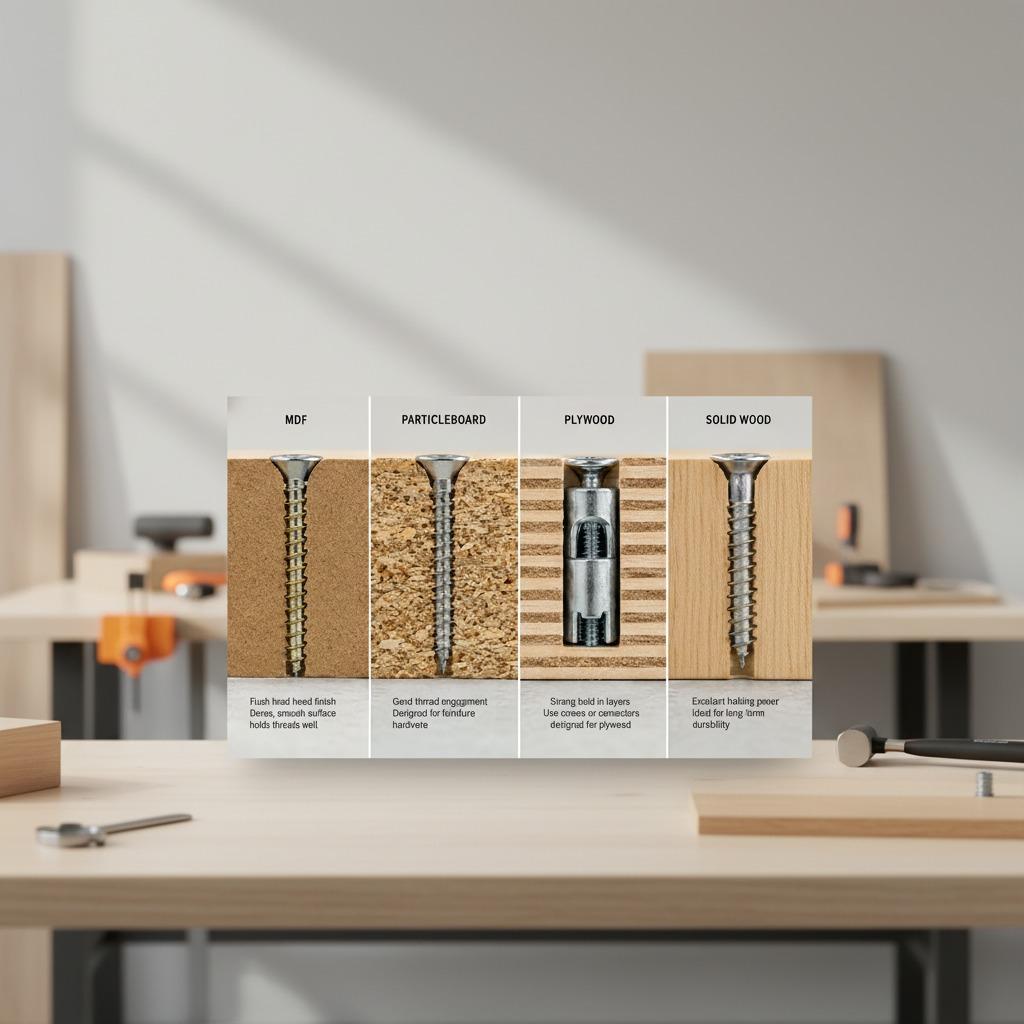
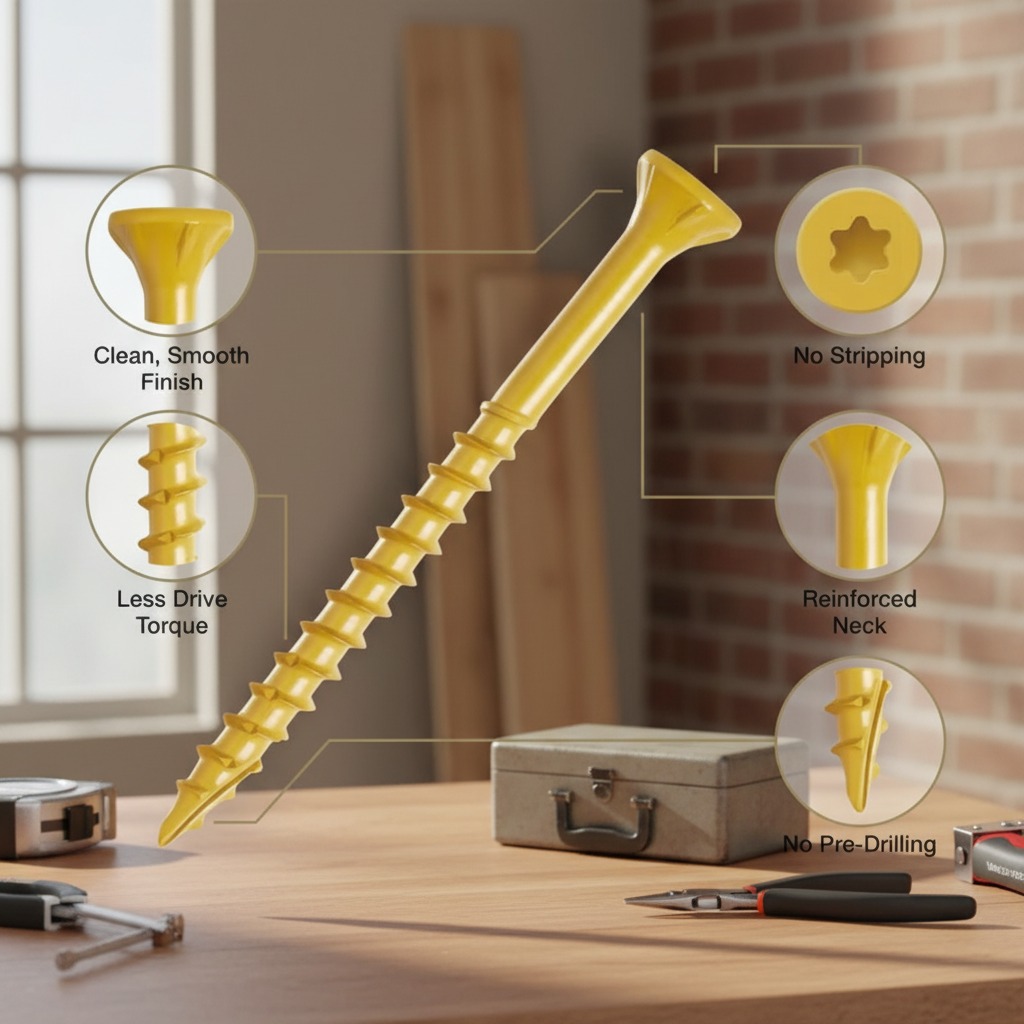
For wood, the main concern is thread bite without splitting the substrate. A wood screw typically needs a profile that grabs firmly and drives without excessive resistance. In furniture, cabinets, and general carpentry, the wrong head style or thread form can make assembly feel rough and leave visible damage around the entry point.
The best screw for metal depends on whether the metal is thin sheet, a bracket, or a thicker structural part. Metal fastenings usually demand a more controlled thread engagement and sometimes a self-tapping or machine-screw approach, depending on the design. If the assembly is going into pre-tapped holes, thread compatibility becomes critical. If it is going into sheet metal, cutting action and chip removal matter more than most buyers expect.
The best screw for drywall is a different category again. Drywall fasteners are selected for holding plasterboard securely without tearing the face paper or crumbling the board edge. They are not a general-purpose substitute for wood or metal work, and treating them as one usually leads to poor holding power.
Quick Buyer Takeaways Before You Compare Options
A useful screw selection guide should make the decision easier, not more abstract. In practice, buyers should narrow the choice by asking four questions:
Which base material is being fastened?
What load or stress will the joint see?
Will the screw be installed by hand, drill, or automated equipment?
Does the application need a standard screw or a custom fastener?
That last point matters for OEMs and hardware wholesalers. Jiangmen Jinhe Hardware Co., Ltd. works across machine screws, self-tapping screws, micro screws, and precision screws, including non-standard customization. For buyers in electronics, furniture, medical devices, automation, or building materials, the difference between a catalog part and a tailored part can be the difference between stable assembly and repeated adjustment on the line.
Why Thread, Head, and Finish Matter More Than People Think
Most sourcing mistakes happen because the conversation stops at length and diameter. Those are important, but they are not the whole story.
Thread style affects grip and insertion force. Head design affects torque transfer, countersinking, and the final appearance of the assembly. Finish affects corrosion resistance and, in some cases, drivability. A bright zinc-plated screw, for example, may be appropriate in many indoor hardware kits, but the buyer should not assume all metallic finishes behave the same in storage or service.
The packaging visible in hardware kits and bucket-style containers is a reminder that selection is not only about the screw. A clear blister or resealable pail can help separate counts, display the contents, and keep mixed hardware organized. For cross-border e-commerce, retail shelves, and service kits, that organization reduces returns and installation errors. It also helps if the pack is labeled clearly by count and size, especially when a kit includes several fastener types.
Common Mistakes in Fastener Sourcing
One recurring mistake is mixing up product categories that look similar. A self-tapping screw may be excellent for one assembly and entirely unsuitable for another. Another is underestimating packaging control: loose bulk screws are cheaper to move, but they are harder to count, easier to mix, and more likely to create headaches in distribution.
A second mistake is ignoring standards. Jiangmen Jinhe Hardware states that its products adhere to GB, DIN, ANSI, BS, JIS, and ISO standards. For industrial buyers, that kind of standard alignment is useful because it reduces ambiguity across drawings, purchasing documents, and international supply chains. Still, the buyer should confirm the exact specification before release. Standards do not replace application review.
How to Evaluate a Supplier Without Getting Lost in Marketing Language
Look for evidence that the supplier understands both manufacturing and application. Jiangmen Jinhe Hardware, founded in 2016 in Jiangmen City, Guangdong Province, produces fasteners in stainless steel, iron, and aluminum, and serves industries including electronics and medical devices. That broad exposure is helpful, but the real value is whether the supplier can translate a drawing or usage need into a stable production part.
Practical signs of a capable fastener supplier include inspection discipline, documentation, and response time. Jinhe describes strict inspection before delivery and support responses within 30 to 60 minutes, with solutions within 2 hours. Those are the kinds of service details buyers should ask about early, not after a shipment problem appears.
What to Ask Before You Place the Order
Before approving a screw order, ask for the exact material, head style, thread type, drive type, and standard reference. If the screws are going into packaged kits, confirm how the parts will be counted, separated, and labeled. A blister pack with distinct compartments may be ideal for spare parts, while a bucket-style container can suit larger retail or trade quantities.
If the application is consumer-facing, packaging visibility matters. If it is production-facing, count accuracy and bin usability matter more. Sometimes both matter, and that is where a supplier with both fastener production and packaging awareness has an edge.
Next Step for Buyers and Product Teams
If you are comparing options for wood, metal, drywall, or mixed hardware kits, start with the substrate and the assembly method, then work backward to the fastener. That one habit eliminates a lot of bad purchases.
For sourcing teams, the next move is to request a matched specification sheet or drawing review from the supplier, especially for non-standard or precision screw requirements. For packaged hardware kits, ask how the parts will be separated, labeled, and protected during transport. It is a small detail on paper, but in the field it is often the difference between a smooth install and a frustrated installer.