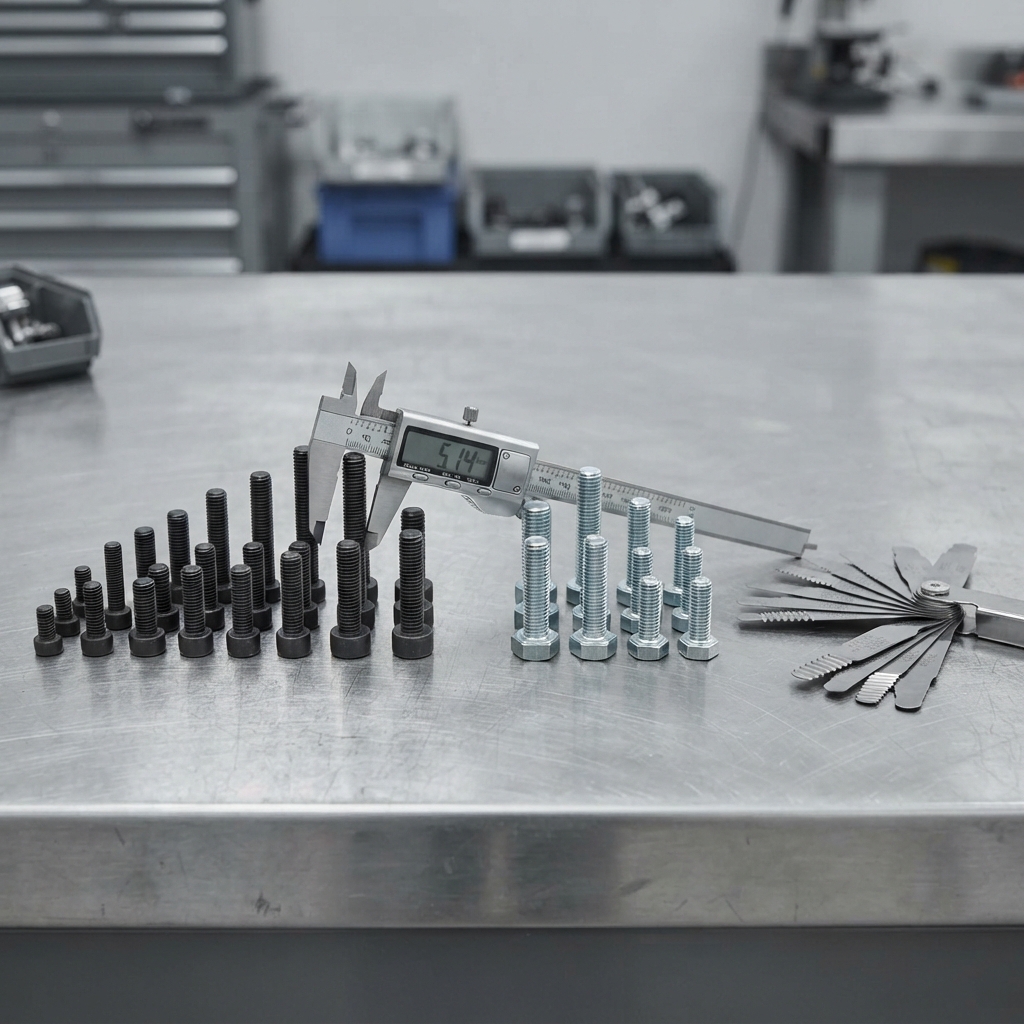

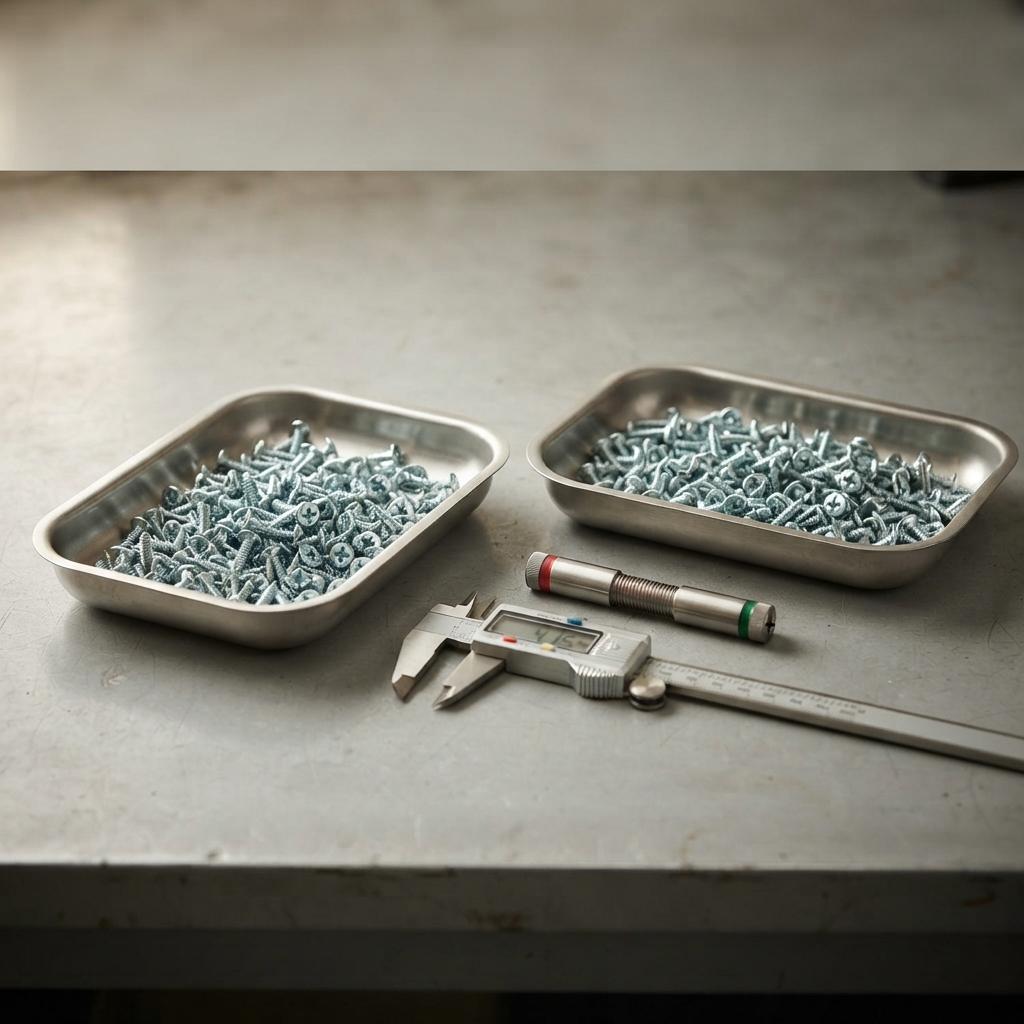
Adding a second screw manufacturer is a risk-reduction project that creates its own risks. It only pays off when the new source is qualified against a frozen specification, its parts are proven interchangeable with your current supplier’s, and volume moves on written rules instead of one cheaper quote. Most failed dual-sourcing programs skip the second step.
This guide is written for OEM purchasing teams, furniture and appliance manufacturers, hardware distributors and private-label brands that already have a working screw program and want a second route without reopening every quality question. It covers when a second source is justified, what the split really costs, how to qualify in sequence, and how to decide which supplier gets which share of the volume.
When a second screw manufacturer is worth the work
Dual sourcing spreads demand across two suppliers to reduce single-source exposure, but it also doubles the coordination surface: two tooling sets, two inspection plans, two packing specifications and two sets of export documents. Amazon Business (2026) frames the trade-off plainly — a second supplier buys resilience at the cost of more management. The question is not whether dual sourcing is good in general, but whether your specific exposure is larger than the added cost.
| Situation | Second source justified? | Qualify this first |
|---|---|---|
| One plant and one set of heading or thread-rolling tools | Yes | Duplicate tooling and first-article equivalence |
| Seasonal or promotional peaks above normal capacity | Yes, as a surge model | Peak capacity evidence and lead time at peak |
| A customer, tender or platform requires a backup source | Yes | The documentation and approval format that customer accepts |
| Tariff, freight or country-of-origin change | Often | Origin, material traceability and landed cost |
| Standard catalog screw with low switching cost | Usually | A simple first article and packaging match |
| A quote that is 8% lower with no process explanation | No | Nothing yet — ask for the cost breakdown first |
If your annual spend on the part is small, if the finish has a plating-line minimum above your yearly volume, or if requalifying the assembly would cost more than the interruption you are insuring against, a qualified backup that never runs may be the better answer than a live 50/50 split.
What “second source” has to mean before you shop
Buyers use three different arrangements under one name, and the difference decides how much work the qualification takes.
Duplicate source
Same drawing revision, same standard and edition, same acceptance criteria, independent tooling, separate lot identity, and parts that can go into the same bin without re-approving the assembly. This is what most OEM programs actually need, and it is the hardest to prove.
Alternate source
A different process route, material source or finish system that meets the performance requirement but is not necessarily a drop-in replacement. It needs requalification of fit, function and appearance, and it usually needs its own part number or deviation approval.
Backup source
Capacity identified and commercial terms agreed, but the part is not qualified, sampled or approved. Useful for emergencies only, and it should be labeled that way in your ERP so no planner treats it as available stock.
If you cannot say which of the three you are buying, the qualification has no exit criteria and no one can decide when it is finished.
The split costs nobody quotes in the unit price
A second source rarely lowers total cost at the same volume. It lowers risk and adds administrative cost. Size the added cost before you commit, or the savings from competition will be eaten by the overhead of running two programs.
| Cost line | Where it appears | How to size it before you commit |
|---|---|---|
| Duplicate tooling | Heading dies, thread-rolling dies, punch tooling, gauges | One-time charge per part; ask who owns the tool and whether it can move if you change supplier |
| Smaller lots per run | Setup time spread over fewer pieces; lost quantity break | Quote at your real split quantity, not your total annual volume |
| Finish batch minimums | Plating or coating line load minimum; color batching | Ask for the minimum load per finish and per color before choosing a split |
| Freight and documents | Two shipments, two export document sets, LCL instead of FCL | Price freight per shipment at the actual split volume, not per year |
| Inventory | Safety stock held at two sources; two lot balances | Carrying cost of the extra safety stock plus the extra cycle stock |
| Quality administration | Two inspection plans, two certificates of analysis, two sample retains, two audits | Hours per month plus the cost of the second audit |
| Lost price leverage | Lower volume at each supplier weakens the next annual re-quote | Test the published price-break table before splitting 50/50 |
The break-even test is simple: split when the annual cost of a supply interruption — lost line time, expedited freight, customer penalties, emergency tooling — is larger than the added cost above. For a low-value standard screw bought once a year, it usually is not.
Qualify the second screw manufacturer in nine steps
- Freeze the specification. Put the same drawing revision, standard and edition, finish specification, acceptance criteria and pack specification in front of both suppliers. Where a requirement is genuinely open, write “to be confirmed” rather than letting each supplier fill the gap with its own default.
- Screen capability against the part, not the brochure. Send one representative drawing and ask which process step creates each critical feature, where variation enters, and how each feature is checked. A screw RFQ checklist makes the answers comparable across candidates.
- Review tooling and the process route. Will the part need new dies or can existing tooling run it? Which operations are in-house and which are outsourced? If coating is outsourced, how does the batch stay identified between processes?
- Approve a first article, not a pretty sample. Require a dimensional report on the critical characteristics you defined, with the gauge, operator and drawing revision recorded. A sample approved on appearance alone proves almost nothing about the production run.
- Run a cross-supplier comparison. Take 30 pieces from each supplier, measure them with the same gauges, by the same operator, under the same conditions, and compare distributions rather than single readings. This is the step that finds a 0.05 mm offset before it becomes a line stop.
- Produce in parallel, not in theory. Give the second source 10–20% of monthly volume for two or three lots, run on its normal equipment and packed on its normal packing line. A pilot batch assembled by the quality manager is not evidence of routine production.
- Prove packaging equivalence. Match the count method (weight count versus piece count), label fields, barcode position and carton marks. A correct screw in a differently labeled bag will still stop a receiving line.
- Fix the document set. Agree the certificate of analysis per lot, the material certificate where required (EN 10204 3.1 if your drawing calls for it), the inspection record, and a lot code that links the carton to production date and material heat.
- Write the ramp and exit rules. State what score moves volume, in what increments, with how much notice, and what pauses the second source. Rules written after a failure are negotiations; rules written before it are governance.
Prove interchangeability, not similarity
Two screws can meet “the same” drawing and still fail in the same assembly. The differences sit in characteristics that drawings often leave loose or that finishing changes after the part is made.
| Characteristic | Why two approved parts can still differ | Check to run |
|---|---|---|
| Thread class and coating thickness | Plating adds material to the thread flank; a 6g part with heavy zinc can bind in the mating thread | Go/no-go gauge after coating, plus a mating-part trial |
| Drive recess depth and geometry | A shallow recess cams out under torque and damages the bit | Driver engagement and torque-to-failure test |
| Head height and bearing face | A head a few tenths proud interferes with the mating part or washer | Assembled joint check, not a loose-part measurement |
| Point geometry | A different point changes starting behaviour and splitting risk in wood or board | Insertion trial in the real substrate |
| Hardness and case depth | Affects drive, thread forming and brittle fracture risk | Hardness test at the agreed sampling rate |
| Lubrication and friction | Different friction gives a different clamp load at the same torque | Torque-tension check on critical joints |
| Length datum | Measuring under the head versus to the point changes the effective grip | Agree the datum on the drawing and on the inspection report |
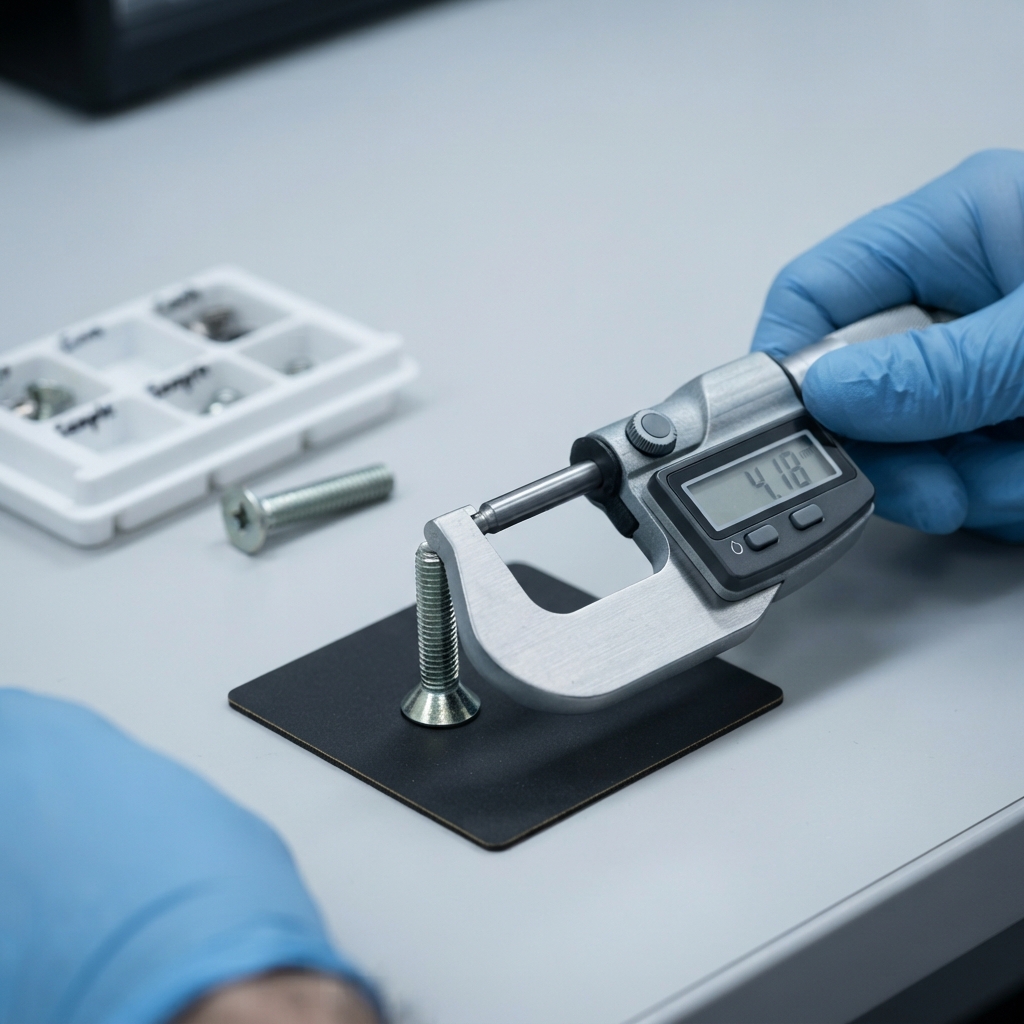
Measurement agreement is part of interchangeability. If two suppliers’ labs disagree by more than the tolerance on the same part, define a referee method and an independent third lab before arguing about the parts. Coating thickness and thread fit interact, which is why thread tolerance classes should be checked after finishing, not before.
Choose an allocation model before the first split purchase order
The split percentage is a management decision, not a purchasing accident. Pick the model that matches your risk and your volume, and write it into the supply agreement.
| Model | Split | Best for | Watch out for |
|---|---|---|---|
| Qualified backup | 100/0, second source approved but idle | Low-volume or highly engineered parts | The backup drifts without production; re-verify annually |
| Incumbent-weighted | 80/20 | Most programs starting dual sourcing | 20% may fall below the second supplier’s MOQ or price break |
| Balanced | 70/30 | Two genuinely comparable sources | Needs strong scorecard discipline to stay balanced |
| Equal | 50/50 | Commodity standard parts | Loses volume leverage at both suppliers; freight and admin double |
| Award by part or plant | Each supplier owns different items | Multi-part catalogs and regional plants | Planning and traceability become complex |
| Surge-only | Second source covers peaks | Seasonal demand | Capacity may not be reserved when the peak arrives |
A common mistake is to start at 50/50 because it feels fair. Unless both suppliers are proven on the same part and the volume is large enough to keep both price breaks, an 80/20 start protects the incumbent relationship and keeps the second source running enough to stay qualified.
Let a scorecard move the volume
Dual sourcing only works if the split is decided by performance data rather than by whoever emails last. Agree the metrics and the consequences at the start of the program.
| Metric | Example target | Data source | Action if missed |
|---|---|---|---|
| On-time delivery | 95% or better | Purchase order date versus actual ship date | Shift 5–10% of volume next quarter |
| Lot quality | Agreed PPM or AQL result | Incoming inspection, for example ISO 2859-1 sampling | 100% inspection and a corrective action report |
| First-article approval | Approved on first pass, no rework | First-article report | No volume ramp until the open points close |
| Document accuracy | 100% certificate and lot match | Receiving audit | Hold the lot and investigate the labeling process |
| Claim response | Within the agreed number of days | Claim log | Escalate and reduce the next allocation |
| Price variance | Within the agreed band | Quotation versus agreed index or baseline | Re-quote with a cost breakdown |
Write the mechanics down: review quarterly, move volume in 5–10% steps, give 30–60 days notice, and never switch suppliers in the middle of a lot or a production run. A supplier that loses 10% of volume for a measurable reason will fix the reason; a supplier that loses 50% overnight will protect its margin instead.
Common mistakes in second-source programs
- Calling a sample an approval. A sample proves a shape; an approved first article with a dimensional report and a revision number proves a process.
- Splitting before interchangeability is proven. Volume is not a test; it is a commitment. Prove the parts match first.
- Giving the hardest finish to the newest supplier. Start with the simplest, most stable specification and move the difficult colors or coatings later.
- Different packaging specifications at each supplier. Receiving errors then look like supplier errors.
- No notice period in the agreement. Sudden volume cuts produce either idle capacity or rushed lots, and both hurt quality.
- Two specifications and one complaint. If each supplier works to its own drawing revision, the buyer owns the resulting mismatch.
- Chasing a 2% price difference while adding 6% in administration. Compare total landed cost, including the split overhead.
When dual sourcing is the wrong answer
- Annual volume is below the finish or tooling minimum at either supplier.
- The part is highly engineered and the requalification cost exceeds the interruption risk.
- You do not have the engineering time to run the cross-supplier comparison properly — an unproven second source is worse than a known single source.
- The second supplier’s price advantage disappears once split quantities, freight and inspection are priced honestly.
What a second source needs from a manufacturer like JHFIX
JHFIX’s public pages describe a manufacturing company, Jiangmen Jinhe Hardware Products Co., Ltd., operating since 2004 in Jiangmen, Guangdong, with cold heading, tapping, stamping, injection molding, assembly, packing and an inspection room under one structure, plus an authorized export partner that handles quotations, contracts, invoices and export coordination. Published custom ranges cover thread sizes from M1 to M12 and lengths from 3 mm to 200 mm, with a stated MOQ of 10,000 pcs per confirmed specification. Finishes offered for review include zinc plating, Ruspert coating, spray painting, electrophoretic coating, blackening, and gold, silver or copper plating; packaging includes bulk cartons, counted bags, compartment packs and private-label cartons. The company states that it exports to more than 40 countries.
Those are capability statements, and they are the start of a second-source review, not the conclusion. What decides the program is whether the factory can hold your drawing revision, pass a cross-supplier comparison against your incumbent, and pack to the same instruction every lot. You can review the screw product range and the manufacturing overview before sending a drawing for part-specific review.
Frequently asked questions
How long does it take to qualify a second screw manufacturer?
It depends on whether new tooling is needed, how quickly the first article is approved and how many parallel lots you require. A standard part with existing tooling can move in weeks; a custom part with new dies, a new finish and a customer approval step typically takes longer. Ask each candidate for a milestone schedule and hold them to the dates rather than to a single total.
Do I need new tooling for a second source?
Often yes, because heading dies and thread-rolling dies are usually supplier-specific. Ask whether the tooling is charged separately, amortized into the unit price, or owned by the supplier, and confirm in writing whether the tool can be transferred if you move the part later.
Can two manufacturers make the same screw and still produce non-interchangeable parts?
Yes. Coating thickness, thread class, recess depth, head height, point geometry and lubrication can all differ within a drawing’s loose fields. That is why a cross-supplier comparison on the same gauges matters more than a certificate that both suppliers meet the same standard.
Should the second source get the same order quantity as the incumbent?
Not at first. Run 10–20% of monthly volume for two or three lots, then decide the steady-state split from the scorecard. Equal volume from day one gives you no room to reduce the allocation if the first lots underperform.
How do I compare parts from two suppliers fairly?
Use one gauge set, one operator, one measurement programme and a defined sample size — 30 pieces per supplier is a practical starting point. Record the drawing revision and lot for each sample, compare distributions rather than single values, and agree a referee laboratory before a dispute starts.
Is dual sourcing worth it for a standard catalog screw?
Usually yes, because the qualification is light: a first article, a packaging match and a short parallel run. The risk of a standard part is rarely geometry; it is availability, so a second source with reserved capacity is often enough.
What documents should each lot carry?
At minimum a certificate of analysis tied to the lot, the inspection record for the agreed characteristics, and a lot code that links the carton to production date and material heat. Add a material certificate such as EN 10204 3.1 only if your drawing or customer requires it; a document that nobody specified is a document nobody checks.
Can JHFIX quote as a second source?
Send the drawing or sample, the application, the critical characteristics, material and finish, the current supplier’s packaging instruction and your estimated split volume. The team can then confirm feasibility, tooling needs and what has to be proven before a parallel run.
Conclusion
A second screw manufacturer reduces risk only when it is a duplicate source rather than a hopeful substitute: same frozen specification, proven interchangeability, matched packaging, and volume that moves on a scorecard. Size the split costs first, qualify in sequence, and write the allocation rules before the first purchase order. Done that way, the second source is insurance you can actually rely on; done casually, it is two quality problems instead of one.
If you are planning a parallel run, send JHFIX your drawing revision, the characteristics that decide fit, your current packaging instruction and the volume you intend to split. Start from the screw range or go straight to the contact page for a part-specific review.
References
- Amazon Business (2026) — Dual sourcing strategy: Reduce single-supplier risk
- ISO 2859-1 — Sampling procedures for inspection by attributes (cited by name; apply the edition your customer requires).