
Why Buyers Keep Looking for a Reliable Self-Tapping Screw Manufacturer
When product teams or purchasing managers start comparing fastener suppliers, the search often begins with a simple question: who can produce screws that drive smoothly, hold securely, and create fewer problems during installation?
That is exactly where a reliable self-tapping screw manufacturer becomes valuable.
For drywall installation, light construction, furniture assembly, building materials, and other applications involving panels or thin substrates, the wrong screw can slow down work, strip during installation, damage the surface, or create hidden problems that only appear later in the field.
A buyer is not only purchasing a screw. They are trying to reduce assembly risk.
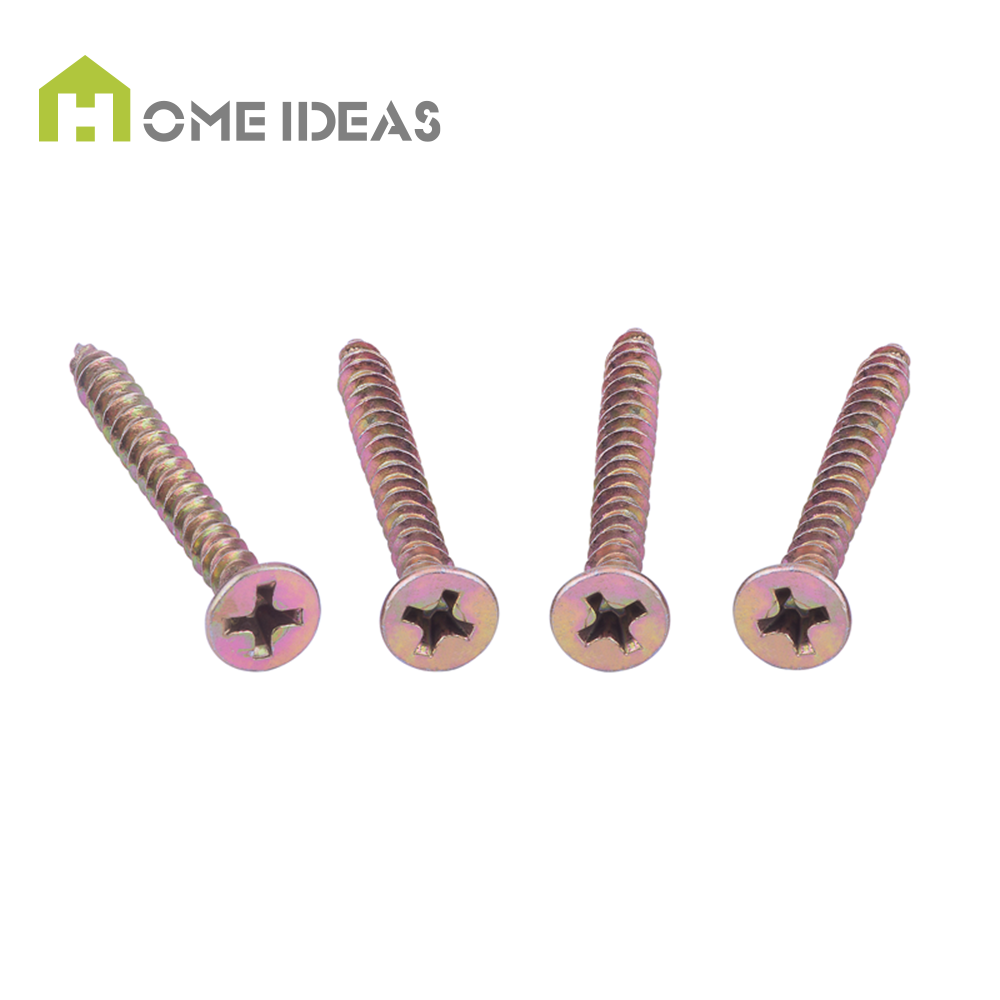
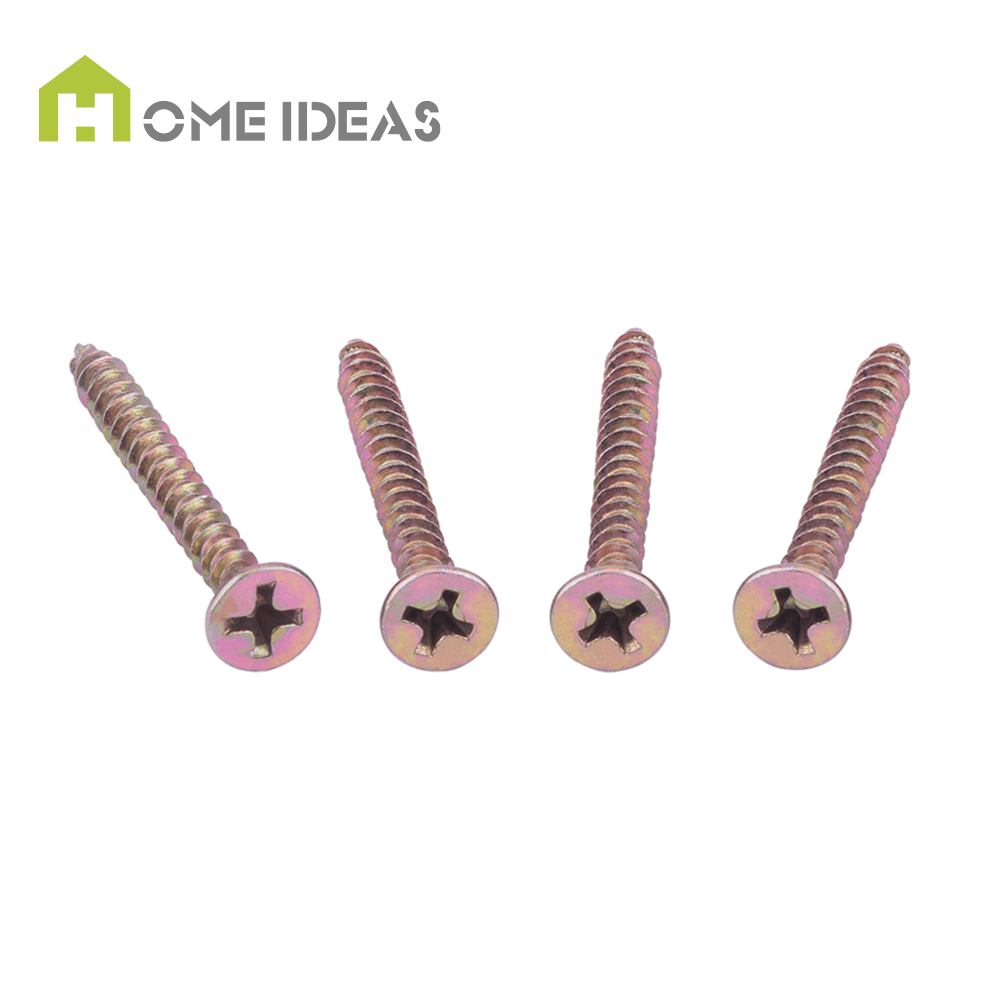
The screw shown in this type of application usually has several common features buyers often request: a Phillips drive, countersunk head, coarse full thread, and sharp point. This is a practical fastening design rather than a decorative one. The surface also appears to have a yellow or gold-toned plated finish, which is common for many plated steel fasteners.
However, unless the coating chemistry and test data are clearly provided, it is better to describe this finish as a corrosion-resistant appearance rather than making unsupported performance claims. Professional buyers understand this difference. Good manufacturers should, too.
What Screw Geometry Tells Buyers at First Sight
For buyers, screw shape is not just a visual detail. It tells them how the fastener may behave during installation.
A countersunk head screw is designed to sit flush or nearly flush with the surface. This is especially useful in drywall, interior finishing, furniture panels, and applications where a raised screw head may affect appearance or assembly.
A Phillips drive remains common because it is widely recognized and easy to use on job sites. But anyone who has worked with installation teams knows one thing clearly: if the driver bit does not match well, or if the operator applies too much force, Phillips drive screws can strip.
The coarse and deep thread profile suggests that the screw is designed to bite efficiently into softer or thinner materials. This can be useful for drywall, wood-based panels, light construction, or general assembly. Still, the final suitability depends on the actual substrate, thread dimensions, core diameter, hardness, and installation conditions.
The sharp point suggests that the screw may enter some materials without pre-drilling. But unless the supplier confirms the design, buyers should not automatically assume it has true self-drilling performance.
This is one of the most common sourcing mistakes: buyers see a pointed screw and assume it can handle every material. It cannot.
Self-Tapping Screw Manufacturer, Distributor, or Wholesaler: Which One Do You Really Need?
This is where many purchasing teams waste time.
A self-tapping screw distributor is useful when you need quick delivery, mixed quantities, or local inventory.
A self-tapping screw wholesaler can be useful when your priority is bulk purchasing and repeat price advantage.
But when the screw is connected to a product platform, customized packaging, coating requirements, furniture kits, or long-term production planning, a self-tapping screw manufacturer is usually the better choice.
Why?
Because you can discuss the real technical details directly:
- Material
- Thread design
- Head style
- Drive recess
- Surface treatment
- Application material
- Packaging format
- Inspection requirements
- Custom dimensions
- Export documentation
For B2B buyers, these details matter more than a product photo.
A product image can show appearance. It cannot prove whether the screw will perform correctly in your material.
Where This Type of Screw Is Commonly Used
Based on the visible geometry, this type of screw is commonly associated with drywall installation, interior finishing, furniture assembly, and light construction.
It may also be used in applications such as:
- Drywall fixing
- Interior decoration
- Light building materials
- Furniture panels
- Wood-based boards
- Thin sheet fastening
- General hardware assembly
- DIY and repair kits
Still, buyers need to be careful.
Not all sharp-pointed, coarse-thread screws are interchangeable. Two screws may look almost the same in a photo but behave very differently during installation. Thread depth, core diameter, coating quality, material hardness, and substrate density can all change the result.
If the screws will be used repeatedly in production, buyers should always test samples in the actual base material before confirming a bulk order.
What Buyers Should Ask Before Placing an Order
A responsible purchasing decision usually comes down to several practical checks. These checks are not complicated, but they can prevent expensive mistakes.
1. Confirm the Screw Material
Do not assume the material based on surface color.
A shiny or yellow-toned surface does not automatically mean stainless steel, and a corrosion-resistant appearance does not always mean the screw is suitable for harsh environments.
Buyers should confirm:
- Carbon steel, stainless steel, iron, aluminum, or other material
- Material grade
- Hardness requirement
- Magnetic or non-magnetic requirement
- Whether heat treatment is needed
- Whether the material is suitable for the application environment
For example, a screw used in dry indoor furniture does not need the same corrosion performance as a screw exposed to humidity or outdoor conditions.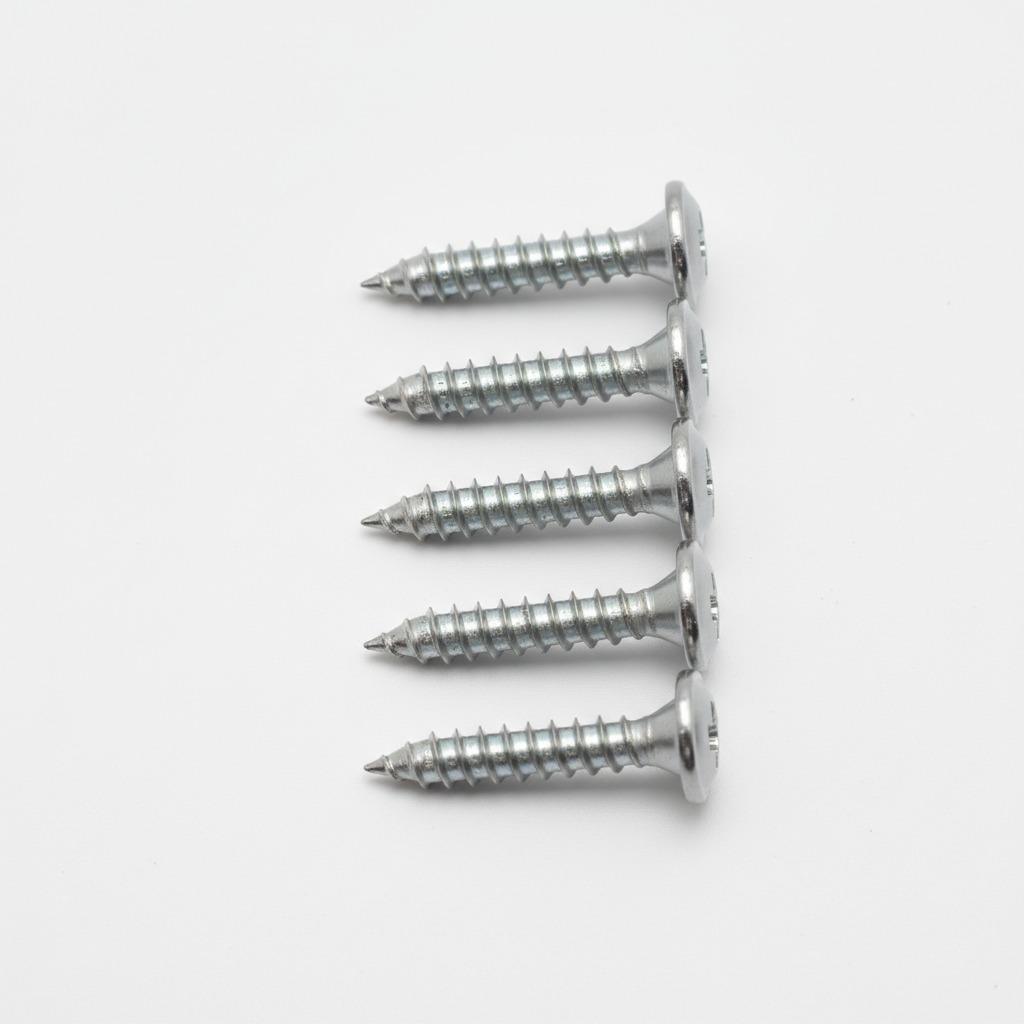
2. Confirm the Drive and Head Dimensions
The Phillips recess and countersunk head may be visible, but the exact dimensions are not.
This affects tool compatibility, installation speed, and final assembly quality.
Buyers should confirm:
- Drive type
- Recess size
- Head diameter
- Head height
- Countersunk angle
- Screw length
- Thread diameter
- Thread pitch
If the screw will be installed with automatic or semi-automatic tools, this becomes even more important. Poor drive fit can cause stripping, tool wear, slow installation, and production line interruptions.
3. Confirm the Coating
The plated appearance may be suitable for many indoor applications, but buyers should ask what the surface treatment actually is.
Possible coating options may include:
- Zinc plating
- Yellow zinc plating
- Nickel plating
- Black oxide
- Phosphate coating
- Stainless steel natural finish
- Other customized surface treatments
Buyers should ask:
- What is the coating process?
- Is the coating suitable for the storage environment?
- Is it designed for indoor or outdoor use?
- Is salt spray testing available if required?
- Will the coating affect installation performance?
- Is the color only decorative, or does it indicate a specific finish?
A serious self-tapping screw manufacturer should be able to explain coating options clearly instead of only saying “anti-rust.”
4. Confirm Standards and Documentation
If your project needs compliance documents, do not wait until shipment to ask for them.
Buyers should confirm whether the supplier can provide:
- Product specifications
- Material confirmation
- Inspection reports
- Standard references
- Packaging details
- Batch information
- Test records if required
- Export documents
For industries such as furniture, building materials, electronics, automation, and medical devices, documentation is often part of the purchasing decision.
A screw without clear documentation may still work in simple applications. But for production buyers, unclear specifications create risk.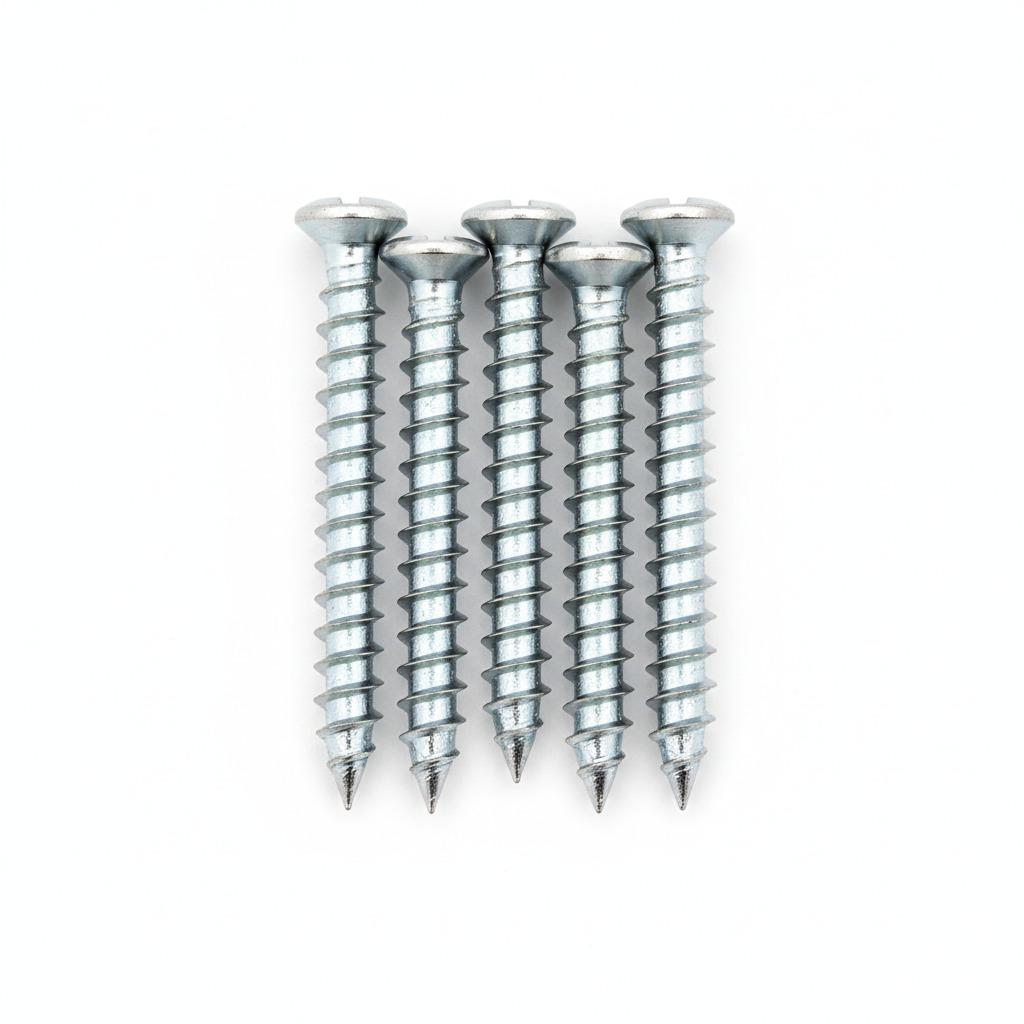
Common Mistake: Buying by Appearance Alone
The most common sourcing mistake is assuming that a screw that looks right in a photo will also work correctly in the actual application.
This problem is especially common in wholesale screw listings, where product names can be broad and images are often generic.
A safer approach is simple:
- Request samples.
- Test the screw in the actual substrate.
- Check drive engagement.
- Confirm whether it is self-tapping, self-drilling, or simply a pointed coarse-thread fastener.
- Review coating and packaging requirements.
- Confirm repeat-order consistency.
For purchasing teams, this is not overthinking. It is basic risk control.
A poor screw choice can cause more loss than the screw price itself. Installation delays, damaged panels, stripped heads, rework, returns, and customer complaints all cost money.
Why Manufacturer Communication Matters
Fastener purchasing often looks simple from the outside. In real projects, communication speed matters a lot.
If a screw is part of an assembly process, delayed answers can slow down sample approval, packaging confirmation, production planning, or shipment scheduling.
A reliable self-tapping screw manufacturer should be able to respond clearly to practical questions:
- Can this screw be used in my material?
- Can you adjust the length or thread?
- Can you make the head sit flush?
- Can you provide this coating?
- Can you pack it in small bags, boxes, blister packs, or hardware kits?
- Can you support repeat orders?
- Can you provide documents before shipment?
- Can you produce according to a sample or drawing?
Buyers do not need vague promises. They need answers that help them make decisions.
Why Buyers Choose a Manufacturer Instead of Only a Wholesaler
For standard, low-risk purchases, a wholesaler may be enough. But for long-term B2B supply, a manufacturer offers stronger control.
A manufacturer can usually support:
- Custom screw sizes
- Custom materials
- Custom coatings
- Custom head styles
- Custom drive types
- OEM production
- Private label packaging
- Hardware kit packaging
- Inspection before shipment
- Stable repeat supply
This is especially important for:
- Furniture manufacturers
- Building material suppliers
- Hardware distributors
- DIY product brands
- E-commerce hardware sellers
- Construction product importers
- Industrial assembly companies
These buyers are not only asking, “How much is the screw?”
They are asking, “Can this supplier help me avoid future problems?”
That is the real difference.
Jiangmen Jinhe Hardware as a Self-Tapping Screw Manufacturing Partner
Jiangmen Jinhe Hardware Products Co., Ltd. is based in Jiangmen, Guangdong, China, and supplies different types of screws and hardware products for domestic and overseas buyers.
The company’s product range includes:
- Machine screws
- Self-tapping screws
- Miniature screws
- Precision screws
- Furniture hardware
- Nuts
- Customized fasteners
- Hardware packaging solutions
Available materials may include stainless steel, iron, aluminum, carbon steel, and other materials depending on customer requirements.
The company can support products according to common standards such as GB, DIN, ANSI, BS, JIS, and ISO when required by the buyer’s specification.
This kind of product range is useful for buyers who need more than one screw model. Many B2B projects require several related fasteners, matching accessories, or custom packaging. A manufacturer with broader fastener capability can help reduce supplier management costs.
What Makes a Self-Tapping Screw Manufacturer Worth Choosing?
A qualified manufacturer should make the sourcing process easier, not more confusing.
Buyers should look for these capabilities:
Application Understanding
The supplier should ask where and how the screw will be used. A screw for drywall is not always the same as a screw for MDF, thin metal, or plastic.
Stable Manufacturing Quality
Head shape, thread accuracy, point sharpness, drive recess, and coating should remain consistent across batches.
Customization Ability
The supplier should support reasonable customization in size, material, coating, head type, drive type, and packaging.
Sample Support
Buyers should be able to test samples before placing a bulk order.
Packaging Options
For furniture, DIY, retail, and e-commerce customers, packaging is not a small detail. It affects installation, inventory, and customer experience.
Useful packaging options may include:
- Bulk packaging
- Small bag packaging
- Box packaging
- Blister packaging
- Hardware kits
- Private label packaging
- Barcode labels
Inspection and Documentation
The supplier should provide inspection support and relevant documents when required.
Buyer’s Note: Start with the Application, Not the Price
If you are comparing fastener suppliers for drywall, light construction, furniture, or building material applications, the goal is not simply to find the lowest price.
The goal is to find a supplier who can confirm:
- Material
- Screw geometry
- Coating
- Head and drive type
- Application suitability
- Packaging method
- Inspection support
- Repeat supply capability
A low-cost screw that causes installation problems is not a low-cost purchase.
A qualified self-tapping screw manufacturer should make communication clear. If you are evaluating screws for production, packaging, or export supply, request samples, ask for technical details, and make sure the manufacturer explains exactly what the screw is designed to do in your actual material stack.
FAQ: Self-Tapping Screw Manufacturer Selection
Why do buyers look for a self-tapping screw manufacturer instead of a distributor?
Buyers usually choose a manufacturer when they need better control over material, coating, dimensions, packaging, quality inspection, and repeat supply. Distributors are useful for fast stock purchases, but manufacturers are better for custom or long-term B2B projects.
Can this type of screw be used for drywall?
Yes, screws with a sharp point, coarse thread, and countersunk head are commonly used in drywall and light construction applications. However, the final selection should depend on the exact screw specification and installation material.
Is a pointed screw always a self-drilling screw?
No. A sharp point does not automatically mean the screw is self-drilling. Self-drilling screws usually have a drill-point tip designed to penetrate specific materials. Buyers should confirm this with the supplier before ordering.
What information should I provide to a screw manufacturer?
You should provide screw size, material, head type, drive type, thread requirement, surface treatment, application material, quantity, packaging method, and any inspection or documentation requirements.
Should buyers request samples before bulk orders?
Yes. Sample testing is strongly recommended, especially when the screw will be used in production, furniture assembly, construction materials, or custom hardware kits.
Can self-tapping screws be customized?
Yes. A capable manufacturer can support custom size, thread design, material, coating, head style, drive type, packaging, and private-label requirements.
Next Step
If you are sourcing self-tapping screws for a project, product line, furniture kit, construction application, or export supply, contact Jiangmen Jinhe Hardware Products Co., Ltd. before confirming your order quantity.
Share your application material, screw specification, packaging requirement, and target quantity. The team can help you review the right screw type, customization options, sample testing, and shipping requirements before mass production.