
Why Fastener Selection Matters in Furniture and Fixture Supply
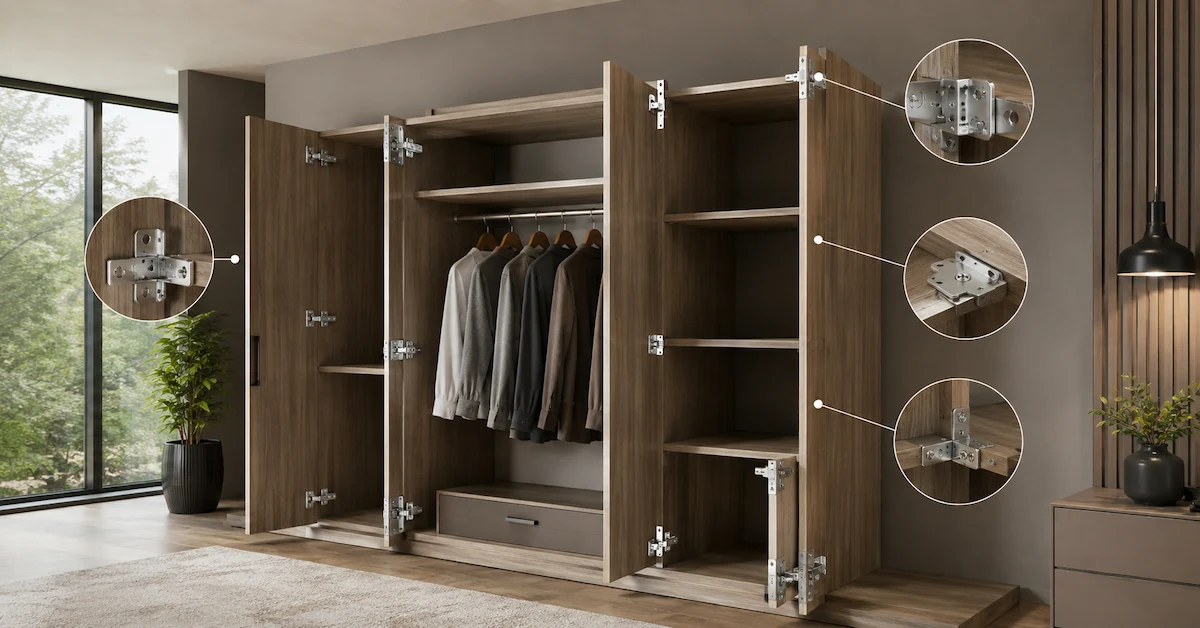
For anyone sourcing from a wardrobe hardware manufacturer, certain small parts often determine whether an entire cabinet arrives sturdy and durable, or a headache just six months later. A screw may seem insignificant, but in wardrobe, shelf, and light assembly work, it bears the weight, maintains alignment, and affects the speed at which workers complete the job. The same principle applies to other related categories, such as kitchen cabinet hardware, shelf support hardware, furniture connectors, and even some light framing applications.
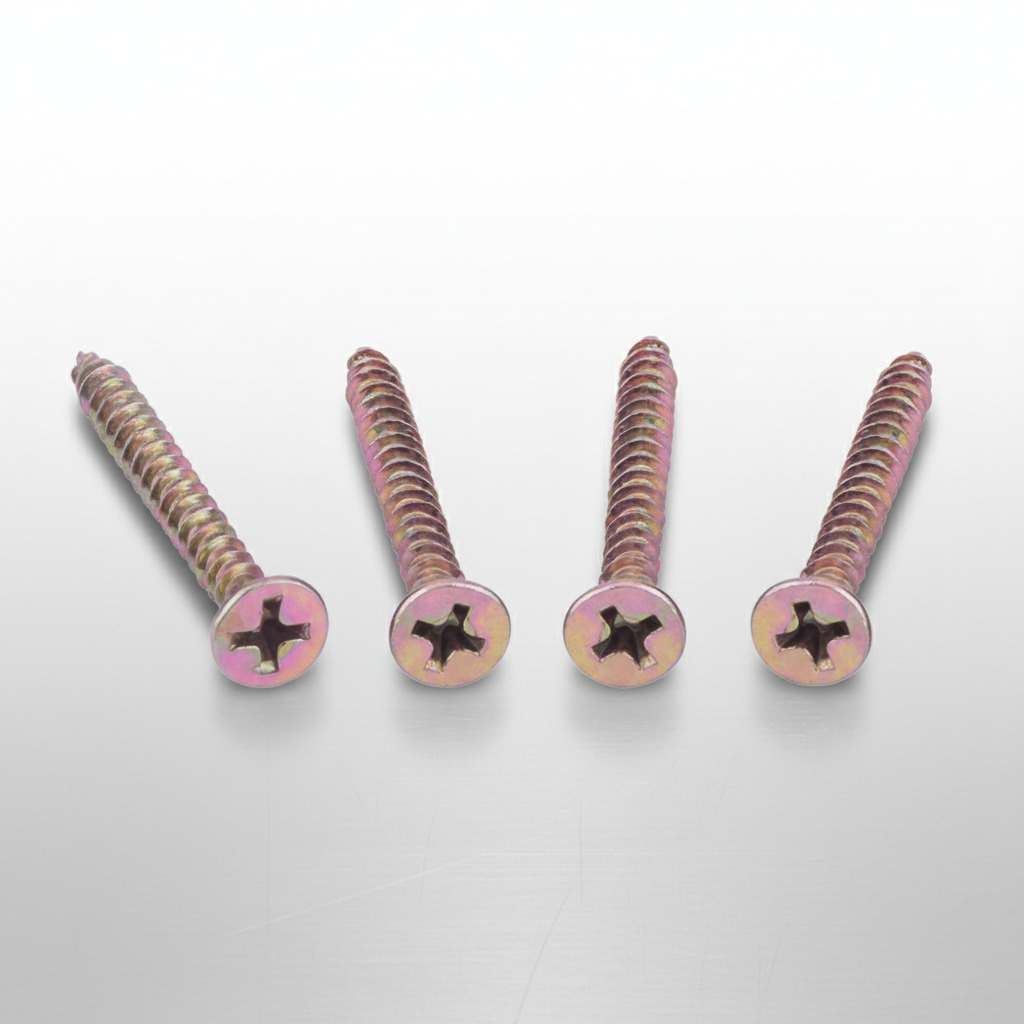
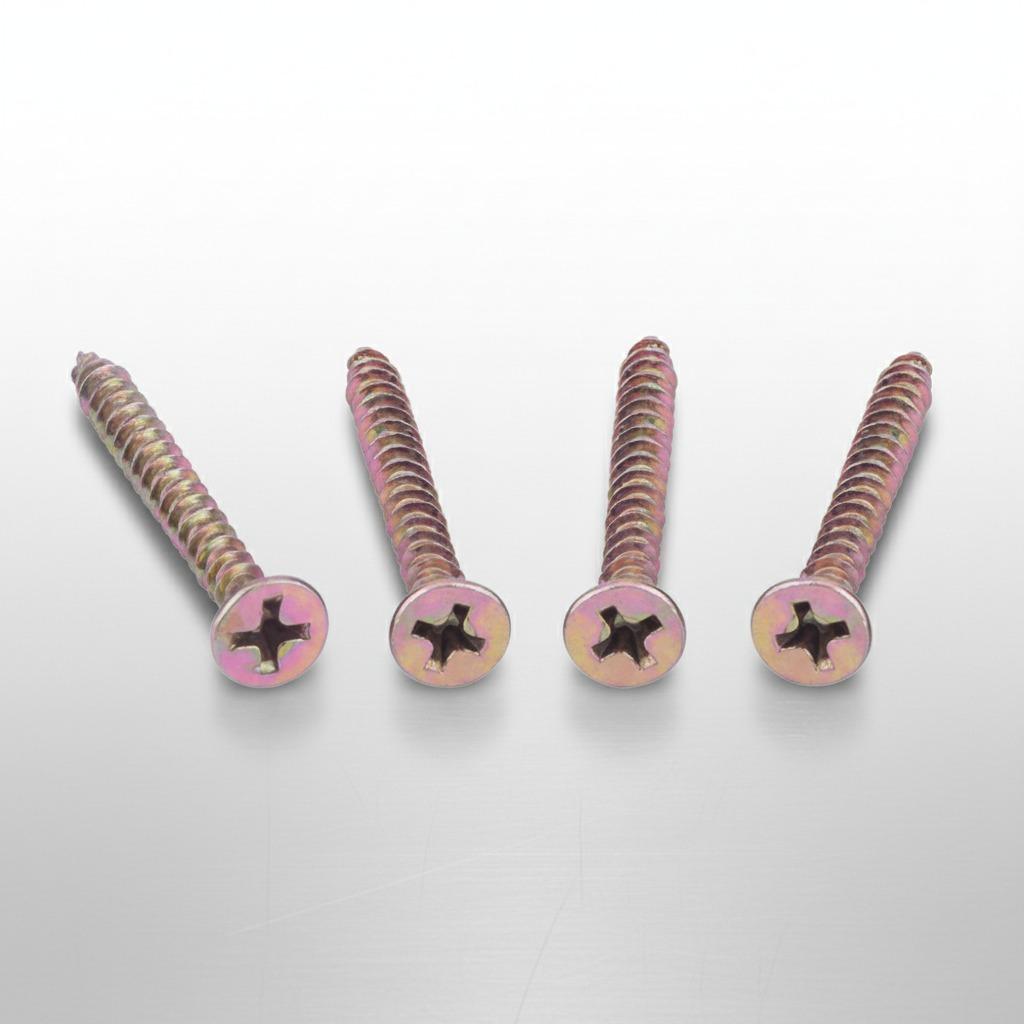
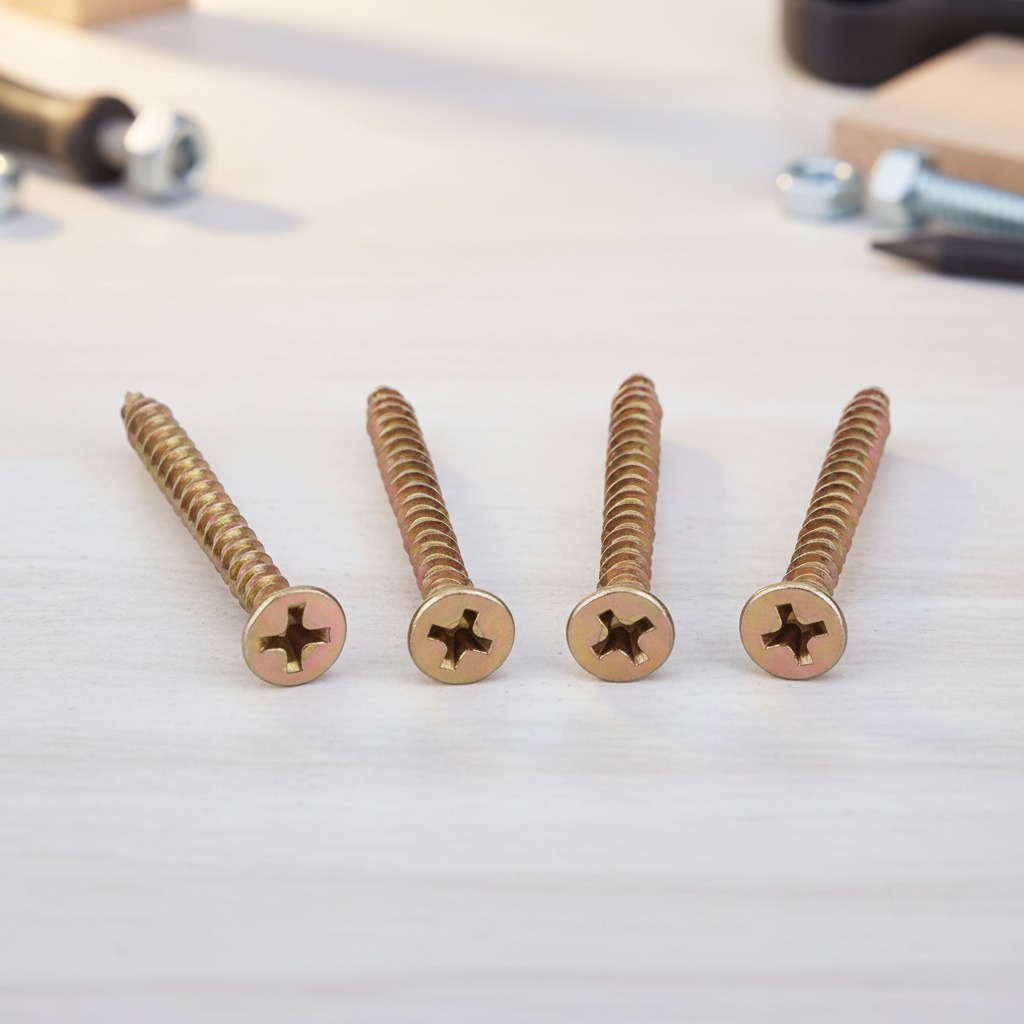
The provided image shows a set of four metal screws with Phillips head grooves, countersunk heads, coarse threads, and a plating similar to yellow zinc or zinc chromate. This combination suggests a practical fastener rather than a decorative one: designed for quick tightening, good holding power, and basic corrosion resistance. Without technical drawings, it's premature to determine the exact type of screw, but based on the visible geometry, it's likely a self-tapping or self-drilling fastener used in speed-critical assembly work.
What is this screw used for?
In furniture and construction assembly, these types of screws are often chosen when installers require a fastener that can engage materials without pre-drilling. This makes them suitable for drywall installation, light framing, panel fixing, and general maintenance. Depending on the screw tip and substrate, they can also be used for assembling wood, thin sheet metal, or composite materials. Consumers should note that while they are convenient fasteners, convenience should not replace the proper fit between the screw and the substrate.
This is crucial for the purchasing team because a series of fasteners might be suitable for one product line but completely unsuitable for another. For example, the fastening method required for a wardrobe frame might differ from that for shelf supports or cabinet back panels. Typically, wardrobe hardware manufacturers that also supply related accessories such as furniture handles or connectors understand this difference and can help determine the appropriate fasteners for each application scenario.
Quickly visually read the information provided about the fasteners.
What can be confirmed from the picture?
The visible screws are Phillips head, flat head or countersunk head, fully threaded or nearly fully threaded, and pointed. The surface treatment is a distinctive iridescent gold-pink color characteristic of a zinc-based protective coating. Four products are shown in the image.
Things that shouldn't be taken for granted
Don't assume that the diameter, length, pitch, corrosion resistance grade, or whether the drill tip is self-drilling or self-tapping are important details in production. These details should be confirmed through specifications or sample testing, rather than guessing based on appearance alone.
Selection criteria that buyers should actually use
The first thing to consider is the substrate. Fasteners for wood, drywall, and thin steel sheets are not interchangeable, even if they look similar on a pallet. The second is the head style. Countersunk screws are typically chosen when the screw needs to be flush or nearly flush with the surface, a common choice for furniture and panels. The third is corrosion resistance. Zinc coating is common for general indoor applications, but the final choice should be based on the product environment and customer expectations.
For furniture manufacturing projects, checking drive compatibility is also crucial. While Philips drives are common and widely available, stripping can occur if worn drill bits or inconsistent torque are used on the assembly line. This may seem like a minor issue in the workshop, but when stripping starts to occur on high-volume production lines, it can result in significant cost losses.
Common Procurement Mistakes
Buying screws based solely on appearance is a common mistake. Another mistake is assuming that screws used in one cabinet model will perform the same in others. Material thickness, hole type, and assembly speed all affect screw performance. Buyers sometimes overlook plating consistency. Fasteners may look good in sample photos, but bulk products may have uneven plating or poor packaging control issues.
This is where manufacturers with broader experience in fasteners can come in handy. Jiangmen Jinhe Hardware Co., Ltd., established in 2016 and located in Jiangmen City, Guangdong Province, manufactures stainless steel, iron, and aluminum machine screws, self-tapping screws, miniature screws, and precision screws. The company's products conform to GB, DIN, ANSI, BS, JIS, and ISO standards, serving industries such as furniture, electronics, medical devices, and automation. For purchasing managers, such a broad product line is valuable because it demonstrates that the supplier is familiar with both standard and custom-made parts.
Practical advice for furniture and hardware teams
If you are sourcing fasteners for wardrobe or related cabinet hardware, be sure to request drawings, material details, coating information, and a clear description of applicable substrates. If the supplier only provides photos and part names, keep asking follow-up questions. A qualified wardrobe hardware manufacturer should be able to discuss installation requirements with you, rather than simply selling screws by the kilogram.
Obtaining packaging and shipping details as early as possible is also helpful. Problems with mixed fastener orders often arise during the identification process, not the production process. Clear labeling, inspection documentation, and a stable supply are just as important as the metal itself.
Buyer FAQs
Can this type of screw be used on a wardrobe? Perhaps, but only if the screw head style, thread shape, and tip match the wardrobe's material and assembly method.
Is the yellow coating decorative? No, it's usually a protective coating and also a visual cue, but the specific coating system needs to be confirmed.
Why use countersunk screws? They help the screw to be flush with the ground, which is very useful in furniture and panel manufacturing.
What to do next?
If you're comparing suppliers, start with your actual application scenario, rather than just focusing on catalog names. Inform suppliers about the substrate, panel thickness, drive requirements, and expected corrosion resistance, then ask them to recommend suitable screws. For wardrobe and cabinet projects, this step is usually more time-efficient and less effort than simply chasing the lowest price.
Jiangmen Jinhe Hardware Co., Ltd. can provide fastener consultation, standard parts and customization support, especially suitable for projects that require more than just ordinary off-the-shelf screws.