
Wire rod for fasteners is the cold-heading-quality steel coil a screw is made from, and it decides more of the finished part than most buyers realise. Grade, surface condition, decarburization and heat traceability set whether the head forms without cracking, whether the thread rolls cleanly and whether the plating adheres. A supplier who cannot show you the coil certificate for your lot is asking you to trust the last step of a process you never see.
What Wire Rod for Fasteners Actually Is
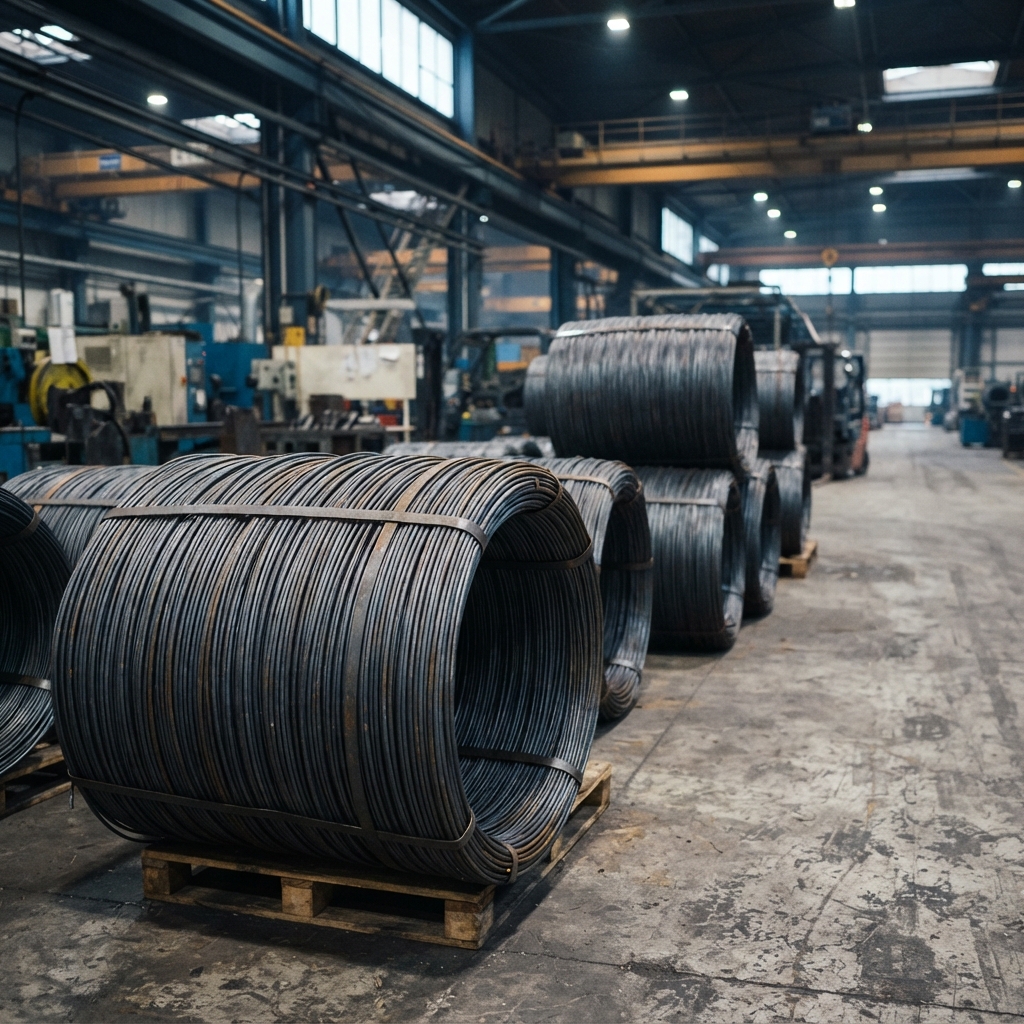
Wire rod is hot-rolled steel supplied in coils, typically from about 5.5 mm up to roughly 20 mm in diameter. A screw factory does not cold-head that coil directly. The rod is first descaled and coated with a lubricant carrier, then drawn down through dies to the wire diameter the heading machine needs. Some grades are spheroidize annealed to soften the structure before heading. The drawn wire is then cut, upset into a head, thread rolled, heat treated if required, plated and sorted.
In practice, wire rod for fasteners is specified as a package: a grade designation, a delivery condition such as CHQ, a dimensional tolerance and a document type. Leave any one of those open and the coil you receive is whatever the supplier had available that week.
Every one of those steps can be executed perfectly and still fail, because the starting coil set the ceiling. If the rod carries a seam, a sliver or a decarburized skin, no amount of operator skill at the header will remove it. That is why raw material is the first place a buyer should look when a batch behaves differently from the approval sample.
Why "CHQ" matters more than the grade name
CHQ stands for cold heading quality. It is a delivery condition, not a single grade: controlled surface quality, internal soundness, uniform microstructure and limited decarburization, all intended to let the steel deform severely without cracking. Cold heading quality steel is bought for what it survives, not for what it contains.
Two coils can carry the same nominal grade and behave completely differently in a header if only one was produced and inspected as CHQ wire rod. When a quotation names a grade but not the delivery condition, you do not know what you are buying. Ask for both, and ask which standard the CHQ wire rod was produced to.
Which Steel Grades Do Screw Buyers Actually Specify?
Most fastener programmes fall into five material families. The table below shows what each family is normally chosen for and what a buyer should verify. Treat the grade examples as common industry references, not as a recommendation for your joint.
| Material family | Typical fasteners | What it buys you | What to verify |
|---|---|---|---|
| Low-carbon CHQ rod (for example 1022A wire rod or SWRCH22A class) | Drywall, chipboard, wood and self-tapping screws | Good heading ductility and predictable case response at the point | Carbon range, decarburization depth, surface seams, drawing reduction |
| Boron and medium-carbon (for example 10B21 steel or 1035 class) | Machine screws and small bolts at 8.8 to 10.9 | Hardenability with better cold formability than plain high-carbon steel | Boron and carbon content, hardenability band, quench and temper response |
| Alloy steel (for example Cr-Mo or SCM435 class) | 10.9 and 12.9 fasteners, high-load joints | Strength after heat treatment | Alloy content, steel cleanliness, baking after plating to limit hydrogen embrittlement risk |
| Stainless steel (304, 316, 410 class) | Corrosion-exposed furniture, outdoor and equipment screws | Corrosion resistance without a plated coating | Grade confirmation, carbon content, passivation, galling behaviour during assembly |
| Brass and copper alloys | Decorative screws, electrical parts, insert nuts | Conductivity, machinability and appearance | Alloy designation, lead or impurity content, dimensional tolerance |
Property class is not a material grade. An 8.8 marking describes a strength class reached through material choice plus heat treatment; the same head marking can be produced from more than one rod grade. That is why a class marking alone does not tell you what was purchased — see how to verify screw property class before assembly.
What Does a Cheap Coil Actually Buy?
Wire rod for fasteners is usually the largest single purchased input in a cold-headed screw. Because of that, a small movement in rod price moves the piece price more than most secondary operations do, and a supplier under price pressure has an obvious lever: buy a cheaper coil, a non-CHQ coil or a coil of uncertain origin.
The saving is real and immediate. The cost is deferred and lands on you. The failure modes are consistent:
- Head cracks and slivers. Surface seams or rolled-in scale open up during upsetting. The head may look acceptable at production speed and fail at assembly torque.
- Thread laps and torn crests. Poor surface quality or wrong drawing practice shows up as folded metal on the thread flank, which weakens the thread and disturbs plating.
- Decarburized skin. A carbon-depleted surface layer is softer than the core, so surface hardness, wear resistance and fatigue life drop even when the core test result looks correct.
- Hardness scatter. Inconsistent chemistry or annealing produces torque scatter on the assembly line and intermittent cam-out or stripping.
- Plating defects. Blisters, poor adhesion and patchy coverage often begin with surface condition, not with the plating bath.
- Hydrogen embrittlement risk. High-strength parts that are pickled and electroplated need controlled baking; substituting a higher-strength or dirtier steel without adjusting the process raises the risk of delayed fracture.
Where Do Raw Material Problems Show Up?
Almost never in incoming goods. They surface downstream, which is what makes them expensive.
| Symptom you see | Likely raw material contribution | Who usually absorbs it |
|---|---|---|
| Head shear or star cracks during heading | Surface seams, wrong drawing reduction, insufficient annealing | Supplier if caught in-process; buyer if it appears as a short shipment |
| Driver cam-out and stripped recess in the field | Soft decarburized surface, inconsistent hardness | Buyer, through returns and labour |
| Threads strip below the specified torque | Thread laps, below-spec diameter, wrong grade | Disputed between parties without lot evidence |
| Rust appearing in the warehouse | Residual surface condition before plating, thin or porous coating | Buyer, unless packaging and coating were specified |
| Plating blister or flaking | Surface contamination, seams, pre-treatment gaps | Often argued, rarely resolved without certificates |
How Do You Read a Mill Certificate Without a Metallurgy Degree?
A mill certificate is only useful if it is the right type, for the right heat, and matches the coil in your lot. Start with the document type.
EN 10204 2.1 is a statement of compliance with the order. It carries no test results. EN 10204 3.1 is an inspection certificate issued by the manufacturer's authorised inspection representative, reporting actual test results for the supplied lot, with heat identification. EN 10204 3.2 is issued by an independent inspection body and is normally reserved for higher-risk or specified applications. The types are defined in BS EN 10204:2004.
Fasteners add their own layer. ISO 16228:2017 sets out the types of inspection documents issued by fastener manufacturers and distributors, and the content each one should carry. A supplier who works to fastener-specific documents will usually give you a cleaner, more complete pack than one who forwards a generic steel certificate.
| Field on the certificate | What it should show | Why a buyer cares |
|---|---|---|
| Heat or cast number | A unique identifier that also appears on the coil tag | Without it, the certificate proves nothing about your lot |
| Chemical composition | C, Mn, Si, P, S, plus B, Cr, Mo or Ni where the grade requires | Confirms the grade was actually produced, not just labelled |
| Mechanical properties or hardenability | Tensile, reduction of area, hardness or hardenability results | Shows the rod can reach the property class you ordered |
| Decarburization depth | A measured value or a stated limit | Directly affects surface hardness, wear and fatigue |
| Delivery condition | Pickled, annealed, coated, CHQ designation | Explains how the coil will behave in the header |
| Dimensions and tolerance | Nominal diameter and permitted deviation | Sets the drawn wire size and therefore the finished thread |
| Standard and document type | Grade standard plus EN 10204 or ISO 16228 designation | Tells you whether results are actual or a declaration |
| Issuer and signature | Mill and authorised inspection representative | Distinguishes a certificate from an internal printout |
The traceability chain test
Ask your supplier to trace one carton backwards: carton label, packing list, production lot, heat treatment batch, plating batch, heading lot, drawing lot, coil tag and heat number on the mill certificate. This is a fifteen-minute exercise for a factory that records lots, and an impossible one for a trader assembling documents after the fact.
That test is what fastener material traceability means in practice. An EN 10204 3.1 certificate for the wire rod for fasteners in your lot is a starting document, not a complete chain. If the chain breaks anywhere, you do not have traceability. You have paperwork. Our guide to what each screw manufacturer certificate actually proves covers the rest of the document set.
Incoming Inspection: Five Checks Before the Coil Reaches the Header
You do not need a metallurgy laboratory to catch most raw material problems. You need a defined check, a sample size and a rejection rule.
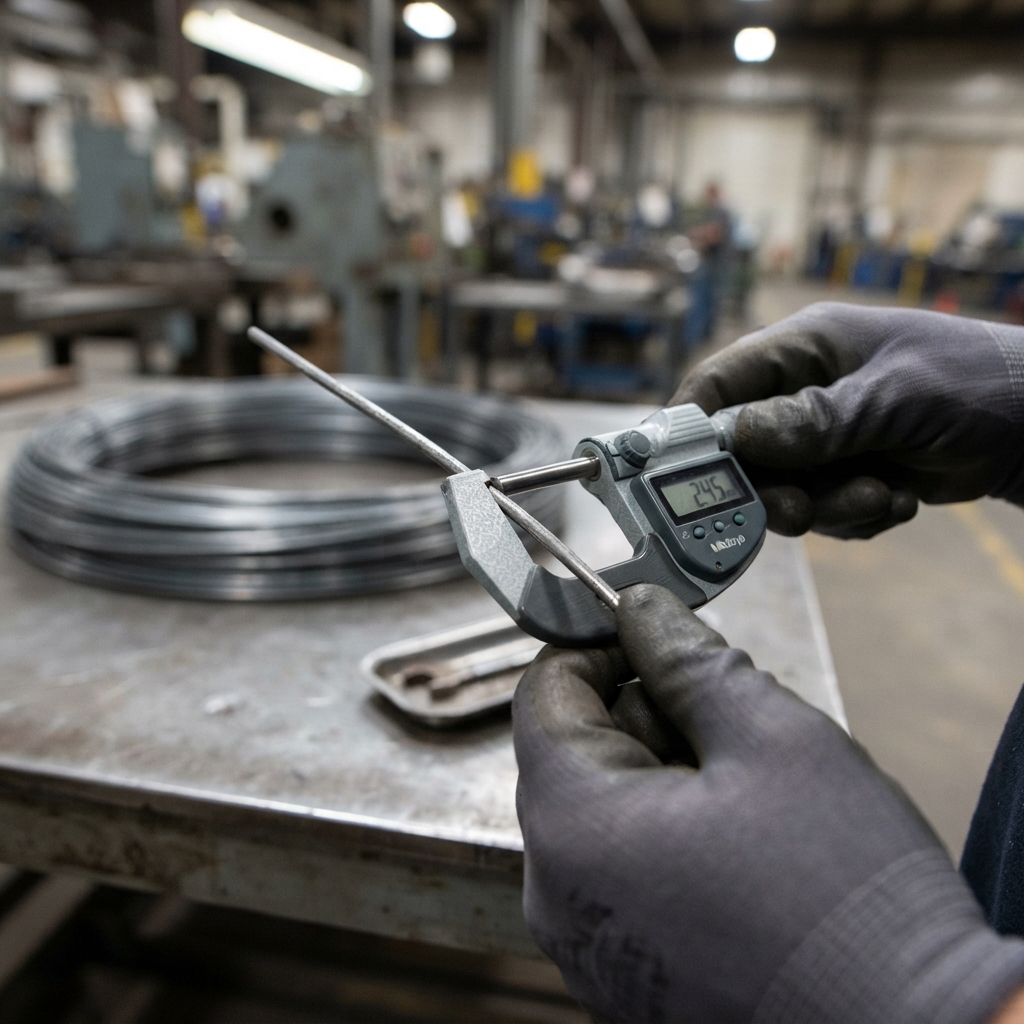
| Check | Practical method | Escalate or reject when |
|---|---|---|
| Surface condition | Visual inspection of coil ends and a straightened sample under good light | Seams, slivers, deep roll marks, heavy rust or rolled-in scale are visible |
| Diameter and ovality | Micrometer at three positions along a drawn sample | Outside the agreed tolerance, or ovality that will not draw true |
| Hardness | Bench or portable hardness test on a prepared sample | Outside the agreed band, or a spread across the coil that predicts heading problems |
| Decarburization | Microhardness traverse or metallographic section at a contracted laboratory | Depth exceeds the limit written into your specification |
| Document match | Heat number on the coil tag against the EN 10204 3.1 certificate | Numbers do not match, or the certificate type is 2.1 when 3.1 was ordered |
If you cannot run these checks yourself, move the sampling upstream: require third-party pre-shipment inspection to witness coil identification and drawing, and make the certificate type part of the purchase order rather than a promise in an email.
How Do You Put Raw Material Control into the Purchase Order?
Raw material discipline belongs in the PO, not in a conversation. Nine clauses do most of the work:
- Grade and standard: the exact designation and the standard it is produced to, not a trade name.
- Delivery condition: CHQ, pickled, annealed or coated, stated explicitly.
- Document type: EN 10204 3.1 certificate per heat, or the ISO 16228 document you require.
- Decarburization limit: a measurable maximum, with the test method named.
- Surface acceptance: which defects are rejectable and at what size.
- Dimensional tolerance: rod diameter and the drawn wire diameter it must produce.
- Traceability marking: heat number on the coil tag and on the carton label.
- No substitution: material or mill changes require written approval before production.
- Record retention: how long lot records and certificates are kept and made available.
Clause eight is the one buyers forget. Substitution is rarely announced, and it is the mechanism behind most "the last batch was fine" disputes — the same point covered in custom screws manufacturer change control.
What Do Buyers Get Wrong About Fastener Raw Material?
- Accepting a grade name without a delivery condition. Fix: specify CHQ and the certificate type in the same clause.
- Treating a certificate as lot evidence. Fix: require the heat number to appear on the coil tag and the carton, then trace one carton.
- Auditing the machine floor but not the material store. Fix: walk the store. Look at coil tags, mill marks, rust and how partial coils are segregated.
- Comparing piece price without a material clause. Fix: normalise the quotes; our fastener cost breakdown shows where a low price usually comes from.
- Assuming the approval sample represents the series. Fix: confirm the sample was made from the same grade, and lock that grade into the PO.
- Chasing the lowest rod price at every reorder. Fix: keep the material specification stable and negotiate on quantity, packaging and scheduling instead.
How Do We Handle Material Selection for Custom Screws?
For custom work, the material question starts with the joint, not the price list. Our product review process looks at the substrate, pilot hole, required engagement, head seating, finish and installation method before a quotation is issued, because those inputs determine which rod grade and delivery condition can meet the specification.
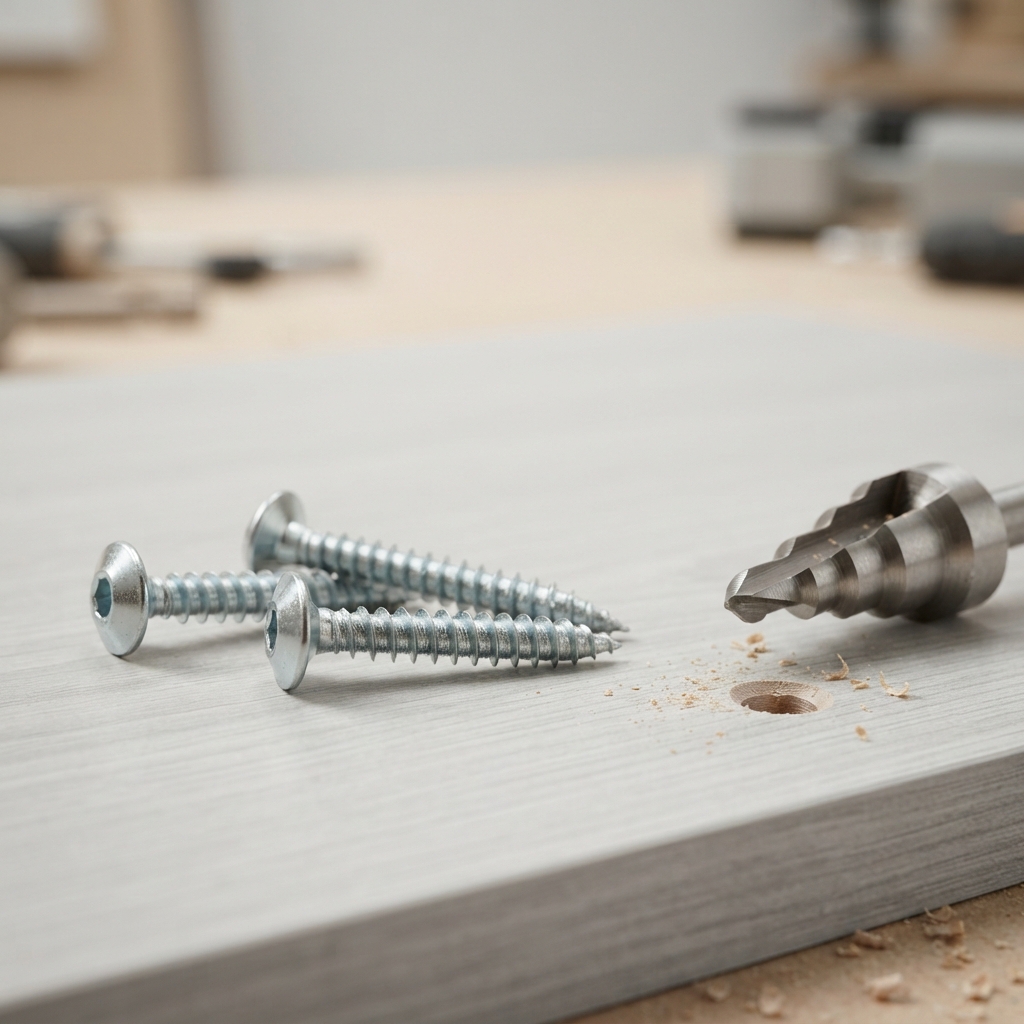
Two examples from our current range show how the part drives the material conversation. The cross-drive countersunk self-tapping screw is a pointed, coarse full-thread drywall form with a flush-seating head; the photographed 25 mm M3.5 configuration is supplied in a bright appearance, with material and surface treatment confirmed against the drawing or purchase specification, and zinc plating among the finish options. Because it is a self-tapping form, the substrate and pilot-hole condition decide the thread and point geometry far more than the head style does.
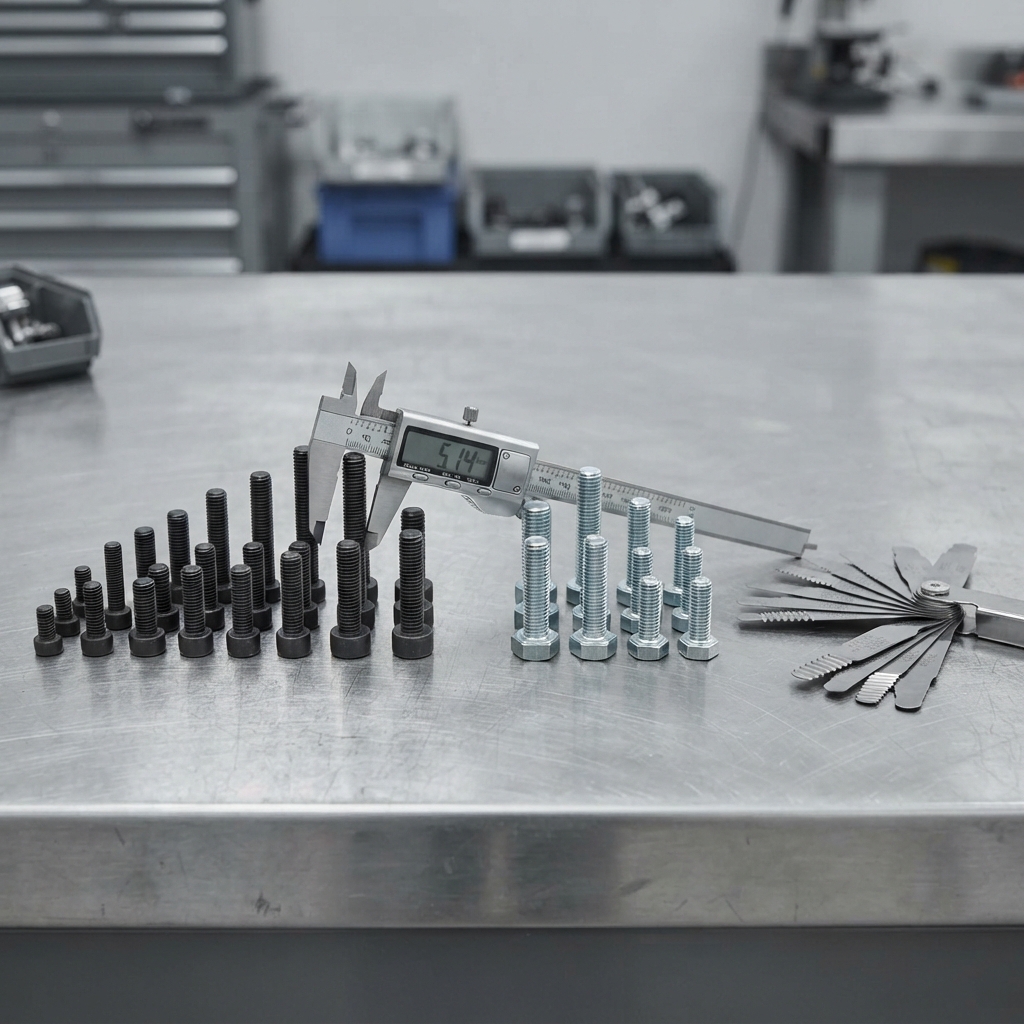
The black hex-socket low-profile wide-head machine screw is a fully threaded machine form offered in M6 and M8 with lengths from 12 mm to 150 mm in the listed variants. A machine screw depends on a mating thread rather than on biting into the substrate, so the joint stack and the mating component set the length and engagement, and the finish is selected for appearance and corrosion exposure rather than for driving performance.
Across both, custom thread configurations from M1 to M12 and lengths from 3 mm to 200 mm can be reviewed against the confirmed subtype, mating part and application, with made-to-drawing and made-to-sample routes available. The stated MOQ is 10,000 pieces per confirmed specification, and packaging can be reviewed as bulk cartons, counted packs, project kits or label artwork. Those limits are worth knowing early: they tell you whether a trial order is realistic before you invest in a drawing package.
Frequently Asked Questions
What steel is used for screws?
Most screws are made from low-carbon or medium-carbon cold heading quality steel wire. Self-tapping and drywall screws typically use low-carbon CHQ grades such as 1022A wire rod, machine screws and bolts in the 8.8 to 10.9 range often use 10B21 steel or medium-carbon grades, and 10.9 to 12.9 parts may use alloy steel. Stainless steel and brass are chosen where corrosion resistance, appearance or conductivity matter more than cost.
What does CHQ mean in wire rod?
CHQ means cold heading quality. It describes a delivery condition with controlled surface quality, internal soundness, uniform microstructure and limited decarburization, so the steel can be upset into a head without cracking. The same nominal grade supplied as non-CHQ may head poorly even though the chemistry looks similar on paper, which is why CHQ wire rod for fasteners is specified as a condition and not only as a grade.
Is EN 10204 3.1 the same as ISO 16228?
No. EN 10204 defines the general types of inspection documents for metallic products, including the 2.1 declaration and the 3.1 and 3.2 certificates. ISO 16228 sets out the inspection document types used for fasteners and the content each should contain. They work together: the fastener document tells you what to expect, and the EN 10204 3.1 certificate supplies heat-specific test results.
Can a supplier reuse one mill certificate for several shipments?
Only if the shipments genuinely come from the same heat. A certificate is tied to a heat number, and a heat is a finite quantity of steel. If a supplier presents the same certificate across multiple orders over a long period, ask for the coil tags and lot records. A certificate that cannot be linked to the coil in your lot is not evidence for your goods.
Does cheaper wire rod really change the finished screw?
Often, yes, and not in the dimension you inspect. Cheaper rod more frequently means non-CHQ supply, wider chemistry scatter, deeper decarburization or surface seams. Those show up as head cracks, thread laps, hardness scatter and plating defects rather than as an out-of-tolerance diameter, so they pass a simple dimensional check and fail in service.
How can I verify wire rod without a metallurgical laboratory?
Combine document checks with simple physical checks: match the heat number on the coil tag to an EN 10204 3.1 certificate, measure diameter at several points, test hardness on a prepared sample and inspect the surface for seams and rust. Send one sample for a decarburization measurement at a contracted laboratory, or require third-party inspection to witness identification at the supplier.
What is a reasonable raw material clause for a small trial order?
Even a trial order should name the grade and delivery condition, require a 3.1 certificate per heat, set a decarburization limit and prohibit substitution without written approval. Quantity is negotiable; the material specification is not. If a supplier resists documenting the grade for a trial, that resistance is itself the answer.
Conclusion
Wire rod for fasteners is the part of the supply chain buyers see least and inherit most. A finished screw can pass a dimensional check and still carry a decarburized skin, a seam under the head or a heat number that belongs to someone else's order. The defence is unglamorous: name the grade and delivery condition, demand a 3.1 certificate tied to a heat, trace one carton back to that heat, and keep the same specification at every reorder.
If you are reviewing a programme and want a second opinion on whether the material clause matches the joint, send the drawing, the target property class, the finish requirement and your expected annual volume through our product pages — for example the drywall and self-tapping range or the machine screw range. Tell us the grade and certificate type you are being quoted today, and we will review the specification against the process route before any price is discussed.