
Why Furniture Buyers Need a Custom Hardware Packaging Supplier for Screw and Installation Kits
When a cabinet plant, flat-pack furniture brand, or e-commerce furniture seller begins ordering mixed fasteners in volume, the packaging problem appears quickly.
Screws, inserts, anchors, cam-lock connectors, dowels, brackets, and small plastic accessories may be easy enough to source as individual parts. The harder task is getting them packed in a way that supports assembly, avoids shortages, and keeps each kit readable for workers or end users.
That is where a custom hardware packaging supplier becomes part of the purchasing decision.
For furniture programs, packaging is not just a shipping detail. It affects picking accuracy, installation speed, surface protection, customer complaints, and repeat production. If the kit is unclear, the problem moves downstream. A missing screw, mixed length, wrong head type, or poorly labeled bag can stop an assembly line just as easily as a larger component defect.
In other words, buyers are not only buying fasteners.
They are buying order inside the hardware kit.
Why hardware packaging matters in furniture sourcing
Flat-pack furniture and panel furniture depend on predictable assembly. The panels are usually pre-drilled. The instruction sheet follows a sequence. The hardware kit should match that sequence.
If everything is packed loosely, workers need extra time to sort parts. If similar screws are mixed, the wrong one may be installed. If the fastener length is wrong, the panel may split or the connector may not hold. If the packaging opens during transit, the customer may think parts are missing even before assembly starts.
A reliable hardware packaging supplier helps reduce these risks by organizing small parts into a kit that is easier to count, easier to identify, and easier to use.
For furniture buyers, this can include:
- labeled screw bags
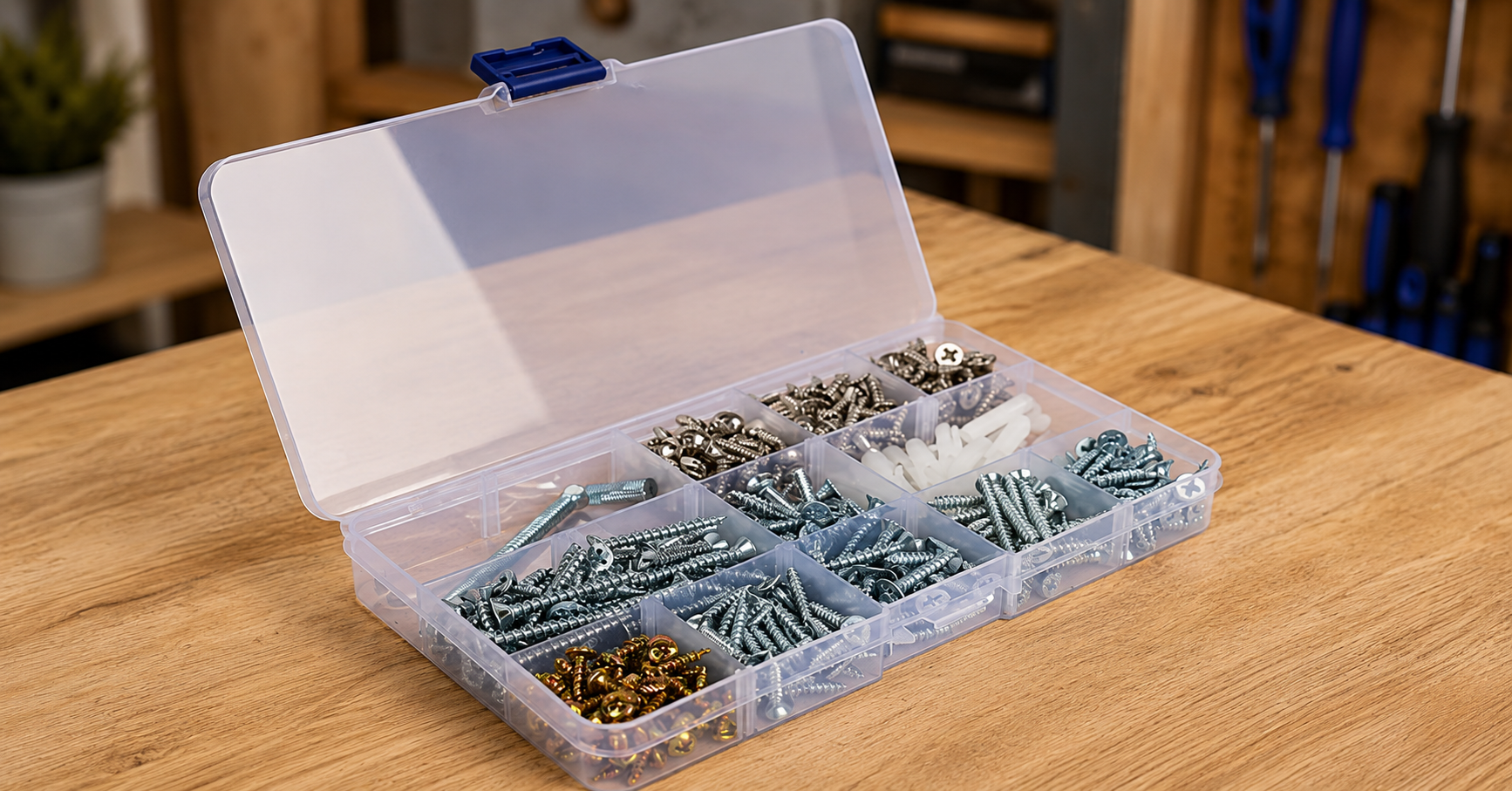
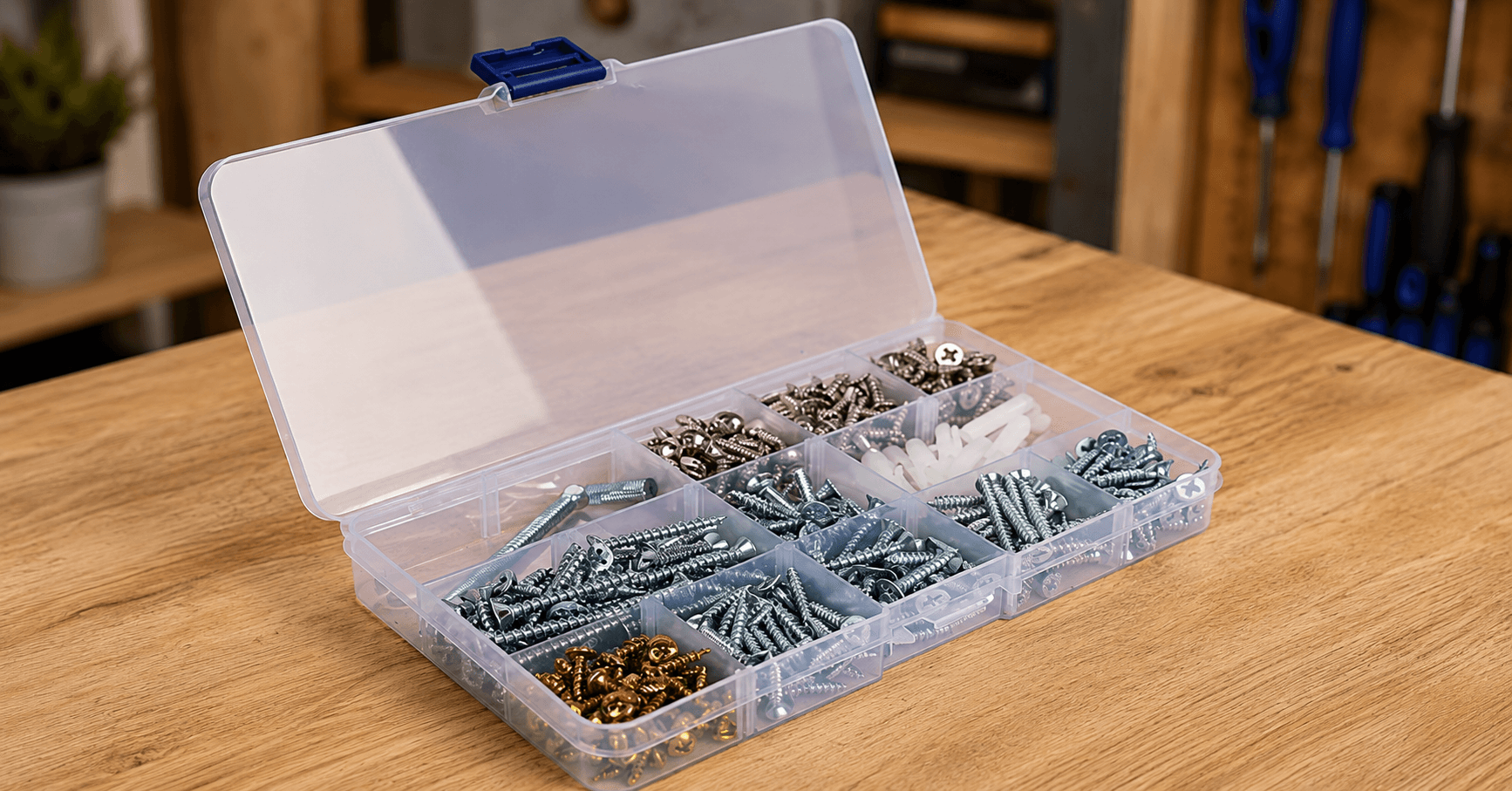
- compartmented boxes
- PVC packaging kits
- blister-style hardware packs
- drywall screw and anchor boxes
- model-specific furniture hardware kits
- OEM screw and installation sets
- mixed fastener kits for retail or e-commerce
The best packaging format depends on how the product will be used. A factory assembly kit may need simple labeled bags. A retail repair kit may need a clear box. A flat-pack furniture kit may need step-based packaging that matches the instruction manual.
Product example: drywall screw and installation hardware kit
The linked JHFix product page identifies the product direction as fiber material drywall screw, self-drilling black drywall screw, galvanizing stainless steel screw set. The specification section lists material as steel, measurement system as metric, thread type as standard thread, grade as 4.8 and 6.8, brand name Jinhe, model number custom screw, and product name as installation hardware kit with PVC packaging. It also lists clear blue zinc finish, strength grade 4.8, application for bed installation / furniture installation / screw combination, customized color, OEM/ODM support, customizable screw head types, coarse/fine thread customization, and thread sizes from M2 / M3 / M4 / M5 / M6 / M8 / M10 / M12.
| Product / Packaging Point | Information Buyers Should Review |
|---|---|
| Product Direction | Drywall screw, self-drilling screw, black drywall screw, galvanized screw set |
| Product Name | Installation hardware kit with PVC packaging |
| Material | Steel listed on the page |
| Measurement System | Metric |
| Thread Type | Standard thread; coarse/fine thread customization also listed |
| Grade | 4.8 and 6.8 listed |
| Finish | Clear blue zinc shown in the translated page text |
| Application | Bed installation / furniture installation / screw combination |
| Head Type | Customizable Phillips, multipurpose, slot, Torx, flat options |
| Thread Size | M2, M3, M4, M5, M6, M8, M10, M12 |
| Custom Support | OEM/ODM support |
This product is a useful example because it connects fasteners with packaging. It is not only a loose screw page. It points to an installation hardware kit with PVC packaging, which is exactly the kind of product furniture buyers often need when building standardized hardware packs.
However, buyers should still confirm the final details before placing an order. The page title mentions drywall screws, self-drilling screws, black screws, galvanizing, and stainless steel wording, while the specification table lists steel material and broader customized screw kit options. This means the final screw material, finish, head type, thread, size list, and packaging layout should be confirmed by sample and quotation.
Hardware-only sourcing versus packaged kit supply
A component supplier and a packaging supplier solve different problems.
A fastener manufacturer may produce screws, self-tapping screws, drywall screws, or precision parts. A packaging supplier organizes those parts into unit packs, SKU-specific kits, or retail-ready boxes. In practice, many furniture buyers need both.
The lowest piece price does not always create the lowest total cost. If a supplier ships only bulk fasteners, the buyer may need to re-count, sort, label, and repack everything in-house. That takes labor. It also creates another point where mistakes can enter the process.
For furniture assembly fasteners, drywall screw sets, and installation hardware kits, a clean packaging workflow can be as valuable as a small unit-price saving.
A practical supplier should understand:
- how screws match panels or anchors
- how screw head types affect installation tools
- how kit labels reduce picking errors
- how PVC or box packaging protects small parts
- how OEM/ODM packaging supports repeat orders
- how mixed fastener kits should be counted before shipment
That is the difference between buying hardware and buying a ready-to-use hardware solution.
What good custom hardware packaging actually does
Good custom packaging makes the hardware easier to use.
In a furniture set, the pack may include screws, dowels, cam locks, threaded inserts, washers, anchors, and small plastic caps. In an installation hardware kit, it may include drywall screws, self-drilling screws, anchors, tools, and accessories.
The kit has to answer a simple question for the user:
Which part do I use next?
That can be achieved in different ways. Some programs use one bag per furniture module. Others use step-labeled bags. For retail or repair kits, compartmented boxes may work better. For screw sets like the JHFix installation hardware kit with PVC packaging, the package should separate parts clearly and keep the screws visible enough for checking.
Good packaging should also prevent damage. Screws with zinc-like finishes or black finishes can rub against one another if packed loosely. That may not always affect function, but it can reduce perceived quality. End users notice scratched hardware, mixed parts, and unclear instructions very quickly.
Common packaging formats
There is no single best packaging format.
| Packaging Format | Best Use |
| Simple polybag | Basic furniture screw kits or internal factory use |
| Labeled sub-pack | Flat-pack furniture with step-based assembly |
| PVC packaging | Installation hardware kits and organized screw sets |
| Compartmented box | Repair kits, drywall screw assortments, reusable hardware kits |
| Blister pack | Retail display and consumer-facing hardware packs |
| Bulk carton | Factory replenishment or distributor supply |
The right choice depends on sales channel and user behavior. A contractor may prefer a reusable box. A furniture brand may prefer labeled bags inside the carton. A retail buyer may prefer blister packaging. An OEM buyer may need custom PVC packaging with a clear part list.
Selection criteria buyers should not skip
When evaluating a custom hardware packaging supplier, buyers should look beyond whether the supplier can seal a bag or print a logo.
The more important questions are practical:
Can the supplier control part counts?
Can they separate similar-looking screws?
Can they package mixed hardware by SKU or assembly step?
Can they support OEM/ODM packaging?
Can they provide samples before mass production?
Can they keep future orders consistent with the approved kit?
Can they confirm material, finish, head type, and thread size?
Can they pack installation hardware kits for furniture or drywall applications?
These questions matter because packaging errors often become assembly errors.
A zinc-plated screw and a black screw may be easy to distinguish. But two similar screw lengths may not be. A fine thread and coarse thread part can look similar to a hurried packer. An M5 and M6 component can be confused if the label is unclear.
Good packaging reduces that risk.
Practical mistakes that slow furniture assembly programs
One common mistake is treating packaging as a late-stage add-on.
By the time the product sample is approved, the fastener list may already be fixed. Then the buyer still needs carton size, bag sequence, label artwork, barcode, compartment layout, and inspection method. If these decisions are rushed, the kit may be technically complete but difficult to use.
Another mistake is mixing too many part families in one package. A cabinet kit with screws, cam locks, anchors, washers, brackets, and plastic plugs needs more organization than a simple bag of bolts.
A third mistake is ignoring product revisions. If a panel changes thickness, the screw length may change. If a bracket changes, the washer count may change. If the furniture model expands into a new market, the label language may change.
A packaging supplier must be able to adapt without losing count control.
How to judge a supplier before placing a trial order
Do not judge a hardware kit from a quotation alone.
Ask for a sample kit that matches the real use case. Open it on an assembly bench. Check whether the parts are easy to identify. Compare the kit with the BOM. Test whether the packaging survives handling. If the hardware is for modular cabinets or flat-pack furniture, try it during a real assembly step.
For an OEM hardware kit packaging project, document:
- part list
- part quantity
- screw size
- head type
- finish
- thread type
- package sequence
- label content
- carton specification
- replacement plan if a part runs short
This documentation helps both sides. It prevents silent substitutions and gives the supplier a clear standard to repeat.
Who benefits most from custom hardware packaging?
Furniture makers with many SKUs usually benefit first.
So do cross-border e-commerce sellers, ready-to-assemble furniture brands, hardware distributors, installation kit sellers, and wholesalers supplying mixed screw boxes. The more variants a buyer runs, the more valuable packaging discipline becomes.
A company selling drywall screw sets, furniture installation kits, or bed assembly hardware can also benefit from custom packaging because buyers want ready-to-use kits, not loose parts that require sorting.
The JHFix page’s product direction—installation hardware kit with PVC packaging, customizable screw head types, OEM/ODM support, and multiple thread sizes—fits this kind of B2B packaging need.
FAQ
Is hardware packaging only about bags and labels?
No. It includes sorting logic, count control, part protection, assembly order, material confirmation, labeling, carton packing, and repeat-order consistency.
What product information is supported by the linked JHFix page?
The page supports a drywall screw / self-drilling screw / screw set direction and lists an installation hardware kit with PVC packaging, steel material, metric measurement system, standard thread, 4.8 and 6.8 grade options, bed and furniture installation applications, OEM/ODM support, customizable head types, coarse/fine thread options, and M2 to M12 thread sizes.
Why is PVC packaging useful for screw kits?
PVC packaging can help organize small hardware, keep parts visible, and support installation kit presentation. Buyers should still confirm the actual package structure, size, thickness, label, and carton method before ordering.
Does the supplier need to make the fasteners too?
Not always. But a hardware supplier with fastener knowledge is often better positioned to understand screw compatibility, head type, material, finish, and repeat supply than a general packaging-only vendor.
What should buyers confirm before ordering?
Buyers should confirm the screw list, material, finish, head type, thread type, size range, packaging format, label content, carton packing, sample approval, and repeat-order rules.
Next step for buyers
If you are evaluating a supplier for furniture screw kits, drywall screw sets, installation hardware kits, or OEM hardware packaging, start with a real sample review.
A good package should make the hardware easier to count, easier to identify, easier to assemble, and harder to misplace.
For custom hardware packaging projects involving screws, drywall screws, self-drilling screws, furniture installation fasteners, bed installation hardware, PVC packaging kits, and OEM/ODM screw sets, Jiangmen Jinhe Hardware Products Co., Ltd. can discuss samples, packaging layout, head types, thread options, material requirements, labels, and repeat supply.
Start with the kit BOM, screw size, thread type, head type, finish, package format, label requirement, and order quantity.
Once those details are clear, the right custom hardware packaging supplier becomes much easier to choose.