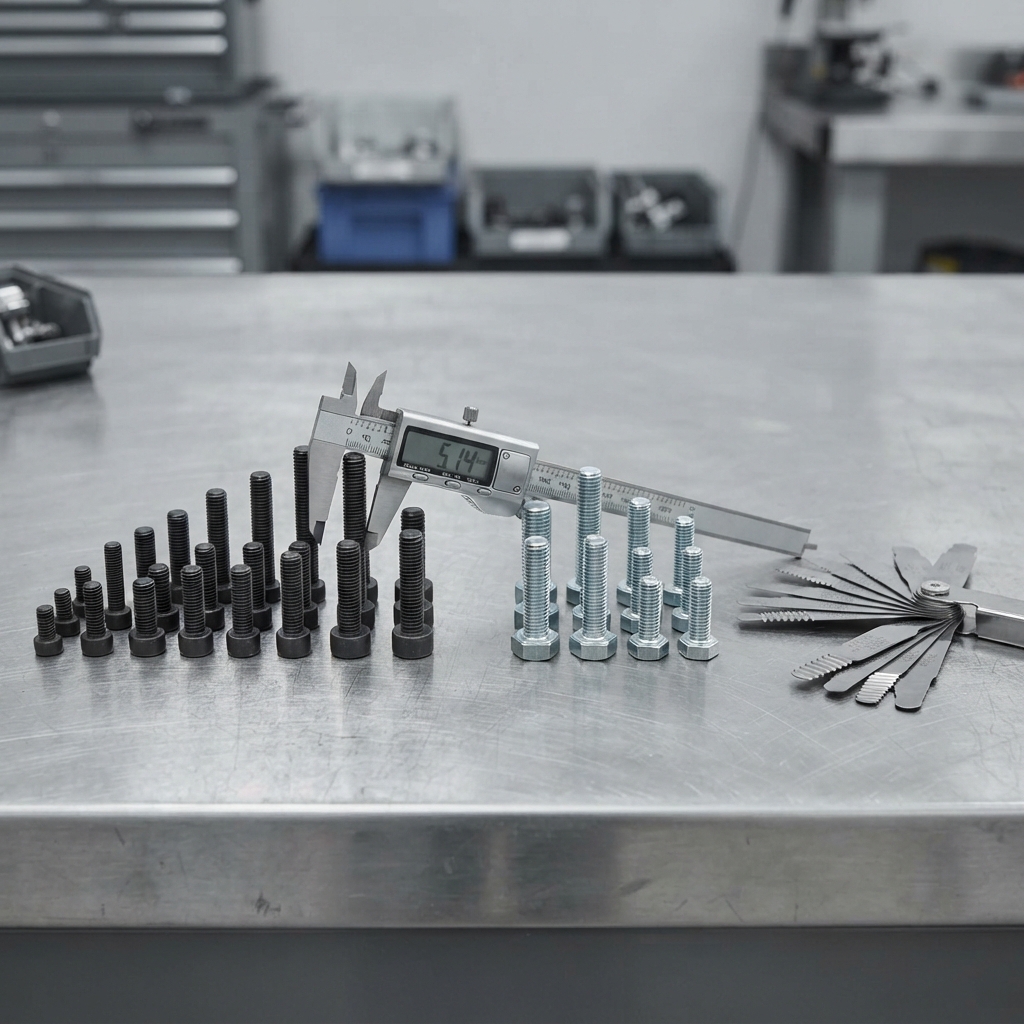


Quick answer: Plated fastener lot release should connect the ordered specification, finished-part lot, coating batch, applicable hydrogen-control records and authorized release decision. A statement such as "baked after plating" is not enough to review a shipment. Where baking is required, reconcile the actual processing sequence and recorded cycle against the approved requirement. Separately verify any required process-control or product-test evidence. Hold the material when identity, coverage or acceptance is unresolved; do not invent a universal baking cycle or treat one passing test as proof of every carton.
This guide is for procurement and supplier-quality teams reviewing a shipment of plated screws, bolts or other steel hardware. It provides a document-review workflow rather than a coating recipe. For the underlying mechanism, use the JHFIX hydrogen embrittlement overview. Here, the narrower question is whether the records support release of the particular goods in front of you.
What does plated fastener lot release actually approve?
A release decision approves a defined quantity against an agreed specification and evidence package. It does not certify that hydrogen can never cause a failure. Define the boundary first: part number, drawing revision, purchase-order line, finished lot, quantity and package references. Then identify who can approve release and who handles deviations.
Do not confuse manufacturing-related internal hydrogen embrittlement with hydrogen introduced by the service environment. Fastenal's engineering article on embrittlement distinguishes these sources. A manufacturing review cannot replace the design team's assessment of corrosion, sustained stress or service exposure.
The following workflow is a suggested buyer control, not a claim that every listed record is universally mandatory. The contract, product standard, coating specification and qualified process determine what applies. Agree that package before ordering, particularly when a coating operation is subcontracted.
Freeze the acceptance basis before reading certificates
Start with the approved drawing and order, not the supplier's certificate template. Record the specified fastener type, material or property designation, coating system, applicable standard editions and any customer-specific requirements. Different fastener families and finishing routes must not inherit requirements merely because their finished colour looks alike.
ISO 4042:2022 covers electroplated fastener coating systems and includes hydrogen-embrittlement risk controls. Its official listing also identifies Amendment 1:2026. Confirm the contractual edition and amendment applicability with the responsible engineer. Do not silently substitute an amendment into an existing order or claim to have assessed clauses you have not obtained.
Likewise, do not substitute hot-dip galvanizing guidance for an electroplating requirement. Portland Bolt's discussion of galvanizing high-strength bolts illustrates why coating permission depends on the named product specification. Similar risk vocabulary does not make different finishing routes interchangeable.
Build an evidence index before accepting the shipment
Use one review index that points to the original records. Avoid merging every document into a file called "quality approved" with no explanation of coverage. Each applicable item needs an identifier, revision or date, covered population and reviewer decision.
| Evidence | Coverage to establish | Question before release |
|---|---|---|
| Drawing and purchase order | Part, revision, specification and ordered finish | Are the acceptance requirements agreed and unambiguous? |
| Lot mapping | Finished lot, coating batch, package references and quantity | Can these documents be connected to these physical goods? |
| Applicable baking record | Actual load, equipment, sequence and cycle evidence | Does the record demonstrate the required process for this load? |
| Process verification | Coating process, coverage period and relevant changes | Does the verification cover the route actually used? |
| Required product test | Sample identity, method, conditions and result | Were representative products tested against the agreed criteria? |
| Disposition authorization | Released quantity, restrictions and named authority | Who approved use, and are unresolved exceptions recorded? |
Mark a record "not applicable" only with an identified technical basis. Blank cells and verbal assurances are not an alternative. If the purchase order omitted a necessary requirement, escalate the specification gap instead of asking a receiving inspector to invent an acceptance limit.
Reconcile split lots and combined coating loads
A finished-part lot and a coating load need not have identical boundaries. Ask whether one production lot was split across several finishing loads, or whether several part lots shared a load. These are mapping questions, not automatic reasons to reject the material.
For a split lot, request a cross-reference showing the quantity sent to each load and the records that cover it. For a combined load, retain the identities of each included part lot. The review fails when a genuine record is attached to goods whose coverage cannot be established.
Check quantity reconciliation as well. Record what was processed, removed for testing, rejected, reworked, packed and proposed for shipment. An unexplained quantity difference deserves investigation before the final certificate is accepted. Keep the mapping available after cartons are opened and stock is transferred into receiving bins.
Review the baking timeline without inventing a recipe
Where the approved requirement calls for hydrogen-relief baking, distinguish a scheduled cycle from a completed cycle. An oven booking, standard work instruction or generic temperature setting does not establish what happened to the shipped load.
Check the sequence and time references
Identify the relevant preceding operation, the recorded transfer or waiting interval, the start of the applicable cycle and the event from which the required duration is measured. Confirm the time zone and date rollover when records come from different systems. Do not calculate a delay from two timestamps unless they describe the agreed process events.
Check what the temperature record represents
Ask whether a value represents the equipment setpoint, measured chamber temperature or demonstrated part-temperature basis. These are different observations. The approved procedure should explain how the recorded evidence establishes the required cycle for the load configuration. Procurement should check that explanation, not prescribe an unqualified thermocouple arrangement.
Check deviations and the approved response
An interruption, missing segment or exceeded limit requires the responsible technical authority to review the deviation. Repeating a cycle is not automatically an acceptable correction. Request the disposition and supporting basis, including any additional verification required before release.
Bossard's hydrogen-embrittlement white paper explains the difficulty of detecting delayed failures through routine outgoing checks. That is a reason to review process evidence carefully, not a reason to promise that paperwork eliminates the risk.
Separate process verification from product testing
A report on a witness specimen and a report on finished screws answer different questions. The reviewer should identify which type is required and what population each result covers.
The official scope of ASTM F1940-07a(2024) describes process-control verification using standard witness specimens, including qualification and periodic monitoring. It is not simply a universal instruction to test every finished lot. ISO 15330:1999 identifies a fastener preloading method for hydrogen-embrittlement detection. Select the applicable method through the specification rather than treating these documents as substitutes.
| Review point | Process verification | Product testing |
|---|---|---|
| Identity | Process, witness specimen and covered monitoring period | Finished part, sampled lot and sample selection |
| Acceptance | Criteria of the specified process-verification method | Criteria of the specified product-test method |
| Coverage gap | Unreviewed change, interruption or missing period | Samples not traceable to the shipment population |
| Release implication | Review applicability to the actual controlled route | Review the result within the agreed lot acceptance plan |
Check the report identifier, method and edition, specimen or sample identity, test conditions, acceptance criteria, results and authorization. Request actual supporting details when "pass" is the only information shown. Keep any failed result and its disposition; do not accept a replacement report without understanding why the original was withdrawn.
Work through a document mismatch before release
Consider a hypothetical shipment with correct carton labels and a signed certificate, but a baking record that names a different load. This is an evidence gap, not immediate proof that the screws are defective. Keep the affected quantity on hold and ask for the production-to-coating mapping.
If the supplier supplies a consistent mapping and the required records cover the load, the reviewer can complete the acceptance check. If the mapping remains uncertain, retain the hold and escalate. If a process deviation is found, obtain an engineering disposition rather than changing the document description until it appears to match.
Apply the same discipline to a coating subcontractor change. Verify whether the approved route, monitoring coverage and evidence arrangements still apply. A supplier's unchanged company name on the invoice does not establish that the finishing process was unchanged.
Common mistakes in plated fastener lot release
Using a mill certificate as finishing evidence
A raw-material record does not establish the subsequent cleaning, coating or baking history. Connect it to the finished lot, then review the relevant finishing records separately.
Copying a cycle from a supplier article
A published example may apply to a particular standard, hardness range or product. Use the governing requirement and approved procedure, not a general internet number.
Approving every carton from one passing sample
A sample result has defined coverage and limitations. Confirm the lot boundary and acceptance plan before extending the conclusion to a shipment.
Treating revised paperwork as corrective action
A corrected transcription may fix an administrative error. It does not correct an uncontrolled process. Preserve the revision history and distinguish the two situations.
Procurement checklist before shipment approval
- Identify the ordered part, drawing revision, coating system and applicable standards.
- Agree the required evidence package and release authority before production.
- Map the finished lot to every relevant coating load and package reference.
- Reconcile quantities, split lots, test samples and any reworked material.
- Where baking applies, review the actual sequence, timing and temperature evidence.
- Confirm whether process verification, product testing or both are required.
- Check report coverage, criteria, results and any superseded or failed records.
- Resolve deviations through the named technical authority.
- Record the exact quantity released and keep unresolved material isolated.
- Retain the review index and its source records with the receiving trace references.
For a JHFIX enquiry, submit the drawing, intended application, coating callout and requested evidence package through the enquiry route. Ask for written confirmation of what can be supplied for the specific part; do not infer a qualified process, test capability or release commitment from a product photograph. Use the claim evidence checklist when a discrepancy has already reached receiving.
Frequently asked questions
Does "baked after plating" justify shipment release?
Not by itself. Review whether the applicable requirement was met for the identified load and whether all other agreed release evidence is complete.
Is a process-control report the same as testing the shipped screws?
No. Establish whether the report covers a witness specimen and controlled process or samples of finished products. Check the required method and coverage.
Must every plated fastener receive the same baking cycle?
No universal cycle should be inferred. Product type, material condition, coating specification and approved process determine applicable requirements.
What should happen when load identities do not match?
Hold the affected quantity, request a documented mapping and escalate unresolved coverage. A mismatch requires investigation; it is not automatically proof of a defective part.
Does a complete evidence pack eliminate hydrogen-embrittlement risk?
No. It supports a defined acceptance decision. Process control, product design, the service environment and the limits of sampling remain relevant.