
Cabinet screws serve more than just the purpose of securing the panels.
Problems at cabinet joints are often not immediately apparent. It might manifest as door panels wobbling, side panels loosening, or the assembled cabinet creaking during normal use. This is why cabinet screws deserve special attention. In furniture manufacturing, suitable fasteners affect assembly speed, surface quality, and the ability of joints to withstand repeated loads. For buyers comparing cabinet hardware screws, choosing screws rarely involves only considering diameter or length; more important are the screw's performance on different materials such as MDF, particleboard, plywood, and solid wood, and whether the selected fastener is compatible with the manufacturing process.
Jiangmen Jinhe Hardware Co., Ltd. has extensive experience in the fastener industry, providing industrial customers with products such as machine screws, self-tapping screws, miniature screws, and precision screws. This manufacturing background is crucial for furniture and panel applications, as cabinet production typically prioritizes repeatability over surface finish. Screws must have a secure, flush fit with the panel material and avoid damaging it. Choosing the wrong screw head type or thread type can negatively impact subsequent assembly line production.
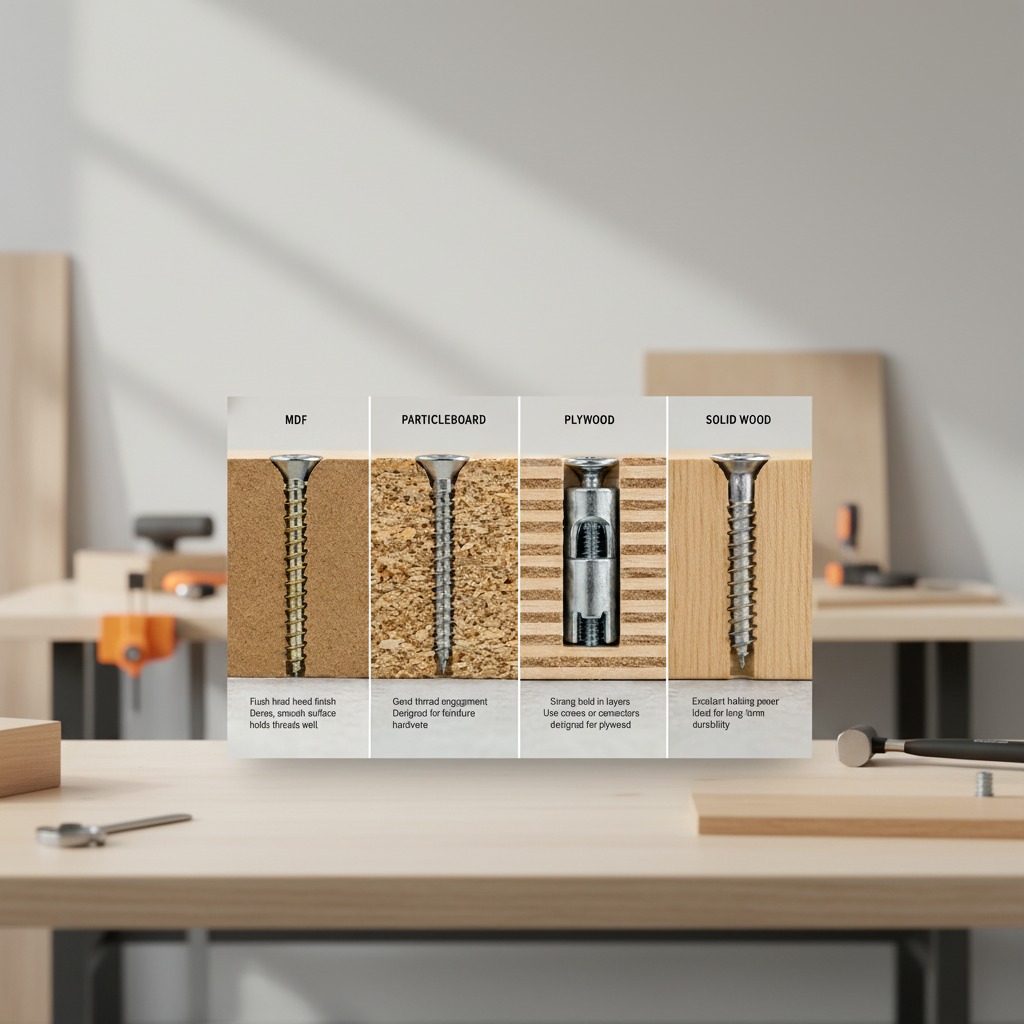
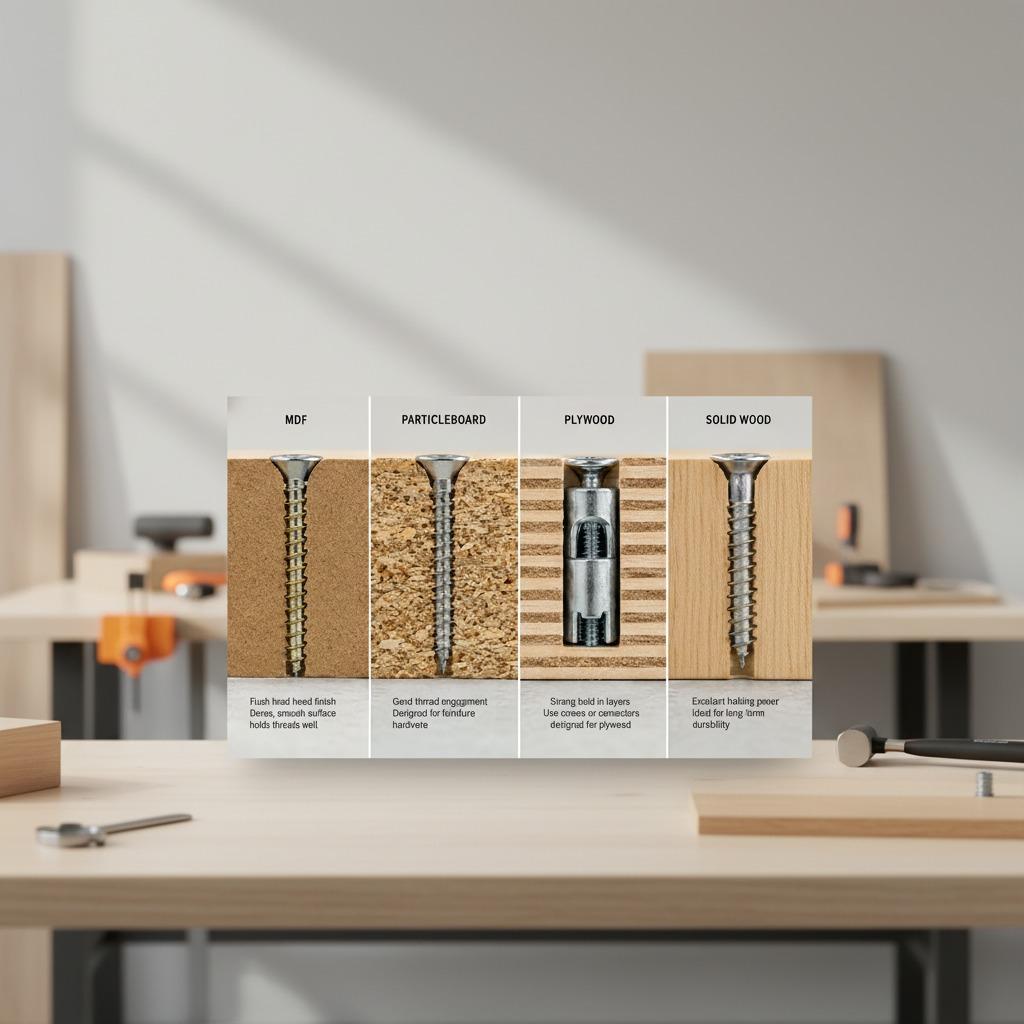
The comparison results can tell you information about wood materials.
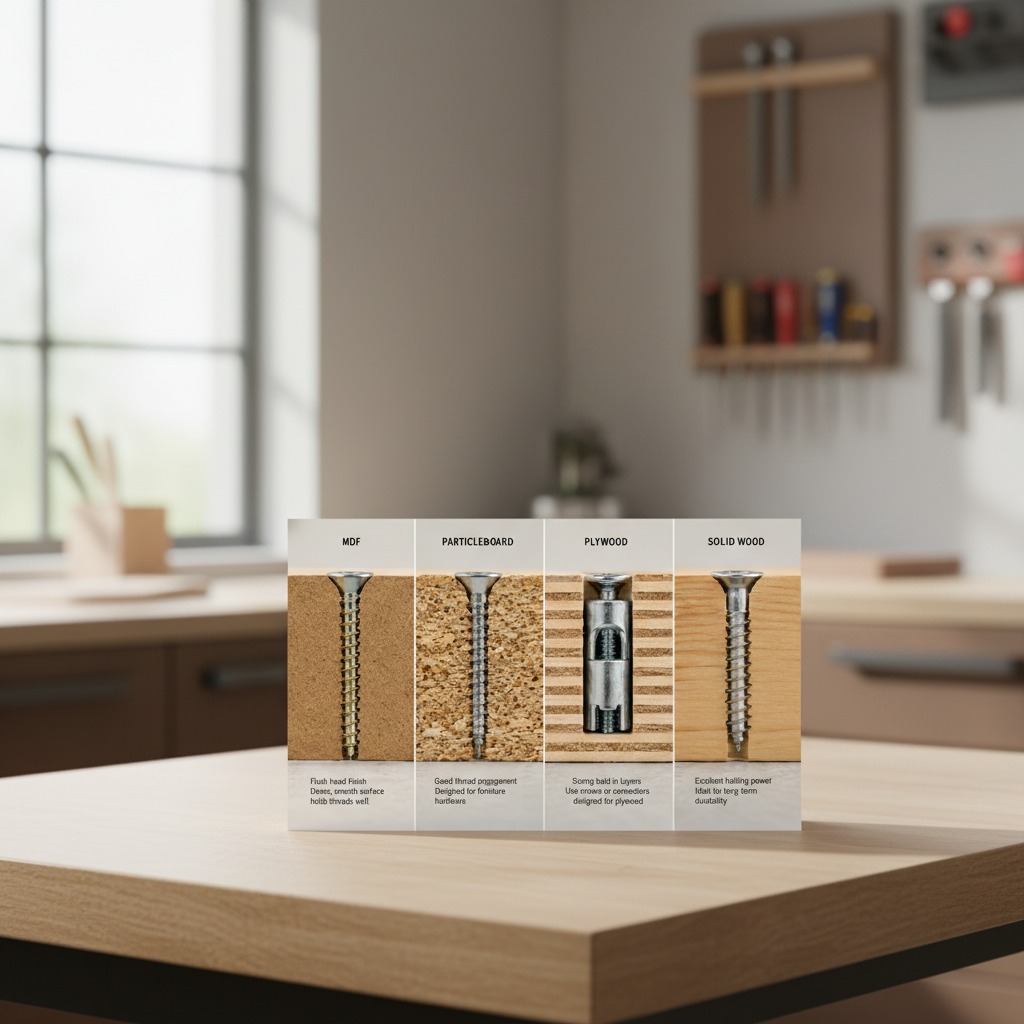
The product information provided compares fasteners for wood-based materials. This is useful because not all substrates perform the same way. Medium-density fiberboard (MDF) has a dense, smooth surface and holds threads well if fasteners are designed correctly. Particleboard also provides good engagement, but is more prone to stripping if screws are overtightened or pre-drilled holes are not positioned correctly. Plywood typically requires different treatment because its layered structure provides strong holding power when the joint reaches the correct layer. Solid wood is generally more forgiving, but the grain direction is still important.
Visual cues in the product data suggest that the screw features a rough wood thread profile, a pointed tip for easy screwing, and a countersunk head for flush mounting. Additionally, the image shows a cylindrical metal connector for plywood, possibly a threaded sleeve or insert fitting, but the specific model is undetermined. This uncertainty is noteworthy. In cabinet manufacturing, connectors that appear similar on drawings can behave drastically differently in actual production.
Flat head cabinet screws and pan head cabinet screws
The impact of screw head style goes far beyond appearance. Flat-head cabinet screws are typically chosen when fasteners need to be flush with the panel surface. This is very useful at visible joints, hinge plates, and areas where protruding screw heads would interfere with other components. Countersunk designs also contribute to a cleaner surface finish, especially on laminate or painted components.
In contrast, pan head cabinet screws are typically used when a wider bearing surface is required or when the screw does not need to be fully embedded in the material. They are very practical in applications such as bracket mounting, hardware fixing, or joints requiring more head contact. Both types of screws have their advantages and disadvantages; there is no absolute superiority or inferiority. The specific choice depends on the panel thickness, the matching hardware, and whether the joint is decorative, structural, or a combination of both.
Selection criteria that actually affect assembly
For the purchasing team, the following points are more important than lengthy specifications. First is the thread engagement. In engineered wood, especially MDF and particleboard, screws must provide sufficient grip without excessively cutting the fibers. Second is the screw head geometry. Clean countersunk holes reduce rework and lower the risk of chipping. Third is the coating or surface treatment. While the screws may appear galvanized or otherwise corrosion-resistant, the specific coating is not yet confirmed, so purchasing personnel should verify this detail before finalizing the production batch.
It's also worth exploring how screws are used on the production line. Pre-drilling, semi-automatic screwdrivers, and manual assembly stations all present different requirements. Fasteners that perform well in the prototyping room may perform drastically differently when factory operators are tightening hundreds per shift. This is why consistent manufacturing and inspection are more valuable than empty promises.
Common mistakes in cabinet assembly
The most common mistake is assuming one type of screw works for all situations. Screws designed for plywood cabinets aren't always suitable for medium-density fiberboard (MDF). Another common error is choosing screw head styles based solely on convenience, neglecting functionality. Protruding screw heads can obstruct the installation of drawer slides, hinges, or side panels. Oversized screws can damage screw holes during the initial installation and weaken the connection during subsequent installations.
A practical tip: For flat-packed furniture and cabinets, fastener selection should be done concurrently with panel processing. Hole type, guide hole size, and board density all influence each other. In other words, screws are only one part of the overall system.
What factors do furniture manufacturers typically consider?
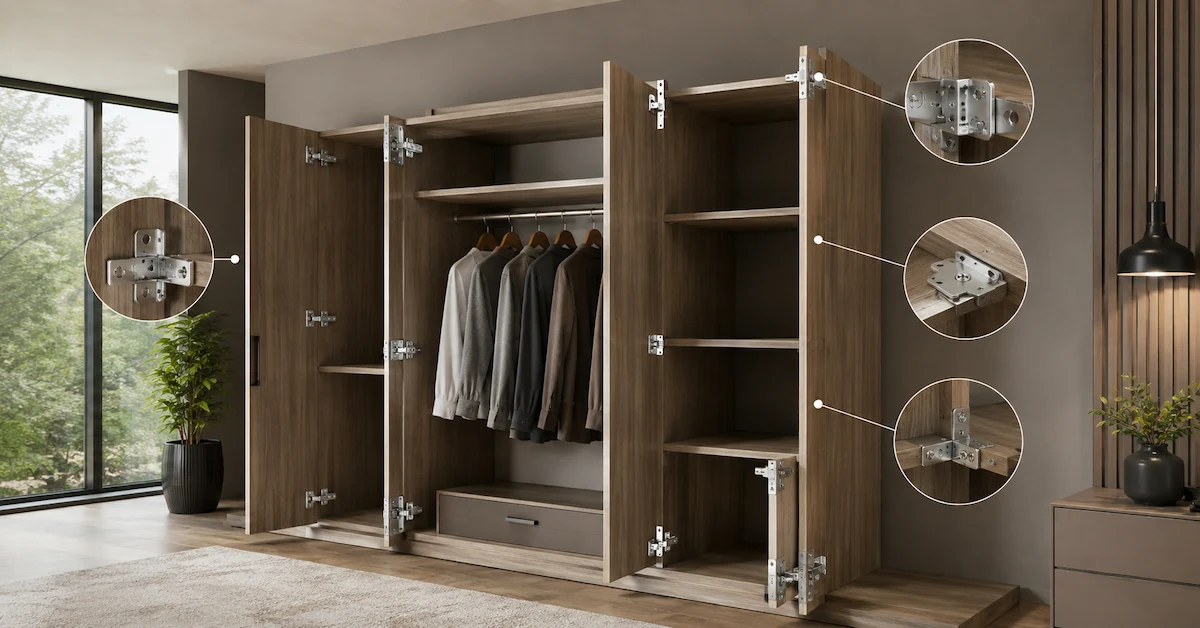
Factory users typically require three things: repeatability, a clean appearance, and robust reliability. The product images provided here also reflect this. Standardized panel dimensions, pre-drilled holes, and batch assembly indicate that the process is designed for speed and consistency. This is common in cabinets, wardrobes, shelving, office furniture, and interior finishing components. For these applications, cabinet screws must be easy to screw in, have predictable torque, and be compatible with the chosen substrate.
Jiangmen Jinhe Hardware Co., Ltd. also stated that it supports non-standard customization and pre-delivery inspection, which is very important for buyers who need fasteners tailored to their panel systems rather than generic catalog parts.
Questions buyers should ask before placing an order
Inquire about the exact size, drive type, thread specification, and coating of the screws. Confirm whether the fasteners are for medium-density fiberboard (MDF), particleboard, plywood, or solid wood. If the design includes connectors or inserts for laminates, verify the hardware type, not just visually. For export or multi-market projects, if the product conforms to relevant GB, DIN, ANSI, BS, JIS, or ISO standards, confirm that it meets your specifications.
If you are purchasing cabinets in bulk, request samples and test them with the boards you actually use. This simple test is often more valuable than a whole page of data.
Next steps for the procurement and production teams
If you are comparing cabinet screws for a new furniture project, first consider the base material, screw head style, and assembly method. Then select the appropriate screws based on the board material and hardware, not the other way around. For custom screws or production support, please contact Jiangmen Jinhe Hardware Co., Ltd., Tel: +86 13729150102, WhatsApp: +8613322893939, Email: sharon@hkhomeideas.com