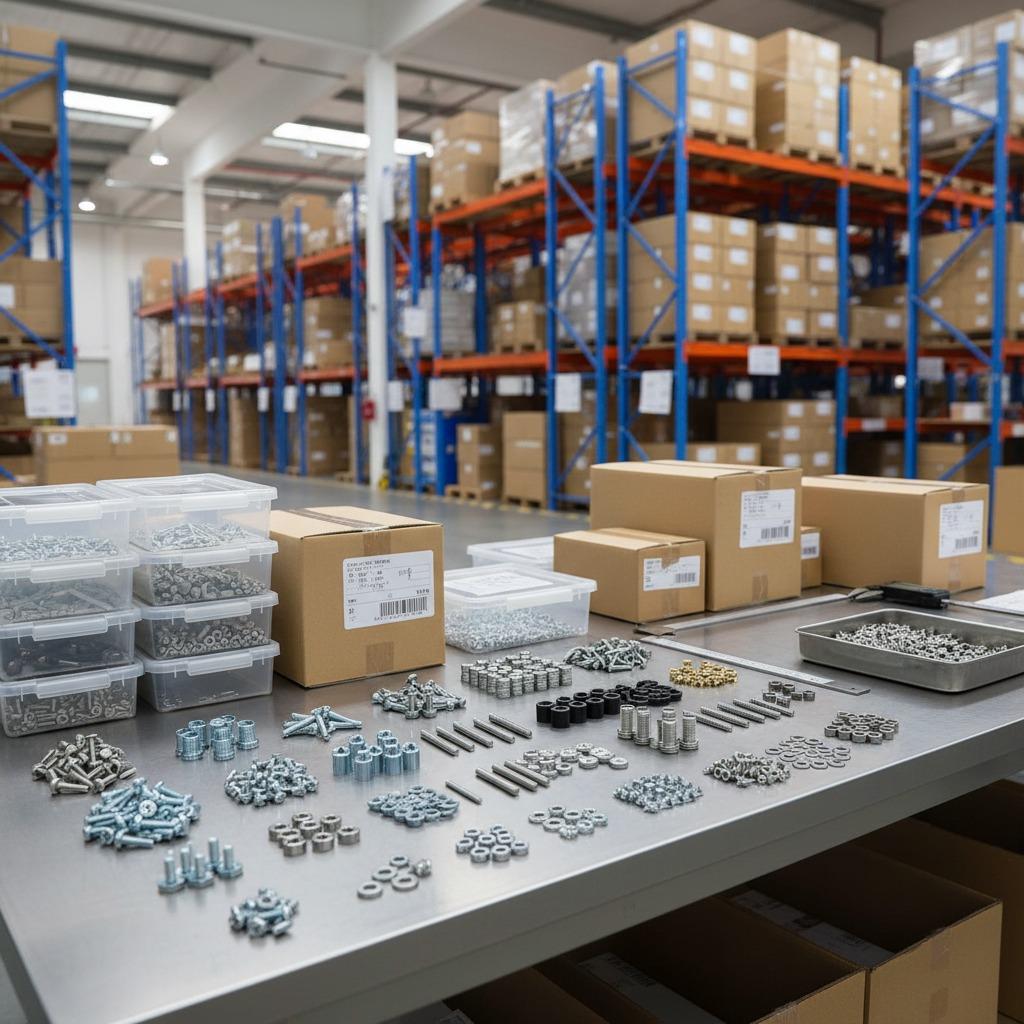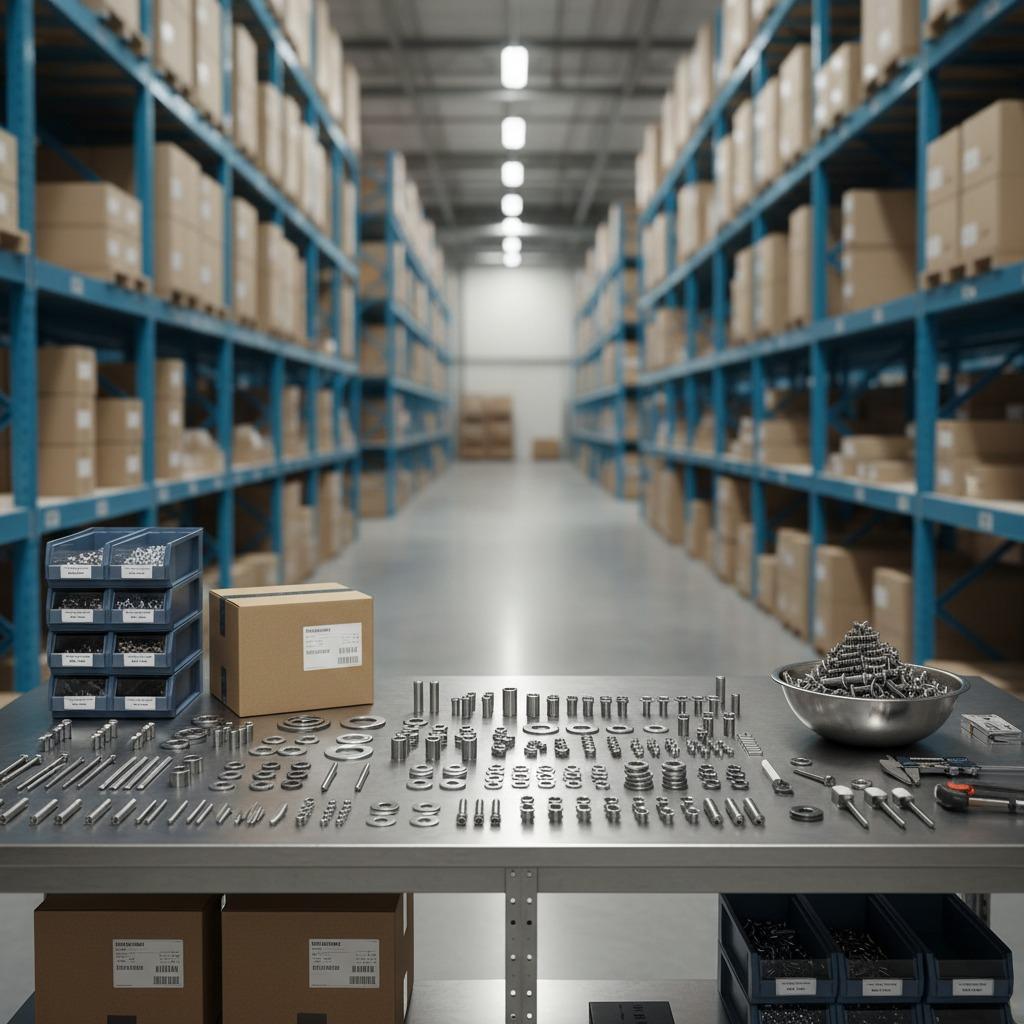

Why Custom Hardware Kits Matter Before Assembly, Maintenance, or Field Installation Starts
For many purchasing teams, the first conversation starts with the parts themselves.
Screws.
Nuts.
Bolts.
Drywall anchors.
Washers.
Small fasteners for repair, installation, furniture assembly, or field service.
At first, these parts look easy to source. They are standard, familiar, and usually inexpensive compared with panels, frames, brackets, machinery, or finished products. But the real cost often appears later, when loose hardware becomes difficult to count, easy to mix, and inconvenient to issue on the shop floor.
That is where a custom hardware kit supplier becomes important.
The right supplier is not just shipping parts in bulk. It is helping buyers turn many small components into a usable kit. A good kit saves time before assembly begins. It helps workers find the correct part quickly. It reduces missing-part complaints. It makes maintenance teams more efficient. It also gives distributors and retail buyers a cleaner product to sell.
In other words, a hardware kit is not only packaging.
It is order, control, and convenience placed into one box.
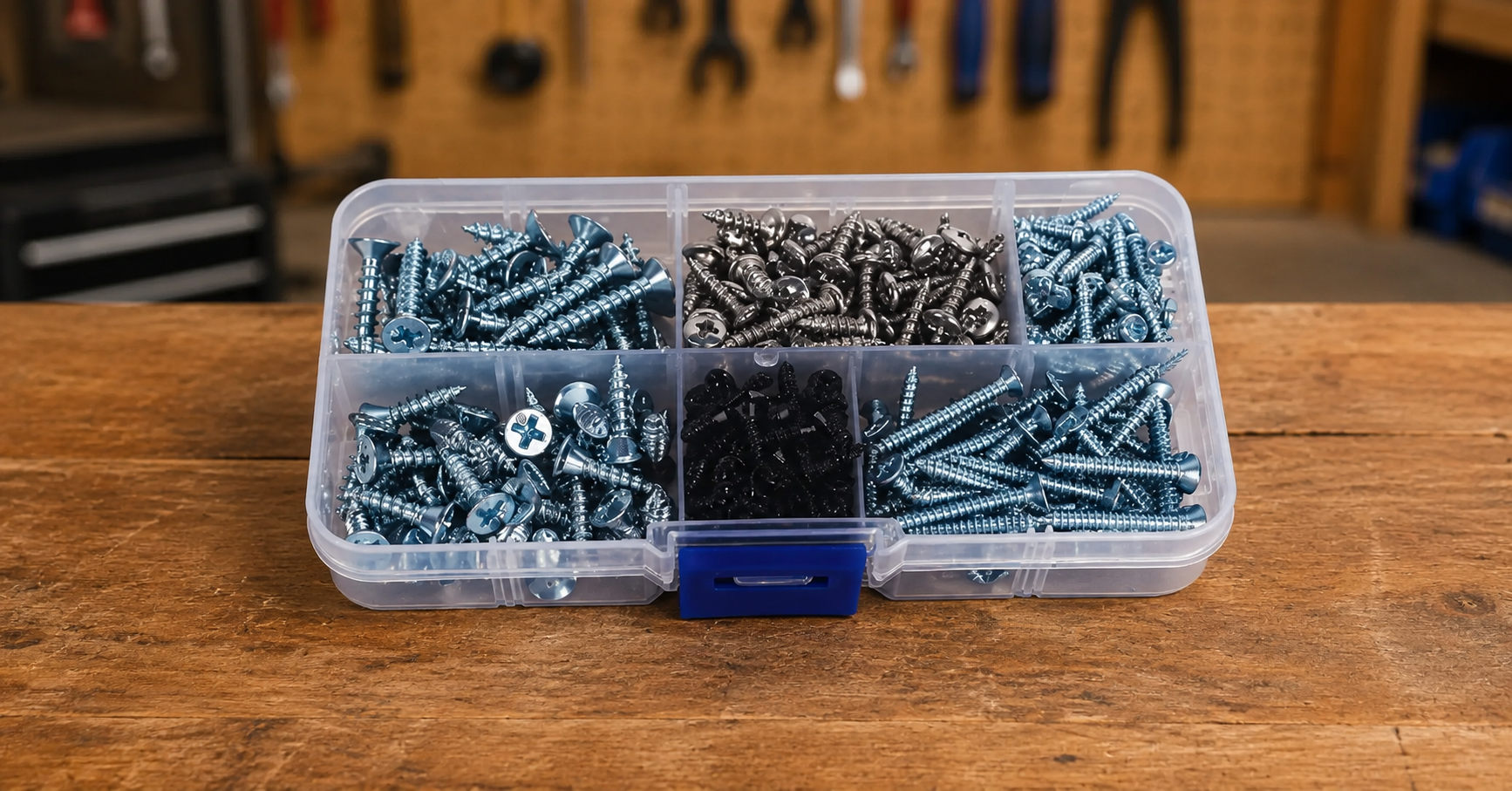
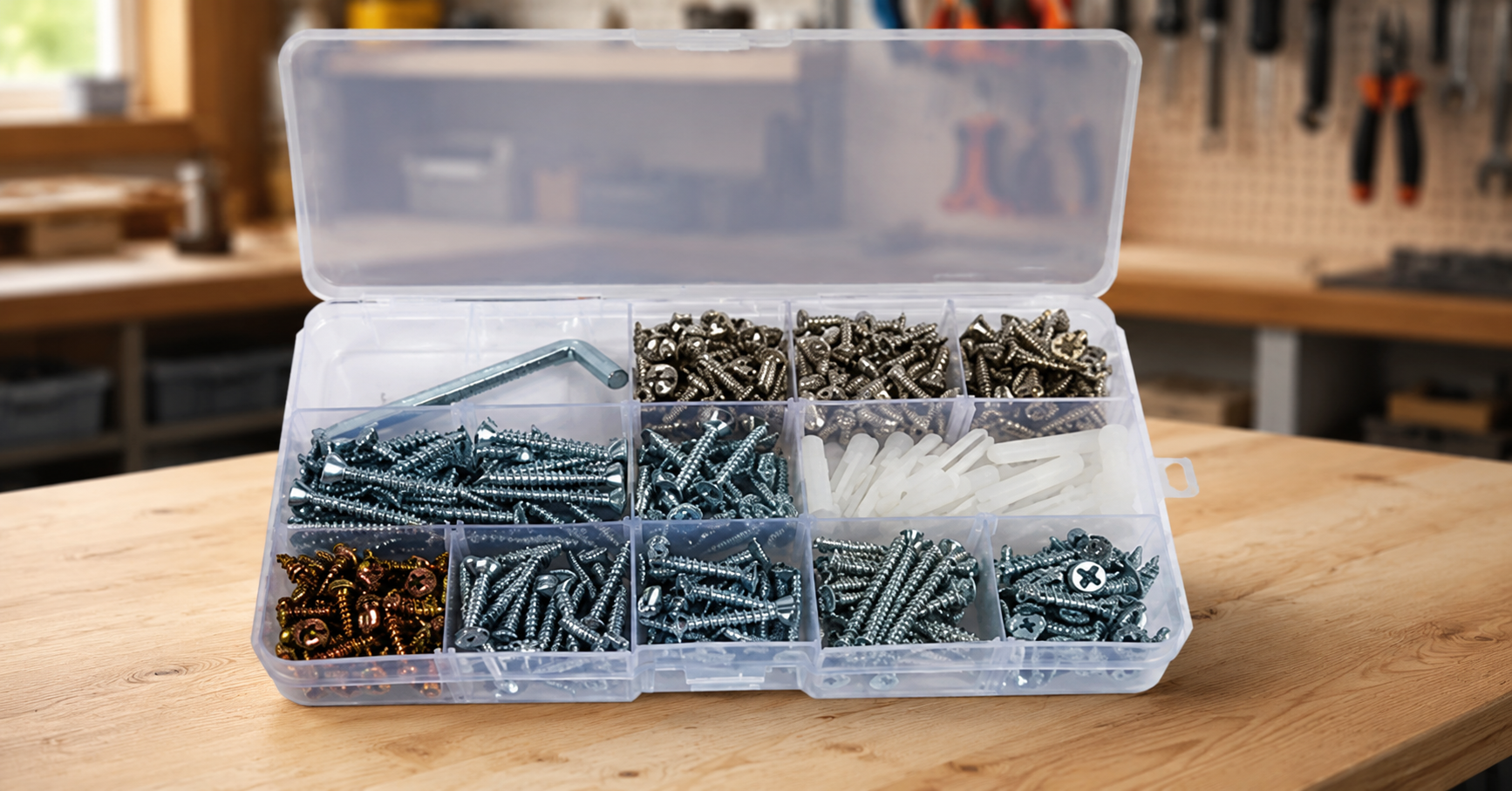
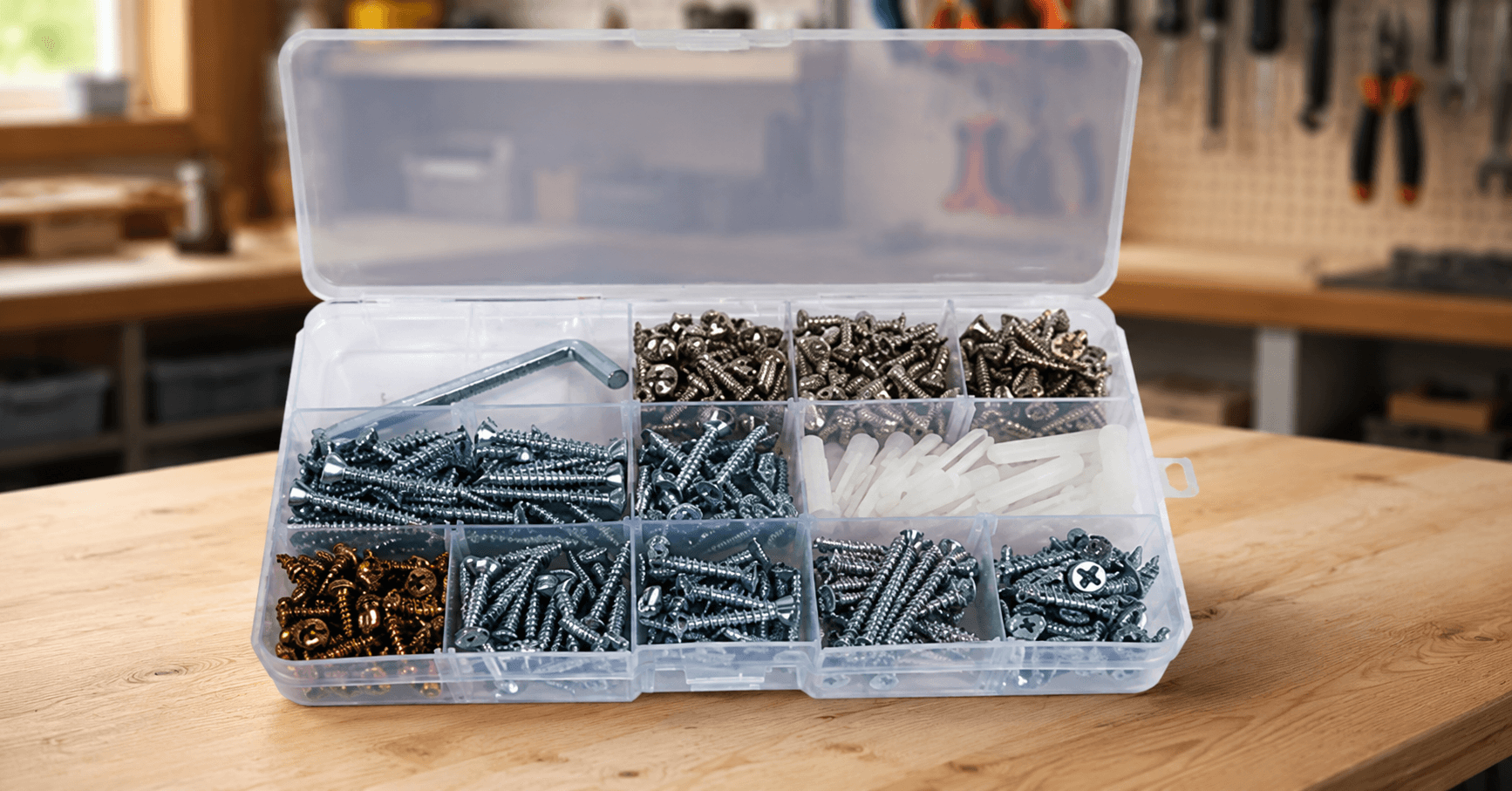
A useful example: hardware assortment kit with plastic box packaging
The linked JHFix product page presents a hardware assortment kit that includes coarse thread screws, nuts, bolts, drywall anchors, and screw-related components with plastic box packaging. The page image title also describes a hardware accessories set containing coarse thread screws, nuts, bolts, and drywall anchors in a plastic box. The specification table lists the product name as Customized Screw Set, strength grade 4.8, ISO standard, blue zinc finish wording in the translated text, furniture / bed installation and screw assembly applications, customized color, OEM/ODM support, customizable screw head types, customizable coarse or fine thread, customizable materials, and M2 to M12 thread size options.
| Product / Kit Point | Information Buyers Should Review |
|---|---|
| Product Direction | Hardware assortment kit with coarse thread screws, nuts, bolts, drywall anchors, and plastic box packaging |
| Product Name in Table | Customized Screw Set |
| Strength Grade | 4.8 |
| Standard | ISO |
| Finish Direction | Blue zinc wording appears in the translated product table |
| Application | Bed installation, furniture installation, screw assembly |
| Color | Customized |
| Custom Support | OEM/ODM support |
| Thread Type | Coarse thread or fine thread customization |
| Thread Size | M2, M3, M4, M5, M6, M8, M10, M12 |
| Packaging Direction | Plastic box packaging / hardware assortment box |
This type of product is a good case study because it shows what buyers often need in real work: not one fastener, but a sorted set of fasteners and anchors that can be opened, checked, stored, and reused.
The page information also shows why confirmation is necessary. The title focuses on a hardware accessories set with screws, nuts, bolts, and drywall anchors, while the product table uses a broader “Customized Screw Set” format. Buyers should confirm the exact contents, quantities, screw sizes, nut sizes, anchor sizes, finish, box layout, and carton packing before ordering.
What the plastic organizer tells us about the use case
A clear plastic organizer is designed for visibility and access.
That matters more than it sounds.
When hardware is packed in a transparent box with internal compartments, the user can usually identify parts faster than with loose bags. This is useful in workshops, furniture assembly stations, maintenance carts, installation teams, and retail repair kits.
A hardware assortment box can help users separate:
- coarse thread screws
- nuts
- bolts
- drywall anchors
- washers
- small connector pieces
- replacement fasteners
- installation accessories
For factory teams, this reduces line-side sorting. For maintenance workers, it keeps spare parts ready. For e-commerce sellers, it creates a cleaner product experience. For distributors, it makes the product easier to display and restock.
A box is not automatically better than a bag, of course. If the compartments are too loose, parts can move during shipping. If labels are missing, similar screws may still be confused. If the box material is weak, the latch may open in transit.
So buyers should not judge a kit only by appearance. They should test how the package performs when it is handled, shipped, opened, and reused.
Why custom hardware kits are more than a packaging exercise
Custom hardware kits solve a practical problem: bulk packaging does not match how people actually use fasteners.
A factory may buy screws by carton, but workers assemble products by set.
A maintenance team may stock bolts by size, but technicians repair equipment by task.
A furniture brand may purchase hardware by part number, but customers assemble furniture by step.
A retailer may buy many small fasteners, but consumers want one organized box.
That is why a custom hardware kit supplier needs to understand both the hardware and the packaging logic.
The buyer should discuss more than screw dimensions. The discussion should include:
- part list
- quantity per compartment
- screw and anchor matching
- nut and bolt compatibility
- box size
- compartment layout
- label method
- carton packing
- inspection method
- replacement plan
- repeat-order control
A hardware kit fails when any of these details are treated casually.
One wrong screw may damage a panel. One missing anchor may stop wall installation. One unlabeled compartment may create confusion every time the box is opened.
Where hardware assortment kits are commonly used
A mixed screw, nut, bolt, and drywall anchor set can serve several markets.
For furniture installation, the kit may support beds, cabinets, shelves, and ready-to-assemble products. The linked page specifically lists bed installation and furniture installation as application directions.
For maintenance teams, the kit can act as a quick-access spare fastener box.
For drywall and wall fixing, the inclusion of drywall anchors makes the set useful for installation and repair work.
For retail or e-commerce, the plastic box gives the buyer a more finished product than loose bags.
For OEM buyers, the same format can be adjusted by changing the screw sizes, thread types, quantities, colors, labels, and box layout.
Typical use scenarios include:
- furniture installation kits
- bed assembly hardware
- drywall anchor repair boxes
- workshop fastener assortment kits
- maintenance spare-part boxes
- contractor installation packs
- hardware retail products
- e-commerce DIY kits
- OEM screw and anchor assortments
- after-sales replacement hardware kits
The important point is that the same general packaging concept can serve different users, but the kit should be configured for the actual use case.
Hardware-only sourcing versus kit-based supply
Hardware-only sourcing answers one question: can the supplier provide the parts?
Kit-based supply answers a larger question: can the supplier provide the parts in a format that the buyer can use immediately?
A supplier may be able to ship screws, nuts, bolts, or drywall anchors in bulk. That can work if the buyer has a strong internal kitting process. But if the buyer must re-count, re-label, separate, and repack everything after receiving, the real cost rises.
A plastic-box kit may cost more per set than bulk fasteners, but it can reduce labor and handling.
| Buying Method | Main Advantage | Main Risk |
| Bulk fastener supply | Lower simple purchasing cost | More sorting, counting, and repacking work |
| Bagged hardware kit | Simple and economical for one product model | Similar parts may mix if labels are weak |
| Plastic-box assortment | Better visibility, storage, and reuse | Box layout must prevent parts from crossing compartments |
| OEM hardware kit | Matches specific product or brand requirement | Requires clear BOM, label, and repeat-order control |
| Retail assortment box | Easier to sell and display | Needs stronger presentation and user-friendly labeling |
A good buyer does not choose packaging only by price.
The better question is: which format reduces the most work after delivery?
What to ask a hardware kit manufacturer
Before placing an order, buyers should ask the supplier practical questions.
Can the supplier pack screws, nuts, bolts, and drywall anchors in one organized box?
Can they separate parts by size, type, or use?
Can the box layout be customized?
Can the color be customized?
Can the thread type be coarse or fine according to the application?
Can the kit include M2 to M12 thread-size options where needed?
Can the supplier support OEM/ODM orders?
Can they provide a sample box before bulk production?
Can they repeat the same layout in the next order?
These questions are directly connected to the linked product page, which lists customized color, OEM/ODM support, customizable coarse/fine thread, and M2 to M12 thread-size options.
For a real sourcing project, buyers should also confirm the exact material. The page’s material line appears partly mistranslated in the readable text, so the final material for each screw, nut, bolt, and anchor should be confirmed in writing before production.
Key selection points buyers should not skip
A visually neat box can still be a weak kitting solution if the internal layout does not match the part mix.
Too many compartments can waste space.
Too few compartments can mix sizes.
A loose lid can let fasteners move during shipping.
A missing label can confuse users.
A wrong screw-to-anchor match can reduce installation reliability.
For a hardware assortment kit, buyers should check:
- whether the screws match the anchors
- whether nuts and bolts match each other
- whether each size has its own compartment
- whether the box stays closed during transport
- whether the kit is easy to count
- whether labels are clear
- whether replacement parts are easy to identify
- whether the carton protects the box
- whether the kit can be reordered without changes
A good sample test is simple: open the box, shake it lightly, move it like a shipped product, then check whether the parts remain separated. If screws have crossed into other compartments, the design needs improvement.
Common mistakes buyers make
One frequent mistake is choosing the kit by total piece count only.
A larger assortment may look better in photos, but it is not useful if the mix does not match real customer needs. A smaller, better-organized kit may be more valuable than a crowded box full of rarely used parts.
Another mistake is combining too many similar screws without clear size marking. A user may not easily see the difference between two lengths or two thread types.
A third mistake is ignoring the anchor-screw relationship. A drywall anchor must be matched with the correct screw. If the screw is too small, the anchor may not expand well. If it is too large, the anchor can split or become difficult to install.
Buyers also sometimes assume that all plastic boxes protect parts equally. They do not. Box quality, compartment depth, lid fit, latch design, and shipping carton support all matter.
The final mistake is skipping sample approval. A hardware kit should be approved as a complete package, not as a loose parts list.
Buyer takeaway: choose the supplier that understands the full system
When sourcing custom hardware kits, the best supplier is not always the one with the cheapest part price.
It is usually the one that can connect fastener selection, sorting logic, packaging, inspection, and repeat supply into one controlled workflow.
The linked JHFix page shows a product direction built around a hardware assortment kit with coarse thread screws, nuts, bolts, drywall anchors, and plastic box packaging. It also lists customization options and OEM/ODM support, which are useful for buyers who need a repeatable kit rather than loose fasteners.
For procurement teams, that combination can simplify a messy kitting project.
A good kit saves labor every time it is opened. A poor one becomes another inventory problem.
FAQ
What is a custom hardware kit supplier?
A custom hardware kit supplier provides screws, nuts, bolts, anchors, washers, and other small hardware in organized kits, boxes, bags, or OEM packaging formats based on buyer requirements.
What product information is supported by the linked JHFix page?
The page supports a hardware accessories set direction, including coarse thread screws, nuts, bolts, drywall anchors, and plastic box packaging. The table also lists customized screw set, 4.8 strength grade, ISO standard, bed and furniture installation applications, customized color, OEM/ODM support, customizable thread types, and M2 to M12 thread sizes.
Why is plastic box packaging useful?
Plastic box packaging helps separate parts, improve visibility, support storage, and make mixed hardware easier to identify during installation or maintenance.
What should buyers confirm before ordering?
Buyers should confirm the exact part list, piece count, screw sizes, nut and bolt compatibility, anchor sizes, material, finish, compartment layout, labels, carton packing, and sample approval.
Is a hardware assortment kit only for retail sale?
No. It can also be used for factory assembly, furniture installation, field maintenance, repair kits, contractor packs, and OEM hardware programs.
Where to go next
If your team is planning a new fastener assortment box, screw-and-anchor kit, furniture installation kit, or maintenance hardware set, start with a clear part list and a real sample review.
Do not judge the kit only by the quotation.
Open it. Count it. Shake it. Use it. Compare it with the actual assembly or repair task.
For custom hardware kits, screw nut bolt assortments, drywall anchor screw kits, plastic box packaging, furniture installation hardware, and OEM fastener assortment boxes, Jiangmen Jinhe Hardware Products Co., Ltd. can discuss samples, kit layout, custom sizes, labels, packaging, and repeat supply.
Start with the hardware list, target use, size range, box layout, labeling requirement, carton packing, and order quantity.
Once those details are clear, the right custom hardware kit becomes much easier to source, pack, sell, and reorder.