
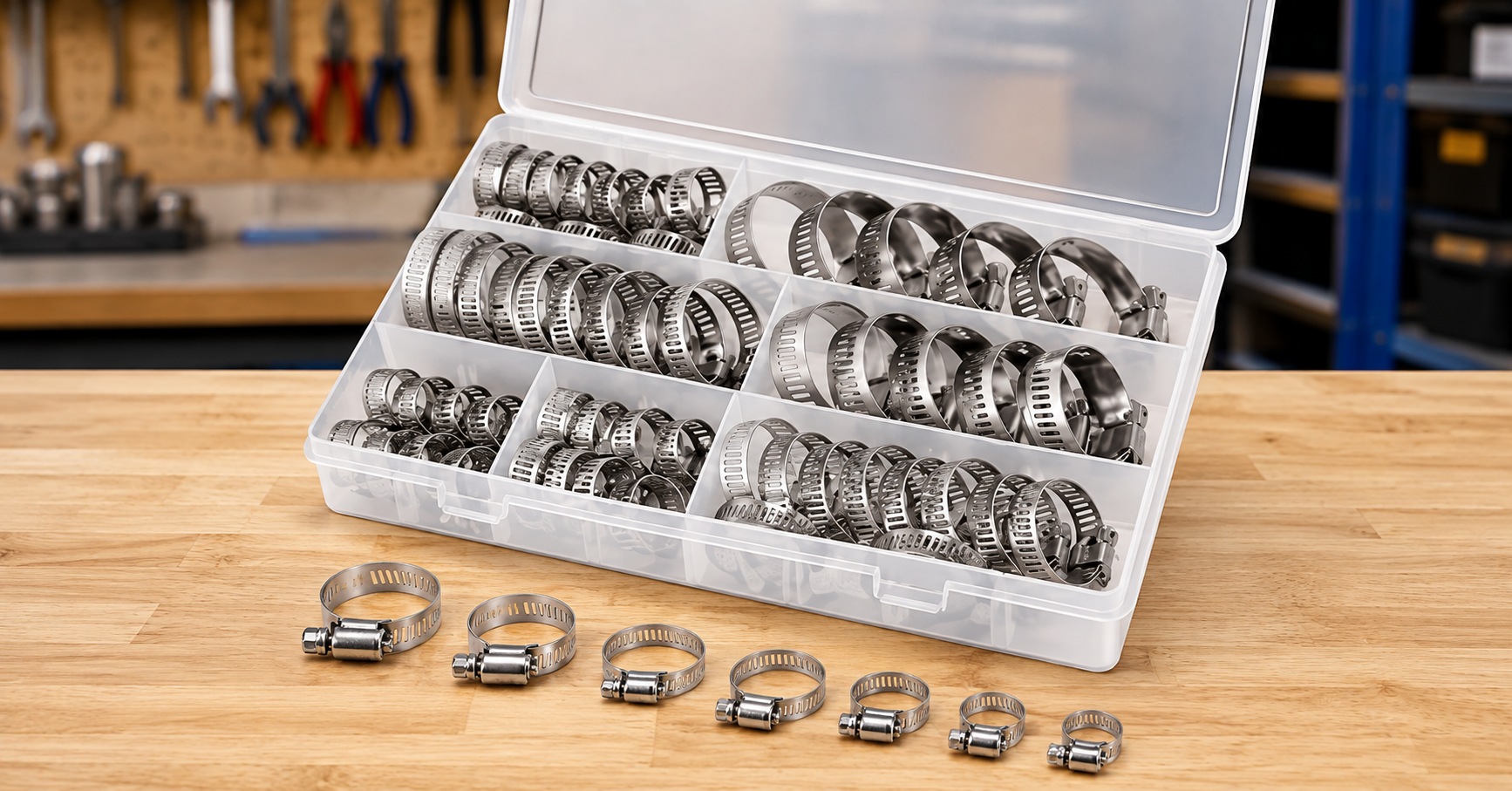
 Why a Custom Hardware Kit Supplier Matters for Hose Clamp, Fastener, and Small-Parts Packaging
A small plastic case can look like a minor detail in a sourcing project.
It is not as technical as the fastener itself. It is not as visible as a finished cabinet, machine, appliance, or pipe system. It may look like nothing more than a storage box with a transparent lid and several compartments.
But for buyers sourcing small hardware in volume, that case can decide whether the kit is useful or frustrating.
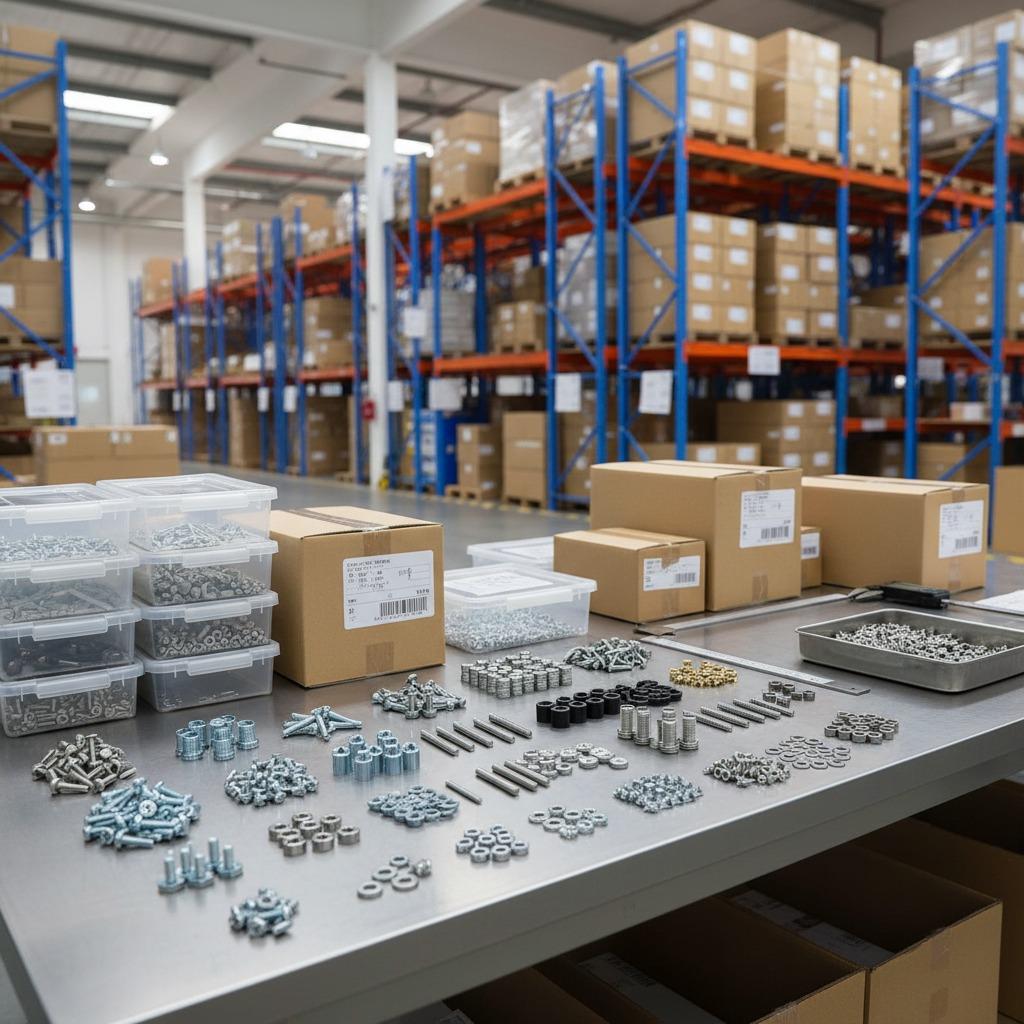
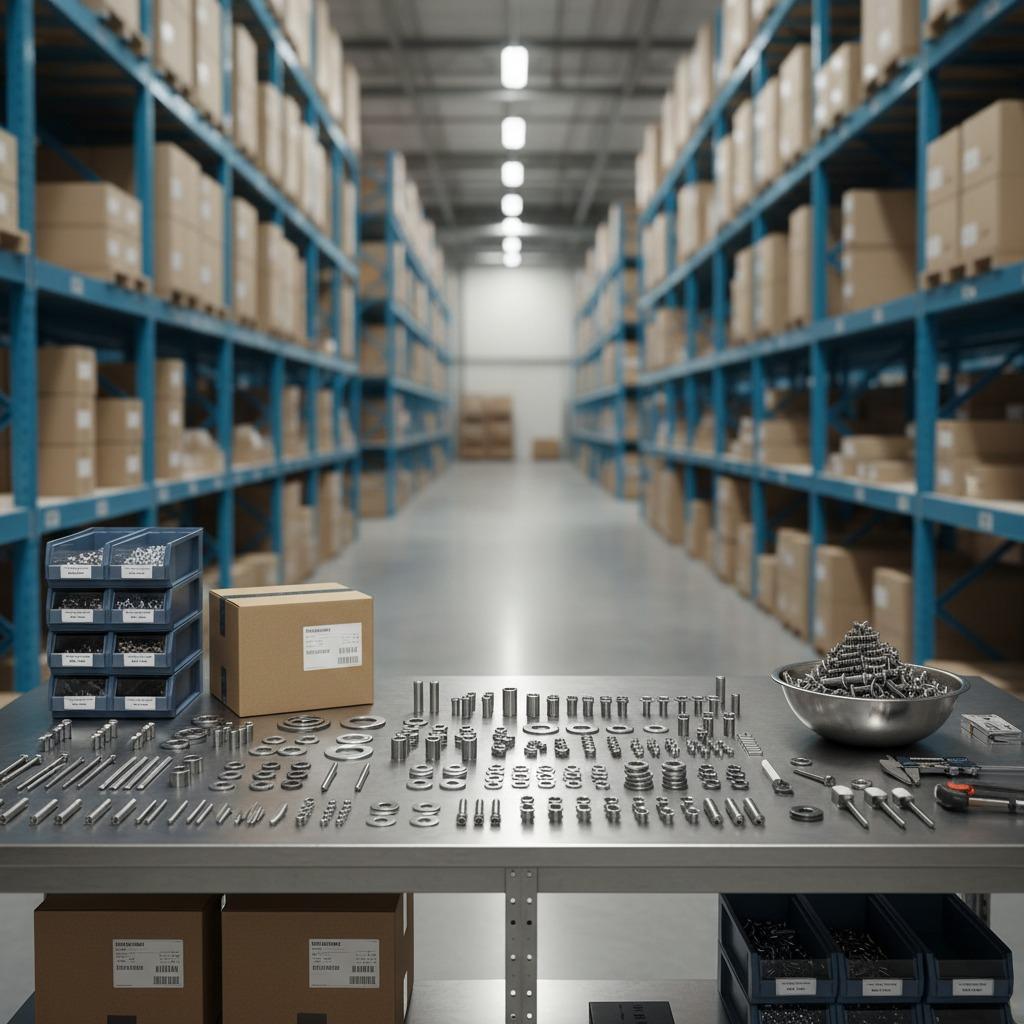
A custom hardware kit supplier does more than ship loose screws, clamps, washers, anchors, or repair parts. The supplier helps turn many small components into an organized system. That system must be easy to count, easy to inspect, easy to store, and easy to use when the job starts.
This matters for workshops, maintenance teams, installers, furniture assembly lines, distributors, and e-commerce sellers. In these channels, the question is not only whether the hardware is correct. The question is whether the user can find the correct part quickly.
A missing clamp can delay repair.
A mixed screw size can damage a panel.
A loose washer can disappear inside a carton.
A poorly closed box can scatter parts during shipping.
An unclear kit can make a simple job feel complicated.
That is why small-parts packaging is not just packaging.
It is part of the product value.
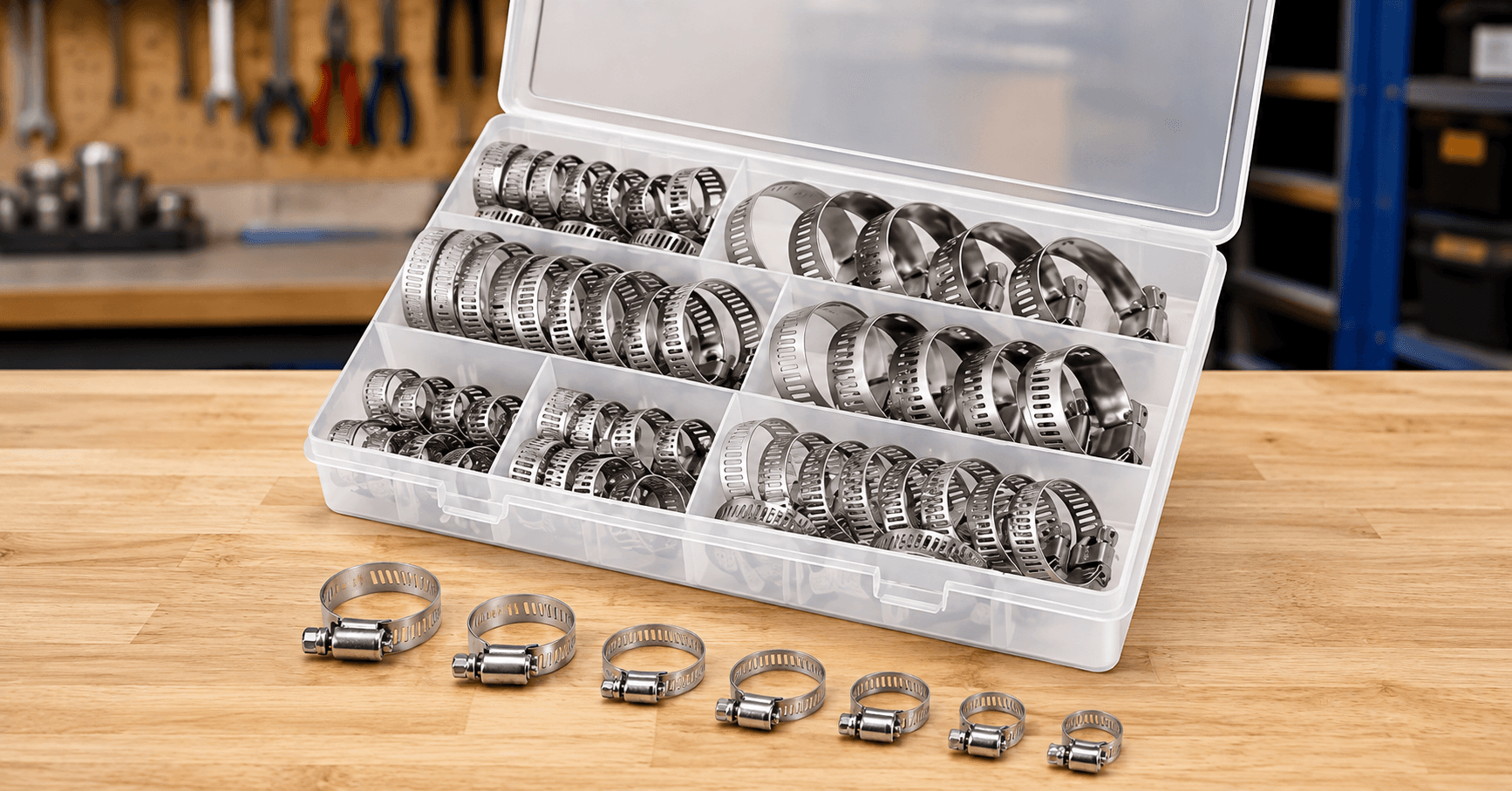
A practical product example: 60pcs hose clamp kit
The linked JHFix product page identifies the product direction as a 60pcs 304 stainless steel pipe throat worm drive hose clamp / galvanized hose clamp / hose pipe clamp set. The specification table lists finish as stainless steel, material as steel, measurement system as metric, application fields including healthcare, food & beverage, general industry, heavy industry, and mining, pipe clamp type as single pipe clamp, and product name as installation hardware kit with PVC packaging. It also lists strength grade 6.8, customized color, OEM/ODM support, customizable head types, coarse/fine thread customization, customizable materials, and thread sizes from M2 to M12 in the broader table format.
| Product / Kit Point | Information Buyers Should Review |
|---|---|
| Product Direction | 60pcs worm drive hose clamp / galvanized hose clamp / hose pipe clamp set |
| Material Wording | Steel is listed; title mentions 304 stainless steel |
| Finish | Stainless steel listed in the table |
| Measurement System | Metric |
| Pipe Clamp Type | Single pipe clamp |
| Application Fields | Healthcare, food & beverage, general industry, heavy industry, mining |
| Product Name in Table | Installation hardware kit with PVC packaging |
| Custom Support | OEM/ODM support |
| Packaging Direction | PVC packaging / kit-style packaging |
| Contact Shown | sharon@hkhomeideas.com / +86 13322893939 |
This product information is useful for B2B buyers because it shows a hose clamp set being positioned not only as loose clamps, but as a packaged hardware kit.
However, buyers should also notice one important sourcing point: the product title mentions 304 stainless steel and galvanized hose clamps, while the table lists material as steel and finish as stainless steel. The same table also includes broader customized screw-set fields.
That means the final order should confirm:
- whether the clamps are 304 stainless steel, galvanized steel, or another confirmed material
- the exact clamp size range
- the quantity of each clamp size inside the 60pcs kit
- whether the packaging is PVC packaging, plastic box packaging, or another kit format
- the final label and carton packing method
- whether the kit is for retail, maintenance, OEM, or distributor supply
A good supplier should welcome these questions. They make the final kit clearer.
Why the box matters before the job starts
A hose clamp set or fastener kit is often used when time matters.
A maintenance worker may need to replace a clamp quickly.
A workshop technician may need several sizes at one station.
A distributor may need an organized kit that customers can inspect before buying.
An industrial buyer may want a repeatable spare-parts box for different teams.
If clamps are shipped loose in a bag, the buyer may save money at first. But the user must sort them later. Similar sizes may be mixed. Small clamps may fall out. The kit may look incomplete even when all parts are technically present.
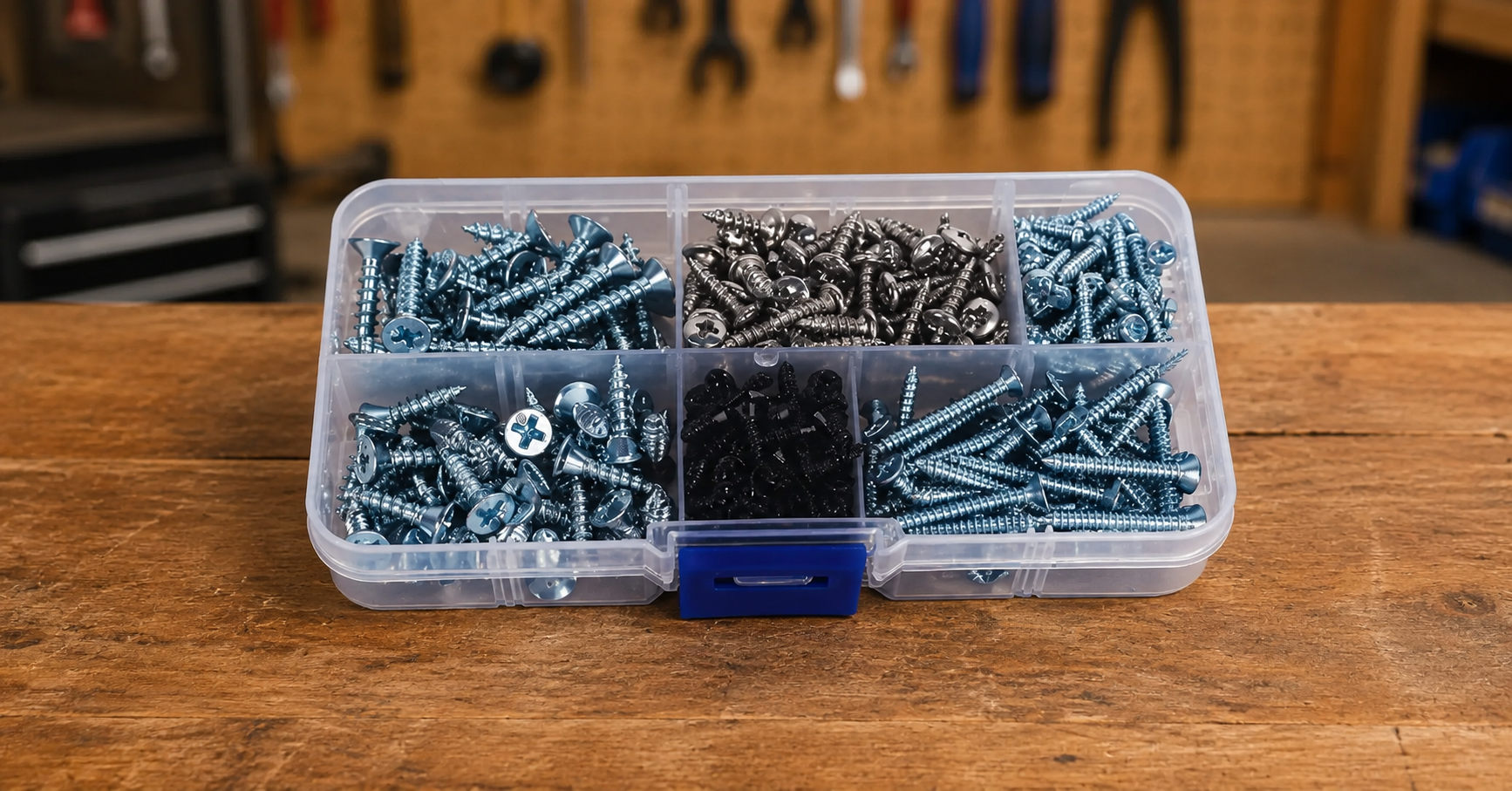
A plastic organizer box helps solve this problem by making the hardware visible and separated. The user can open the lid, check the compartments, and select the part without emptying the whole package.
For a hose clamp kit, this is especially useful because size differences matter. A clamp that is slightly too small cannot fit the hose. A clamp that is too large may not tighten correctly. Good packaging helps the user pick the right one faster.
What buyers should check in a hose clamp kit
A hose clamp kit should be evaluated as a complete product, not only as a group of metal clamps.
The clamp, box, label, and carton all matter.
Buyers should ask:
What sizes are included in the 60pcs set?
How many pieces are included for each size?
What is the confirmed material?
Is the band stainless steel, galvanized steel, or another material?
What is the screw material?
Is the clamp suitable for the intended hose material?
Can the box keep sizes separated during shipping?
Is the lid secure enough for transport?
Can the label include size range, barcode, or OEM branding?
Can the supplier repeat the same mix in future orders?
These are practical questions. They help prevent the most common kit problem: a box that looks useful in photos but becomes confusing in real use.
Where hose clamp kits are commonly used
The product page lists healthcare, food & beverage, general industry, heavy industry, and mining among its application fields.
That broad application direction makes hose clamp kits relevant for many buyers, but the final use should still be confirmed carefully.
Possible use scenarios include:
- pipe and hose repair kits
- workshop maintenance boxes
- automotive repair assortments
- small equipment servicing
- water hose fixing
- air hose fixing
- pump and filter maintenance
- general industrial spare-parts kits
- distributor hardware boxes
- retail repair kits
- OEM installation kits
For food and beverage or healthcare-related use, buyers should be especially careful. These fields may have material, hygiene, cleaning, and compliance requirements that are not fully defined by a product title. For mining and heavy industry, buyers may care more about durability, vibration, corrosion exposure, and field repair convenience.
The kit can support different markets, but one standard configuration will not automatically fit every environment.
Hardware-only sourcing versus kit-based supply
Buying hose clamps in bulk is different from buying a ready-to-use hose clamp kit.
Bulk sourcing can be practical when the buyer already has internal sorting and storage. It may also reduce simple unit cost.
Kit-based supply is better when the buyer needs a finished assortment that can go directly to users, technicians, distributors, or retail channels.
| Buying Method | Main Benefit | Main Risk |
| Bulk hose clamp supply | Lower basic part cost and flexible internal use | Requires sorting, labeling, and storage work |
| Simple bagged kit | Lower packaging cost and easy packing | Sizes may mix or become hard to identify |
| Plastic organizer box | Better visibility, storage, and reuse | Compartments must prevent size mixing |
| OEM hardware kit | Matches a buyer’s brand, SKU, and use case | Requires clear BOM and sample approval |
| Retail repair kit | Easy to display and sell | Needs strong label and user-friendly layout |
A purchasing team should not only ask, “What is the clamp price?”
A better question is, “What format reduces work after the goods arrive?”
Why custom hardware kits are more than packaging
Custom hardware kits solve the gap between how parts are manufactured and how parts are used.
Factories often produce and ship parts by type.
Users need parts by task.
That difference is why kit-building matters.
A field technician does not want to carry ten loose cartons of different clamp sizes. A retail buyer does not want to explain a mixed bag of unmarked hardware. A maintenance team does not want to search through bins every time a hose clamp is needed.
A well-designed kit groups the parts by real use.
For hose clamps, that may mean arranging sizes from small to large. For screws and anchors, it may mean matching screws with plugs. For washers, it may mean separating flat washers, spring washers, and copper washers. For furniture hardware, it may mean one bag per assembly step.
The packaging should follow the job.
Not the other way around.
How to choose a hardware kit manufacturer
A reliable hardware kit manufacturer should understand both the parts and the packaging workflow.
For hose clamp kits, buyers should check whether the supplier can support:
- clamp size confirmation
- material confirmation
- finish confirmation
- quantity control
- compartment layout
- plastic box or PVC packaging
- label and barcode requirements
- OEM/ODM customization
- sample kit approval
- carton packing
- repeat-order consistency
The JHFix page identifies Jiangmen Jinhe Hardware Products Co., Ltd. in the footer and provides contact information for inquiries. For buyers, that gives a clear channel to request samples, final specifications, and packaging confirmation.
A good supplier should not only say that a kit is available. It should help the buyer define what the kit contains, how it is packed, and how the same configuration will be repeated.
Selection criteria that actually matter
A clear plastic organizer box may look simple, but buyers should still evaluate it carefully.
1. Compartment layout
The compartments should match the part mix. Hose clamp sizes should not be forced into spaces that are too small or too large. If parts can jump between sections during shipping, the kit loses its value.
2. Lid and latch behavior
A transparent lid is useful for quick inspection. A snap-style latch can support normal handling. But buyers should not assume the box is impact-resistant, waterproof, or dustproof unless the supplier confirms those properties.
3. Visibility and labeling
Visibility helps users identify parts quickly. Labeling helps them choose correctly. For hose clamp kits, the label should ideally show size range, piece count, material, and application notes.
4. Material confirmation
The title and table wording should be checked carefully. If a buyer needs 304 stainless steel, that should be confirmed in writing, not assumed from title text alone.
5. Repeat supply
A good sample is not enough. Future shipments should match the same clamp sizes, quantities, box layout, label, and carton packing.
Common mistakes buyers make
One common mistake is treating all hose clamp kits as interchangeable.
They are not.
A kit for general repair may not suit food and beverage equipment. A kit for light workshop use may not suit mining or heavy industry. A retail kit may need stronger presentation than an internal maintenance box.
Another mistake is choosing by total piece count only. A 60pcs kit is useful only if the size mix matches real demand.
A third mistake is ignoring the box layout. If clamps move between compartments during shipping, the user still has to sort them.
Buyers also sometimes assume material from the title without checking the specification. For this product page, the title and table wording should be confirmed before ordering.
The final mistake is skipping sample testing. Buyers should open the box, count the parts, check the clamp sizes, shake the box gently, and confirm that the compartments hold parts securely.
What this case study suggests for sourcing teams
For sourcing managers, the lesson is direct: a reliable hardware kit is a system, not a pile of parts.
The clamp must fit the hose.
The material must suit the environment.
The box must keep sizes separated.
The label must guide the user.
The carton must protect the kit.
The supplier must repeat the approved configuration.
This is where a custom hardware kit supplier can add value.
The buyer saves time not because the box looks nice, but because the box reduces sorting, checking, searching, and rework.
FAQ
What is a custom hardware kit supplier?
A custom hardware kit supplier provides small hardware parts such as screws, clamps, washers, anchors, nuts, bolts, and accessories in organized kits, boxes, bags, or OEM packaging formats.
What product information is supported by the linked JHFix page?
The page supports a 60pcs hose clamp kit direction, including 304 stainless steel wording in the title, galvanized hose clamp wording, single pipe clamp type, metric measurement system, steel material listed in the table, application fields such as healthcare, food & beverage, general industry, heavy industry, and mining, and installation hardware kit with PVC packaging.
Why should buyers confirm the material before ordering?
The title mentions 304 stainless steel and galvanized hose clamps, while the specification table lists material as steel and finish as stainless steel. Buyers should confirm the exact material and finish before mass production.
Why is plastic box packaging useful for hose clamps?
It helps separate sizes, improve visibility, support storage, and reduce sorting time during maintenance, repair, retail sale, or distributor supply.
What should buyers confirm before bulk order?
Buyers should confirm clamp size range, quantity per size, material, finish, screw type, box layout, label, carton packing, sample approval, and repeat-order rules.
Next step for buyers
If you are evaluating a custom hardware kit supplier for hose clamp kits, fastener assortment boxes, maintenance hardware, or OEM small-parts packaging, start with a real sample.
Do not judge the kit only from a product photo.
Open it. Count it. Check the size mix. Shake it lightly. Test whether the lid stays closed. Confirm whether the parts remain separated after handling.
For 60pcs hose clamp kits, 304 stainless steel hose clamp assortments, galvanized hose clamp sets, worm drive hose clamps, plastic box packaging, PVC packaging hardware kits, and OEM hardware assortment programs, Jiangmen Jinhe Hardware Products Co., Ltd. can discuss samples, kit layout, material confirmation, labels, carton packing, and repeat supply.
Start with the clamp size range, material requirement, target application, box layout, label content, carton method, and order quantity.