
Small Fasteners, Big Supply Chain: How to Choose a Custom Wholesale Screws Supplier
Fasteners are easy to underestimate.
They are small. They are usually low-cost compared with panels, housings, frames, motors, or finished assemblies. They sit quietly in bins, bags, cartons, or compartment trays until somebody needs them.
Then one wrong screw can stop the job.
If a production line has ever slowed down because the wrong fastener arrived in the wrong bin, the value of a custom wholesale screws supplier becomes very clear. The supplier is not only providing screws. It is helping control assembly quality, packaging accuracy, repeat order stability, and the amount of time a warehouse team spends sorting small parts.
That is why buyers do not usually search for custom screws just to find a cheaper piece price. They search because they need the right part, in the right volume, with the right packaging, inspection, and documentation. The requirement may apply to appliances, electronics, furniture, automation equipment, repair kits, MRO stock, or cross-border hardware sales.
In each case, the same rule applies: a screw is only useful when it fits the product and the supply process.
Why fastener buying becomes more than a price decision
On paper, screw sourcing can look simple.
Choose the size.
Choose the finish.
Confirm the quantity.
Ask for a quotation.
Place the order.
Real production is less forgiving.
A drive recess that strips too easily can slow down assembly. A head height that is slightly wrong can interfere with a cover. A coating that looks fine in a sample may not suit the actual working environment. A mixed fastener kit that is poorly packed can turn receiving into a manual sorting job.
For this reason, a custom screw manufacturer for bulk orders needs to do more than manufacture parts. The supplier should help buyers reduce variation, protect repeat orders, and make the hardware easier to use after delivery.
A good fastener supplier supports the full chain:
- part definition
- material selection
- head and drive matching
- thread control
- finish confirmation
- inspection before shipment
- packaging and labeling
- repeat-order consistency
- logistics and delivery support
This is where buyers begin to separate a simple seller from a real custom fastener partner.
What buyers need from a custom fastener partner
A reliable custom fastener manufacturer should help buyers avoid three common problems: unclear specifications, inconsistent supply, and messy packaging.
For Jiangmen Jinhe Hardware Co., Ltd., the company’s stated product range includes machine screws, self-tapping screws, micro screws, and precision screws. It works with materials such as stainless steel, iron, and aluminum, and supports non-standard customization. For buyers, that range matters because many projects do not rely on one screw type only.
An appliance program may need machine screws and self-tapping screws.
An electronics product may require micro screws or precision screws.
A furniture project may need screws packed with washers, connectors, or small fittings.
A hardware wholesaler may need mixed fastener assortments sorted by size and finish.
In these cases, the buyer is not only asking, “Can you supply screws?”
The better question is:
Can you supply the right screw system for this application?
That system includes the fastener itself, but also the way it is checked, packed, labeled, shipped, and repeated.
Common fastener types in bulk supply
Machine screws and precision screws
Machine screws and precision screws are often used where repeatable fit matters. Electronics, medical device components, automation equipment, small mechanisms, and appliance assemblies may all require more careful control over dimensions and engagement.
For these products, buyers should discuss drawings, tolerances, head style, material, finish, and inspection documents early. Waiting until after production to clarify these points is risky.
A sample can look acceptable on a desk. It still needs to work in the actual assembly.
Self-tapping screws
Searches for a bulk self tapping screws supplier often come from buyers who want faster installation or fewer prepared holes. These screws are common in furniture, appliances, sheet metal, light industrial assemblies, and repair applications.
The important question is not only whether the supplier can produce self-tapping screws. Buyers should ask whether the point style, thread form, drive type, material, and finish can remain consistent across lots.
Self-tapping performance depends heavily on the material being fastened. A screw that works well in one substrate may not work well in another.
Mixed hardware kits and fastener assortments
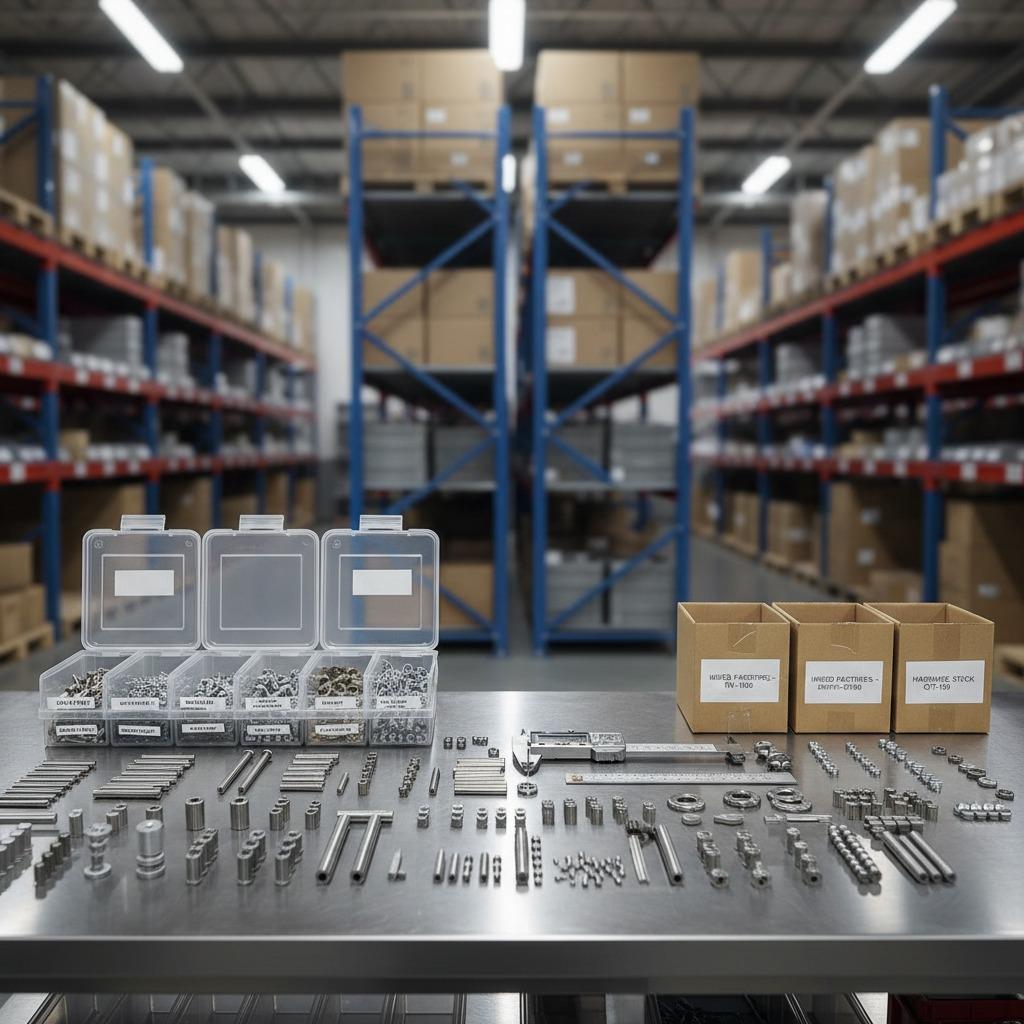
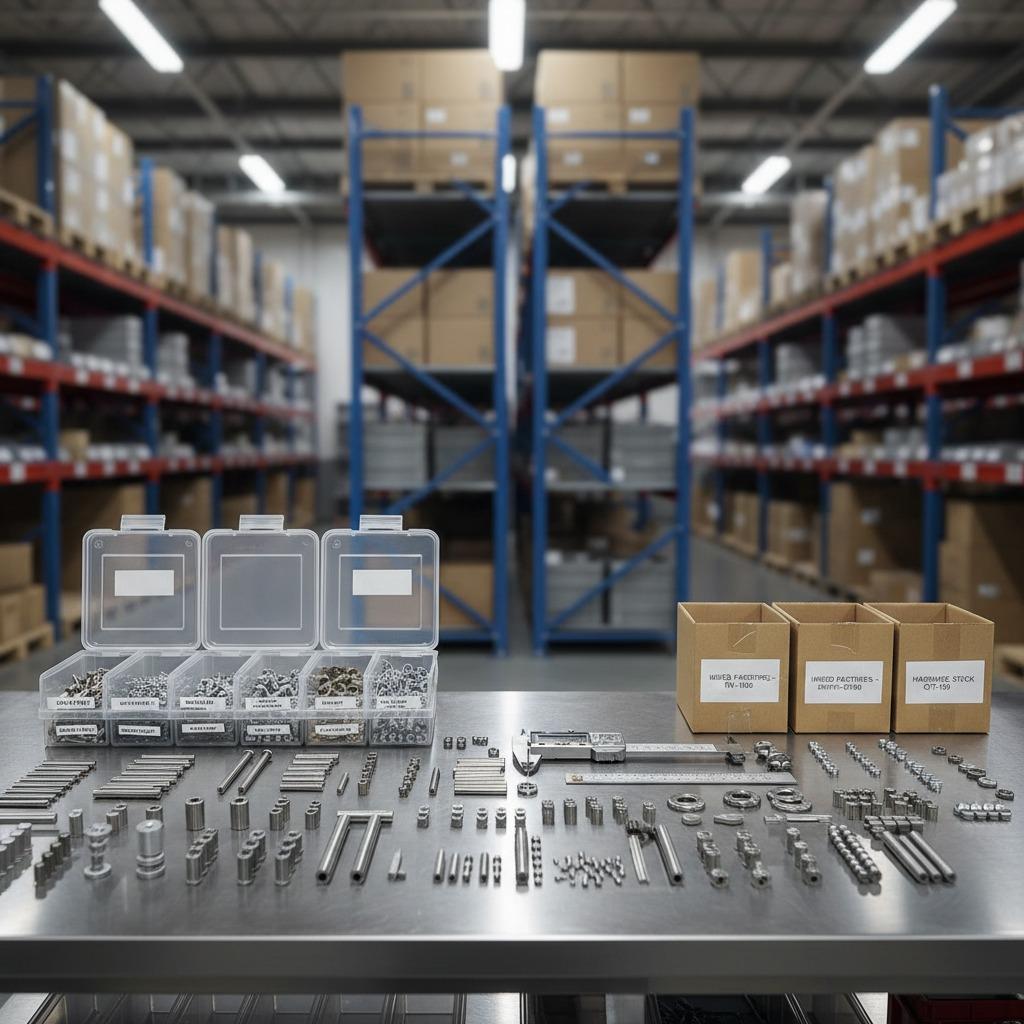
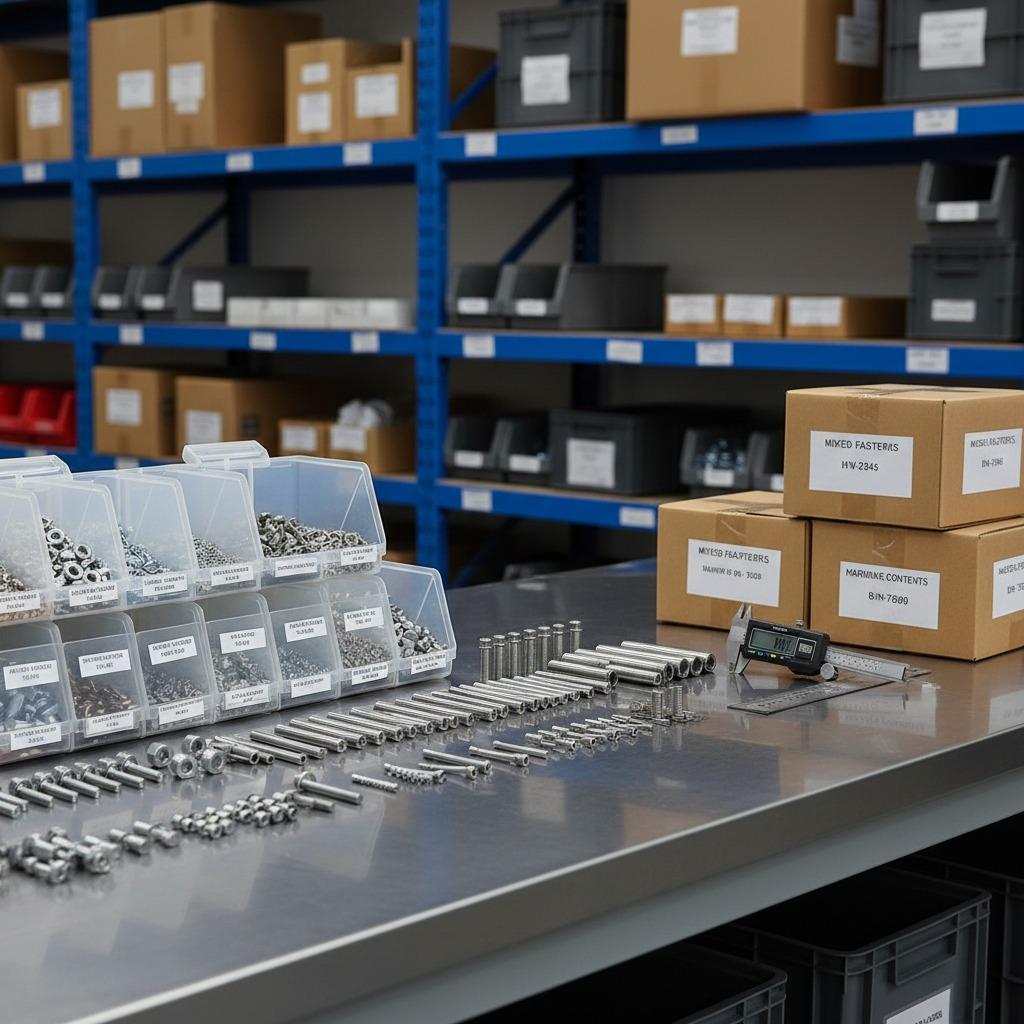
The image shows mixed hardware, including bolts, washers, threaded rods, spacers, and compartment trays. This is a useful reminder that many fastener orders are not one-part orders.
OEMs, distributors, and maintenance teams often need organized kits.
A good supplier should understand:
- kitting logic
- label control
- compartment packing
- warehouse handling
- carton marking
- replacement and repeat orders
- mixed fastener sorting
Loose fasteners in the wrong compartment can turn a clean order into a frustrating search. For buyers selling repair kits, service packs, or e-commerce hardware sets, packaging discipline can be just as important as production capability.
What buyers should confirm before ordering
Before placing a bulk screw order, buyers should prepare a clear specification. This does not need to be complicated, but it should be complete enough to prevent guessing.
| Sourcing Point | What to Confirm |
|---|---|
| Screw type | Machine screw, self-tapping screw, micro screw, precision screw, or mixed hardware |
| Drawing or sample | Whether the supplier is following a drawing, approved sample, or standard part |
| Material | Stainless steel, iron, aluminum, or another confirmed material |
| Finish | Zinc plating, black coating, galvanizing, passivation, or other required treatment |
| Head style | Pan, flat, countersunk, socket, hex, Phillips, Torx-style, or customized head |
| Thread form | Standard thread, coarse thread, fine thread, or application-specific thread |
| Packaging | Bulk carton, bag, compartment box, kit, label, or OEM package |
| Inspection | Dimensions, finish, quantity, appearance, and document requirements |
| Repeat supply | How future batches will match the approved sample |
These checks help buyers avoid the most common mistake in fastener sourcing: assuming that similar-looking screws will behave the same.
They often do not.
Standards and documentation matter
Jiangmen Jinhe states that it works with standards including GB, DIN, ANSI, BS, JIS, and ISO. For sourcing teams, this gives engineering and procurement a shared language. It is easier to define a screw when both sides know whether the order is based on a standard fastener or a non-standard drawing.
However, buyers should still confirm the exact standard for each order.
“ISO standard” or “DIN standard” is not enough by itself if the project has specific material, coating, or tolerance requirements. A controlled project should define what must be checked before delivery.
Jinhe also states that products undergo strict inspection before delivery and are accompanied by necessary documentation. That is the kind of supplier statement buyers should look for, especially in electronics, appliances, automation, medical device-related products, and export supply chains.
Still, every buyer should ask:
What inspection is included?
Which dimensions are checked?
Can reports be provided?
How are rejected parts handled?
How are samples recorded for repeat orders?
What documents are available before shipment?
Those questions are not excessive. They prevent avoidable disputes later.
Where buyers often get into trouble
One of the biggest mistakes is assuming that a sample and a production order are the same thing.
They are not.
A sample may be carefully selected, checked, and packed. Bulk production introduces more variables: finish consistency, dimensional drift, mixed packaging, carton labels, quantity control, and shipment handling.
Another common mistake is under-specifying the finish. The parts in the image appear mostly metallic, with dull gray or coated surfaces. Some may look zinc-plated, galvanized, black-coated, or raw, but exact material and coating cannot be confirmed from appearance alone.
If corrosion resistance, appearance, conductivity, or environmental exposure matters, buyers should write the finish requirement clearly.
Do not guess from a photo.
A third mistake is ignoring packaging. A screw can be technically correct but operationally inconvenient if it arrives in the wrong pack count, mixed with similar parts, or without useful labels.
In a warehouse, poor packaging creates labor.
On an assembly line, it creates delays.
In e-commerce, it creates complaints.
For maintenance teams, it creates lost time.
Why responsiveness matters in OEM and wholesale supply
In fastener sourcing, communication speed is not just a service detail.
It protects schedules.
If a drawing needs clarification, a part number changes, a bin is short, or a shipment requires updated documents, slow response can delay the entire order. Jiangmen Jinhe states that customer support responds within 30–60 minutes and provides solutions within 2 hours for issues.
Buyers should still verify response quality during real projects, but responsiveness is a meaningful factor when comparing suppliers.
Jinhe also serves sectors such as home appliances, electronics, furniture, building materials, and medical device manufacturing, along with cross-border e-commerce sellers and hardware wholesalers. That customer mix suggests a supplier familiar with both production discipline and supply-chain coordination.
Fasteners do not only need to be made. They need to arrive correctly, in the right place, in the right format.
A practical buyer checklist
Before sending a purchase order, confirm these points:
- drawing or approved sample
- material
- surface finish
- screw size and length
- head style
- drive type
- thread type
- packaging count
- carton marking
- inspection expectations
- document requirements
- delivery method
- repeat-order control
For custom fasteners, also ask how the approval process works. Does the supplier confirm samples before bulk production? Can it support revised drawings? How are changes recorded? How will future batches be checked against the approved version?
For bulk orders, clarify packaging early. If the screws are used for assembly, maintenance, or spare-parts fulfillment, the packaging format can save or waste a surprising amount of time.
What to ask next
If you are comparing an OEM screw supplier with a broader custom fastener manufacturer, ask for a quotation based on your drawing or sample. Then request the inspection and packaging method in writing.
For sensitive applications, ask about material options and standard compatibility before you commit.
For self-tapping screw projects, confirm the substrate, point style, drive type, thread form, and finish. Consistency across the order matters more than a good-looking first sample.
For mixed hardware kits, ask how the supplier sorts, labels, and packs different parts.
A supplier that understands production and supply-chain support can reduce many of the small problems that usually appear after delivery.
FAQ
What does a custom wholesale screws supplier do?
A custom wholesale screws supplier provides screws and fasteners in bulk while supporting customization, packaging, inspection, documentation, and repeat supply based on buyer requirements.
When should buyers choose custom screws?
Buyers should choose custom screws when standard parts do not fully meet the application, material, head style, drive type, finish, packaging, or repeat-order requirement.
Why is packaging important in fastener sourcing?
Packaging affects receiving, counting, sorting, assembly, resale, and maintenance work. Poor packaging can create extra labor even when the screws themselves are correct.
Can one supplier handle standard and custom screws?
Yes, if the supplier has production capability, customization experience, inspection discipline, and clear communication. Buyers should still confirm capability for each product family.
What should buyers verify before mass production?
Buyers should verify drawing, sample, material, finish, head type, drive type, thread form, dimensions, packaging, inspection documents, and reorder rules.
Final takeaway
A fastener is not “just a screw” when it affects production.
It becomes part of the assembly process, inventory system, packaging workflow, and customer experience.
For buyers who want both production and supply-chain support, Jiangmen Jinhe Hardware Co., Ltd. offers a useful starting point for custom screw and fastener projects.
Contact:
Tel / WeChat: +86 13729150102
WhatsApp: +86 13322893939
Email: sharon@hkhomeideas.com
If you are building a fastener program rather than buying a single box of screws, the real conversation should begin with the drawing, the application, the packaging, and the repeat supply plan.