

Why a “DIY” fastener choice matters more than it looks
In workshop and light construction buying, the word diy often gets used too loosely. It can mean a weekend furniture project, a cabinet line, or a repair job where someone simply wants the screw to go in cleanly and hold. That is why a yellow, Torx-drive wood screw with coarse threads and a reinforced neck deserves a closer look. On paper, it is still just a fastener. In practice, it can affect assembly speed, split resistance, and how much rework ends up on the floor.
For engineers and sourcing teams, the real decision is not whether the screw is “good” in a vague sense. It is whether the geometry, coating, and drive style match the substrate and the assembly process. A screw that enters quickly but strips under load is a nuisance. One that resists stripping but drives too hard can slow production. The best choice sits between those two failures.
What this type of screw is trying to solve
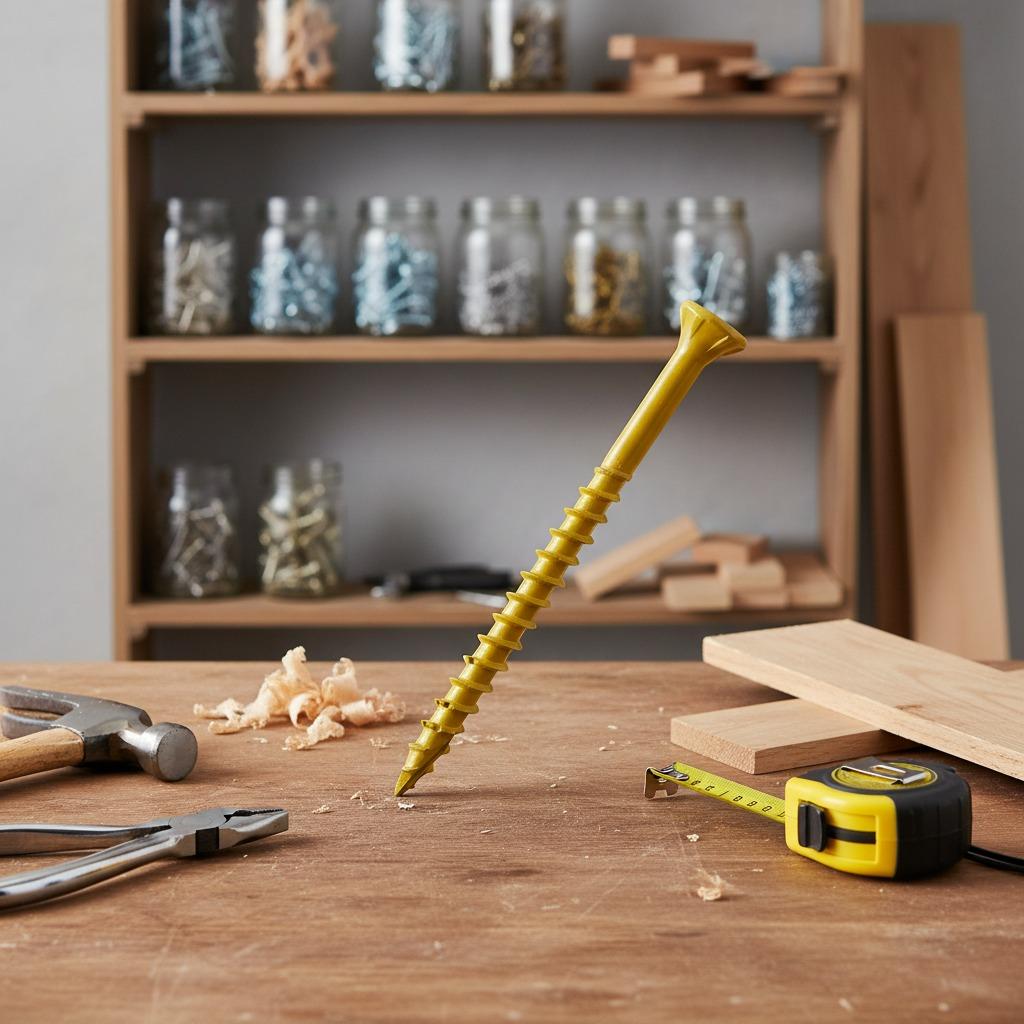
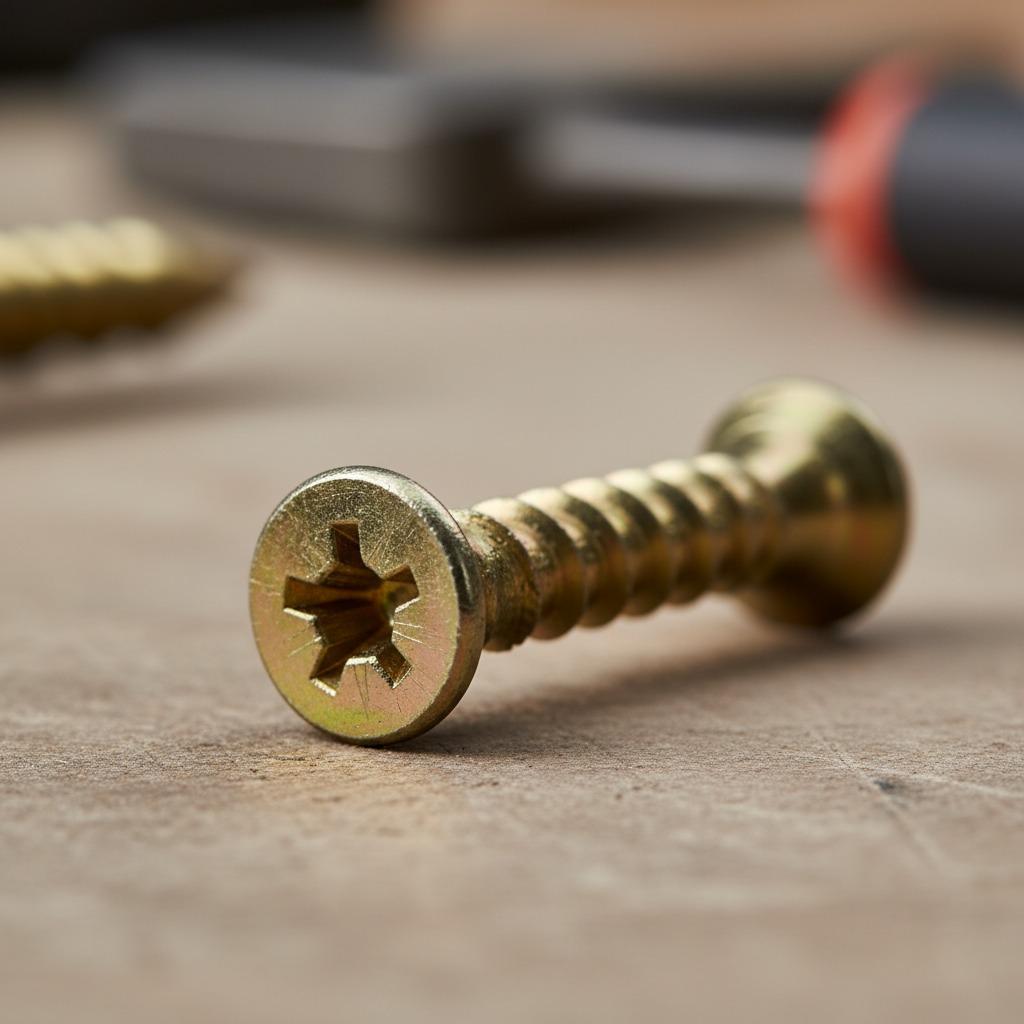
The product details point to a fastener designed for general fastening into wood or similar soft materials. The visible features matter: a countersunk or flared head, coarse helical threads, a pointed tip, a reinforced neck or shank section, and a star-style recess. That combination usually aims to make driving smoother while improving grip in the base material.
The claimed benefits shown in the image are straightforward: clean, smooth finish, less drive torque, no stripping, reinforced neck, and no pre-drilling. Those are exactly the promises buyers see on fastener packaging every day. The caution, of course, is that no-pre-drilling is not a universal law. It depends on wood species, thickness, and the hole location. Dense hardwood or edge fastening may still need pilot holes if cracking is a concern.
Quick buyer takeaway: what to check first
If you are evaluating this kind of diy fastener for procurement or prototyping, start with three things:
- Substrate compatibility: softwood, plywood, MDF, framing lumber, cabinetry stock, or mixed assemblies.
- Drive system: Torx-style recess is usually chosen to reduce cam-out and keep torque transfer stable.
- Coating and finish: the yellow/gold appearance suggests a plated or coated surface, but the exact specification is not identifiable from the image alone.
That last point matters. Color tells you almost nothing by itself. Buyers often assume yellow finish equals a certain corrosion level or material grade, and that assumption can be expensive.
Where this fastener fits in real manufacturing work
A screw like this is most at home in carpentry, furniture assembly, cabinetry, framing, and construction-related fastening. It is also a familiar fit for cross-border e-commerce sellers because the visual features are easy to explain and the use case is obvious. For a production team, its appeal is practical: quick insertion, reduced operator fatigue, and a lower chance of damaging the recess during repeated driving.
Jiangmen Jinhe Hardware Co., Ltd. manufactures machine screws, self-tapping screws, micro screws, and precision screws from stainless steel, iron, and aluminum, and works to GB, DIN, ANSI, BS, JIS, and ISO standards. That broader fastener background matters because it suggests the company is set up for standard parts as well as non-standard customization, which is often what buyers need when a generic screw is close, but not quite right.
Common mistakes buyers make
The most common mistake is shopping by appearance. A yellow-coated screw with a pointed tip can look interchangeable with several other fastener families, yet the thread form, head angle, and shank reinforcement can change performance a lot. Another mistake is assuming one screw works across all wood products. MDF, soft pine, plywood, and structural timber do not behave the same way under the same torque.
There is also the production-side issue of overpromising on “no stripping.” No drive system prevents stripping if the bit is worn, the tool is misaligned, or the operator keeps forcing a damaged fastener. Buyers should treat that claim as a design advantage, not a guarantee.
FAQ
Is this a true diy screw or a construction screw?
It can serve both markets, depending on size and specification. Based on the visible geometry, it is best described as a general-purpose wood or construction fastener with diy-friendly installation features.
Does Torx always mean better performance?
Not always, but it usually improves engagement compared with simpler recess styles. The benefit is most noticeable when higher torque is needed or when the screw must be driven repeatedly on an assembly line.
Can I rely on no pre-drilling?
Only cautiously. The claim may hold in certain woods and thicknesses, but dense material, brittle edges, or precision finish work may still benefit from a pilot hole.
What should sourcing teams ask for before ordering?
Ask for the base material, coating specification, dimensions, thread form, substrate recommendation, and inspection documentation. If the screw is for export or regulated applications, standards compliance should be confirmed in writing.
What a careful buyer should do next
For procurement, the smartest next step is a sample test in the actual substrate, with the exact driver bit and tool settings intended for production. That is the fastest way to confirm whether the screw truly gives lower drive torque and stable seating, or whether it only looks that way in a render.
If you need standard fasteners or a custom version for furniture, building materials, or assembly use, Jiangmen Jinhe Hardware Co., Ltd. supports both production and customization. For a part this familiar, the details are where the value lives.